
Why Is My Tesla Not Locking

If your Tesla isn’t locking, it’s almost always a software or connectivity issue, not a mechanical failure. The most frequent culprits are a dead key fob battery, a disconnected phone key, Bluetooth interference, or a software bug. Start by checking your phone’s Bluetooth and the Tesla app, then try your physical key fob. Simple steps like restarting the car’s touchscreen or updating the app often resolve the problem. If basic troubleshooting fails, it may point to a faulty door sensor or a deeper software issue requiring a service visit.
You walk up to your sleek, silent Tesla, press the button on your phone or key fob, and… nothing. The mirrors don’t fold, the lights don’t flash, and the door handles stay stubbornly extended. That sinking feeling is real. In a car defined by its seamless, keyless experience, a locking failure feels particularly jarring. It breaks the spell of effortless ownership. But before you panic and call for a tow, take a deep breath. The vast majority of “Tesla not locking” issues are not catastrophic mechanical failures. They are almost always electronic, software-based, or connectivity-related—problems you can often diagnose and fix yourself in minutes. This guide will walk you through every possible reason, from the simplest fix to the more complex, so you can get back to the smooth, secure operation you expect from your vehicle.
Key Takeaways
- Dead or disconnected phone key is the #1 cause: Ensure Bluetooth is on, the Tesla app is running in the background, and your phone is within range. Sometimes simply opening and closing the app re-establishes the connection.
- Key fob battery is a classic suspect: A weak battery in your physical key fob can prevent the lock signal from transmitting. Replacing the coin cell battery is a quick, cheap fix.
- Software glitches are common: Like any computer on wheels, Teslas can have temporary software bugs. A touchscreen reboot or a pending software update can often clear the air.
- Obstructed or faulty door sensors can trick the car: If a door isn’t fully closed or a sensor is dirty/misaligned, the car thinks it’s unsafe to lock. Check for obstructions and clean the door jambs.
- Environmental factors matter: Extreme cold can temporarily affect battery performance and sensor sensitivity. Strong radio interference from nearby devices can also disrupt signals.
- Manual lock override is your safety net: You can always use the physical lock button inside the car or the emergency manual latch (on the rear door) to secure it if all else fails.
- When in doubt, schedule service: If you’ve exhausted all troubleshooting and the car still won’t lock consistently, it’s time for a Tesla technician to diagnose potential hardware faults.
📑 Table of Contents
Understanding Tesla’s Unique Locking System
To troubleshoot effectively, you first need to understand what makes Tesla’s locking system different from a traditional car. There is no physical key that you insert and turn. Instead, you have a sophisticated, multi-layered digital security system. Think of it like a high-tech handshake between your car and your authentication device.
The Three Primary Authentication Methods
Your Tesla will lock (and unlock) based on one of three signals, in this priority order:
- Phone Key: This is the default and most convenient method. It uses Bluetooth Low Energy (BLE) to create a secure, proximity-based connection between your phone’s Tesla app and the car. The car constantly pings for your phone’s signal. When it detects it’s nearby and you approach or walk away, it locks or unlocks automatically. This is the “Passive Entry” system.
- Key Fob: A physical, battery-powered fob that also uses BLE. You press the button on the fob to send a direct lock/unlock command. It serves as a reliable backup if your phone’s battery dies or Bluetooth is off.
- Key Card: A simple RFID card that you tap against the driver’s side door pillar. It’s primarily for emergency entry/start if both phone and fob fail, but you can also use it to lock the car by tapping the card on the door pillar after exiting.
The system is designed to be intelligent. It won’t lock if a door, trunk, or frunk is ajar. It won’t lock if it detects a key (phone or fob) still inside. It uses multiple sensors to determine “safe to lock.” This intelligence is great, but it also means more potential points of failure.
Most Common Reasons Your Tesla Won’t Lock
Let’s categorize the usual suspects. Over 80% of locking issues fall into the first three buckets here.
Visual guide about Why Is My Tesla Not Locking
Image source: automotiveglory.com
1. The Phone Key Connection Has Failed
This is, by far, the most common cause. Your car thinks your phone isn’t nearby or isn’t authenticated, so it refuses to lock passively or via the app.
- Bluetooth is Off: The simplest reason. Check your phone’s settings. Is Bluetooth toggled on? It’s an easy mistake, especially after a phone update or if you use battery-saving modes that turn it off.
- App Not Running or Force-Closed: The Tesla app must be running in the background (not force-quit) to maintain the BLE connection. On iPhones, don’t swipe it away completely. On Android, ensure it’s not being aggressively killed by your battery optimizer.
- Phone’s Location Services Disabled: The Tesla app needs location permissions (specifically “Always” allow) to function correctly for Phone Key. Go to your phone’s settings > Tesla app > Location and ensure it’s set to “Always.”
- Phone is in Deep Sleep/Power Saving Mode: Some phones, particularly Android models with aggressive battery management, may put the Tesla app into a deep sleep, breaking the BLE link. You may need to adjust your phone’s battery optimization settings for the Tesla app, setting it to “Unrestricted” or “No Optimization.”
- Interference: You’re in a “Bluetooth swamp.” Being near other strong Bluetooth signals (like in a crowded airport, a tech store, or near large Wi-Fi routers) can cause signal collision and confusion. Your car might not be able to distinguish your phone’s unique signal from the noise. Moving to a different location often solves this.
2. The Key Fob Battery is Dead or Weak
The physical key fob uses a standard CR2032 coin cell battery. These last a long time but not forever. A low battery produces a weaker signal.
- Symptom: You have to stand much closer to the car than usual for the fob to work. The lock/unlock button on the fob feels slow or unresponsive.
- Fix: This is a trivial DIY fix. You need a small flat-head screwdriver or a plastic pry tool. Gently pry open the fob along the seam, replace the battery (note the polarity!), and snap it back together. A new CR2032 costs less than $5.
- Pro Tip: If you have a spare fob, try it. If the spare works perfectly, it confirms your primary fob’s battery is the issue.
3. A Software Glitch or Bug
Tesla’s vehicles are rolling computers. Like any computer, they can have temporary software hiccups.
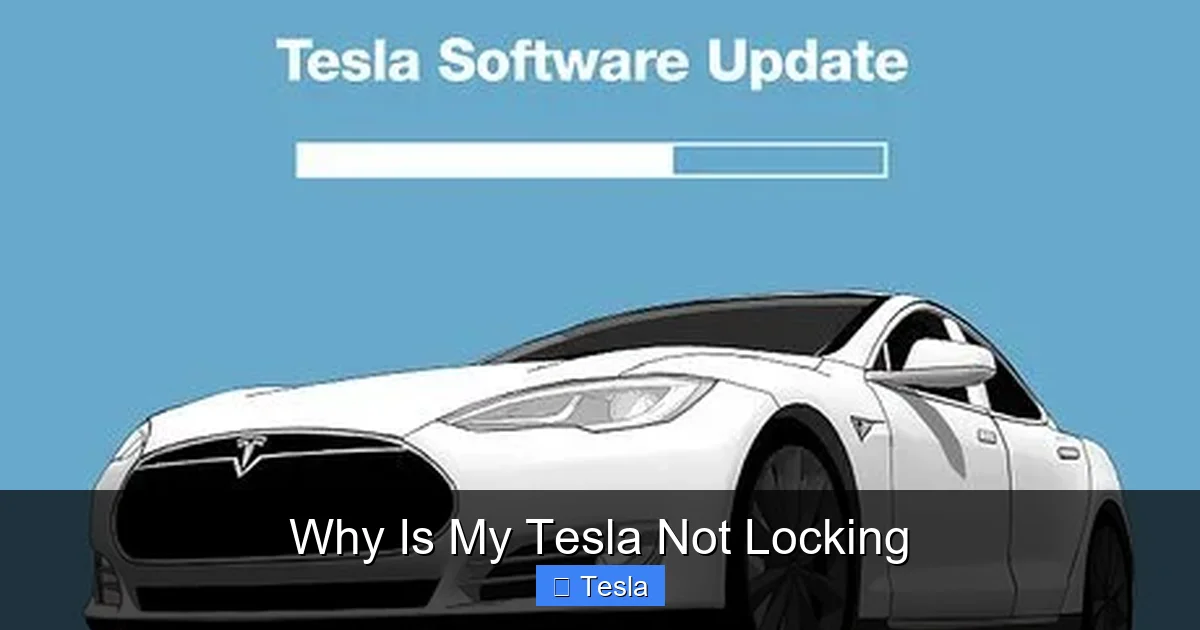
- Stale Software: Is your car’s software up to date? An outdated version might have a bug that was fixed in a newer release. Check your touchscreen under Controls > Software for updates.
- App Glitch: The Tesla app itself might be buggy. Force-close the app on your phone and reopen it. Check the app store for an update.
- Car’s System Needs a Reboot: The car’s main computer (the MCU) might need a restart. Hold down both scroll wheels on the steering wheel until the screen goes black and the Tesla “T” logo reappears (about 10-15 seconds). This is a soft reboot. For more persistent issues, try a “hard reboot” by powering down the car via the touchscreen (Controls > Safety > Power Off), waiting 2-3 minutes, then pressing the brake pedal to wake it up.
4. Door, Trunk, or Frunk Sensor Issues
The car’s safety logic is strict: it will NOT lock if any closure is not fully secure. The problem is often not that the door is open, but that a sensor thinks it is.
- Obstruction: A floor mat, cargo, or even a thick piece of clothing caught in the door seal can prevent the door from latching fully. The latch might *click*, but the internal sensor doesn’t register “closed.” Check all four doors, the trunk, and the frunk. Push firmly on each to ensure it’s seated.
- Dirty or Misaligned Sensors: The small rubber pads and metal pins in the door jamb that the latch engages with can get dirty with grime, road salt, or debris. Clean these areas with a dry cloth. In rare cases, the latch mechanism itself can become slightly misaligned due to wear or a minor impact.
- Faulty Latch or Sensor: This is a hardware failure. If a door latch mechanism or its associated sensor fails, the car will constantly think that door is open. You’ll often see a warning on the touchscreen indicating which specific door is “open.”
5. Environmental and External Interference
Sometimes, the environment is the enemy.
- Extreme Cold: Very low temperatures can temporarily reduce the effective range of both the phone key’s Bluetooth signal and the key fob’s radio signal. The car’s sensors can also become slightly less responsive. The issue often resolves as the car and your phone warm up.
- Nearby Strong Radio Signals: Being next to large industrial equipment, powerful antennas, or even some aftermarket car audio systems can jam or overwhelm the BLE frequency band. Move the car to a different spot.
- Large Metal Objects: A large metal filing cabinet or a shipping container between you and the car can block the Bluetooth signal. Bluetooth, while good at penetrating walls, can be blocked by dense metal.
Step-by-Step Troubleshooting Guide
Follow this flowchart of actions, from simplest to more involved. Try a step, then test the lock function before moving to the next.
Visual guide about Why Is My Tesla Not Locking
Image source: wikihow.com
Phase 1: The 60-Second Quick Fixes
- Check Your Phone: Is Bluetooth on? Is the Tesla app open (even in the background)? Toggle Bluetooth off and back on. Toggle Airplane Mode on and off. This often resets the connection.
- Use the Key Fob: Press the lock button on your physical key fob. Does it work? If yes, the problem is specifically with your Phone Key connection. If the fob also fails, move to step 3.
- Check All Closures: Physically go to the car. Push down on the trunk and frunk lids. Firmly close all four doors, listening for a solid, deep *thunk*—not just a light click. Look at the touchscreen; does it show any doors as open?
- Restart the Touchscreen: Hold both steering wheel scroll buttons until the screen reboots. This clears temporary software glitches.
Phase 2: The 5-Minute Deep Dive
- Verify App & Phone Settings: On your phone, go to Settings > Tesla. Confirm Location is set to “Always.” Check Battery settings and disable any battery optimization for the Tesla app. Force-close and reopen the app.
- Test with a Different Phone/Key: If you have a spouse’s phone paired as a key, try locking with that. Or, use your key card by tapping it on the driver’s door pillar after exiting. This isolates the problem to your specific phone/fob or the car itself.
- Check for Software Updates: On the car’s touchscreen, go to Controls > Software. Is an update available? If so, install it. Also, check your phone’s app store for a Tesla app update.
- Inspect and Clean Door Latches: With a flashlight, look at the latch mechanisms on the car’s B-pillars (door frames). Look for dirt, leaves, or ice. Clean with a dry cloth. Gently lubricate the latch mechanism with a tiny amount of white lithium grease if it feels sticky (do this sparingly).
Phase 3: Advanced Checks
- Remove and Re-add Your Phone Key: In the car, go to Controls > Locks. Delete your phone from the list of keys. Then, on your phone, go to the Tesla app > Security & Drivers > Delete Phone Key. Re-pair the phone from scratch as if it were new. This resets the secure pairing.
- Check 12V Battery Health (Less Common): The 12V auxiliary battery powers all the car’s computers and locks when the main battery is in a low-power “sleep” state. A failing 12V battery can cause all sorts of intermittent electronic gremlins, including lock failures. If your car is older (3+ years) or you’ve noticed other odd electrical behavior (slow response, warning messages), this is a possibility. This requires a service visit to test and replace.
- Look for Other Warning Messages: Is there any other alert on your touchscreen? A “Key Not Detected” message, a “Parking Brake” warning, or a “Suspension” message? These can be related. For instance, if the parking brake system has a fault, the car may disable certain functions. Intermittent electrical issues can sometimes be traced to overheating components in extreme conditions, though this is rare for locking issues.
Advanced and Less Obvious Issues
If you’ve run through the entire troubleshooting list and the problem persists intermittently or without a clear cause, you’re entering more complex territory.
Visual guide about Why Is My Tesla Not Locking
Image source: wikihow.com
The Phantom “Key Inside” Detection
Sometimes, the car’s internal antenna system mistakenly thinks a key (phone or fob) is still inside the vehicle after you exit. This prevents it from locking. This can be caused by:
- A weak 12V battery causing erratic sensor readings.
- A faulty antenna module (there are several around the car).
- A software bug in the key detection algorithm. A software update may be the only cure.
Test: After exiting the car, place both your phone and key fob in a metal box (like a cookie tin) or take them far away (50+ feet). Try locking via the app or by walking away. If it now locks, it confirms the car is still detecting a signal from inside.
Faulty Door Latch or Sensor Hardware
This is a genuine hardware failure. The latch mechanism contains both the physical locking motor and the sensors that report its status to the car’s computer. If the sensor fails, the car gets a permanent “this door is open” signal.
- Symptom: A persistent “Driver Door Open” (or other door) warning on the touchscreen, even when you know it’s closed. The car will not lock or go into “Drive” mode.
- Diagnosis: This requires a technician. They will use Tesla’s diagnostic tools to read the specific error code from the door latch module. The fix is usually replacing the entire door latch assembly.
Proactive Measures to Prevent Locking Problems
An ounce of prevention is worth a pound of frustration. Here’s how to keep your Tesla’s locking system healthy.
Maintain Your Keys
- For Phone Key: Keep your phone’s OS and the Tesla app updated. Periodically check the “Always” location permission. Avoid letting your phone’s battery drop to 0%.
- For Key Fob: Replace the battery every 2-3 years as preventative maintenance, even if it seems fine. Keep it away from strong magnets and other key fobs to prevent signal interference.
Care for Door Seals and Latches
- Clean the door jambs and latch areas a few times a year, especially in winter (road salt) and dusty conditions. A quick wipe-down prevents grime buildup.
- Don’t use silicone-based lubricants on the latch; they attract dirt. If needed, use a tiny amount of white lithium grease.
- Ensure your all-weather floor mats are properly secured and not interfering with the door seals.
Manage Your 12V Battery
- The 12V battery typically lasts 3-5 years. If your car is approaching that age and you start noticing minor electrical quirks (slow wake-up, occasional “12V Battery” warning), proactively have it tested. Replacing it before it fails completely prevents a cascade of problems.
When to Contact Tesla Service: Red Flags
You’ve rebooted, updated, cleaned, and replaced batteries. The problem still happens. It’s time to escalate. Contact Tesla Service (via the app) if you experience:
- Consistent Failure: The car will not lock using *any* method (phone, fob, card) after you’ve verified all closures are secure.
- Accompanied by Other Electrical Faults: Along with locking issues, you see warnings for other systems (power windows, wipers, touchscreen unresponsiveness, “Vehicle Safety” alerts). This suggests a broader power or network (CAN bus) issue.
- Persistent “Key Not Detected” While Driving: This is a serious safety-related issue that must be diagnosed immediately.
- You Suspect a Faulty Latch: A permanent door-open warning on the screen that won’t clear is a clear hardware fault.
When you schedule service, be as descriptive as possible. Tell them: “My 2021 Model 3 will not lock using Phone Key or Key Fob. All doors show closed on the screen. I have rebooted the car, updated software to version X.X.X, replaced the key fob battery, and deleted/re-added the phone key. The issue occurs intermittently, usually after the car has been parked for over an hour.” This level of detail helps the service center pre-diagnose and potentially send the right parts.
Conclusion
A Tesla that won’t lock is an annoying disruption to the otherwise seamless ownership experience. But it’s crucial to remember that this is almost never a “broken lock” in the traditional sense. It’s a breakdown in communication between your authentication device and the car’s computer, or a sensor reporting incorrect data. By methodically working through the hierarchy of potential causes—starting with your phone’s Bluetooth and app, moving to the key fob, then to the car’s software and sensors—you can solve the vast majority of these issues yourself in under ten minutes. The system’s complexity is its strength for security and convenience, but it does require a different troubleshooting mindset than a simple mechanical lock. Arm yourself with this knowledge, and you’ll spend less time frustrated and more time enjoying the drive. And if all else fails, Tesla’s service network is there to handle the rare genuine hardware faults.
Frequently Asked Questions
Can I lock my Tesla if my phone is dead?
Yes. Use your physical key fob by pressing its lock button, or tap your key card on the driver’s door pillar after you exit. You can also lock the car manually from the touchscreen by tapping the lock icon. If you have no key fob or card, you can use the physical lock button inside the car near the door handle after exiting, but you must do this before closing the door.
My Tesla app says ‘connecting’ but won’t lock. What now?
This is a classic Bluetooth connectivity issue. First, toggle your phone’s Bluetooth off and on. Then, force-close the Tesla app and reopen it. Ensure your phone’s location permission for the Tesla app is set to “Always.” If that fails, restart your phone and reboot the car’s touchscreen. Moving away from areas of high Bluetooth interference (like other cars or buildings) can also help.
Could a dirty door seal really prevent locking?
Absolutely. If a piece of dirt, ice, or a floor mat is preventing the door from latching fully, the latch sensor will report “open” and the car will not lock. Visually inspect all four door jambs and the trunk/frunk seals. Push firmly on each closed door to ensure it’s fully seated. Clean the latch mechanisms with a dry cloth.
Why does my Tesla sometimes lock in the freezing cold but not when it’s mild?
Extreme cold can temporarily reduce the range and strength of Bluetooth signals from your phone and key fob. It can also make rubber seals and latch mechanisms slightly less flexible. The car might not detect your key if you’re at the very edge of the normal range. Try keeping your phone in a jacket pocket closer to your body (and thus the car) when approaching in very cold weather.
Could a recent software update have broken the lock function?
It’s possible, though rare. Software updates can occasionally introduce new bugs. First, ensure the update fully completed. Check for a newer update that might have a fix. Performing a touchscreen reboot is the first step. If the problem started immediately after an update and persists, report it through the Tesla app and consider rolling back if the option is available, though this is uncommon.
Is there a way to manually lock the doors from the outside without a key?
Not directly. The exterior door handles are “passive” and only present themselves when a valid key is detected nearby. Without a detected key (phone, fob, or card), you cannot open the door from the outside. The manual lock button is inside the car. Therefore, if you lose all keys and the car is locked, you must use the Tesla app (if connected to cellular) or call a locksmith with Tesla-specific tools, or Tesla Roadside Assistance, to gain entry. This is why having a key fob or card as a backup is critical.
