
Which Is Better Honda Cr V or Subaru Outback

Choosing between the Honda CR-V and Subaru Outback comes down to your priorities. The CR-V offers more rear cargo space, slightly better fuel economy, and a reputation for bulletproof reliability. The Outback provides superior standard all-wheel drive, more ground clearance, and a wagon-like driving feel for adventure seekers. Both are excellent, practical, and safe family vehicles, but their strengths cater to slightly different drivers.
So, you’re in the market for a practical, reliable, and safe vehicle that can handle life’s adventures and daily grind. You’ve likely narrowed it down to two of the most compelling choices in the segment: the Honda CR-V and the Subaru Outback. It’s a fantastic problem to have, as both are consistently top-rated, best-selling crossovers. But which is better for you? This isn’t about declaring a universal champion. It’s about matching your specific needs, driving habits, and lifestyle to the unique strengths of each vehicle. We’re going to dive deep into every category that matters—from powertrains and interior space to real-world fuel economy and off-pavement capability—to give you a crystal-clear picture. By the end, you’ll know exactly which one deserves a spot in your driveway.
Key Takeaways
- The CR-V wins on pure passenger and cargo volume: It offers more rear legroom and a larger, square cargo hold, making it ideal for growing families and frequent haulers.
- The Outback’s AWD system is more robust and off-road capable: Subaru’s Symmetrical AWD with X-Mode is a true standard feature, offering better traction in snow and on loose surfaces than the CR-V’s optional system.
- Fuel economy favors the Honda: The CR-V consistently delivers 1-3 MPG better combined fuel economy, a significant advantage for high-mileage drivers.
- Driving experience differs: SUV vs. Wagon: The CR-V feels like a taller, more upright SUV. The Outback feels lower, longer, and more like a traditional station wagon, which some prefer for handling.
- Pricing and value are closely matched: Base prices are similar, but the Outback includes more standard features like a larger touchscreen and all-wheel drive. The CR-V’s value shines in its long-term reliability predictions.
- Safety is a tie with different approaches: Both earn top crash test scores. Honda uses its Honda Sensing suite; Subaru uses EyeSight. Both are excellent, but Subaru’s is standard on all trims.
[FEATURED_IMAGE_PLACEHOLDER]
📑 Table of Contents
- Powertrain and Performance: Efficiency vs. Capability
- Interior Space and Practicality: The Hauler Showdown
- All-Wheel Drive and Off-Pavement Prowess: The Core Difference
- Safety and Driver Assistance: A Dead Heat with Different Names
- Pricing, Value, and Ownership: The Long Game
- Who Should Choose Which? The Final Breakdown
Powertrain and Performance: Efficiency vs. Capability
Under the hood, both vehicles take a sensible, modern approach: a turbocharged 4-cylinder engine paired with a continuously variable transmission (CVT). But the devil is in the details, and those details create distinct personalities.
Honda CR-V: The Refined and Efficient Commuter
The CR-V’s 1.5-liter turbocharged engine (190 hp, 179 lb-ft of torque) is a peach. It’s quiet, smooth, and delivers power in a linear, predictable way. The CVT is well-programmed to mimic traditional gear steps, avoiding the rubber-band feel of older CVTs. The focus here is on effortless, quiet, and fuel-efficient around-town and highway cruising. Acceleration is adequate, not thrilling. The front-wheel drive (FWD) model is the efficiency king, but the all-wheel drive (AWD) system, when equipped, is competent for light snow and wet roads. It’s a system designed for inclement weather security, not for tackling rutted forest service roads. If your idea of adventure is a snowy ski trip or a rainy camping weekend, it’s more than capable. For a deeper dive into Honda’s powertrain technology and common questions, you can explore resources on specific model maintenance, like what to do if your Honda CR-V won’t start but the battery is good.
Subaru Outback: The Standard-Bearer for All-Weather Confidence
The Outback’s 2.5-liter boxer engine (182 hp, 176 lb-ft) is also smooth and reliable, though it has a slightly coarser sound than the Honda’s engine under hard acceleration. The real story is the transmission and the standard all-wheel drive. Subaru’s Symmetrical AWD is a full-time, permanent system with a near-50/50 front/rear torque split as its default. It’s constantly working to send power where it’s needed most. The game-changer is the available X-Mode. This system optimizes the AWD, transmission, and traction controls for low-traction conditions like deep snow, mud, or steep gravel hills. It’s a genuine off-pavement assist that gives the Outback a tangible capability edge. For those who regularly face unplowed roads or enjoy dirt-track detours, this is a massive point in Subaru’s column. Understanding how to use X-Mode in the Subaru Outback is key to unlocking its full potential.
Real-World Fuel Economy: A Close but Clear Contest
Here, the Honda has a measurable advantage. EPA ratings for the current models typically show the CR-V AWD earning around 27 mpg city / 32 mpg highway / 29 mpg combined. The Outback AWD is rated at roughly 26 mpg city / 33 mpg highway / 29 mpg combined. The difference is minimal on the highway, but the CR-V’s edge in city driving—where the CVT and turbo shine—means for stop-and-go commuters, the Honda will likely save you a few gallons per month. Over five years, that adds up to real money. Both are excellent for their class, but if minimizing fuel stops is your top priority, the CR-V has a slight but consistent lead.
Interior Space and Practicality: The Hauler Showdown
Both vehicles are celebrated for their spacious, versatile interiors. But their designs serve different hauling philosophies.
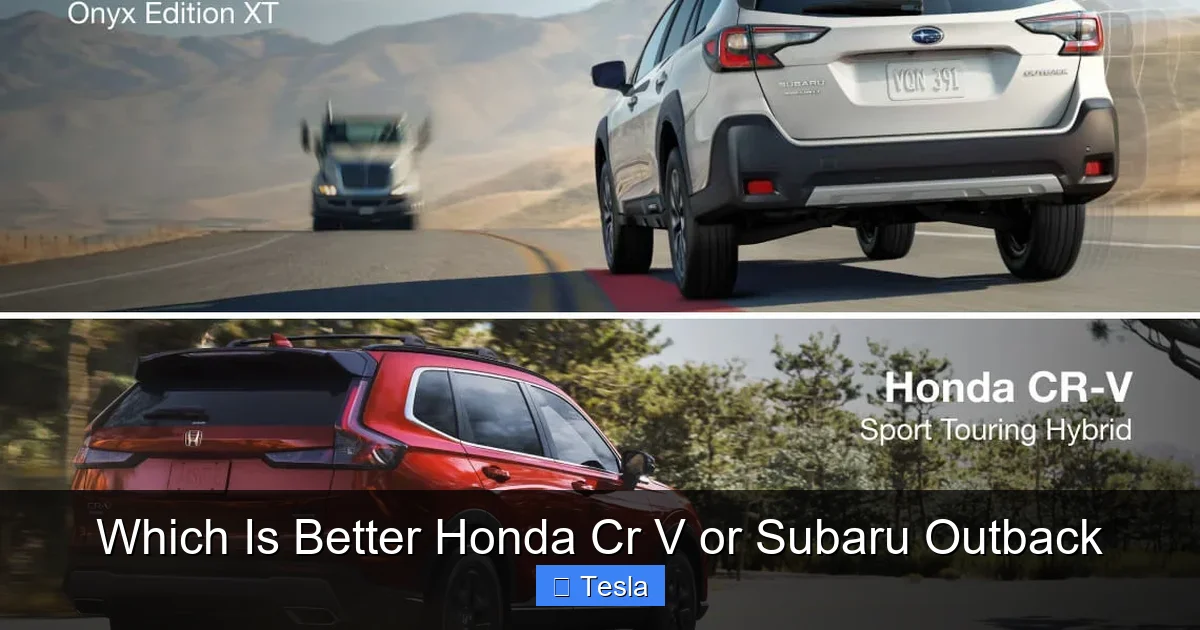
Visual guide about Which Is Better Honda Cr V or Subaru Outback
Image source: wallacesubaru.com
Cargo Volume: Shape Matters
On paper, the CR-V boasts a larger total cargo volume behind the rear seats (39.1 cubic feet vs. Outback’s 32.5). That’s a significant 6.6 cubic foot advantage. The CR-V’s cargo area is also a perfect square, making it incredibly easy to load bulky items like large suitcases, dog crates, or flat-pack furniture. The power liftgate is wide and tall. The Outback’s cargo hold is long and narrow, a product of its wagon-like shape. It’s fantastic for long items like skis, golf clubs, or lumber that can be laid flat, but you might find yourself juggling bags to maximize its slightly shallower depth. The Outback does have a trick up its sleeve: a standard rigid cargo cover that blends seamlessly, versus the CR-V’s optional retractable cover. For pure, boxy volume, the CR-V is the winner.
Passenger Comfort and Rear Seat Space
This is another win for the Honda. The CR-V’s rear seat is famously spacious, offering more legroom and a more upright, comfortable seating position for adults. The outboard seats are wide and supportive. The Outback’s rear seat is also very good by class standards—better than many—but it feels slightly less roomy, especially for taller passengers on long journeys. The CR-V simply feels more like a mini-minivan in terms of rear passenger pampering. If you frequently transport adults in the back, the CR-V’s extra space is noticeable and appreciated.
Interior Quality and Tech
Both cabins are well-built with soft-touch materials on most surfaces. The CR-V’s design is more conventional, with a clean dashboard and a physical volume knob (a major win for usability). The Outback’s design is more driver-focused, with a large, portrait-oriented 11.6-inch touchscreen standard on most trims. This screen is powerful but can be divisive; some love the tablet-like interface, others find it less intuitive than traditional buttons. Subaru’s infotainment system is capable, but Honda’s is often praised for its simplicity and quick response. Both offer standard Apple CarPlay and Android Auto. The best dash cam for a Honda CR-V 2023 will install cleanly in either vehicle, but the CR-V’s more standard rearview mirror layout might be slightly easier for some models.
All-Wheel Drive and Off-Pavement Prowess: The Core Difference
This is the most fundamental and important distinction between these two vehicles. It defines their character and suitability for your life.
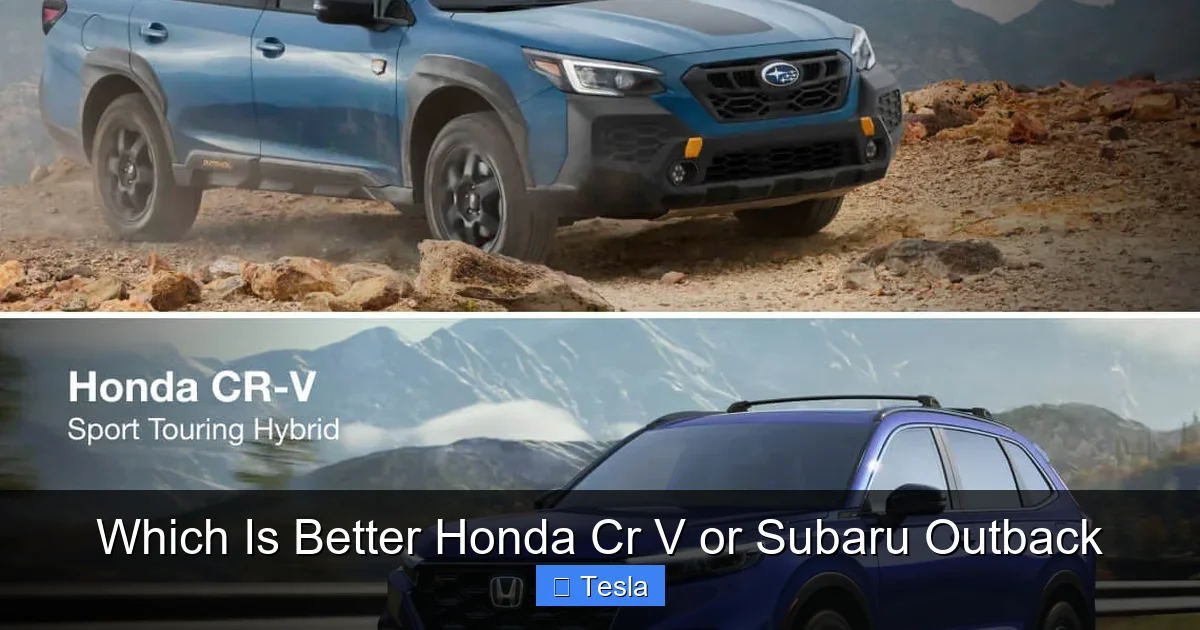
Visual guide about Which Is Better Honda Cr V or Subaru Outback
Image source: wallacesubaru.com
Honda’s Real-Time AWD: Intelligent and Efficient
The CR-V’s AWD system is an on-demand, predictive system. It uses sensors to monitor wheel slip and driving conditions, sending up to 50% of engine power to the rear wheels when needed. It’s sophisticated and great for reacting to sudden loss of traction on wet roads, ice, or light snow. However, it’s primarily a FWD vehicle that can send power rearward. It does not have a low-range gear or a dedicated off-pavement mode. Its goal is safety and confidence in poor weather, not trail capability.
Subaru’s Symmetrical AWD: Always On and Ready
Subaru’s system is permanent, full-time AWD. The engine and transmission are mounted longitudinally (like a rear-wheel-drive car), with the driveshaft running down the center. This symmetrical layout is inherently balanced and provides constant power to all four wheels. Combined with the X-Mode function (available on most trims), it actively manages throttle response, transmission shift points, and torque distribution to maintain momentum on slippery inclines or loose surfaces. It’s a system you can feel working. While neither vehicle is a hardcore off-roader, the Outback with X-Mode has a genuine advantage on dirt roads, in deep snow, and on rocky creek beds. For anyone living in the mountains, rural areas, or who just wants maximum peace of mind in winter, this is a decisive factor. You can read more about specific Subaru Outback X-Mode capabilities to see if it matches your needs.
Safety and Driver Assistance: A Dead Heat with Different Names
You cannot go wrong with either. Both the CR-V and Outback are perennial winners of top safety awards from the IIHS (Top Safety Pick+) and NHTSA (5-Star rating). Their suites of active safety features are comprehensive and highly effective.

Visual guide about Which Is Better Honda Cr V or Subaru Outback
Image source: wallacesubaru.com
Honda Sensing vs. Subaru EyeSight
Honda Sensing is standard on all CR-V trims. It includes a pre-collision system with pedestrian detection, adaptive cruise control, lane-keeping assist, and a road departure mitigation system. It’s known for being non-intrusive, with gentle steering and braking interventions. The adaptive cruise is smooth and reliable.
Subaru EyeSight is also standard on all Outback trims (a huge plus). It uses a dual-camera system (instead of radar) for its pre-collision braking, adaptive cruise, and lane keep assist. It’s exceptionally good at recognizing pedestrians and cyclists. Many drivers find its lane centering to be slightly more proactive than Honda’s. Both systems are best-in-class. The real difference is inclusion: on the Subaru, you get this advanced AWD and the full EyeSight suite on the base model. On the Honda, you get the safety suite on the base model, but AWD is an added cost.
Crash Test Performance
Both vehicles ace the standard crash tests with “Good” ratings (the highest score) across the board from the IIHS for front, side, roof strength, and head restraints. Their structures are equally robust. Your choice here should come down to personal preference in how the active systems feel and operate, as the passive safety is a virtual tie.
Pricing, Value, and Ownership: The Long Game
Let’s talk money. The starting MSRPs are very close. A base 2024 Honda CR-V LX FWD starts around $31,000. A base 2024 Subaru Outback starts around $31,500. But here’s where the value proposition splits.
What You Get for Your Base Dollar
The Subaru Outback’s base price includes standard all-wheel drive. That’s a $1,500-$2,000 value right out of the gate. It also includes a larger touchscreen (7-inch vs. CR-V’s 5-inch) and Subaru’s Starlink connected services. The Honda CR-V base model is FWD, and adding AWD costs about $1,700. So, when comparing like-for-like (AWD to AWD), the Outback often starts slightly higher, but you’re getting more standard tech and the AWD without an upcharge.
Reliability and Long-Term Costs
This is Honda’s traditional fortress. The CR-V, and Hondas in general, have a decades-long reputation for exceptional long-term reliability and low cost of ownership. The 1.5T engine and CVT are proven in the Accord and Civic. Major issues are rare. Subaru’s reliability has improved dramatically, and the current Outback’s 2.5L boxer engine is very solid. However, some earlier generations of CVTs and head gasket issues (mostly in older models) still linger in the collective memory. For the absolute maximum peace of mind over 10+ years and 200,000 miles, the historical data gives Honda a slight edge. Both will hold their value well, but the CR-V often has a marginally stronger resale value trajectory. For common maintenance questions, like finding the best oil filter for a 2016 Honda CR-V, the aftermarket support is vast for both.
Who Should Choose Which? The Final Breakdown
Let’s make this personal. Which vehicle aligns with your life?
Choose the Honda CR-V if you:
- Prioritize maximum passenger and cargo space. You have a large family, frequently carry adults in back, or need the largest, most square cargo bay possible.
- Want the best possible fuel economy. Your commute is long, or you’re simply cost-conscious at the pump.
- Value bulletproof, long-term reliability above all. You plan to keep this vehicle for 15 years and 300,000 miles with minimal drama.
- Prefer a more conventional, user-friendly interior. You want physical buttons for critical functions and a simpler infotainment layout.
- Your “adventure” is mostly on pavement. You might see snow, but you won’t be seeking out unmaintained forest roads.
Choose the Subaru Outback if you:
- Need or deeply value standard, capable all-wheel drive. You live in a snowy region, on a rural road, or just want the ultimate all-weather confidence without paying extra for it.
- Value ground clearance and off-pavement potential. You go camping on dirt roads, hike in muddy conditions, or just like the idea of having X-Mode in your back pocket.
- Prefer a wagon-like driving feel. You like the lower, longer, more planted sensation of a car-based vehicle over an SUV’s taller stance.
- Want more standard tech and safety at the base trim. You want the big touchscreen and full EyeSight suite without having to buy a more expensive trim.
- Carry long items regularly. The long, narrow cargo hold is perfect for skis, lumber, or ladders.
It’s also worth considering how these compare to other three-row options. If you need even more space but are weighing these two, a comparison like Honda CR-V vs. Toyota Highlander might be your next stop. Similarly, if you’re cross-shopping across brands, looking at which is bigger between a Nissan Rogue or Chevy Equinox can provide useful segment context.
Frequently Asked Questions
Is the Subaru Outback more reliable than the Honda CR-V?
Historically, the Honda CR-V has held a slight edge in long-term reliability ratings and owner surveys. Both current models are very reliable, but Honda’s reputation for longevity is a key selling point for risk-averse buyers.
Can the Honda CR-V handle snow as well as the Subaru Outback?
The CR-V’s AWD system is good for typical snowy roads and light accumulation. However, the Subaru Outback’s permanent Symmetrical AWD with X-Mode provides significantly more traction in deep snow, on unplowed roads, and on icy hills. For severe winter conditions, the Outback has a clear advantage.
Which has a more comfortable ride, the CR-V or Outback?
The Outback generally offers a smoother, more car-like ride due to its longer wheelbase and wagon design. The CR-V’s ride is firm and controlled, but can feel more choppy on rough pavement. For comfort on long highway trips, the Outback often gets the nod.
Do both vehicles have a lot of road noise?
Both are average to good for their class. The CR-V is notably quiet at highway speeds. The Outback can have slightly more wind and road noise, especially with the larger available wheels, but both are acceptable and not deal-breakers. Adding best Michelin tires for a Honda CR-V or similar premium tires can improve noise levels in either vehicle.
Which is better for a large family?
The Honda CR-V is the better choice for a large family. Its rear seat has more legroom, and its cargo area is larger and more square, making it easier to fit strollers, sports equipment, and groceries. The Outback’s rear seat is still good, but the CR-V’s is superior for adult passengers.
Should I buy the base model or a higher trim?
For the Outback, the base model is extremely well-equipped with AWD and EyeSight, making it a fantastic value. For the CR-V, moving up from the base LX trim adds important features like Honda Sensing on all trims (it’s already standard), but the EX trim adds desirable comfort features. Test drive both base models first, as they might already meet all your needs.