
Where to Buy a Tesla Tiny House

Contrary to popular belief, Tesla does not sell a ready-made “Tesla Tiny House” product. Instead, you build or buy a tiny home and power/equip it with Tesla Energy technology like Solar Roof, Powerwall, and Wall Connectors. Your primary sources are official Tesla for energy systems, specialized tiny house manufacturers for the structure, and third-party retailers for components. This guide breaks down exactly where to source each piece for your sustainable, tech-forward tiny living project.
So, you’ve heard about the “Tesla Tiny House” and are ready to live the sustainable, minimalist dream with cutting-edge tech. I have to stop you right there with a friendly, but important, clarification: Tesla does not manufacture or sell a complete, ready-to-live-in tiny house. You won’t find a “Tiny House Model S” on their website. What you can do, and what all the buzz is about, is using Tesla’s incredible energy and electric vehicle technology to power and equip a tiny home you source or build yourself. Think of Tesla as your powerhouse partner, not your general contractor.
This article is your complete roadmap. We’ll walk through exactly where to buy every single component—from the wooden walls to the solar roof tiles—to create your own authentic “Tesla-powered tiny house.” It’s a fun, complex puzzle, but putting it together correctly means you get a stunning, off-grid capable home that’s smarter than most traditional houses.
Key Takeaways
- No Direct “Tesla Tiny House” Product: Tesla sells energy and EV tech, not complete tiny homes. You must source the structure separately.
- Core Components are Tesla Energy: The “Tesla” in a tiny house comes from Solar Roof/solar panels, Powerwall batteries, and a Wall Connector for EV charging.
- Structure Sources Vary: Buy from dedicated tiny house builders, RV manufacturers, or DIY using trailers and plans.
- Integration is Key: Success depends on correctly integrating Tesla’s energy systems with your tiny home’s electrical and plumbing design.
- Research Local Laws First: Zoning, building codes, and RV certification are critical hurdles that vary drastically by location.
- Cost is a Multi-Part Equation: Budget for the tiny house shell, Tesla energy system, interior finishes, and land/parking separately.
- Installation Requires Pros: Solar and electrical work must be done by licensed, Tesla-certified installers for warranty and safety.
📑 Table of Contents
- The Big Clarification: What *Is* a “Tesla Tiny House”?
- Where to Buy the Tiny House Structure & Shell
- Integrating the Tesla System with Your Tiny House
- Cost Breakdown: Budgeting for Your Tesla Tiny House
- Navigating the Legal Maze: Zoning, Codes, and Parking
- Practical Examples & Pro Tips from the Field
- Final Conclusion: Your Blueprint for Success
The Big Clarification: What *Is* a “Tesla Tiny House”?
The term is a bit of a misnomer that stuck after Tesla built a demonstration model for events. That single, custom-built unit showcased how their products could fit into a small space. It was a marketing showcase, not a product line. Therefore, your journey has two parallel tracks:
- Track 1: The Tiny House Itself. The physical structure: trailer, frame, walls, roof, windows, plumbing, and interior finishes.
- Track 2: The Tesla Energy System. The power generation (solar), storage (batteries), and usage (EV charger, efficient appliances) that make it uniquely “Tesla.”
You are the project manager, sourcing from different vendors for each track and then seamlessly integrating them. Let’s start with the most exciting part: the Tesla tech.
Where to Buy the Tesla Energy Components
This is the easy, one-stop-shop part. For all things power, you go directly to the source: Tesla.com or a Tesla Energy-certified installer. They sell the core trio that defines a Tesla tiny home setup.
- Solar Roof or Solar Panels: You have two main paths. The iconic, expensive, and seamless Tesla Solar Roof (tiles that are your roof) is sold through Tesla’s website and installed by their certified crews. For a tiny house on a trailer, traditional framed panels are often more practical and flexible. Tesla sells these too, and they will design a system for your specific roof layout. You request a quote online, they do a virtual assessment, and provide a design and price.
- Powerwall (or Powerwall+): This is the heart of your off-grid capability. The Powerwall+ combines a battery and a solar inverter in one unit. For a tiny home, one Powerwall (13.5 kWh capacity) is often sufficient, but you can stack them for more storage. You buy these directly from Tesla as part of your solar package or separately. They come with a 10-year warranty.
- Tesla Wall Connector: This is the sleek, high-speed EV charger you’ll mount on the outside of your tiny house. If you own a Tesla (or any EV with an adapter), this is how you charge it from your stored solar energy or grid power. You buy it from the Tesla shop online. It’s programmable and can be set to charge only from your solar surplus, making your transportation truly renewable.
Critical Tip: Do not buy these components from random online retailers or eBay hoping for a discount. The warranty, system integration, and eligibility for the federal solar tax credit (26-30%) are almost always tied to purchase and installation through Tesla or their authorized partners. Always get quotes from at least two certified installers.
Where to Buy the Tiny House Structure & Shell
This is where your creativity and research kicks in. Since Tesla isn’t building the box, you have several excellent avenues, each with pros and cons.
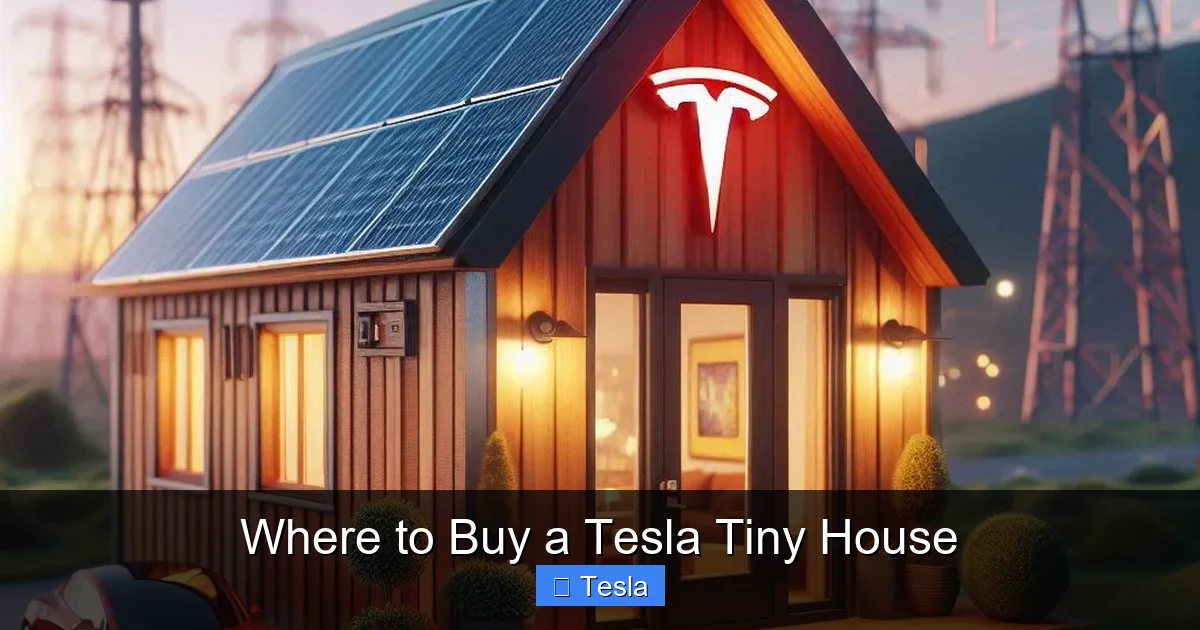
Visual guide about Where to Buy a Tesla Tiny House
Image source: elonbuzz.com
1. Specialized Tiny House Builders
This is the most popular route for a custom, code-compliant home. Companies across the US specialize in building tiny homes on wheels (THOWs) or foundation. They handle the trailer, frame, insulation, roofing, and basic shell. You then take delivery and install your Tesla system (or have them create a rough-in for it).
- How to Find Them: Search for “tiny home builder [your state/region].” Look at portfolios on Instagram and their websites. Reputable builders include Tumbleweed Tiny House Company, Tiny Heirloom, and many fantastic smaller local outfits.
- What You Get: A professionally built, often beautifully finished shell. They can often incorporate solar-ready roofs and wiring conduits for your future Powerwall and Wall Connector. Prices for a complete shell (no interior finishes) start around $60,000 and go up to $150,000+ for high-end custom work.
- Pro: You save immense time and get a structure engineered for travel and living. Builders know the common pitfalls.
- Con: It’s the most expensive option for the shell. You must ensure they are experienced with or willing to accommodate the extra weight and routing of solar equipment.
2. RV & Park Model Manufacturers
Companies that build travel trailers, fifth wheels, and park models are another fantastic source. Their products are built to RV standards (RVIA certified), which can simplify parking and insurance. Many now offer “tiny home” floor plans.
- How to Find Them: Visit RV shows, browse brands like Airstream (for the classic look), Lance Camper, or hip modern brands like nuCamp or Bowlus. Look for models under 400 sq ft. Some custom RV builders will modify a shell for you.
- What You Get: A lightweight, road-ready, often beautifully finished home with all RV systems (water,LP, electricity) pre-installed. They are built to handle movement.
- Pro: Often lighter than custom tiny homes, which is crucial for towing. Comes with full RV systems. RV certification can help with zoning (treated as an RV, not a permanent dwelling).
- Con: RV layouts can feel less “homey” and more like a camper. Storage and customization can be limited. The roof may not be ideal for heavy solar tile installation without reinforcement.
3. The DIY Route: Buy a Trailer & Build
For the true hands-on enthusiast, you can buy a bare trailer and build everything on top. This is the ultimate customization path but requires significant skill, time, and tool investment.
- How to Start: Purchase a new or used flatbed/gooseneck trailer from a manufacturer like Big Tex, PJ Trailers, or a local welder. Ensure it’s rated for your final weight (shell + Tesla batteries = heavy!). Then, you’re building from the ground up with plans from sources like Tiny House Design or YouTube tutorials.
- What You Get: Complete control over every dimension, material, and feature. You can design the roof pitch and structure specifically for your Tesla Solar Roof or panel layout. It’s often the most cost-effective for materials, but your labor is free.
- Pro: Lowest material cost, perfect integration from the start, immense personal satisfaction.
- Con: Requires advanced carpentry, electrical, and plumbing skills. Takes 6-18 months of full-time work. You are responsible for all engineering and inspections. A single mistake in framing can be catastrophic on the road.
Practical Example: Sarah, a DIY builder in Colorado, bought a 30′ gooseneck trailer for $8,000. She built a 350 sq ft stick-frame house on it, designing the roof rafters with 45-degree pitch to perfectly match the Tesla Solar Tile specifications she got from her installer during the design phase. This saved her from retrofitting later.
Integrating the Tesla System with Your Tiny House
This is the most critical technical phase. You cannot just slap a Powerwall on the wall. The tiny house’s electrical “nervous system” must be designed to work with it from day one.
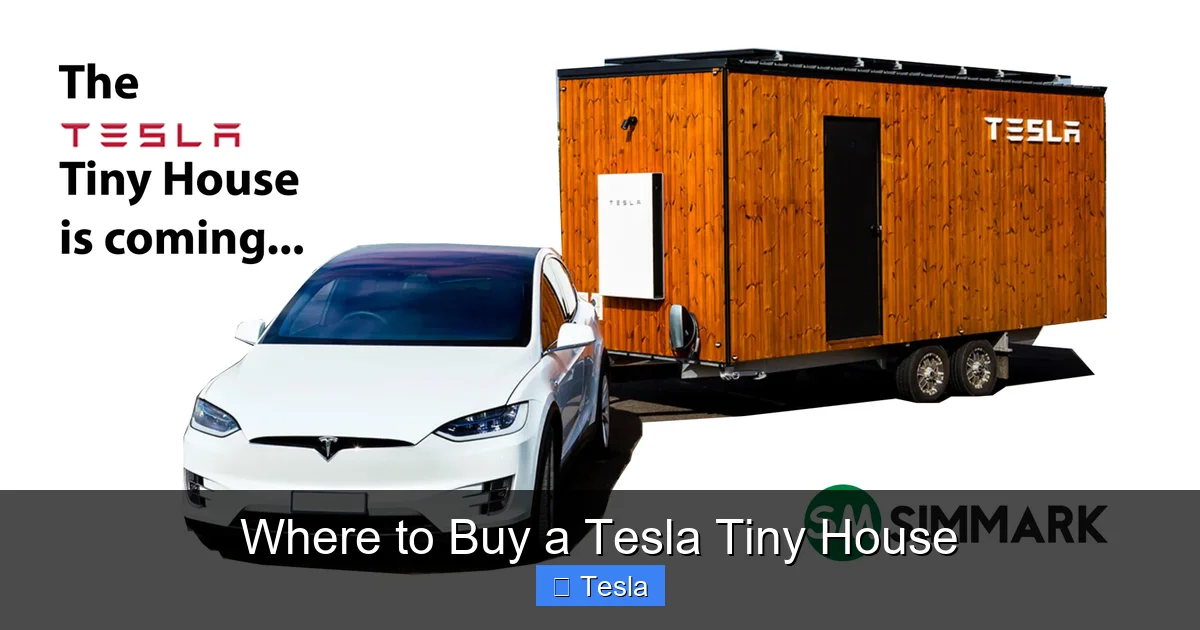
Visual guide about Where to Buy a Tesla Tiny House
Image source: simmark.com.au
The Essential Rough-In: Wiring & Space
Before you close up any walls, you must run the proper wiring and create dedicated spaces.
- Main Service Panel: Your tiny house will have a main breaker panel (like a 100-amp subpanel). Your Tesla Powerwall+ will connect to this panel via a dedicated 60-amp circuit. Your builder or electrician must leave a large conduit (1.5″ minimum) running from this panel to where the Powerwall(s) will live (usually an exterior mechanical room or a large interior closet).
- Wall Connector Circuit: The Wall Connector requires a dedicated 60-amp circuit (for the most common model). A separate conduit must run from your main panel to the exterior location where you’ll mount it (sidewall or rear).
- Physical Space & Ventilation: Powerwalls are about the size of a small refrigerator and weigh over 250 lbs each. They need a secure, level, well-ventilated mounting spot, typically against an exterior wall. Plan for this space in your floor plan. They can be stacked, but that requires specific mounting hardware and ceiling height.
- Pro Tip: During the shell build, have your Tesla-certified electrician come out for a pre-walkthrough. They can mark exactly where conduits need to be run and what space is required. This prevents costly rework later.
Working with Tesla-Certified Installers
You will hire a separate company for the solar and Powerwall installation. This is non-negotiable for warranty and tax credit purposes. Your tiny house builder should not do this unless they are also a licensed electrical contractor and Tesla-certified (rare).
- Finding an Installer: Use the “Find an Installer” tool on Tesla’s website. Enter your project address. It will show certified companies in your area.
- The Process: The installer will come, assess your tiny house roof (or ground-mount location), design the solar array size, and provide a quote that includes the equipment (Solar Roof or panels, Powerwall(s), Wall Connector) and all labor. They handle all permits, engineering stamps, and utility interconnection paperwork.
- Key Question to Ask: “Have you installed Powerwall systems on a structure on wheels, like a tiny house or RV?” Some installers are hesitant due to movement and mounting challenges. You need one with experience or a strong willingness to engineer a safe, permanent mounting solution that meets code.
Cost Breakdown: Budgeting for Your Tesla Tiny House
Let’s talk real numbers. A “Tesla tiny house” is a premium project. Here’s a realistic ballpark budget for a 300 sq ft home, fully powered.
Visual guide about Where to Buy a Tesla Tiny House
Image source: downsizegeek.com
- Tiny House Shell (Trailer + Build): $70,000 – $120,000. DIY on the low end, custom builder on the high end. This includes trailer, frame, insulation, exterior siding, roof decking, windows, doors, and basic interior framing.
- Tesla Energy System (Equipment + Install): $45,000 – $80,000+. A 4kW Solar Roof system (typical for a tiny home) with 2 Powerwalls and a Wall Connector, fully installed, falls in this range. Solar Roof tiles are significantly more expensive than traditional panels. A panel system would be on the lower end of this range. Remember: this is where a significant portion of the “Tesla premium” lives.
- Interior Finishes: $15,000 – $40,000. This is your cabinets, countertops, flooring, fixtures, toilet, shower, HVAC (mini-split), appliances, and furniture. High-end finishes (quartz, custom cabinets, propane range) push this up.
- Contingency & Incidentals: $10,000+. Always budget 15-20% for surprises, extra solar cable, specialty fasteners, and tools.
Total Project Estimate: $140,000 – $250,000+. Yes, it’s more than a traditional tiny house because you’re buying a top-tier, integrated energy system. The long-term payoff is near-zero energy bills and a resilient, high-tech home.
This is the make-or-break section for many. A beautiful, legal tiny house is useless if you can’t park it legally. This has nothing to do with Tesla, but everything to do with your project’s success.
Understanding the Three Main Legal Pathways
- As an RV (Recreational Vehicle): This is the easiest if your tiny house is built to RVIA standards by a manufacturer. You can often park it on your own property (check local ordinances), in RV parks, or on friend’s land with permission. It’s treated like a giant camper. Insurance is through an RV insurer.
- As an Accessory Dwelling Unit (ADU): Some counties/cities allow tiny houses on foundations as ADUs on single-family lots. This requires permanent utility hookups (septic or sewer, water, grid power) and passing permanent building codes. This path usually excludes a trailer-mounted home and makes your Tesla system a grid-tied solar setup (still great, but less off-grid).
- In a Tiny House Community: A growing number of dedicated communities have their own legal agreements and infrastructure. You buy or lease a lot. These are rare but fantastic options if you find one.
Actionable Research Steps
- Step 1: Identify your target county and city.
- Step 2: Search “[County Name] tiny house regulations” and “[City Name] zoning ordinance.” Look for keywords: “ADU,” “recreational vehicle,” “park model,” “minimum square footage.”
- Step 3: Call the local Planning & Zoning or Building Department. Ask directly: “Can I permanently park a habitable tiny house on wheels (built to RVIA standards) on a single-family zoned lot?” Be polite; they get few of these calls.
- Step 4: If RV parking is allowed, ask about duration limits (e.g., 30 days, 180 days) and permit requirements. Some places require a “temporary living quarters permit.”
- Step 5: Always get parking permission in writing from the landowner before buying or building.
Example: Spur, Texas, famously became the first “Tiny House Friendly” town with specific, welcoming codes. Counties in states like Oregon, Washington, and Tennessee are generally more friendly than strict urban areas in California or New York. Your research here is 50% of the battle.
Practical Examples & Pro Tips from the Field
Let’s bring this all together with two common scenarios and insider advice.
Scenario A: The Off-Grid Boondocker
Goal: Live completely independent of the grid, moving between public lands and remote sites.
- Structure: A custom-built, lightweight THOW on a triple-axle trailer. Aluminum framing, spray foam insulation, metal roofing (pre-installed with mounting rails for traditional solar panels).
- Tesla System: A 3kW system with traditional monocrystalline solar panels (cheaper, lighter, more flexible for angled roofs than Solar Roof tiles) and 2 Powerwalls. A 50-amp 240V shore power cord for rare campground hookups. The Wall Connector is a must for charging their Cybertruck from the stored power.
- Integration: The builder ran a 4″ conduit from the planned battery closet to the roof. The solar installer mounted the panel racking directly to the metal roof and ran wires down the conduit to the Powerwall location. They used a transfer switch to allow either solar or shore power to feed the main panel.
- Key Tip: For off-grid, every watt counts. Pair your Tesla system with a high-efficiency mini-split heat pump, an induction cooktop, and a heat pump water heater. Consider also reading our guide on how to charge a Tesla in various situations for insights on power management that apply to your own setup.
Scenario B: The Grid-Tied Urban Dweller
Goal: Live in a backyard ADU in a friendly city, minimizing bills and carbon footprint while connected to utilities.
- Structure: A factory-built park model tiny home from an RV manufacturer, placed on a permanent foundation with skirting. It has full plumbing connections.
- Tesla System: A 5kW Tesla Solar Roof (for aesthetics and durability) with 2 Powerwalls and a Wall Connector. The system is grid-tied with net metering, so excess power goes to the utility for credits. During outages, the Powerwalls provide backup to critical circuits.
- Integration: The manufacturer provided a full set of electrical blueprints. The solar installer designed the Solar Roof layout to avoid skylights and used the existing main panel location. They installed a dedicated subpanel for the Powerwall and critical loads (refrigerator, lights, outlets, Wall Connector).
- Key Tip: In an urban ADU, your roof orientation is fixed. Use Tesla’s online design tool to see exactly how many tiles you can fit and the expected production. South-facing is best. Also, look into local solar rebates that stack on top of the federal tax credit—this can save thousands.
Final Conclusion: Your Blueprint for Success
Building a Tesla-powered tiny house isn’t about buying a single product. It’s about becoming a savvy integrator of two worlds: the innovative, sustainable energy technology of Tesla and the timeless craft of small-space living. Your journey starts with deep research into your local zoning laws—do not skip this. Then, secure your tiny house shell from a reputable builder or through a meticulous DIY process, always with Tesla integration in mind. Finally, engage a Tesla-certified installer early to design your perfect energy system.
The result is a home that represents the future: incredibly efficient, energy-independent, and connected. It’s a significant investment of money and research, but for those who undertake it, a Tesla tiny house isn’t just a place to live—it’s a statement of innovation and self-reliance. Start by getting quotes from both a tiny house builder and a Tesla installer. See how the numbers and logistics align for your dream. The road is open, and the power is yours.
Frequently Asked Questions
Does Tesla actually sell a complete Tiny House?
No. Tesla does not manufacture or sell a complete, ready-to-move-in tiny home. They sell the energy components (Solar Roof, Powerwall, Wall Connector) that people use to power tiny houses they obtain from other builders or build themselves. The “Tesla Tiny House” refers to any tiny home equipped with these Tesla systems.
Can I use a Tesla Cybertruck to power my tiny house?
Yes, but with major caveats. The Cybertruck has a large battery and can supply power via its 120V and 240V outlets. For very small, temporary loads (charging a laptop, running a few lights), it can work. However, it’s not designed as a permanent home power source. You cannot directly connect it to your tiny home’s main panel like a Powerwall. You’d be using extension cords, which is unsafe for full-time living and lacks the automation and capacity of a dedicated Powerwall system.
What is the best Tesla battery for a tiny house?
The Powerwall+ is the standard and best choice for most tiny houses. It combines a 13.5 kWh battery with a solar inverter, making it a compact, all-in-one unit. For most tiny home loads (LED lights, fridge, laptop, efficient appliances), one Powerwall provides 1-2 days of backup. Two Powerwalls offer more security and can handle heavier loads like an EV charger or air conditioner running longer. The older, standalone Powerwall is less common now.
How much does a full Tesla tiny house setup cost?
A realistic total budget for a 300 sq ft Tesla-powered tiny house ranges from $140,000 to $250,000+. The tiny house shell itself (trailer and build) costs $70,000-$120,000. The Tesla energy system (Solar Roof/panels, 2 Powerwalls, Wall Connector, full installation) adds $45,000-$80,000. Interior finishes and contingency add another $25,000-$60,000. The Tesla system is the premium portion of the budget.
What are the biggest legal challenges for a Tesla tiny house?
The biggest challenge is parking and zoning legality, which is unrelated to Tesla. You must determine if your local government allows a habitable dwelling on wheels (often classified as an RV or park model) on your intended lot. Key questions: Is it allowed in your zoning district? Are there time limits (e.g., 30 days)? Do you need a permanent foundation for ADU status? Always get written confirmation from your local planning department before purchasing land or a tiny house.
Where can I find builders experienced with Tesla integrations?
Start with established tiny house builders whose websites showcase solar-ready designs or mention Tesla/Powerwall compatibility. During your consultation, ask explicitly: “Do you have experience coordinating with Tesla-certified installers?” and “Can you provide conduits and mounting locations for a Powerwall+ and Wall Connector?” You can also ask Tesla-certified installers if they have preferred or previous tiny house builder partners. The Tiny House Community Facebook groups and forums are also great places to ask for builder recommendations with solar experience.
