
Is a Jeep or a Truck Better in Snow?

Choosing between a Jeep and a truck for snow depends on your specific needs. Jeeps, especially Wranglers, excel in deep, unplowed snow with their exceptional articulation, short wheelbase, and robust 4×4 systems. Trucks, like the F-150 or Silverado, offer superior stability on packed snow and ice, greater payload capacity for hauling, and often more comfortable, road-friendly rides. The “better” vehicle is the one whose strengths align with your typical winter driving conditions and lifestyle requirements.
The first snowflake of the season brings a familiar question for many drivers: “Is my vehicle going to get me through this?” For those in the market for a capable winter warrior, the debate often narrows to two iconic American choices: the rugged Jeep and the powerful truck. But when it comes to the cold, white stuff, is a Jeep or a truck better in snow? The answer isn’t as simple as picking a brand. It’s about understanding the fundamental engineering differences and matching them to your winter reality. Let’s break down the snow-fighting capabilities of these two vehicle classes, from the physics of traction to the practicalities of daily life.
Key Takeaways
- Jeeps dominate in deep, off-pavement snow: Their superior approach/departure angles, high ground clearance, and short wheelbase allow them to plow through snow piles and navigate unplowed backroads where trucks might high-center or get stuck.
- Trucks excel on maintained roads and ice: Their longer wheelbase and heavier weight provide more stability and traction on icy highways and packed snow, making them safer and more confident for daily winter commutes.
- 4×4 systems differ in philosophy: Jeep’s part-time 4×4 (in most models) is a robust, low-range tool for severe conditions. Trucks often use sophisticated, full-time AWD or selectable 4×4 systems that balance on-road comfort with off-road capability.
- Payload and towing favor trucks: If you need to carry heavy winter gear, a snowmobile, or tow a trailer through snowy conditions, a truck’s vastly superior payload and towing capacity are decisive advantages.
- Tires are the ultimate equalizer: A front-wheel-drive car with quality winter tires can often outperform a 4×4 vehicle with all-season tires. The right tires are the single most important factor for snow safety, regardless of vehicle type.
- Consider your primary environment: A Jeep is a dedicated snow tool for rural, mountainous, or off-grid living. A truck is a versatile all-rounder better suited for suburban drivers who occasionally face snow but also need daily utility and highway comfort.
📑 Table of Contents
- The Core of the Matter: Philosophy and Design
- Traction Systems: 4×4 vs. AWD in the Snow
- Ground Clearance and Geometry: The Snow Plow Test
- Weight, Stability, and Handling on Ice
- Real-World Performance: Deep Snow vs. Packed Snow & Ice
- Cost, Practicality, and Lifestyle Considerations
- Making the Choice: Who Should Buy What?
- The Final Verdict: It’s About the Match, Not the Medal
The Core of the Matter: Philosophy and Design
At their heart, Jeeps and trucks are built for different primary missions, which dictates their performance in snow.
Jeep: The Uncompromising Off-Road Tool
Think of a Jeep, especially the iconic Wrangler. Its DNA is pure off-road capability. Every design choice—from the solid front and rear axles to the removable doors and roof—prioritizes durability and articulation over on-road comfort. This philosophy translates directly to snow performance. A Jeep’s goal is to keep moving forward over obstacles, whether those obstacles are rocks, mud, or deep snowdrifts. Its short, stubby wheelbase allows it to “plow” through snow rather than ride up on it. High ground clearance (often 10+ inches on a stock Wrangler Rubicon) means the undercarriage stays clear of deep snow pack. The classic part-time 4×4 system with a low-range transfer case is a mechanical masterpiece for torque multiplication, letting you crawl slowly and surely up a snow-covered hill without wheel spin.
Truck: The Versatile Workhorse
Modern full-size and mid-size trucks, like the Ford F-150, Chevrolet Silverado, or Toyota Tacoma, are engineering chameleons. Their primary design goal is to be a versatile tool for work and life. This means they must haul a heavy payload, tow a large trailer, and still provide a relatively comfortable, stable ride on the highway. Their longer wheelbases and wider tracks are fantastic for stability when loaded down or driving on slippery, maintained roads. Many modern trucks offer incredibly sophisticated all-wheel-drive or 4×4 systems with multiple drive modes (like “Snow” or “Slippery”) that intuitively manage power delivery to prevent wheel spin. They are built to be capable when needed, but unobtrusive the rest of the time.
Traction Systems: 4×4 vs. AWD in the Snow
This is where the technical details get crucial. Not all four-wheel-drive systems are created equal, and their operation in snow varies significantly.
Visual guide about Is a Jeep or a Truck Better in Snow?
Image source: quadratec.com
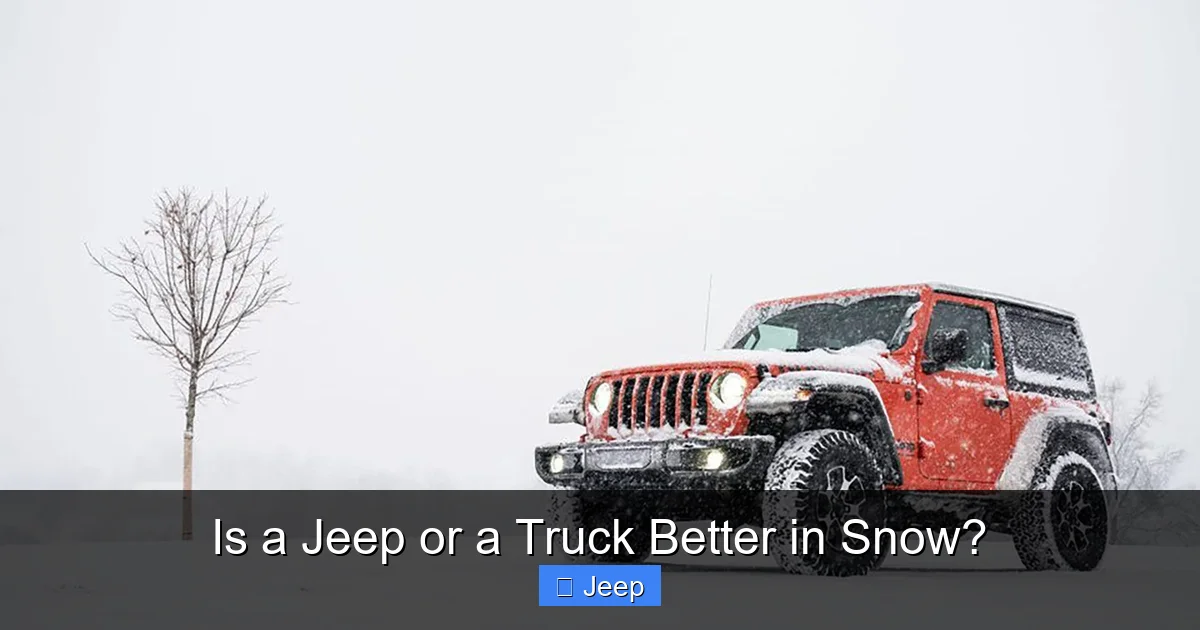
Jeep’s Part-Time 4×4: The Pure, Simple Warrior
Traditional Jeeps use a part-time 4×4 system. This means 2WD (usually rear-wheel) is the default for dry pavement. You manually select 4-High (4H) for slippery conditions like snow-covered roads or mud, and 4-Low (4L) for severe conditions requiring maximum torque, like climbing a steep, deep-snow bank. The key characteristic? There is no center differential. In 4H or 4L, the front and rear driveshafts are locked together at a fixed ratio. This is fantastic for traction in loose snow or off-road because both axles are forced to turn together. However, it is dangerous on dry pavement—the “binding” can cause drivetrain stress and loss of handling. You must disengage it on clear roads. This system is simple, robust, and incredibly effective when used correctly in snow.
Truck’s Full-Time AWD/4×4: The Intelligent, Seamless Partner
Most modern trucks, especially those aimed at daily drivers, use a full-time all-wheel-drive (AWD) or on-demand 4×4 system. These systems feature a center differential or a computer-controlled clutch pack that allows the front and rear wheels to rotate at different speeds. This means you can drive on dry pavement all the time without worrying about drivetrain binding. In snow, sophisticated computers constantly monitor wheel slip and can send power to the wheels with the most traction almost instantly. Many trucks even have a dedicated “Snow” mode that softens throttle response and starts the vehicle in 2nd gear to reduce wheel spin. This system is less mechanically brutal than a locked Jeep 4×4 but more than capable for 95% of winter driving scenarios, especially on packed snow and ice. For a deeper dive into how various systems manage low-traction situations, you might explore how features like Toyota’s Snow Button modify throttle and transmission behavior.
Ground Clearance and Geometry: The Snow Plow Test
Imagine you’re driving down a plowed road that has a 10-inch snowbank on the shoulder. Or you’re trying to navigate a deep, unplowed driveway. Here, geometry is everything.
Visual guide about Is a Jeep or a Truck Better in Snow?
Image source: jeepmodified.com
Approach, Departure, and Breakover Angles
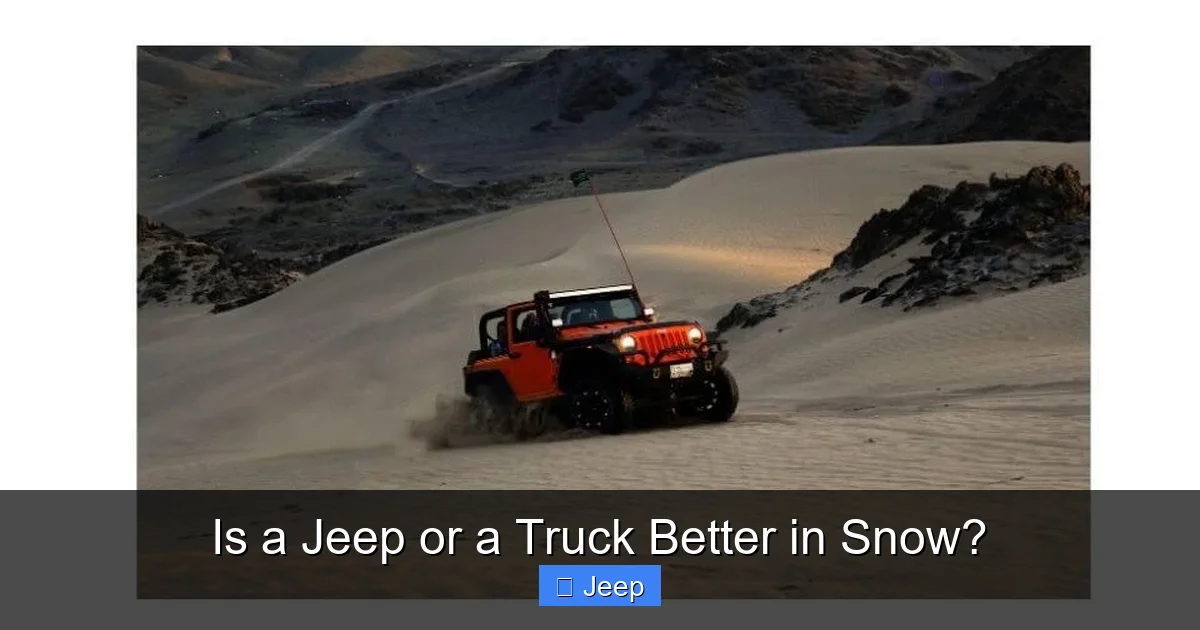
Jeeps are the champions here. The approach angle (how steep a hill you can climb without the front bumper hitting) and departure angle (how steep you can descend without the rear bumper dragging) are typically much higher on a Jeep due to its short overhangs. The breakover angle (how sharp a crest you can cross without the center scraping) is also superior. In deep snow, these angles mean the Jeep rides over the snow rather than into it. A long-bed truck with a big front grille and rear bumper will have much lower angles and is far more likely to high-center on a deep snow drift, leaving both axles spinning in the air.
Actual Ground Clearance
Stock, a Jeep Wrangler Rubicon offers about 10.8 inches of ground clearance. A stock Ford F-150 might offer 8-9 inches, though some trims with larger tires can exceed that. That 1-2 inch difference can be the gap between sailing through a snowdrift and getting stuck fast. Many truck owners “level” their trucks with larger tires, which can actually reduce effective ground clearance at the front axle, making them less capable in deep snow than their lifted, high-clearance Jeep counterparts.
Weight, Stability, and Handling on Ice
Now, flip the scenario. The snow has plowed into a hard, icy crust on the highway. The roads are slick and straight. Here, a truck’s characteristics become advantages.
Visual guide about Is a Jeep or a Truck Better in Snow?
Image source: motortrend.com
The Weight Advantage
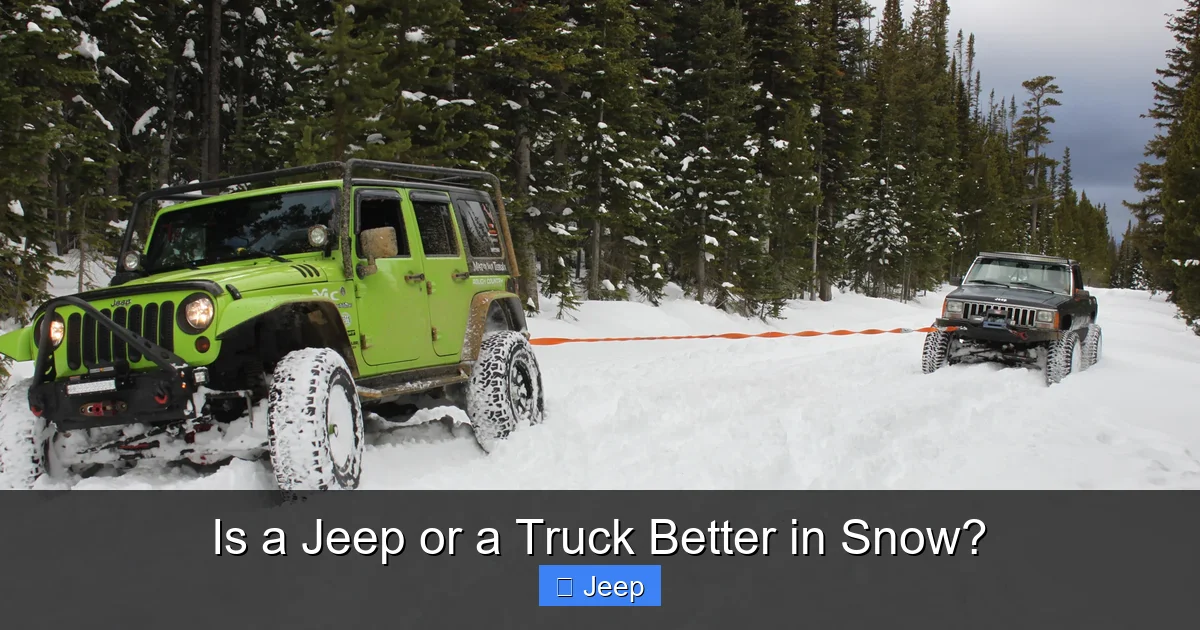
A full-size truck, especially a crew cab with a bed full of winter gear or sandbags, can weigh 1,000-2,000 pounds more than a similarly sized Jeep. Weight is your friend on ice. More mass means more downward force on the tires, which can improve traction on a surface with very little mechanical grip. A heavy truck feels more planted and less “nervous” on a slippery highway than a lighter Jeep, which can feel more susceptible to wind gusts and sudden slides. This added momentum also helps a truck power through slushy patches without slowing down as much.
Wheelbase and Stability
The long wheelbase of a truck is a major stability asset. It resists “fishtailing” and makes the vehicle’s path on ice more predictable. A Jeep’s short wheelbase is agile off-road but can feel twitchy on a long, icy straightaway. For drivers who spend most of their time on maintained, snow-packed or icy state routes and interstates, the truck’s stable, sure-footed feel is often preferred and can inspire more confidence.
Real-World Performance: Deep Snow vs. Packed Snow & Ice
Let’s put it all together in practical scenarios.
Scenario 1: The Unplowed Country Road
You live on a rural road that doesn’t get plowed until the next day, or you’re heading to a remote cabin. The snow is fresh, deep, and unconsolidated. Winner: Jeep. Its high clearance, short overhangs, and aggressive 4×4 system allow it to “bulldoze” through drifts and float over the snow surface. A truck, especially a long-bed model, will likely plow into the drift, build a wedge of snow against its front end, and come to a halt, high-centered with all wheels off the ground.
Scenario 2: The Icy Commute and Grocery Haul
Your daily drive is on roads that are plowed and treated but still icy. You also need to carry home a week’s worth of groceries, maybe some salt bags, and occasionally tow a small utility trailer. Winner: Truck. Its stable highway manners, comfortable cab, massive payload capacity (often 1,500+ lbs), and seamless AWD system make it the superior all-weather, all-purpose vehicle. You’ll feel safer and more in control on the slick roads, and you won’t be overloading the vehicle’s suspension.
The Critical Role of Tires
No discussion of snow performance is complete without this caveat: tires are 90% of the equation. A Jeep or truck on cheap, worn all-season tires will be dangerously useless in snow. Conversely, a front-wheel-drive sedan on premium true winter tires (like Bridgestone Blizzaks or Michelin X-Ice) will outperform a 4×4 on all-seasons in almost every winter scenario. The rubber compound and tread design of a dedicated winter tire are engineered to remain flexible in freezing temperatures and bite into snow and ice. If you own either a Jeep or a truck and live in a snowy climate, investing in a set of four quality winter tires is the single best safety and performance upgrade you can make. This principle also applies when comparing vehicles like a Subaru Outback with its symmetrical AWD, where tire choice remains paramount.
Cost, Practicality, and Lifestyle Considerations
Beyond pure performance, the “better” choice hinges on your budget and life.
Purchase Price and Fuel Economy
Generally, a comparably equipped truck will cost more than a Jeep. Full-size trucks command a significant premium. Fuel economy is also a factor. A heavy V8 truck will drink gasoline at a startling rate, especially in cold weather where engines work harder. A modern Jeep Wrangler with the turbo 4-cylinder gets surprisingly good mileage for its capability, but still lags behind a car. If your winter driving is mostly in-town, the fuel penalty of a large truck might be a deal-breaker.
Daily Comfort and Refinement
This is no contest. Modern trucks are significantly quieter, smoother-riding, and more feature-rich inside than any Jeep. The Jeep’s focus on off-road rigidity means more road noise, a bouncier ride, and wind noise (especially with the doors/roof off, which you won’t do in winter anyway). For a long winter commute, the truck’s cozy, car-like cabin is a major perk.
Payload and Towing: The Utility Factor
This is the truck’s home turf. Need to haul a snowmobile, a quad, a ton of firewood, or a large trailer? A truck does this effortlessly. A Jeep’s payload capacity is limited (often under 1,000 lbs), and while it can tow, its smaller size and less robust cooling systems make it less suited for heavy, long-distance towing in cold conditions. If “winter” means “snowmobile season” for you, the truck is your indispensable hauler.
Making the Choice: Who Should Buy What?
So, after all this, how do you decide?
Choose a Jeep if:
- Your winter driving regularly involves unplowed roads, deep rural snow, or backcountry access.
- You prioritize extreme off-road capability year-round (rock crawling, mudding) and want one vehicle to do it all.
- You love the open-air, adventurous lifestyle and value the iconic, rugged image.
- You can accept a noisier, rougher ride on pavement in exchange for off-pavement prowess.
Choose a Truck if:
- Your winter driving is primarily on maintained roads, highways, and in suburban/urban areas.
- You need serious payload capacity for work, hobbies, or family gear.
- You tow a boat, trailer, or camper, even occasionally.
- You value daily comfort, a quiet cabin, and a stable, confidence-inspiring ride on slick surfaces.
- You want one vehicle that is a comfortable daily driver 90% of the time and a capable winter machine 10% of the time.
It’s also worth noting that the lines are blurring. The new Jeep Gladiator is essentially a Jeep Wrangler with a truck bed, offering a unique blend. Meanwhile, trucks like the Toyota Tacoma and Ford Ranger have become incredibly capable off-road machines in their own right. For those considering a mid-size option, the debate might even extend to comparing a half-ton truck like the Nissan Frontier against a smaller Jeep model, where the differences in size and capability become more nuanced.
The Final Verdict: It’s About the Match, Not the Medal
There is no universal champion in the “Jeep vs. Truck for snow” debate. The better vehicle is the one that best matches your specific winter environment and lifestyle needs.
The Jeep is the specialist—a scalpel for cutting through deep, unplowed snow and conquering backcountry terrain. It is less refined but more mechanically focused on the sole task of forward progress over obstacles.
The truck is the generalist—a Swiss Army knife that provides outstanding stability, comfort, and utility for winter driving on maintained roads, all while possessing the muscle to haul heavy loads and tow when needed. It is the more practical and comfortable choice for the vast majority of winter drivers.
Before you buy, honestly assess your worst-case winter driving scenario. If it’s a foot of fresh snow on a dirt road, lean Jeep. If it’s black ice on the morning commute followed by a trip to the hardware store, lean truck. And no matter which side you choose, budget for a set of four excellent winter tires. That decision will do more for your safety and confidence in the snow than any badge on the hood or the number of drive modes in your transfer case.
Frequently Asked Questions
Is a Jeep really better in deep snow than a 4×4 truck?
Yes, generally. A Jeep’s shorter wheelbase, higher ground clearance, and superior approach/departure angles allow it to navigate deep, unplowed snow without high-centering, where a longer-wheelbase truck is more likely to get stuck.
Are trucks safer on icy roads than Jeeps?
Often, yes. A truck’s longer wheelbase and heavier weight provide greater stability and momentum on slippery, packed snow and ice, making it feel more planted and predictable during highway driving compared to a lighter, shorter Jeep.
Can a 2WD truck with sandbags in the bed handle snow?
It can be surprisingly effective on packed snow and ice by adding weight over the rear axle for better traction. However, it will be severely limited in deep snow compared to any true 4×4 vehicle and offers no front-wheel traction for steering or hill climbing.
Do I need a lift kit on my Jeep or truck for snow?
Not necessarily. A stock Jeep Wrangler already has excellent clearance. A lift kit on a truck can sometimes reduce front-end clearance and change handling. For most drivers, quality winter tires are a far more effective and affordable upgrade than a lift.
What about fuel economy? Which is worse in winter?
Both suffer in cold weather, but a large V8 truck will typically have significantly worse fuel economy than a Jeep with a modern turbocharged 4-cylinder. The truck’s greater weight and aerodynamic drag also hurt efficiency.
Is there a vehicle that combines the best of both?
The Jeep Gladiator offers Wrangler-level off-road and snow capability with a truck bed. For a more road-friendly option, a mid-size truck like a Toyota Tacoma or Ford Ranger with a 4×4 system and good ground clearance is a strong compromise. Some may also consider a crossover SUV with advanced AWD for ultimate on-road winter comfort with decent light-off-road ability.
