
How to Charge a Jeep 4xe

Charging your Jeep 4xe is straightforward once you understand its plug-in hybrid system. You have three main options: standard Level 1 (120V), faster Level 2 (240V), and rapid DC Fast Charging. Your daily charging routine will most likely use Level 1 or 2 at home, while DC Fast Charging is best for road trips. This guide breaks down each method, estimated times, costs, and provides actionable tips to maximize your electric range and battery health.
Key Takeaways
- The Jeep 4xe is a Plug-in Hybrid Electric Vehicle (PHEV): It has both a gasoline engine and a rechargeable battery, allowing for short all-electric drives before the engine starts.
- Three Charging Levels Exist: Level 1 (120V outlet) is slow but convenient. Level 2 (240V outlet) is the recommended home/work solution. DC Fast Charging (public stations) is for quick top-ups on long trips.
- Charging Time Varies by Level and Battery Size: A full charge from empty takes about 2-3 hours on Level 2, 12-14 hours on Level 1, and 30-45 minutes via DC Fast Charging to 80%.
- Cost to Charge is Low: Filling the 17.7 kWh battery typically costs between $2.50 and $4.50 depending on your local electricity rates, far less than a gallon of gas.
- Charge Whenever Possible: To maximize electric-only driving and efficiency, plug in nightly. The vehicle’s system manages battery health automatically.
- Use the Jeep Connect App: This app lets you remotely start/stop charging, check status, and find public chargers, adding significant convenience.
- Public Charging Networks are Widely Available: Use apps like Electrify America, ChargePoint, or EVgo to find compatible DC Fast Charging stations along your route.
📑 Table of Contents
Understanding Your Jeep 4xe’s Plug-In Hybrid System
Before we talk about the “how,” let’s quickly cover the “what.” Your Jeep Wrangler 4xe or Grand Cherokee 4xe is a Plug-in Hybrid Electric Vehicle (PHEV). This means it has two power sources: a gasoline engine and an electric motor powered by a rechargeable battery pack. The battery is sizable (around 17.7 kWh) but not as large as a full EV’s. This gives you a valuable all-electric range—typically 20-26 miles depending on model and driving—for daily commutes and errands without using any gas. Once that electric range is depleted, the vehicle seamlessly switches to hybrid mode, using both the engine and motor for optimal efficiency. Understanding this dual nature is key to how to charge a Jeep 4xe effectively.
The beauty of the 4xe system is its flexibility. You can treat it like a normal hybrid and never plug it in (though you’ll miss out on huge savings and quiet EV mode), or you can plug in regularly to maximize electric miles. The goal is to keep the battery topped up as often as your lifestyle allows. The vehicle’s onboard computer is smart; it will use the battery first, then the engine, and even recharge the battery slightly during braking (regenerative braking). But for the best experience, you need to plug it in. Now, let’s get into the actual methods.
The Three Levels of Charging: From Slow to Super Fast
Charging infrastructure uses standardized “levels.” Think of them like different sized fuel pumps. Your 4xe is compatible with all three, but your day-to-day experience will be defined by Level 1 and Level 2. DC Fast Charging is a fantastic bonus for road trips.

Visual guide about How to Charge a Jeep 4xe
Image source: jeepfixes.com
Level 1 Charging: The Basic, No-Installation Method
Level 1 charging uses a standard 120-volt household outlet. The charging cord that comes with your Jeep (often called the “convenience cord” or “portable cord”) plugs into this outlet. It’s the simplest method—no special equipment or installation needed. You just plug the cord into any grounded three-prong outlet and then into your 4xe’s charging port, located behind a door on the driver’s side front fender.
How it works: The vehicle’s onboard charger converts the AC (alternating current) from your wall into DC (direct current) to fill the battery. This onboard charger has a limited capacity, so with Level 1’s lower power input, it’s a slow process.
- Power Output: ~1.4 kW (kilowatts)
- Time for Full Charge (0-100%): Approximately 12-14 hours.
- Best For: Overnight charging if you have no other option, or for topping up a few miles of range after a short trip. It’s reliable but not efficient for daily full charges if you deplete the battery regularly.
Practical Tip: Ensure the outlet you use is on a dedicated circuit and in good condition. Avoid using cheap, long extension cords, as they can cause voltage drop and potentially overheat. If you must use one, get a heavy-duty (12-gauge or lower) cord rated for outdoor use, and keep it as short as possible.
Level 2 Charging: The Recommended Home & Work Solution
This is the sweet spot for most Jeep 4xe owners. Level 2 uses a 240-volt outlet, similar to what your clothes dryer or electric range uses. It requires the purchase and installation of a dedicated Electric Vehicle Supply Equipment (EVSE), commonly called a “home charging station” or “wall charger.”
How it works: The same onboard charger in your Jeep handles the conversion, but it receives power much faster from a 240V source, so it fills the battery in a fraction of the time. You can have an electrician install a 240V outlet (like a NEMA 14-50 or 6-50) and use a portable charger that plugs into it, or install a hardwired station like a JuiceBox, ChargePoint Home, or the Mopar-branded charger.
- Power Output: Typically 7.2 kW for the Jeep 4xe’s onboard charger (some models may vary).
- Time for Full Charge (0-100%): About 2-3 hours.
- Best For: Daily overnight charging at home or at the workplace. It’s fast enough to fully recharge the battery every night with normal use.
Installation Note: Always hire a licensed electrician. They will assess your home’s electrical panel capacity, run the appropriate wiring, and install the outlet or hardwired unit to code. This is a one-time cost that pays for itself in convenience. For a detailed breakdown of home charging setup costs, you can read our companion article on how much it costs to charge a Jeep 4xe, which includes installation estimates.
DC Fast Charging (Level 3): The Road Trip Power-Up
DC Fast Charging (DCFC) is completely different. Instead of using your vehicle’s onboard charger, these public stations deliver high-power Direct Current straight to the battery. This bypasses the onboard charger’s limit, allowing for extremely rapid charging. However, the 4xe’s battery management system limits the peak charging rate to protect the battery’s longevity.
- Power Output: Typically 50 kW to 150 kW, but the 4xe will accept up to about 50 kW.
- Time to 80%: Approximately 30-45 minutes.
- Connector Type: CCS (Combined Charging System). This is the large, combined plug that fits your 4xe’s port. CHAdeMO and Tesla connectors are not compatible.
How it works: You pull up to a public DCFC station (found at major highways, shopping centers, and dedicated EV charging hubs), plug the CCS connector into your vehicle, and initiate the session via the station’s screen or app. Payment is usually handled through an app or RFID card. The process is automated.
Important Caveats:
- Cost: DCFC is significantly more expensive per kWh than Level 1 or 2 at home. Prices are typically by the minute or by the kWh. It’s meant for convenience on long trips, not daily use.
- Battery Health: Frequent use of DCFC can generate more heat and may contribute slightly faster to long-term battery degradation. It’s best reserved for when you need it.
- Availability: The network is growing but still less dense than gas stations. Always plan your route using apps like PlugShare, Electrify America, or the built-in Jeep Connect app to ensure stations are operational and compatible before you need one.
Step-by-Step: How to Charge Your Jeep 4xe at Each Level
Now for the practical, hands-on part. The process is intentionally simple, but let’s walk through it for each scenario.
Visual guide about How to Charge a Jeep 4xe
Image source: jeepfixes.com
Charging with Level 1 (120V Outlet)
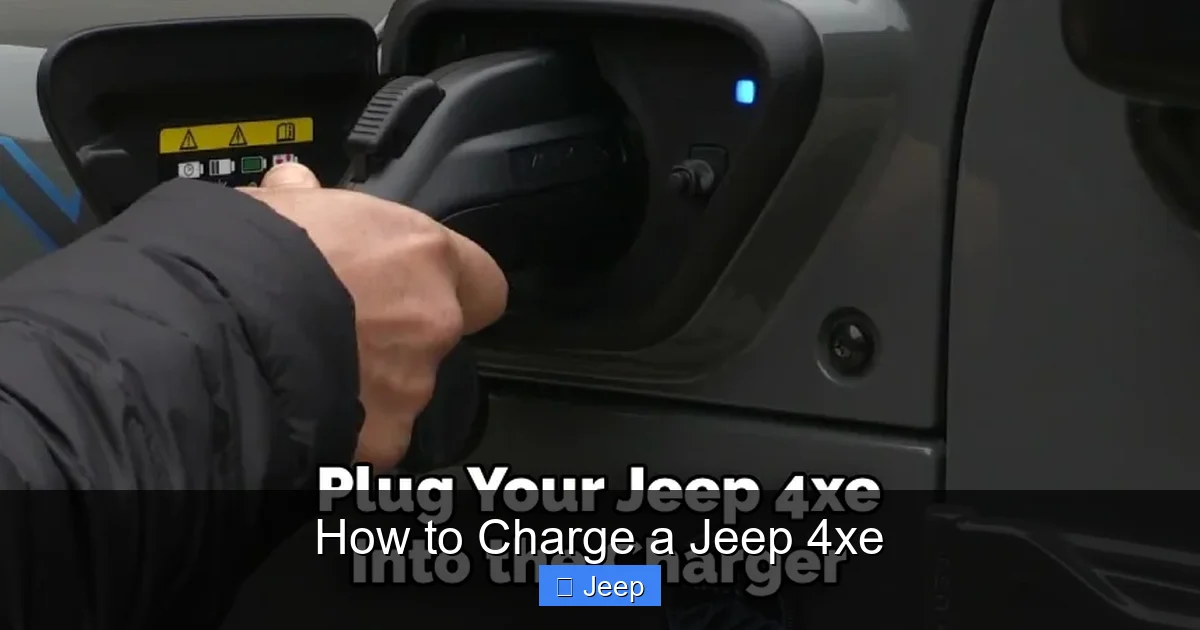
- Locate your vehicle’s charging port. It’s on the driver’s side front fender, behind a small door. Press the button on the key fob or the door itself to open it.
- Unwrap the portable charging cord stored in your vehicle (usually in the cargo area).
- Plug the cord’s connector into your 4xe’s charging port. You’ll hear a click. The charging port light will illuminate (usually amber for ready/charging, green for complete).
- Plug the other end of the cord into a standard, grounded 120V wall outlet.
- Check your vehicle’s touchscreen. Go to the “Vehicle” or “Energy” menu to see charging status, estimated time to full, and electric range gained.
- The vehicle will automatically manage the charge. It will stop when full. You can unplug at any time, but it’s best to let it finish for a full battery.
Safety Reminder: Ensure the outlet and cord are dry. The system is weatherproof, but it’s good practice. The cord and port are designed for use in rain, but avoid standing in water while plugging in.
Charging with Level 2 (Home/Work Station)
- Park your 4xe and open the charging port as described above.
- Grab the connector from your wall-mounted EVSE. It will be permanently attached to the station.
- Press the connector’s button (if it has one) and firmly insert it into your vehicle’s port until it clicks.
- The station and your vehicle will “handshake.” Your 4xe’s screen and the station’s display will confirm charging has begun.
- You can often schedule charging times through the station’s app or the Jeep Connect app to take advantage of lower electricity rates at night.
- When charging is complete (or you’re ready to leave), press the button on the connector, wait for the click, and remove it. Return it to the holster on the station.
Pro Tip: Many Level 2 stations allow you to set a charging schedule directly on the unit or via an app. This is a great way to automate charging for off-peak hours, saving money. You can also monitor energy usage and costs over time.
Charging with DC Fast Charging (Public Station)
- Use an app or your vehicle’s navigation to find a compatible CCS DCFC station. The Jeep Connect app will show station locations, status, and estimated cost.
- Park at the station, open your charging port, and open the station’s connector bay.
- Lift the heavy CCS connector and firmly insert it into your 4xe’s port. It locks in automatically.
- Initiate the session. This is usually done by tapping a credit card on the station, using the station’s app, or tapping an RFID card from a charging network (like ChargePoint or Electrify America). Follow the on-screen prompts.
- Charging will begin immediately. You can watch the progress, kW rate, and cost accumulate on the station screen and your vehicle’s screen.
- Charging typically slows down as the battery fills, especially past 80%. You can stop the session early at any time via the station’s controls.
- When you’re ready to leave, end the session in the app or on the station screen. Wait for the connector to unlock (this may take 10-30 seconds after payment), then press the release button on the connector, remove it, and return it to the holster. Close your vehicle’s port door.
Key Reminder for DCFC: These stations are high-power. Never force the connector. If it doesn’t easily plug in or release, check for alignment and try again. The system is designed to be user-friendly, but the connectors are heavy and precise.
Maximizing Efficiency and Battery Health: Essential Tips
Charging is more than just plugging in. How and when you charge impacts your cost, convenience, and your battery’s long-term health. Here are the golden rules.

Visual guide about How to Charge a Jeep 4xe
Image source: adventurejeep.com
Charge Frequently, Not Deeply
Lithium-ion batteries, like the one in your 4xe, prefer shallow discharge cycles. Try to plug in whenever you’re at home, even if the battery isn’t completely empty. Keeping the state of charge between 20% and 80% for daily use is ideal for longevity. The vehicle’s software is designed to manage this, so there’s no need to worry about “memory effect” or needing to fully discharge occasionally. Just plug in when you park.
Embrace Scheduled Charging
This is the #1 tip for saving money and reducing grid strain. Use the Jeep Connect app or your Level 2 station’s scheduler to set charging to only occur during off-peak hours (usually late night to early morning). Electricity rates are often lowest then. You can plug in whenever you get home, but the actual charge won’t start until your set time. The vehicle will still be ready by morning.
Precondition the Cabin While Plugged In
On hot or cold days, use the Jeep Connect app to remotely start the climate control system while the vehicle is still plugged in. This heats or cools the cabin using grid power instead of draining the battery before you even start driving. It’s a huge comfort and efficiency win. You can also set departure times in the vehicle to automatically precondition the battery and cabin before you leave.
Know Your Real-World Electric Range
The EPA-rated electric range (e.g., 21 miles for the Wrangler 4xe) is a best-case scenario. Aggressive driving, extreme temperatures, using the heater or A/C heavily, and carrying a heavy load can reduce it significantly. Don’t push the battery to zero regularly. If your trip is 18 miles and your range reads 22, you’re probably fine. If it reads 19, consider using gas or finding a charger en route. The vehicle will warn you well before you’re out of electricity.
Use Public Charging Strategically
Don’t rely on public DCFC as your primary charging source. It’s expensive and can add unnecessary wear. Use it to extend your range on long trips when your battery is low and you need to get to your destination or the next charger. For a deeper dive into the nuances of public charging and cost comparisons, our article on how to charge a Jeep 4xe: essential charging tips covers this in more detail.
Winter and Extreme Weather Considerations
Cold weather reduces battery efficiency and regenerative braking effectiveness. Your electric range can drop by 30-40% in freezing temps. The battery also charges more slowly when cold. To mitigate this:
- Park in a garage if possible.
- Plug in whenever parked. The battery management system will use grid power to keep the battery at an optimal temperature.
- Use the preconditioning feature before unplugging and driving.
- Expect longer Level 2 charging times in very cold climates.
Frequently Asked Questions (FAQs)
How long does it take to fully charge a Jeep 4xe?
It depends entirely on the charging level. Using a Level 2 (240V) home charger, a full charge from empty takes about 2-3 hours. With a standard Level 1 (120V) household outlet, it takes 12-14 hours. DC Fast Charging can bring the battery from a low state to about 80% in 30-45 minutes.
How much does it cost to charge a Jeep 4xe at home?
It’s very affordable. With a 17.7 kWh battery and the U.S. national average electricity cost of about 16 cents per kWh, a full charge costs roughly $2.83. Your actual cost depends on your local utility rate and time of day. Using off-peak rates can drop it below $2. This provides 20-26 miles of electric driving, a tiny fraction of the cost of gasoline.
Can I charge the Jeep 4xe in the rain or snow?
Yes, absolutely. The charging connectors and vehicle ports are designed to be weatherproof and safe for use in wet conditions. The system will not allow a connection if there is moisture detected inside the port. Always ensure both the connector and your vehicle’s port are as dry as possible before plugging in for safety, but normal rain and snow are not a problem.
Will frequent fast charging damage the 4xe battery?
Occasional use of DC Fast Charging is perfectly fine and designed into the vehicle’s battery management system. However, frequent (daily) use can generate more heat and may contribute to slightly faster long-term battery capacity loss compared to slower Level 1/2 charging. For maximum battery lifespan, rely on Level 2 charging for your daily routine and use DC Fast Charging primarily for road trips when necessary.
Do I need a special electrician to install a Level 2 charger?
Yes. A Level 2 charger requires a dedicated 240-volt circuit, similar to an electric dryer. You must hire a licensed electrician to assess your home’s electrical panel, install the appropriate outlet or hardwired connection, and ensure everything meets local electrical codes. This is not a DIY project for safety and warranty reasons.
How do I find public DC Fast Charging stations for my 4xe?
Use smartphone apps and your vehicle’s built-in navigation. The best tools are the Jeep Connect app (which integrates with charging networks), PlugShare (shows all networks and user reviews), and apps from major networks like Electrify America, EVgo, and ChargePoint. Filter for “CCS” or “SAE Combo” connectors, which are compatible with your 4xe. Your vehicle’s navigation system will also often show nearby chargers and can plan trips incorporating charging stops.
Frequently Asked Questions
What is How to Charge a Jeep 4xe?
How to Charge a Jeep 4xe is an important topic with many practical applications.
