Does the Tesla Model 3 Roof Open?

Contents
- 1 Key Takeaways
- 2 📑 Table of Contents
- 3 Does the Tesla Model 3 Roof Open? The Straight Answer
- 4 The Design Philosophy: Why Tesla Chose a Fixed Roof
- 5 How Do You Get Fresh Air in a Model 3?
- 6 Aftermarket “Solutions”: The Risky Sunroof Conversions
- 7 Managing the Glass: Sun, Heat, and Tinting
- 8 Comparing to the Competition: Sunroofs in Other EVs
- 9 The Bottom Line: Is a Fixed Roof a Deal-Breaker?
- 10 Frequently Asked Questions

LED Indicator Light

Rear View Camera

Steering Wheel Cover

Car MP3 Player
No, the Tesla Model 3 does not have a roof that opens. Its signature feature is a large, fixed panoramic glass roof that is permanently sealed. You cannot pop it up, slide it back, or remove it. For ventilation, you must rely on the standard power windows and HVAC system. While aftermarket companies offer complex sunroof conversions, they are expensive, void warranties, and are not factory-approved. The design prioritizes structural rigidity, low noise, and a spacious feel over traditional open-air motoring.
Key Takeaways
- The Model 3 has a fixed glass roof: It is a single, sealed pane of glass that does not open, slide, or remove in any way from the factory.
- It’s a design feature, not a flaw: Tesla chose this for superior structural integrity, a quieter cabin, increased headroom, and an airy, open feeling without compromises.
- Ventilation relies on windows and HVAC: Fresh air enters through the standard four power windows and the sophisticated heating, ventilation, and air conditioning system.
- Aftermarket “sunroofs” exist but come with major risks: They involve cutting the roof, cost thousands, almost certainly void your vehicle warranty, and can compromise safety and water integrity.
- Managing sun and heat is key: Owners commonly use retractable sunshades, consider ceramic window tinting, and rely on the powerful A/C to manage the greenhouse effect from the glass roof.
- Repair/replacement is expensive: A damaged glass roof is considered a major structural component. Replacement costs are very high, often comparable to a new windshield but more complex, making comprehensive insurance crucial.
- For a true open-air experience, look elsewhere: If a convertible or traditional sunroof is a non-negotiable requirement, the Model 3 is not the vehicle for you. Consider a Roadster or other convertible EVs when they become available.
📑 Table of Contents
- Does the Tesla Model 3 Roof Open? The Straight Answer
- The Design Philosophy: Why Tesla Chose a Fixed Roof
- How Do You Get Fresh Air in a Model 3?
- Aftermarket “Solutions”: The Risky Sunroof Conversions
- Managing the Glass: Sun, Heat, and Tinting
- Comparing to the Competition: Sunroofs in Other EVs
- The Bottom Line: Is a Fixed Roof a Deal-Breaker?
Does the Tesla Model 3 Roof Open? The Straight Answer
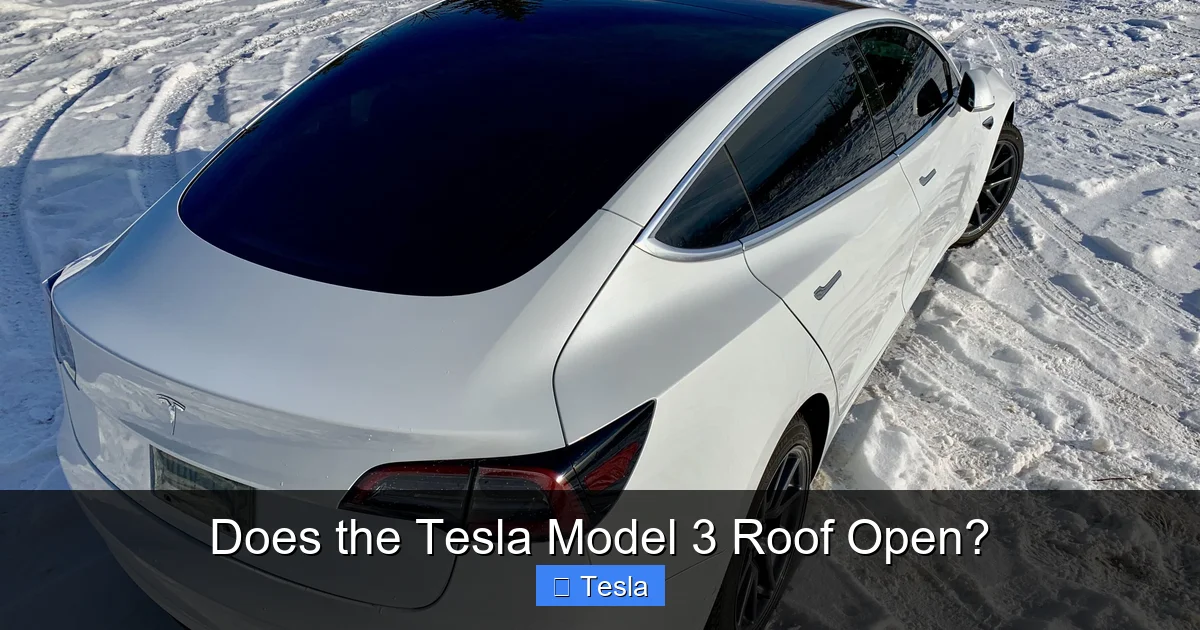
Let’s cut right to the chase, because this is one of the most common questions we get from new and prospective Tesla Model 3 owners: No, the Tesla Model 3 roof does not open. There is no button to press, no lever to pull, and no hidden mechanism that will make that vast expanse of glass slide back or pop up. From the factory, the Model 3 is equipped with what Tesla calls a “Panoramic Glass Roof,” and that’s exactly what it is—a single, fixed pane of glass that is permanently sealed into the vehicle’s body structure.
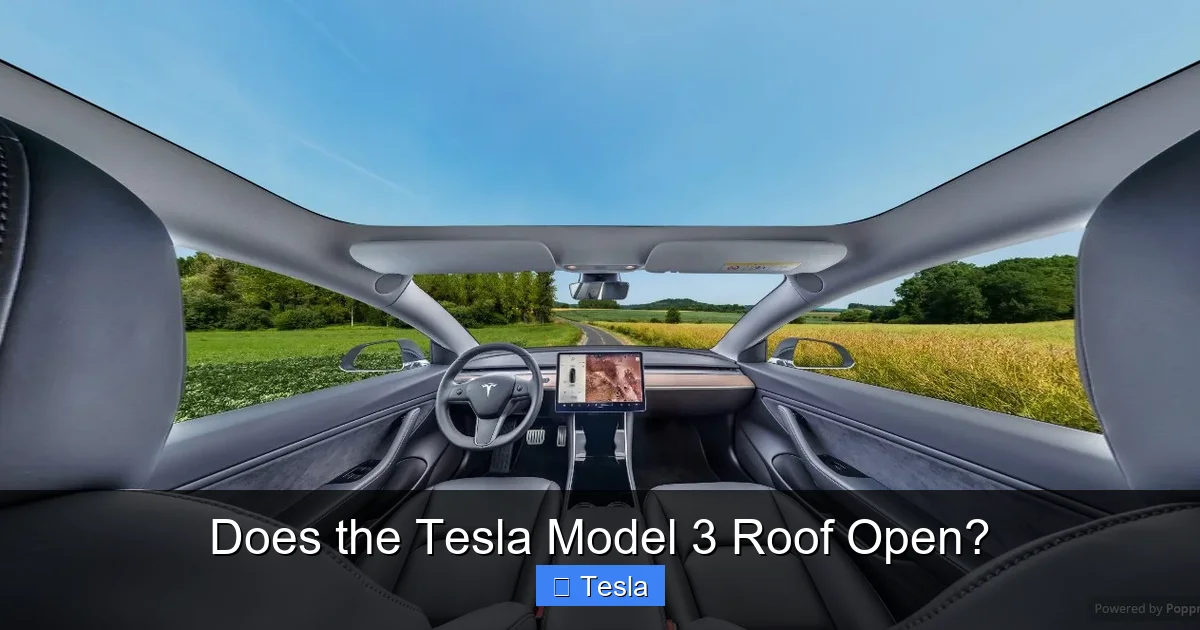
This design choice often sparks confusion. Many people are used to traditional sunroofs or even full convertibles. The idea of a “glass roof” naturally makes them think of a sunroof that happens to be very large. But in Tesla’s world, “panoramic glass roof” means a fixed window that offers an uninterrupted view of the sky above, creating a sense of openness and spaciousness inside the cabin that is simply unmatched by a small pop-up sunroof. It’s a philosophical difference in design intent. So, if your dream is to drive with the wind in your hair in your Model 3, we’re sorry to be the bearer of bad news—you’ll need to roll down the windows, just like in any other sedan.
The Design Philosophy: Why Tesla Chose a Fixed Roof
To understand why the Model 3 roof doesn’t open, it helps to look at the engineering and design goals behind it. Tesla didn’t accidentally forget to add a sunroof mechanism; they actively chose a fixed glass panel for several compelling reasons that align with the brand’s focus on performance, efficiency, and minimalist design.
Visual guide about Does the Tesla Model 3 Roof Open?
Image source: lh3.googleusercontent.com
Structural Rigidity and Safety
A vehicle’s roof is a critical structural component, especially in a rollover accident. A fixed glass roof, bonded directly to the metal cage around it, creates an incredibly rigid “monocoque” structure. This significantly increases the car’s torsional stiffness (how much it resists twisting), which improves handling precision, reduces cabin squeaks and rattles, and provides a superior safety cell for occupants. A sunroof, by necessity, requires a large cutout in that roof structure and a moving mechanism, which inherently creates a weaker point. Tesla prioritized ultimate structural integrity and a solid, quiet ride over the novelty of an opening panel.
Noise, Vibration, and Harshness (NVH) Suppression
One of the quietest cabins in the automotive world belongs to the Tesla Model 3. A major contributor to that silence is the absence of a complex mechanical sunroof assembly. There’s no motor, no tracks, no drainage channels, and no moving seals to create wind noise, rattles, or potential leaks. The fixed glass, with its acoustic-laminated properties, acts as a serene window to the world, keeping road and wind noise to an absolute minimum. For an EV where near-silence is a key selling point, this is a huge advantage.
Headroom and Spaciousness
Because there is no bulky sunroof cassette and motor assembly housed in the roof liner, the interior ceiling can be lower and flatter. This translates directly to more usable headroom for both front and rear passengers. The continuous glass surface also creates a psychological effect of vast, open space. It makes the cabin feel larger and more connected to the environment than a traditional metal roof with a small sunroof ever could. It’s an elegant solution to the problem of a claustrophobic-feeling car interior.
Aesthetic Minimalism
This is pure Tesla. The design language is one of clean lines and hidden complexity. The seamless glass roof is a single, beautiful form that flows from the windshield to the rear window. There are no unsightly sunroof buttons on the headliner, no tracks, no handles. It embodies the “less is more” philosophy and gives the Model 3 a strikingly modern and uncluttered interior aesthetic that many traditional sunroof designs disrupt.
How Do You Get Fresh Air in a Model 3?
If the roof is solid, how do you enjoy a breeze? The answer is straightforward and relies on the conventional methods that every car has, executed with Tesla’s typical polish.
Visual guide about Does the Tesla Model 3 Roof Open?
Image source: lh4.googleusercontent.com
The Power Windows
This is your primary and most effective method. All four doors have full-power, one-touch-down windows. Rolling down the front windows creates a significant draft. For a more balanced airflow, you can also crack the rear windows slightly. The system is quiet and responsive. A common trick for a gentle, distributed breeze is to open the front windows slightly (like an inch) and direct the HVAC vents to blow outside air. This creates a pleasant circulation without the buffeting of fully open windows at higher speeds.
The HVAC System: A Supercharged Air Handler
Tesla’s heating and cooling system is exceptionally powerful and efficient. It can cool or heat the cabin very quickly. The system features a high-efficiency cabin air filter (often a HEPA filter in earlier models) that scrubs the outside air before it enters. You have full control over fan speed, temperature, and airflow direction. For a “fresh air” feeling without opening windows, you can set the system to draw outside air (not recirculate) and point the vents to blow directly on you. In “Auto” mode, the car will manage temperature and fan speed intelligently, often using a mix of fresh and recirculated air for optimal comfort and efficiency.
The “Dog Mode” and “Camp Mode” Ventilation
These are unique Tesla features that leverage the HVAC system for specific scenarios. While not for driver comfort while driving, they are relevant to cabin airflow. Dog Mode keeps the A/C running while the car is parked and unattended, maintaining a safe temperature for pets. Camp Mode allows the HVAC system to run for up to 48 hours while the car is parked, perfect for sleeping in the car. Both modes continuously bring in and condition fresh air, demonstrating the system’s capability beyond just driver comfort.
Aftermarket “Solutions”: The Risky Sunroof Conversions
Where there’s a will, there’s a way—but this way is fraught with peril. A small niche of aftermarket shops, primarily in Europe and some in the US, offers “sunroof conversion” kits for the Model 3. They literally cut a hole in your fixed glass roof (or more commonly, the metal roof of a Model 3 Standard Range that came with a metal roof from the factory) and install a traditional sliding sunroof assembly.

Visual guide about Does the Tesla Model 3 Roof Open?
Image source: teslarati.com
How It Works (In a Nutshell)
The process is invasive. It involves:
- Carefully removing the original glass roof panel.
- Cutting an opening in the underlying metal roof structure (if applicable) or modifying the glass aperture.
- Welding or bonding in reinforcement frames for the new sunroof mechanism.
- Installing the sunroof cassette, tracks, motor, and new glass panel.
- Sealing everything meticulously to prevent leaks.
- Re-routing wiring and potentially modifying the car’s software to recognize the new component (though this is often not possible).
The Massive Downsides and Risks
1. Warranty Void: This is the biggest and most immediate risk. Tesla’s warranty explicitly states that unauthorized modifications to the vehicle’s structure, including the roof, will void the New Vehicle Limited Warranty for any related components. This means if you have a sunroof installed and later have any issue with the roof, the battery, the suspension, or even unrelated electrical gremlins that a dealer *might* link to the modification, you could be on the hook for thousands in repairs. Your power train and battery warranty could be at risk.
2. Structural Compromise: You are permanently altering the most critical structural element of the car. While installers add reinforcement, it will never be as strong or as integrally designed as the factory-unibody. This can affect crash safety, rollover protection, and long-term chassis rigidity, leading to potential squeaks, rattles, or misalignment over time.
3. Water Leaks and Rust: Creating a new, large moving seal in a body panel is a recipe for potential leaks. Improper installation can lead to water ingress during car washes or heavy rain, damaging the headliner, electronics, and causing rust inside the roof cavity. Fixing these leaks is often difficult and expensive.
4. Noise and Aerodynamics: The factory roof is engineered for silent, slipstream airflow. Adding a moving panel with tracks and a gap will almost certainly increase wind noise at speed and could negatively impact range (though likely minimally). The smooth, quiet ride of the Model 3 is a key part of its appeal.
5. Cost: These conversions are not cheap. Expect to pay $3,000 to $6,000+ for the kit and professional installation. For that money, you’re getting a compromised, warranty-voiding version of a feature that hundreds of conventional cars offer flawlessly from the factory.
The Verdict on Aftermarket Sunroofs
While technically possible, an aftermarket sunroof on a Model 3 is generally considered a poor value and a significant risk by experts and most owners. The joy of an occasional breeze does not outweigh the permanent loss of warranty, potential safety degradation, and risk of chronic leaks. It is the automotive equivalent of performing open-heart surgery on a world-class athlete. It might be done, but you’d be crazy to do it to your own.
Managing the Glass: Sun, Heat, and Tinting
The fixed glass roof’s biggest practical challenge is managing solar heat gain. On a hot, sunny day, the greenhouse effect can make the cabin noticeably warmer than a comparable metal-roofed car, especially with darker interior colors. This is where proactive measures come in, and this is where our internal linking becomes very relevant.
The Essential Sunshade
The single most effective and affordable accessory for a Model 3 glass roof owner is a high-quality, custom-fit retractable sunshade. These are typically made of a mesh or reflective fabric and magnetically or velcro-attach to the headliner. They deploy in seconds, blocking a huge percentage of direct sunlight and radiant heat before it enters the cabin. When not in use, they roll up and tuck away neatly. They are a must-have for anyone parking outdoors regularly. For a deeper dive into customizing your Model 3’s interior environment and protection, our guide on how much it costs to tint a Tesla Model 3 covers window film options that also help with this.
Window Tinting: More Than Just Style
While you cannot tint the glass roof itself (it’s a specific, laminated safety glass), tinting the four side and rear windows is a highly effective complementary strategy. A high-quality ceramic tint (not dyed film) with a high Total Solar Energy Rejected (TSER) rating will block a significant amount of infrared heat (the feeling of heat) while maintaining excellent visibility. This reduces the overall heat load on the cabin, taking pressure off the A/C system and improving efficiency. The legal limits for tint vary by state, so always check local regulations. The cost for a professional ceramic tint job on all windows typically ranges from $500 to $1,000. Our detailed article on how much to tint a Tesla Model 3 breaks down material choices, legal considerations, and professional installation.
Parking Strategy and Pre-Conditioning
Simple habits make a big difference. Whenever possible, park in shade or use a reflective windshield sunshade. Use the Tesla mobile app to pre-cool the cabin using the A/C while the car is still plugged in before you get in. This uses grid power instead of battery and ensures you step into a cool car, reducing the initial heat soak from the glass roof.
The Glass Roof and Windshield: A Costly Pair
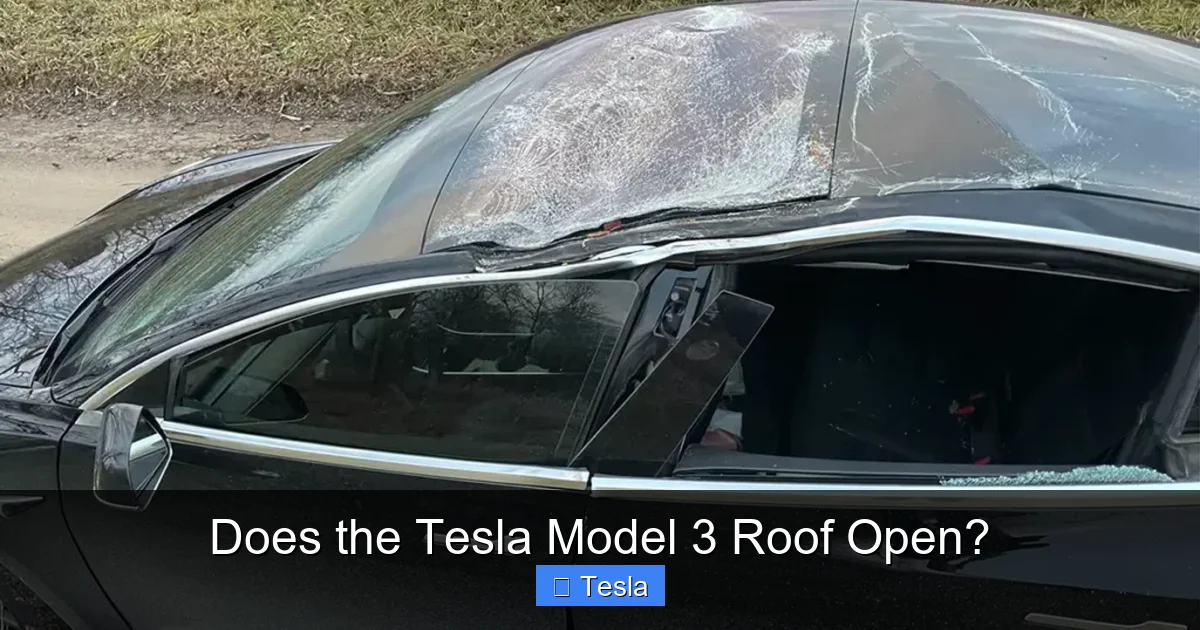
It’s important to understand that the panoramic glass roof is considered a structural, safety-critical component, much like the windshield. Damage from a major impact (like a large hailstone or a collision) often means full replacement. This is not a cheap auto glass shop job; it requires Tesla-specific parts and calibration. The cost can easily reach $2,000 to $4,000 or more, depending on the model year and region. Comprehensive insurance with a low deductible is strongly recommended. For context on glass replacement costs, see our piece on how much a Tesla Model 3 windshield is, as the principles and price points are similar for the roof.
Comparing to the Competition: Sunroofs in Other EVs
How does Tesla’s approach stack up against other electric vehicles? The market is split. Many traditional automakers transitioning to EVs have kept their familiar sunroof options.
- Ford Mustang Mach-E: Offers a large, conventional dual-panel panoramic sunroof that opens.
- Volkswagen ID.4: Available with a large panoramic fixed glass roof (similar to Tesla) or an opening panoramic sunroof depending on trim.
- Hyundai Ioniq 5 / Kia EV6: Offer a standard fixed glass roof. No opening sunroof option is available.
- Chevrolet Bolt EUV: Comes with a standard fixed glass roof.
- Porsche Taycan: Offers a sophisticated, large-opening panoramic sunroof as an option.
- Rivian R1T/R1S: Feature a fixed panoramic glass roof as standard.
The trend, especially among dedicated EV platforms, is moving toward fixed glass roofs for the same reasons Tesla uses them: structural, acoustic, and spatial benefits. However, brands with deep internal combustion heritage (like Ford and VW) often offer the traditional opening sunroof as a nod to customer familiarity. The Tesla Model Y also shares the fixed glass roof design philosophy with the Model 3. If you’re cross-shopping, this is a key differentiator to note.
The Bottom Line: Is a Fixed Roof a Deal-Breaker?
For the vast majority of Tesla Model 3 buyers, the fixed glass roof is not a deal-breaker; in fact, it’s a celebrated feature. The sense of spaciousness, the silent ride, and the uncluttered interior are frequently cited as favorite aspects of the car. The ability to open the roof is a low-priority “nice-to-have” for most, easily compensated for by excellent climate control and, when desired, rolling down the windows.
However, if you are someone who prioritizes an open-air driving experience above all else—if you dream of a sunroof you can open on a cool evening or a convertible for summer drives—then the Model 3 will always feel like a compromise. You will be constantly aware of the roof you cannot open. For that specific desire, you might be better served by waiting for the next-generation Tesla Roadster (which promises a removable hardtop) or looking at a convertible from another brand, even if it means sacrificing some EV range or tech.
Ultimately, the fixed glass roof is a conscious design trade-off. Tesla bet that the benefits of rigidity, silence, space, and aesthetics would outweigh the loss of a traditional sunroof for their target audience. For the millions who have bought the car, that bet has paid off handsomely. Understanding that the roof doesn’t open is just the first step to appreciating why it was built that way.
Frequently Asked Questions
Can the Tesla Model 3 panoramic glass roof be opened at all?
No. The panoramic glass roof on all Tesla Model 3 variants is a fixed, sealed unit. It is not designed to open, slide, or be removed. Ventilation is provided solely by the power windows and the HVAC system.
How do I keep my Model 3 cool with the glass roof on a hot day?
Use a custom-fit retractable sunshade to block direct sunlight before parking. Apply high-quality ceramic tint to the side windows (where legal). Pre-cool the cabin using the Tesla app while the car is still plugged in. Always park in shade when possible. The powerful A/C system is very effective once the initial heat soak is managed.
Is it possible to get an aftermarket sunroof installed on a Model 3?
Yes, but it is highly discouraged. Such conversions require cutting into the roof structure, cost $3,000-$6,000+, and will almost certainly void your Tesla warranty. They also risk water leaks, increased noise, and compromised structural integrity. It is an invasive modification with significant downsides.
What is the cost to replace a damaged Model 3 glass roof?
Replacement is very expensive, typically ranging from $2,000 to over $4,000. The glass roof is a structural component, requiring Tesla-specific parts and precise installation. It is not a standard auto glass repair. Comprehensive insurance with a low deductible is essential to cover this potential cost.
Does the glass roof make the Model 3 less energy efficient?
In hot weather, the glass roof can increase cabin heat, causing the A/C to work harder and slightly reducing range. However, the effect is manageable with sunshades and tint. In cold weather, the glass may allow slightly more heat loss than a metal roof, but the overall impact on efficiency is minimal compared to the car’s other energy systems. The aerodynamic benefits of the smooth, fixed roof may offset some of this.
Is the panoramic roof covered under the Tesla New Vehicle Limited Warranty?
Yes, the glass roof is covered against defects in materials and workmanship for the duration of the New Vehicle Limited Warranty (4 years or 50,000 miles, whichever comes first). However, damage from impacts (hail, debris), scratches, or aftermarket modifications is not covered. Any unauthorized alteration, like an aftermarket sunroof, will void the warranty for the roof and potentially other vehicle systems.