
Why Is My Jeep Making a Humming Noise?

A humming noise in your Jeep is most commonly caused by worn wheel bearings or low differential fluid, issues that escalate quickly if ignored. This isn’t just an annoyance—it’s a critical safety risk that can lead to catastrophic failure and costly repairs; diagnosing the exact source with a professional is essential for your safety and your wallet.
Key Takeaways
- Check differential fluid: Low or contaminated fluid is a top cause of humming noises.
- Inspect wheel bearings: Worn bearings often hum; replace them to prevent damage.
- Examine your tires: Uneven wear or improper inflation can create a constant drone.
- Assess the transmission: Low fluid or internal wear may cause humming under load.
- Consider axle issues: Failing axle shafts or CV joints can produce a humming sound.
- Note driving conditions: Noise changes with speed? Likely rotating component issues.
- Seek professional diagnosis: A mechanic can pinpoint the exact source safely.
📑 Table of Contents
Understanding the Humming Noise in Your Jeep
You’re out on the trail or cruising down the highway, the Jeep’s familiar rumble under your feet, when a new sound slides into the mix—a steady, low hum that wasn’t there before. It’s not the engine, not the tires on rough pavement. It’s a persistent, almost melodic noise that seems to come from within the vehicle itself. If you’re asking, “Why is my Jeep making a humming noise?” you’re not alone. This is one of the most common auditory complaints among Jeep owners, from Wrangler veterans to first-time Grand Cherokee drivers. That hum is your vehicle’s way of sending an SOS—a signal that something in the complex dance of rotating parts isn’t moving as freely as it should.
The good news? Most causes of a Jeep humming noise are diagnosable with a keen ear and some basic know-how. The bad news? Ignoring it can turn a simple fix into a wallet-draining repair. In this guide, we’ll break down the usual suspects, walk through practical steps to pinpoint the source, and share real stories from the garage. Whether your hum is a recent development or a nagging old friend, understanding it is the first step to getting your Jeep back to its quiet, capable self.
The Usual Suspects: Common Causes of Jeep Humming Noises
When that humming starts, your mind might jump to the worst-case scenario. But more often than not, the culprit is one of a handful of well-known issues. Think of your Jeep as a symphony of moving parts—bearings, gears, tires—all designed to spin in harmony. When one falls out of tune, you hear it. Let’s tune into the most frequent sources of that unwanted hum.
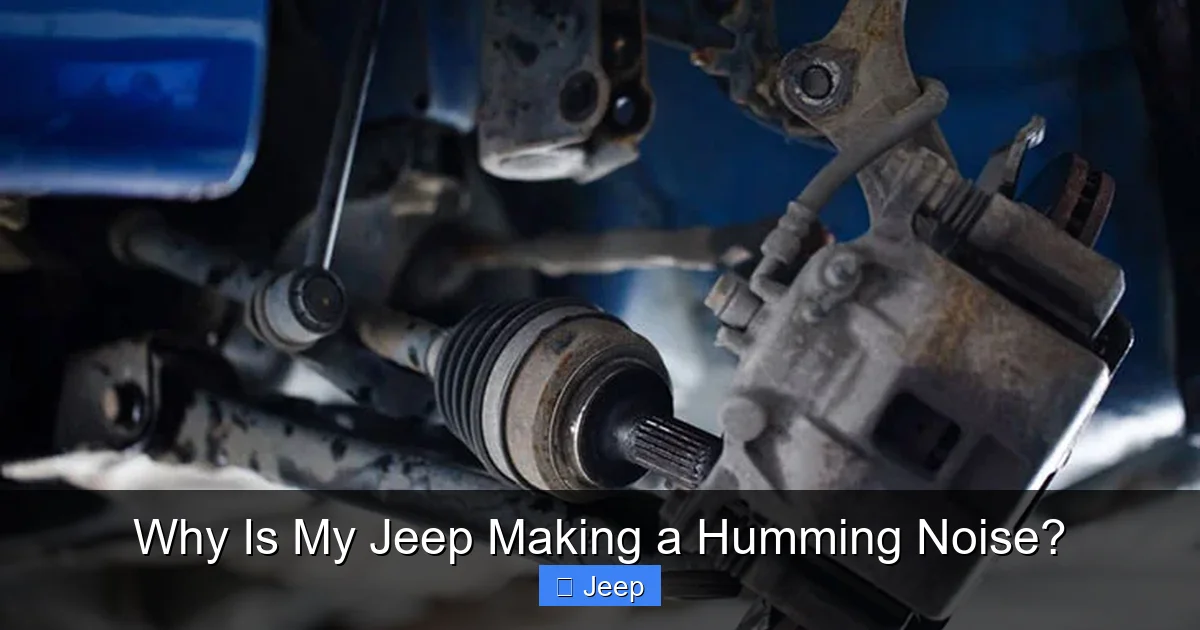
Visual guide about Why Is My Jeep Making a Humming Noise?
Image source: bryansgarage.com
Wheel Bearings: The Prime Culprit
If there’s a poster child for Jeep humming noises, it’s the wheel bearing. These small, steel balls or tapered rollers sit inside the wheel hub, allowing your wheels to spin with minimal friction. Over time, they wear out, lose lubrication, or get contaminated with dirt and water—especially if you take your Jeep off-road. A failing wheel bearing doesn’t just hum; it often produces a grinding or growling sound that rises and falls with your speed. You might also feel a subtle vibration in the steering wheel or floorboard, or notice the noise changes when you gently turn the wheel (e.g., louder when turning right, indicating a left-side bearing issue). In Jeeps with solid front axles, like the Wrangler, wheel bearings are a very common failure point due to the stress of off-road angles and heavy tires.
Differential Issues: Fluid, Wear, and Damage
The differential is the gearbox that allows your wheels to rotate at different speeds when turning. Inside, a set of pinion and ring gears mesh with carrier bearings. If the differential fluid is low, dirty, or the wrong type, these components can overheat and wear prematurely, creating a distinct humming or whirring noise. This sound usually comes from the front or rear of the vehicle and often changes with acceleration—getting louder as you press the gas. In 4×4 Jeeps, both the front and rear differentials can be sources. A metallic whine might indicate gear wear, while a deeper hum could point to bearing failure. Because differentials are enclosed, problems can escalate quickly without regular fluid checks and changes.
Tire Problems: Tread, Pressure, and Alignment
Sometimes the hum isn’t coming from inside the Jeep at all—it’s the tires singing on the pavement. Aggressive all-terrain or mud-terrain tires naturally produce more road noise due to their deep, blocky tread patterns. However, a new or changing hum can signal issues like uneven wear from improper inflation or misalignment. A tire that’s worn on one edge will hum at certain speeds. Similarly, tires that are out of balance will cause a vibration that can sound like a low hum, especially at highway speeds. Rotating your tires regularly and maintaining proper pressure are simple ways to rule out—or confirm—tire-related noise.
Transmission Whine: Gears and Bearings
Both automatic and manual transmissions can develop a whining or humming noise from worn bearings or gear sets. This sound is often most noticeable under load—when accelerating, climbing hills, or towing. In an automatic, it might change pitch as the transmission shifts. In a manual, it could be present in certain gears. For Jeep owners, this is particularly relevant in models with the infamous NAG1 (WA580) automatic transmission, which can develop a whine from the planetary gear sets as they age. Transmission noise usually emanates from the center of the vehicle and may be accompanied by shifting issues or fluid leaks.
Electrical and Accessory Factors
Less common but still possible are electrical or accessory-related hums. The alternator, power steering pump, or even aftermarket additions like winches, high-output alternators, or auxiliary lighting systems can generate a humming sound that varies with engine RPM (revolutions per minute). If the noise changes pitch when you rev the engine but not when you change vehicle speed, an accessory might be the source. A failing alternator, for example, can produce a high-pitched whine that gets louder as electrical demand increases (like when you turn on the AC or headlights).
To help you narrow down the source based on sound and behavior, here’s a quick reference table:
| Noise Characteristic | Likely Cause | Typical Location | Urgency Level |
|---|---|---|---|
| Hum that increases with speed, louder when turning in one direction | Wheel bearing | Near wheel area (front or rear) | High – Can lead to wheel lockup and unsafe driving |
| Constant hum from front/rear, changes with acceleration | Differential (fluid low or internal wear) | Axle area (under vehicle) | High – Can cause differential failure and leave you stranded |
| Speed-dependent hum with possible steering vibration | Tires (uneven wear, imbalance) | All around, often through steering wheel | Medium – Affects handling, fuel economy, and tire life |
| Whine under load, changes with gear shifts or throttle | Transmission | Center of vehicle | High – Can lead to catastrophic transmission damage |
| Changes with engine RPM, not vehicle speed | Electrical/accessory (alternator, pumps) | Engine bay | Low to Medium – Depends on component; may cause battery drain or failure |
Diagnosing the Noise: A Step-by-Step Guide
Now that you know the usual suspects, it’s time to play detective. Diagnosing a humming noise in your Jeep is like solving a mystery—you gather clues, test theories, and eliminate possibilities. You don’t need to be a mechanic to get started; many checks are simple and safe to do at home. The goal is to gather enough information to either fix it yourself or give your mechanic a clear picture, saving time and money.
Visual guide about Why Is My Jeep Making a Humming Noise?
Image source: smartvehiclecare.com
Listening Carefully: Note the Details
Your ears are your best tool. Next time you’re driving, tune in—but safely. Ask yourself: When does the hum start? Is it present as soon as you move, or only above 40 mph? Does turning affect it? Try gentle left and right turns on a quiet road. If the noise gets louder when turning left, the right-side components (right wheel bearing, right differential side) are often the culprit. What about braking? A hum that stops when you brake might point to a brake issue, not a bearing. Is it constant or pulsating? A pulsating hum could indicate a damaged tire cord. Record a short video with your phone’s audio to capture the sound—this is gold for a mechanic.
Simple Checks You Can Do at Home
With the Jeep safely parked on level ground and the parking brake set, you can perform these basic inspections:
- Tire Check: Inspect all tires for even tread wear, proper inflation (use your door jamb sticker for correct PSI), and any bulges or cuts. Rotate them if it’s been a while.
- Fluid Inspection: Check your differential and transmission fluid levels. For differentials, locate the fill plug (usually on the differential housing) and remove it—fluid should be level with the bottom of the hole. It should smell sweet and look clear; if it’s dark, gritty, or smells burnt, it’s bad. Transmission fluid on many Jeeps is checked with a dipstick; low or dirty fluid is a red flag.
- Wheel Bearing Spin Test: If you have jack stands and a safe workspace, lift one wheel off the ground at a time. With the vehicle in neutral, spin the wheel by hand. It should rotate smoothly and quietly. Listen for grinding or feel for rough spots. Wiggle the wheel vertically and horizontally—excessive play (more than a tiny bit) indicates a worn bearing.
- Accessory Test: Turn off all aftermarket accessories (winch, extra lights, etc.) one by one to see if the hum disappears. Also, try driving with the radio off and windows up to isolate the sound.
When to Call a Professional
If your home checks point to wheel bearings, differentials, or transmission, it’s time to call a trusted mechanic. These are complex, safety-critical components. Driving with a severely worn wheel bearing can cause the wheel to lock up, while low differential fluid can lead to a catastrophic failure that damages axles and gears. A professional will use specialized tools like mechanic’s stethoscopes, chassis dynamometers, or even road tests to pinpoint the exact location. Don’t delay—what might be a $200 bearing job now could become a $2,000 differential rebuild later.
The best lessons come from those who’ve been there. Here are anonymized but real cases from Jeep forums and service bays that highlight how a humming noise can manifest and be resolved.
Visual guide about Why Is My Jeep Making a Humming Noise?
Image source: smartvehiclecare.com
Case Study: The 2015 Wrangler’s Bearing Failure
Mike, an avid off-roader with a 2015 Wrangler Rubicon, noticed a low hum at highway speeds after a weekend of rock crawling. Initially, he thought it was the new all-terrain tires. But the hum persisted even after a rotation. His mechanic lifted the Jeep and spun the front wheels—the left front bearing had a gritty feel and emitted a faint grinding sound. The bearing had likely been damaged by water and mud intrusion during his off-road adventure. Replacing the wheel bearing and seal cost about $300 and silenced the hum. Lesson: Off-roading can accelerate bearing wear; regular inspection after deep water or mud crossings is wise.
Case Study: Differential Noise in a Grand Cherokee
Sarah’s 2017 Grand Cherokee developed a subtle hum from the rear at around 60 mph. She checked tire pressure and rotated the tires, but the noise remained. Her dealer performed a differential fluid analysis and found metal shavings, indicating internal gear wear. The culprit was a failing pinion bearing inside the rear differential. The repair involved a differential rebuild, costing over $1,500. Sarah learned that differential fluid should be changed every 30,000–50,000 miles, especially in 4×4 models used for towing or severe service.
Case Study: Tire-Induced Hum in a Cherokee
David’s 2018 Cherokee started humming shortly after he installed a set of aggressive all-terrain tires. The hum was most noticeable at 55–65 mph. An alignment check revealed significant toe-in (wheels pointed slightly inward), causing the tires to scrub against the road. An alignment corrected the issue, but the deep tread still produced some road noise—a normal trade-off for off-road traction. David now accepts a bit of hum for his tire’s capability, but knows it’s not a mechanical problem.
Preventive Maintenance to Avoid Future Humming
The best way to deal with a Jeep humming noise? Prevent it from happening in the first place. While some failures are due to age or manufacturing defects, many are avoidable with proactive care. Think of your Jeep like a trusted trail partner—regular check-ups keep it happy and quiet.
Regular Inspections and Fluid Changes
Stick to your Jeep’s maintenance schedule, especially for drivetrain fluids. Differential fluid should be changed every 30,000 to 50,000 miles (or as recommended for your model and usage). Transmission fluid changes are typically every 60,000–100,000 miles, but severe driving (towing, off-roading, extreme temps) may require more frequent service. During oil changes, ask your technician to inspect wheel bearings for play and leaks around axles and seals. Catching a small leak early prevents fluid loss and subsequent damage.
Proper Tire Care
Tires are your connection to the road and a frequent source of noise. Maintain proper PSI (check monthly), rotate them every 5,000–8,000 miles, and get an alignment at least once a year or after hitting a major pothole. If you switch to aggressive tires, research their road noise characteristics—some brands are quieter than others. Also, ensure your wheels are properly torqued; uneven torque can cause brake rotor warp, which can mimic a hum.
Addressing Small Issues Before They Escalate
That faint hum you’ve been ignoring for months? It’s not going away on its own. The moment you notice a new noise, start your diagnostic process. A minor wheel bearing issue can sometimes be monitored for a short time if it’s just starting to wear, but driving long distances with a bad bearing risks catastrophic failure. Similarly, a small differential leak can be fixed with a seal replacement before fluid levels drop dangerously low. Pay attention to other symptoms: leaks under the vehicle, changes in handling, or warning lights. Addressing problems early is almost always cheaper and safer.
Conclusion: Silence is Golden (But Safety First)
So, why is your Jeep making a humming noise? As we’ve explored, the answer is most likely one of a few common issues: a wearing wheel bearing, low or dirty differential fluid, tire problems, transmission whine, or an accessory. Each has its own telltale signs, and with careful listening and simple checks, you can often narrow it down yourself. Remember, that hum is your Jeep’s voice—it’s trying to tell you something’s off. Don’t ignore it.
While some causes are minor and inexpensive to fix, others can be serious safety concerns if left unattended. Your best move is to diagnose early, consult a professional when needed, and stay on top of preventive maintenance. A well-maintained Jeep isn’t just quieter; it’s more reliable, safer, and ready for whatever adventure lies ahead. Keep those ears open, and happy trails!
Frequently Asked Questions
Why is my Jeep making a humming noise when driving?
A humming noise that changes with vehicle speed is most commonly caused by a failing wheel bearing. It can also originate from the differentials, especially if you have aftermarket gears installed. The noise typically intensifies as you accelerate and may change when turning.
Is a humming noise from my Jeep dangerous?
Yes, a persistent humming noise can indicate a serious issue like a worn wheel bearing or damaged drivetrain component. Ignoring it can lead to a wheel seizing or a breakdown, which is unsafe. It’s best to diagnose the source promptly to avoid costly repairs or an accident.
Can bad tires cause a humming noise in my Jeep?
Absolutely. Uneven tire wear, improper inflation, or a specific aggressive tread pattern can create a consistent hum. This noise is usually directly tied to road speed. A tire rotation and inspection for cupping or uneven wear are good first steps in diagnosis.
What Jeep parts cause a humming noise besides wheel bearings?
The front or rear differential, especially with aftermarket ring and pinion gears, is a prime suspect. A failing transfer case or worn constant velocity (CV) axles can also produce a humming or whining sound. These noises often indicate insufficient lubrication or internal component wear.
My Jeep’s humming noise gets louder when I turn. What is it?
A humming noise that increases in volume when turning points strongly to a wheel bearing. The bearings on the side opposite the turn typically bear more load and thus make more noise. For example, a right turn often makes a left-side bearing noise louder.
How do I diagnose the source of the humming noise in my Jeep?
First, note if the noise changes with speed or steering input. A careful test drive can help isolate it to a wheel or the center drivetrain. A mechanic will often use a stethoscope or lift the vehicle to spin each wheel and listen for bearing noise. Checking differential fluid for metal shavings is also crucial.
