
Does Tesla Have a 12v Outlet

Yes, every Tesla comes with at least one 12V DC outlet, often called a “cigarette lighter” port. These outlets are designed for low-power accessories like phone chargers, dash cams, and air pumps. They are not suitable for high-draw devices like power tools or inverters for laptops. Understanding the location and power limits of your Tesla’s 12V outlet is key to using it safely and effectively.
You’re packing up your Tesla for a road trip. Phone charger? Check. Dash cam? Check. Portable air pump for the tires? You plug it into that familiar round socket in the center console, just like in your old gas car. But then a thought hits you: is this little port really the same? Can it handle a small fridge? A power tool? What about jump-starting another car? The question “Does Tesla have a 12V outlet?” seems simple, but the answer opens a window into the fascinating, dual-voltage electrical heart of your electric vehicle. Let’s pull back the hood and explore everything you need to know about that humble power point.
Key Takeaways
- Yes, Teslas have 12V outlets: All Tesla models are equipped with at least one 12V DC power outlet for accessories.
- Location varies by model: The outlet is typically in the center console or glovebox area, but exact placement differs between Model S, 3, X, Y, and Cybertruck.
- Strict power limits: The outlet is fused, usually at 10-15 amps. Exceeding this will blow the fuse and can damage the car’s electrical system.
- Not for high-power devices: Avoid using inverters, power tools, or other high-wattage electronics. It’s meant for small, low-amp accessories.
- Part of the 12V auxiliary system: The outlet is powered by the car’s 12V battery, which is separate from the main high-voltage traction battery that powers the motor.
- Accessories must be compatible: Use plugs that fit the round 12V socket. Many modern devices use USB, so a simple 12V-to-USB adapter is common.
- Fuse location is in the fuse box: If the outlet stops working, the most common fix is checking and replacing the specific 12V outlet fuse in the car’s fuse panel.
📑 Table of Contents
- What Exactly Is a 12V Outlet?
- Where to Find the 12V Outlet in Every Tesla Model
- Power Capabilities and Limitations: The Crucial Details
- What Can You Safely Power? (And What You Should Never Try)
- Safety Tips, Best Practices, and Common Pitfalls
- Troubleshooting: Why Your 12V Outlet Might Not Be Working
- The Bigger Picture: Why a 12V System Exists in a High-Tech EV
- Conclusion: Your Tiny, Mighty Power Portal
What Exactly Is a 12V Outlet?
Before we dive into Teslas, let’s clarify what we’re talking about. The “12V outlet” is the official name for what most of us grew up calling the “cigarette lighter” port. It’s a round, metal-lined socket that provides direct current (DC) power at approximately 12 volts from the car’s electrical system. Its original purpose was to heat a cigarette lighter element, but it quickly became the universal standard for aftermarket car accessories.
A Brief History of the Cigarette Lighter Port
This port became ubiquitous in the mid-20th century. By the 1990s and 2000s, it was the primary way to power everything from air compressors to cell phone chargers in any vehicle. The standard was so successful that it persists today, even in radically different cars like Teslas. The port provides a simple, robust, and relatively high-current connection (compared to USB) for devices that need more power than a standard USB port can deliver.
Technical Specs: It’s Not Exactly 12 Volts
Here’s a technical nuance: while called a “12V” outlet, the actual voltage when the car is running is typically between 13.2V and 14.4V. This is because it’s connected to the car’s charging system (the alternator in a gas car, the DC-DC converter in a Tesla). When the car is off, it draws from the 12V auxiliary battery, which provides a true 12V (or slightly less as it discharges). This slight over-voltage when running is normal and designed to charge that 12V battery.
Where to Find the 12V Outlet in Every Tesla Model
Yes, your Tesla has them. But they haven’t put them in the same spot across the lineup. Location is the first practical piece of knowledge. Tesla, in its minimalist design philosophy, often hides these ports to maintain a clean interior aesthetic.
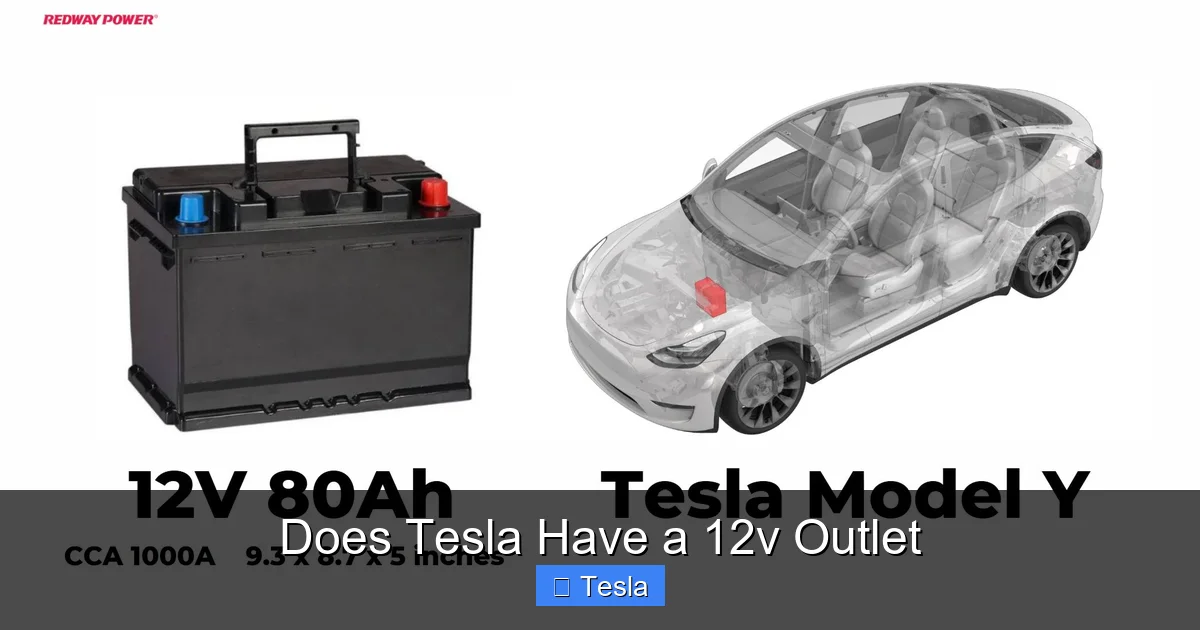
Visual guide about Does Tesla Have a 12v Outlet
Image source: redwaybattery.com
Model S and Model X: The Classic Placement
In the Model S and the falcon-wing-doored Model X, you’ll typically find a 12V outlet inside the center console storage bin. There’s often a small rubber cover you lift to access it. Some model years and trims may also have a second outlet in the rear center console or the glove compartment. The glovebox in these models is also powered by the 12V system, but it doesn’t have an outlet itself unless specified.
Model 3 and Model Y: Minimalist and Concealed
The more affordable Model 3 and Model Y take the concealment further. The primary 12V outlet is almost always located in the center console storage area, under a small, sleek flap. It’s a design that keeps the interior lines clean. In some newer Model Ys, there might be an additional outlet in the rear trunk for convenience. It’s always worth a quick check of your owner’s manual for your specific VIN and year, as Tesla has made small changes over time.
Cybertruck: Utility-First Design
As expected from a utility vehicle, the Cybertruck’s 12V outlets are placed for work. There is a prominent outlet in the front cabin’s center console. More uniquely, the Cybertruck’s bed and rear cargo area feature multiple 12V outlets and even 120V AC outlets, making it a mobile power station for tools and gear. This is a significant differentiator from the other models.
Pro Tip: Your Owner’s Manual is Your Best Friend
Never hesitate to consult your digital owner’s manual through the Tesla touchscreen. Navigate to the “Vehicle” or “Controls” section and search for “12V power” or “fuse box.” It will have the exact, authoritative diagram for your specific vehicle’s production year and configuration.
Power Capabilities and Limitations: The Crucial Details
This is the most important section. Knowing your Tesla has a 12V outlet is only half the battle. Understanding what it can and cannot power is critical to avoiding blown fuses and potential damage.
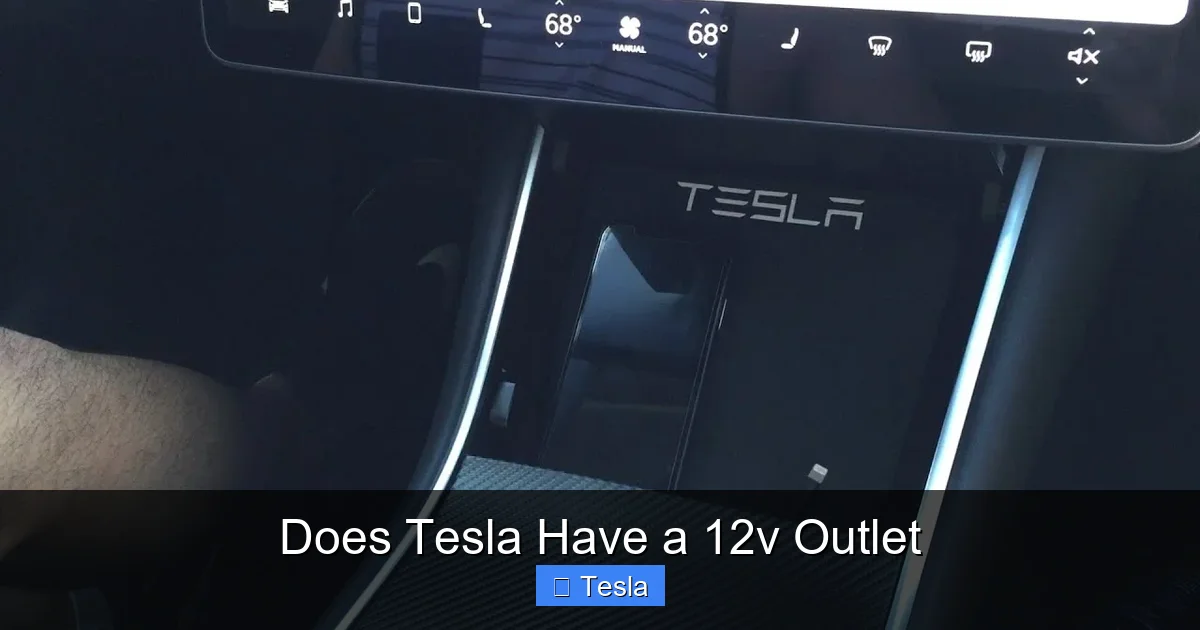
Visual guide about Does Tesla Have a 12v Outlet
Image source: i.ytimg.com
Fuse Ratings: The Hard Limit
Every 12V outlet circuit is protected by a fuse. This fuse is the gatekeeper. In nearly all Tesla models, the fuse for the primary front 12V outlet is rated at 15 amps. Some secondary outlets (like in the trunk) may have a lower rating, such as 10 amps. The formula is simple: Volts (V) x Amps (A) = Watts (W). At 12V and 15A, the theoretical maximum is 180 watts. However, you should never plan to draw more than 80% of that continuously, so a safe continuous load is around 140-150 watts.
What Does This Mean in Real-World Terms?
Let’s translate those numbers:
- A standard phone charger: 5-10W (No problem)
- A dash cam with hardwire kit: 5-15W (No problem)
- A portable tire inflator: 100-180W (May work intermittently, risk of blowing fuse if used for long periods)
- A small 12V cooler/fridge: 40-100W (Usually fine, check your specific model’s draw)
- A 150W power inverter for a laptop: 150W+ (Risky. The laptop might draw 65W, but the inverter itself is inefficient and draws more, likely tripping the fuse)
- A 12V power tool (drill, saw): 200-800W (Absolutely not. Will blow fuse instantly)
Comparison to a Standard AC Wall Outlet
A typical US household AC outlet provides 120V at 15 or 20 amps. That’s 1,800-2,400 watts—over ten times the power capacity of your Tesla’s 12V outlet. This comparison highlights why trying to run anything substantial through a 12V-to-AC inverter in your car is usually a failed experiment. For high-power needs in a Tesla, you’re looking at the vehicle’s own high-voltage system for propulsion, or for stationary use, a proper 220V outlet installation at your home for charging, which is a completely different, dedicated circuit.
What Can You Safely Power? (And What You Should Never Try)
Armed with the wattage limit, we can make a clear list. The 12V outlet is for convenience and low-power accessories.
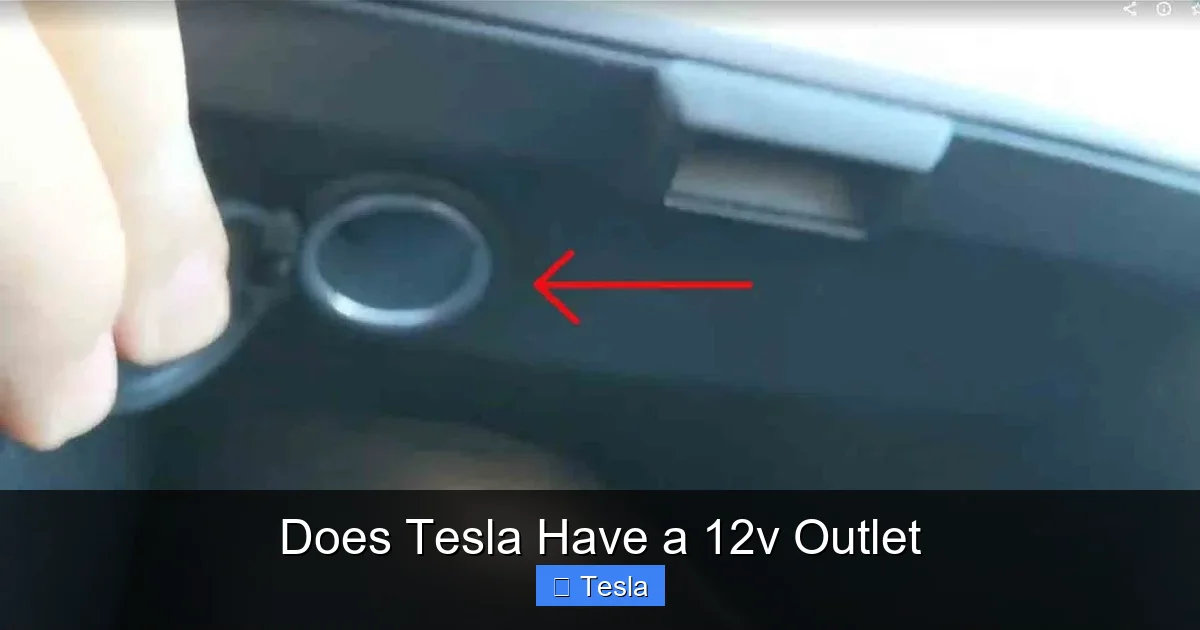
Visual guide about Does Tesla Have a 12v Outlet
Image source: i.ytimg.com
Perfectly Compatible Devices
These are the bread and butter of the 12V outlet:
- USB Chargers: Single or multi-port USB-A and USB-C chargers for phones, tablets, and headphones.
- Dash Cams: Most hardwired dash cam kits are designed for 12V sockets and draw minimal power.
- GPS Navigators & Radar Detectors: Older but still used devices that plug directly into 12V.
- Tire Inflators/Portable Air Pumps: Many are designed for 12V car use. Check the amperage rating; if it’s under 10A, you’re likely safe.
- Heated Seat Cushions or Steering Wheel Covers: These low-power warming accessories work well.
- Small 12V Refrigerators/Coolers: Thermoelectric coolers are ideal. Compressor-based fridges can be borderline; check specs.
- Vacuum Cleaners: Small, 12V-specific handheld vacs for cleaning out the car.
Devices to Avoid (The “Don’t Try This” List)
This is where people get into trouble:
- Power Inverters (12V to 110V/120V AC): Even a small 150W inverter is pushing the limit. The conversion process is inefficient, causing the actual draw from the 12V side to exceed the inverter’s rating. A 300W or 400W inverter will blow the fuse immediately and could overheat wires.
- Power Tools: Drills, saws, impact wrenches, etc., have massive startup currents (inrush current) that will destroy the fuse and possibly the outlet.
- Hair Dryers or Curling Irons: These are high-wattage heating elements. Not a chance.
- Booster/Jump Starters: Do not use a portable jump starter that plugs into the 12V outlet to try and jump-start the Tesla’s 12V battery. It won’t work effectively and can damage electronics. Tesla’s 12V system is sensitive. For a dead 12V battery, you must use the designated jump terminal under the front trunk (frunk) and follow the manual’s procedure precisely.
- “Daisy-Chaining” Multiple Adapters: Plugging one multi-port USB charger into another 12V-to-USB adapter increases resistance and risk. Use a single, high-quality multi-port charger directly in the socket.
Safety Tips, Best Practices, and Common Pitfalls
Using the 12V outlet is simple, but a few practices will keep you trouble-free.
The 80% Rule is Your Friend
Never plan to use more than 80% of the fuse’s rating continuously. For a 15A fuse, that’s 12A or ~140W. This safety margin accounts for heat buildup and voltage fluctuations, ensuring the fuse doesn’t nuisance-blow and protecting the wiring.
Quality Matters: Use Good Accessories
Cheap, no-name 12V chargers or inverters can be poorly made. They may have undersized wiring, poor connections that cause heat, or lack proper safety certifications. Spend a few extra dollars on a reputable brand with clear amperage/wattage ratings. Look for UL or CE marks.
Don’t Forget the 12V Battery’s Role
In a Tesla, the 12V battery is not the main power source for driving. It’s a critical auxiliary battery that powers all the computer systems, lights, wipers, and the 12V outlets. If the 12V battery dies, the car won’t turn on—even if the main battery is fully charged. Using the 12V outlet for long periods with the car off can drain this battery. It’s best to use accessories while the car is on or in “Accessory” mode. If you need to use something for a while with the car off, be mindful of the drain.
The Myth of the “Always-On” 12V Outlet
In some older cars, the 12V outlet stays live for hours after the car is locked. In most Teslas, the 12V outlets are switched—they only have power when the car is in “On” or “Accessory” mode, or sometimes for a few minutes after locking (for things like Sentry Mode). If you need constant power for a dash cam, you must use a hardwired kit that taps into a constant 12V source (like the fuse box) and has a low-voltage cutoff to protect the 12V battery. This is a common point of confusion.
Troubleshooting: Why Your 12V Outlet Might Not Be Working
If you plug in a known-good device and nothing happens, don’t panic. It’s almost always a simple fix.
Step 1: Check the Fuse
This is the #1 cause. The fuse has blown. This can happen from an overloaded device, a short in the accessory plug, or even a faulty device. You need to locate the fuse box. In most Teslas, there are two: one in the front (under the front trunk, near the windshield) and one in the rear (in the rear wheel well or under a trim panel in the trunk). The owner’s manual will have the exact diagram. Find the fuse labeled “12V OUTLET” or “POWER OUTLET.” Pull it with a fuse puller (usually provided in the fuse box) and inspect the metal strip inside. If it’s broken, replace it with a new fuse of the exact same amperage rating. Never use a higher-amp fuse.
Step 2: Inspect the Outlet and Plug
Look inside the outlet. Is there debris, dust, or a bent metal contact? Use compressed air to clean it gently. Check the plug on your accessory. Are the metal parts bent or damaged? A poor connection can cause arcing and fuse failure.
Step 3: Test with a Different Device
Rule out a faulty accessory. Try a simple, low-draw USB charger you know works.
Step 4: When to Call Tesla Service
If you’ve replaced the fuse and it blows again immediately with a known-good, low-draw device, there may be a short in the wiring or the outlet itself. This requires professional diagnosis. Also, if the outlet feels loose or the socket is damaged, it needs replacement.
The Bigger Picture: Why a 12V System Exists in a High-Tech EV
This is the fascinating part. Your Tesla is a high-voltage machine. Its main battery pack is a 350V-400V (or higher) system that powers the massive electric motor. So why keep an old, 12V lead-acid (or lithium) battery and all this low-voltage wiring?
Reliability, Safety, and Legacy
The 12V system is a legacy automotive standard that solves critical problems. First, safety. Many critical systems—like the steering lock, braking system electronics, and certain sensors—run on a stable, low-voltage DC system. Keeping these on a separate, isolated 12V circuit from the high-voltage traction battery adds a layer of safety and redundancy. Second, reliability and cost. The 12V ecosystem is mature. Billions of dollars of aftermarket accessories, from stereos to chargers, are designed for it. It’s simple, robust, and well-understood by technicians. Third, it provides a stable power source for the car’s computers even when the high-voltage system is completely off. The 12V battery acts as an uninterruptible power supply (UPS) for the car’s “brain.”
The DC-DC Converter: The Magic Box
So how does the high-voltage battery keep the 12V battery charged? Through a DC-DC converter. This is a critical component that steps down the high voltage (e.g., 400V) from the main battery to around 14V to charge the 12V battery and power the 12V outlets when the car is on. It’s essentially the EV equivalent of an alternator. If this converter fails, the 12V battery will drain, and the car will brick itself—a common failure mode that requires service.
Thinking About Power Needs: From 12V to 220V
Understanding the 12V outlet’s limits makes you appreciate the car’s primary purpose: movement. For charging the car’s main battery, you need a dedicated, high-power connection. A standard 120V household outlet can charge slowly, but for real convenience, a 220V/240V outlet installation is the gold standard. This is a major home electrical project, not something you do with a 12V adapter. The cost and complexity of installing a 220V outlet for your Tesla are significant because it’s wiring a dedicated, high-amperage circuit directly to your home’s electrical panel, completely separate from the car’s internal 12V system. It’s the difference between powering a phone and powering the entire house—they are on entirely different circuits.
Conclusion: Your Tiny, Mighty Power Portal
So, does Tesla have a 12V outlet? Absolutely. It’s your direct link to the car’s auxiliary power system—a simple, powerful, and limited portal. It’s perfect for the essentials: keeping your devices alive, running a dash cam, and inflating a tire. But it is not a substitute for a wall outlet or a generator. Its 15-amp fuse is a strict guardrail. Respect that limit, use quality accessories, and understand that this little socket is a legacy feature that keeps your Tesla’s advanced electronics humming reliably. When in doubt, check your owner’s manual, stay under 100 watts for continuous use, and remember: for the big jobs—like charging the car itself—you need the big power solution, a proper home charging installation that’s a world apart from this humble 12V port.
Frequently Asked Questions
Can I use a 12V outlet in my Tesla to jump-start another car’s 12V battery?
Technically, you could connect a donor car to the Tesla’s 12V outlet, but it’s not recommended. The Tesla’s 12V battery is not designed for high cranking amperage and you risk damaging the Tesla’s sensitive electrical system. Always use the proper jump terminal under the front trunk and follow Tesla’s manual, or use a dedicated portable jump starter.
Can I plug a 12V refrigerator into my Tesla’s outlet for a long road trip?
Yes, but with caution. A small thermoelectric cooler (40-60W) is generally safe. A compressor-based fridge can draw 5-10A (60-120W), which is near the limit. Ensure your specific fridge’s rated draw is below 10A, and use it while the car is on to avoid draining the 12V battery.
Will a 12V power inverter work in my Tesla to run a laptop?
A small 150W pure sine wave inverter might work intermittently, but it’s risky. The inverter’s inefficiency means it draws more than 150W from the 12V side, likely blowing the 15A fuse. It’s better to use a direct 12V-to-USB-C PD charger designed for your laptop, which is more efficient and safer.
Why does my Tesla’s 12V outlet stop working after I used a cheap air compressor?
>The most likely cause is a blown fuse. The air compressor probably drew too many amps, exceeding the 15A fuse rating. Replace the fuse with one of the same amperage. If the new fuse blows immediately with a different, low-draw device, the compressor may have shorted the outlet, requiring service.
Is the 12V outlet in my Tesla always powered, even when the car is locked?
In most Teslas, the 12V outlets are switched power. They are active only when the car is in “Park,” “Drive,” “Reverse,” or “Neutral,” or in “Accessory” mode. They typically turn off a few minutes after locking the car. For constant power (e.g., for a dash cam), you must hardwire it to a constant 12V source in the fuse box with a low-voltage cutoff.
Can I charge my Tesla’s main battery using the 12V outlet?
No. The 12V outlet provides a tiny fraction of the power needed to charge the main high-voltage battery. Charging the main battery requires a dedicated connector (the Tesla connector or J1772) that connects to a high-power source like a Wall Connector or Supercharger, which operates on the car’s high-voltage system.
