Are There Tesla Chargers in Yosemite?

Contents
- 1 Key Takeaways
- 2 📑 Table of Contents
- 3 Your Burning Question Answered: Are There Tesla Chargers in Yosemite?
- 4 The Two Vital Tesla Supercharger Locations Inside Yosemite
- 5 Understanding the Charging Logistics: What to Expect
- 6 Planning Your Yosemite Trip Around the Chargers: A Step-by-Step Guide
- 7 Alternatives, Future Plans, and What About Other EVs?
- 8 Essential Tips for a Flawless Tesla Yosemite Adventure
- 9 Frequently Asked Questions


Yes, Tesla does have dedicated Supercharger stations within Yosemite National Park, but they are limited to two primary locations. These chargers are crucial for exploring the park, as public charging infrastructure is sparse. Planning your charging stops using Tesla’s navigation is essential, especially during peak seasons when wait times can occur. Understanding the logistics, costs, and backup options will ensure your electric adventure to Yosemite is smooth and stress-free.
Key Takeaways
- Limited On-Site Charging: There are only two official Tesla Supercharger stations inside Yosemite National Park, located in Yosemite Valley and Wawona.
- Strategic Planning is Non-Negotiable: Always pre-plan your charging stops in Tesla’s navigation system before entering the park, as cell service is unreliable or absent in most areas.
- Peak Season Means Potential Waits: During summer and holidays, the Valley Supercharger can get busy. Charging during off-hours (early morning or late evening) is highly recommended.
- Costs Apply: Yosemite Superchargers are not free. Pricing is consistent with other Supercharger sites, typically billed per kWh or by time, depending on your Tesla account.
- Backup Plans are Critical: Have a contingency plan. Know the locations of the nearest non-Tesla (J1772) public chargers in gateway towns like Groveland, Mariposa, and Oakhurst.
- Vehicle Range Matters: Ensure your Tesla has sufficient range to reach the next charger. The park’s steep terrain and elevation changes can impact battery efficiency more than flat highway driving.
- Charging is Part of the Experience: Use charging time to rest, use facilities, or enjoy a meal. The Valley Supercharger is conveniently near the Visitor Center and shuttle stops.
📑 Table of Contents
- Your Burning Question Answered: Are There Tesla Chargers in Yosemite?
- The Two Vital Tesla Supercharger Locations Inside Yosemite
- Understanding the Charging Logistics: What to Expect
- Planning Your Yosemite Trip Around the Chargers: A Step-by-Step Guide
- Alternatives, Future Plans, and What About Other EVs?
- Essential Tips for a Flawless Tesla Yosemite Adventure
Your Burning Question Answered: Are There Tesla Chargers in Yosemite?
So, you’re dreaming of the iconic granite cliffs of El Capitan, the majestic waterfalls of Yosemite Valley, and the giant sequoias of Mariposa Grove. You’ve got your Tesla, you’re all about that electric lifestyle, and you’re ready for a national park adventure. But then it hits you: “What about charging? Are there Tesla chargers in Yosemite?” It’s the single biggest logistical question for any EV owner planning a trip to this remote, beautiful corner of California’s Sierra Nevada mountains.
The short answer is a relieved yes. Tesla has installed dedicated Supercharger stations within the boundaries of Yosemite National Park. However, the reality is a bit more nuanced. You won’t find a sprawling network of chargers on every corner. Instead, there are two strategically placed, vital stations that serve as lifelines for Tesla travelers. Understanding exactly where they are, how they work, and how to plan around them is the key to a fantastic, anxiety-free journey. Let’s break down everything you need to know, from the precise locations to pro tips that will make your charging experience as smooth as your Tesla’s acceleration.
The Two Vital Tesla Supercharger Locations Inside Yosemite
Forget what you know about dense urban Supercharger networks. In Yosemite, it’s all about these two critical outposts. Think of them as oases in the desert. Their placement is no accident; they’re located in the two most popular, vehicle-accessible hubs of the park.

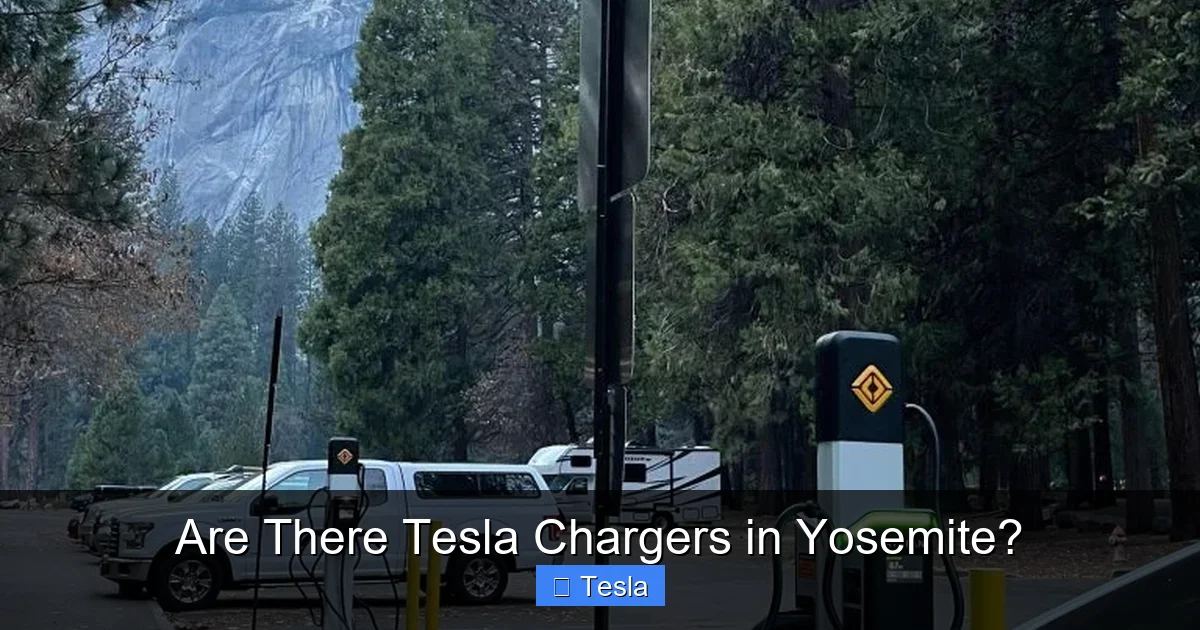
Visual guide about Are There Tesla Chargers in Yosemite?
Image source: driveteslacanada.ca
Yosemite Valley Supercharger: The Main Hub
This is the big one, the primary charging center for most visitors. It’s located at the Yosemite Valley Lodge/Curry Village area, right in the heart of Yosemite Valley. The station is easily visible from Southside Drive, near the confluence of the Merced River and the main road loop.
- Vault/Stalls: Typically 10-12 V3 Supercharger stalls.
- Proximity: You are steps away from the Valley Visitor Center, the main shuttle bus stops, restrooms, food services (at the lodge and grocery store), and trailheads. This is incredibly convenient.
- Atmosphere: Charging here feels like part of the park experience. You might see deer grazing nearby while your car powers up. It’s a busy, social spot during the day.
- Key Tip: This is the station with the highest demand. If you arrive mid-day in July, expect a line. Charging at dawn or after the last shuttle returns (around 5-6 PM) often means zero wait.
Wawona Supercharger: Gateway to the South
Located at the Wawona Hotel near the southern entrance of the park, this station serves a different purpose. It’s essential for anyone exploring the southern end of Yosemite—Mariposa Grove (the giant sequoias), the historic Wawona area, Glacier Point (when the road is open), or coming in/out of the south gate (CA-41 from Fresno).
- Vault/Stalls: Usually 6-8 V3 stalls.
- Proximity: Adjacent to the Wawona Hotel, the Mariposa Grove Welcome Center, and the trailhead for the sequoias. There’s also a general store and historic buildings nearby.
- Scenery: The setting is more rustic and historic than the Valley. You’re in a meadow with dramatic views of the surrounding mountains.
- Key Tip: This station is less crowded than the Valley’s, but it’s the only option for a large area. If you’re staying in the Wawona area or doing the Glacier Point hike, this is your charging base.
Important Note: There are no Tesla Superchargers at Tuolumne Meadows (high country, seasonal), Hetch Hetchy, or along the Tioga Pass (CA-120) until you reach Lee Vining outside the park. If your itinerary includes these high-elevation areas, you must plan to arrive with a full or near-full charge from the Valley or Wawona and have a buffer for the return trip.
Understanding the Charging Logistics: What to Expect
You’ve found the pins on the map. Great. Now, let’s talk about the actual experience of plugging in. It’s straightforward, but knowing the details removes all friction.
Visual guide about Are There Tesla Chargers in Yosemite?
Image source: driveteslacanada.ca
Cost, Speed, and Compatibility
Yosemite Superchargers are not a free perk of national park entry; they operate on Tesla’s standard billing. You’ll be charged either per kWh (if your Tesla account is set up for it) or by the minute. Rates vary by region, but you can expect prices similar to other California Supercharger sites—generally competitive with, but sometimes slightly higher than, local utility rates. Always check your Tesla app for real-time pricing before you plug in.
The chargers are V3 units, meaning they can deliver up to 250 kW of power. In reality, you’ll see speeds of 150-200 kW if your battery is low and the station isn’t sharing power with another car. This means you can typically add 150-200 miles of range in about 15-20 minutes. The key is to plug in with a low enough state of charge (SOC) to get the maximum speed, but not so low that you’re stressed. A good rule is to arrive with 10-20% SOC and charge to 70-80% for the next leg—this balances speed and battery health.
As for compatibility, these are exclusively for Tesla vehicles. The connectors are proprietary. Non-Tesla EVs (including other brands and Tesla vehicles with CCS adapters in Europe) cannot use them. This is a critical point if you’re traveling in a mixed-EV group.
The Golden Rule: Use Tesla Navigation
This cannot be overstated. Do not rely on third-party apps like PlugShare as your primary planning tool for Yosemite. While PlugShare is excellent for finding non-Tesla J1772 chargers in gateway towns, only Tesla’s in-car navigation has real-time, authoritative data on Supercharger availability and functionality. It knows if a stall is offline, if there’s a queue (in some regions), and will automatically route you to the optimal station based on your battery’s state and your destination.
Before you even cross the park boundary, set your destination inside the park (e.g., “Yosemite Valley Visitor Center”). The car will calculate the route, tell you exactly which Supercharger to use, and estimate your arrival SOC. It will also warn you if your battery buffer is too low for the terrain ahead. Follow its guidance religiously. Once inside the park, cell service is spotty to non-existent in the Valley and along most roads. Your pre-loaded navigation route will continue to work offline, but you won’t get live updates on Supercharger stall availability. This is why arriving at off-peak hours is your best strategy.
Planning Your Yosemite Trip Around the Chargers: A Step-by-Step Guide
Success in Yosemite with a Tesla is 90% planning. Here’s a practical framework to build your itinerary.

Visual guide about Are There Tesla Chargers in Yosemite?
Image source: tesla.dauger.com
Step 1: Calculate Your Real-World Range
Your Tesla’s stated range (e.g., 350 miles) is a best-case, flat-highway number. Yosemite will challenge that. You have mountain passes (Tioga Pass is 9,945 ft), steep downhill/uphill grades, and potentially cold mornings. A safe multiplier is to reduce your expected range by 25-30%. If your car says 300 miles, plan as if you have 210-225 miles of usable range for park driving. This conservative estimate is your safety net.
Step 2: Map Your Charging Stops from Gateway Cities
You’ll likely be coming from one of three directions: San Francisco Bay Area (CA-120), Central Valley/Fresno (CA-41), or the Sierra foothills (CA-140/CA-49). Each route has different charging opportunities before you hit the park.
- From Bay Area (CA-120): The last major charging opportunity before the park entrance is in Groveland. There’s a Tesla Supercharger at the Groveland Hotel and a few J1772s at the local Rite Aid. Charge here to 100% if you can, as the climb to Crane Flat and into the Valley is long and steep.
- From Fresno/CA-41: The last stop is in Mariposa. There’s a Tesla Supercharger at the Mariposa County Visitor Center. This is perfect for topping up before the final climb to Wawona and the Valley.
- From Merced/CA-140: The last stop is in Mariposa (same as above) or further north in El Portal (right at the park boundary, but fewer amenities).
Your goal is to enter the park with as much charge as possible. Use these gateway Superchargers to your advantage.
Step 3: Build a Daily Charging Schedule
Don’t wait until you’re at 5% to frantically search. Build charging into your daily rhythm.
- Day 1 (Arrival): Arrive at the Valley Supercharger with your buffer (e.g., 15-20%). Plug in, charge to 80% while you grab lunch at the Degnan’s Kitchen or the Yosemite Valley Lodge. This gives you plenty of range for the afternoon.
- Day 2 (Valley Exploration): You might not need to charge if your day’s driving is just the valley loop (about 7 miles). But if you’re doing longer drives to Glacier Point (when open) or up to Tuolumne Meadows, you’ll need to charge again. The best strategy is to charge overnight back at the Valley Supercharger or at your lodging if you have a J1772 outlet (some park lodges and campgrounds offer them, but they are slow Level 1/2 and must be booked far in advance).
- Day 3 (Exit/South Trip): If heading to Wawona/Mariposa Grove, charge at the Valley Supercharger before leaving. Use the Wawona Supercharger as your base for that area. If exiting via CA-41, you can often make it to the Mariposa Supercharger from Wawona with a comfortable buffer.
Step 4: Have a Non-Tesla Backup Plan
What if the Valley Supercharger is fully occupied with a 30-minute wait? You need a plan B. Here are your J1772 options outside the park:
- Groveland: Multiple J1772 stations at hotels, the Groveland Hotel, and Rite Aid.
- Mariposa: Several J1772s at hotels, the county visitor center, and the Mariposa Museum.
- Oakhurst: A handful of J1772s at hotels, the visitor center, and a few retail locations. This is your main backup if coming from the south and Wawona is full.
You will need a J1772 to Tesla adapter (the official “Tesla-to-J1772 Adapter” sold by Tesla) to use these. Always carry it in your trunk. These Level 2 chargers are much slower (adding 20-30 miles per hour), so you’d need a longer stop (2-4 hours). This is where a flexible lunch or dinner break can double as your charging time.
Alternatives, Future Plans, and What About Other EVs?
The Yosemite charging ecosystem is evolving. While Tesla has the only *dedicated fast chargers* in the park, the landscape is slowly changing for everyone else.
The Non-Tesla EV Experience in Yosemite
If you’re driving a Ford Mustang Mach-E, a Rivian, or a Chevy Bolt, your options inside Yosemite are currently non-existent for fast charging. There are no CCS or CHAdeMO fast chargers within the park. Your entire charging strategy must rely on the J1772 Level 2 stations in the gateway towns listed above. This makes a trip to Yosemite in a non-Tesla EV significantly more challenging, requiring much longer stop times and tighter range planning. It’s doable, but it’s a different, slower-paced adventure. For these drivers, PlugShare is an absolutely critical tool for finding and verifying those J1772 stations.
Future Expansion: What’s on the Horizon?
The National Park Service and third-party charging networks are aware of the demand. There are ongoing discussions and preliminary plans to bring more robust, universal fast charging (CCS) into national parks. However, as of now, there are no announced, concrete construction timelines for additional fast chargers within Yosemite. Tesla’s partnership with the park has given them the first-mover advantage. For the foreseeable future, the two-Supercharger model will remain the reality. Always check recent PlugShare updates and NPS announcements before your trip, as situations can change.
Gas Station Analogy: Think “Two Pumps in a Remote Town”
The best way to manage expectations is to compare Yosemite’s Superchargers to gas stations in a very remote town. There are only two. They work great, but if ten cars show up at once, there’s a line. You wouldn’t drive into that remote town with your gas light on, and you shouldn’t drive into Yosemite with your Tesla at 5%. Your strategy should mimic a careful road tripper in a gas car: fill up when you can, don’t wait until the last minute, and have a rough idea of where the next “pump” is.
Essential Tips for a Flawless Tesla Yosemite Adventure
Let’s bundle the wisdom into actionable, bite-sized pieces. These are the pro moves that separate a stressful trip from a magical one.
Charge Early, Charge Late
This is the #1 rule. The Valley Supercharger’s peak demand is between 10 AM and 4 PM, when tour buses, shuttle riders, and day-trippers are all moving around. If you can plug in at 7 AM before your hike, or at 7 PM after dinner, you will almost certainly have a stall waiting for you. Charging overnight at your lodging (if J1772 is available) is the ultimate luxury, freeing you from all daytime Supercharger anxiety.
Pre-Condition Your Battery While Navigating
As you drive towards the Supercharger, use Tesla’s “Navigate to Supercharger” feature. The car will automatically pre-heat or pre-cool the battery to the optimal temperature for charging. This can shave several minutes off your charging time, especially in cold weather. Let the car do its thing.
Pack for a (Potential) 30-Minute Wait
If you must charge during peak hours, be prepared to wait. This is where having a “charging kit” pays off. Pack a book, your tablet, a phone charger, and maybe a snack. The Valley Supercharger’s location is so good you can actually walk to the Visitor Center, use the restroom, or browse the gift shop while you wait for a stall notification in the Tesla app.
Know the Park’s Shuttle System
In Yosemite Valley, you do not need your car to get around. The free shuttle system is excellent and frequent. This is a huge advantage! You can plug in at the Supercharger, walk to your lodging or a trailhead, and spend the day without moving your car. This reduces the pressure to “get a spot and leave immediately.” Plan to leave your car at the charger for a few hours while you explore via shuttle.
Check for Station Outages
Before you commit to a day’s plan, open your Tesla app and check the status of the Yosemite Valley and Wawona Superchargers. The app will show if any stalls are offline. While the stations are generally reliable, a single-stall outage during peak season can exacerbate wait times. This quick check takes 10 seconds and can save you 30 minutes of frustration.
Consider Your In-Car Comfort
Spending 20-30 minutes in the car while charging is a great time to use Sentry Mode to monitor the vehicle, watch a show on Tesla’s theater, or simply blast the HVAC. If you have a Tesla Model Y, you might even appreciate the quiet cabin to take a quick power nap. For longer Level 2 charging stops, comfort is key. You might want to consider investing in a good Tesla Model Y car seat cover to keep your seats pristine during these extended sits, especially after a dusty hike.
Respect the Park and Other Drivers
Yosemite is a fragile, crowded place. When using the Supercharger:
- Don’t block stalls. Once charging is complete (80% is usually sufficient for the next leg), move your car promptly to a regular parking spot. Superchargers are for charging, not all-day parking.
- Keep noise down. The area around the Valley Supercharger is a shared space with campers and wildlife. Don’t blast music from your car.
- Pack out all trash. There are often no trash cans right at the charger. Be prepared to take your trash with you to a bin.
- Be patient and courteous. Everyone there is on the same electric adventure. A friendly wave goes a long way during a busy charging session.
Frequently Asked Questions
Are Tesla Superchargers in Yosemite free to use?
No, the Tesla Superchargers in Yosemite National Park are not free. They operate on Tesla’s standard pay-per-use billing, either by the kilowatt-hour (kWh) or by charging time, depending on your account settings. Pricing is similar to other Supercharger locations in California.
Can non-Tesla electric vehicles use the chargers in Yosemite?
No. The two Tesla Supercharger stations in Yosemite (Valley and Wawona) use Tesla’s proprietary connector and are exclusively for Tesla vehicles. Non-Tesla EVs must rely on the slower J1772 Level 2 public chargers available in the gateway towns of Groveland, Mariposa, and Oakhurst.
How long does it take to charge at the Yosemite Superchargers?
Using a V3 Supercharger, you can typically add about 150-200 miles of range in 15-20 minutes when starting from a low state of charge (10-20%). Most drivers charge from ~20% to 70-80%, which takes approximately 20-30 minutes. This is enough time for a bathroom break, a snack, or to check the shuttle schedule.
What happens if all the Supercharger stalls are full when I arrive?
This is a real possibility during peak summer months. Your first step is to use the Tesla app to see estimated wait times. If the line is long, your best backup is to drive to the nearest gateway town (like Groveland or Mariposa) to use the J1772 Level 2 chargers there. This requires a J1772-to-Tesla adapter and will take 2-4 hours for a meaningful charge, so plan it as a meal stop. Alternatively, wait it out at the Supercharger; the queue usually moves within 30-45 minutes as people cycle through.
Do I need to reserve a Tesla Supercharger spot in Yosemite in advance?
No, Tesla Superchargers are first-come, first-served and cannot be reserved. This is why timing your arrival (early morning or evening) and having a solid backup plan are so critical. Unlike some urban stations that now have reservation systems, the Yosemite locations operate on the traditional model.
Are the Tesla chargers in Yosemite operational year-round?
Yes, both the Yosemite Valley and Wawona Supercharger stations are designed to operate year-round. However, extreme winter weather can occasionally cause temporary outages. The high-elevation Tioga Pass (CA-120) and Glacier Point roads are closed by snow in winter, so the Valley and Wawona stations serve the accessible park areas. Always check current road and facility conditions on the official NPS Yosemite website before your trip, especially in shoulder seasons.