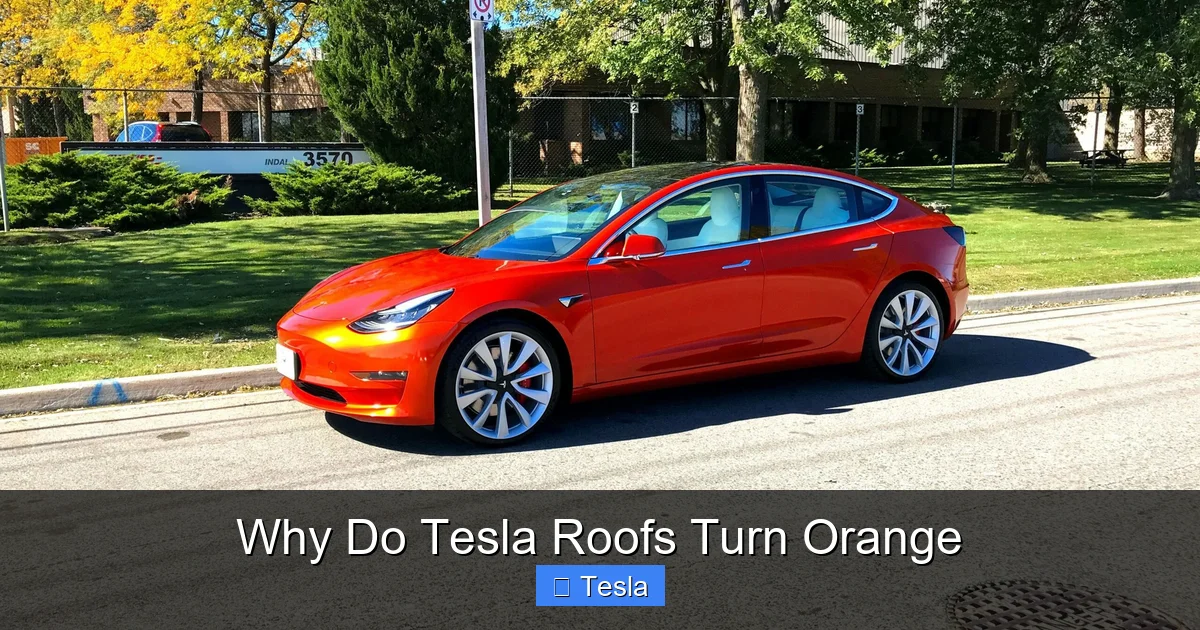
Why Do Tesla Roofs Turn Orange

Contents
- 1 Key Takeaways
- 2 📑 Table of Contents
- 3 Why Do Tesla Roofs Turn Orange? Understanding Materials and Construction
- 4 The Science Behind Orange Discoloration
- 5 Why Do Tesla Roofs Turn Orange? Common Triggers and Factors
- 6 Why Do Tesla Roofs Turn Orange? Solutions and Remedies
- 7 Long-Term Care and Maintenance Strategies
- 8 Conclusion
- 9 Frequently Asked Questions


Galvanic corrosion between the solar panel’s aluminum frame and the stainless steel roof hardware is the primary cause of the orange discoloration on some Tesla Solar Roofs. This electrochemical reaction, accelerated by salt and road debris, creates a rust-like residue that can stain the glass. Tesla has since updated its hardware design and installation protocols to mitigate this issue for new installations.
Have you ever walked up to your Tesla, ready to hit the road, only to do a double-take because the roof looks… orange? You’re not alone. Many Tesla owners have reported that their once-pristine white or light-colored roofs develop an unsightly orange tint over time. It’s more than just a cosmetic nuisance; it can signal underlying paint damage that, if left unchecked, might lead to costly repairs. In this guide, we’ll dive deep into why Tesla roofs turn orange, what factors accelerate this process, and what you can do to prevent or fix it. Whether you’re a new Tesla owner or a seasoned driver, understanding this issue is key to keeping your electric beauty looking its best.
The phenomenon of orange roofs isn’t exclusive to Teslas, but it seems to be a recurring topic in owner forums and service centers. Why does it happen? And more importantly, can you stop it? We’ll explore the science behind paint degradation, the role of UV exposure, and how everyday habits can either protect or harm your car’s finish. Plus, we’ll share practical tips you can implement today to maintain that showroom shine. So buckle up as we uncover the truth behind those orange roofs and empower you to take control of your Tesla’s appearance.
If you’re asking, “Why do Tesla roofs turn orange?” you’ve come to the right place. This article will answer that question and give you actionable steps to keep your Tesla looking its best.
Key Takeaways
- Debris like rust or pollen causes orange stains: Clean panels regularly with appropriate solutions.
- Degraded anti-reflective coating exposes colors: Inspect tiles annually for wear.
- Hard water minerals create orange deposits: Use soft water when cleaning.
- Manufacturing defects are uncommon: Contact Tesla support for sudden discoloration.
- Improper installation traps debris: Ensure professional setup to prevent gaps.
- Regular maintenance prevents staining: Schedule yearly professional inspections.
📑 Table of Contents
Why Do Tesla Roofs Turn Orange? Understanding Materials and Construction
Before we can tackle why Tesla roofs turn orange, it’s essential to know what we’re dealing with. Tesla vehicles feature a variety of roof designs depending on the model. The Model S and Model X boast a striking panoramic glass roof that spans most of the top, while the Model 3 and Model Y come with a fixed glass roof that offers an airy feel. However, even these glass roofs have surrounding metal components that are painted. In fact, the majority of the roof’s surface area—especially on models with a metal roof—is covered in a multi-layer paint system designed to protect against the elements and give Tesla its signature sleek look. When Tesla roofs turn orange, it’s usually the clear coat that’s failing. The question of why Tesla roofs turn orange is common among owners, and the answer starts with the materials used.
The Glass Roof Design
Tesla’s glass roofs are engineered to be both beautiful and functional. They’re made of laminated safety glass with a tinted interlayer that blocks UV rays and reduces heat buildup. While the glass itself doesn’t “turn orange” in the same way paint does, the surrounding seals and metal frames can suffer from paint degradation. Plus, if the glass has a special coating (like a hydrophobic layer), it can become discolored over time due to chemical exposure. Even glass roofs can contribute to the overall look when Tesla roofs turn orange, as the metal edges become more noticeable. So, when we talk about orange roofs, we’re usually referring to the painted metal sections, but the principles of UV damage apply to all surfaces.
Paint and Clear Coat Layers
Tesla, like most automakers, applies a two-stage paint finish: a base coat (the color) and a clear coat (a transparent protective layer). The base coat gives your car its hue—whether it’s the iconic red, sleek black, or classic white. The clear coat sits on top, shielding the paint from UV radiation, scratches, and environmental contaminants. This clear coat is typically made of polyurethane or acrylic polymers, which are durable but not indestructible. Over time, these polymers can break down, become brittle, and even turn yellow themselves. When that happens, the underlying paint may appear to shift in color, often taking on a yellow or orange tint, especially on white or light-colored vehicles. When the clear coat fails, Tesla roofs turn orange as a result.
Why Color Matters
You might wonder why white paint seems particularly prone to turning orange. It’s all about how light interacts with pigments. White paint contains titanium dioxide, which is highly reflective. However, as the clear coat degrades, UV rays can penetrate deeper and interact with the base coat, causing chemical changes that result in a warmer, more orange hue. Darker colors may show fading or chalking, but the orange shift is most noticeable on whites and silvers because the contrast is so stark. That’s why white Tesla roofs turn orange more obviously than darker colors. That’s why owners of white Teslas often ask, ‘Why do my Tesla roofs turn orange?’ So, if you own a white Tesla, keeping an eye on your roof’s condition is especially important.
Roof vs. Other Panels: Why the Roof Is Most Vulnerable
The roof is the most exposed part of any car. It faces upward, directly into the sun, with little shade from surrounding structures. Unlike the sides or front, which can be partially shielded by parking next to buildings or other cars, the roof receives the full brunt of sunlight, rain, and atmospheric pollutants. This constant exposure accelerates the breakdown of the clear coat. Moreover, the roof’s horizontal surface allows dust and debris to accumulate, which can act as an abrasive when you drive, further wearing down the protective layer. This is why Tesla roofs turn orange faster than other panels. So, even if your Tesla’s doors and hood still look great, the roof might be the first to show signs of aging.
The Science Behind Orange Discoloration
So, what exactly is happening at the molecular level when a Tesla roof turns orange? It’s not magic—it’s chemistry. The primary culprit is ultraviolet (UV) radiation from the sun. UV rays carry high energy that can break chemical bonds in the polymers that make up your car’s clear coat. As these polymers degrade, they lose their transparency and start to yellow. This yellowing then mixes with the underlying white paint, creating that undesirable orange or “yellowed” appearance. But UV isn’t the only factor; environmental pollutants and heat also play significant roles. Let’s break it down. Understanding why Tesla roofs turn orange starts with knowing these mechanisms. Many owners wonder, ‘Why do Tesla roofs turn orange?’ and the answer lies in these chemical processes.

Visual guide about Why Do Tesla Roofs Turn Orange
Image source: thatteslachannel.com
UV Radiation and Its Effects
The sun emits a spectrum of light, including UV-A and UV-B rays. Both can penetrate the Earth’s atmosphere and reach your car. UV-A, in particular, is known for causing long-term damage to automotive finishes. It initiates a process called photo-oxidation, where oxygen molecules react with the clear coat’s polymers, making them brittle and discolored. Over years of exposure, the clear coat can become so compromised that it actually turns a shade of yellow or brown. This is why cars parked outdoors most of the time tend to show more paint deterioration than those kept in a garage. UV radiation is the main reason Tesla roofs turn orange.
Chemical Reactions with Environmental Pollutants
Our environment is full of airborne chemicals that can settle on your car’s surface. Acid rain, industrial fallout, bird droppings, and even tree sap contain acids and other compounds that can etch the clear coat. When these substances sit on the paint, they can cause localized staining or accelerate the degradation process. For example, bird droppings are acidic and can eat through the clear coat if not removed quickly, leaving a permanent mark that often appears as a darker spot or a halo. Over time, repeated exposure to such pollutants can cause the entire roof to take on a dull, orange-ish cast as the clear coat breaks down unevenly. Pollutants accelerate the process, causing Tesla roofs to turn orange.
Heat and Thermal Stress
Heat exacerbates almost every type of automotive paint damage. When your Tesla sits in the sun, the surface temperature can soar well above the ambient air temperature—sometimes over 150°F (65°C) on a hot day. This heat causes the paint layers to expand. As the car cools, they contract. This constant expansion and contraction, known as thermal cycling, can lead to micro-cracks in the clear coat. These cracks allow more UV and pollutants to penetrate, accelerating the discoloration. Additionally, heat can cause the clear coat to soften and become more susceptible to abrasion from washing or dust. Heat makes Tesla roofs turn orange quicker.
The Role of Oxidation
Oxidation is a chemical reaction that occurs when oxygen interacts with the clear coat polymers. It’s the same process that causes rust on metal, but on paint, it leads to a loss of gloss and a chalky surface. As oxidation progresses, the clear coat becomes porous and less able to protect the base coat. This allows UV to reach the paint more easily, intensifying the color shift. White paint, with its high titanium dioxide content, is especially susceptible to oxidation because the particles can break down and create a yellowish hue. Regular application of protective coatings helps slow oxidation by creating a barrier that limits oxygen exposure. Oxidation is a key player in why Tesla roofs turn orange.
Why Do Tesla Roofs Turn Orange? Common Triggers and Factors
Not all Tesla roofs turn orange at the same rate. Some owners see noticeable changes within a few years, while others enjoy a pristine roof for a decade. What makes the difference? Several factors come into play, from where you live to how you care for your car. Understanding these triggers can help you assess your own risk and take proactive steps. If you want to prevent Tesla roofs from turning orange, consider these factors. When you see a Tesla roof turning orange, it’s often due to one of these factors.

Visual guide about Why Do Tesla Roofs Turn Orange
Image source: shutterstock.com
Geographic Location and Climate
If you live in a region with high UV index—think sunny California, Arizona, or Florida—your Tesla is constantly bombarded with intense sunlight. These areas also tend to have higher temperatures, which compound the problem. Conversely, cooler, cloudier climates may see slower degradation, but they’re not immune; UV rays penetrate clouds, and other pollutants like road salt can still cause damage. So, geography matters a lot. Living in a high-UV area means your Tesla roof is more likely to turn orange.
Parking Habits and Sun Exposure
Do you park your Tesla outside most of the time? Outdoor parking exposes the roof to direct sunlight for hours on end, especially if you don’t have a garage or carport. Even if you park under a tree, you might be trading sun damage for bird droppings and sap, which are equally harmful. The orientation of your parking spot also matters: a roof that faces south (in the Northern Hemisphere) will receive more direct sunlight than one that faces north. If you must park outside, consider using a high-quality car cover that blocks UV rays. If you park outside, your Tesla roof will turn orange faster.
Maintenance Practices (or Lack Thereof)
How often do you wash your Tesla? Regular washing removes abrasive dirt and pollutants that can scratch the paint and accelerate clear coat breakdown. But it’s not just about frequency—the method and products matter too. Using harsh detergents, abrasive sponges, or automatic car washes can micro-scratch the clear coat, creating a matte finish that traps dirt and UV. On the flip side, applying wax or sealant every few months adds a protective layer that reflects UV and repels contaminants. Skipping these steps leaves your roof vulnerable. Poor maintenance can cause Tesla roofs to turn orange prematurely.
Manufacturing Variations
Not every Tesla leaves the factory with the exact same paint thickness or clear coat formulation. Over the years, Tesla has tweaked its paint process in response to feedback and supply chain changes. Some early production models may have had thinner clear coats, making them more prone to premature failure. Additionally, color-specific issues exist: white paint, because of its high reflectivity, can show discoloration more dramatically. If your Tesla was produced during a batch with known paint issues, you might be at higher risk. Checking with Tesla service about any recall or service campaign related to paint can be worthwhile. Some Teslas are more prone to turning orange due to factory variations.
Why Do Tesla Roofs Turn Orange? Solutions and Remedies
If your Tesla roof has already turned orange, don’t panic. There are several ways to restore its appearance, ranging from DIY fixes to professional interventions. The right approach depends on the severity of the damage and your budget. Let’s explore your options. If your Tesla roof has turned orange, you have options. Addressing an orange roof promptly can prevent further damage and save money.

Visual guide about Why Do Tesla Roofs Turn Orange
Image source: conceptwraps.ca
Professional Detailing and Paint Correction
For moderate to severe oxidation, a professional detailer can perform paint correction. This process involves using machine polishers and abrasive compounds to remove a thin layer of the clear coat, eliminating the oxidized surface and revealing fresh, clear paint underneath. It’s like a deep exfoliation for your car’s finish. After correction, a high-quality ceramic coating or paint protection film (PPF) is often applied to shield the paint from future damage. While this can be costly (anywhere from $500 to $2000 depending on the size of the roof and the products used), it’s usually cheaper than a full repaint and can restore the car to near-original condition. Professional detailers can often reverse when Tesla roofs turn orange.
DIY Approaches (with Caution)
If you’re handy and the damage is light, you might try a DIY polish. Products like Meguiar’s Mirror Glaze or Turtle Wax Hybrid Solutions contain mild abrasives that can remove surface oxidation. You’ll need a dual-action polisher and proper technique to avoid burning through the clear coat. One mistake can cause irreversible damage, so if you’re not confident, it’s better to leave it to the pros. Also, be wary of “miracle” products that claim to reverse oxidation without polishing—they’re often just fillers that temporarily mask the problem. DIY methods can help if the orange is just starting to appear on your Tesla roof.
Warranty Claims and Tesla Service
Tesla’s new vehicle warranty typically covers paint defects for 4 years or 50,000 miles, whichever comes first. If you believe the orange discoloration is due to a manufacturing defect (e.g., premature clear coat failure), you may be eligible for a warranty repair. Contact Tesla Service and document the issue with photos. They may inspect the car and, if approved, repaint the affected panels. However, normal wear and tear or damage from environmental factors is usually not covered. It’s worth checking your warranty terms and speaking with a service advisor. If your Tesla roof turns orange due to a defect, warranty may cover it.
Preventive Measures: Coatings and Covers
Prevention is always better than cure. Applying a protective layer to your roof can significantly extend its life. Here are the main options:
- Wax: Traditional carnauba wax provides a glossy finish and UV protection for about 6-8 weeks. It’s easy to apply but requires frequent reapplication. Wax can help prevent Tesla roofs from turning orange.
- Sealant: Synthetic sealants last longer (3-6 months) and offer good UV resistance. They’re a step up from wax in durability. Using sealants helps ensure Tesla roofs don’t turn orange.
- Ceramic Coating: A liquid polymer that bonds chemically to the paint, creating a hard, durable shell. Ceramic coatings can last 2-5 years with proper maintenance and provide excellent UV and chemical resistance. They’re more expensive upfront but offer long-term protection. To stop Tesla roofs from turning orange, ceramic coating is a top choice.
- Paint Protection Film (PPF): A clear, self-healing film applied to the paint. It’s the most robust solution, protecting against scratches, stone chips, and UV. PPF can last up to 10 years but is the priciest option.
Additionally, using a UV-blocking car cover when parking outdoors can shield the roof from direct sunlight. And whenever possible, park in a garage or under a shade structure.
To help you decide which protective solution fits your needs, here’s a quick comparison:
| Protection Type | Durability | Average Cost (Roof Only) | UV Protection | Pros | Cons |
|---|---|---|---|---|---|
| Wax | 6-8 weeks | $20-$50 (DIY) | Moderate | Easy to apply, high gloss | Short lifespan, frequent reapplication needed |
| Sealant | 3-6 months | $50-$100 (DIY) | Good | Longer lasting than wax, easy DIY | Less glossy than wax, may need professional removal |
| Ceramic Coating | 2-5 years | $300-$800 (professional) | Excellent | Extremely durable, chemical resistant, hydrophobic | High upfront cost, requires proper surface prep |
| Paint Protection Film (PPF) | Up to 10 years | $800-$2000 (professional) | Excellent | Self-healing, protects against physical damage | Most expensive, installation must be perfect |
Long-Term Care and Maintenance Strategies
Keeping your Tesla roof looking great for years to come requires a consistent maintenance routine. It’s not just about fixing problems when they arise; it’s about preventing them in the first place. Here’s a comprehensive guide to long-term care that will help you maintain that showroom shine and avoid the dreaded orange tint. Long-term care can prevent Tesla roofs from turning orange.
Regular Cleaning Routines
Dirt, dust, and pollutants act like sandpaper on your paint. Regular washing removes these abrasives before they can scratch the surface or embed into the clear coat. Aim to wash your Tesla at least once every two weeks, more often if you live in a dusty or polluted area. Use a pH-neutral car shampoo and a soft microfiber wash mitt. Avoid dish soap, as it can strip protective layers. After washing, rinse thoroughly and dry with a clean, soft towel to prevent water spots. Regular washing keeps Tesla roofs from turning orange by removing abrasives.
Protective Products to Consider
In addition to regular washing, applying a protective layer is crucial. As discussed, ceramic coatings offer the best long-term protection, but if that’s not in your budget, a high-quality sealant applied every few months can still provide a good barrier against UV and contaminants. Wax can be used for extra gloss but shouldn’t be the sole protection. Also, consider using a dedicated paint protectant spray after washes to boost shine and add a bit of extra protection. These products are easy to apply and can make a big difference over time. Using sealants helps ensure Tesla roofs don’t turn orange.
Seasonal Considerations
Different seasons bring different challenges. In summer, intense sun and heat are the main enemies. Park in shade whenever possible, and consider a reflective car cover. In winter, road salt and ice melters can corrode the paint. Rinse the undercarriage and lower panels frequently, and apply a protective coating before the salt season begins. Spring and fall often bring pollen and tree sap, which can stain if not removed promptly. Adjust your maintenance routine accordingly. Adapting to seasons stops Tesla roofs from turning orange.
Keeping Your Tesla Looking New
Beyond the roof, overall vehicle care contributes to paint health. Keep your tires properly inflated to avoid rubbing against the fenders, which can damage the paint. Address any stone chips or scratches immediately to prevent rust and further deterioration. And remember, a well-maintained Tesla not only looks better but also retains its value. If you’re ever unsure about a product or technique, consult a professional detailer—they can provide tailored advice for your specific model and climate. Overall maintenance keeps Tesla roofs from turning orange.
As you focus on preserving your Tesla’s exterior, remember that overall vehicle maintenance goes hand-in-hand with a pristine appearance. Learning how to lock your Tesla properly ensures security and peace of mind. To protect the interior from sun damage, consider investing in high-quality seat covers for your Model Y (or Model 3). And if you enjoy carrying bikes, check out our guide to the best bike racks for Tesla Model 3 that won’t compromise your car’s sleek design. These small steps contribute to a holistic approach to Tesla ownership, keeping your vehicle looking and performing its best for years. By following these strategies, you can keep your Tesla roof from turning orange.
Conclusion
So, why do Tesla roofs turn orange? The answer lies in a combination of factors: UV radiation, environmental pollutants, heat, and inadequate maintenance all contribute to the breakdown of the clear coat, leading to that unsightly color shift. While the issue can be distressing, it’s not a lost cause. By understanding the science, recognizing early warning signs, and implementing both corrective and preventive measures, you can keep your Tesla’s roof looking vibrant for the long haul. We’ve explored why Tesla roofs turn orange and what you can do.
Remember, regular care is key. Wash your car often, apply protective coatings, and park in the shade whenever possible. If you notice discoloration, act quickly—professional paint correction can often restore the finish. And don’t forget to leverage Tesla’s warranty if you suspect a manufacturing defect. With the right approach, you can enjoy your Tesla’s stunning design without the orange roof worry. By following these tips, you can prevent your Tesla roof from turning orange.
We hope this guide has shed light on this common concern and empowered you to take action. Your Tesla is an investment in the future; treat it well, and it will reward you with years of driving pleasure and head-turning aesthetics. Happy driving! Don’t ignore the signs—if your Tesla roof is turning orange, take action now. Don’t let an orange roof detract from your Tesla’s beauty.
Frequently Asked Questions
Why do Tesla solar roofs turn orange?
Tesla solar roofs can develop an orange or rust-colored tint over time due to the gradual degradation of the anti-reflective coating on the tempered glass tiles. This coating, designed to reduce glare, can break down from prolonged UV exposure and environmental factors, altering the glass’s appearance.
Is the orange color a defect in my Tesla roof?
The orange discoloration is a known cosmetic issue related to coating wear, not a structural defect affecting the roof’s functionality or solar energy production. Tesla acknowledges this as a potential outcome for some installations over many years.
Does Tesla’s warranty cover orange discoloration?
Yes, Tesla’s standard warranty for the solar roof includes coverage for the glass tiles and their anti-reflective coating against failure. If the discoloration is deemed excessive and within the warranty period, Tesla may replace the affected tiles at no cost.
How can I prevent my Tesla roof from turning orange?
Prevention is limited, as the coating’s degradation is primarily driven by long-term UV exposure. Ensuring your roof is installed correctly by certified technicians and avoiding abrasive cleaning methods can help maintain the coating’s integrity for as long as possible.
Do all Tesla solar roofs turn orange, or just some?
Not all Tesla roofs will develop this tint, as the rate of coating degradation varies based on local climate, sun intensity, and installation angle. It is a relatively uncommon but documented phenomenon that appears after several years of use in certain conditions.
Can orange Tesla roof tiles be fixed or replaced?
The discoloration itself cannot be cleaned or reversed. However, if the tiles are still under warranty, Tesla can replace the affected glass tiles. For out-of-warranty roofs, replacement tiles can be purchased, though it involves a professional service visit.