How to Turn Off Rainbow Road on Tesla

Contents
- 1 Key Takeaways
- 2 📑 Table of Contents
- 3 What Exactly is Tesla’s Rainbow Road?
- 4 Why Would You Want to Turn Off Rainbow Road?
- 5 Step-by-Step: How to Turn Off Rainbow Road on Tesla
- 6 What Happens After You Turn Off Rainbow Road?
- 7 Troubleshooting: What If Rainbow Road Won’t Turn Off?
- 8 Other Tesla Easter Eggs and Customization Options
- 9 Conclusion: Your Tesla, Your Visuals
- 10 Frequently Asked Questions

Car Inverter

Car Trash Can

Car Tool Kit Set

Tool Roll Bag
Rainbow Road is a playful Tesla Easter egg that transforms your car’s on-screen visualizer into a vibrant, multicolored display. While fun for some, it can be distracting or unprofessional for others, leading many owners to seek a way to disable it. This guide provides clear, simple instructions to turn off Rainbow Road through Tesla’s hidden service menu, explains what happens when you revert to the standard view, and offers troubleshooting tips if the setting doesn’t stick. You’ll also gain insight into managing other Tesla software features to customize your driving experience.
Key Takeaways
- Rainbow Road is an Easter egg within Tesla’s Emissions Testing Mode, not a standard feature. It changes the visualizer’s road depiction to a rainbow pattern for entertainment.
- To turn off Rainbow Road, you must access the hidden Service & Diagnostics menu. Navigate to Controls > Service > Diagnostics > Emissions Testing Mode and select “Normal.”
- Disabling Rainbow Road instantly reverts the visualizer to the standard gray road display. No other vehicle functions or settings are altered in the process.
- Common reasons to turn it off include reducing visual distraction, maintaining a professional appearance, or personal preference for the default interface.
- If Rainbow Road remains active after changing the setting, a simple vehicle reboot (power cycle) usually resolves the issue. This forces the system to reload the standard visualization.
- Software updates can sometimes reset or modify Easter egg accessibility. After an update, you may need to re-enable or disable the feature again.
- Managing Tesla’s hidden features, like Rainbow Road, is similar to customizing other driver-assist systems across brands. For example, turning off lane departure on a Honda Civic also involves navigating digital settings menus.
📑 Table of Contents
- What Exactly is Tesla’s Rainbow Road?
- Why Would You Want to Turn Off Rainbow Road?
- Step-by-Step: How to Turn Off Rainbow Road on Tesla
- What Happens After You Turn Off Rainbow Road?
- Troubleshooting: What If Rainbow Road Won’t Turn Off?
- Other Tesla Easter Eggs and Customization Options
- Conclusion: Your Tesla, Your Visuals
What Exactly is Tesla’s Rainbow Road?
If you’ve ever glanced at your Tesla’s touchscreen while parked and seen a surreal, psychedelic road winding through a digital landscape, you’ve encountered Rainbow Road. This isn’t a glitch or a bug—it’s a deliberate, hidden feature Tesla engineers tucked away as an Easter egg. Officially, it’s part of something called “Emissions Testing Mode,” a playful nod to the fact that electric vehicles like Teslas don’t produce tailpipe emissions. In this mode, the car’s visualizer, which normally shows a simple gray road with lane markers, transforms into a bright, swirling rainbow path. It’s a fun, lighthearted touch that showcases Tesla’s software-centric culture and sense of humor.
The feature has been around for several years and appears across various Tesla models, from the Model 3 and Model Y to the Model S and Model X. Activation typically requires accessing a hidden diagnostic menu, which means it’s not something you stumble upon accidentally during daily driving. However, once enabled, it persists until manually changed back. For many owners, discovering Rainbow Road is a delightful surprise—a secret handshake from the brand. But for others, its constant, colorful display can become a nuisance, a distraction, or simply not match their desired aesthetic. This is where the need to turn it off comes in.
The Origins and Purpose of Rainbow Road
Tesla’s software is famous for being packed with hidden features and jokes. Rainbow Road fits into a tradition of automotive Easter eggs, from the classic “performance” modes in older cars to the complex “developer modes” in modern vehicles. Its specific inspiration likely draws from the iconic Rainbow Road track in the Mario Kart video game series—a notoriously difficult, colorful circuit. By including this, Tesla’s engineers created an inside joke for tech-savvy owners who enjoy exploring their car’s deeper menus. It serves no practical purpose; it doesn’t improve performance, range, or safety. It’s purely a visual novelty, a testament to the fact that Tesla treats its vehicle software like a consumer tech product, complete with fun surprises.
Understanding this context is important. Because Rainbow Road is part of a diagnostic or “service” mode, Tesla doesn’t provide a straightforward toggle in the main Settings menu. This means turning it off requires the same kind of menu navigation used to enable it. It’s not a setting you’d find under “Display” or “Controls.” This hidden nature is why many owners searching for help online find conflicting or outdated information. The steps are simple but must be followed precisely within the correct submenu.
Why Would You Want to Turn Off Rainbow Road?
Before diving into the “how,” it’s worth considering the “why.” While many Tesla owners love Rainbow Road as a quirky conversation starter, several legitimate reasons exist for disabling it. The decision often comes down to personal preference, driving context, and safety considerations.

Visual guide about How to Turn Off Rainbow Road on Tesla
Image source: automotiveglory.com
Minimizing Distraction
The primary argument against Rainbow Road is distraction. Tesla’s large, central touchscreen is already a focal point, and the vibrant, shifting colors of Rainbow Road can be more eye-catching than the standard, monochrome road visualization. For some drivers, especially those who are easily distracted or who use the visualizer as a reference for lane positioning, the rainbow effect can pull attention away from the actual road. In a vehicle that emphasizes minimalist interiors and screen-based controls, any extra visual noise is worth considering. Reducing on-screen clutter aligns with a general principle of safe driving: keep your eyes on the road, not the dashboard.
This concern isn’t unique to Tesla. Drivers of all makes often seek to simplify their dashboards. For instance, some Honda Civic owners choose to turn off lane departure warnings because they find the alerts more jarring than helpful. Similarly, Rainbow Road’s constant visual change, while not an alert, can be a persistent sensory input that some find unnecessary or taxing during a commute.
Professional and Resale Considerations
If you use your Tesla for ride-sharing, professional driving, or simply want to maintain a “stock” appearance for potential buyers, Rainbow Road might not project the right image. While harmless, a rainbow road on the screen can seem gimmicky or suggest the car has been “tampered with” by a previous owner. For a seamless, factory-fresh experience, reverting to the standard visualization is a quick way to reset the car’s software persona. It’s a small detail, but in a competitive resale market, every seemingly minor customization can influence a buyer’s perception.
Personal Taste and Preference
Let’s be honest: not everyone loves rainbows. Some drivers may simply prefer the clean, technical look of the standard gray road with clear lane markings. The default visualization is designed to be a functional, low-contrast backdrop that doesn’t compete with other on-screen information like navigation arrows, speed, or Autopilot status. Rainbow Road, by design, is bold and artistic. If your taste leans toward the minimalist or utilitarian, turning it off is an easy choice. It’s about making the car’s interface work for you, not the other way around.
Preventing Confusion for Passengers or New Drivers
If you frequently have passengers, especially children or new drivers, Rainbow Road can cause confusion. “Why is the road pink and green?” is a common question. While it can be a fun teaching moment about Easter eggs, it can also be a distraction from learning the vehicle’s actual controls. For a straightforward, no-fuss driving environment, the standard visualizer is universally understandable. It presents information in a consistent, expected manner that aligns with virtually every other car’s digital display.
Step-by-Step: How to Turn Off Rainbow Road on Tesla
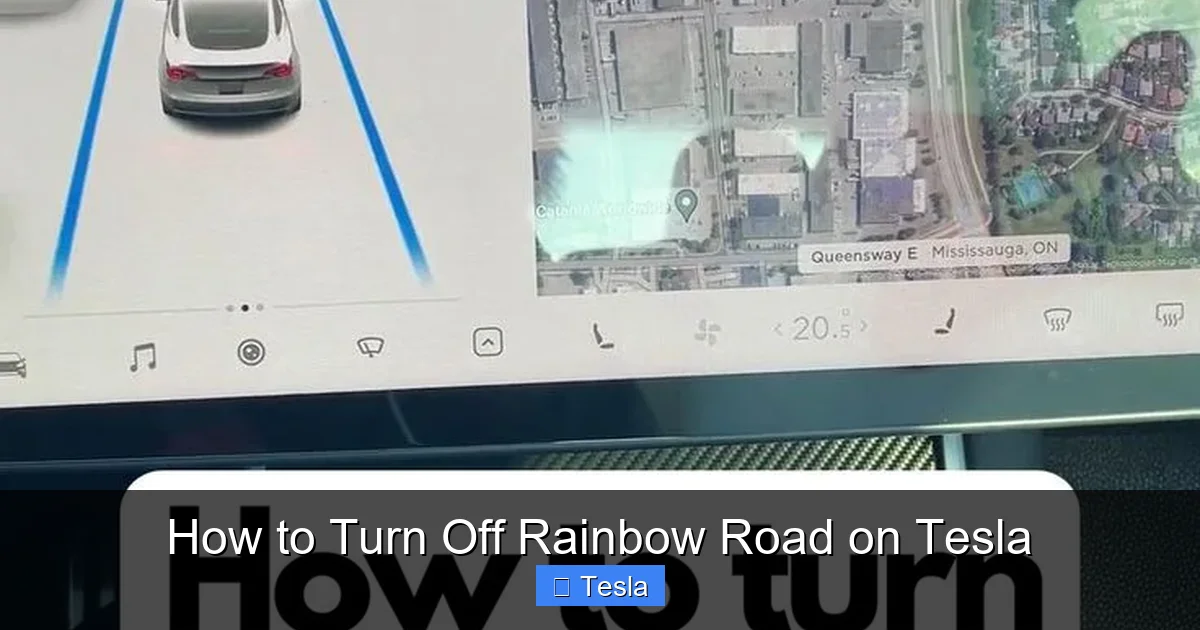
Now, let’s get to the practical steps. Disabling Rainbow Road requires accessing the same hidden service menu used to enable it. The process is identical across most Tesla models and software versions, though menu labels might vary slightly. Follow these steps carefully while your car is parked and in Park mode.
Visual guide about How to Turn Off Rainbow Road on Tesla
Image source: i.pinimg.com
Step 1: Access the Service Menu
Start by tapping the “Controls” icon (the car silhouette) on the bottom center of your touchscreen. This opens the main vehicle settings panel. Scroll down to the very bottom of this menu. You should see an option labeled “Service.” Tap it. This submenu contains diagnostic tools, vehicle information, and access to the hidden modes. If you don’t see “Service,” ensure your car is updated to a recent software version; the menu structure has been consistent for several years now.
Step 2: Navigate to Diagnostics
Inside the Service menu, look for a button or tab that says “Diagnostics.” This is the gateway to the deeper software settings. On some older models, it might be labeled “Vehicle Diagnostics” or simply represented by a wrench icon. Tap on “Diagnostics.” You will likely see a warning message stating that these settings are for service personnel and that changes could affect vehicle operation. Read it, acknowledge it, and proceed. This is standard for accessing Easter eggs.
Step 3: Find Emissions Testing Mode
Within the Diagnostics screen, scroll through the list of options. You are looking for “Emissions Testing Mode.” The exact phrasing may vary; it could be “Emissions Test” or “Emissions Mode.” It is usually located near other test options like “Battery” or “Tire” diagnostics. Once you find it, tap on “Emissions Testing Mode.” This will open a new screen showing the available visualizer options.
Step 4: Select “Normal” or “Off”
On the Emissions Testing Mode screen, you will see a list of visualizer presets. The active one will be highlighted or have a checkmark next to it. If Rainbow Road is enabled, you’ll see an option like “Rainbow,” “Colorful,” or “Psychedelic.” Other options might include “Normal,” “Standard,” or “Off.” To disable Rainbow Road, simply tap on “Normal” or “Off.” The selection should highlight immediately. There is no confirmation pop-up; the change is instantaneous.
Step 5: Exit and Verify
After selecting “Normal,” you can exit all the menus by tapping the back arrow or the “X” button until you return to the main screen. The visualizer on the main drive screen (the one that shows your car’s position on the map) should now revert to the standard gray road with white lane markers within a second or two. If it doesn’t change right away, a soft reboot of the car’s system is often necessary (see troubleshooting below).
Important Note: These steps rely on Tesla’s current software menu structure. If a future update reorganizes these menus, the path might change slightly. However, the feature itself—Emissions Testing Mode—has been a stable Easter egg for years, so the method remains reliable. If you cannot find the Diagnostics option, your vehicle may have a different software version, but it is highly unlikely Tesla would remove this classic Easter egg entirely.
What Happens After You Turn Off Rainbow Road?
Once you successfully select “Normal” in the Emissions Testing Mode settings, the change is immediate and permanent—until you change it again. The visualizer returns to its default state. Understanding what this default state looks like and what it affects can clear up any confusion.

Visual guide about How to Turn Off Rainbow Road on Tesla
Image source: koala.sh
The Standard Visualizer Display
The normal Tesla visualizer is a stylized, top-down representation of your car and its surroundings. The road is rendered in a flat, medium-gray color. Lane markers are solid white lines. Other vehicles are shown as simple rectangles or silhouettes in various colors. This design is intentionally low-contrast and non-distracting. It serves as a spatial reference, helping you understand where your car is relative to lanes and detected objects, especially when using Autopilot or other driver-assist features. The standard view is what you see during normal driving when not using navigation turn-by-turn prompts (which overlay arrows on the road).
Returning to this view means you lose the rainbow colors but gain back that familiar, functional interface. All other aspects of the touchscreen—the music player, climate controls, navigation—remain completely unaffected. This is purely a cosmetic change to one specific graphic element. Your driving experience, vehicle performance, and Autopilot functionality are 100% unchanged.
No Impact on Vehicle Systems
It’s crucial to emphasize that Rainbow Road is skin-deep. It’s a graphics setting, like changing the wallpaper on your phone. Disabling it does not “turn off” any sensors, cameras, or software features. Your car’s Autopilot, Full Self-Driving capability (if equipped), collision warnings, and blind-spot monitoring all operate exactly as before. The visualizer is just a visual representation of data those systems are already processing. So, you can turn off Rainbow Road with confidence, knowing you’re not compromising any safety or convenience feature.
This separation of function and form is a hallmark of Tesla’s software design. The same principle applies to other customizable displays. For example, you can change the layout of the instrument cluster in a Model S without affecting speedometer accuracy. It’s all about user preference within a safe, constrained environment.
Troubleshooting: What If Rainbow Road Won’t Turn Off?
In most cases, selecting “Normal” in the Emissions Testing Mode menu works instantly. However, software can be quirky. If you follow the steps and the rainbow road persists, don’t panic. There are a few simple fixes to try, ranked from easiest to more involved.
1. Perform a Soft Reboot (Power Cycle)
This is the first and most effective solution for most Tesla software glitches. A soft reboot clears the system’s temporary memory (RAM) and reloads the operating system, forcing all settings—including visualizer preferences—to reinitialize properly. Here’s how:
- Ensure your car is in Park and not actively charging.
- Press and hold down both scroll wheels on the steering wheel (the left and right buttons used for volume and scrolling) simultaneously.
- Hold them for about 10-15 seconds. The screen will go black, and you may hear a faint click or pop from the speakers.
- Continue holding until the Tesla logo reappears on the screen. This can take 30-60 seconds.
- Release the buttons and wait for the system to fully boot back to the main screen.
After the reboot, check the visualizer. It should now be back to normal. If not, proceed to the next step.
2. Double-Check the Menu Selection
It’s possible you didn’t actually select “Normal” or the selection didn’t register. Go back through the steps: Controls > Service > Diagnostics > Emissions Testing Mode. Verify that “Normal” is indeed highlighted and that “Rainbow” or any other colorful option is no longer selected. Tap “Normal” again firmly. Sometimes a second tap is needed. Exit the menus and wait a few moments for the visualizer to update.
3. Check for Software Updates
While rare, a pending software update might temporarily override certain Easter egg settings or introduce a bug. Go to Controls > Software and check if an update is available or downloading. If so, it’s best to let the update complete. Tesla’s over-the-air updates often refresh system files and could reset the visualizer to default. After updating, verify the setting again. Conversely, if you recently updated and Rainbow Road appeared afterward, the update might have re-enabled it or changed the menu path; re-follow the steps carefully.
4. Clear the Visualizer Cache (Advanced)
For persistent issues, there’s a more obscure method within the same Diagnostics menu. Some users report success by looking for an option like “Clear Visualizer Cache” or “Reset Graphics” within the Emissions Testing Mode screen or a neighboring diagnostic option. This isn’t always present, but if you see it, try it. It forces the system to discard any cached graphic assets for the rainbow visualization.
5. Contact Tesla Service
If all else fails, and the rainbow road is stuck despite reboots and correct menu selections, it may indicate a deeper software corruption. At this point, the best course is to contact Tesla Service. You can do this through the Tesla app (Service > Request Service) or by calling. Explain that you’ve attempted to disable Emissions Testing Mode (Rainbow Road) via the service menu, performed reboots, but the visualizer remains stuck. A technician can remotely push a command or advise on a more thorough reset. This is an extreme rarity, but it’s an option. Remember, this is a non-critical feature, so there’s no safety risk in waiting for service.
Pro Tip: Before contacting service, take a screenshot or video of the menu showing “Normal” selected and the rainbow visualizer still active. This provides clear evidence of your troubleshooting steps.
Other Tesla Easter Eggs and Customization Options
Rainbow Road is just one of many Tesla Easter eggs. The company’s software is a treasure trove of hidden features, from lighthearted animations to useful utility modes. Knowing how to manage these can enhance your ownership experience. Here’s a brief tour of other notable Easter eggs and how they relate to the process of turning off Rainbow Road.
The Famous “Emissions Testing Mode” Suite
Rainbow Road is part of the larger Emissions Testing Mode. When you access that menu, you’ll typically find several other visualizer options besides “Normal” and “Rainbow.” These might include:
- Rainbow Road: The colorful, winding path.
- Model X: Shows a Falcon Wing door opening animation on the visualizer.
- Santa Mode: Adds reindeer and a sleigh to the visualizer during the holidays.
- Romance Mode: Puts a roaring fireplace in the car’s center console on the screen.
- Mars Mode: Changes the background to the Martian surface.
All of these are toggled in the same menu. The process to turn any of them off is identical: select “Normal.” So, if you ever activate Santa Mode by accident and want to revert, you now know where to go. This centralized location for visual Easter eggs makes management straightforward.
Other Hidden Features and Their Settings
Tesla hides other fun and functional features in different parts of the interface. For example:
- Camp Mode: Allows you to run climate control while parked for extended periods. Found in the main “Controls” menu under “Climate.” Turn it off by tapping the same button.
- Sentry Mode: Uses cameras to monitor the surroundings when parked. Toggled in the “Safety & Security” menu.
- Boombox Mode: Lets you play external sounds through the car’s speaker. Found in “Entertainment.”
- Joe Mode: Dims the instrument cluster and center screen brightness at night. Activated via voice command (“Hey Tesla, enable Joe Mode”). Disable with the same command.
Notice a pattern? Most of these are accessible through standard menus, not hidden diagnostics. Easter eggs like Rainbow Road are the exception, tucked away in service areas. The key takeaway is that Tesla’s software is highly customizable. If you enjoy exploring, you can spend hours finding these gems. But if you prefer a clean, predictable interface, you can disable them all, returning your car to a “stock” software state. This flexibility is a major advantage of a software-defined vehicle.
Comparing to Other Brands’ Feature Toggling
The process of disabling a Tesla Easter egg via a hidden menu is not unique in the automotive world. Many manufacturers bury certain settings in submenus or require specific button sequences. For instance, disabling Autopark on a Dodge Challenger might involve navigating the Uconnect system’s driver-assist settings. Similarly, turning off Subaru’s Eyesight system requires a series of steering wheel button presses. The principle is the same: the manufacturer provides the option, but it’s not always on the main screen. Tesla’s method, while hidden, is relatively straightforward once you know the path. It’s a reminder that exploring your vehicle’s manual or online owner forums can uncover powerful customization options, whether you drive a Tesla, a Honda, or any other brand.
Conclusion: Your Tesla, Your Visuals
Rainbow Road is a charming piece of Tesla’s cultural identity—a nod to the joy of discovery in a machine often seen as purely functional. But a car is also a personal space, and its interface should serve the driver’s needs and tastes. If the rainbow-hued road on your touchscreen feels more like a distraction than a delight, you now have the knowledge to revert to the standard view in under a minute. The process is a simple dive into the Service > Diagnostics > Emissions Testing Mode menu and selecting “Normal.” A reboot may be needed, but that’s a common fix for many software quirks.
Remember, turning off Rainbow Road is a cosmetic change only. It doesn’t affect your car’s performance, safety systems, or core functionality. It simply changes the background graphic of the visualizer. This underscores a broader point about modern vehicles, especially Teslas: software is malleable. You can often tailor the experience to your liking, from serious driver-assist features to playful Easter eggs. If you ever feel overwhelmed by hidden menus, take a breath. Most settings, even the hidden ones, are designed to be reversible. There’s almost always a “Normal” or “Off” option waiting to be selected.
So go ahead, access that service menu, and choose the visualizer that best suits your drive. Whether you keep the rainbow for a smile on a dull commute or switch back to the clean gray road for focus, the power is in your hands—and on your touchscreen. Happy driving!
Frequently Asked Questions
What is Rainbow Road on a Tesla?
Rainbow Road is a hidden Easter egg in Tesla’s software that changes the car’s on-screen visualizer to display a colorful, rainbow-colored road instead of the standard gray one. It’s part of the Emissions Testing Mode, accessible through a hidden service menu, and serves no functional purpose other than entertainment.
Is it safe to drive with Rainbow Road enabled?
Yes, it is safe. Rainbow Road is purely a visual change to the graphic representation on the touchscreen. It does not affect any driving systems, Autopilot functionality, or sensor performance. The only potential risk is if the vibrant colors prove more distracting to the driver than the standard display.
Will turning off Rainbow Road affect my Tesla’s Autopilot or other features?
No. Disabling Rainbow Road only changes the visualizer’s appearance. All driver-assist features, including Autopilot, Full Self-Driving, collision warnings, and blind-spot monitoring, continue to operate exactly as before. The visualizer is just a graphical output; the underlying systems are separate.
Why might Rainbow Road stay on even after I select “Normal” in the menu?
This is usually a temporary software glitch. The setting change may not have been fully processed by the system. A soft reboot (holding both steering wheel scroll buttons until the screen restarts) almost always resolves this by forcing the system to reload the standard visualization.
Can a Tesla software update remove or change how to access Rainbow Road?
It’s possible. Tesla’s over-the-air updates occasionally reorganize menu structures or modify Easter eggs. While Rainbow Road has been a stable feature for years, a major update could theoretically move it or change its name. Always refer to the latest owner forums or Tesla’s official release notes for the most current information.
Are there other visual Easter eggs in Tesla like Rainbow Road?
Yes! The same Emissions Testing Mode menu typically includes several other visual Easter eggs, such as “Model X” (shows Falcon Wing doors opening), “Santa Mode” (adds reindeer), “Romance Mode” (fireplace), and “Mars Mode” (Martian landscape). You can toggle between all of them and “Normal” in that menu.