How to Sync Messages to Tesla

Contents
- 1 Key Takeaways
- 2 📑 Table of Contents
- 3 Introduction: Your Texts, Your Tesla, Zero Distractions
- 4 Understanding How Tesla’s Messaging System Actually Works
- 5 Prerequisites: Getting Your Phone and Car Ready
- 6 Step-by-Step: Syncing Your iPhone to Tesla
- 7 Step-by-Step: Syncing Your Android Phone to Tesla
- 8 Advanced Settings, Customization, and Unlocking Potential
- 9 Troubleshooting: When Messages Won’t Sync
- 10 Maximizing Safety and Best Practices
- 11 Conclusion: Drive Connected, Stay Focused
- 12 Frequently Asked Questions

Steering Wheel Cover

Portable Air Pump

Magnetic Car Phone Mount

Car Cup Holder Expander
Syncing messages to your Tesla allows you to send, receive, and listen to texts without taking your hands off the wheel. This guide covers everything from setup to troubleshooting for both iPhone and Android. Follow these steps to enable seamless connectivity and enhance your driving safety.
Key Takeaways
- Compatibility is Key: Tesla’s messaging system works with both iPhone (iMessage/SMS) and Android (SMS) but requires specific OS versions and app permissions.
- Two-Part Connection: Syncing relies on Bluetooth for basic pairing and an internet connection (cellular or Wi-Fi) for full iMessage functionality and message retrieval.
- Permissions Are Critical: You must grant Tesla’s “Tesla” app notification access and, on iPhone, enable “Show Notifications” in Bluetooth settings for texts to appear.
- Troubleshooting Starts Simple: Most issues are fixed by restarting your phone and car, re-pairing Bluetooth, or checking notification permissions before deeper fixes.
- Safety Features First: Always use text-to-speech and auto-reply features to minimize distractions; never manually read or type while driving.
- Software Matters: Ensure your Tesla runs the latest software update (via touchscreen > Controls > Software) for the best, most stable messaging experience.
- Multi-Phone Support: You can pair multiple phones, but only one active user can be logged into the Tesla app at a time for messaging to function correctly.
📑 Table of Contents
- Introduction: Your Texts, Your Tesla, Zero Distractions
- Understanding How Tesla’s Messaging System Actually Works
- Prerequisites: Getting Your Phone and Car Ready
- Step-by-Step: Syncing Your iPhone to Tesla
- Step-by-Step: Syncing Your Android Phone to Tesla
- Advanced Settings, Customization, and Unlocking Potential
- Troubleshooting: When Messages Won’t Sync
- Maximizing Safety and Best Practices
- Conclusion: Drive Connected, Stay Focused
Introduction: Your Texts, Your Tesla, Zero Distractions
Picture this: you’re cruising down the highway, enjoying the smooth, silent power of your Tesla. A text notification chimes on your phone, but you don’t fumble for it. Instead, the Tesla’s premium sound system calmly reads the message aloud. You speak a quick reply, and it’s sent—all without your eyes leaving the road or your hands leaving the wheel. That’s the promise of syncing messages to Tesla. It transforms your car’s massive touchscreen and audio system into a safe, integrated communication hub.
But getting there isn’t always as simple as plug-and-play. The process involves a delicate dance between your smartphone’s operating system, Bluetooth connectivity, the Tesla mobile app, and your car’s own software. One missed permission or a glitchy update can leave you staring at a blank messaging screen. This guide is your complete roadmap. We’ll walk through every step for both iPhone and Android, demystify the technology, and arm you with practical fixes for common hiccups. By the end, you’ll have a reliable, hands-free texting setup that maximizes convenience and safety.
Understanding How Tesla’s Messaging System Actually Works
Before diving into buttons and menus, it helps to understand what’s happening under the hood. Tesla doesn’t have a traditional SIM card for cellular texts. Instead, it acts as a smart peripheral for your phone. Your phone remains the primary device that receives messages via its carrier network. The Tesla, through the Bluetooth connection and the paired Tesla mobile app, requests and displays those notifications.
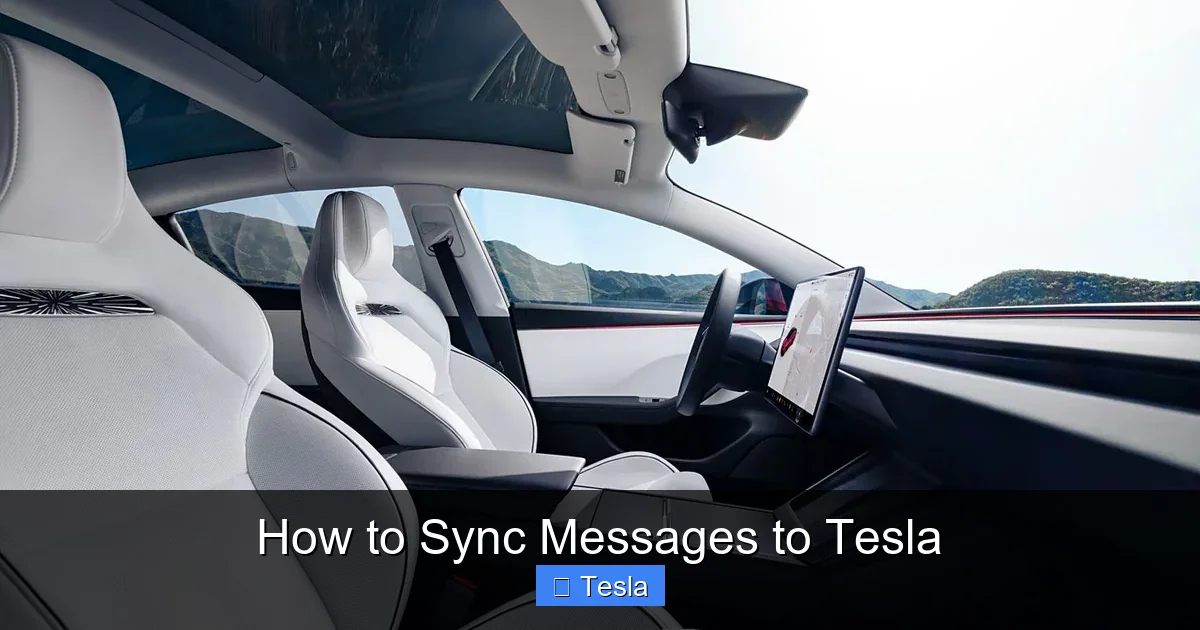
Visual guide about How to Sync Messages to Tesla
Image source: i.redd.it
The Bluetooth Bridge
Bluetooth Low Energy (BLE) is the first link in the chain. It creates a short-range, secure connection between your phone and the car. This link handles basic data transfer: the signal that a new text has arrived, the sender’s name, and a snippet of the message. For SMS (standard texting) on both iPhone and Android, this Bluetooth link is sufficient for the car to receive and read the notification.
iMessage’s Internet Dependency
Here’s where it gets specific for iPhone users. iMessage is Apple’s internet-based messaging service (the blue bubbles). For Tesla to display the full, rich content of an iMessage—including emojis, images, and group chats—your Tesla must have its own active internet connection. This comes via the car’s built-in LTE/5G cellular modem (powered by your Tesla’s service plan) or a connected Wi-Fi network. Without this, iMessage may not appear, or you’ll only get a basic SMS fallback (green bubbles). Android users, dealing primarily with SMS, rely less on the car’s internet but still need it for certain app features and map data.
The Role of the Tesla Mobile App
The Tesla app on your phone is the crucial middleware. It has the necessary system-level permissions to access your notification shade and message content. When you grant the app permission, it becomes a trusted messenger, relaying your texts from your phone’s OS to the car’s infotainment system over Bluetooth. If the app is force-closed, not logged in, or lacking permissions, the pipeline breaks.
Prerequisites: Getting Your Phone and Car Ready
Syncing won’t work if the foundation is shaky. Before touching your Tesla’s screen, verify these essentials on your phone and in your vehicle.
Phone Compatibility and OS Versions
For iPhone, you need iOS 13 or later. For Android, the requirement is typically Android 8.0 (Oreo) or newer. Always check Tesla’s official support page for the most current requirements, as updates can change this. Your phone’s Bluetooth must also be functional and turned on.
Essential Tesla Software
Your Tesla’s infotainment system needs a recent software version. Older versions (e.g., pre-2020) had more limited messaging support. To check, go to Controls > Software on your touchscreen. If an update is available, connect your car to a strong Wi-Fi network to download and install it. A stable connection is key; you might consider the cost and logistics of installing a dedicated 220V outlet at home to ensure your car consistently has enough charge to download large updates overnight, especially if you don’t have a home charger. This is a more permanent solution than relying on public chargers for updates.
Bluetooth and Internet: The Two Pillars
Ensure your car’s Bluetooth is discoverable and your phone’s Bluetooth is on. In the car, navigate to Controls > Bluetooth > Add New Device. Have your phone ready to pair. For iMessage users, confirm your Tesla has a cellular signal (look for the signal bars in the top corner of the screen) or is connected to Wi-Fi. You can check Wi-Fi under Controls > Wi-Fi.
Granting the All-Important Permissions
This is the most common point of failure. On your phone:
- iPhone: Go to Settings > Tesla. Toggle ON Notifications and ensure Show Notifications is enabled. Then, go to Settings > Bluetooth, find your Tesla under “My Devices,” tap the “i” icon, and ensure Show Notifications is ON.
- Android: Go to Settings > Apps > Tesla. Tap Permissions and grant Notifications access. Some Android versions also require enabling “Notification Access” in a separate system settings menu.
Think of these permissions as giving the Tesla app a key to your notification drawer. Without it, the app can’t see the texts to send them to the car.
Step-by-Step: Syncing Your iPhone to Tesla
iPhone users enjoy the most seamless experience due to deep Apple-Tesla integration, but the steps must be followed precisely.
Step 1: Prepare Your iPhone and Tesla
Ensure Bluetooth is on, your phone is unlocked, and the Tesla app is installed and logged into your Tesla account. Place your phone near the car. In your Tesla, go to Controls > Bluetooth > Add New Device. Your car will begin scanning.
Step 2: Pair the Devices
On your iPhone, under Bluetooth settings, you should see your Tesla’s name (e.g., “Tesla Model 3”). Tap it. You may see a pairing request on both the phone and car screen; confirm on both. The car will now show your iPhone as a paired device, often with a phone icon and battery percentage.
Step 3: Configure Notification Settings (The Crucial Part)
This is where many get stuck. On your iPhone, perform the permission checks from the Prerequisites section again. Double-check: Settings > Tesla > Notifications is ON, and Settings > Bluetooth > [Your Tesla] > Show Notifications is ON. If you recently updated iOS or the Tesla app, these can sometimes revert.
Step 4: Launch the Tesla App and Test
Open the Tesla app on your phone. It should connect to your car automatically (you’ll see the car’s status). Now, have someone send you an iMessage or SMS. Within a few seconds, a notification should appear on your Tesla’s bottom center screen. Tap the notification to see the message and options to reply via voice dictation or a quick reply (like “On my way”).
Pro Tip for iPhone Users
If iMessage isn’t coming through but SMS is, your Tesla likely lacks a strong cellular connection. Connect to a reliable Wi-Fi network (like your home network) and try again. Also, ensure “Send as SMS” is enabled in your iPhone’s Settings > Messages as a fallback.
Step-by-Step: Syncing Your Android Phone to Tesla
Android setup is slightly different due to the fragmented nature of Android OS and manufacturer skins (Samsung One UI, Google Pixel UI, etc.). The core principles are the same: Bluetooth pair, grant permissions.
Step 1: Install and Log Into the Tesla App
Download the official Tesla app from the Google Play Store. Log in with your Tesla account credentials. This app is non-negotiable; it’s the bridge for notifications.
Step 2: Pair via Bluetooth
In your Tesla, go to Controls > Bluetooth > Add New Device. On your Android, go to Settings > Connected Devices > Pair New Device. Select your Tesla from the list. Confirm any pairing codes on both screens.
Step 3: Grant Notification Access (The Android-Specific Hurdle)
This is the most variable step. Go to Settings > Apps > Tesla > Permissions. Find Notifications and set it to “Allow.” On some Android versions (especially Samsung), you must also go to Settings > Apps & notifications > Special app access > Notification access and find “Tesla” in the list, toggling it ON. The Tesla app will often prompt you to do this with a pop-up; follow it.
Step 4: Test with an SMS
Have someone send you a standard text message (SMS). Avoid using advanced RCS features (like chat features in Google Messages) as they may not display correctly. The notification should pop up on your Tesla screen. Tap it to view and use voice reply.
Common Android Pitfall
Battery optimization settings can kill the Tesla app in the background, stopping notifications. Go to Settings > Apps > Tesla > Battery and set it to “Unrestricted” or “Don’t optimize.” This tells Android not to restrict the app’s background activity, which is essential for it to monitor notifications.
Advanced Settings, Customization, and Unlocking Potential
Once the basics work, you can tailor the experience. The Tesla’s messaging interface is minimalist for safety, but there are settings to tweak.
Text-to-Speech and Volume Control
When a notification arrives, the car automatically reads it aloud. You can adjust the voice speed and volume in Controls > Sound > Voice Command settings. To have messages read only when the car is parked, there’s no native setting, but you can quickly mute the media volume while driving if desired.
Auto-Reply and Quick Responses
When you receive a text, the notification screen offers 1-tap “Reply” options like “On my way,” “Stuck in traffic,” or “Can’t talk now.” You can customize these! Go to Controls > Safety & Security > Driver Profile (or find Messaging settings). Some software versions allow editing these quick replies. If your version doesn’t, you might explore third-party solutions, which leads us to the next point.
Integrating Third-Party Messaging Apps
By default, Tesla only accesses your native SMS/MMS and iMessage apps. However, through the Tesla’s “Launcher” (the app drawer), you can sometimes add browser-based shortcuts to web versions of WhatsApp, Telegram, or Facebook Messenger. This isn’t true syncing—you’d be interacting with the web app via touch, which is unsafe while moving. For deeper integration, enthusiasts have explored unofficial methods. For a safe, official approach to expanding your Tesla’s app ecosystem beyond messaging, check out our comprehensive guide on how to add apps to Tesla. It covers browser-based shortcuts and the limits of the system.
Managing Multiple Phones and Drivers
Your Tesla can store multiple Bluetooth phone pairings. However, for messaging to work, the Tesla mobile app on one phone must be actively connected and logged in. If two drivers have the app on their phones, the last one to open the app or connect via Bluetooth will likely take precedence. To switch, the active user should log out of the Tesla app, and the other user should log in on their phone.
Troubleshooting: When Messages Won’t Sync
Don’t panic if your texts go silent. Most issues have simple fixes. Work through this ladder of solutions.
Issue: No Notifications Appear at All
Solution: Start with the classic “turn it off and on again.” Restart your phone and restart your Tesla (hold both scroll wheels on the steering wheel until the screen goes black). Re-pair the Bluetooth connection from scratch: on your Tesla, forget the device (Controls > Bluetooth > [Your Phone] > Forget), then pair again. Double and triple-check notification permissions on your phone (see Prerequisites).
Issue: iMessage Works, SMS Doesn’t (or Vice Versa)
Solution: For iMessage issues, your Tesla’s internet connection is suspect. Ensure it has a strong cellular signal or is on Wi-Fi. Try toggling Wi-Fi off/on in the car. For SMS-only issues on iPhone, ensure “Send as SMS” is on in your iPhone’s message settings. On Android, ensure your default SMS app is correctly set (e.g., Google Messages).
Issue: Messages Show But Are Blank or Stale
Solution: This often points to the Tesla app being out of date or not running in the background. Update the Tesla app from your app store. Check battery optimization settings on Android (set Tesla to Unrestricted). On iPhone, ensure background app refresh is on for Tesla (Settings > Tesla > Background App Refresh).
Issue: Connection Drops Frequently
Solution: Bluetooth interference is common. Keep your phone out of metal cases or faraday pouches while in the car. Move other Bluetooth devices (like wireless earbuds) away from the car during pairing. Restarting the car’s infotainment system (via touchscreen: Controls > Safety & Security > Power Off) can reset the Bluetooth radio.
A Note on Message Persistence and Clearing
In Tesla, notifications disappear once you’ve viewed them or after a set time. They don’t accumulate in an inbox. If you’re used to vehicles where you must manually delete old messages, this is different. For comparison, some trucks and SUVs require you to navigate through the radio menu to clear stored texts. If you ever encounter such a system, you’d follow specific steps, like those detailed in guides for other brands—for instance, the process to clear messages on a Dodge Ram 1500 is quite different from Tesla’s automatic handling. Tesla’s system is designed to be transient and distraction-free.
Maximizing Safety and Best Practices
The goal of syncing messages is to reduce distraction, not add a new screen to stare at. Here’s how to use it wisely.
Voice Commands Are Your Best Friend
Never read a message visually while moving. Use the voice command button on your steering wheel (or say “Hey Tesla” if enabled). Say “Read messages” to have the last one read aloud. To reply, say “Reply” after a message is read, then dictate your response. The system will read it back for confirmation before sending.
Configure Auto-Reply for Peace of Mind
Set up an auto-reply for when you’re driving. While Tesla doesn’t have a native “driving mode” auto-responder for texts, you can use your phone’s built-in features. On iPhone, use Settings > Focus > Driving to auto-reply to specific contacts. On Android, use Settings > Digital Wellbeing > Driving mode or a third-party app. This lets senders know you’re behind the wheel and will respond later.
Know the Limits
You cannot initiate a new text from the Tesla’s screen while driving for safety reasons. You can only respond to incoming notifications via voice. The system is designed for consumption and quick voice replies, not for composing new messages. Plan your communication accordingly before you drive, or pull over safely.
Keep Systems Updated
Tesla frequently improves the messaging interface through over-the-air updates. Ensure your car is set to download updates automatically (default) and that you have a stable Wi-Fi connection at home to facilitate this. A well-updated system is more reliable and secure.
Conclusion: Drive Connected, Stay Focused
Syncing messages to your Tesla bridges the gap between your digital life and your driving experience in a remarkably safe way. It takes a few minutes of setup—primarily involving Bluetooth pairing and granting the right permissions—but the payoff is immense. You’ll never miss a critical text from family, a coordination message from a friend, or a confirmation from a service, all while keeping your eyes on the road and hands on the wheel.
Remember the core pillars: Bluetooth for the link, the Tesla app and its permissions as the messenger, and an internet connection for full iMessage support. When things go wrong, methodical troubleshooting—restart, re-pair, check permissions—solves 90% of issues. Embrace the voice controls, set up auto-replies on your phone, and always prioritize safety over convenience. Your Tesla’s messaging system is a powerful tool; used correctly, it makes every journey more connected and secure.
Frequently Asked Questions
Can I sync messages to Tesla without Bluetooth?
No, Bluetooth is the fundamental wireless link that allows your phone and car to communicate directly for notifications. Without it, the Tesla cannot receive the signal that a new text has arrived.
Why are my iMessages not coming through to my Tesla, but SMS texts are?
This almost always means your Tesla lacks a stable internet connection. iMessage requires the car’s cellular modem or Wi-Fi to retrieve the full message from Apple’s servers. Ensure your Tesla has signal bars or is connected to Wi-Fi.
Does Tesla support sending pictures or emojis via synced messages?
For iPhone users, if your Tesla has an internet connection, it can display images and emojis within iMessages. For Android SMS, image support is limited and may not appear. You cannot send new pictures from the Tesla; you can only view received media and reply via voice.
Can I sync messages to Tesla with the phone locked?
Yes, that’s the whole point. The Tesla app uses system-level notification access, which works even when your phone is locked and in your pocket or bag. Just ensure the app isn’t force-closed and battery optimization isn’t blocking it.
How do I stop message notifications from appearing on my Tesla?
To stop all notifications, you can disable notification access for the Tesla app in your phone’s settings. Alternatively, while driving, you can mute the media volume or use the “Do Not Disturb” focus mode on your phone, which typically prevents notifications from being forwarded.
Is message syncing available on all Tesla models?
Yes, the feature is available on all Tesla models (Model S, 3, X, Y) that have the current infotainment hardware and are running a recent software version (typically from 2018 onward). Very early production vehicles may lack full support.