
How to Jack Up a Tesla Model Y

Contents
- 1 Key Takeaways
- 2 📑 Table of Contents
- 3 Why Jacking Up a Tesla Model Y Is Different (And Demands Respect)
- 4 Identifying the Correct Jack Points on Your Tesla Model Y
- 5 Essential Tools for Safely Lifting Your Model Y
- 6 Step-by-Step: How to Jack Up Your Tesla Model Y
- 7 Critical Safety Protocols and Common Mistakes to Avoid
- 8 After the Jack: Lowering and Final Procedures
- 9 Conclusion: Confidence Through Correct Procedure
- 10 Frequently Asked Questions


Jacking up a Tesla Model Y requires careful attention to its unique design and specific reinforced jack points. Using the wrong points can cause severe damage to the battery pack, suspension, or body panels. Always use a proper floor jack with pinch weld adapters and secure the vehicle with jack stands—never rely on the jack alone. Following the correct procedure ensures your safety and protects your investment.
So, you need to get your Tesla Model Y off the ground. Maybe it’s for a tire rotation, inspecting the underbody, or replacing a wheel. Whatever the reason, the process isn’t as simple as just popping a traditional sedan in the air. The Model Y, like all Teslas, has a unique architecture with a heavy, sensitive battery pack forming the entire undercarriage and an aluminum-intensive body. This means you can’t just throw any old jack under there and hope for the best. Doing it wrong isn’t just a recipe for a bent frame; it can puncture the high-voltage battery, creating a dangerous and astronomically expensive situation. But don’t worry—with the right knowledge, tools, and a healthy respect for the procedure, you can safely jack up a Tesla Model Y in your own garage. This guide will walk you through every single step, from finding the exact spot to place the jack to lowering the car with confidence. We’ll talk tools, safety, and those all-important “do not jack here” zones. Let’s get into it.
Key Takeaways
- Use Only Designated Jack Points: The Tesla Model Y has specific reinforced steel jacking points located behind the front wheels and ahead of the rear wheels. Never jack from the battery tray, suspension components, or body panels.
- Always Employ Jack Stands: A jack is for lifting only. You must place jack stands on solid, level ground under the designated support rails before crawling under the vehicle. This is non-negotiable for safety.
- Employ the Correct Jack and Adapters: Use a floor jack with a saddle that fits the pinch weld or a dedicated Tesla jack pad. The included scissor jack is for emergency tire changes only and is not ideal for prolonged lifting.
- Prepare the Vehicle and Area: Park on a flat, stable surface, engage the parking brake, and chock the wheels opposite the lifting end. Put the car in “Park” or “Neutral” as specified in the owner’s manual.
- Understand the Risks: Incorrect jacking can puncture the high-voltage battery, bend suspension components, or damage the aluminum body, leading to extremely costly repairs. When in doubt, consult a professional.
- Check Tesla’s Official Documentation: Your owner’s manual contains the definitive, model-specific jacking instructions and diagrams. Always cross-reference this guide with Tesla’s guidance.
- Mind the Low Profile: The Model Y’s ride height is low. Ensure your jack has sufficient lift range and that you have clear access to the jack points without scraping the underbody.
📑 Table of Contents
- Why Jacking Up a Tesla Model Y Is Different (And Demands Respect)
- Identifying the Correct Jack Points on Your Tesla Model Y
- Essential Tools for Safely Lifting Your Model Y
- Step-by-Step: How to Jack Up Your Tesla Model Y
- Critical Safety Protocols and Common Mistakes to Avoid
- After the Jack: Lowering and Final Procedures
- Conclusion: Confidence Through Correct Procedure
Why Jacking Up a Tesla Model Y Is Different (And Demands Respect)
Before we talk about the “how,” we need to cement the “why.” Traditional gasoline cars have a steel unibody with specific, often reinforced, pinch welds or designated lifting points. The Tesla Model Y shares the concept of designated points, but the context is entirely different. The most critical component under your car isn’t the axle or exhaust pipe—it’s the battery pack. This isn’t a small, replaceable unit; it’s a massive, structural part of the vehicle that runs the entire length and width of the chassis, sandwiched between the front and rear subframes. It’s also incredibly expensive.
The second major difference is the material. The Model Y’s body and many suspension components use aluminum. Aluminum is lighter but softer and more prone to damage from point loading (like a jack saddle pressing on a thin sheet). A small dent or puncture in the wrong place can compromise structural integrity or, worse, breach the battery’s sealed enclosure. Finally, the Model Y sits quite low to the ground for aerodynamics. This limits access and means you need a jack with a low profile and enough lift height to get the tire off the ground without scraping your precious paint or the jack itself. This combination—a valuable, sensitive, low-slung vehicle—means the margin for error is zero. You must follow Tesla’s prescribed method exactly.
The High-Voltage Battery: Your Primary Concern
Let’s talk about the elephant in the room: the battery. It’s housed in a steel tray, but the cells themselves are vulnerable. The manual explicitly warns against placing any lifting device under the battery enclosure. The risk is two-fold. First, physical impact can damage the thermal management system (the cooling lines) or the battery modules themselves. Second, and more critically, a puncture can lead to thermal runaway—a fire that is extremely difficult to extinguish. This isn’t fear-mongering; it’s engineering reality. This is why the jack points on a Tesla Model Y are not on the battery tray itself, but on the reinforced steel rails that run alongside it. You are lifting the car’s structure, not the battery.
Aluminum Bodywork: Handle With Care
Aluminum doesn’t behave like steel. It work-hardens and cracks when stressed incorrectly. The pinch welds—the seams along the rocker panels—are the traditional lifting points for many cars. On the Model Y, these are reinforced, but you must use the correct adapter. A standard steel jack saddle with a sharp edge can easily cut into or crush the aluminum pinch weld, causing permanent damage that is costly to repair. The included Tesla scissor jack has a unique, wide, plastic-coated pad designed to distribute pressure. For a floor jack, you need a dedicated rubber or plastic pad that fits the pinch weld geometry perfectly. Some owners use a simple block of wood, but a proper adapter is the safest, most professional choice.
Identifying the Correct Jack Points on Your Tesla Model Y
This is the most important section. One wrong inch, and you’re looking at a multi-thousand-dollar repair bill. Tesla has made this as clear as possible in the owner’s manual and with physical markers on the car. There are four primary jacking locations, two at the front and two at the rear. They are all on the reinforced steel rails that run parallel to the rocker panels.
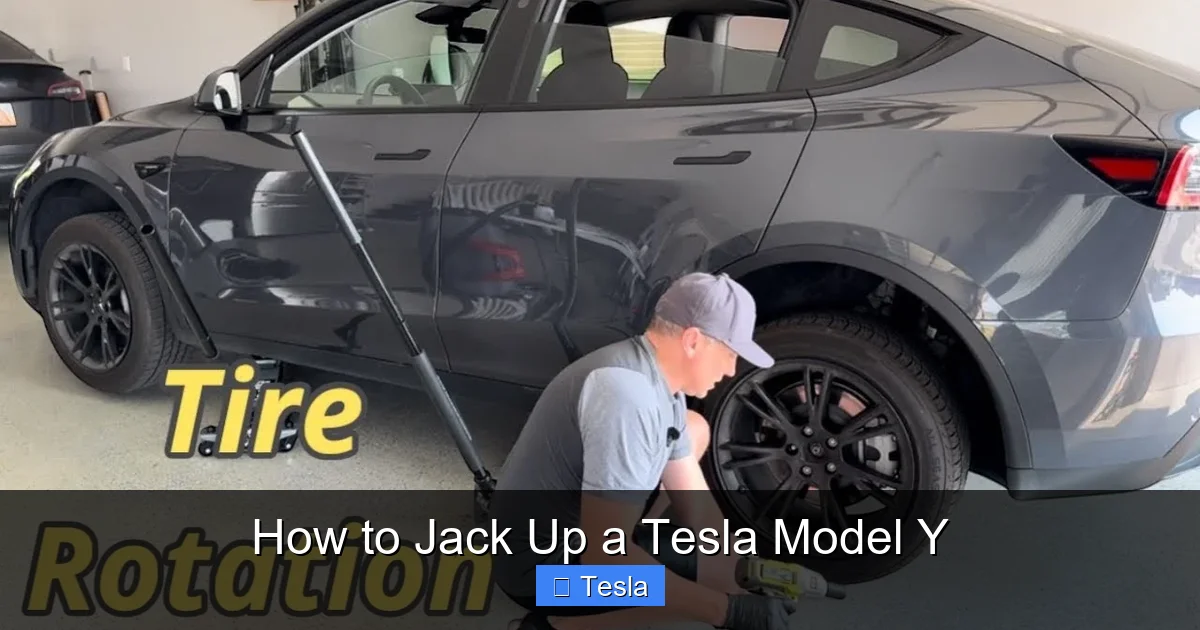
Visual guide about How to Jack Up a Tesla Model Y
Image source: buzzlyo.com
Front Jacking Points
The front points are located just behind the front wheel arches. Look at the underside of the car. You’ll see a thick, painted steel rail (often black) that runs front-to-back. On this rail, you’ll find a small, circular, recessed area—this is the jack point. It’s designed to cradle the jack saddle perfectly. There is one on each side. The key is to align your jack’s centerline directly with this recess. The manual states to place the jack “as close as possible to the wheel” for these points. This is for stability and to avoid the suspension components.
Rear Jacking Points
The rear points are similar but located just ahead of the rear wheel arches on the same type of reinforced steel rail. Again, look for the circular recess. The procedure is identical. For safety, Tesla recommends lifting the car from one end at a time (either both front wheels or both rear wheels) when using a single jack. If you need to lift one corner (like for a single tire change), you must use the specific corner jack point and ensure the opposite side is securely chocked.
What to Absolutely Avoid: The “No-Jack” Zones
To be perfectly clear, here is a list of places you must NEVER place a jack:
- The Battery Tray: The large, flat steel plate covering the battery. This is a “do not jack” zone. Lifting here can crush the battery cells.
- The Rocker Panel (Body Panel): The painted aluminum sheet metal between the wheels. This is not a structural member and will bend or tear instantly under the jack’s load.
- Any Suspension Component: Control arms, knuckles, or axle housings are not designed to bear the full weight of the car from above. They can break.
- The Seam Behind the Rear Wheels: There is a specific reinforced point ahead of the rear wheels, not behind them. The area behind the rear wheels is part of the rear subframe and not a designated lift point.
- The Front Bumper or Underbody Shields: Plastic and composite materials are not load-bearing. They will shatter.
When in doubt, consult the diagrams in your owner’s manual. They are the final authority. You can also find excellent visual guides in Tesla’s official service documentation if you have access, or from reputable Tesla owner forums where members have photographed the exact points.
Essential Tools for Safely Lifting Your Model Y
You can’t jack up a Tesla Model Y with just any old jack from the garage. Using improper tools is the second most common cause of damage. Here’s your checklist.
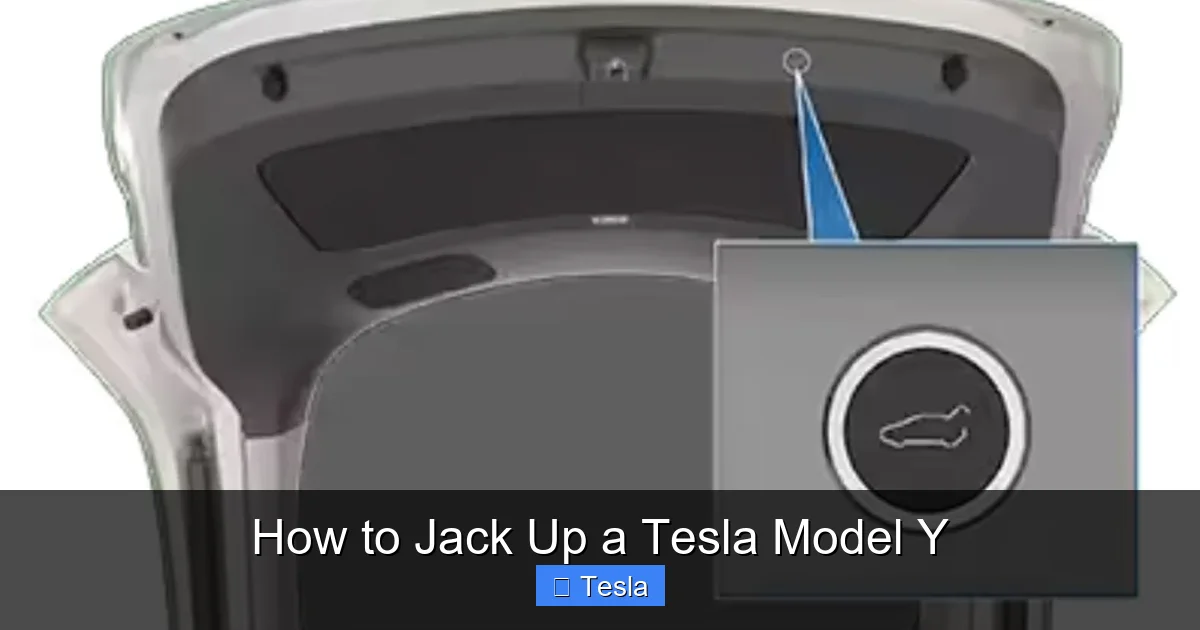
Visual guide about How to Jack Up a Tesla Model Y
Image source: i0.wp.com
The Jack: Floor Jack vs. Scissor Jack
Tesla’s Included Scissor Jack: Your Model Y comes with a compact scissor jack in the trunk. It’s designed for one thing: changing a flat tire on the side of the road. It has a very limited lift range and a low weight capacity. It’s not ideal for maintenance work because it’s slow, unstable, and requires you to be in an awkward position. It *can* be used if you’re careful and use the correct pad, but a floor jack is superior for any serious work.
Recommended: A 2-Ton (or higher) Floor Jack: This is the gold standard for home garages. You want a low-profile jack (to clear the Model Y’s ground clearance) with a minimum lift height of at least 17-18 inches. More importantly, you need the right saddle. Look for a jack that either comes with a “pinch weld adapter” or where you can purchase one separately. These are wide, often rubber-coated, pads that distribute the load over a larger area of the pinch weld, preventing damage. Brands like Daytona, Arcan, or Pittsburgh make good options. A jack with a universal saddle and a separate Tesla-specific adapter is a great combo.
Jack Stands: Non-Negotiable Safety Gear
This cannot be stressed enough: the jack is for lifting. Jack stands are for supporting. Never, ever crawl under a car supported only by a hydraulic jack. Jack stands are your safety net in case the jack fails or loses pressure. For the Model Y, you need stands that are tall enough to reach the car’s designated support rails. These rails are the same steel rails the jack points are on, but they run the length of the car. You will place the jack stands on these rails, not on the pinch weld itself. Look for stands with a wide, solid base and a secure, adjustable height mechanism. A 3-ton capacity per stand is standard and more than sufficient.
Support Rails and Adapters
As mentioned, you place the jack stands on the solid steel support rails. These are easy to spot—they are the thick, painted (usually black) beams running front-to-back on either side of the battery tray. You need to position the stand so it sits squarely on this rail. Some owners use small wooden blocks or metal pads between the stand’s saddle and the rail to prevent marring, but the smooth saddle of a good stand is usually fine. The key is that the rail is the load-bearing point, not the thin aluminum body.
Other Vital Gear
- Wheel Chocks: You need at least two. Place them snugly against the tires on the opposite end of the car from where you’re lifting. If lifting the front, chock the rear wheels. If lifting the rear, chock the front. This prevents the car from rolling.
- Gloves: Protect your hands from dirt and potential sharp edges under the car.
- Flashlight or Work Light: The underbody is dark. A good light is essential for seeing jack points, bolts, and ensuring clearances.
- Torque Wrench: If you’re removing wheels, you’ll need a torque wrench to properly tighten lug nuts to Tesla’s specification (typically 129 ft-lbs, but check your manual). Over or under-tightening is dangerous.
Step-by-Step: How to Jack Up Your Tesla Model Y
Finally, the procedure. We’ll assume you’re lifting one end of the car (both front or both rear wheels) to change two tires or perform work that requires the entire end to be in the air. If you only need to lift one corner, the principles are the same but you must be extra vigilant with chocking.

Visual guide about How to Jack Up a Tesla Model Y
Image source: koala.sh
Step 1: Prepare the Vehicle and Work Area
This step is 50% of the safety. Find a perfectly flat, level, and solid surface. Concrete is ideal. Avoid asphalt (which can soften and allow jack stands to sink) or uneven gravel. Engage the parking brake firmly. Put the car in “Park” if it’s an automatic. For maximum security, you can also activate the “Service Mode” (if available in your software version) which disables the traction control and makes the steering wheel lockable, but this is usually not necessary for simple lifting. Chock the wheels on the opposite end you are lifting with your wheel chocks. For example, if you’re lifting the front, chock both rear wheels tightly. Remove any wheel covers or center caps if you have them.
Step 2: Position the Jack and Connect to the Jack Point
Locate the correct jack point for the side you’re working on. Roll your floor jack into position. The jack’s saddle must be centered directly under the circular recess of the jack point. This may require you to angle the jack slightly. Use your flashlight to confirm alignment. If your jack has a universal saddle, now is the time to install your pinch weld adapter. Gently lower the jack saddle until it makes contact with the jack point. You should feel it settle into the recess. Give it a slight nudge to ensure it’s seated properly and won’t slip. The saddle should not be touching any other part of the underbody.
Step 3: Lift the Vehicle to the Desired Height
Before pumping the jack handle, do a final visual check. Ensure nothing is under the car. Ensure your body is clear of the lifting path. Pump the jack handle smoothly and slowly. Watch the car’s lift. It should rise evenly. If one side seems to be lifting faster or you hear a creak, stop immediately. Lower it, reposition, and try again. Lift the car until the tire is completely off the ground. For tire changes, you only need enough clearance to remove and replace the wheel. For underbody inspection, lift it high enough to comfortably slide a creeper under, but no higher than necessary—higher means less stability. Remember, the higher the car, the more leverage a jack stand has to tip over if not perfectly placed.
Step 4: Secure with Jack Stands—This Is the Critical Moment
Once the tire is clear of the ground (with at least 2-3 inches of space), you must transfer the weight to the jack stands. Do not skip this. With the car supported by the jack, slide your first jack stand into position on the solid steel support rail. The rail runs the length of the car. Position the stand so it is as close to the jacking point as possible, but squarely on the wide, flat top of the rail. The stand’s saddle should be centered. Slowly lower the jack just enough to transfer the car’s weight onto the jack stand. You will feel the car settle onto the stand. Give the car a firm push to ensure it is stable on the stand. Now, carefully lower the jack completely and remove it from under the car. Repeat the process for the other side. Place the second jack stand on the opposite side’s support rail at a similar distance from the jack point. Lower the car onto this second stand. Now the entire end of the car should be resting securely on both jack stands. Give the car a vigorous shake test. It should feel solid, with no rocking or shifting.
Step 5: Perform Your Work
Only now, with the car fully and securely supported by two jack stands, should you crawl under the vehicle. For a tire change, you can now remove the lug nuts, take off the wheel, and install the spare or new tire. For other underbody inspections, you have safe access. Keep your limbs clear of the car’s underside. If you need to move the jack stands, you must first lower the car onto its wheels, reposition the stands, and lift it again.
Step 6: Lowering the Vehicle Safely
When your work is done, the lowering process is the reverse, but with equal care. First, ensure all tools and body parts are clear. Place the floor jack back under one of the jack points. Lift the car just high enough to slide the jack stand out from under the support rail. Lower the car onto the jack’s saddle. Remove the jack stand. Repeat for the other side. Now the car’s full weight is on the jack. Lower the jack smoothly and slowly until the tire touches the ground. Remove the jack. Remove the wheel chocks. Give the lug nuts a final torque check with your torque wrench if you changed a wheel. For a comprehensive look at general lifting safety principles that apply here, you can review the procedures in guides like How To Jack Up Car For Oil Change Safely And Efficiently, which emphasize the universal rule of using stands.
Critical Safety Protocols and Common Mistakes to Avoid
Even with the right steps, a few pitfalls can turn a routine job into a disaster. Here’s what to watch out for.
Mistake 1: Jacking from the Wrong Spot
We’ve hammered this home, but it bears repeating. The pinch weld is the target. The body panel is not. If your jack saddle is pressing on the flat, painted rocker panel, you are doing it wrong. Stop immediately. You will cause irreversible damage. Always double-check your alignment. Using a flashlight from the side can help you see if the saddle is nestled in the recess or sitting on top of the panel.
Mistake 2: Forgoing Jack Stands
“I’ll just be quick.” “The jack feels solid.” These are famous last words. Hydraulic jacks can fail. Seals leak. Handles get bumped. A car falling on you from even a foot high can be fatal. Jack stands are cheap insurance. Never compromise. This is the single most important safety rule in any automotive work, and it’s doubly true for a heavy EV like the Model Y.
Mistake 3: Using the Tesla Scissor Jack Improperly
The scissor jack that comes with the car has a specific, wide pad. If you try to use it on a standard jack point without the pad, or if you use it on the wrong part of the underbody, you’ll damage the car. The scissor jack is also slow and can be unstable if the ground isn’t perfect. Reserve it for true emergencies on the road. For any planned maintenance, invest in a good floor jack.
Mistake 4: Working on an Unstable Surface
Grass, dirt, or a sloped driveway are recipes for disaster. The jack stands can sink, shift, or tip. Always work on concrete or another rigid, level surface. If you must work on a slope, wheel chocks become even more critical, but it’s best to find a level spot.
Mistake 5: Not Chocking the Wheels
The parking brake holds the drivetrain, but it does nothing to stop the car from rolling if a jack stand fails or if you’re lifting one corner. Wheel chocks are your backup against movement. Use them religiously.
Mistake 6: Overlooking the Risk to Paint and Body
When positioning the jack, you might scrape its frame or wheels against the Model Y’s painted rocker panel. The aluminum is soft. Even a light scrape can leave a permanent mark. Be mindful of the jack’s position as you roll it into place. Consider using a piece of cardboard or a rubber mat under the jack’s wheels if you’re on a rough surface. And remember, any damage to the paint or body, however small, can be costly to fix. In fact, owners often explore paint protection options like vinyl wraps precisely to guard against such scuffs. You can learn more about the cost to wrap a Tesla Model Y to understand the value of keeping that pristine finish intact.
After the Jack: Lowering and Final Procedures
You’ve finished your work. The wheel is torqued, the inspection is done. Now, the get-down.
Begin by removing all tools and debris from under the car. Position the floor jack under one of the front (or rear) jack points. Lift the car just high enough to slide the jack stand on that side out from under the support rail. Lower the car onto the jack’s saddle. Remove that jack stand. Repeat for the opposite side. Now the car’s weight is fully on the jack. Lower the jack smoothly and controllably until the tire touches the ground. Do not just drop it. Once the tire is on the ground, remove the jack. Before driving, if you removed a wheel, use your torque wrench to tighten the lug nuts in a star pattern to the exact specification in your manual (usually 129 ft-lbs). Remove the wheel chocks. Do a final walk-around. Start the car, listen for any unusual sounds, and check the tire pressure via the touchscreen if you changed a tire, as the TPMS may need a reset.
If you were performing a more involved task like an oil change (though Teslas don’t need traditional oil changes) or brake service, you’d also follow specific re-torquing and system check procedures. For general lifting, the steps above are your complete guide.
Conclusion: Confidence Through Correct Procedure
Jacking up a Tesla Model Y doesn’t have to be a nerve-wracking experience. It all comes down to respecting the vehicle’s unique engineering and following a disciplined process. Remember the three pillars: correct points (the steel rail pinch welds), correct tools (a proper floor jack with adapter and jack stands), and correct safety (chocks, flat ground, never under a jack-only car). Your owner’s manual is your best friend—keep it handy. If at any point you feel uncertain, especially about locating the exact jack point, don’t guess. Seek out a visual guide from a trusted Tesla community source or, better yet, have a professional show you the first time. The cost of a service call is trivial compared to the cost of a punctured battery pack or a bent suspension arm. By taking the time to do it right, you protect your significant investment and ensure your own safety. Now you’re ready to lift your Tesla with confidence. Happy (and safe) wrenching!
Frequently Asked Questions
Can I use the included Tesla scissor jack for regular maintenance?
The included scissor jack is designed for emergency roadside tire changes only. It has limited lift range and stability, making it unsuitable for prolonged work or tasks requiring you to get under the car. A dedicated floor jack and jack stands are strongly recommended for any garage maintenance.
Where exactly are the jack points on a Tesla Model Y?
The four jack points are on the reinforced steel rails running parallel to the rocker panels. There is one circular recess behind each front wheel arch and one ahead of each rear wheel arch on these rails. Always look for the specific recessed area—never guess based on the body shape.
What happens if I accidentally jack from the battery tray?
This is extremely dangerous. Placing a jack under the battery enclosure can crush the battery cells, damage the thermal management system, and potentially cause a thermal runaway fire. It will also result in catastrophic and extremely expensive damage. Never, ever jack from the flat tray under the car’s center.
Do I need special jack stands for a Tesla?
No special stands are needed, but you must place them on the solid steel support rails, not on the aluminum body or battery tray. Standard 3-ton jack stands with a wide, flat saddle are perfectly suitable when positioned correctly on the rails.
Can I jack up just one corner of my Model Y to change a single tire?
Yes, you can lift one corner, but you must use the specific corner jack point and have the opposite rear (or front) wheel chocked extremely securely. The car will be less stable than when both ends are lifted. For a single tire change, many prefer to use the included scissor jack at the correct point, but a floor jack is still better. Always ensure the car is stable before crawling near it.
Is it safe to lift the Model Y from the front or rear tow hooks?
No. The tow hooks are for towing only and are not designed to bear the full static weight of the vehicle for lifting. They are made of steel but are not integrated into the primary structural rails in a way that can safely support the car’s full mass from a vertical lift. Always use the designated jack points on the side rails.