
How to Defog a Tesla Windshield

Defogging a Tesla windshield leverages its advanced electric climate system, which is more powerful and responsive than traditional cars. The quickest method uses the touchscreen or Tesla app to activate max defrost, directing heated air to the windshield and rear glass. Prevention through proper ventilation, cabin filter maintenance, and smart use of features like preconditioning is key to avoiding foggy drives.
Key Takeaways
- Use Max Defrost: The fastest way to clear fog is selecting the “Max Defrost” setting on your Tesla’s touchscreen or via the Tesla app, which directs all HVAC power to the windshield.
- Electric System Advantage: Tesla’s electric heat pump or PTC heater provides instant, powerful, and efficient air for defogging, unlike slower engine-based systems in gas cars.
- Prevention is Primary: Consistently using the “Keep Climate On” setting, maintaining cabin air filter health, and managing interior humidity are the best long-term strategies.
- The App is Your Friend: Precondition your Tesla remotely using the app before you get in, especially in cold, wet conditions, to start with a clear windshield.
- Don’t Just Wipe: Using wipers alone on a fogged interior is ineffective and can smear. Always address the humidity source with the climate system first.
- Check the Cabin Filter: A clogged cabin air filter severely reduces airflow and defogging efficiency. Regular replacement is crucial for optimal performance.
- Understand the Cause: Interior fog is caused by warm, moist air (from your breath or wet items) hitting cold glass. The solution is drying the air and warming the glass surface.
[FEATURED_IMAGE_PLACEHOLDER]
📑 Table of Contents
- Why Defogging a Tesla Windshield is a Unique Experience
- Understanding Your Tesla’s Climate & Defog System
- The Immediate Action Plan: How to Defog Right Now
- Leveraging Advanced Tesla Features for Long-Term Clarity
- Prevention: The Proactive Approach to a Fog-Free Tesla
- Common Mistakes & Misconceptions
- When Standard Defogging Isn’t Enough: Troubleshooting
- Conclusion: Embrace the Electric Advantage
Why Defogging a Tesla Windshield is a Unique Experience
There’s nothing quite like the moment you slide into your Tesla, ready to enjoy the silent, instant torque, only to be met with a windshield completely obscured by fog. It’s a universal driving annoyance, but solving it in an electric vehicle like a Tesla feels different. You don’t have to wait for an engine to warm up. There’s no gradual buildup of heat from a radiator. Instead, you have a computer-controlled, high-voltage climate system at your fingertips, capable of responding with astonishing speed and precision. Understanding how to harness this system is the key to defogging your Tesla windshield not just effectively, but in a way that feels futuristic and effortless. This isn’t about old tricks with a rag; it’s about leveraging software and electric power to solve a physical problem.
Many new Tesla owners, especially those transitioning from combustion engine vehicles, instinctively reach for the traditional “crank the heat and point the vents” method. While that works in a pinch, it doesn’t tap into the full potential of your car’s defogging arsenal. Tesla’s approach is holistic, combining powerful hardware—like dedicated heated windshield elements (in many models) and a robust heat pump or PTC (Positive Temperature Coefficient) heater—with intelligent software that automates the perfect response. The goal of this guide is to move you from frustration to fluency, turning that foggy pane of glass into a non-issue by the time you click “Drive.”
Understanding Your Tesla’s Climate & Defog System
Before we dive into the “how,” let’s appreciate the “why it works so well.” A traditional car’s defogger relies on waste heat from the engine. In winter, you must wait for the engine to reach operating temperature before the heater blows warm air. In a Tesla, the electric heater draws power directly from the high-voltage battery, providing heat instantly, regardless of outside temperature. This is the foundational advantage.

Visual guide about How to Defog a Tesla Windshield
Image source: carstale.com
The Role of the Heat Pump vs. PTC Heater
Tesla has used both technologies across its fleet. Older Model S and X vehicles, and some current configurations, use a PTC heater. It’s a simple, powerful electric element that heats the coolant for the HVAC system. Newer models, including the Model 3, Y, and the latest S/X, feature a sophisticated heat pump. This system is significantly more efficient because it doesn’t just generate heat; it actively moves heat from the outside air (even when it’s cold) into the cabin using a refrigerant cycle, much like an air conditioner running in reverse. For defogging, both systems are capable of producing the hot, dry air needed, but the heat pump does so with less impact on your driving range. The user experience, however, is the same: rapid, on-demand warmth.
The Heated Windshield & Mirrors: Your Secret Weapon
Many Tesla models (typically from a certain production year forward) come equipped with a heated windshield and heated side mirrors. This is not just a comfort feature; it’s a critical defogging and defrosting tool. Thin, transparent heating elements are embedded in the glass. When activated, they gently warm the surface of the glass itself, preventing condensation from forming and melting any light ice or frost. This works in tandem with the HVAC system: the heated air dries the cabin air, while the heated glass raises its surface temperature above the dew point. The result is a doubly effective, streak-free clear view. You can control these elements via the touchscreen climate controls.
The Cabin Air Filter: The Unsung Hero
Your Tesla’s climate system recirculates cabin air through a filter (often a HEPA filter in Teslas, famous for their “Bioweapon Defense Mode”). This filter traps pollen, dust, pollutants, and moisture. Over time, it becomes clogged. A clogged filter dramatically reduces airflow through the vents. You might hear the blower fan working overtime but feel minimal air coming out. This cripples your defogging power. Regular cabin filter replacement is non-negotiable for optimal defogging performance. You can often do this yourself with a simple tool, but for a thorough job, especially on models with the “Bioweapon Defense Mode” filter stack, a service appointment might be preferable. A clean filter ensures maximum volume of dry, conditioned air reaches your windshield.
The Immediate Action Plan: How to Defog Right Now
Fog has just appeared. You’re in the car, or about to get in. What do you do? Follow this sequence for the fastest results. The key principle is to attack the problem from two angles simultaneously: 1) Dry the air in the cabin, and 2) Warm the windshield surface.
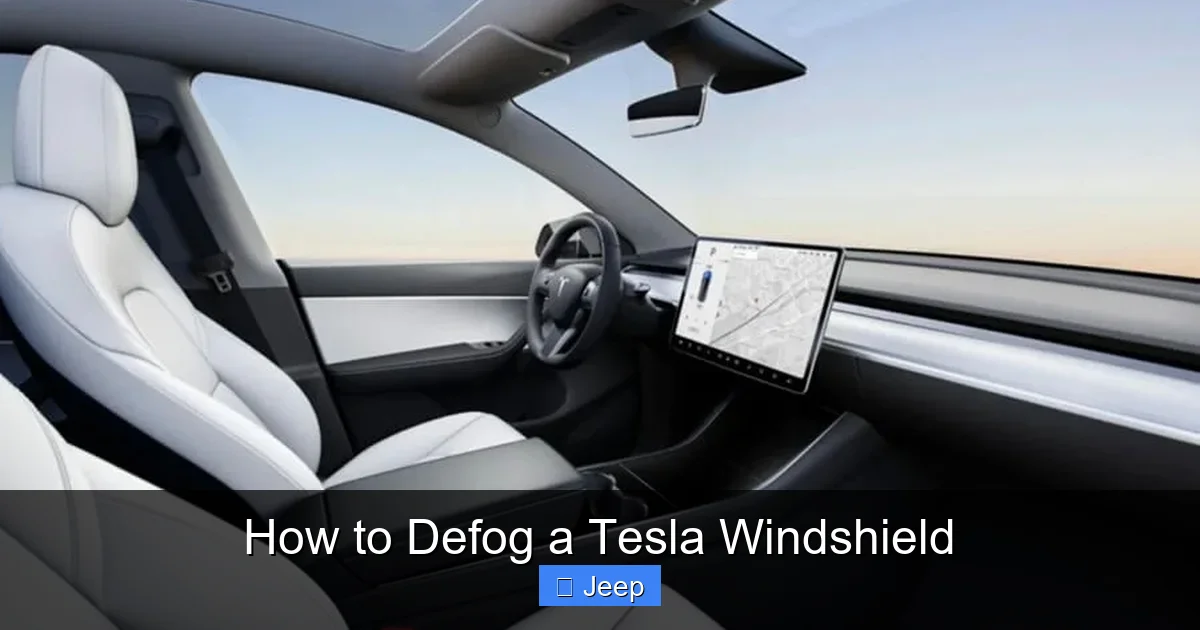
Visual guide about How to Defog a Tesla Windshield
Image source: carstale.com
Step 1: Activate Max Defrost on the Touchscreen
The single most effective command is the “Max Defrost” button. On the touchscreen, navigate to the climate control fan icon. You’ll see a large button with a wavy arrow pointing at a rectangle (the windshield). Tap it. This tells the car’s computer: “Forget comfort, forget efficiency. Use every bit of heating and fan power to clear the front and rear glass.” The system will automatically:
- Set the fan to maximum speed.
- Direct all airflow to the windshield and rear window vents (often closing the face vents).
- Activate the heated windshield and mirror elements (if equipped).
- Set the temperature to a warm point (usually around 75°F / 24°C, but it varies).
- Turn off air recirculation, pulling in drier outside air.
This automated scene is far more effective than manual tweaking. Sit back and let the car do the work. Within 1-3 minutes, depending on severity, the fog should be gone.
Step 2: The Tesla App Remote Advantage
Why wait until you’re in the car? The greatest Tesla defogging hack is doing it before you even open the door. Using the Tesla app on your phone:
- Ensure your car is connected (cellular or Wi-Fi).
- Tap “Climate” or the fan icon.
- Select “Max Defrost” or simply turn the climate system on and set it to a high temperature with the fan on high.
- If your car has it, also activate the heated rear window from this menu.
Do this while you’re still indoors, finishing your coffee. By the time you walk to your car, the cabin air will be dry and warm, and the windshield surface will already be thawed and cleared. This is especially magical on cold, damp mornings. It transforms a miserable start into a seamless one. For maximum effect, combine this with the “Scheduled Departure” feature to have the car preconditioned at a specific time.
Step 3: Manual Override & Fine-Tuning
If Max Defrost isn’t available or you need to adjust:
- Temperature: Set it warmer than you might think. 72-75°F (22-24°C) is a good target for rapid defogging.
- Fan Speed: Crank it. Air movement is critical for evaporating moisture and pushing dry air against the glass.
- Airflow Direction: Manually select the setting that points all arrows at the windshield and front pillars.
- Recirculation: TURN IT OFF. Recirculating moist cabin air is the worst thing you can do. You must pull in drier outside air, even if it’s cold. The heater will warm it.
- Heated Windshield: Ensure the heated windshield icon (usually a rectangle with wavy lines) is illuminated on the screen. If it’s not, your specific model/trim may not have the feature, making the HVAC system’s job harder.
Leveraging Advanced Tesla Features for Long-Term Clarity
Moving beyond crisis management, Tesla offers several features designed to prevent fogging altogether or handle it proactively. Integrating these into your routine is the mark of a Tesla pro.
Visual guide about How to Defog a Tesla Windshield
Image source: carstale.com
Cabin Overheat Protection
While primarily for keeping the cabin from becoming dangerously hot in the sun, this feature has a side benefit for humidity. Set to “On” or “Fan Only” in your settings, it can run the fans to circulate air even when the car is parked and unoccupied. On a humid day after rain, having this run at a low level can help air out the cabin and reduce the moisture load before you even get in, making defogging upon entry much faster. It’s a passive, always-available helper.
Preconditioning & Scheduled Departure
This is your ultimate prevention tool. By using “Scheduled Departure” in the charging menu or simply preconditioning manually via the app, you tell the car to prepare itself at a set time. In cold weather, this means:
- The battery and cabin are warmed using grid power (while plugged in), saving range.
- The windshield is warmed via the heated glass elements and warm air from the HVAC.
- The cabin air is dried out.
When you get in, the interior is already dry and warm. The windshield is clear. You simply get in and go. This habit alone will make you forget what it’s like to have a foggy windshield. It’s the equivalent of starting a gas car and having the defroster already on full blast before you turn the key.
The Power of “Keep Climate On”
Found in the climate settings, “Keep Climate On” allows the HVAC system to run even when the car is parked and unoccupied, as long as the battery has sufficient charge. For those who live in extremely humid climates or frequently have wet gear (umbrellas, snow boots) in the car, enabling this for a few hours after parking can continuously pull moisture out of the air. It’s an energy-intensive option, so use it judiciously, but it’s a powerful tool for stubborn, persistent humidity problems. Combine it withSentry Mode if you’re concerned about battery drain.
Prevention: The Proactive Approach to a Fog-Free Tesla
An ounce of prevention is worth a pound of defrosting. Here’s how to keep fog from forming in the first place.
Manage Interior Moisture Sources
The fog comes from water vapor. The most common source is you and your passengers breathing. Secondary sources are wet clothing, umbrellas, snow-covered boots, and even damp floor mats. The strategy is to remove or contain these sources.
- Wet Items: Shake off snow and water outside the car. Store umbrellas in a dedicated dry bag. If boots are soaked, consider placing them in a plastic bag or trunk until they dry.
- Floor Mats: Use all-weather rubber floor mats that can be easily removed and dried. Fabric mats absorb water and then slowly release moisture into the cabin air.
- Ventilation: Even in winter, crack a window slightly when parked if safe to do so. This allows moist air to escape and be replaced by drier outside air. The slight energy loss from a tiny gap is often worth the humidity reduction.
Seasonal Maintenance Checklist
As seasons change, perform a quick check:
- Fall/Winter: Ensure your cabin air filter is fresh before the cold, damp season. Test your heated windshield and mirrors to confirm they work. Top up your washer fluid with a winter formula that won’t freeze.
- Spring/Summer: High humidity is the enemy. Focus on keeping the interior as dry as possible. Use the AC’s dehumidifying function more often, even on cool days. The AC naturally removes moisture from the air.
- Year-Round: Clean the interior glass regularly. Oily films from hands and off-gassing from plastics can create a surface that attracts moisture and makes fogging worse. Use a proper automotive glass cleaner and microfiber cloth.
Consider Professional Window Tinting (with Caution)
Many Tesla owners love the aesthetic and privacy of window tint. However, certain types of low-quality or excessively dark tints can interfere with the heated windshield’s function or trap heat/moisture against the glass. If you’re considering tint, always choose a reputable installer who understands Tesla’s specific requirements, especially regarding the front windshield (which often has a ceramic heating element). They should use a non-metallic, IR-rejecting film that won’t block the heating elements. You can research the specifics and costs through resources like our guide on how much it costs to tint a Tesla Model 3, which also covers important compatibility notes.
Common Mistakes & Misconceptions
Even with the best tech, it’s easy to make errors that prolong fogging. Let’s clear them up.
Mistake 1: Relying on the Wipers Alone
Swiping at interior fog with your wipers is useless and can damage the wiper blades by smearing grime across the glass. The wipers are designed for external water, not internal condensation. You must eliminate the moisture source in the cabin air first with the HVAC system. Once the fog is gone, a quick wipe with a clean, dry microfiber cloth can remove any residual streaks.
Mistake 2: Using Recirculation Mode
This is the #1 error. Recirculation traps the moist air you’re exhaling inside the cabin. It feels like you’re getting warmer air faster, but you’re just recycling the problem. Always use fresh air mode (recirculation OFF) when defogging. The system needs to exchange humid cabin air for drier outside air.
Mistake 3: Setting the Temperature Too Low
Cold air holds less moisture. To clear fog, you need to warm the glass surface above the dew point. A lukewarm setting (like 68°F / 20°C) might not be enough on a very cold day. Don’t be afraid to set it to 75°F or even higher temporarily. The system will quickly bring the cabin to a comfortable temperature once the fog is gone, and you can adjust it down.
Mistake 4: Ignoring a Clogged Cabin Filter
If your defogging seems weak and sluggish despite using Max Defrost, a clogged cabin filter is the prime suspect. Reduced airflow means less dry, warm air reaches the windshield. This is a maintenance issue, not a usage issue. Replacing the filter is a relatively inexpensive fix that yields massive returns in HVAC performance, including defogging, air quality, and overall fan strength.
When Standard Defogging Isn’t Enough: Troubleshooting
If you consistently battle fog despite following all best practices, there may be an underlying issue.
Persistent Humidity & “Musty” Smell
If the fog is accompanied by a stale or musty odor, especially when you first turn on the climate system, you likely have a moldy or mildew-clogged cabin air filter or, worse, mold in the HVAC evaporator case or ducts. Replacing the cabin filter is the first step. If the smell persists, a professional HVAC system cleaning and disinfectant treatment may be necessary. This is a health and comfort issue, not just a visibility one.
Fog on the *Outside* of the Windshield
This article focuses on interior fog. Exterior condensation (fog on the outside) is a different beast, usually caused by high humidity outside and a cold windshield. Your wipers and washer fluid handle this. If it’s persistent, your windshield might be excessively cool. Ensure your heated windshield is working. In very humid climates, using the “Keep Climate On” with AC can help dry the air near the glass from the inside.
Windshield Damage Concerns
Sometimes, what looks like stubborn fog or haze is actually a damaged or degraded windshield. Deep scratches, pitting, or a failing hydrophilic coating can trap moisture and create a permanent hazy view. If thorough cleaning and defogging don’t resolve a visual impairment, it’s time to inspect the glass itself. Windshield replacement on a Tesla is complex due to ADAS (Advanced Driver Assistance Systems) calibration. Always use a Tesla-certified glass shop. You can learn more about the process and costs from articles like how much a Tesla Model 3 windshield costs, which highlights the importance of proper recalibration after replacement.
Conclusion: Embrace the Electric Advantage
Defogging your Tesla windshield shouldn’t be a daily struggle. It’s a solved problem, thanks to the vehicle’s powerful, instant, and intelligent climate system. The core strategy is simple: use Max Defrost (via screen or app) to combine high-volume dry air with heated glass, and prevent moisture buildup through smart habits and feature usage like preconditioning. Remember to maintain your cabin air filter, avoid recirculation, and manage wet items. By understanding the technology and adopting these practices, you transform a common driving nuisance into a non-event. You get in, you tap a button (or better yet, your phone does it for you), and you drive off with perfect clarity. That’s not just convenience; it’s a fundamental part of the modern, efficient Tesla ownership experience. So next time you see that mist creeping across the glass, smile—you have the tools to make it vanish in seconds.
Frequently Asked Questions
Can I use my Tesla wipers alone to clear interior fog?
No. Windshield wipers are designed for external water, not internal condensation. Wiping interior fog will smear moisture and potentially dirt across the glass, making visibility worse. Always use the climate system to eliminate the moisture source first.
How long does Max Defrost take to clear a completely fogged windshield?
Typically 1 to 3 minutes. The exact time depends on the severity of the fog and the outside temperature. The system works immediately, so you’ll see rapid improvement within 30-60 seconds. Using the Tesla app to precondition remotely can make the time virtually zero when you get in.
Is it safe to use the Tesla app to turn on climate control while the car is locked?
Yes, it is perfectly safe and designed for this purpose. This is a core feature of the Tesla app. The car’s security system remains active while the HVAC runs. It’s a convenient way to precondition your cabin without needing to be inside the vehicle.
Why is my defogging so weak even on Max Defrost?
The most common cause is a severely clogged cabin air filter, which restricts airflow. Replace your cabin filter first. Secondary causes could be a malfunctioning heated windshield element or a low refrigerant charge in the HVAC system (requiring service).
Should I use the air conditioner (AC) to defog?
Yes, but indirectly. The AC system’s compressor dehumidifies the air. When you use Max Defrost, Tesla’s system automatically engages the AC compressor to help dry the air, even if the temperature setting is warm. You don’t need to manually turn on the AC; the Max Defrost mode handles it optimally.
My Tesla has a permanent haze on the inside of the windshield that won’t wipe off. Is this fog?
Probably not. This is likely a chemical film from off-gassing plastics, smoking residue, or a degraded windshield coating. It requires a deep clean with appropriate automotive glass cleaners and possibly a clay bar. If cleaning fails, the glass itself may be damaged or have a failing coating, requiring professional assessment or replacement.
