
What Is Normal Oil Pressure for a Jeep Wrangler?

Normal oil pressure for a Jeep Wrangler typically ranges from 20 to 60 PSI when the engine is warm and idling, with higher pressures during acceleration. The exact pressure varies by model year, engine type (like the 3.6L Pentastar V6 or 2.0L Turbo), and oil viscosity. Consistently low pressure signals a serious issue, while excessively high pressure can also cause damage. Regular maintenance with the correct oil and filter is non-negotiable for protecting your Wrangler’s heart.
Key Takeaways
- Ideal Range: A healthy, warm Jeep Wrangler engine should maintain 20-60 PSI at idle, often peaking around 40-50 PSI. Cold starts will show higher pressure (60-80+ PSI) until the oil warms and thins.
- Model Matters: Pressure specs differ between the TJ/JK/JL generations and engine options (3.6L, 2.0L, 3.0L EcoDiesel). Always consult your owner’s manual for your specific Wrangler’s specifications.
- Temperature is Key: Oil pressure is inversely related to temperature. Cold, thick oil creates high pressure; hot, thin oil creates lower pressure. The 20-60 PSI rule applies when the engine is at operating temperature (about 180-220°F).
- Warning Signs: A steady low reading (below 10-15 PSI when warm) or a flashing oil pressure light means immediate shutdown. Fluctuating pressure at steady RPMs often points to a failing sensor or pump, not necessarily low oil.
- Maintenance is Everything: Using the correct oil viscosity (like 0W-20 or 5W-30 as specified), a quality filter, and changing it on schedule are the most critical factors in maintaining proper pressure and engine health.
- Pressure vs. Volume: Do not confuse oil pressure with oil level. You can have perfect pressure with low oil (temporarily) and catastrophic failure is imminent. Always check both.
- When in Doubt, Stop: If the oil pressure warning light illuminates or the gauge drops into the danger zone, shut off the engine immediately. Running even for a minute without pressure can destroy an engine.
📑 Table of Contents
- Introduction: Your Wrangler’s Lifeline in a Number
- Why Oil Pressure Isn’t Just a Number: The Physics of Protection
- Decoding the Numbers: What’s Actually Normal for Your Wrangler?
- The Usual Suspects: What Affects Your Wrangler’s Oil Pressure?
- Reading the Tea Leaves: Interpreting Your Gauge and Warning Light
- Troubleshooting: From Quick Checks to Professional Diagnosis
- Proactive Protection: Maintaining Perfect Oil Pressure for the Long Haul
- Conclusion: Knowledge is Power (and Engine Longevity)
Introduction: Your Wrangler’s Lifeline in a Number
You’re behind the wheel of your Jeep Wrangler, the iconic boxy shape cutting through traffic or conquering a rocky trail. The gauges on your dash tell a story, but few are as critical—or as misunderstood—as the oil pressure gauge. That needle or digital readout isn’t just another dashboard ornament; it’s your engine’s vital sign monitor in real-time. Understanding what “normal” oil pressure is for your specific Jeep Wrangler is one of the most fundamental pieces of knowledge a owner can have. It separates casual drivers from informed enthusiasts who can prevent a minor issue from becoming a $10,000 engine replacement.
The concept is simple: oil under pressure lubricates, cools, and cleans every moving part inside your engine. Without adequate pressure, metal grinds on metal, temperatures soar, and destruction follows swiftly. But “adequate” isn’t a one-size-fits-all number. What’s normal for a 2012 JK with a 3.6L V6 differs from a new JL with the 2.0L turbo, and both differ from a classic TJ with a 4.0L straight-six. This guide will demystify the numbers, explain the science, and give you the practical knowledge to read your Wrangler’s health like a pro. We’ll break it down by generation, engine, and condition, so you’ll never look at that gauge with confusion again.
Why Oil Pressure Isn’t Just a Number: The Physics of Protection
The Hydraulic System Inside Your Engine
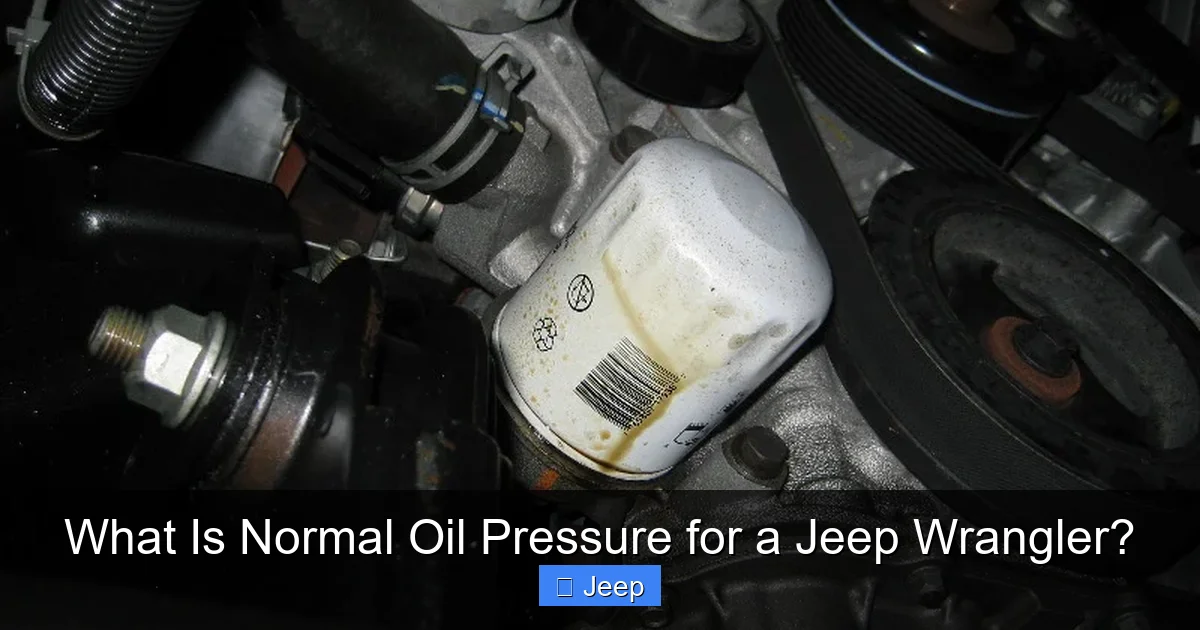
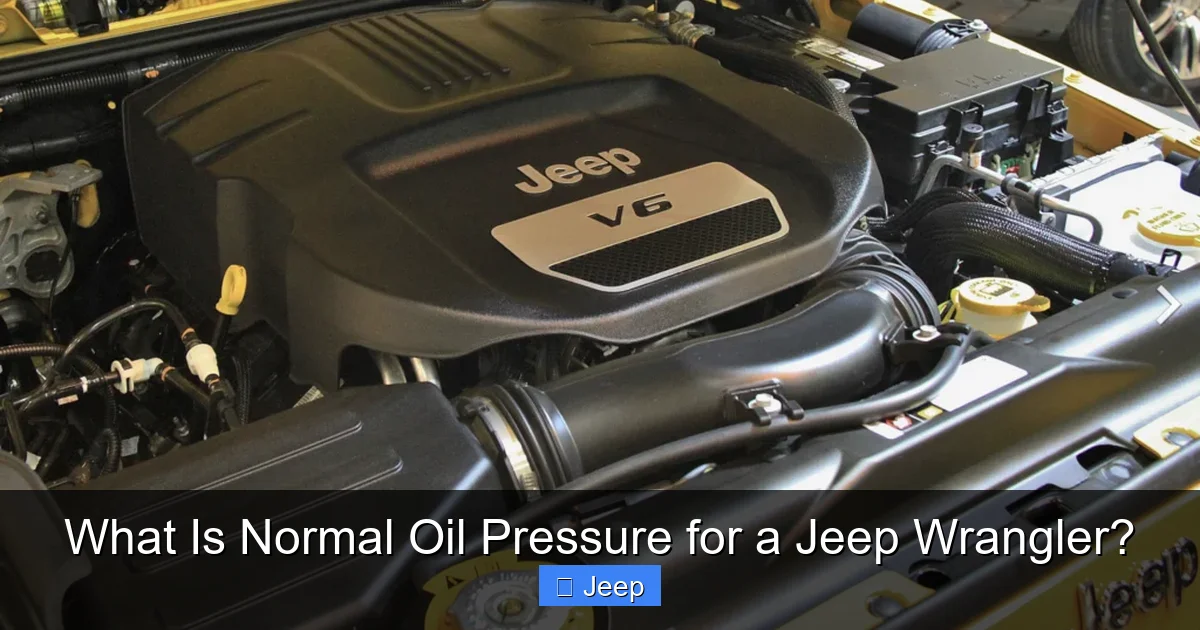
Think of your engine’s lubrication system as a complex network of pipes, channels, and clearances. The oil pump, driven by the engine, forces oil through this network under pressure. This pressure does the heavy lifting. It overcomes the resistance of the narrow oil passages (galleries) in the crankshaft and camshaft, ensures oil squirts onto the cylinder walls, and delivers a mist to the valve train. The “pressure” part is crucial because gravity alone won’t get oil to the top of a V6 engine when it’s running. The pump creates the force needed to fight friction and gravity simultaneously.
Visual guide about What Is Normal Oil Pressure for a Jeep Wrangler?
Image source: paulstravelpictures.com
Pressure vs. Flow: A Critical Distinction
Many people confuse oil pressure with oil flow. They are related but not the same. Pressure is the force per square inch (PSI) exerted by the oil. Flow is the volume of oil moving through the system per minute. You need both. An old, clogged oil filter might create high pressure (because the oil can’t get through easily) but low flow (because not enough oil is actually circulating). Conversely, a massive internal leak (like worn bearings) causes low pressure because oil is escaping, but flow might initially be high—it’s just going in the wrong place (the crankcase). Your gauge reads pressure, which is why it’s such a valuable diagnostic tool.
The Viscosity Connection: Oil’s Thickness is Everything
Oil viscosity—its resistance to flow—is the single biggest factor affecting pressure, besides engine speed. Thicker oil (like a 10W-40) creates more resistance in the pump and passages, leading to higher pressure readings. Thinner oil (like a 0W-20) flows more easily, resulting in lower pressure. This is why modern engines, including newer Wranglers, specify lower viscosity oils. They are designed with tighter tolerances and require thinner oil for efficiency and cold-start protection. Using the wrong viscosity can create dangerously high pressure on cold starts or dangerously low pressure when hot. For specific recommendations on what oil to use, you can refer to guides like our best oil for a 2014 Jeep Wrangler, which discusses the perfect viscosity for that popular model year.
Decoding the Numbers: What’s Actually Normal for Your Wrangler?
Here’s where we get specific. “Normal” is a range, not a single number, and it changes dramatically with engine temperature and RPMs. Below are general guidelines for the most common Wrangler engines. Your owner’s manual is the ultimate authority.
Visual guide about What Is Normal Oil Pressure for a Jeep Wrangler?
Image source: vehiclers.com
The Golden Rules for All Wranglers
- Cold Start (First 1-2 minutes): Expect very high pressure, often 60-80 PSI or more. The oil is cold and thick, and the pump is spinning fast. This is normal and not a cause for alarm unless it’s excessively high (100+ PSI) or the gauge pegs immediately.
- Warm Idle (Operating Temp): This is the most important number. A healthy, warm engine at a normal idle (around 600-800 RPM) should show 20 to 60 PSI. Most Wranglers will settle in the 30-50 PSI range at a steady idle. Below 20 PSI when hot and idling is a red flag.
- Under Acceleration/High RPM: Pressure will rise with engine speed, often reaching 50-70 PSI at 3000+ RPM. This is normal as the pump spins faster.
- Steady Cruise: At a constant highway speed (e.g., 70 MPH, 2500 RPM), pressure should be steady within the normal range for that RPM, typically 40-60 PSI.
Generation & Engine-Specific Norms
Jeep Wrangler TJ (1997-2006)
The beloved TJ era, especially with the legendary 4.0L inline-six, has straightforward expectations. The 4.0L is a low-revving, durable engine. At a warm idle, you should see 25-45 PSI. During normal driving, it might hover around 40-50 PSI. The 2.4L and later 4.0L models are similar. The gauge needle should move smoothly with RPMs, never jumping erratically.
Jeep Wrangler JK & JKU (2007-2018)
The JK introduced the modern 3.6L Pentastar V6 (from 2012 onward), which became a benchmark for reliability. The 3.6L typically runs a bit higher than the old 4.0L. A warm idle on a healthy 3.6L should be 35-50 PSI. The earlier 3.8L V6 (2007-2011) is also known for good oil pressure, often in the same range. The key with the JK’s more precise engine is that fluctuations are more noticeable. A drop below 25 PSI at idle when hot warrants investigation.
Jeep Wrangler JL & JLU (2018-Present)
The current JL generation offers the most variety: the 3.6L Pentastar, the efficient 2.0L Turbo, and the powerful 3.0L EcoDiesel V6. The 2.0L Turbo, due to its design and recommended 0W-20 oil, often has the lowest idle pressures of the bunch. It’s common to see 25-40 PSI at a warm idle. The 3.6L remains in the 35-50 PSI range. The 3.0L Diesel, with its heavy-duty design and different oil spec, can read higher. Consult your manual for your specific engine’s spec. The JL’s digital gauge clusters can sometimes be less intuitive than analog needles, so understanding what “normal” movement looks like is key.
What About the Oil Pressure Warning Light?
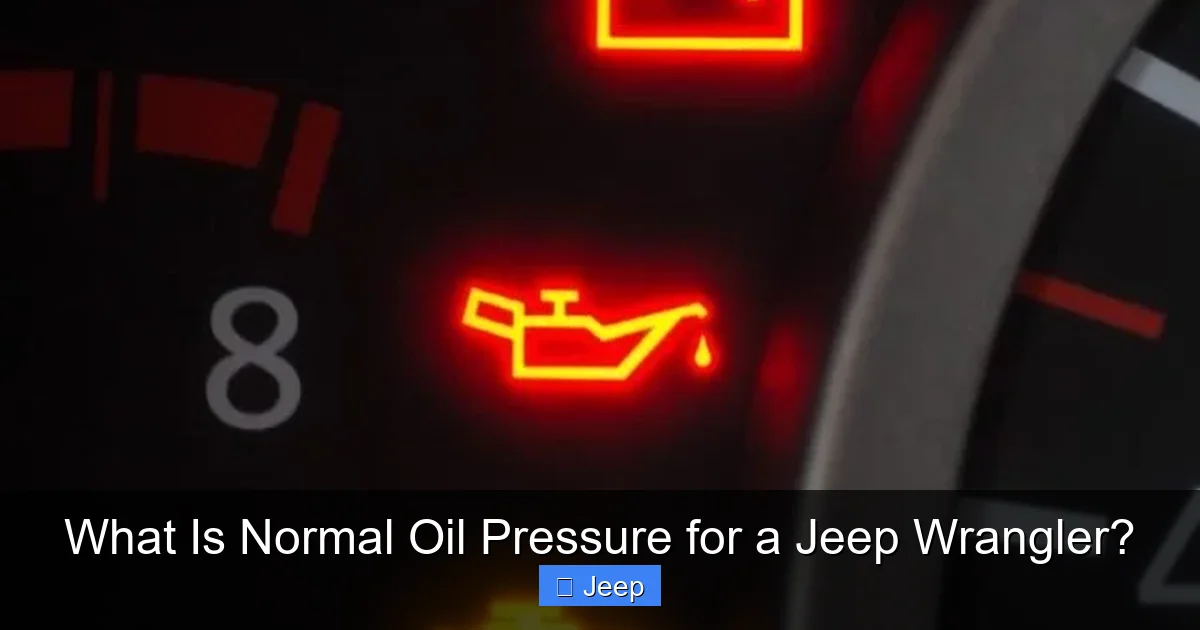
Unlike the gauge, which shows a range, the warning light (usually a red oil can icon) is a binary alarm. It is designed to illuminate when pressure drops below a critical, engine-damaging level—typically around 5-10 PSI. It is NOT a “check oil level” light. If this light comes on, even if the gauge shows 15 PSI, you must shut the engine off immediately. The light’s sole purpose is to prevent you from destroying the engine. A malfunctioning sensor can trigger it falsely, but you must treat it as a real emergency until proven otherwise.
The Usual Suspects: What Affects Your Wrangler’s Oil Pressure?
If your gauge isn’t reading in the normal range, several factors could be at play. Some are simple fixes; others are major repairs.
Visual guide about What Is Normal Oil Pressure for a Jeep Wrangler?
Image source: gdlauto.com.au
Oil Level: The Obvious First Check
The absolute first step if you have a pressure concern is to check the oil level on a cold, level surface. Low oil will cause low pressure. However, do not assume low pressure means low oil. You can have a full pan and still have zero pressure if the pump has failed. But a low level is the easiest fix. The dipstick on your Wrangler has clear marks. Keep it between MIN and MAX, ideally at or near the MAX mark for best protection.
Oil Condition & Viscosity
Old, degraded oil can lose its viscosity, becoming thinner than intended. This reduces pressure. If you’re way past due for an oil change, this is a likely culprit. Conversely, using oil that is too thick for your engine or the ambient temperature can cause excessively high pressure on cold starts and potentially starve the engine of oil at startup before it warms up. Always use the viscosity specified in your manual. Understanding what oil is needed for your car is foundational to this entire discussion.
The Oil Filter: A Common Culprit
A clogged, low-quality, or incorrect oil filter is a prime suspect for erratic pressure. A filter with a restrictive bypass valve or one that’s become clogged with debris can cause high pressure readings. A filter with a damaged or missing anti-drain back valve can cause a brief moment of low pressure on start-up until it primes. Always use a high-quality filter that meets or exceeds your manufacturer’s specifications. For deep dives on filters, resources like what oil filter to use for my car are invaluable.
Wear and Tear: Internal Engine Components
This is the big one. As an engine accumulates miles, clearances between parts increase. The main bearings, rod bearings, and cam bearings all have a designed clearance. When these wear out, oil escapes more easily through these gaps, causing a permanent drop in system pressure. This is a gradual process. A steady, slow decline in oil pressure over years is often a sign of normal wear. A sudden drop, however, is catastrophic (e.g., a spun bearing). The oil pressure sensor itself can also fail, giving false readings. A mechanical gauge test is the only way to definitively rule out a bad sensor.
Reading the Tea Leaves: Interpreting Your Gauge and Warning Light
The Normal Dance: How Pressure Should Behave
A healthy oil pressure system is dynamic. Here’s what you should see and hear:
- Start-up: Gauge jumps high (60-80+ PSI) within a second of cranking. Light may flicker briefly (this is normal for some systems as pressure builds).
- Warm-up: As the engine reaches operating temperature, pressure will slowly drop and settle into the normal warm idle range (20-60 PSI).
- Driving: Pressures rise and fall smoothly with RPMs. Accelerate: pressure climbs. Cruise: pressure steadies. Decelerate: pressure drops back to idle level.
Warning Signs and What They Likely Mean
- Low Pressure at Warm Idle (e.g., 10-15 PSI): Could be low oil level, worn engine bearings, a failing oil pump, or a clogged filter. Check level first. If level is fine, diagnosis is needed.
- Pressure Drops When Hot, but is Normal When Cold: Classic sign of worn main or rod bearings. The clearances are so large that hot, thin oil can’t maintain pressure. This is a “death rattle” scenario; major repair is looming.
- Pressure Fluctuates Wildly at Steady RPM: Often a failing oil pressure sensor or a wiring issue. Sometimes a pump with damaged gears can cause this. A mechanical gauge test is essential.
- No Pressure at All (0 PSI): Immediate shutdown! Likely a catastrophic failure: broken pump drive, severe pump failure, or a massive internal leak from a spun bearing. Do not run the engine.
- Excessively High Pressure (e.g., 80+ PSI at Idle when Hot): Could be a clogged filter, a stuck pressure relief valve in the pump, or using oil that is far too thick for the engine/climate. This can damage seals and gaskets.
Troubleshooting: From Quick Checks to Professional Diagnosis
If you suspect a problem, follow this logical path.
Step 1: The Immediate Action Protocol
If the oil pressure warning light comes on or the gauge drops into the red/danger zone:
- SAFETY FIRST: Signal and move out of traffic if possible.
- SHUT IT DOWN: Turn off the engine immediately. Do not “run it to a shop.” Every second of running without pressure causes microscopic damage that adds up.
- DO NOT RESTART: Even if the light goes out, do not restart. Have the vehicle towed to a trusted mechanic.
Step 2: Basic Owner Checks
If the pressure is low but not in the emergency zone, and the engine is off/cold:
- Check oil level. Add the correct oil if low. Recheck after a minute on level ground.
- Inspect for leaks. Look under the car and around the engine for fresh drips. A major leak will cause low pressure. Understanding what it means when your car leaks oil can help you assess the severity.
- Consider the last oil change. Was the correct oil and filter used? Was it filled properly?
Step 3: Professional Diagnosis
If basic checks don’t solve it, a mechanic will:
- Test for a bad sensor: They will install a known-good mechanical oil pressure gauge directly into the engine’s oil gallery. If the mechanical gauge reads normal but your dash gauge reads low, the sensor or its circuit is bad.
- Check for sludge/coking: Especially on older engines or those with neglected maintenance, sludge can block oil passages, causing high pressure in some areas and low in others.
- Assess internal wear: This often requires more invasive steps. A “wet compression test” or even removing the oil pan to inspect bearings may be necessary to confirm wear.
Proactive Protection: Maintaining Perfect Oil Pressure for the Long Haul
Prevention is infinitely better than cure. Your oil pressure system’s health is a direct result of your maintenance habits.
Stick to the Oil Change Schedule—Religiously
This is the single most important thing you can do. Engine oil degrades over time, losing its ability to maintain viscosity and suspend contaminants. The factory interval for your Wrangler (often 5,000-10,000 miles depending on year and driving conditions) is a maximum, not a target. If you do a lot of short trips, off-roading in dust, or towing, shorten the interval. Fresh, clean oil is the best defense against wear that leads to pressure loss.
Use ONLY the Recommended Oil and Filter
Do not “upgrade” to a different viscosity unless you have a specific, proven reason and understand the consequences. The engineers who designed your engine selected the oil for a reason. For example, using 10W-40 in an engine that calls for 0W-20 can cause startup wear and potentially high pressure issues. Likewise, cheap, no-name filters often have poor quality control and inadequate media, leading to premature clogging or failure. Spend the extra few dollars on a Mopar, WIX, Fram, or Bosch filter.
Warm It Up, But Don’t Idle Excessively
After a cold start, drive gently for the first minute or two. This allows oil to circulate and reach operating temperature faster than idling. Modern engines do not need a 5-minute warm-up. However, avoid high RPMs and heavy loads until the oil temperature gauge (if equipped) or the engine feels warm.
Listen and Feel
Your Wrangler will give you clues. A new, light ticking from the top end on cold start that goes away is usually lifter tick (common on some 3.6Ls) and not directly pressure-related. A deep, rhythmic knocking that gets quieter as it warms up could be a bearing issue—get it checked immediately. A steady, high-pitched whine from the front of the engine could be a failing oil pump.
Consider Your Environment
Are you constantly in extreme heat or extreme cold? In very cold climates, a high-quality full synthetic oil with a “0W” winter rating is crucial for quick startup flow. In very hot climates, towing, or high-performance driving, you might consider an oil with a higher high-temperature viscosity (e.g., 5W-30 instead of 0W-20) if your manual allows, to help maintain a stronger pressure film at temperature. This is an advanced topic; consult with a knowledgeable mechanic or Jeep specialist before deviating from spec.
Conclusion: Knowledge is Power (and Engine Longevity)
Understanding normal oil pressure for your Jeep Wrangler transforms you from a passive driver into an active guardian of your investment. That gauge is your most direct line of communication with your engine’s internal health. Remember the core ranges: 20-60 PSI when warm, higher when cold, and steady with RPMs. Know that the 3.6L Pentastar in your JK or JL will behave differently than the 4.0L in your TJ, and the 2.0L Turbo will have its own personality. The mantra remains constant: Check the level, use the right oil and filter, change it on time, and never ignore a warning light.
Off-roading, towing, and daily driving all put unique stresses on your Wrangler’s lubrication system. By respecting the numbers and acting swiftly on anomalies, you can ensure your Jeep’s legendary durability lives up to its reputation for hundreds of thousands of miles. The simple act of peeking at that gauge and knowing what you’re looking at is a powerful skill that can save you from a world of mechanical heartbreak and financial stress. Keep it filled, keep it clean, and keep an eye on the pressure.
Frequently Asked Questions
Is it normal for my Jeep Wrangler’s oil pressure to be high when I start it cold?
Yes, this is completely normal. Cold oil is thick, so the pump works against more resistance, creating high pressure (often 60-80+ PSI). As the engine warms and the oil thins, the pressure will drop into the normal warm range (20-60 PSI). If the pressure stays excessively high (100+ PSI) even when warm, it could indicate a clogged filter or faulty relief valve.
My oil pressure gauge fluctuates a lot when I’m driving at a steady speed. Is that bad?
Some minor fluctuation is normal, but wild swings (e.g., jumping from 30 to 50 PSI and back while holding a constant speed on the highway) are not. This is often a sign of a failing oil pressure sensor, a loose electrical connection, or occasionally a failing oil pump. A steady, erratic gauge should be diagnosed with a mechanical gauge test to rule out a sensor issue.
What should I do immediately if my oil pressure warning light comes on?
Shut off the engine IMMEDIATELY. Pull over safely and turn the engine off. Do not try to “make it to the next exit” or “run it to a shop.” The light means pressure has dropped to a critically low level. Running the engine without oil pressure will destroy it in minutes. Have the vehicle towed to a repair shop for diagnosis.
Will using synthetic oil affect my Wrangler’s oil pressure readings?
Synthetic oil can affect readings, especially on cold starts. High-quality full synthetics flow better when cold, which can sometimes result in slightly lower initial pressure compared to conventional oil. However, they maintain their viscosity better at high temperatures, which can help sustain pressure under extreme heat and load. Always use the viscosity grade your manual specifies, whether it’s conventional or synthetic.
Can a clogged oil filter cause low oil pressure?
Yes, but in a counterintuitive way. A severely clogged filter will cause high pressure upstream of the filter because oil can’t pass through easily. However, if the filter’s bypass valve is stuck open or the filter is so clogged that the bypass valve is constantly open, it can allow unfiltered oil to flow, potentially affecting overall system performance. More commonly, a clogged filter causes high pressure, not low.
Is higher oil pressure always better for my Jeep’s engine?
No. “Higher” is not “better.” Oil pressure must be within the manufacturer’s specified range for your specific engine. Excessively high pressure (above 70-80 PSI at idle when warm) stresses seals and gaskets, can cause oil aeration (foaming), and may indicate a blocked passage or faulty relief valve, preventing oil from reaching where it’s needed. The goal is correct pressure, not maximum pressure.
