Does Tesla Use Micro Inverters?

Contents
- 1 Key Takeaways
- 2 📑 Table of Contents
- 3 Introduction: Clearing Up the Confusion
- 4 What Exactly Is an Inverter? And What’s a Microinverter?
- 5 Tesla Electric Vehicles: The Case of the Massive Integrated Inverter
- 6 Tesla Solar Products: A More Nuanced Picture
- 7 Why the Different Strategies? Philosophy and Practicality
- 8 What This Means for You: A Homeowner’s Guide
- 9 The Future: Will Tesla Ever Use Microinverters in Cars?
- 10 Conclusion: Context is Everything
- 11 Frequently Asked Questions


No, Tesla electric vehicles do not use microinverters; they employ a large, integrated inverter to convert DC battery power to AC for the motor. However, Tesla’s solar panel systems often do utilize microinverters, typically from partner Enphase, to maximize energy harvest. This strategic difference highlights Tesla’s focus on vehicle performance versus solar efficiency and modularity. Understanding this distinction is key for homeowners considering a Tesla Energy setup.
Key Takeaways
- Tesla vehicles use a single, powerful central inverter, not microinverters. This integrated design is optimized for the high power demands and compact packaging of an electric drivetrain.
- Tesla Solar Panels commonly rely on Enphase microinverters. For maximum energy production from each panel, especially in shaded conditions, Tesla often pairs its panels with Enphase IQ7/8 series microinverters.
- The Tesla Solar Roof uses a different architecture with its own integrated inverter. The Solar Roof’s tiles contain micro-optimizers, but the system’s power conversion is handled by a central Tesla inverter.
- Microinverters offer panel-level optimization and monitoring. This is a major benefit for solar arrays with complex layouts or partial shading, which is why they are favored in solar installations.
- Tesla prioritizes system simplicity and integration. Their vehicle design minimizes components, while their solar offerings sometimes leverage best-in-class partners like Enphase to ensure performance.
- Homeowners must understand the components for proper maintenance. Knowing whether your system uses microinverters or a central inverter affects troubleshooting, warranty claims, and system monitoring.
- The term “inverter” applies to both EVs and solar, but the technology differs greatly. Confusion often arises because both devices convert DC to AC, but their scale, purpose, and design are fundamentally different.
📑 Table of Contents
- Introduction: Clearing Up the Confusion
- What Exactly Is an Inverter? And What’s a Microinverter?
- Tesla Electric Vehicles: The Case of the Massive Integrated Inverter
- Tesla Solar Products: A More Nuanced Picture
- Why the Different Strategies? Philosophy and Practicality
- What This Means for You: A Homeowner’s Guide
- The Future: Will Tesla Ever Use Microinverters in Cars?
- Conclusion: Context is Everything
Introduction: Clearing Up the Confusion
When you start exploring solar power or electric vehicles, the term “inverter” pops up everywhere. It’s a crucial piece of technology that converts direct current (DC) electricity into the alternating current (AC) used in our homes. But when people ask, “Does Tesla use microinverters?” the answer isn’t a simple yes or no. It depends entirely on which side of Tesla you’re looking at: their groundbreaking electric cars or their ambitious solar energy products.
This question often stems from a common point of confusion. We hear about microinverters in the context of rooftop solar panels, and we know Tesla is a leader in both EVs and solar. So, it’s logical to wonder if the same technology powers both. The reality is that Tesla takes a very different approach to power electronics in its vehicles versus its solar offerings. In their cars, they favor a massively powerful, integrated unit. In their solar systems, they frequently embrace the modular, panel-level intelligence of microinverters from industry leaders. Let’s break it down, section by section.
What Exactly Is an Inverter? And What’s a Microinverter?
Before diving into Tesla, we need a quick foundation. An inverter is an electrical device that changes DC power (like from a battery or solar panel) into AC power (like what comes from your wall outlet). Everything from your laptop charger to the massive grid-scale energy systems uses some form of inverter.
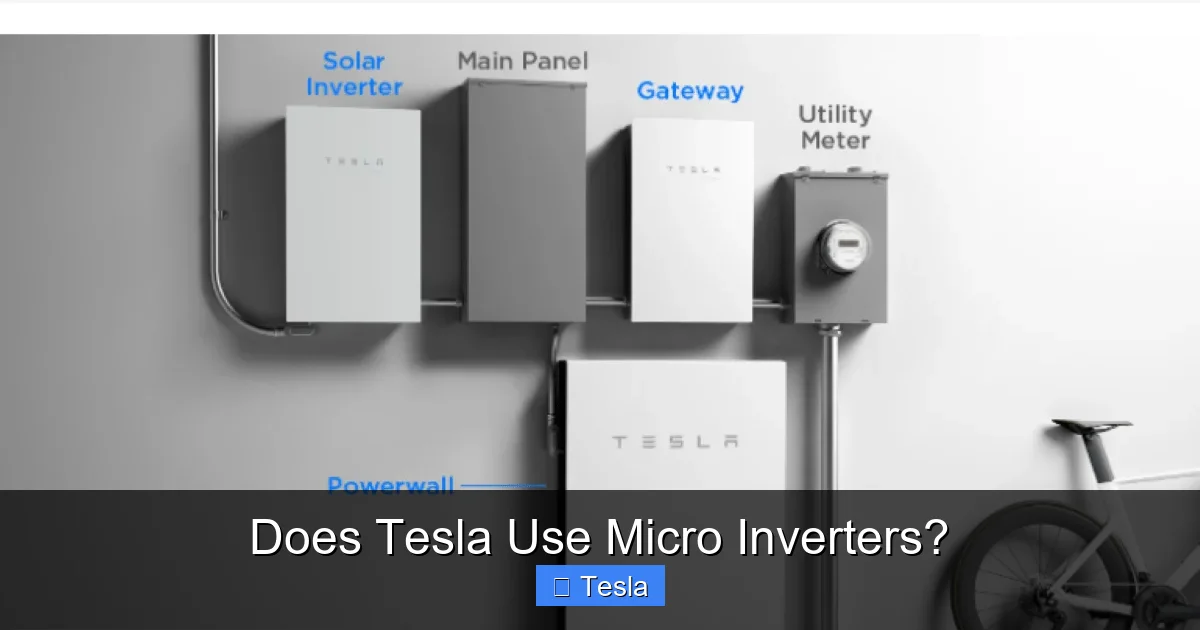
Visual guide about Does Tesla Use Micro Inverters?
Image source: wholemars.net
The Traditional String Inverter
For decades, the standard for home solar was the string inverter. Solar panels are wired together in a series, like Christmas lights, forming a “string.” The entire string’s DC power is sent to one central string inverter, which converts it all to AC at once. The big drawback? If one panel is shaded, dirty, or faulty, it can drag down the performance of the entire string.
The Microinverter Revolution
A microinverter is a tiny, smart inverter that sits on the back of each individual solar panel. It converts the DC power from that single panel right at the source, before it ever leaves the roof. This means each panel operates at its own maximum potential. Shading on one panel doesn’t affect the others. You also get panel-level monitoring, making it easy to see exactly which panel is underperforming. The trade-off is cost and complexity—you have many small devices instead of one large one.
Now, with this context, let’s see how Tesla approaches these technologies.
Tesla Electric Vehicles: The Case of the Massive Integrated Inverter
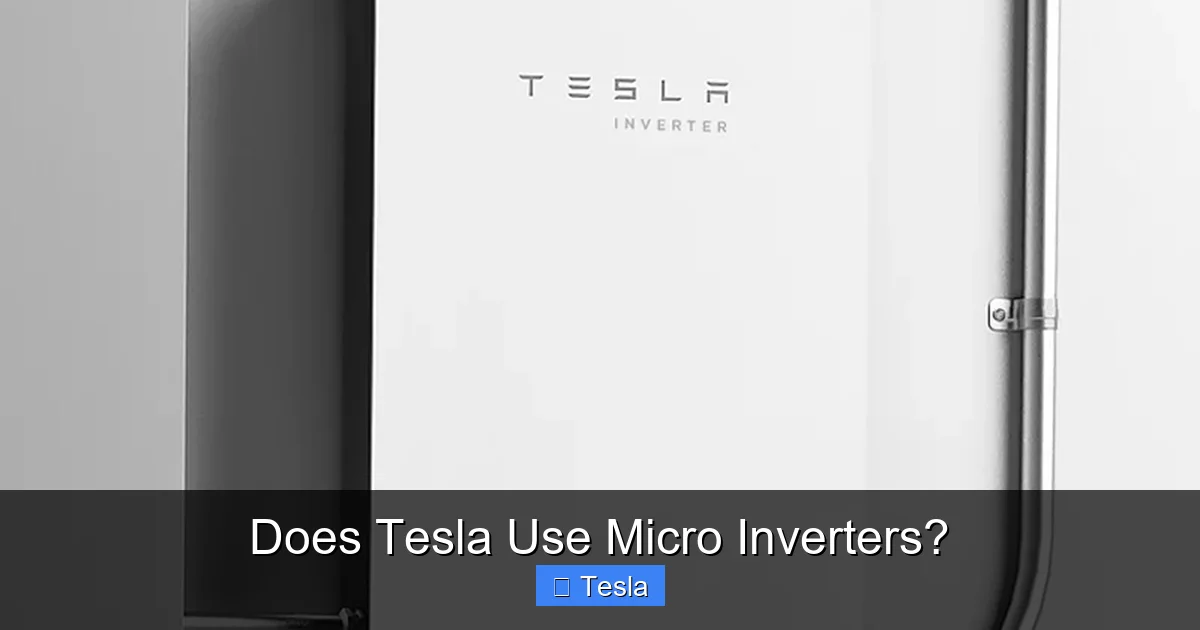
Here’s the direct answer to your question: Tesla does not use microinverters in any of its electric vehicles—Model S, 3, X, Y, or Cybertruck. Instead, they use what is often called a central inverter or drive unit inverter. It’s a single, incredibly powerful and sophisticated piece of engineering.
Visual guide about Does Tesla Use Micro Inverters?
Image source: thatteslachannel.com
The Role of the Inverter in an EV
In a Tesla, the battery stores high-voltage DC electricity (typically around 400 volts). The electric motor, however, runs on AC. The inverter’s job is to take that DC from the battery and synthesize a precisely controlled, high-frequency AC waveform to drive the motor. This process, called “inverting,” is fundamental to how an EV moves. It also handles regenerative braking, converting the motor’s AC back into DC to recharge the battery.
Why a Central Inverter for a Car?
You might think, “Why not use a bunch of little microinverters, one per motor or component?” The reasons are all about automotive design priorities:
- Packaging and Weight: Space and weight are sacred in a car. A single, integrated unit is far more compact and lighter than multiple discrete microinverters and their associated wiring. Every gram saved improves range and performance.
- Efficiency and Power Density: Tesla’s inverter is a marvel of power electronics. It handles hundreds of kilowatts of power (a Model S Plaid’s inverter handles over 500kW) in a tiny package. Spreading that power across many small units would be less efficient and generate more total heat.
- Cost and Reliability: Fewer, larger components can simplify manufacturing and reduce potential failure points (fewer connections, enclosures, etc.). It’s a consolidated, robust system.
- Thermal Management: Managing the heat from one large, well-cooled unit is easier than dispersing heat from many small units scattered around the vehicle.
So, in your Tesla vehicle, you will never find a panel-like microinverter. You’ll find a dense, liquid-cooled power electronics module as part of the drive unit, a masterpiece of integrated design aimed at one goal: propelling the car forward with maximum efficiency and power.
Tesla Solar Products: A More Nuanced Picture
Flip the switch to Tesla’s solar division, and the story changes. Here, microinverters are not only used but are often a key selling point for their standard solar panel systems. However, it’s critical to distinguish between Tesla’s two main solar offerings: their traditional Solar Panels and the integrated Solar Roof.
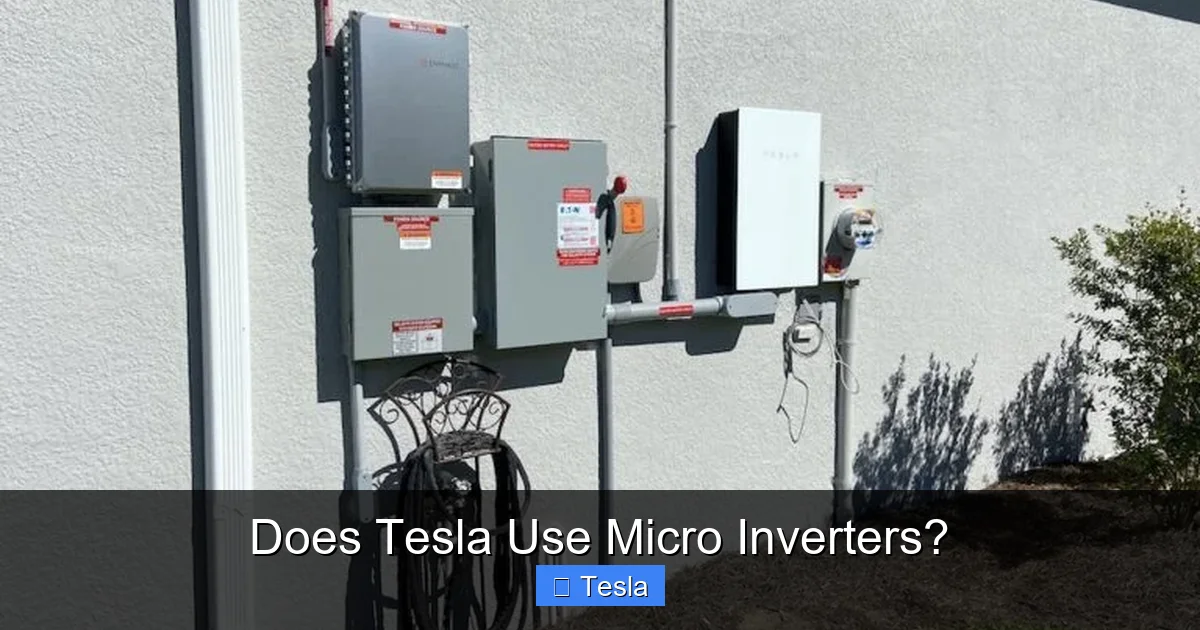
Visual guide about Does Tesla Use Micro Inverters?
Image source: 8msolar.com
Tesla Solar Panels: Often Paired with Enphase Microinverters
When you order a conventional solar system from Tesla—where they install standard, rectangular solar panels on your roof—the default and recommended configuration almost always includes Enphase microinverters. Specifically, they use the Enphase IQ7 or IQ8 series, depending on the panel model and system size.
Why? Because Tesla acts as a system designer and installer. They select the best components for performance and reliability. Enphase is a market leader in microinverters, known for their efficiency, longevity, and robust monitoring platform via the Enphase Enlighten app. By using microinverters, Tesla can guarantee that each panel operates independently, maximizing daily and annual energy harvest, which is the primary goal of a solar array. This setup also provides the granular data homeowners love.
Practical Example: Imagine a roof with a chimney casting a shadow on a few panels in the afternoon. With a string inverter, those shaded panels would cripple the output of the entire string. With Enphase microinverters on each panel, only the shaded panels see reduced output, while the sunlit panels continue at full capacity. This makes a significant difference in real-world energy production.
Tesla Solar Roof: A Different Architecture
The Tesla Solar Roof is an entirely different beast. It’s not panels mounted on your roof; it’s your roof, made of glass tiles that generate power. In this system, the power electronics are more integrated. Each Solar Roof tile contains a small micro-optimizer (similar in function to a microinverter’s DC optimizer), but the actual DC-to-AC conversion is handled by a central Tesla Gateway (or in newer systems, the Tesla Inverter).
So, does the Solar Roof use microinverters? Not in the traditional, per-panel sense. It uses a hybrid approach: panel-level optimization at the tile, but central conversion at the gateway/inverter. This design maintains the sleek, integrated aesthetic of the Solar Roof while still allowing for some shade tolerance. The monitoring is done through the Tesla app, not a third-party platform like Enphase.
Key Distinction: If you buy “Tesla Solar Panels,” you’re very likely getting Enphase microinverters. If you buy a “Tesla Solar Roof,” you’re getting Tesla’s proprietary system with a central inverter and tile-level optimizers.
Why the Different Strategies? Philosophy and Practicality
Tesla’s divergent approaches aren’t accidental; they reflect the core philosophies and practical constraints of each business.
Vehicles: Integration is King
In automotive engineering, especially for a performance and efficiency-focused brand like Tesla, integration is a holy grail. Combining the motor, gearbox, and inverter into a single, compact drive unit reduces weight, cost, complexity, and failure modes. It’s a vertically integrated solution that gives Tesla complete control over the entire powertrain’s performance and software. A microinverter-based system in a car would be a step backward for these goals.
Solar: Flexibility and Performance Win
In residential solar, the market has spoken. Homeowners and installers value the panel-level optimization, shade tolerance, and detailed monitoring that microinverters provide. For Tesla Solar Panels, using a best-in-class partner like Enphase is a pragmatic choice. It allows them to offer a top-tier, high-performance product without the immense R&D cost of building their own microinverter from scratch (though they are developing their own for the Solar Roof). For the Solar Roof, maintaining the seamless, tile-based aesthetic necessitates a different, more integrated power electronics approach.
This also highlights Tesla’s strategy: they will build their own component when it’s a core differentiator (like their battery cells or vehicle software), but they will partner with specialists when it makes more sense (like microinverters for panel systems or Panasonic for early battery cells).
What This Means for You: A Homeowner’s Guide
If you’re considering a Tesla product, understanding this distinction is crucial for setting expectations and planning.
If You’re Buying a Tesla Solar Panel System
Expect a system with Enphase microinverters. This is great news for performance and monitoring. You’ll use the Enphase Enlighten app to see per-panel production. Maintenance is simplified—if one microinverter fails, only that panel goes offline, and it’s a relatively straightforward swap. Your system’s architecture is modular and scalable. When getting a quote from Tesla, confirm the specific Enphase model they plan to use, as this affects efficiency ratings and warranty terms.
If You’re Buying a Tesla Solar Roof
You are buying a fully integrated Tesla product. The monitoring, control, and warranty will all be through Tesla’s ecosystem. The system will include a Tesla Gateway/Inverter. While it offers shade tolerance via tile optimizers, its monitoring granularity may not match the per-panel detail of Enphase. Repairs might require a Tesla technician, as the components are proprietary. The aesthetic benefit is unparalleled, but the service path is more locked into Tesla.
If You’re Buying a Tesla Vehicle
This article’s core question doesn’t apply to your daily driving. You don’t need to worry about microinverters. The integrated inverter is a sealed, reliable part of the drivetrain. Your maintenance concerns are tires, brakes, battery health, and software updates—not panel-level power electronics. However, if you plan to charge your Tesla at home with solar, then the type of solar inverter (micro vs. central) becomes relevant for your overall energy ecosystem’s design and monitoring. For instance, installing a dedicated home charger, like a Tesla Wall Connector, involves its own electrical work and may require a dedicated 220V outlet or direct wiring, which is a separate consideration from your solar array’s inverter type.
Furthermore, if you’re evaluating other EVs, it’s worth noting that Tesla’s proprietary charging connector means a Nissan Ariya cannot use a Tesla Supercharger without an adapter, a key difference in their respective ecosystems. Your choice of vehicle influences your charging infrastructure options, just as your choice of solar system influences your energy management.
The Future: Will Tesla Ever Use Microinverters in Cars?
It’s highly improbable. The trajectory of EV power electronics is toward even greater integration and power density. Tesla’s latest drive units continue to combine more functions into fewer, more advanced silicon-carbide (SiC) based inverters. The future is about making the single inverter smaller, cooler, and more efficient, not about fragmenting it into many small pieces. The automotive packaging constraints are simply too severe.
In solar, the trend is also toward integration at the module level (like the Solar Roof) or more powerful, grid-supportive central inverters for large systems. However, for the traditional panel-on-roof market, microinverters and DC optimizers remain dominant for their performance benefits. Tesla’s partnership with Enphase is likely to continue for its panel systems, while its Solar Roof will continue on its proprietary path.
Conclusion: Context is Everything
So, does Tesla use microinverters? The answer is a firm no for its vehicles and a qualified yes for its standard solar panel systems. This dichotomy perfectly illustrates how the same fundamental technology—DC to AC conversion—is adapted to wildly different applications with vastly different design priorities. Tesla’s vehicles are masterclasses in integrated, high-performance power electronics. Their solar panel business is a pragmatic partnership to deliver proven, high-yield systems. Their Solar Roof represents a bet on a fully integrated, aesthetic-first future.
For you, the consumer, the takeaway is to always ask for specifics. If someone says “Tesla solar,” ask: “Is that the Solar Roof or traditional panels? If panels, what inverter are you using?” For your Tesla car, you can rest easy knowing its sophisticated inverter is working tirelessly under the floor, a single point of brilliance converting battery power into exhilarating motion, with no microinverters in sight.
Frequently Asked Questions
Do Tesla cars have microinverters?
No, Tesla electric vehicles use a single, large, integrated inverter as part of the drive unit to convert the battery’s DC power to AC for the motor. This design is optimized for space, weight, and high power delivery.
Does Tesla Solar use microinverters?
Yes, Tesla’s standard Solar Panel systems typically use Enphase microinverters (like the IQ7 or IQ8 series) for panel-level optimization. However, the Tesla Solar Roof uses a different system with tile-level optimizers and a central Tesla inverter.
Why doesn’t Tesla put microinverters in their cars?
Using many small microinverters in a car would be inefficient, add excessive weight and complexity, and be difficult to cool. A single, powerful, integrated inverter is far better suited to the dense packaging and extreme power demands of an electric vehicle drivetrain.
Can I monitor each panel’s output with a Tesla solar system?
Yes, but it depends on the system. If you have Tesla Solar Panels with Enphase microinverters, you get detailed per-panel monitoring through the Enphase Enlighten app. With a Tesla Solar Roof, monitoring is done through the Tesla app at a system or tile-group level, not individual tile detail.
What happens if a microinverter fails on my Tesla solar system?
If your Tesla Solar Panel system uses Enphase microinverters, a failure will only take that single panel offline. The rest of the array continues to produce power. The failed microinverter can be replaced individually by a technician. This is a key advantage of the microinverter architecture.
Is the inverter in a Tesla car the same as the one in a Tesla solar system?
No, they are fundamentally different devices designed for different purposes. The car’s inverter handles hundreds of kilowatts of power for propulsion and is tightly integrated with the motor. The solar system’s inverter (whether micro or central) handles a much smaller, steady power flow for home energy production and is designed for maximum energy harvest from panels.