Does Tesla Model 3 Roof Open?

Contents
- 1 Key Takeaways
- 2 📑 Table of Contents
- 3 The Direct Answer: A Roof That Does Not Open
- 4 The Engineering & Design Philosophy Behind the Fixed Roof
- 5 How Do You Get Ventilation Then? Practical Solutions
- 6 Common Misconceptions and Clarifications
- 7 Living With the Fixed Roof: Pros, Cons, and Customization
- 8 The Bigger Picture: How Tesla’s Roof Compares
- 9 Conclusion: Embracing the Fixed Sky
- 10 Frequently Asked Questions


No, the Tesla Model 3 does not have a roof that opens. It comes standard with a large, fixed panoramic glass roof that is sealed permanently to the body. This design choice prioritizes structural rigidity, a quiet cabin, and an open-air feeling without the mechanical complexity or potential leaks of a moving panel. For ventilation, you must rely on the climate control system, slightly crack a window, or use aftermarket solutions.
Key Takeaways
- The Tesla Model 3 has a fixed panoramic glass roof. It is a single, solid piece of glass bonded to the car’s structure and does not tilt, slide, or retract in any way.
- This is a deliberate Tesla design philosophy. They prioritize structural integrity (the glass roof contributes to a very stiff chassis), cabin quietness (no moving parts or wind noise), and a seamless, minimalist aesthetic.
- Ventilation must be achieved through other means. Owners use the powerful HVAC system with external air circulation, crack the front windows using the “vent” command, or install aftermarket pop-up vents.
- The glass is tinted and laminated for safety and comfort. It blocks most UV rays and infrared heat, but many owners still apply ceramic window film for significant additional heat rejection, as detailed in articles about how much it costs to tint a Tesla Model 3.
- It is not a convertible. Despite the glass roof, the Model 3 is a fully enclosed sedan and cannot be driven with the roof open. This distinguishes it from true convertibles or cars with traditional sunroofs.
- The roof is a key part of the cabin’s “sky” experience. It provides an unobstructed view upward, enhancing the sense of spaciousness, which is a hallmark of Tesla’s interior design.
📑 Table of Contents
- The Direct Answer: A Roof That Does Not Open
- The Engineering & Design Philosophy Behind the Fixed Roof
- How Do You Get Ventilation Then? Practical Solutions
- Common Misconceptions and Clarifications
- Living With the Fixed Roof: Pros, Cons, and Customization
- The Bigger Picture: How Tesla’s Roof Compares
- Conclusion: Embracing the Fixed Sky
The Direct Answer: A Roof That Does Not Open
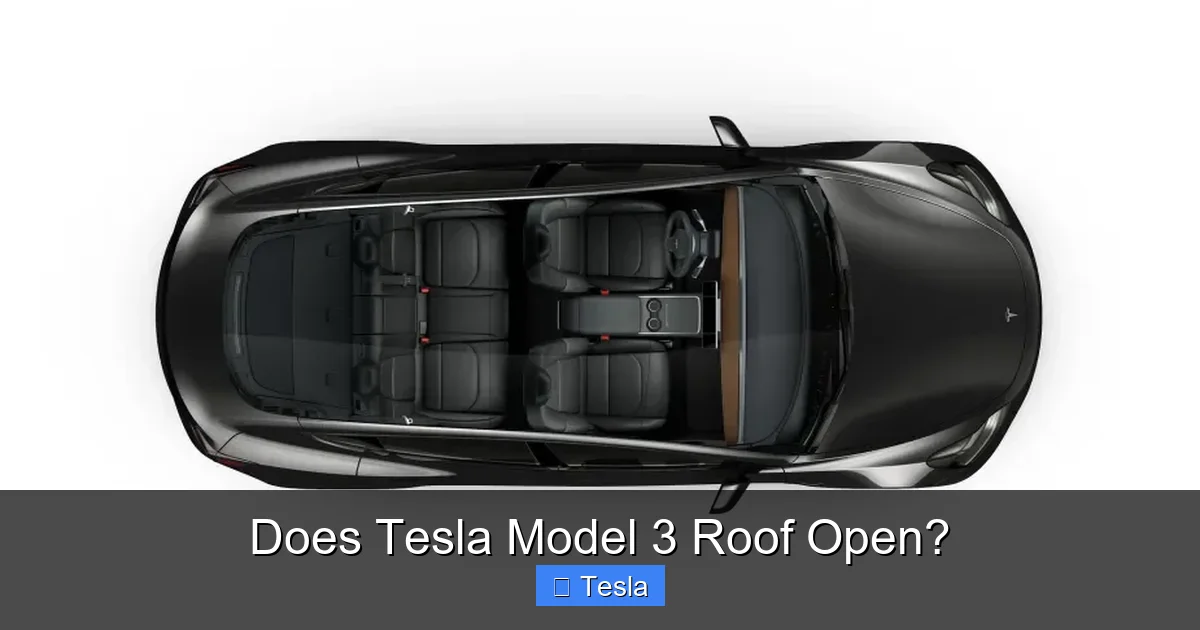
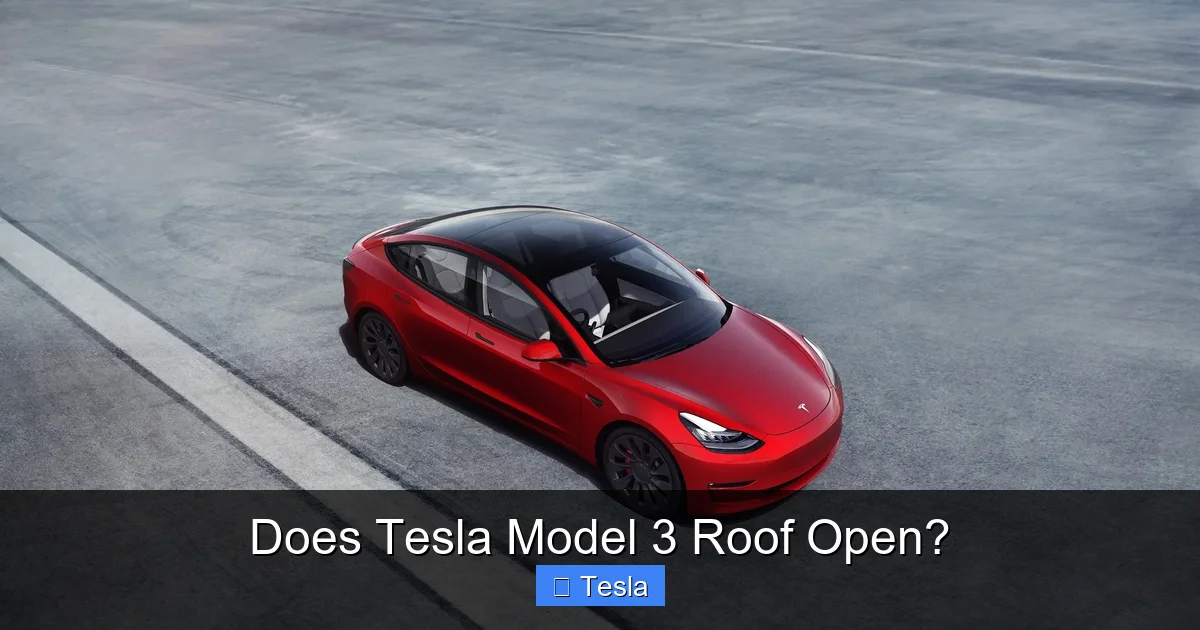
Let’s cut right to the chase. If you’re asking, “Does Tesla Model 3 roof open?” the simple, clear answer is no. The Tesla Model 3 does not have a sunroof, a moonroof, or a convertible top. Instead, it features what Tesla calls a “Panoramic Glass Roof.” This is a single, large piece of glass that forms the entire roof section from the front windshield header all the way to the rear trunk lid. It is fixed in place, permanently sealed to the car’s body structure. There are no levers, buttons, or switches in the car that will make any part of that glass move, tilt, or slide away. It is as much a part of the car’s structure as the steel or aluminum around it.
This often comes as a surprise or even a disappointment to people transitioning from traditional cars that almost universally offer at least a small pop-up sunroof. Our brains are wired to associate a glass roof with an opening function. But Tesla, in its pursuit of minimalist design and engineering efficiency, made a different choice. Understanding why they made this choice is key to appreciating the design and learning how to live with it comfortably.
The Engineering & Design Philosophy Behind the Fixed Roof
To someone used to a sunroof, a fixed roof might feel like a compromise. But for Tesla, it’s a deliberate and beneficial feature. Let’s break down the reasons.

Visual guide about Does Tesla Model 3 Roof Open?
Image source: evcarsuae.com
Structural Rigidity and Safety
A fixed glass roof, bonded directly to the car’s unibody, creates an incredibly stiff structural element. Think of it like a giant, curved glass panel that acts as a huge brace across the top of the passenger cell. This significantly increases the car’s torsional rigidity—its resistance to twisting. A stiffer chassis improves handling precision, reduces interior squeaks and rattles over time, and is a major asset in crash safety. In a rollover accident, that fixed glass roof contributes to maintaining the survival space for occupants. A traditional sunroof, with its large cutout in the roof structure and a moving panel within a frame, inherently creates a weaker point in the chassis.
Superior Acoustic Comfort (Quietness)
One of the most praised features of the Model 3 is its incredibly quiet cabin. A fixed roof eliminates all the potential sources of wind noise and road noise associated with moving sunroof mechanisms. There are no seals to wear out and leak, no tracks to get clogged with debris, and no motor or mechanism that can fail or create rattles. The only sound that gets through is what penetrates the glass itself, which is minimal thanks to the dual-pane acoustic glass. This creates a serene, library-like environment that is a hallmark of the premium electric car experience.
Aesthetic Minimalism and the “Open Air” Illusion
Tesla’s interior design is famously minimalist, with a focus on clean lines and a futuristic feel. A large, fixed glass roof perfectly aligns with this. There are no bulky sunshade mechanisms, no headliner with a sunroof opening, no awkwardly placed controls. The glass stretches from front to back, creating a continuous, unbroken ceiling line. More importantly, it provides a psychological sense of openness and spaciousness that a solid metal roof cannot. On a sunny day, you get the light without the heat (thanks to the tint), and at night, you can stargaze. It tricks the mind into feeling less confined, all without any moving parts. This design choice is so central to the Model 3’s identity that it’s featured in every single marketing photo.
How Do You Get Ventilation Then? Practical Solutions
So, if you can’t open the roof, how do you get fresh air? This is the practical question every new Model 3 owner asks. You have several excellent options, all controlled via the central touchscreen or the Tesla app.
Visual guide about Does Tesla Model 3 Roof Open?
Image source: motorbiscuit.com
1. The Primary Method: The HVAC System with “Outside Air”
The car’s heating, ventilation, and air conditioning (HVAC) system is incredibly powerful and smart. The default “Auto” setting recirculates cabin air for efficiency. To bring in fresh outside air, you simply tap the fan icon on the bottom bar of the screen and turn off the recirculation mode (the icon will no longer be highlighted). The system will then actively draw outside air through the cabin air filter (which is very effective) and distribute it. You can direct this airflow to your face, the windshield, or the footwells. This is the cleanest, most controlled way to ventilate the car, filtering pollen and pollutants. It works even when the car is parked and you’re inside, thanks to the “Keep Climate On” setting in the mobile app.
2. The “Vent” Command: Cracking the Windows
This is the closest you’ll get to a traditional sunroof feel. While the Model 3’s windows don’t have a physical “crack” button, you can command them to lower slightly. With the car parked and in Park, you can use the Tesla app to “Vent” the windows. This will lower all four windows by about an inch. Alternatively, while driving, you can hold down the window switch on the driver’s door to activate a “one-touch down” feature for the front windows only—they will lower all the way. To get that slight crack, you must manually hold the switch down just until you hear a click and see the window stop descending. This allows a gentle breeze to flow through the cabin, which, combined with the fixed roof, creates a surprisingly pleasant airflow. Just be mindful of rain and security.
3. Aftermarket Pop-Up Vents (The Sunroof Simulator)
For those who really miss the ability to open a roof panel, there is an aftermarket solution. Companies like Tesla-specific accessory makers offer pop-up roof vents. These are small, manually operated panels that install into the fixed glass roof (usually via a strong adhesive) and can be popped open to allow hot air to escape from the cabin. They are most effective when used in conjunction with the windows cracked, creating a cross-draft. They are not an official Tesla product, so installation and potential for leaks must be carefully considered, but they are a popular fix for the “no open roof” problem.
4. Strategic Parking and Shading
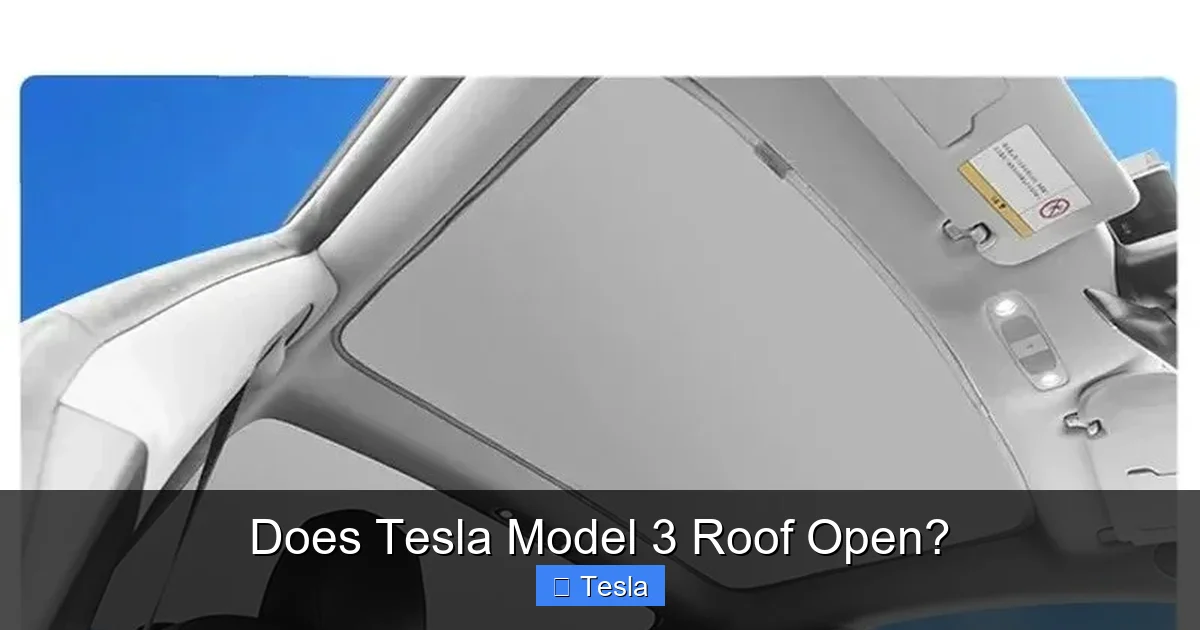
Finally, the simplest solution is behavioral. Always try to park in the shade. The fixed glass roof, while tinted, will still allow the cabin to heat up significantly in direct sun. Using a reflective sunshade designed for the Model 3’s panoramic roof is an absolute must for parked cars in sunny climates. This blocks solar gain before it happens, keeping the cabin much cooler and reducing the workload on the A/C system when you return.
Common Misconceptions and Clarifications
Because the Model 3’s roof is so unique, several myths and misunderstandings persist.
Visual guide about Does Tesla Model 3 Roof Open?
Image source: evcarsuae.com
“But I saw a video of a Model 3 with the roof open!”
You may be thinking of the Tesla Model S or Model X, which do have opening panoramic roofs (the Model X’s is even more complex with its Falcon Wing doors). Or, you might be seeing a modified Model 3 where an owner has had the fixed glass roof cut out and replaced with a convertible top—an extremely expensive, complex, and non-factory modification that voids warranties and compromises structural integrity. The factory Model 3, in every single configuration (Standard Range, Long Range, Performance), has the same fixed glass roof.
“What about the ‘Sunroof’ option on some used listings?”
This is a common mislabeling. Sometimes sellers or even Tesla’s own old configurator might have imprecisely called the panoramic glass roof a “sunroof” in a list of features. It is not. It is a fixed glass panel. Always look for video walkthroughs or official specs to confirm. The feature is universally standard; there is no “sunroof package” to select.
“Can I remove the glass myself to make it open?”
Absolutely not. The glass is bonded to the roof frame with structural adhesive, similar to how a windshield is installed but on a much larger scale. Attempting to remove it would require cutting through this adhesive, which would destroy the roof’s structural integrity, almost certainly cause the glass to break, and leave you with an unsealed, unsafe, and leaky hole. It is not a DIY project and is not recommended by any reputable shop.
Living With the Fixed Roof: Pros, Cons, and Customization
Let’s be real about the day-to-day experience.
The Pros: It’s Mostly Great
The benefits are substantial. The sense of space is undeniable. On a clear night, lying back in the driver’s seat and looking at the stars is a magical experience unique to cars with large glass roofs. The lack of noise is a constant luxury. There’s zero maintenance for a sunroof mechanism—no worries about drains clogging or motors burning out. It simplifies the design and reduces potential failure points. For many, the psychological benefit of an “open” ceiling outweighs the functional need for a physical opening.
The Cons: The Heat and the Lack of True Open-Air Driving
The primary drawback is heat. On a hot, sunny day, the cabin can become an oven quickly. While the tint blocks UV, it does not block all infrared heat. You will use the A/C more aggressively. This is where investing in a high-quality, heat-rejecting ceramic window film for the roof glass becomes a practical necessity, not just a cosmetic upgrade. Understanding the cost and process of tinting a Tesla Model 3 is a key research step for new owners in warm climates. The second, more philosophical con is the inability to experience true open-air driving with the wind in your hair. For some, this is a deal-breaker. For others, the trade-off for the quiet, stiff, and spacious cabin is more than worth it.
Customization: Wraps and Tints
The large glass canvas is also a canvas for customization. While you can’t change its function, you can change its appearance. Some owners opt for a full or partial vinyl wrap on the exterior glass roof (using a special perforated vinyl that maintains visibility from inside) to change its tint tone or add a unique pattern. This is a niche application, and you must understand that wrapping a Tesla Model 3’s glass roof is more complex and expensive than wrapping body panels due to the curvature and need for precision. More commonly, owners focus on high-performance ceramic window film for the interior side of the glass. This dramatically reduces heat buildup (some films claim up to 60% heat rejection) without significantly darkening the view, preserving the open feeling while making the cabin bearable in summer.
The Bigger Picture: How Tesla’s Roof Compares
It’s helpful to see the Model 3’s roof in context. Most of its direct competitors—the BMW 3 Series, Mercedes-Benz C-Class, Audi A4—offer conventional sliding sunroofs as an option (often a costly one). These provide the physical opening but come with the trade-offs of reduced headroom, potential for noise and leaks, and added mechanical complexity. Tesla eliminates those trade-offs entirely by offering a different value proposition: maximum light and space with zero moving parts. It’s a polarizing design, but it’s consistent with Tesla’s overall ethos of doing things differently and often simpler. Even within Tesla’s own lineup, the Model S and Model X offer opening roofs, targeting slightly different buyer preferences (though the Model S Plaid’s fixed roof option shows even there, the fixed design has merits). For the mass-market Model 3, the fixed roof is the only choice, and it’s a defining characteristic of the vehicle’s identity.
Conclusion: Embracing the Fixed Sky
So, does the Tesla Model 3 roof open? The enduring answer is no, and that’s by design. It’s a fixed panoramic glass roof that is a core component of the car’s engineering, safety, and sensory experience. Learning to live without a sunroof means embracing the HVAC system’s capabilities, getting comfortable with the “vent” window command, and investing in sun protection for parked scenarios. For the vast majority of owners, the breathtaking view, the supremely quiet cabin, and the sense of spaciousness quickly make up for the lack of a moving panel. The key is managing expectations and understanding the practical workarounds. If an open-air driving experience is your non-negotiable must-have, the Model 3 is not the car for you. But if you value quiet, stiffness, and an unfettered view of the sky, the fixed glass roof isn’t a compromise—it’s a feature, and a brilliant one at that. Ultimately, it’s a fundamental part of what makes a Tesla Model 3 feel like a car from the future, today.
Frequently Asked Questions
Can I put a sunshade on the Tesla Model 3 glass roof?
Yes, absolutely. Using a reflective sunshade when parked is highly recommended to combat heat buildup. These are custom-fit for the Model 3’s panoramic roof and are a simple, effective accessory.
Does the fixed glass roof make the cabin hotter than a metal roof?
In direct sun, yes, initially a glass roof can allow more radiant heat than a reflective metal roof. However, the factory-tinted glass and, more importantly, aftermarket ceramic window film are very effective at blocking infrared heat. A quality tint can make the heat difference negligible compared to a metal roof.
Is the glass roof safe in a crash or rollover?
Yes, and it’s often considered safer. The fixed, bonded glass roof significantly increases the structural rigidity of the entire passenger cell, helping to maintain survival space in severe impacts and rollovers. It is a safety asset, not a liability.
Can I hear road noise with the glass roof?
Surprisingly little. The fixed roof, combined with dual-pane acoustic glass and the overall excellent sound insulation of the Model 3, results in one of the quietest cabins in its class. There is no wind buffeting or mechanism noise because there is no mechanism.
Will the glass roof ever need maintenance or replacement?
Like any large piece of automotive glass, it can chip or crack from severe impact (e.g., a large rock). If damaged, it would need to be replaced by a Tesla-certified technician. The seal around it should last the life of the car, but if a leak ever developed, it would require professional resealing. There is no routine maintenance for a sunroof mechanism because there isn’t one.
Can I see the stars from inside the Model 3 at night?
Yes, this is one of the most delightful features of the fixed glass roof. The large, unobstructed pane provides an excellent view of the night sky, especially when driving in areas with low light pollution. It’s a unique and romantic experience the car was designed to offer.