
Does Bmw Replace Windshields?

Yes, BMW windshields are replaced, but not at any auto glass shop. The process must be performed at a BMW dealership or a certified collision center using only Original Equipment Manufacturer (OEM) glass to ensure structural integrity and proper function of advanced driver-assistance systems (ADAS). This specialized approach affects cost, timeline, and warranty coverage, making it distinct from standard windshield replacements.
Key Takeaways
- Certified Centers Only: BMW requires windshield replacements to be done at dealerships or certified collision centers to maintain quality and safety standards.
- OEM Glass is Mandatory: Using genuine BMW windshield glass is non-negotiable for proper fit, durability, and integration with vehicle systems.
- ADAS Recalibration is Essential: Replacement always requires recalibration of cameras and sensors behind the windshield, adding time and cost.
- Insurance Typically Covers It: Comprehensive auto insurance usually covers windshield replacement, but deductibles and OEM use policies vary.
- Cost is Significantly Higher: Expect to pay substantially more than for a standard vehicle due to OEM parts and specialized labor.
- Warranty is Provided: Reputable centers offer a warranty on both the glass and the installation labor.
- Aftermarket Glass is a Risk: Using non-OEM glass can compromise safety, sensor accuracy, and may void related warranties.
📑 Table of Contents
- Understanding BMW’s Windshield Replacement Policy
- The BMW-Certified Replacement Process: A Step-by-Step Look
- Who Can Replace a BMW Windshield? Dealerships vs. Independent Shops
- Decoding the Cost: Why a BMW Windshield is So Expensive
- Insurance, Warranties, and What You Need to Know
- Practical Tips for the BMW Owner Facing a Windshield Replacement
- The Bottom Line: Safety Over Savings
Understanding BMW’s Windshield Replacement Policy
So, your BMW’s windshield has a crack or a significant chip. Your first thought might be to call the same local auto glass shop that fixed your friend’s Honda. Stop right there. BMW, like other premium German automakers, operates under a very different set of rules when it comes to glass replacement. It’s not about being difficult; it’s about engineering, safety, and the seamless integration of complex technology. The short answer is yes, BMW absolutely replaces windshields. However, the “how,” “where,” and “with what” are strictly controlled by the manufacturer.
This control stems from the fact that a modern BMW windshield is far more than just a pane of glass to keep the wind out. It is a critical structural component of the vehicle’s safety cell, contributing to roof crush resistance. More importantly, it houses the housing for a suite of advanced driver-assistance systems (ADAS)—cameras for lane departure warning, automatic emergency braking, and adaptive cruise control, as well as sensors for rain and light. A poorly fitted or incorrect windshield can misalign these systems, rendering them useless or, worse, dangerously inaccurate. Therefore, BMW’s policy is designed to protect you, the driver, and the vehicle’s intended performance.
The “Why”: Engineering and Safety First
To understand BMW’s stance, you must appreciate the windshield’s role. In a collision, the windshield provides up to 70% of the structural support for the roof. It must be bonded to the frame with specific adhesives that meet federal safety standards (FMVSS 208/216). An improper installation can lead to catastrophic failure in a rollover. Furthermore, the glass itself has specific acoustic and UV properties to maintain cabin quietness and protect interior materials.
The ADAS integration is the newer, defining factor. The forward-facing camera, for example, must see through the glass with zero optical distortion. The windshield has a specially coated area (often called the “seal area” or “camera aperture”) that is precisely engineered. Aftermarket glass rarely replicates this coating’s exact properties, leading to blurred or skewed camera feeds. This is why BMW’s official position is that only OEM glass can guarantee the system functions as designed. When you consider that a misaligned camera could mean your automatic emergency braking doesn’t trigger in time, the OEM requirement makes perfect sense.
The BMW-Certified Replacement Process: A Step-by-Step Look
Getting a BMW windshield replaced isn’t a quick in-and-out job. It’s a multi-step procedure that prioritizes precision. Here’s what you can typically expect when you take your vehicle to a certified provider.
Visual guide about Does Bmw Replace Windshields?
Image source: cdn.thedailyautomotive.com
Step 1: Assessment and Sourcing
The process begins with a thorough assessment. The technician will verify the exact make, model, year, and even specific trim level (e.g., BMW 330i with Premium Package) because windshield part numbers can vary. They will then source the correct OEM BMW windshield. This isn’t just a “BMW” glass; it’s the exact part number from BMW’s supply chain, often coming from the same supplier (like Saint-Gobain Sekurit or Fuyao) that supplies glass for new BMWs at the factory. The part will have the correct acoustic layer, rain sensor compatibility, and camera aperture coating.
Step 2: Meticulous Removal
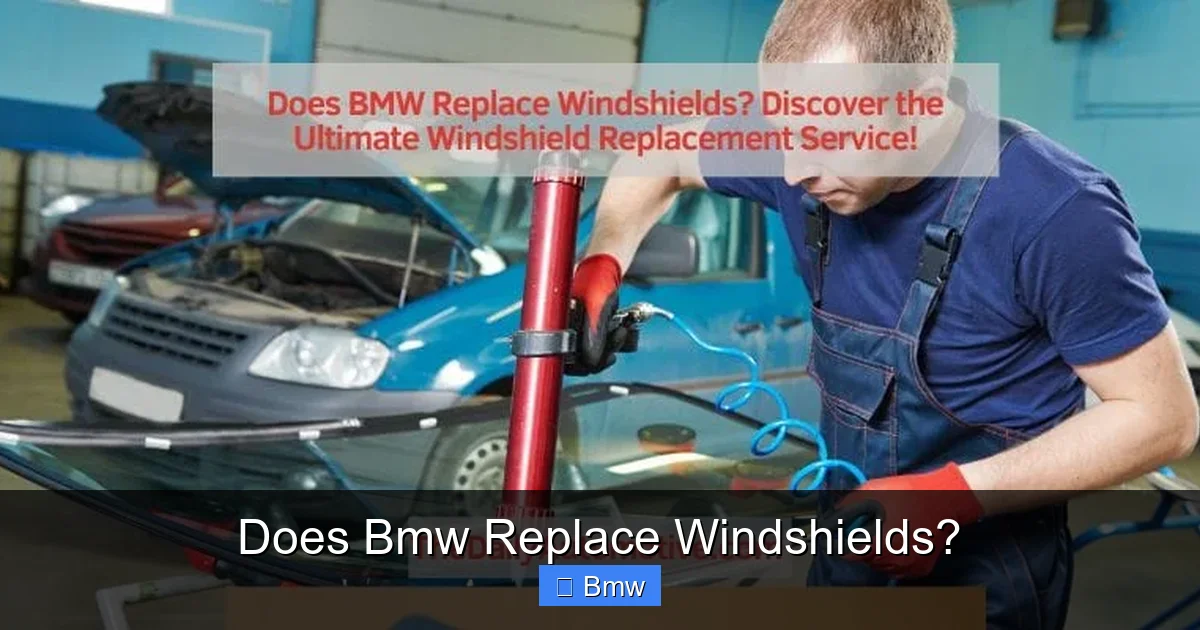
Removing the old windshield is a delicate operation. Technicians use specialized tools to cut through the urethane adhesive bonding the glass to the frame. The goal is to remove the glass without damaging the painted pinchweld (the metal frame the glass sits in) or any interior components like the rearview mirror, rain sensor, or camera module. Any damage here can compromise the new installation’s seal and strength.
Step 3: Prep and Priming
Once the old glass and adhesive are removed, the pinchweld must be meticulously cleaned. Any residue, old adhesive, or contaminants must be cleared. Then, a special primer is applied to the metal frame. This primer is crucial for the new urethane adhesive to bond chemically and permanently to the metal, creating the strength required for structural integrity and watertight sealing.
Step 4: Installation and Curing
The new OEM glass is carefully positioned and placed. The technician applies a precise bead of high-strength, fast-curing urethane adhesive—again, a specific product approved by BMW. The glass is set into place, aligned perfectly, and held until the adhesive gains initial strength. The vehicle is then moved to a controlled environment. The adhesive must cure fully before the car is driven. This “safe drive-away time” is dictated by the adhesive type and ambient temperature/humidity and can range from 30 minutes to several hours. Driving too soon risks the glass popping out in a minor impact.
Step 5: ADAS Recalibration (The Critical Final Step)
This is the most technical and often overlooked part. After the windshield is installed and the adhesive cured, the ADAS systems must be recalibrated. The camera and sensor housing has been moved—even by a fraction of a millimeter—and the system needs to “relearn” its exact position and field of view. This is not a simple plug-in procedure. It requires specialized, expensive calibration equipment (often from brands like Bosch or Hella) and a trained technician. The process involves driving the vehicle on a specified route (dynamic recalibration) or using a static calibration target in a controlled setting (static recalibration), or sometimes both. Skipping this step means your blind-spot monitoring, lane keep assist, and automatic braking will not work correctly. Any shop that does not perform this recalibration is doing an incomplete and unsafe job.
Who Can Replace a BMW Windshield? Dealerships vs. Independent Shops
This is the core of the confusion for many BMW owners. You have two primary, legitimate options, but one is often preferred.
Visual guide about Does Bmw Replace Windshields?
Image source: cdn.thedailyautomotive.com
BMW Dealerships
Going to a BMW dealer is the most straightforward path. They have direct access to OEM parts, factory-trained technicians, and the official BMW diagnostic and calibration tools. The entire process is done “by the book,” and you receive a full BMW warranty on the parts and labor. This is the gold standard and the only way to ensure 100% compliance with BMW’s specifications. The downside is typically cost—dealership labor rates are the highest—and potentially longer wait times if they are busy.
BMW-Certified Collision Centers
Many independent body shops go through a rigorous certification process with BMW (often called “BMW Certified Collision Repair Center” or similar). These shops have proven they have the specific tools, training, and access to OEM parts required by BMW. They use genuine BMW windshields and perform the ADAS recalibration to factory specs. They are an excellent alternative, often offering competitive pricing compared to the dealer while maintaining identical quality standards. You can verify a shop’s certification through BMW’s official website or by asking for proof of their certification and tooling.
The “Independent” Auto Glass Shop: A Major Risk
You will find many local auto glass shops that advertise they “service all makes, including BMW.” Extreme caution is advised here. While they may be skilled at replacing standard windshields, they often lack the specific BMW ADAS calibration tools and training. They may try to use an “OEM-equivalent” aftermarket windshield to save costs. This is a dangerous gamble. Even if they install the glass perfectly, without recalibration, your safety systems are disabled. Some may attempt a “static-only” calibration with inferior equipment, which is insufficient for many BMW models that require dynamic calibration. Using these shops can lead to persistent ADAS warning lights, malfunctioning systems, and a major headache that ultimately requires you to take it to a certified center anyway, costing you twice. It also risks voiding any remaining new car warranty provisions related to the ADAS systems.
Decoding the Cost: Why a BMW Windshield is So Expensive
If you’ve gotten a quote, you’ve likely experienced sticker shock. A BMW windshield replacement can easily range from $1,500 to over $3,000. Let’s break down where that money goes, and you can find a detailed model-specific breakdown in our comprehensive guide on how much it costs to replace a BMW windshield.

Visual guide about Does Bmw Replace Windshields?
Image source: cartireinflator.com
1. The OEM Windshield Itself
This is the biggest variable. A genuine BMW windshield is not a commodity item. It’s a manufactured part with specific acoustic layers, heating elements (if equipped), and the precise camera/seal coating. For a BMW 3 Series, the part alone can cost $800-$1,200. For an X5 or 7 Series with more complex sensor integration, it can exceed $1,500. Compare this to a generic aftermarket windshield for a non-luxury car, which might be $200-$400.
2. Advanced ADAS Recalibration
This is a non-negotiable line item. The labor for recalibration is high because it requires a technician skilled in using the diagnostic software and calibration targets. The equipment itself is a significant investment for the shop. This service typically adds $300 to $800+ to the total bill, depending on whether both static and dynamic calibration are required. Some newer BMW models require a “target-less” dynamic calibration that still requires a lengthy, specific test drive cycle.
3. Specialized Labor and Adhesives
Installing a structural glass requires more time and care than a standard replacement. Technicians must follow BMW’s specific procedural instructions. The urethane adhesive used is a premium, fast-curing product designed for high-strength bonding and is more expensive than standard auto glass sealants. Labor rates at certified shops reflect the higher skill level required.
4. Additional Components
Often, the replacement requires new moldings, clips, or mounting brackets. The rain sensor or camera module may need to be replaced if damaged during the incident or if the adhesive residue is too difficult to clean. These small parts add up.
It’s also worth noting that costs vary dramatically by model. A BMW i3 might have a different (and sometimes lower) cost structure than a BMW X6 with a panoramic roof and full ADAS suite. For specific examples, see our analysis of BMW windshield cost by model.
Insurance, Warranties, and What You Need to Know
Navigating the financial side is as important as the technical side.
Insurance Coverage: Comprehensive is Key
Windshield damage from road debris (rocks, etc.) is typically covered under the “comprehensive” portion of your auto insurance policy, not collision. This is good news, as comprehensive claims usually do not affect your premium in the same way an at-fault collision claim might. You will be responsible for your comprehensive deductible unless you live in a state with specific glass coverage laws (like Florida, Kentucky, or Arizona, which may require zero-deductible for windshield repairs/replacements).
The OEM Question: Here’s a critical point: your insurance company is generally required to pay for an OEM windshield if that is what BMW specifies for your vehicle. Some insurers may try to offer a “like-kind and quality” (LKQ) or aftermarket part to save money. You must insist on an OEM part, citing BMW’s certification requirements and the necessity for ADAS recalibration. Document everything. If your insurer refuses, you may need to involve your state’s insurance department. This is a common point of contention, and standing your ground is essential for safety.
The Warranty: What’s Covered?
A reputable BMW-certified replacement will come with a warranty. This typically covers:
- Leaks: Against water intrusion for a specified period (e.g., 1 year/unlimited miles).
- Defects: In the glass itself (e.g., stress cracks, delamination).
- Workmanship: Issues related to the installation.
Importantly, this warranty is usually from the glass shop or dealer, not from BMW NA. It should be provided in writing. Ask about the warranty terms before authorizing work. A good shop stands behind its work.
A Word on “Repair” vs. “Replace”
For smaller chips or cracks (typically under 6 inches and not in the driver’s direct line of sight or near the edge), a repair might be possible. However, due to the ADAS camera location (often just behind the rearview mirror), any damage in that central area almost always necessitates full replacement. A repair in the camera’s field of view will cause optical distortion. BMW’s guidelines are strict: if the damage impairs the driver’s view or compromises the structural seal, replacement is the only option. Never assume a repair is sufficient; get a professional assessment from a BMW-certified center.
Practical Tips for the BMW Owner Facing a Windshield Replacement
Armed with knowledge, here’s your action plan.
- 1. Get Multiple Quotes from Certified Sources Only: Contact your BMW dealer and 2-3 certified independent collision centers. Provide your VIN for an accurate quote. Do not waste time with non-certified shops.
- 2. Ask the Right Questions: When getting a quote, ask: “Is the glass a genuine OEM BMW part?” “Do you perform both static and dynamic ADAS recalibration to BMW factory specifications?” “What is the exact warranty on parts and labor?” “What is the safe drive-away time?” If they hesitate or say “it’s just a windshield,” walk away.
- 3. Involve Your Insurance Early: File a comprehensive claim. Be explicit that you require an OEM windshield and full ADAS recalibration. Get your claim adjuster’s approval in writing for the OEM part before work begins to avoid a surprise bill for the difference between OEM and aftermarket.
- 4. Inspect the Work Thoroughly: When you pick up the car, inspect the windshield for any chips, scratches, or uneven gaps. Check that all moldings are secure. Before driving, ensure there are no ADAS warning lights on the dash. Take a short test drive to verify the lane assist and other functions feel normal. If anything seems off, do not take delivery until it’s corrected.
- 5. Understand the “Break-In” Period: The urethane adhesive continues to cure for 24-72 hours to reach full strength. Avoid high-pressure car washes, slamming doors, or driving on very rough roads immediately after replacement if possible. Follow the shop’s specific advice.
The Bottom Line: Safety Over Savings
Your BMW is a precision instrument. Its windshield is a key component of that instrument, engineered to work in harmony with the vehicle’s structure and its array of electronic guardians. Choosing a shortcut—an aftermarket part, an uncertified shop, or skipping recalibration—undermines that engineering. It risks your safety, the functionality of your car’s best features, and could even lead to costly future repairs or warranty disputes.
The answer to “Does BMW replace windshields?” is a resounding yes, but on BMW’s terms. The process is designed to be thorough, technology-focused, and quality-controlled. While the cost is high, it is a direct reflection of the OEM parts, specialized labor, and critical calibration required. By understanding this process, demanding OEM materials, and insisting on certified providers, you ensure your BMW is restored to its intended, safe, and sophisticated standard. It’s not just a window; it’s a vital safety system. Treat it as such.
Frequently Asked Questions
Can I replace my BMW windshield myself or at a standard auto glass shop?
No. BMW requires replacement at certified centers using OEM glass and specific ADAS recalibration. A standard shop lacks the tools and training, risking safety system failure and voiding warranties.
How much does it typically cost to replace a BMW windshield?
Costs range from $1,500 to over $3,000, depending on the model, OEM part price, and ADAS recalibration requirements. For precise estimates by model, consult our detailed cost guides.
How long does a BMW windshield replacement take?
The entire process, including removal, installation, adhesive curing, and ADAS recalibration, typically takes 3 to 6 hours. The safe drive-away time after installation can be 30 minutes to several hours depending on adhesive and weather.
Will my insurance pay for an OEM BMW windshield?
Yes, if you have comprehensive coverage. Insurers must cover OEM parts when required by the manufacturer. You must insist on OEM and get approval in writing to avoid being forced to use aftermarket glass.
What happens if I don’t recalibrate the ADAS after a windshield replacement?
The forward-facing camera and sensors will be misaligned. Systems like automatic emergency braking, lane keep assist, and adaptive cruise control will not function correctly, may give false warnings, or could fail entirely when needed.
Is it ever okay to use an aftermarket windshield in a BMW?
Technically, it can be installed, but it is strongly discouraged. Aftermarket glass often lacks the precise optical properties for the ADAS camera and may not meet structural standards, compromising safety and potentially voiding warranties. Always insist on OEM.