
Who Makes Mazda Oil Filters?

Mazda does not manufacture its own oil filters. Instead, they contract production to major OEM suppliers like Denso and Mahle. You can also choose high-quality aftermarket filters from brands like Fram, Mobil 1, and Bosch. Always verify part numbers to ensure compatibility and avoid counterfeits for optimal engine protection.
You’re staring at the oil filter on your Mazda3 or CX-5, wrench in hand. The big question pops into your head: “Who actually makes this thing?” It’s a smart question. The oil filter is your engine’s lifeline, trapping dirt, metal shavings, and other contaminants before they can cause catastrophic wear. Knowing who is behind that metal canister gives you insight into its quality and reliability. The answer might surprise you. Mazda, like almost all modern automakers, does not manufacture its own oil filters. They design specifications and then contract the production to specialized industrial giants. Let’s peel back the layers and see exactly who makes Mazda oil filters, what that means for you, and how to choose the best one for your beloved Zoom-Zoom ride.
Key Takeaways
- OEM Suppliers, Not Mazda: Mazda-branded oil filters are manufactured by third-party companies like Denso and Mahle, not by Mazda itself.
- Aftermarket Options Abound: Numerous reputable aftermarket brands produce excellent filters compatible with Mazda vehicles, often at better value.
- Genuine Means OEM, Not “Mazda Made”: A “Genuine Mazda” filter is an OEM part sourced from suppliers, bearing Mazda’s part number and branding.
- Quality Varies by Brand: Not all filters are equal. Focus on filtration media, build quality, and bypass valve reliability rather than just the brand name.
- Part Number is King: Always use your vehicle’s specific OEM part number (or a reputable aftermarket cross-reference) to guarantee the correct filter for your engine.
- Beware of Counterfeits: Cheap, unknown brands, especially on online marketplaces, may be counterfeit and offer no real engine protection.
- Where You Buy Matters: Purchase from authorized dealerships, reputable auto parts stores, or trusted online retailers to ensure authenticity.
📑 Table of Contents
- The Myth of the “Mazda-Made” Oil Filter
- The Primary OEM Suppliers for Mazda
- The Aftermarket Landscape: Quality Beyond the Dealership
- How to Identify a Genuine Mazda Oil Filter
- Performance Comparison: Does “Genuine” Always Equal “Best”?
- Where to Buy and What to Avoid: A Practical Guide
- The Bottom Line for Your Mazda
The Myth of the “Mazda-Made” Oil Filter
It’s a common misconception. We see the Mazda logo on the box and assume the filter rolled off an assembly line in Hiroshima. In reality, the automotive supply chain is a complex web of specialization. Building a high-performance, high-temperature, high-pressure oil filter is a science and engineering discipline all its own. It involves advanced media (like cellulose, synthetic blend, or full synthetic), precision metal stamping for the base plate and anti-drainback valve, and robust canister construction. Major automakers like Mazda focus their immense resources on engine design, chassis development, and electronics—not on manufacturing every single bolt and filter.
Instead, they partner with Tier 1 suppliers. These are massive, global corporations that specialize in specific automotive components. They have the R&D, production lines, and quality control systems dedicated solely to making filters (or brakes, or spark plugs) for multiple car brands. This system benefits everyone: Mazda gets a world-class filter designed to its exact specs without the capital cost of a factory, and the supplier achieves massive economies of scale. The result? That “Genuine Mazda” filter you buy at the dealership was very likely made by one of two or three companies you’ve probably never heard of—unless you’re deep in the automotive parts world.
Why This Matters to You
Understanding this isn’t just trivia. It’s practical knowledge. It means that the “Mazda” filter and an “OEM-spec” filter from a brand like Fram or Bosch might literally be made in the same factory, on the same line, to the same blueprints. The only difference could be the box it comes in. This opens up a world of choices, often at better prices, without sacrificing the protection your SkyActiv engine deserves. It also means you should be skeptical of any brand claiming to be “better than OEM” without specific, technical evidence. The OEM spec is the benchmark.
The Primary OEM Suppliers for Mazda
So, who are these shadowy manufacturers? While Mazda doesn’t publish an official, exclusive list (supplier relationships can change), industry analysis, part number decoding, and tear-downs reveal the primary players. Two names dominate the landscape for Mazda filters, just as they do for many Asian and domestic brands.
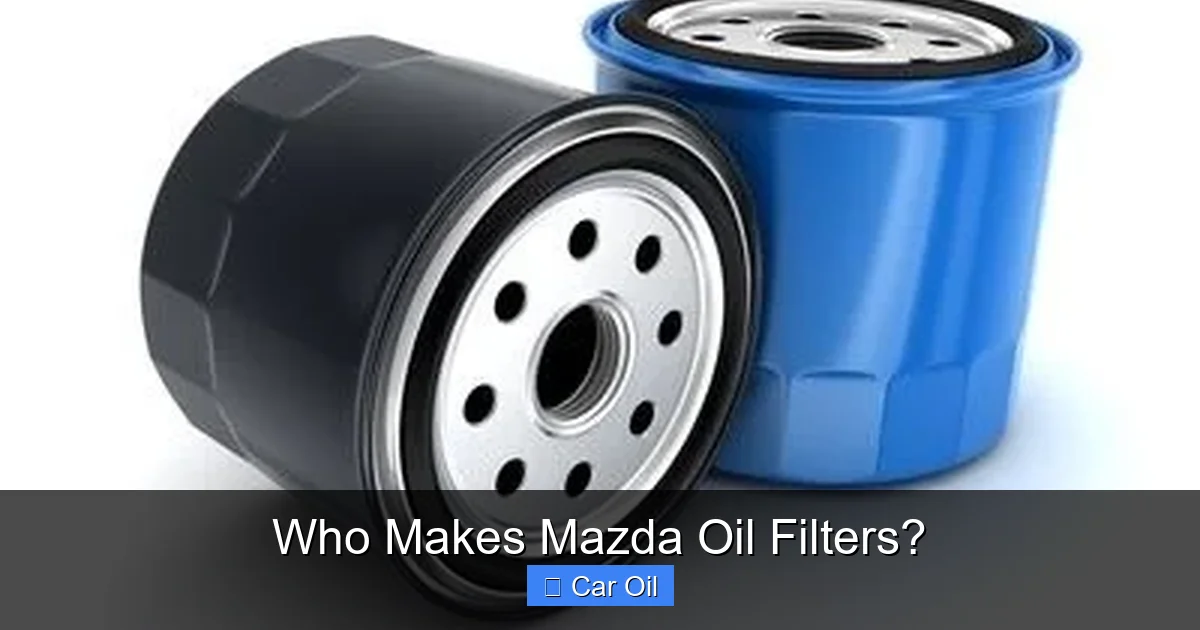
Visual guide about Who Makes Mazda Oil Filters?
Image source: rparts-sites.s3.amazonaws.com
Denso: The Likely Leader
Denso is a powerhouse. Originally part of Toyota, it’s now an independent global supplier with staggering reach. They are a top-tier manufacturer of fuel pumps, spark plugs, alternators, and—critically—oil filters. For decades, Denso has been the primary or a very significant OEM supplier for Mazda. Many “Genuine Mazda” filters carry Denso manufacturing codes or are directly sourced from them. Denso’s reputation is built on precision engineering and tight tolerances. Their filters are known for robust canisters, reliable anti-drainback valves, and efficient filtration media. If you see a Denso part number that cross-references to your Mazda, you can be confident you’re getting an OEM-quality product.
Mahle: The Filtration Specialist
Mahle is another titan, with a heritage specifically in filtration and engine components. They are one of the world’s largest filter manufacturers and supply countless OEMs across Europe, Asia, and America. Mahle’s expertise is in the filter media itself—the heart of the component. Their multi-layered, pleated designs are engineered for maximum dirt-holding capacity and minimal flow restriction. While Denso seems to have a slight edge in Mazda-specific applications based on part number evidence, Mahle is almost certainly a secondary or alternate supplier for certain models or regions. Finding a Mahle-made “Genuine Mazda” filter is possible, especially on older models.
It’s worth noting that other suppliers like Fram (through its parent company, Affinia Group, now part of Spectrum Brands) and Hengst also have OEM contracts with various manufacturers. However, for the Mazda brand specifically, Denso and Mahle are the most consistently identified sources for genuine filters.
The Aftermarket Landscape: Quality Beyond the Dealership
This is where the real power of choice comes in. The aftermarket is flooded with brands selling filters for your Mazda. The key is separating the truly excellent from the mediocre. Here’s a breakdown of the tiers.
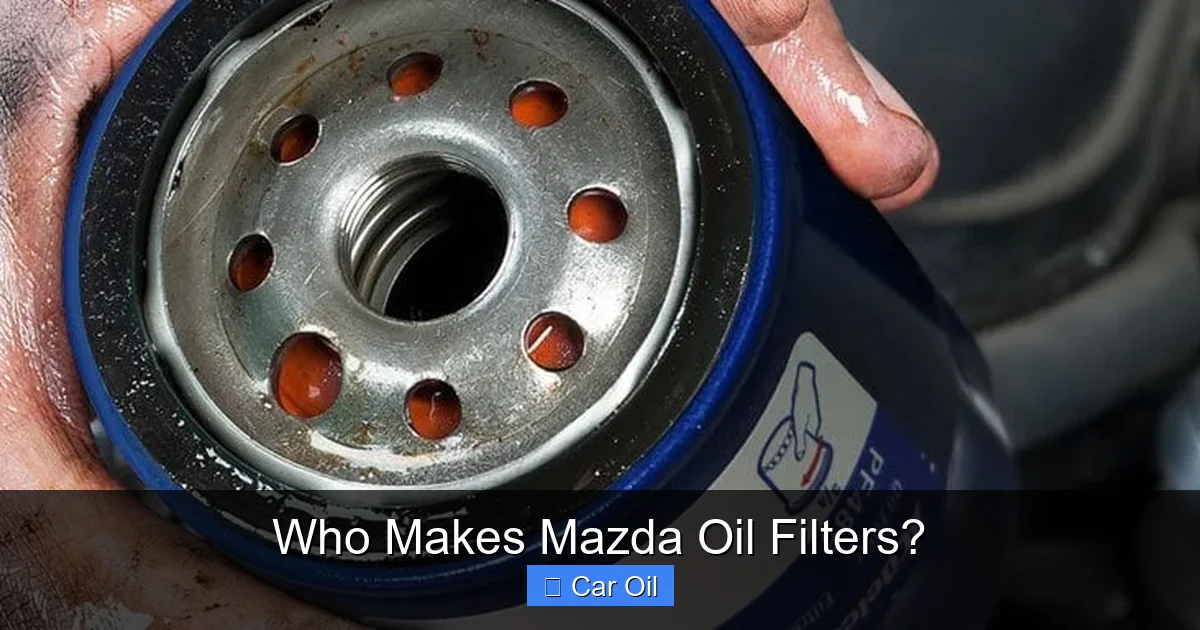
Visual guide about Who Makes Mazda Oil Filters?
Image source: ic.carid.com
Premium Aftermarket Brands (OEM-Spec or Better)
These companies often have their own R&D and manufacturing, or they source from the same OEM suppliers. They are your best bet for value and performance.
- Fram: The household name. Their “Extra Guard” and “Tough” series are solid, reliable filters. Critically, Fram often produces filters that are identical to the OEM version for many applications, just with a different label. They are a top choice for budget-conscious DIYers who want known quality.
- Mobil 1 M1-110A: Synonymous with synthetic oil, their filter is a premium offering. It typically features a high-efficiency synthetic blend media and a sturdy construction. It’s a direct, high-performance alternative to the OEM filter.
- Bosch: A German engineering giant, their oil filters are top-tier. The “DistancePlus” line uses a highly efficient media and a strong metal base. They are frequently cited in comparative testing as meeting or exceeding OEM specs.
- WIX XP: WIX is another major OEM supplier in its own right. Their XP (eXpert Performance) line is designed for extended drain intervals and high protection, making it a great match for Mazda’s recommended oil change intervals.
- K&N: Famous for performance air filters, their oil filters are also well-regarded. They use a high-quality synthetic media and are a popular choice among enthusiasts. Their “Gold” series is their standard offering.
Value and Standard Brands
Brands like Purolator (another historic name now under the same umbrella as Fram), ACDelco (GM’s OEM, but widely available), and Motorcraft (Ford’s OEM) produce competent filters that meet industry standards. For normal driving and standard oil change intervals, they are perfectly adequate and often represent the best balance of cost and known quality. You might find that a Motorcraft filter is actually made by Denso for certain Ford applications—the same logic applies to Mazda-compatible parts from these brands.
The “No-Name” and Ultra-Cheap Danger Zone
This is where you must be cautious. Filters from unknown brands, especially those priced significantly lower than established names (e.g., $3-$4 filters on large e-commerce sites), are often suspect. They may have thin metal canisters that can crack under pressure, poorly engineered bypass valves that open too easily (letting unfiltered oil flow), or filter media that resembles cardboard more than engineered fabric. Using these can be more expensive in the long run due to potential engine damage. If a deal seems too good to be true for a critical wear part, it almost always is.
How to Identify a Genuine Mazda Oil Filter
If you decide to go to the dealership or want to verify a filter you already have, here’s what to look for. Remember, “Genuine Mazda” means it was produced to Mazda’s specification by an OEM supplier and is sold under the Mazda brand.
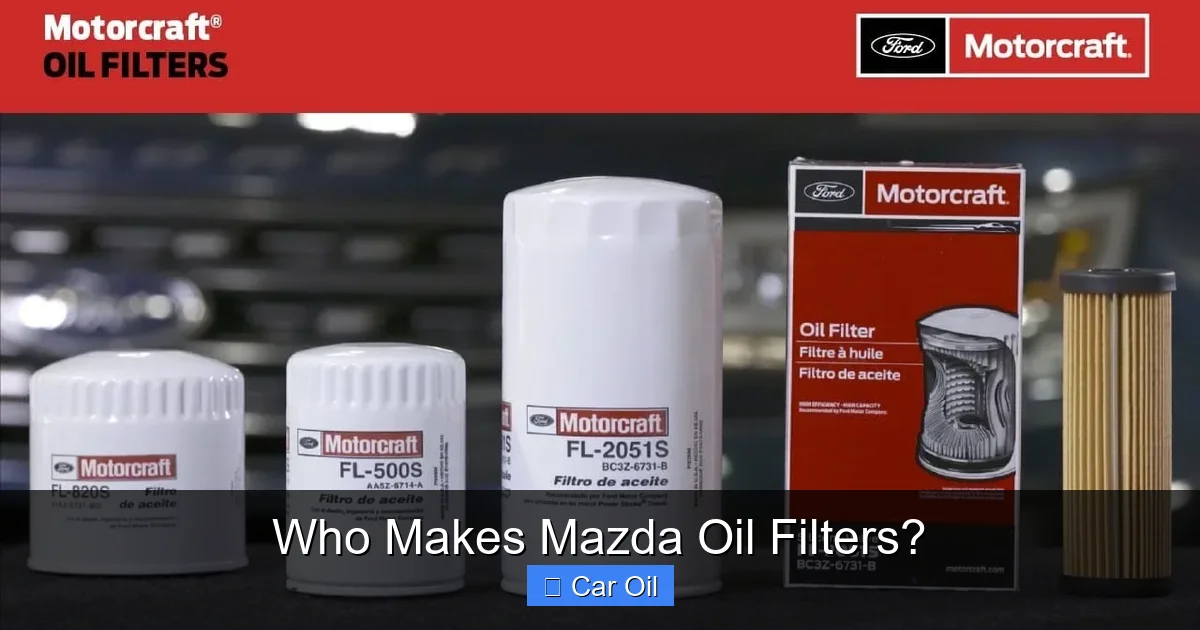
Visual guide about Who Makes Mazda Oil Filters?
Image source: oilfiltersonline.com
Part Numbers Are Your Best Friend
Every filter has a unique part number. The easiest way is to look up the OEM part number for your specific vehicle and engine. For example, a common part number for many Mazda3 and CX-5 models with the 2.0L or 2.5L SkyActiv-G engine is B6A1-14-302 or B6A1-14-302B. You can find this in your owner’s manual, on the old filter itself (if legible), or via any reputable parts catalog website. A genuine filter will have this number prominently printed on the box and often stamped on the filter itself.
Packaging and Branding Details
Genuine Mazda parts come in official Mazda packaging. It will have the Mazda logo, part number, and often a QR code or other security features. The box is typically white with blue/black/red Mazda branding. The filter itself will have the Mazda logo molded or stamped onto the metal canister, along with the part number. The construction will feel substantial—no thin, flimsy metal.
The “OEM” Label Trick
Sometimes, you might see a filter with a label that says “OEM” or “Original Equipment” but no car brand logo. This is common for parts sold by suppliers like Denso or Mahle directly to the aftermarket. If the part number matches your Mazda’s spec and it’s from a reputable brand like Denso, Mahle, or Fram (who often makes the OEM version), it is functionally identical to the “Genuine” part, just without the Mazda markup. This is often the smartest buy.
Performance Comparison: Does “Genuine” Always Equal “Best”?
This is the million-dollar question. In independent testing by organizations like Automotive Service Association (ASA) or consumer advocacy groups, the performance gaps between top-tier OEM filters and premium aftermarket brands are often negligible to non-existent. The test criteria usually include:
- Filtration Efficiency: Percentage of particles (of various sizes) captured. A good filter should capture 95%+ of particles in the 20-40 micron range.
- Dirt-Holding Capacity: How much contaminant the filter can hold before media breakdown or excessive restriction.
- Flow Restriction: How much the filter impedes oil flow to the engine. Too high, and you starve the engine of oil at startup or high RPM.
- Construction Integrity: Canister burst strength, base plate strength, and anti-drainback valve reliability.
Top brands like Bosch, Mobil 1, and Fram consistently score at or near the top in these tests, often matching or exceeding the OEM filter’s numbers. The “Genuine Mazda” filter, being a Denso or Mahle product, is inherently high-quality. But you are paying a premium for the Mazda brand badge. For the vast majority of drivers doing standard maintenance, a Denso-sourced aftermarket filter or a Bosch DistancePlus will provide identical protection at a lower cost. The only time you might strictly prefer the dealership part is if your vehicle is under a warranty that could question the use of non-dealership parts (though this is rare for wear items like filters) or for absolute peace of mind regarding perfect, documented OEM compliance.
Where to Buy and What to Avoid: A Practical Guide
Armed with knowledge, where should you actually purchase your Mazda oil filter? The answer depends on your priority: convenience, price, or guaranteed OEM.
Source 1: The Mazda Dealership
Pros: Guaranteed genuine OEM part. Perfect compatibility. Often has the exact part number in stock. You get a receipt that is part of your service history. Cons: Highest price. You’re paying for the dealership’s overhead and the Mazda brand markup. Convenience is limited to dealership hours.
Source 2: Large Auto Parts Stores (AutoZone, Advance Auto, O’Reilly, NAPA)
Pros: Very convenient. They carry multiple brands. You can physically inspect the filter. Staff can often look up the correct application. Many have loyalty programs. Cons: Prices are mid-range. Inventory of specific brands can vary by location. You must know which brand you want (e.g., ask for a Denso or Fram for your specific Mazda).
Source 3: Online Retailers (Amazon, RockAuto, Tire Rack, dedicated parts sites)
Pros: Best prices, especially on premium brands. Huge selection. RockAuto is exceptional for finding exact OEM part numbers and cross-references from multiple suppliers. You can buy in bulk. Cons: Requires knowledge to avoid counterfeits (stick to sellers with high ratings, sold by the site itself or “Amazon’s Choice”). No immediate gratification. Must check compatibility meticulously.
The Critical Avoidance List
Never, ever buy an oil filter from:
- Unverified third-party sellers on large marketplaces with prices that seem impossible.
- Flea markets, garage sales, or “as-is” auto swaps for a critical wear item.
- Generic “universal” or “fit-all” filters. Your Mazda engine has specific port sizes and pressure requirements. An incorrect filter can cause leaks or starve the engine of oil.
Pro Tip: Always check the part number on the filter you receive against the OEM number for your vehicle before installation. It’s a simple step that prevents a world of trouble.
The Bottom Line for Your Mazda
So, who makes Mazda oil filters? The answer is a who’s who of global filtration: primarily Denso, with Mahle also in the mix. This is a good thing. These are not obscure factories; they are industry leaders whose reputations depend on making flawless filters for multiple top automakers.
For you, this means freedom. You are not forced to pay dealership prices for a filter that is functionally identical to one you can buy elsewhere. Your strategy should be:
- Find your exact OEM part number. This is non-negotiable.
- Decide on your brand preference. If you want “just like the dealer” but cheaper, find a Denso or Mahle part number that matches. If you want a known premium aftermarket brand, research which one consistently tests well (Bosch, Mobil 1, K&N are safe bets).
- Buy from a reputable source. Whether that’s the dealership for convenience, a local parts store for immediacy, or a trusted online vendor for price, ensure the seller is authorized and the part is authentic.
Protecting your Mazda’s engine is simple: use the correct filter, filled with quality oil, changed at the recommended interval. The manufacturer’s name on the box is less important than the part number and the brand’s engineering pedigree. By understanding that Mazda oil filters are made by world-class OEM suppliers, you can make an informed, confident, and cost-effective choice every single time you perform this vital maintenance task. Your engine will run smoother, last longer, and keep delivering that signature Mazda driving pleasure for years to come.
Frequently Asked Questions
Who actually manufactures genuine Mazda oil filters?
Genuine Mazda oil filters are manufactured by major OEM suppliers, primarily Denso and Mahle. Mazda designs the specifications and contracts production to these industrial partners, who also supply filters to many other automakers.
Are aftermarket oil filters for Mazda as good as genuine ones?
Yes, premium aftermarket filters from brands like Bosch, Fram, and Mobil 1 are often identical to the OEM filter or meet/exceed the same performance standards. They are made by the same suppliers or have their own advanced engineering. The key is choosing a reputable brand, not an unknown cheap one.
How can I tell if a Mazda oil filter is genuine?
Look for the exact OEM part number (e.g., B6A1-14-302) on the box and the filter itself. Genuine filters come in official Mazda-branded packaging with a substantial metal canister and the Mazda logo stamped on it. Purchasing from a Mazda dealership guarantees authenticity.
Can I use any brand of oil filter on my Mazda?
You must use a filter with the correct part number for your specific engine. An incorrect filter can have the wrong thread size, gasket, or pressure relief valve, leading to leaks, oil starvation, or poor filtration. Always verify compatibility using your VIN or OEM part number.
What are the risks of using a cheap, unknown-brand oil filter?
Cheap filters often have thin canisters that can crack, poor-quality filter media that doesn’t trap particles effectively, and unreliable bypass or anti-drainback valves. This can lead to unfiltered oil circulating through your engine, causing accelerated wear, low oil pressure, and potentially severe engine damage, making the initial savings a false economy.
Where is the best place to buy a Mazda oil filter?
The best place depends on your priority: dealerships for guaranteed genuine parts and service history; large auto parts stores for convenience and brand choice; trusted online retailers like RockAuto or the websites of brands like Bosch or Fram for the best prices and selection. Always avoid unverified sellers on large marketplaces with suspiciously low prices.