
Are Infiniti Parts Expensive?

Infiniti parts are generally more expensive than those for non-luxury vehicles but are often more affordable than parts for European luxury brands like BMW or Mercedes-Benz. This pricing is due to Infiniti’s position as Nissan’s luxury division, using higher-quality materials and advanced technology. You can manage costs effectively by utilizing Nissan dealerships for service, considering quality aftermarket options, and adhering to a strict maintenance schedule to avoid costly repairs.
So, you’re eyeing an Infiniti, or maybe you already own one. That smooth, quiet ride and powerful engine come with a question that often pops up in car forums and dealership service lanes: “Are Infiniti parts expensive?” It’s a fair and smart question. The short answer is: it’s complicated, but generally, they fall into a “premium but manageable” category. Let’s pop the hood and take a detailed, no-nonsense look at what drives the cost of Infiniti parts, how they truly stack up against the competition, and most importantly, how you can be a savvy owner who keeps costs in check without sacrificing reliability. Think of this as your ultimate owner’s guide to the real price of keeping an Infiniti on the road.
Infiniti, for those new to the brand, is Nissan’s luxury division, launched in 1989 to compete with the Acura and Lexus juggernauts. This relationship with Nissan is the single most important factor in understanding Infiniti parts pricing. It creates a unique ecosystem that is different from a brand like BMW, which stands completely alone. This shared heritage means your Infiniti Q50, for example, shares its basic platform and many drivetrain components with a Nissan Maxima or Altima. That shared DNA is a double-edged sword for cost. On one hand, it means some basic parts (like certain suspension components or engine blocks) have a more stable supply chain and can be sourced from Nissan’s massive parts network, often at a lower cost than a unique, brand-only part. On the other hand, when a part is specifically engineered and calibrated for Infiniti’s higher performance and luxury standards—like a unique turbocharger or a sophisticated suspension damper—it carries the Infiniti premium. We’ll break all of this down piece by piece.
Key Takeaways
- Infiniti is Nissan’s luxury division: This shared corporate lineage means many Infiniti vehicles share platforms and some components with Nissan models, which can help moderate parts costs compared to standalone luxury brands.
- Parts cost more than mainstream brands, less than Europeans: Expect to pay a premium over a Toyota or Honda, but typically less than for a German luxury car for the same component.
- OEM vs. Aftermarket is a key decision: OEM (Infiniti/Nissan) parts guarantee fit and quality but cost more. High-quality aftermarket parts can offer significant savings but require careful brand selection.
- Preventative maintenance is critical: Neglecting routine service on complex Infiniti engines (especially turbocharged ones) leads to exponentially higher repair bills for major components.
- Nissan dealers can often service Infinitis: This is a major cost-saving advantage, as technician labor rates and parts availability are typically more favorable than at dedicated Infiniti dealerships.
- Some components are inherently costly: Turbochargers, advanced electronics/sensors, and complex suspension systems will always be expensive due to their sophistication and low-tolerance manufacturing.
- Research and shopping save money: Comparing prices online, considering remanufactured parts for certain items, and building a relationship with an independent specialist can lower your total cost of ownership.
📑 Table of Contents
- The Infiniti Parts Pricing Puzzle: It’s All About Brand Positioning
- OEM vs. Aftermarket: Understanding Your Parts Options
- The Most Commonly Expensive Infiniti Parts: What to Expect
- Maintenance: The Silent Cost Driver (And Your Best Defense)
- Smart Strategies to Manage and Reduce Infiniti Parts Costs
- How Infiniti Parts Costs Compare to Other Luxury Brands
- Conclusion: The Verdict on Infiniti Parts Costs
The Infiniti Parts Pricing Puzzle: It’s All About Brand Positioning
To understand the “why” behind the price tag, you have to start with the business strategy. Infiniti isn’t trying to be a bargain brand, but it also isn’t aiming to be a full-blown European luxury marque. It occupies a sweet spot often called “near-luxury” or “premium.” This positioning directly informs parts costs.
Brand Positioning and Its Impact
When you buy an Infiniti, you’re paying for a specific package: more refined engines (often with turbocharging), superior interior materials, advanced noise cancellation, and cutting-edge driver-assist technology. The parts that make this package possible are engineered to tighter tolerances and with higher-grade materials than your average commuter car. A brake rotor for an Infiniti Q60 is designed to handle more power and speed than one for a Nissan Sentra. It uses a different alloy, undergoes more rigorous testing, and has a more complex mounting system. That engineering and quality control adds cost at the factory, which flows down to the parts counter.
However, because Infiniti shares so much with Nissan, it doesn’t have the same massive R&D overhead per model as a brand like Porsche. This is where Infiniti parts often become more palatable than, say, Audi or Mercedes parts. The German brands often use proprietary designs and manufacturing processes that are incredibly expensive to replicate. Infiniti, by leveraging Nissan’s global supply chain and production scale for core components, avoids some of that extreme cost inflation. You’re getting a luxury experience with a parts bill that, while steeper than a Toyota, won’t typically give you the full-blown heart attack that a European luxury car repair can.
Supply Chain and Production Factors
The global supply chain is a huge, often invisible, player in parts pricing. A part that is manufactured in high volume for both Nissan and Infiniti models will have a lower per-unit cost. A great example is the VQ35HR or VQ37VHR V6 engine. This legendary engine powered everything from the Nissan 350Z to the Infiniti G37 and Q50. Many internal components—pistons, rods, bearings—are shared or very similar. If you need a timing chain guide, you might find a Nissan-branded version that is identical to the Infiniti part but costs 20-30% less because it’s sold in vastly higher quantities.
Conversely, a part unique to Infiniti’s performance models, like the VR30DDTT twin-turbo V6 in the Q50 and Q60, has a much lower production volume. The turbochargers themselves, with their complex variable geometry and intercooling systems, are expensive components to manufacture and are Infiniti-specific. Their cost reflects that low-volume, high-tech nature. So, when you ask “Are Infiniti parts expensive?” the answer is: “It depends entirely on which part you’re talking about and its production volume across the Nissan-Infiniti family.”
OEM vs. Aftermarket: Understanding Your Parts Options
This is the battleground where most of your cost-control strategies will be won or lost. Understanding the difference between OEM and aftermarket parts is non-negotiable for any car owner looking to manage expenses.
Visual guide about Are Infiniti Parts Expensive?
Image source: passportinfiniti.com
OEM Parts: The Premium Choice
OEM stands for Original Equipment Manufacturer. For Infiniti, this means parts that are made by Nissan (or its certified subsidiaries) specifically for Infiniti vehicles and sold through Infiniti or Nissan dealership parts departments. These are the exact parts that rolled off the assembly line with your car. They come with a perfect fit guarantee and are backed by the manufacturer’s warranty (usually 12 months/unlimited miles). There is zero ambiguity about quality or compatibility.
The downside? Price. OEM parts are the most expensive option on the market. You are paying for the Infiniti/Nissan brand stamp, the logistics of the dealership network, and the absolute certainty of a direct replacement. A simple OEM oil filter for an Infiniti QX60 might cost $15-20, while a high-quality aftermarket filter from a brand like Mobil 1 or Bosch might be $8-12. On a major component like an alternator or a complete brake caliper assembly, that price delta can be hundreds of dollars. For complex electronics like a steering angle sensor or a transmission control module, the OEM price can be astronomical because it includes the proprietary software and calibration.
Aftermarket Parts: Quality and Savings
The aftermarket is everything else. It’s a vast universe of companies that manufacture parts to fit your Infiniti. The quality spectrum here is breathtaking, from cheap, no-name imports to premium brands that actually supply parts to Nissan’s own factories (these are sometimes called “Tier 1” suppliers). Brands like Bosch, Denso, ACDelco, KYB, Moog, and Cardone are household names in the aftermarket world for a reason: they consistently produce parts that meet or exceed OEM specifications.
For an Infiniti owner, the aftermarket is where you find your best value. A set of premium aftermarket brake pads from a company like Akebono or Hawk will stop your Q50 just as well as OEM pads, often with less dust and better performance under hard use, for 30-50% less money. A replacement alternator from a reputable remanufacturer like Remy or Bosch will come with new bearings and diodes and a solid warranty, saving you significant cash. The key is research. You must read reviews, understand the brand’s reputation, and, for critical safety components like brakes or steering parts, stick with the most trusted names. Never cheap out on a $5 Amazon special for a part that controls your steering or braking.
Which Should You Choose? A Practical Framework
There’s no one-size-fits-all answer. Here’s a simple rule of thumb:
- Critical, Safety-Related, or Complex Electronic Parts: Lean heavily toward OEM or the highest-tier aftermarket. This includes airbags, ABS modules, engine control units, turbochargers, and major suspension components like struts/springs. The risk of a failure is too high, and the engineering is too specific. For these, the OEM premium is often a form of insurance.
- Wear-and-Tear Items: The aftermarket is your friend. Brake pads and rotors, wiper blades, batteries, oil filters, air filters, and most suspension bushings are perfect candidates for quality aftermarket brands. You’ll save a bundle.
- Cosmetic and Interior Parts: Aftermarket offers endless options, often at better prices. Door handles, trunk actuators, and minor trim pieces can often be sourced cheaper from aftermarket suppliers or even salvage yards.
A pro tip: When shopping for an aftermarket part, cross-reference the part number. Many premium aftermarket parts list the OEM number they replace. If you see a Bosch part with the Nissan/Infiniti part number on the box, you can be confident you’re getting a part made to the original standard, often in the same factory.
The Most Commonly Expensive Infiniti Parts: What to Expect
Not all parts are created equal. Some are inherently expensive due to their complexity, material, or role in the vehicle. Knowing these “hot spots” helps you budget and prioritize maintenance.
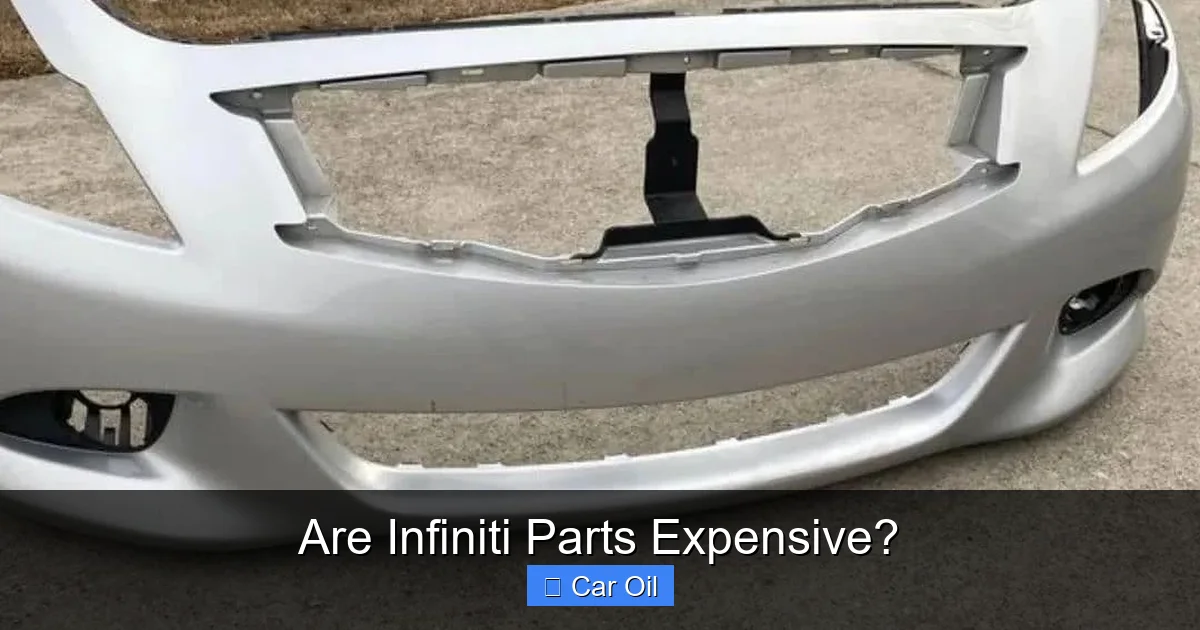
Visual guide about Are Infiniti Parts Expensive?
Image source: infinitipartsales.com
Engine Components, Especially on Turbocharged Models
This is the big one. Infiniti has been a major proponent of turbocharging for performance and efficiency, especially in its V6 and four-cylinder engines. The turbocharger(s) themselves are the crown jewels of expense. A failed turbo on a VR30DDTT (Q50 Red Sport 400, Q60 Red Sport 400) can easily cost $3,000 – $4,500+ for a new OEM unit, including labor. Rebuilt or aftermarket turbos can save $1,000-$2,000, but you must trust the rebuilder.
Other expensive engine items include timing chains and related components (tensioners, guides), especially on higher-mileage VQ and VR engines. While these engines are generally robust, a neglected timing chain can lead to catastrophic engine failure, making the repair bill (often $2,500-$4,000) a harsh lesson. Head gaskets are another potential major repair, though less common on Infiniti’s modern turbo engines than on some older Nissan VQ engines. High-pressure fuel pumps and direct injectors for turbo engines are also sophisticated, costly components.
Advanced Electronics and Sensors
Modern Infinitis are rolling computers. The Transmission Control Module (TCM) or Engine Control Module (ECM) can cost $1,000 – $2,500+ for a new OEM unit, often requiring dealer programming. A faulty steering angle sensor (critical for stability control) is a few hundred dollars. Air suspension compressors and struts on models like the QX80 or older Q45 are notoriously expensive, with a single OEM air strut costing $800-$1,200+.
Even “simple” sensors like crankshaft position sensors or camshaft sensors on turbo models are more expensive than on a base four-cylinder due to their placement and specification. The rule of thumb: if it has a wire harness plug and affects engine management, driving dynamics, or safety systems, assume it’s pricey.
Brake System (Beyond Pads)
We already praised aftermarket brake pads. But when you move up the chain, costs rise. Brembo-branded calipers (available on some Infiniti sport packages) are performance parts with a performance price. A single replacement caliper can be $400-$700 OEM. Rotors for larger, sport-tuned brake setups are also costly. And if you need brake fluid service on a vehicle with ABS and stability control, it requires specialized equipment to bleed the system properly, adding to labor cost at a shop.
Suspension and Steering
Infiniti often uses more sophisticated suspension designs than its Nissan siblings, like double-wishbone front suspensions on performance models. This means control arms, ball joints, and tie rod ends can be more complex and expensive. Hub assemblies with integrated wheel speed sensors are another costly item. The labor for suspension work is also intensive, contributing to the high total bill. On vehicles with magnetic ride control (like some Q50/Q60 models), the shock absorbers themselves are incredibly expensive, often $1,000+ each.
Maintenance: The Silent Cost Driver (And Your Best Defense)
Here is the most crucial section. The single biggest factor determining whether your Infiniti parts experience is “moderately expensive” or “financially catastrophic” is your approach to maintenance. Infiniti engines, particularly the turbocharged V6s and four-cylinders, are high-performance machines that demand respect.
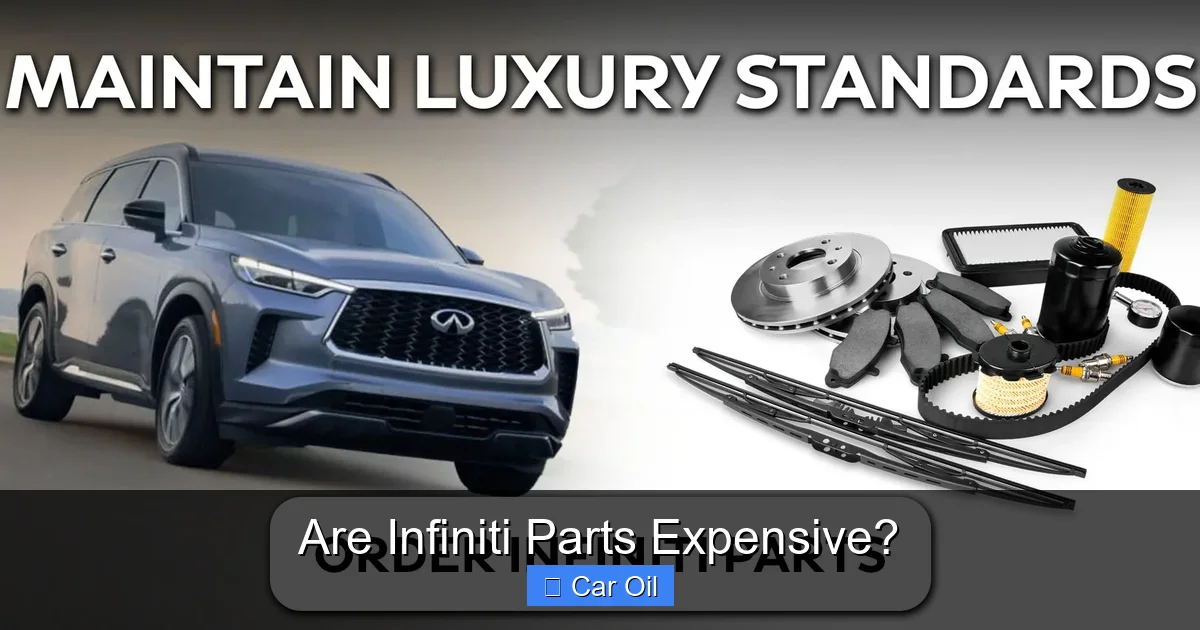
Visual guide about Are Infiniti Parts Expensive?
Image source: infinitiofapex.com
Regular Servicing vs. Neglect: The $500 vs. $5,000 Story
Let’s talk about oil. Using the correct oil, in the correct viscosity, and changing it at the recommended interval (often every 5,000-7,500 miles for modern Infinitis, but always check your owner’s manual) is the #1 most important thing you can do. These turbo engines run hot and create significant stress on the oil. Sludge formation from neglected oil changes can clog oil passages, leading to premature wear on turbo bearings, piston rings, and camshafts. The repair for a sludged-up turbo or a scored cylinder wall? We’re talking major engine rebuild territory, easily exceeding $5,000. A proper oil change with a good synthetic oil and filter, even if you use a premium aftermarket filter, costs $80-$120 at an independent shop. That’s the ultimate “pay me now or pay me much, much later” scenario.
The same philosophy applies to cooling system service. Infiniti’s turbo engines have complex cooling systems with multiple thermostats, water pumps, and radiators. A failing water pump or a leaky hose can lead to overheating and rapid engine destruction. Proactively replacing coolant, inspecting hoses, and addressing small leaks is cheap insurance.
Infiniti’s Recommended Maintenance Schedule
Your owner’s manual is your bible. It outlines mandatory services at specific mileage intervals. These often include:
- Spark Plugs: On turbo models, these are often indexed and require specific torque. They are more expensive than standard plugs ($25-$50 each vs. $5-$10) and labor can be high due to difficult access. But worn plugs cause misfires, which can wash oil from cylinder walls and destroy catalytic converters—a $3,000+ repair.
- Differential Fluid: Often overlooked. The rear differential (and front on AWD models) needs fluid changes. Neglected differential fluid leads to whining, gear wear, and eventual failure.
- Transmission Fluid: For automatic transmissions, fluid condition is paramount. Some models call for “lifetime” fluid, but many independent mechanics advocate for earlier changes, especially for vehicles used for towing or in severe conditions. A transmission flush is $200-$300. A transmission rebuild is $3,000-$5,000.
- Air Filters: A clogged engine air filter starves the turbo of air, reducing performance and increasing stress. A $25 filter change is trivial.
Sticking to this schedule isn’t throwing money away; it’s strategically investing to prevent the exponential cost of major component failure. How much an Infiniti oil change costs is a common starting point for this conversation, but the real cost is in understanding that the oil change is just one part of a holistic maintenance strategy that protects thousands of dollars in engine parts.
Smart Strategies to Manage and Reduce Infiniti Parts Costs
Okay, so parts can be pricey. What do you actually *do* about it? This is where you become a strategic owner.
Leverage the Nissan Connection: Your Secret Weapon
This cannot be stressed enough. Because Infiniti is Nissan’s luxury brand, a Nissan dealership can almost always service your Infiniti. This is a monumental advantage. Nissan dealerships typically have lower labor rates than Infiniti dealerships. Their technicians are factory-trained on the shared platforms and engines. They have direct access to Nissan’s parts catalog, which includes many of the exact same components that go into your Infiniti, often at a lower price than the Infiniti parts counter. For common repairs—brake jobs, suspension work, coolant system service, even some engine work—a reputable Nissan dealer is frequently the best value proposition. You get factory-trained labor and genuine Nissan parts (which are often identical to Infiniti OEM) at a better price. Always call and ask if they service Infinitis; the answer will almost certainly be yes.
Shop Around, Including Online Retailers
Never assume the first quote is the best. Get estimates from at least three sources: an Infiniti dealer, a Nissan dealer, and a trusted independent shop. For parts alone, explore online retailers like RockAuto, PartsGeek, or even Amazon for certain items. These sites aggregate inventory from multiple warehouses and aftermarket suppliers, often at prices far below dealer list. You can order the part and have it shipped to your independent mechanic, who will install it for a labor-only charge. This two-step process (buy part, pay for install) can save hundreds.
Consider Used and Remanufactured Parts for Non-Critical Items
For components like wheel hubs, alternators, starters, and even some transmission solenoids, remanufactured parts are an excellent value. Companies like Cardone, Bosch, and Remy take used core units, completely disassemble them, replace all wear items with new components, test them to exacting standards, and sell them with a solid warranty. They are often 40-60% cheaper than new OEM. For body parts (fenders, doors), used parts from salvage yards (especially late-model wrecked vehicles) can be a huge savings, though you must inspect for quality and corrosion.
Avoid used parts for: anything safety-related (airbags, seat belts), turbochargers, complex electronics, or parts with internal wear you can’t see (like engines or transmissions). The risk outweighs the savings.
Build a Relationship with an Independent Infiniti/Nissan Specialist
This is the golden ticket for long-term ownership. Find an independent repair shop that focuses on Infiniti and Nissan vehicles. These shops have deep, specific knowledge of these cars’ quirks and common failure points. Their labor rates are usually lower than dealers. They often have a network of parts suppliers (including aftermarket and used) and can guide you to the best value for your specific repair. They may also be more willing to install your personally-sourced aftermarket or remanufactured parts, whereas some dealers will only install their own OEM inventory. A good specialist is worth their weight in gold and can save you thousands over the life of the car.
How Infiniti Parts Costs Compare to Other Luxury Brands
Let’s put the Infiniti premium in context. How does it really stack up?
Infiniti vs. Lexus: The Japanese Luxury Rivalry
This is the most direct and relevant comparison. Both are Japanese luxury divisions (Infiniti/Nissan, Lexus/Toyota) with similar market positioning. Generally, Infiniti parts are comparable to, and often slightly less expensive than, Lexus parts. The reason comes back to model lineups. Lexus has a broader range, including some very expensive, low-volume models (LC 500, some V8-powered sedans) with unique, costly components. Infiniti’s lineup is more focused on turbocharged V6 and four-cylinder performance models, which share more with high-volume Nissan products. For common repairs on comparable sedans or SUVs (like a Q50 vs. an ES 350), you’ll find the parts bills are very similar. However, for a high-performance model like the Q60 Red Sport 400 vs. an RC F, the Lexus’s naturally aspirated V8 and unique chassis parts will likely be more expensive. Are Lexus parts expensive? Yes, but they inhabit a similar cost universe to Infiniti, making them both relatively “affordable” luxury options compared to Europe.
Infiniti vs. German Luxury (BMW, Mercedes-Benz, Audi)
Here is where Infiniti shines in value. Parts for German luxury cars are consistently and significantly more expensive. There are several reasons. First, they are almost entirely unique to the brand, with no high-volume mainstream sibling to share costs. Second, they use more complex, proprietary engineering (e.g., BMW’s twin-turbo inline-6s, Mercedes’ air suspension systems). Third, the European dealer labor rates are notoriously high. A simple oil change on a Mercedes E-Class can cost $200-$300 at a dealer. An alternator for a BMW 5-Series can be $1,200-$1,800 for the part alone, often requiring complex removal. Infiniti parts and labor simply do not reach these stratospheric levels. You are paying a premium for luxury and performance with Infiniti, but you are not paying the “German tax” on every single component.
Infiniti vs. Acura and Other “Near-Luxury” Brands
Acura (Honda’s luxury division) is another close peer. The comparison is very similar to Infiniti vs. Lexus. Both brands leverage their mainstream parent’s engineering and parts bin. Acura’s parts, especially for its turbocharged models (like the TLX Type S with its V6), will be in the same ballpark as Infiniti’s. You might see slight variations depending on the specific component and model year, but there’s no dramatic cost difference. The real savings between these brands often come down to long-term reliability and specific model quirks, not a fundamental parts price disparity.
Conclusion: The Verdict on Infiniti Parts Costs
So, are Infiniti parts expensive? The final, nuanced answer is: They are a premium, but a manageable and justifiable one for the value they provide. You will pay more than you would for a Honda or a Ford. You should budget for that. But you will not face the punishing, budget-busting repair bills that are commonplace with European luxury brands. The Infiniti ownership experience is built on a foundation of performance and refinement that doesn’t require a second mortgage to maintain, provided you are an informed and proactive owner.
The keys to success are threefold: First, embrace preventative maintenance. The oil change, the fluid flushes, the scheduled inspections—these are your cheapest investments against the most expensive repairs. Second, use the Nissan connection to your advantage. A Nissan dealership is a fantastic resource for parts and labor at a better rate. Third, become a smart parts shopper. Understand the OEM vs. aftermarket landscape, don’t be afraid of remanufactured parts for the right applications, and build a relationship with a specialist independent shop.
Infiniti offers a compelling package: luxury, tech, and driving excitement. Its parts cost structure reflects its position as a performance-oriented luxury brand with a crucial lifeline to Nissan’s vast engineering and production resources. By understanding this ecosystem and acting accordingly, you can enjoy your Infiniti for years to come without the lingering dread of an unaffordable repair bill. It’s not the cheapest hobby, but with knowledge and a plan, it’s a perfectly sustainable and rewarding one.
Frequently Asked Questions
What are the most expensive Infiniti parts to replace?
The turbochargers on VR30DDTT engines (Q50/Q60 Red Sport 400), complex electronics like transmission control modules, and air suspension components on certain SUVs are among the most costly. Major engine work due to neglected maintenance also leads to the highest total bills.
Are aftermarket Infiniti parts reliable and safe to use?
Yes, but with a major caveat. High-quality aftermarket parts from reputable brands like Bosch, Denso, or Moog are often excellent and can save significant money, especially for wear items like brakes and suspension. Always avoid the cheapest, unknown brands for critical safety or engine components.
Can I really take my Infiniti to a Nissan dealer for service and parts?
Absolutely. This is a key advantage of the Infiniti/Nissan relationship. Nissan dealerships are factory-trained and equipped to service and repair Infiniti vehicles. They often have lower labor rates and can source many of the same parts, making them a cost-effective alternative to Infiniti dealers for most maintenance and repairs.
How do Infiniti parts costs compare to Lexus?
They are very similar. Both are Japanese luxury brands that share technology with their mainstream counterparts (Nissan/Toyota). Parts for comparable models in the same class are generally in the same price range, with minor variations depending on the specific component and model.
Is it worth doing Infiniti repairs myself to save on parts?
It depends on your skill level and the repair. Simple maintenance like oil changes, filter swaps, and brake pad replacements are excellent DIY projects that save labor costs. However, complex jobs involving engine timing, turbo systems, or advanced electronics should be left to professionals to avoid costly mistakes and potential safety risks.
Do expensive Infiniti parts affect insurance premiums?
Indirectly, yes. Insurance premiums are primarily based on the vehicle’s overall value, repair costs, theft rates, and safety ratings. Because Infiniti is a luxury brand with higher parts and repair costs than a standard sedan, insurance for an Infiniti will typically be higher than for a comparable non-luxury vehicle.