
Car Cover Maintenance Tips: How to Keep Your Cover Clean and Durable

Quick Answer
The best car cover maintenance tips are simple: clean the cover regularly, dry it completely before storage, remove dirt from your vehicle before covering it, and inspect the fabric, seams, straps, and elastic for wear. Follow the manufacturer’s cleaning instructions because different materials need different care. For additional vehicle ownership guidance, consult the Edmunds automotive resource center.
Essential maintenance habits
- Clean regularly: Remove dust, leaves, bird droppings, and other debris before they accumulate.
- Wash gently: Use the cleaning method and products approved for your cover’s material.
- Dry completely: Avoid folding or storing a damp cover for extended periods.
- Prepare the vehicle: Remove loose dirt from the paintwork to reduce abrasion beneath the cover.
- Inspect for damage: Check seams, straps, elastic edges, and worn areas before each long storage period.
- Store it properly: Keep the clean, dry cover in a breathable storage bag or another suitable place away from sharp objects.
One important precaution
- Never assume a waterproof or weather-resistant cover can safely remain wet and tightly folded indefinitely.
- Check the cover manufacturer’s instructions before machine washing, applying cleaners, or using heat to speed up drying.
A car cover can help protect your vehicle from dust, tree sap, bird droppings, sunlight, and certain weather conditions. However, the cover itself needs attention if you want it to keep working effectively.
I’ve always considered cover maintenance part of looking after the vehicle, not just another cleaning chore. A dirty cover can transfer grime back onto the paint, while trapped moisture and poor storage can shorten the cover’s useful life.
This guide explains how to clean, dry, inspect, and store a car cover, whether you use one in a garage, under a carport, or outdoors throughout the year.
In This Guide
- Why does car cover maintenance matter?
- How do you clean a car cover properly?
- How should you dry a car cover and prevent moisture damage?
- How do you maintain a car cover during everyday use?
- How does maintenance differ by car cover material?
- How do you inspect, repair, and store a car cover?
- How often should you maintain a car cover?
- Frequently asked questions
Why Does Car Cover Maintenance Matter?
Car cover maintenance means regularly cleaning, drying, inspecting, and storing a protective vehicle cover so it continues to fit properly and perform as intended. It also includes keeping the vehicle’s surface reasonably clean before putting the cover on.
A well-maintained cover can help reduce contamination and unnecessary wear. Neglecting it can allow grit, moisture, and accumulated debris to interfere with its protective function.
What happens when you neglect a car cover?
Most cover problems develop gradually rather than appearing overnight. A few simple checks can help you spot trouble before it affects the fabric or your vehicle’s finish.
- Paint abrasion: Dirt trapped between the cover and vehicle can rub against the finish when the fabric moves in the wind.
- Musty odors: A cover folded while damp can develop unpleasant smells, particularly when stored in a warm, poorly ventilated space.
- Fabric deterioration: Persistent contamination, harsh cleaners, and unsuitable drying methods may damage some materials or their coatings.
- Loose or damaged fittings: Worn elastic, broken straps, and weakened seams can make the cover less secure.
- Reduced weather protection: Damaged seams or degraded water-resistant coatings may allow more moisture through than the manufacturer intended.
Why the vehicle needs attention too
Cleaning the cover alone isn’t enough. A cover placed over dusty paint can trap abrasive particles against the surface, especially when wind moves the fabric back and forth.
Before covering the vehicle, remove loose dirt and inspect areas where debris tends to collect. Pay particular attention to the hood, roof, trunk, mirrors, and lower body panels.
Don’t put a cover over a vehicle that’s still wet unless the product instructions specifically allow that use. If moisture becomes trapped, give the vehicle and cover an opportunity to dry.
Maintenance tip: Think of the cover as another surface that touches your car. Clean paint and a clean cover work together better than either one alone.
Section takeaway: Regular maintenance protects both the cover and the vehicle’s finish. Cleanliness, moisture control, and secure fit are the three priorities to watch.
How Do You Clean a Car Cover Properly?
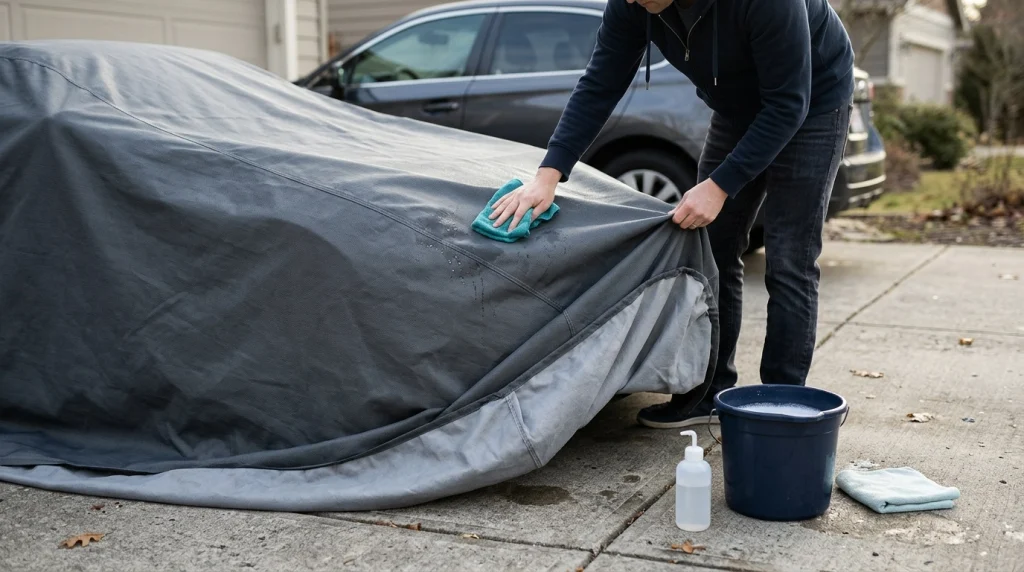
Clean a car cover according to its manufacturer’s instructions, using a gentle method that won’t damage its fabric, lining, seams, or protective coating. For many reusable covers, removing loose debris and washing with suitable mild cleaning products is safer than aggressive scrubbing.
The right approach depends on the material and whether the cover is designed for indoor or outdoor use. When the care label gives specific directions, follow those directions over general advice.
Step 1: Remove loose dirt and debris
Start by removing the cover from the vehicle carefully. If it has collected loose dust, leaves, or dried debris, shake it out in a suitable open area without dragging it across the ground.
- Remove leaves, twigs, and other loose debris by hand.
- Brush away loose dirt gently if the fabric permits it.
- Check the inner surface for grit, especially around the hem and folded areas.
- Keep the cover away from gravel, rough concrete, and other abrasive surfaces while handling it.
This first step matters because washing loose debris into the fabric can make cleaning more difficult. It also reduces the chance of rubbing hard particles into a delicate inner lining.
Step 2: Choose the correct washing method
Some covers can be washed by hand, while others allow machine washing in a suitably sized machine. Some coated, lined, or multilayer products require specialized care, so don’t assume every cover can be treated the same way.
Check the label or manufacturer’s website before choosing a washing method. If the instructions are missing, contact the manufacturer rather than guessing about machine compatibility.
- Hand washing: Use a clean, spacious area and the approved cleaning solution, then work gently without excessive scrubbing.
- Machine washing: Use a machine only if the manufacturer explicitly permits it and the cover fits without being forced into the drum.
- Spot cleaning: Treat small dirty areas with an approved cleaner rather than washing the entire cover unnecessarily.
Step 3: Use a suitable cleaner
Choose a mild detergent or cleaning product approved for the particular cover. Strong solvents, bleach, and harsh degreasers may affect coatings, water resistance, color, or fabric strength.
Don’t add fabric softener unless the manufacturer specifically allows it. Residues can affect the performance of some technical textiles.
If you want to try a new cleaner, test it on a small, inconspicuous area when the manufacturer permits spot testing. Stop if the material changes color, texture, or appearance.
Step 4: Rinse thoroughly
Remove all detergent according to the washing instructions. Leftover cleaning product can leave a residue that attracts dirt or affects how the fabric feels.
Pay attention to folded sections, hems, and thicker areas where rinse water may collect. Avoid forceful scrubbing or high-pressure spraying unless the manufacturer expressly recommends it.
Step 5: Clean stubborn stains carefully
Bird droppings, tree sap, pollen, and oily marks may need separate treatment. The safest method depends on the contaminant and the cover’s fabric or coating.
- Bird droppings: Remove the contamination promptly using the approved cleaning method instead of allowing it to accumulate.
- Tree sap: Avoid scraping aggressively or using strong solvents without checking material compatibility.
- Pollen and dust: Remove loose particles before washing to limit unnecessary rubbing.
- Grease: Use only a cleaner approved for the cover, since automotive degreasers can be too harsh for protective textiles.
If a stain won’t come out safely, accept a minor cosmetic mark rather than risking permanent damage. The goal is to maintain the cover’s performance, not make every fiber look brand-new.
Avoid this mistake: Don’t assume that a car cover can tolerate the same detergent, washing temperature, or spin cycle as ordinary clothing. Its coatings and layered construction may need different care.
Section takeaway: Remove loose debris first, use the approved cleaning method, and rinse carefully. Gentle, material-specific cleaning is preferable to aggressive stain removal.
How Should You Dry a Car Cover and Prevent Moisture Damage?
Dry a car cover thoroughly before folding it or putting it into storage. Airflow helps remove moisture from the fabric, lining, seams, and elastic edges, reducing the chance of musty odors and mildew during storage.
In humid weather, the outside may feel dry while thicker seams or the inner surface remain damp. Check those areas before deciding the cover is ready to put away.
Air-dry the cover in a suitable location
After washing, spread the cover over a clean drying rack or another broad, clean surface that allows air to circulate. A shaded, well-ventilated location is a sensible choice for many covers.
- Spread the material out instead of leaving it in a heap.
- Keep the cover away from dirty floors and rough surfaces.
- Turn or reposition it if necessary so both sides can dry.
- Check the hems, seams, mirror pockets, and other thick sections.
- Allow additional drying time when humidity is high or airflow is poor.
Don’t use a tumble dryer, heater, or high-temperature air blower unless the manufacturer specifically approves that method. Excessive heat can shrink some fabrics or damage their coatings and bonded layers.
What should you do when a car cover gets wet in the rain?
A cover getting wet during outdoor use doesn’t automatically mean it needs a full wash. If it’s otherwise clean, remove excess surface water where practical and let it dry thoroughly before storing it.
After heavy rain, check the cover for pooled water, sagging sections, and places where moisture may remain trapped. Follow the manufacturer’s instructions if the fabric becomes saturated or develops signs of damage.
If you need to remove the cover while it’s still wet, avoid dragging it across the vehicle’s paint. Fold or roll it loosely for temporary handling, then spread it out to dry as soon as practical.
How can you prevent mildew and musty smells?
Moisture, poor ventilation, and stored contamination can combine to produce musty odors. Prevention is easier than trying to remove an established smell from a multilayer fabric.
- Never leave a damp cover tightly folded in its storage bag for an extended period.
- Don’t store a wet cover in a closed car trunk overnight if you can avoid it.
- Keep the storage area dry and ventilated.
- Clean visible contamination before putting the cover away for several weeks.
- Investigate persistent odors rather than masking them with fragrance sprays.
If mildew appears, check the manufacturer’s approved cleaning procedure before treating it. Bleach or household mold removers can discolor fabric and damage protective treatments.
Practical check: Before folding, feel the inner fabric, hems, and seams. If any area still feels damp, continue drying instead of packing the cover away.
Section takeaway: Airflow and complete drying are essential after washing or heavy rain. Pay particular attention to seams and folds, where moisture can linger unnoticed.
How Do You Maintain a Car Cover During Everyday Use?
For everyday use, inspect the vehicle and cover before installation, fit the material without dragging it across the paint, and secure it according to the manufacturer’s instructions. These small habits help limit abrasion, wind damage, and avoidable contamination.
Daily maintenance doesn’t require washing the cover every time. Most of the work involves handling it correctly and responding to weather or dirt before problems build up.
Prepare the car before covering it
Check the vehicle’s surface before putting the cover on. Loose grit, dried mud, leaves, and other debris can become trapped between the material and the paint.
- Remove loose dirt from the hood, roof, trunk, and other covered panels.
- Check for sharp debris around windshield wipers and body-panel edges.
- Allow the vehicle to cool before covering it after a drive.
- Follow the paint shop’s guidance if the vehicle has recently been repainted.
- Avoid covering a heavily wet or muddy vehicle for extended periods.
Pay attention to hot exhaust components as well. A cover should never contact a hot exhaust pipe or other surface that could melt or damage the fabric.
Fit the cover without scratching the paint
Start at the end identified by the manufacturer’s label, then work the cover across the vehicle without pulling it over dirty bodywork. Align the mirror pockets, if present, and make sure the material sits correctly over the roof, hood, and trunk.
Secure the elastic hems, straps, and tie-downs as directed. The cover should fit as designed without excessive slack or improvised tightening that could damage its seams.
Protect the cover in windy weather
Wind can cause a loose cover to flap against the bodywork, shifting grit across the paint. Strong gusts may also pull at seams, elastic edges, and attachment points.
- Use the supplied straps, loops, or tie-downs correctly.
- Check the fit after a period of strong wind.
- Remove the cover if conditions exceed what the manufacturer recommends.
- Inspect the inner surface for newly collected grit before reinstalling it.
Don’t assume that a tight fit alone makes every cover suitable for severe weather. A lightweight indoor cover, for example, may not be designed to withstand outdoor wind.
Adjust your routine for outdoor and indoor parking
Where you park affects how quickly your cover becomes dirty and which maintenance tasks matter most. Outdoor covers face weather and airborne contamination, while indoor covers often collect dust and workshop debris.
- Outdoor parking: Watch for rain, tree sap, bird droppings, pollen, dust, and wind movement.
- Garage parking: Check for dust, dampness, leaking liquids, and contact with stored tools or equipment.
- Carport parking: Look for windblown debris, roof runoff, and sunlight reaching exposed sections.
- Long-term storage: Inspect the vehicle and cover periodically rather than leaving everything unchecked for months.
For broader vehicle-care guidance, the Kelley Blue Book car advice section offers additional ownership and maintenance information.
Everyday rule: Before fitting the cover, check the paint and the cover’s inner face. After removing it, secure the cover and check for any damage caused by wind or contact with debris.
Section takeaway: Correct handling, a clean vehicle, and secure fitting prevent many avoidable cover problems. Adjust the routine to match the parking environment and local weather.
How Does Maintenance Differ by Car Cover Material?
Car cover maintenance depends on the fabric, lining, and protective treatments used in its construction. A lightweight indoor cover may need different cleaning and drying methods from a multilayer outdoor cover designed for rain and sunlight.
Always identify the actual material and consult its care instructions before washing it. The categories below describe general considerations, not universal cleaning rules for every product.
What maintenance does each type of car cover need?
The following table compares common cover types and the maintenance issues worth checking. Specific products may differ, even when they use similar material descriptions.
| Cover type | Main maintenance priority | Important precaution |
|---|---|---|
| Indoor fabric or satin-style cover | Keep the inner surface free from dust and grit. | Avoid abrasive washing and rough handling of delicate finishes. |
| Breathable outdoor cover | Remove outdoor debris and dry thoroughly after rain or washing. | Don’t assume every breathable fabric is machine washable. |
| Water-resistant or waterproof cover | Protect the coating, seams, and water-resistant treatment. | Avoid unapproved detergents, solvents, and high heat. |
| Multilayer or padded cover | Allow sufficient drying time through thicker sections. | Don’t compress or tumble-dry it unless the instructions permit that method. |
| Custom-fitted cover | Inspect mirror pockets, elastic hems, and shaped seams. | Avoid stretching or pulling the cover beyond its intended fit. |
Waterproof versus breathable covers: does maintenance change?
Yes, although the precise care requirements depend on the product. Waterproof or water-resistant covers may rely on coatings, membranes, or treated seams that need protection from incompatible cleaners and excessive heat.
Breathable covers are designed to allow some moisture vapor to escape, but that doesn’t mean they can be stored wet indefinitely. Dirt, saturation, and poor airflow can still create maintenance problems.
Neither label guarantees that moisture will never reach the vehicle. Consider the manufacturer’s stated limitations, the fit, the weather, and how long the car will remain covered.
Should you reapply a waterproofing treatment?
Don’t automatically apply a water-repellent spray when a cover starts absorbing water. Some materials are designed for a particular treatment, while others can be damaged or made less breathable by incompatible products.
First, clean the cover using the approved method and let it dry completely. If water resistance still appears reduced, check the product instructions or ask the manufacturer whether a compatible restoration treatment exists.
Water beading alone isn’t a complete test of a cover’s protective performance. Seam condition, fabric construction, and the manufacturer’s intended use also matter.
Section takeaway: Choose maintenance methods according to the actual material and construction. When instructions are unclear, confirm compatibility before washing, applying treatments, or using heat.
< h2 id=”inspection-storage”>How Do You Inspect, Repair, and Store a Car Cover?
Inspect your car cover whenever you remove it for cleaning or put it away for an extended period. Look for tears, thinning fabric, loose stitching, damaged straps, stretched elastic, and contamination on the vehicle-facing surface.
Small problems are often easier to address before they spread. However, a repair is worthwhile only if the cover remains suitable for protecting your vehicle afterward.
Which parts of a car cover should you inspect?
- Fabric panels: Look for holes, brittle areas, thinning, discoloration, and damaged coatings.
- Seams and stitching: Check for loose threads, separated panels, and small openings.
- Elastic hems: Look for stretched sections that no longer hold the cover securely.
- Straps and buckles: Check for fraying, cracks, missing fasteners, and damaged attachment points.
- Mirror pockets: Inspect the stitching and fabric around areas that experience repeated pulling.
- Inner lining: Look for embedded grit, mildew, sticky residue, and rough patches.
I would pay particular attention to seams and attachment points after strong winds. These areas experience repeated tension, and early damage can turn into a larger tear if the cover keeps flapping.
Can you repair a torn car cover?
Minor tears may be repairable with a compatible fabric repair patch or tape approved for the cover’s material. A damaged seam may need specialized stitching or a manufacturer-approved repair method.
Before repairing anything, check whether the proposed method will affect water resistance, breathability, or the inner surface that contacts the paint.
- Small fabric puncture: Consider a compatible repair patch if the surrounding material remains strong.
- Loose stitching: Use an approved seam repair method rather than ordinary tape that may leave residue.
- Broken strap: Replace it with a suitable component if the manufacturer offers one.
- Widespread deterioration: Consider replacement when several areas have weakened or the fabric has become brittle.
Avoid placing rough adhesive patches against painted bodywork. Also, don’t use a damaged cover for outdoor storage if the repair leaves sharp edges, loose hardware, or areas that can rub against the finish.
For guidance on the broader signs of wear, see this related guide on car cover lifespan and replacement.
What is the best way to store a car cover?
Store a clean, completely dry cover loosely folded or rolled in a clean, dry location. Use the supplied storage bag if appropriate, and avoid packing the material so tightly that it becomes difficult to unfold without dragging it across dirty surfaces.
- Remove loose debris and clean the cover if needed.
- Let both sides dry completely, including the seams and elastic.
- Fold the cover on a clean surface, keeping the dirty exterior away from the paint-contacting surface where practical.
- Place it in its supplied bag or another suitable storage container.
- Keep it away from standing water, sharp tools, chemicals, and excessive heat.
- Inspect the cover before reinstalling it after a long storage period.
A breathable bag can help reduce dust buildup, but the manufacturer’s recommended storage method takes priority. The important part is keeping moisture out and preventing physical damage.
What if you have to remove a wet cover immediately?
Don’t leave it tightly bundled until you have time to deal with it. Shake off excess water, then spread the cover loosely in a ventilated place until you can dry it properly.
If you cannot dry it immediately, leave it unfolded as much as practical rather than sealing it in a bag. Once it is completely dry, inspect it and store it normally.
For more detailed instructions, read this guide to storing a wet car cover safely.
Replacement warning: If the fabric has widespread cracking, the seams keep separating, or the cover no longer fits securely, replacing it may be safer than repeatedly patching it.
Section takeaway: Inspect high-stress areas regularly, repair only damage that can be addressed safely, and store the cover clean and completely dry. Replace it when deterioration compromises its fit or protective function.
How Often Should You Maintain a Car Cover?
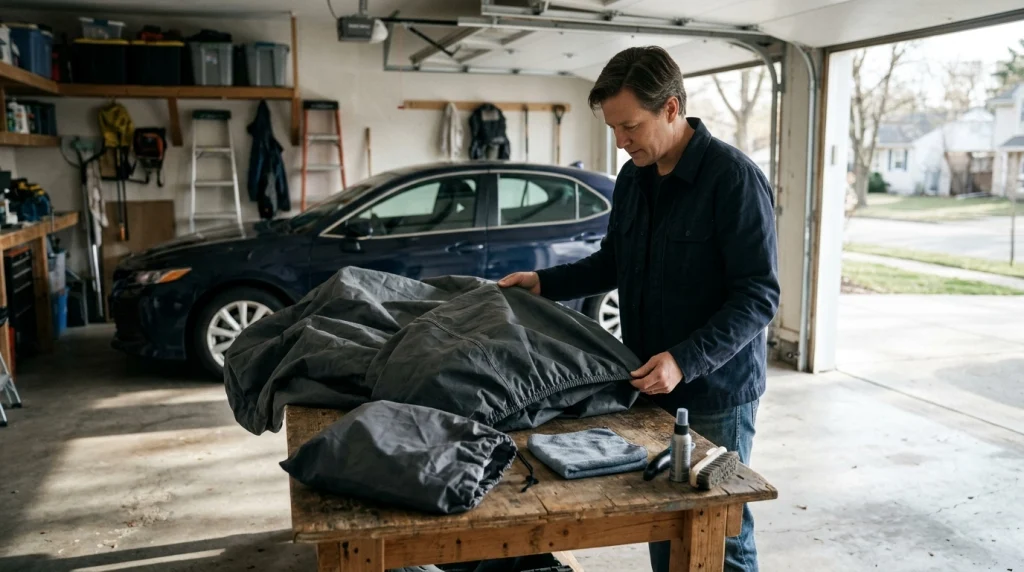
There is no single cleaning interval that suits every car cover. Maintenance frequency depends on how often you use it, where you park, local weather, and the manufacturer’s care recommendations.
A cover used outdoors every day usually needs more frequent attention than one used occasionally in a clean garage. Use the following schedule as a practical starting point, then adjust it to the conditions around your vehicle.
A simple car cover maintenance schedule
| When | Maintenance task | Purpose |
|---|---|---|
| Before installation | Check paintwork, inner fabric, and fit. | Reduce abrasion and installation problems. |
| After rain or heavy outdoor exposure | Check for trapped moisture, debris, and loose fittings. | Address weather-related problems promptly. |
| Weekly during frequent outdoor use | Check for accumulated dirt, sap, bird droppings, and wind wear. | Catch contamination before it becomes harder to remove. |
| Monthly during regular use | Inspect seams, straps, elastic, and fabric condition. | Identify wear before it affects the cover’s fit. |
| Whenever visibly dirty | Spot-clean or wash using the approved method. | Prevent contamination from accumulating. |
| Before long-term storage | Clean if needed, dry fully, inspect, and fold carefully. | Keep the cover ready for future use. |
These intervals are suggested habits, not universal manufacturer requirements. Increase inspections after storms, heavy contamination, or periods of strong wind.
How do you know when a car cover needs cleaning?
Visible dirt is an obvious sign, but the inner surface deserves equal attention. A cover may look acceptable from the outside while its underside has collected grit from the vehicle or storage area.
Clean it when contamination builds up, when stains remain after ordinary handling, or when the manufacturer recommends routine washing. Avoid unnecessary washing because repeated handling and unsuitable cleaning methods can also wear some fabrics.
How do you know when maintenance is no longer enough?
A cover may be approaching the end of its useful life when cleaning no longer restores its condition or damage keeps returning. Poor fit and material deterioration can matter more than appearance alone.
- Multiple tears or seams that repeatedly separate.
- Elastic that no longer holds the cover in place.
- Brittle, cracked, or extensively thinning material.
- Persistent mildew or contamination that cannot be safely removed.
- Significantly reduced performance compared with the manufacturer’s intended use.
If the cover no longer protects the vehicle adequately, choose a replacement designed for your parking environment and vehicle dimensions. A well-maintained cover is useful only while its condition and fit remain appropriate.
Section takeaway: Use a simple inspection schedule and clean the cover when its condition calls for it. Consistent attention is more useful than following an arbitrary washing frequency.
Frequently Asked Questions About Car Cover Maintenance
1. How often should I wash my car cover?
Wash your car cover when it becomes noticeably dirty or when the manufacturer recommends cleaning. Outdoor covers may need more frequent attention because they collect pollen, dust, bird droppings, and tree sap. Always follow the product’s care instructions rather than relying on a fixed monthly schedule.
2. Can I put my car cover in the washing machine?
Only if the manufacturer confirms that machine washing is safe for your particular cover. Check the approved cycle, temperature, detergent, and machine type before washing. Some multilayer, coated, or lined covers require a different method, and an unsuitable cycle can damage their construction.
3. Can I leave a car cover on a wet car?
Avoid leaving a cover on a wet vehicle for extended periods, especially when humidity is high and airflow is limited. Allow the car to dry before covering it whenever practical. If rain wets the vehicle and cover during outdoor storage, check for trapped moisture and follow the manufacturer’s guidance.
4. How do I stop my car cover from smelling musty?
Remove the cover, clean it using an approved method if necessary, and dry it completely before storage. Check the seams, lining, and folds for lingering dampness. Store the dry cover in a suitable location with good moisture control, and investigate persistent odors rather than masking them with fragrances.
5. Is it safe to use a dryer on a car cover?
Don’t use a tumble dryer unless the manufacturer specifically approves it for your model. Heat and tumbling can shrink some fabrics, weaken elastic, or damage coatings and bonded layers. Air-drying in a well-ventilated area is a suitable option for many covers, but the product’s instructions should determine the method.
6. Can a dirty car cover scratch my paint?
Yes, dirt and grit trapped between the cover and vehicle can cause abrasion when the material shifts. Remove loose debris from the cover’s inner surface and prepare the vehicle before installation. A properly fitted, clean cover is less likely to create this problem than a dirty, loose one.
7. When should I replace my car cover instead of repairing it?
Replace the cover when widespread fabric deterioration, repeated seam failure, damaged elastic, or poor fit compromises its protective function. A small, repairable tear may not require replacement, but repairs must be compatible with the fabric. If the cover continues rubbing the paint or cannot be secured properly, choose a suitable replacement.
Final Takeaway: Keep Your Car Cover Clean, Dry, and Secure
The most effective car cover maintenance tips are straightforward: keep the vehicle and cover clean, wash the material correctly, dry it thoroughly, and inspect it regularly for wear. These habits help preserve the cover’s fit and reduce avoidable problems with dirt, moisture, and abrasion.
Start with a quick inspection before every installation, then make cleaning and storage part of your regular vehicle-care routine. Adjust the frequency to your climate, parking conditions, and the cover manufacturer’s instructions.
If you’re dealing with a specific problem, such as trapped moisture, a damaged seam, or a cover that has become difficult to store, explore these related guides:
- How to clean a car cover safely.
- How to troubleshoot car cover storage issues.
- How to prevent mold under a car cover.
A little care after each use can help your cover remain ready for the next time you need it. Keep it clean, let it dry fully, and don’t ignore signs of wear.