
Rodents Under Car Cover: Why They Hide There and How to Stop Them

Quick Answer
Finding rodents under a car cover usually means the parked vehicle is providing shelter, quiet, or access to a warmer engine bay. A normal cover does not seal the underside, so mice and rats can still enter around the wheels and underbody. Keep the parking area clean, move the vehicle regularly, inspect for nests and chewing, and use several deterrent methods together. Consumer Reports also recommends making the vehicle and its storage area less attractive to rodents.
What I would check first
- Look for nesting: Check around the wheels, cowl, air intake, battery area, and engine-bay corners.
- Inspect wiring: Look for tooth marks, missing insulation, exposed copper, or partially cut wires.
- Remove attractants: Keep pet food, birdseed, garbage, cardboard, leaves, and food wrappers away from the vehicle.
- Move the car: A regularly used vehicle is less attractive as a quiet nesting site than one sitting untouched.
- Control the surroundings: Seal garage gaps and reduce hiding places near the parking space.
- Check before driving: If wiring, hoses, belts, or other important parts are damaged, get the vehicle inspected first.
I’ve found that the cover itself is rarely the whole problem when rodents appear around a stored car. The bigger issue is usually the quiet, protected environment underneath and around a vehicle that does not move often.
This guide explains why rodents get under car covers, what damage to look for, and how I would protect an everyday vehicle without relying on one questionable trick.
In This Guide
- Why Do Rodents Hide Under a Car Cover?
- What Are the Signs of Rodents Around a Covered Car?
- Does a Car Cover Keep Mice and Rats Away?
- How Do You Keep Rodents Away From a Covered Car?
- What Should You Do If Rodents Have Already Reached the Car?
- What Is the Best Storage Setup for Rodent Prevention?
- Frequently Asked Questions
Why Do Rodents Hide Under a Car Cover?
Rodents usually approach a covered car because it offers shelter and relatively little disturbance. The problem becomes more likely when the vehicle sits for long periods near food, vegetation, clutter, or established rodent activity.
Definition: Rodents under a car cover are mice, rats, squirrels, or similar animals using the protected area around a covered vehicle, its underbody, wheel wells, engine bay, cowl, air intake, or other openings as shelter or a nesting location.
They can enter from underneath
A conventional car cover protects the body from above and around the sides. It does not create a sealed enclosure underneath the car.
A mouse does not need to climb through the cover fabric. It can approach from the ground and travel through the wheel-well, suspension, splash-shield, or engine-compartment areas.
Stored vehicles provide quiet shelter
Long periods without movement give rodents more time to investigate. A vehicle parked for weeks is generally more attractive for nesting than a daily driver that starts and moves regularly.
- Dark spaces: Engine bays and underbody cavities offer hiding places.
- Nesting material: Leaves, insulation, paper, and nearby debris may provide material.
- Food nearby: Birdseed, pet food, garbage, and food wrappers can attract rodents to the area.
- Low disturbance: Infrequent vehicle use makes a nest less likely to be disrupted.
Are rodents attracted to soy-based car wiring?
You may have heard that modern plant-based wire insulation attracts rodents. The evidence is not strong enough for me to treat soy content as the main explanation.
Rodents naturally gnaw on many materials, including wiring. Car and Driver has also discussed the debate around plant-based insulation while noting that rodent chewing existed long before those materials became common.
In practical terms, I focus on access, shelter, food sources, and inactivity. Those are factors an owner can change.
What Are the Signs of Rodents Around a Covered Car?
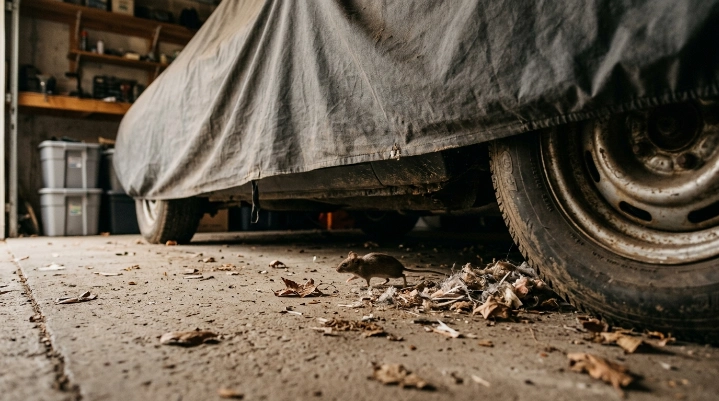
Droppings, nesting debris, tooth marks, unusual odors, and damaged wiring are common warning signs. Finding them early can prevent a small intrusion from becoming a major electrical problem.
When I inspect a stored vehicle, I usually look for displaced material before I start hunting for the animal itself. Shredded insulation or a small pile of leaves can reveal the problem faster.
Check these areas first
- Under the cover: Look around the tires, rocker panels, and lower body edges.
- Engine bay: Inspect wiring harnesses, battery areas, plastic covers, and secluded corners.
- Cowl area: Check the space below the windshield where leaves can collect.
- Air intake: Look for nesting material near accessible intake openings.
- Cabin: Check for shredded material, droppings, or food debris.
- Under the vehicle: Watch for pieces of insulation, plastic, or nesting material on the ground.
Rodent damage can create electrical symptoms
A partially chewed wire may create an intermittent problem rather than an immediate failure. You might see warning lights, rough operation, accessories that stop working, or a no-start condition.
Manufacturers have documented real cases of rodent-damaged wiring. Honda, for example, has issued service information involving rodent damage and rodent-deterrent harness tape.
Mechanic Alert: If you find exposed copper, damaged connectors, multiple chewed wires, or warning lights after rodent activity, have a qualified mechanic inspect the vehicle before normal driving.
Does a Car Cover Keep Mice and Rats Away?
No. A standard car cover is designed mainly to protect vehicle surfaces, not to create a rodent-proof barrier.
The cover may block dust, sunlight, moisture, or environmental debris depending on its design. Rodents can still approach from below.
| Storage Method | Exterior Protection | Blocks Access From Below? | Rodent-Control Value |
|---|---|---|---|
| Car cover alone | Yes, depending on cover | No | Low |
| Cover plus clean parking area | Yes | No | Better |
| Cover plus regular vehicle use and inspections | Yes | No | Good preventive approach |
| Clean, well-sealed garage plus prevention | High | Reduces access significantly | Best practical setup |
A cover can still be useful. I just would not buy one expecting it to solve a mouse or rat problem.
How Do You Keep Rodents Away From a Covered Car?
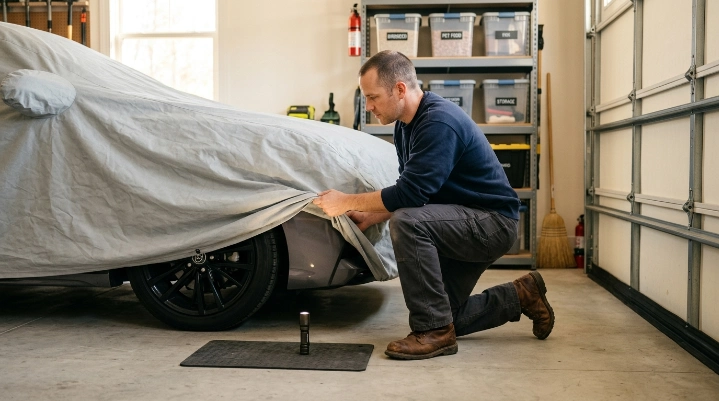
The best approach combines sanitation, access control, regular disturbance, inspections, and appropriate deterrents. I would not depend on one scent, electronic gadget, or homemade remedy.
1. Remove food and nesting materials
Start with the parking area rather than the vehicle. Rodent control becomes harder when food and shelter remain within a few feet of the car.
- Seal pet food and birdseed in rodent-resistant containers.
- Move garbage and food waste away from the parking space.
- Remove cardboard, paper, rags, leaves, and unnecessary clutter.
- Keep food wrappers out of the vehicle.
- Trim dense vegetation near an outdoor parking location.
2. Seal garage entry points
If the car is indoors, inspect garage-door seals and obvious openings around walls, pipes, vents, and doors. Fixing access to the building helps every vehicle inside it.
A pest-control professional may be worthwhile when rodents keep returning. That is especially true if you cannot identify where they enter.
3. Use the vehicle regularly when possible
Regular movement disrupts a quiet nesting environment. Kelley Blue Book has also advised moving stored vehicles regularly as part of reducing rodent problems.
If the vehicle must remain parked, remove the cover periodically and inspect it. Pay special attention after discovering rodent activity elsewhere on the property.
4. Consider purpose-made deterrents
Some manufacturers and technicians use rodent-deterrent products around vulnerable wiring. Honda has documented capsaicin-containing rodent-deterrent tape for certain harness repairs.
Follow product and vehicle-manufacturer instructions carefully. Do not spray unknown chemicals onto hot, electrical, rubber, painted, or plastic parts.
5. Do not assume ultrasonic devices will solve everything
Electronic ultrasonic repellents are widely sold, but effectiveness can vary. I would treat one as a supplementary measure rather than the foundation of the plan.
Physical prevention and good storage habits matter more. That means controlling food, entry points, clutter, and vehicle inactivity first.
Section Takeaway: The most reliable strategy is layered prevention. Make the parking area unattractive, reduce access, disturb the vehicle regularly, inspect often, and use appropriate deterrents only as support.
What Should You Do If Rodents Have Already Reached the Car?
Do not immediately start the engine after finding a nest or obvious chewing. Inspect the affected areas first so moving parts, heat, or electricity do not turn existing damage into a larger problem.
Start with a visual inspection
- Remove the car cover carefully and check underneath it.
- Look around all four tires and beneath the vehicle.
- Open the hood and inspect for nesting material.
- Look for chewed wire insulation and damaged connectors.
- Check visible hoses, belts, and air-intake areas.
- Inspect the cabin if there are signs rodents entered inside.
Pay particular attention to brightly colored exposed copper or wires that appear partially severed. Do not assume electrical tape is enough for an unknown harness problem.
Be careful with contaminated nesting material
Rodent waste can create health concerns. Avoid stirring dry droppings or nesting debris into the air, and follow current public-health guidance when cleaning contaminated areas.
If contamination has reached HVAC ducts or difficult interior spaces, professional cleaning may be the better choice.
Document expensive damage
Take photographs before major cleanup or repairs if you may file an insurance claim. Some comprehensive auto policies may cover rodent damage, but coverage and deductibles vary.
Contact your insurer before assuming the repair is covered. Never rely on another owner’s claim outcome as proof of your own coverage.
Mechanic Alert: Damage involving the main wiring harness, fuel or brake-related components, high-voltage hybrid or EV systems, or extensive electrical faults should be inspected by a qualified professional.
What Is the Best Storage Setup for Rodent Prevention?
As of 2026, I would choose a clean, enclosed garage with controlled rodent access whenever possible. The car cover should be one part of the storage setup, not the pest-control system.
NHTSA hosts manufacturer service information showing that rodent-related wiring damage is a genuine automotive repair issue. Prevention is much easier than tracing damaged circuits later.
My practical storage checklist
- Clean vehicle: Remove crumbs, wrappers, and other possible food sources.
- Clean cover: Do not put a contaminated or dirty cover over the vehicle.
- Dry conditions: Avoid storing the car or cover while wet.
- Clear surroundings: Remove clutter, cardboard, vegetation, and stored food nearby.
- Secure building: Repair damaged garage seals and obvious entry gaps.
- Periodic inspection: Look under the cover and beneath the hood during storage.
- Regular movement: Drive or move the vehicle when practical.
Outdoor storage needs even more attention because you cannot control the surrounding environment as easily. Keep the immediate parking area clear and watch for burrows, droppings, damaged trash containers, or other signs of an active population.
The main lesson is simple. A good car cover protects the exterior, while a good storage routine protects the whole vehicle.
Frequently Asked Questions
Why are mice getting under my car cover?
Mice can simply approach the vehicle from underneath because a normal car cover does not seal the underbody. A quiet parked car may also provide dark hiding spaces, nesting locations, and access to the engine compartment.
Will a car cover prevent rats from getting into the engine bay?
No. A conventional fabric cover protects exterior surfaces but does not block rats from entering below the vehicle. Garage sealing, sanitation, regular movement, inspections, and pest control are more useful for preventing engine-bay activity.
Can rodents damage a car even if they never enter the cabin?
Yes. Rodents can damage wiring, insulation, hoses, air-intake areas, and other components while remaining in the engine bay or underbody. Cabin intrusion is not required for expensive damage to occur.
Should I start my car if I find a mouse nest under the hood?
Inspect and remove the problem safely before starting the engine. Check wiring, belts, hoses, air-intake areas, and nearby components first, and seek professional help if you find electrical or mechanical damage.
Does peppermint oil keep mice away from cars?
Peppermint-based repellents are sometimes used as a deterrent, but I would not depend on them alone. Any scent treatment can fade, wash away, or fail against persistent rodents, so combine deterrents with sanitation and access control.
Can rodent damage be covered by car insurance?
Some comprehensive auto insurance policies may cover damage caused by rodents because it is not collision damage. Coverage, exclusions, limits, and deductibles vary, so photograph the damage and contact your insurer before authorizing expensive repairs.
What is the best way to protect a car stored for months?
Use a clean, dry storage location, remove food and nesting materials, seal rodent entry points, inspect the car periodically, and control any existing pest population. Use a correctly fitted cover for exterior protection rather than relying on it as a rodent barrier.
If you keep finding rodents under your car cover, treat the surrounding environment first. A clean parking area, controlled access, regular inspections, and prompt attention to early signs give you a much better chance of protecting the vehicle than a cover alone.
