
Snow on Car Cover: Is It Safe and How Should You Remove It?

Quick Answer
Snow on a car cover is usually manageable when the cover is designed for outdoor use, fits securely, and allows moisture to escape. Don’t pull off a cover while it’s buried under heavy snow or frozen in place. Clear loose snow first, then remove the cover carefully. Before driving, also follow winter vehicle preparation guidance and clear your vehicle completely.
What to check first
- Loose powder: Brush or push it off gently before touching the cover itself.
- Wet snow: Remove it sooner because it puts more stress on the fabric and attachment points.
- Ice layer: Don’t chip ice with a metal shovel or sharp scraper while it’s sitting over painted panels.
- Frozen cover: Never yank fabric that appears frozen to the car.
- Loose fit: Secure flapping material before wind rubs trapped dirt against the paint.
Best approach
- Work from the highest sections downward and lift the cover only after most snow has been removed.
Finding snow on your car cover can make you wonder whether removing the cover will protect the paint or create a bigger problem. I’ve found that the safest approach is less about rushing and more about checking the snow, ice, fit, and moisture first.
This guide explains what to do with snow on a car cover, when to leave it alone temporarily, how to remove it safely, and how to prevent winter cover damage.
In This Guide
Is Snow on a Car Cover Safe?
Yes, moderate snow on a suitable outdoor car cover isn’t automatically a problem. The bigger concerns are heavy wet accumulation, frozen fabric, trapped contamination, poor fit, and moisture that cannot escape.
Definition: Snow on a car cover means frozen precipitation has accumulated on the protective fabric rather than directly on the vehicle’s paint, glass, trim, and exterior components.
A good outdoor cover creates a physical barrier between winter precipitation and the vehicle. That can make cleanup easier and reduce direct ice buildup on exposed surfaces.
The cover doesn’t make winter risks disappear, though. Dirt beneath the fabric can still rub against paint when wind moves a loose cover.
- Dry powder snow: Usually easier to brush from the cover without applying much pressure.
- Wet snow: Heavier and more likely to stretch the cover or pull on straps.
- Freezing rain: Can form a rigid outer layer that makes normal cover removal difficult.
- Wind-driven snow: May enter beneath gaps if the cover doesn’t fit securely.
- Repeated thawing: Can leave moisture around folds, seams, and lower edges.
I pay particular attention to a cover after temperatures move above and below 32°F (0°C). That’s when snow can melt and later refreeze around the fabric.
Winter car care also extends beyond the cover itself. Resources from Kelley Blue Book can help with broader seasonal vehicle maintenance.
How Much Snow Can You Leave on a Car Cover?
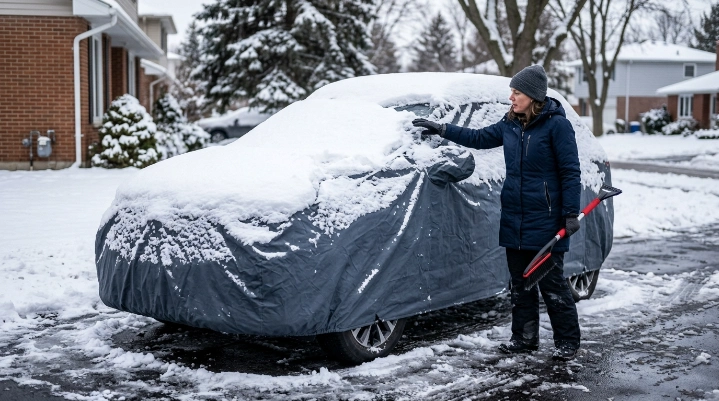
There isn’t a reliable universal number of inches that is safe for every car cover. Snow density varies too much, and a few inches of wet snow can behave differently from a deeper layer of light powder.
Instead of measuring depth alone, inspect how the cover is reacting. Clear it when the fabric is sagging, attachment points look strained, or wet snow is becoming increasingly heavy.
| Winter condition | Main concern | Best response |
|---|---|---|
| Light, dry powder | Usually low stress on fabric | Brush it away before removing the cover |
| Heavy, wet snow | More weight on seams and fasteners | Clear it sooner and work in small sections |
| Ice crust | Cover may become rigid or frozen | Allow safe thawing instead of forcing removal |
| Strong wind plus snow | Flapping and paint abrasion | Check fit, straps, and trapped debris |
| Thaw and refreeze near 32°F / 0°C | Frozen moisture around the cover | Avoid pulling until the fabric releases freely |
If a long storm is underway, clearing the cover periodically can be easier than dealing with one large frozen accumulation later.
Follow the manufacturer’s instructions when they give specific weather or snow-load limitations. Cover construction varies, so its stated limits should take priority over a generic rule.
How Do You Remove Snow From a Car Cover Safely?
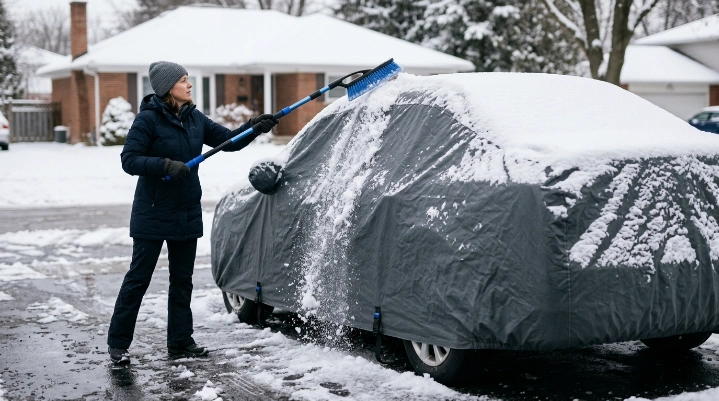
Remove most of the snow before trying to take the cover off the vehicle. This reduces strain on the fabric and makes it less likely that you’ll drag a loaded cover across painted surfaces.
Here’s the method I use on a covered daily driver after an overnight snowfall.
- Check for ice first. Press the outer fabric lightly and confirm that it can move independently.
- Start at the roof. Use a soft snow broom or similarly non-abrasive tool to move loose snow downward.
- Clear the hood and trunk. Push snow away without grinding the tool into the fabric.
- Clear attachment areas. Expose straps, hems, mirror pockets, and elastic edges before releasing them.
- Release the cover carefully. Don’t drag one dirty section across another part of the vehicle.
- Shake off remaining snow. Do this away from the car whenever space allows.
- Dry before storage. Don’t fold a soaked cover and leave it packed for an extended period.
Avoid metal shovels, sharp scrapers, and stiff tools around covered painted panels. One slip can damage the cover and reach the finish beneath it.
After removing the cover, inspect the roof, windows, mirrors, hood, lights, license plates, and surrounding areas. Don’t assume the cover removed every trace of snow or ice.
For broader maintenance guidance throughout winter, Edmunds is another useful automotive reference.
What Should You Do if the Car Cover Freezes?
If the car cover is frozen to the vehicle, don’t pull harder. Forcing frozen fabric can tear the cover, strain seams, or drag frozen contamination across the finish.
First determine whether only the outer snow is frozen or whether sections of the fabric seem attached to the vehicle itself.
- Loose outer ice: Wait for it to soften enough to remove without aggressive scraping.
- Frozen lower edges: Clear surrounding snow and give those areas time to release.
- Frozen windshield area: Use the vehicle’s normal defrost system as appropriate before forcing anything around the glass.
- Cover stuck to paint: Let natural warming or a sheltered environment loosen it.
Don’t pour very hot water over frozen glass or a frozen cover. Rapid temperature changes aren’t worth the risk, and the added water may simply freeze again.
If you can move the vehicle into a suitable sheltered area without driving with obstructed glass or snow-covered surfaces, gradual thawing is easier on the cover.
Once released, inspect the inside of the fabric. Look for grit, frozen dirt, damaged lining, torn seams, or areas that feel unusually rough.
What Kind of Car Cover Works Best in Snow?
A good snow-season cover needs more than a label saying “waterproof.” Fit, moisture management, inner-surface softness, and secure attachment matter just as much.
For outdoor winter parking in 2026, these are the features I’d prioritize.
- Outdoor-rated construction: The manufacturer should specifically approve the cover for exterior weather exposure.
- Breathable material: Moisture vapor needs a way to escape instead of remaining trapped against the vehicle.
- Water resistance: The outer fabric should handle snow, sleet, and ordinary precipitation as intended.
- Secure fit: A properly sized cover reduces movement during windy winter weather.
- Soft inner surface: Material touching the car should be clean and suitable for automotive finishes.
- Strong attachment points: Elastic hems, straps, or other approved fastening systems should remain secure.
I prefer a correctly sized cover over an oversized one that hangs loosely around the body. Extra fabric can become a problem when winter wind repeatedly moves it against dirty paint.
The car should also be reasonably clean before covering. A soft lining can’t protect the finish effectively if abrasive grit is trapped between two moving surfaces.
Independent vehicle ownership information from Consumer Reports can also help when evaluating broader vehicle-care products and practices.
What Winter Car Cover Mistakes Should You Avoid?
The most common winter problems come from how a cover is used rather than snow touching the outer fabric. A few simple habits can prevent most avoidable trouble.
- Yanking a snow-loaded cover: Clear the weight first instead of pulling against straps and seams.
- Covering heavy dirt: Road grit beneath moving fabric can act as an abrasive.
- Ignoring wind: A loose cover may repeatedly rub the same panels.
- Using sharp tools: Metal shovels and aggressive ice tools can cut fabric or reach the paint.
- Folding it while soaked: Dry the cover according to its care instructions before longer storage.
- Leaving damaged straps: Repair or replace failed fastening components before the next storm.
- Forcing frozen fabric: Allow it to release instead of tearing it away.
One mistake I especially avoid is pulling a cover sideways across the roof after clearing only one end. Even clean-looking winter fabric can hold grit that you don’t immediately see.
Lift and fold the material progressively instead. That gives you much more control over what touches the paint.
Also inspect the cover throughout winter. Thin spots, damaged seams, stretched elastic, rough lining, or recurring water underneath can signal that it no longer suits outdoor service.
Frequently Asked Questions
Can you leave snow on a car cover overnight?
Light snowfall can usually remain temporarily on an outdoor-rated cover, but inspect conditions before leaving it longer. Heavy wet snow, freezing rain, strong wind, or sagging fabric are good reasons to clear the cover sooner rather than waiting.
Should I remove a car cover before a snowstorm?
Not necessarily. A properly fitted outdoor cover can keep snow and ice from contacting many exterior surfaces directly. Make sure the vehicle and inner cover are reasonably clean, the cover is secured correctly, and the manufacturer approves it for winter outdoor use.
Can snow make a car cover scratch the paint?
Snow itself isn’t usually the main scratching problem. Scratches are more likely when dirt or grit becomes trapped beneath the cover and loose fabric moves against the finish, especially during strong wind or careless removal.
Can I use a broom to remove snow from a car cover?
A soft snow broom designed for vehicle use is safer than a household broom with stiff or dirty bristles. Apply light pressure and move loose snow from the highest areas downward instead of grinding the tool against the cover.
What if my car cover is covered with solid ice?
Don’t crack, chip, or force the frozen cover away from the vehicle. Let the ice soften and the fabric release naturally when possible. Forcing rigid material can damage seams, tear the cover, or drag frozen contamination across painted surfaces.
Should a car be dry before putting a cover on in winter?
A clean, dry vehicle is the safest starting point when conditions allow. If moisture repeatedly becomes trapped beneath your cover, check its breathability, fit, installation, and manufacturer instructions rather than assuming the cover is managing the moisture correctly.
Do I need to clear the car after removing a snow-covered cover?
Yes. Check the windshield, windows, mirrors, roof, hood, lights, license plates, and other exterior areas before driving. Snow and ice may remain around edges or attachment points even after the main cover has been removed.
The takeaway: Snow on a car cover usually isn’t an emergency, but don’t treat the cover like a tarp you can yank off under any condition. Clear loose snow gently, allow frozen areas to release, keep dirt away from the paint, and use an outdoor-rated cover that fits securely.
If your cover repeatedly freezes, flaps in the wind, traps moisture, or shows damaged fabric and seams, inspect it before the next storm. Replacing a failing cover is easier than correcting paint damage caused by poor winter protection.
