
Custom Fit Car Cover Problems: 9 Issues and How to Fix Them

Quick Answer
The most common custom fit car cover problems are incorrect fitment, paint rubbing, trapped moisture, wind movement, difficult installation, worn elastic, and incompatibility with vehicle modifications. Most problems can be prevented by confirming the exact year, make, model, body style, and accessories, keeping both surfaces clean, and installing the cover correctly. Proper car-cover use also reduces paint-scratch risk.
Common problems to check first
- Wrong pattern: The cover may be listed for your model but not your exact body style or equipment.
- Loose fabric: Excess material can move in wind and rub against dirty paint.
- Too-tight areas: Mirror pockets, spoilers, antennas, or bumpers may place excessive stress on seams.
- Trapped moisture: Covering a wet vehicle or using poor ventilation can slow drying.
- Worn hardware: Old elastic hems and straps may no longer hold the cover securely.
- Vehicle modifications: Roof racks, wings, splitters, and other accessories can change the required pattern.
Best first step
- Remove the cover, verify the vehicle application, inspect its contact points, and reinstall it only after the car and cover are clean and dry.
A custom-fit car cover sounds simple: order one for your vehicle, stretch it over the body, and enjoy better protection. In practice, even a cover sold as custom fit can cause frustration when the pattern, material, installation, or vehicle details do not match.
I look at fit before worrying about layer counts or marketing claims. If the cover cannot stay positioned without excessive tension or loose fabric, many other problems start from there.
In This Guide
- What Are the Most Common Custom Fit Car Cover Problems?
- Why Doesn’t My Custom Fit Car Cover Fit Properly?
- Can a Custom Fit Car Cover Scratch Paint?
- Why Is There Moisture Under My Custom Fit Car Cover?
- Why Does a Custom Fit Car Cover Flap or Blow Off?
- Custom Fit vs. Semi-Custom vs. Universal: Which Has Fewer Problems?
- Frequently Asked Questions
What Are the Most Common Custom Fit Car Cover Problems?
Custom fit car cover problems usually involve fit, movement, contamination, moisture, or durability. A custom pattern can improve coverage, but it cannot compensate for an incorrect vehicle selection or poor installation.
A custom fit car cover is a cover shaped for a specific vehicle application rather than a broad size category. Depending on the manufacturer, that application may account for the vehicle’s body shape, mirrors, bumpers, roofline, and selected factory equipment.
1. The cover is looser than expected
Large folds around the doors, hood, roof, or bumpers suggest that the pattern is not following the body closely. Some small areas of slack are normal because fabric must move during installation.
Large unsupported sections are different. They can catch wind, collect water, and move repeatedly against the vehicle.
2. The cover feels too tight
A tight cover may be difficult to pull over mirrors, spoilers, or bumper corners. Excessive tension can also strain stitching, elastic hems, and mirror pockets.
Do not force a cover over a sharp accessory. Confirm that the cover matches the correct body style and equipment first.
3. The mirror pockets do not line up
Misaligned mirror pockets are one of the easiest signs of a fitment problem. The cover may be backward, off-center, or cut for a different variation of the vehicle.
- Confirm the front and rear markings.
- Center the cover over the roof before pulling down the sides.
- Fit mirror pockets before stretching the hems around both bumpers.
- Check whether your vehicle has factory or aftermarket mirrors.
4. The cover interferes with accessories
Roof racks, large wings, spoilers, antennas, light bars, body kits, splitters, and other modifications can change the vehicle’s exterior dimensions. A pattern for a stock vehicle may not accommodate them.
This is why ordering by model name alone is risky. Year, trim, body style, and exterior equipment can matter.
5. The cover becomes difficult to use every day
Custom-fit covers often take longer to position than loose universal covers because their shaped sections must align correctly. That precision is useful once installed, but daily removal can become inconvenient.
If the vehicle is driven several times each day, think about whether full-body coverage fits your routine. Protection that becomes too inconvenient often stops being used.
Section Takeaway: Most custom-fit problems begin with application accuracy. Verify the exact vehicle configuration before blaming the fabric itself.
Why Doesn’t My Custom Fit Car Cover Fit Properly?
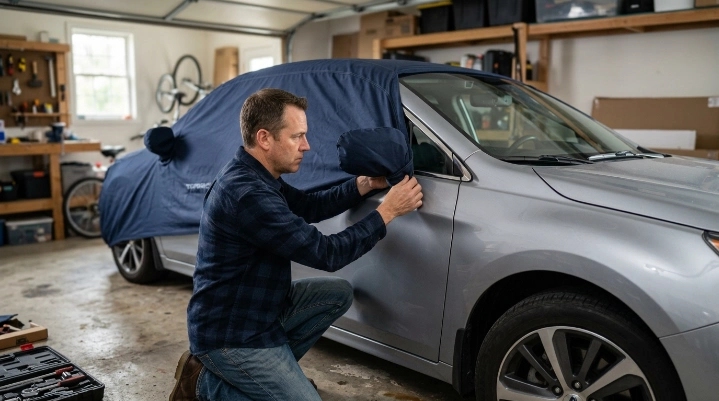
A custom-fit cover usually fits poorly because the vehicle specification, pattern, installation, or equipment differs from what the manufacturer expected. The words “custom fit” do not guarantee that every version of a model uses the same exterior shape.
Check the complete vehicle description
Start with the order confirmation or product label. Compare every available detail with your actual car.
- Model year
- Make and model
- Sedan, coupe, hatchback, wagon, SUV, or pickup body style
- Cab and bed length on trucks
- Factory spoiler or wing
- Roof rails or roof-mounted equipment
- Mirror configuration
- Aftermarket exterior modifications
Two vehicles sharing the same model name can have different bumpers, rooflines, or body lengths. A redesign between model years can make an older pattern unsuitable.
Make sure the cover is oriented correctly
Before stretching anything, find the front label or identifying seam. Lay the cover across the roof and locate the mirror pockets.
I prefer to position the mirrors first. Once they sit naturally, I work toward the front and rear hems rather than pulling one end tight immediately.
Watch for signs the pattern is wrong
A correct cover should follow the major contours without needing excessive force. It also should not leave large loose panels that balloon away from the body.
- Likely too small: hems will not reach both bumpers, seams feel overloaded, or mirror pockets pull sideways.
- Likely too large: large folds remain after installation, hems hang low, or side panels balloon in light wind.
- Likely wrong pattern: overall length seems correct but mirrors, roofline, spoiler, or corners do not align.
Do not assume stretching will fix it
Some fabrics have useful elasticity, but stretching cannot correct the wrong pattern. Forcing a small cover may weaken seams and create high-pressure contact points.
If the fit looks clearly wrong, take photos before using the cover outdoors. Contact the manufacturer while the cover remains clean and returnable.
For broader vehicle-care guidance, Kelley Blue Book’s maintenance guide emphasizes following vehicle-specific recommendations rather than treating every car identically. The same principle is useful when choosing exterior accessories.
Section Takeaway: A custom cover should look shaped to the vehicle without being stretched to its limit. Misaligned mirrors, unreachable hems, or large loose panels point to an application problem.
Can a Custom Fit Car Cover Scratch Paint?
Yes, a custom-fit car cover can contribute to paint marks if abrasive dirt becomes trapped underneath or the fabric moves repeatedly across contaminated paint. The fit itself is only one part of scratch prevention.
A clean, soft cover on clean paint presents much less risk than a dirty cover moving over dust and grit. This is especially important on dark finishes where light marring is easier to see.
Dirt under the cover is the biggest concern
Small particles can sit between the inner fabric and clear coat. When the cover shifts during installation, removal, or wind, those particles can rub against the finish.
That is why I avoid installing a cover after driving on dusty roads without checking the body first. The cover may be spotless while the paint underneath is not.
Loose areas create more movement
A shaped cover should reduce unnecessary motion, but it still needs to be secured correctly. Excess fabric around the doors or bumpers can flutter when air gets underneath.
Covercraft’s published guidance also identifies dirt and loose, flapping covers as situations where scratching can occur. A snug installation and clean surfaces are simple preventive steps.
Check the inside before every installation
The inner surface can pick up grit when the removed cover touches a driveway, garage floor, trunk, or dirty storage area. Inspect it before putting it back on the vehicle.
- Shake away loose debris in a clean area.
- Follow the manufacturer’s washing instructions.
- Do not drag the inside surface across pavement.
- Store the cover dry and protected from dirt.
- Replace a cover with damaged or rough interior sections.
Use a controlled removal technique
Pulling a cover sideways across the hood and doors creates unnecessary sliding contact. Instead, release the hems and straps first.
Then fold each side toward the roof and roll or fold the cover along the centerline. Reverse the process when installing it again.
If maintaining the finish is a priority, Consumer Reports’ car-wax guidance is another useful resource for understanding routine exterior protection.
Section Takeaway: Custom fit does not make a dirty installation safe. Clean paint, a clean inner surface, and minimal cover movement matter more than the label on the package.
Why Is There Moisture Under My Custom Fit Car Cover?
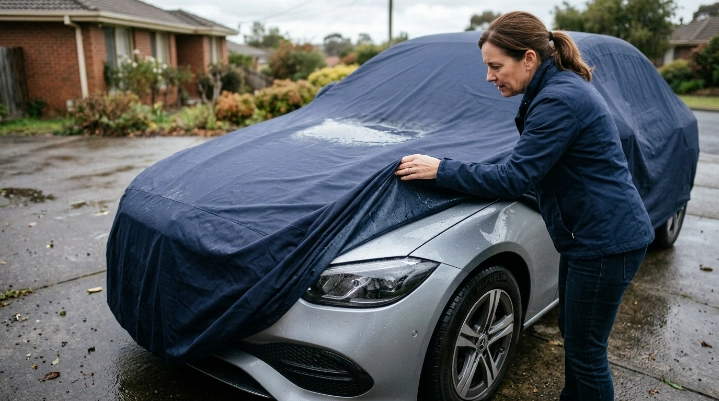
Moisture can appear under a custom-fit cover because the vehicle was covered while damp, humid air became trapped underneath, or water entered during weather exposure. A close fit does not eliminate condensation.
Water resistance and breathability are different properties. An outdoor cover needs to manage rain while still allowing trapped moisture to escape as conditions permit.
Never cover a wet car for storage
If possible, let rainwater or wash water dry before installing the cover. Covering a damp vehicle can slow evaporation.
Pay attention to mirror housings, window seals, trunk channels, roof seams, and areas around trim. Water can remain in these places after the broad panels look dry.
Condensation can happen without a leak
A damp surface underneath does not automatically prove that rain passed through the fabric. Temperature and humidity changes can create condensation under a cover.
Before assuming the cover failed, inspect the pattern of moisture. A localized wet area beneath a seam may suggest water entry, while widespread light dampness can point toward condensation.
Loose sections can collect water
Large pockets of fabric over the hood, trunk, or roof can form low spots. Those areas may hold water instead of letting it run away.
Pooling adds weight and can stretch the cover. It is another reason proper fit matters even when scratch protection is not the main concern.
Give a stored car periodic attention
Long-term storage should not mean covering the vehicle and ignoring it for months. Inspect the cover, paint, tires, surrounding area, and moisture conditions periodically.
Edmunds’ car-maintenance resource provides broader ownership and maintenance guidance that can help when preparing a vehicle for extended periods of limited use.
- Check for damp fabric after storms.
- Remove leaves and debris collecting around the vehicle.
- Inspect exposed metal for early corrosion.
- Dry the vehicle and cover before reinstalling if moisture is found.
- Follow the cover manufacturer’s cleaning and storage instructions.
Section Takeaway: Moisture beneath a custom-fit cover does not always mean the fabric leaks. Start by checking whether the vehicle was dry, whether condensation is possible, and whether the cover has low spots or ventilation problems.
Why Does a Custom Fit Car Cover Flap or Blow Off?
A custom-fit car cover can still flap if the pattern has excess material, the hems are not seated correctly, or wind gets beneath an unsecured edge. Worn elastic and missing straps can make the problem worse.
Check the front and rear hems
The hems should sit securely around the intended bumper areas. A partially installed hem gives wind an easy entry point.
Walk around the entire car after installation. Look for hanging fabric or an edge that can lift easily by hand.
Use the supplied securing system
If the manufacturer provides underbody straps, buckles, loops, or gust straps, use them as directed. Do not improvise by tying material to exhaust parts, suspension components, or other hot or moving hardware.
Inspect elastic as the cover ages
Elastic hems can lose tension with age and use. Straps and buckles can also become damaged.
If the cover once fitted well but now hangs loosely, wear may be the problem rather than the original pattern. Compare both bumper areas and inspect the securing hardware.
Know when weather exceeds the cover’s purpose
No fabric cover should be treated as permanent armor against every severe-weather condition. Follow the manufacturer’s wind and weather instructions for your specific product.
Before storms, inspect the surrounding area for branches, loose objects, and other hazards. A fitted cover cannot prevent damage from heavy falling debris.
Section Takeaway: A custom pattern reduces excess material, but secure hems and working straps still matter. New wind movement on an older cover often points to worn elastic or hardware.
Custom Fit vs. Semi-Custom vs. Universal: Which Has Fewer Problems?
A genuine custom-fit cover generally offers the best body conformity, while universal covers trade precision for broad compatibility. Semi-custom covers sit between those two approaches.
The best choice depends on storage conditions, vehicle shape, budget, and how frequently you install the cover. Fit quality should matter more than the marketing term alone.
| Factor | Custom Fit | Semi-Custom | Universal |
|---|---|---|---|
| Vehicle matching | Specific application | Vehicle class or grouped applications | Broad size range |
| Typical loose fabric | Lowest when pattern is correct | Moderate | Usually highest |
| Modification compatibility | Can be poor if pattern assumes stock bodywork | May tolerate small differences | Broadest tolerance but least precise |
| Installation alignment | More exact | Moderate | Usually simplest |
| Wind movement risk | Lower with correct fit and secure straps | Moderate | Higher when excess material remains |
| Best suited for | Owners prioritizing precise coverage | Balanced fit and flexibility | Temporary or multi-vehicle use |
When custom fit makes the most sense
Custom fit is attractive for vehicles stored outdoors, cars with sensitive finishes, or owners who want less loose material. It also works well when you plan to keep the same vehicle for years.
When semi-custom can be enough
A well-sized semi-custom cover can be practical when exact patterns are unavailable. Check actual dimensions and securing features instead of relying on vehicle class alone.
When universal fit is useful
Universal covers can work for temporary dust protection or when one cover must serve several similar vehicles. Their main compromise is excess material around body contours.
No matter which type you choose, basic vehicle care still matters. Consumer Reports’ maintenance and repair guide is a useful broader reference for keeping a daily-driven vehicle in good condition.
Section Takeaway: Custom fit usually reduces excess fabric, but only when the pattern truly matches the vehicle. A well-chosen semi-custom cover can perform better than an incorrectly specified custom one.
Frequently Asked Questions
Should a custom fit car cover be tight?
A custom-fit car cover should be snug enough to follow the vehicle’s main contours without excessive loose fabric. It should not require extreme stretching, distort mirror pockets, or place heavy tension on seams and bumper areas.
Why is my custom car cover too big?
The cover may be made for a different body style, model year, or vehicle configuration. First confirm the product number, orientation, and exact application before assuming the cover was manufactured incorrectly.
Why is my custom fit cover too small?
A cover can seem too small when it is backward, off-center, or incorrectly positioned around the mirrors. If proper installation does not solve the problem, verify spoilers, roof accessories, body kits, and the exact vehicle application.
Can I put a custom fit car cover on a dirty car?
It is better to avoid covering a dirty vehicle when possible. Dust, sand, and other particles can become trapped between the fabric and paint, where movement during installation or windy conditions may contribute to surface marks.
Can I cover my car when it is wet?
For storage, it is better to let the vehicle dry first. Covering a wet car can slow evaporation and increase the amount of moisture that remains trapped beneath the fabric.
Do custom fit car covers work with spoilers and roof racks?
Only when the pattern is designed to accommodate those features. Factory and aftermarket spoilers, roof racks, antennas, wings, and body kits can change the required dimensions, so confirm accessory compatibility before ordering.
How do I know when my car cover needs replacing?
Consider replacement when the fabric tears, interior material becomes rough, elastic no longer holds the hems, straps fail, seams open, or the cover cannot remain securely fitted. Follow the manufacturer’s care instructions because lifespan varies by material and exposure.
Final Takeaway: Custom fit car cover problems are usually fixable once you identify whether the issue comes from the pattern, installation, contamination, moisture, weather, or worn materials. Start with exact vehicle fitment, keep both surfaces clean and dry, secure the cover correctly, and replace it when its shape or hardware can no longer hold the vehicle properly.