
Car Cover Flapping in Wind: Why It Happens and How to Stop It

Quick Answer
A car cover flapping in wind usually means the cover is too loose, wind is getting underneath an edge, or the built-in straps and elastic aren’t holding it tightly enough. The best fix is a properly sized cover secured at several points, especially around the front, rear, and underneath the vehicle. A loose cover should not be ignored because repeated movement can rub dirt against the paint; this car storage guidance from Kelley Blue Book also stresses using a snug, well-secured cover.
What I check first
- Check the fit: Excess material along the sides or bumpers gives wind more fabric to grab.
- Secure the bottom: Use the cover’s factory straps, buckles, or approved tie-down system.
- Block wind entry: Tighten loose areas around the front bumper, rear bumper, and rocker panels.
- Inspect the elastic: Stretched hems may no longer grip the vehicle well.
- Clean first: Dirt trapped beneath moving fabric can increase the chance of paint marks.
One important rule
- If strong gusts keep lifting the cover despite proper securement, remove it and move the vehicle to sheltered parking when possible.
I know how annoying that constant snapping sound can become. More important, a car cover flapping in wind can turn a product meant to protect your paint into something that repeatedly rubs against it.
When I deal with this problem, I don’t start by adding random ropes everywhere. I first find out where the air is getting underneath the cover and why the cover has enough slack to move.
As of 2026, the basic solution remains simple. Correct fit, clean surfaces, good anchor points, and sensible parking make the biggest difference.
In This Guide
Why Is My Car Cover Flapping in the Wind?
Your car cover flaps because moving air gets beneath the fabric and creates enough lift to move it away from the body. Poor fit is one of the most common reasons this happens.
Definition: A flapping car cover is a vehicle cover that repeatedly lifts, snaps, balloons, or moves across body panels because wind is getting underneath it or the cover lacks enough tension.
The cover is too large
A universal cover often leaves more loose material than a vehicle-specific cover. That extra fabric can act like a small sail when a gust reaches it.
I usually look at the doors and bumper corners first. Large folds hanging from those areas are a strong clue that sizing is part of the problem.
- Loose sides: Wind can push underneath the rocker-panel area.
- Baggy bumpers: Air can enter through an unsecured front or rear opening.
- Excess roof material: Fabric can repeatedly slap against the roof during gusts.
- Loose mirror pockets: Poorly positioned pockets can allow movement around the doors and windshield.
The wind is getting underneath an edge
A cover doesn’t need to be oversized to flap. One exposed opening may be enough to let air inflate part of it.
This often happens when a vehicle is parked nose-first into the wind. Air can enter beneath the front hem and travel under the cover.
The elastic or straps are worn
Elastic hems weaken with age and repeated stretching. Buckles can also loosen, while webbing straps may stretch or become damaged.
Don’t assume a strap is working because it’s still attached. Pull gently on each attachment point and check whether it still holds tension.
The cover wasn’t installed evenly
I have seen covers secured tightly at one bumper but left loose on the opposite side. The loose end becomes the entry point for wind.
Center the cover before tightening anything. Then work around the vehicle instead of securing one side completely first.
Can a Flapping Car Cover Damage Paint?
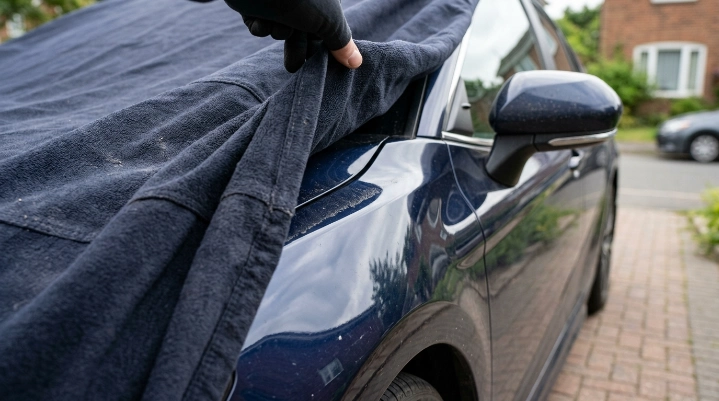
Yes, repeated cover movement can contribute to scratches, scuffs, or swirl-like marks, especially when dirt is trapped between the cover and paint. The moving fabric alone isn’t always the biggest problem.
The combination of **movement plus contamination** is what concerns me most. Dust, sand, pollen, and other particles can behave like fine abrasives when rubbed repeatedly across a finish.
Where damage is most likely to appear
- Mirror housings: Fabric can pull tightly across their outer edges.
- Fender corners: These raised areas receive concentrated rubbing.
- Roof edges: Loose fabric can repeatedly lift and fall.
- Bumper corners: Wind often moves the cover around these areas first.
- Spoilers and antennas: Protruding parts create extra tension points.
The condition of the car also matters. Putting a clean, soft-lined cover over clean paint is different from dragging a dusty cover across a dirty vehicle.
That’s why I always shake loose debris from the cover before installation. I also avoid laying the inside surface on pavement while fitting it.
Car and Driver’s car-cover testing and buying guide is also useful when comparing outdoor covers, proper sizing, straps, and fit.
Check before marks become worse
Don’t wait until the cover has spent weeks moving in the wind. Remove it and inspect the paint after the first windy period.
- Look at the mirror caps.
- Check the hood and roof edges.
- Inspect the tops of the fenders.
- Look around sharp body creases.
- Check painted spoiler surfaces.
If you notice dirt tracks that match the cover’s movement, fix the fit before reinstalling it. Continued rubbing will not solve itself.
How Do I Stop a Car Cover From Flapping?
Start by correcting the fit and stopping wind from entering beneath the cover. You shouldn’t need extreme tension if the cover is the correct size.
- Remove the cover. Check the car and inner cover surface for dirt, grit, leaves, or moisture.
- Confirm the size. Compare your vehicle dimensions with the cover manufacturer’s fitment information.
- Reinstall it evenly. Center the cover over the roof before pulling it over both bumpers.
- Seat the elastic hems. Make sure the front and rear edges sit fully beneath the bumper areas they are designed to grip.
- Connect factory straps. Use every intended buckle or underbody strap according to the manufacturer’s instructions.
- Remove large pockets of slack. Check both sides, the hood, roof, trunk, and bumper areas.
- Test the fit. Gently lift several edges by hand and look for areas where air could easily enter.
Use the cover’s own attachment system first
I prefer built-in straps and buckles over improvised rope. They are normally positioned where the manufacturer expects the cover to carry tension.
A strap should be secure, not guitar-string tight. Excessive force can strain seams, buckle attachment points, and thin cover material.
Be careful with an underbody strap
Follow the cover manufacturer’s method for passing a strap underneath the car. Keep straps away from hot exhaust parts, sharp edges, and moving components.
Mechanic Alert: Never crawl beneath an unsupported vehicle or jack up a car just to install a cover strap. If the attachment cannot be reached safely from outside the vehicle, use another approved securement method.
Don’t use metal hooks against painted surfaces
A bare metal hook can create more damage than the flapping cover. Hardware should never be allowed to strike paint, wheels, glass, or trim.
If your cover requires extra accessories, use products designed for that specific cover. Follow its installation instructions rather than improvising attachment points.
What Is the Best Way to Secure a Car Cover in Windy Weather?
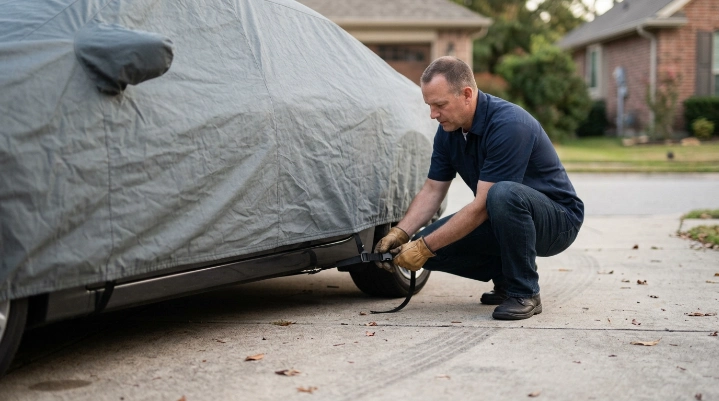
The best method depends on why the cover is moving. I normally start with fit correction and built-in straps before adding anything else.
| Method | Best For | Main Advantage | Watch Out For |
|---|---|---|---|
| Correct-size cover | Excess fabric everywhere | Reduces loose material before straps are needed | A cover that’s too tight can stress seams |
| Built-in underbody straps | Side-to-side lifting | Helps stop the cover ballooning upward | Keep straps away from hot or sharp parts |
| Elastic front and rear hems | Wind entering around bumpers | Closes two common wind-entry points | Old elastic may lose its grip |
| Manufacturer-approved gust straps | Localized loose sections | Adds securement without changing the cover | Avoid unpadded hardware near paint |
| Sheltered parking | Frequent or strong wind | Reduces the wind load on the entire cover | Avoid trees or structures that could drop debris |
Notice that I don’t recommend piling heavy objects on top of the vehicle. Bricks, boards, tools, or similar items can damage panels and become dangerous if they move.
The same principle applies to loose straps. Secure excess strap material so it cannot whip against the paint.
The NHTSA guidance on securing loads is a useful reminder of the larger safety problem created when unsecured objects separate from a vehicle and enter the roadway.
When Should I Remove the Cover Instead of Securing It?
Remove the cover when you cannot keep it securely attached or when severe weather makes the cover itself another potential hazard. A car cover isn’t a substitute for sheltered parking during dangerous weather.
The cover keeps lifting after you secure it
If every strap is installed correctly but large areas still balloon upward, something is wrong. The cover may be oversized, damaged, or unsuitable for the conditions.
At that point, I would rather remove it than keep tightening straps. More tension doesn’t automatically create a safer setup.
A major storm is approaching
High winds can bring branches, signs, outdoor furniture, and other debris toward a parked vehicle. Moving the vehicle into a garage or another protected location is the better option when available.
- Use a garage when possible.
- A sturdy carport may reduce direct exposure.
- A parking structure can offer substantial wind protection.
- Avoid parking beneath weak branches.
- Move loose objects away from the vehicle.
The cover is torn or its attachments are failing
A small tear can grow rapidly when wind pulls on it. Broken buckles and stretched attachment loops are also signs that the cover needs repair or replacement.
Don’t tie a damaged section to a windshield wiper, door handle, antenna, or another fragile vehicle part. Those components were not designed to anchor a full-size cover.
Never drive with a full car cover installed
Remove the entire cover before moving the vehicle. A full cover can obstruct visibility, lights, mirrors, ventilation openings, and access to normal controls.
Check that all straps and accessories have also been removed or secured. Nothing should hang underneath the vehicle before you drive.
How Can I Prevent My Car Cover From Flapping Again?
Prevention starts when you buy and install the cover. A good outdoor cover should match the vehicle closely and include secure attachment points.
Choose fit before extra features
I would take a properly fitted basic cover over an oversized cover loaded with features. Excess fabric gives wind more material to grab.
Model-specific covers usually follow the vehicle’s body shape more closely. If you choose a universal cover, measure your vehicle rather than relying only on labels such as small, medium, or large.
Keep the car and cover clean
A clean cover can still move, but reducing trapped grit lowers the abrasion risk when movement occurs. Wash the vehicle before longer storage periods when practical.
- Shake dirt from the cover before installation.
- Never drag the inner surface across pavement.
- Let a wet cover dry before storing it.
- Follow the manufacturer’s washing instructions.
- Inspect the inner lining for embedded grit.
If you’re storing the vehicle for more than a short period, Edmunds’ long-term vehicle storage guide covers other useful preparation steps beyond the cover itself.
Inspect attachment points regularly
Outdoor exposure slowly wears fabric, elastic, buckles, and webbing. A setup that survived last season may not hold the same way today.
I check attachment points whenever I wash or reposition the vehicle. Catching one frayed strap early is easier than chasing a cover across a parking lot later.
Think about wind direction when parking
A different parking position can sometimes reduce how much wind reaches an exposed cover edge. Nearby buildings or solid barriers may also provide useful shelter.
Don’t park beside unstable fences, construction materials, or unhealthy trees just to block wind. The shelter shouldn’t introduce a bigger risk.
Section Takeaway: A snug cover with intact straps should move only minimally. If it repeatedly balloons or snaps, correct the fit or remove it rather than accepting constant rubbing.
Frequently Asked Questions About Car Covers Flapping in Wind
Is it normal for a car cover to move slightly in the wind?
Small movement can happen outdoors, especially during changing gusts. Large sections should not repeatedly balloon, snap, or slide across the vehicle, because that usually means the cover has too much slack or wind is entering underneath it.
Can I use bungee cords to stop my car cover from flapping?
I prefer the cover manufacturer’s straps or approved accessories. A bungee hook can scratch paint or release suddenly if installed poorly, so don’t attach one to fragile trim, wheels, suspension parts, door handles, or other unintended anchor points.
Should a car cover be tight?
A car cover should be snug rather than stretched hard against the vehicle. You want enough tension to reduce loose fabric while still allowing the cover to follow the body shape without overstressing seams, mirror pockets, or attachment points.
Why does my car cover keep blowing off?
The usual causes are an oversized cover, weak elastic hems, disconnected straps, broken buckles, or wind getting beneath an exposed edge. Recheck fitment first, then inspect every factory attachment before adding another securement method.
Can wind make a car cover scratch my car?
Yes. The risk increases when wind repeatedly moves the cover over dusty or gritty paint. Keeping both surfaces clean, using a soft inner layer, and stopping excessive movement can reduce the chance of scratches and swirl-like marks.
Should I leave my car cover on during a windstorm?
Not automatically. If the cover remains securely fitted and conditions are mild, it may stay in place, but remove it when strong gusts repeatedly lift it or threaten its attachment points. Sheltered parking is preferable during severe weather.
What should I do if the cover flaps only around the doors?
Check for excess width, misplaced mirror pockets, and a loose underbody strap. Recenter the cover before tightening it, because pulling one side too far down can create slack on the opposite side and make the door area flap.
A car cover should protect your vehicle without constantly fighting the wind. If yours is flapping, start with sizing, locate the loose edge, secure every intended attachment point, and inspect the paint afterward.
Don’t keep tightening a poor-fitting cover indefinitely. When it still moves excessively after proper installation, replacing it with the correct size or choosing sheltered parking is usually the safer solution.