
When to Replace a Car Cover: 7 Signs It’s Time for a New One

Quick Answer
Replace a car cover when it no longer keeps water, dirt, sun, and wind away from the vehicle without creating new problems. Don’t rely only on its age. I look at the fabric, seams, lining, fit, and water resistance, just as I would inspect other items during routine vehicle maintenance.
Signs Your Car Cover Is Ready for Replacement
- Water soaks through: Rain no longer beads or runs off as it once did.
- Fabric feels brittle: The material is stiff, cracked, powdery, or weak.
- Holes appear: Tears expose parts of the vehicle to weather and debris.
- Seams are failing: Stitching, hems, elastic, or straps are coming apart.
- Lining is damaged: A rough or deteriorating inner surface may rub against paint.
- Fit has changed: The cover now moves, sags, or flaps excessively in wind.
I don’t replace a car cover just because another birthday has passed. Its real condition tells me much more than the date on the receipt.
Sun, wind, rain, dirt, handling, and storage all affect a cover differently. Here’s how I decide when to replace a car cover and when a simple repair is still worthwhile.
In This Guide
How Often Should You Replace a Car Cover?
There is no single replacement interval that works for every car cover. An outdoor cover in full sun may age much faster than a garage cover used only on weekends.
As of 2026, I prefer a condition-based approach. I inspect the cover and replace it when its protective function starts failing.
What is a worn-out car cover?
A worn-out car cover is one whose material, construction, fit, or protective coating has deteriorated enough to reduce protection. Age alone doesn’t make a cover worn out.
The environment matters most. Direct sunlight, wind, freezing weather, heavy rain, dust, and repeated folding can all speed up wear.
- Indoor use: Usually causes less weather-related deterioration because the cover avoids direct rain, wind, and intense sunlight.
- Outdoor use: Places greater stress on the fabric, coatings, seams, straps, and elastic.
- Daily handling: Adds wear around mirrors, corners, hems, and other high-contact areas.
- Long-term storage: Can be gentle on the cover if both the vehicle and cover stay clean and dry.
I therefore don’t write a replacement date on my calendar. I add the cover to my regular visual inspection routine instead.
This approach matches the broader principle behind good vehicle maintenance and inspection: look for changing condition and address problems before they grow.
Section Takeaway: Replace a car cover based on loss of protection, not age alone. Outdoor exposure and frequent handling usually demand closer inspection.
What Are the Signs a Car Cover Needs Replacing?
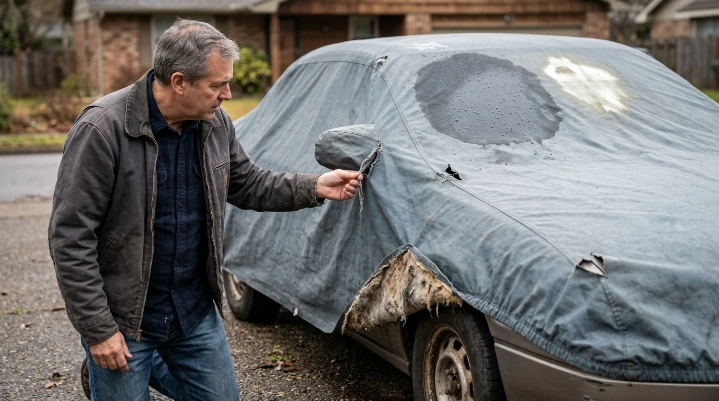
The strongest replacement signs are physical damage or a clear loss of protection. I start with the areas that experience the most stress.
1. Water is soaking into or through the cover
A cover that once shed rain but now becomes saturated deserves attention. First, make sure dirt or improper cleaning isn’t affecting its water-repellent surface.
After cleaning it according to the manufacturer’s instructions, test it again. Persistent water penetration is a much stronger reason to replace it.
2. The fabric has become thin or weak
Hold the clean, dry cover up to daylight. Compare the roof, hood, mirror, and corner areas with sections that receive less stress.
Thin patches suggest the material is losing strength. Those areas can develop tears quickly once wind starts pulling on them.
3. The material feels stiff, brittle, or powdery
Healthy fabric should behave roughly as its manufacturer intended. A major change in texture can indicate deterioration from sun, age, heat, or environmental exposure.
I would replace a cover that cracks when folded or sheds degraded material. I wouldn’t want that surface repeatedly moving across clean paint.
4. Tears or holes keep appearing
One small tear near a seam may be repairable. Several tears across different sections suggest the material itself has weakened.
Patching weak fabric often becomes a cycle. A fresh tear may simply appear beside the repaired area.
5. Seams, hems, or straps are failing
Inspect stitching around mirror pockets, corners, elastic hems, tie-down points, and straps. These areas carry much of the load when wind pulls on the cover.
A failed securing system matters even when the main fabric looks usable. The cover cannot protect properly if it won’t stay in position.
6. The inner surface has become rough
The inside deserves as much attention as the outside. Check for embedded grit, peeling layers, hardened sections, or deteriorating fibers.
If gentle cleaning doesn’t restore a safe surface, replacement makes sense. The cover sits directly against some of the most visible painted panels.
7. The cover no longer fits securely
Elastic can stretch and straps can loosen over time. Fabric may also change shape after years of pulling, washing, and storage.
A cover that repeatedly flaps against the vehicle is no longer doing its job well. Excess movement can also accelerate wear on the cover itself.
Section Takeaway: The clearest replacement signs are leaking, thinning, brittleness, repeated tears, failed seams, rough lining, and a loose fit.
Can an Old Car Cover Damage Your Paint?
Yes, a badly worn or dirty cover can create conditions that are unfriendly to paint. The greatest concern is repeated rubbing combined with trapped dirt or moisture.
A clean, suitable cover should protect the surface. A rough inner layer or loose cover can behave very differently.
Watch for movement and contamination
Imagine a loose cover moving across a dusty hood during a windy night. Grit trapped between the two surfaces can act like an abrasive.
That’s why I clean both surfaces before long storage. I also stop using a cover if its damaged lining begins shedding material.
- Check the paint: Look for new fine marks where the cover moves most.
- Check the lining: Feel for grit, hard spots, peeling layers, or rough fibers.
- Check the fit: Watch the cover during moderate wind if it is safe to do so.
- Check moisture: Remove the cover occasionally and make sure the vehicle can dry properly.
Good exterior care is part of preserving a vehicle over time. Consumer Reports maintains a broader car maintenance and repair guide for owners who want to build a complete maintenance routine.
Should You Repair, Reproof, or Replace a Car Cover?
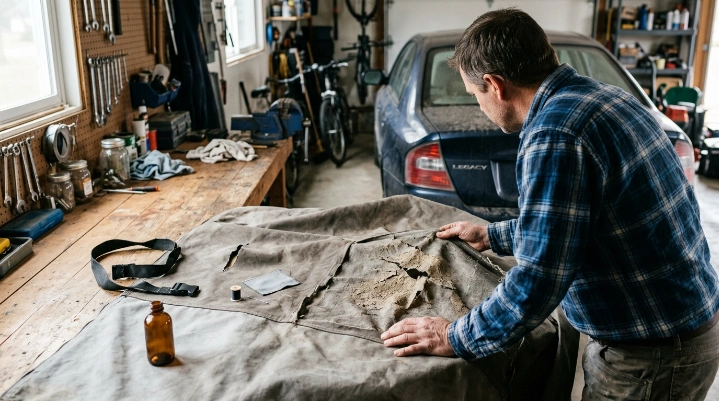
Minor localized problems don’t always require a new cover. The key question is whether the underlying fabric remains strong and safe.
This is the quick decision table I use.
| Cover Condition | First Action | Replace? |
|---|---|---|
| One small tear in otherwise strong fabric | Use an approved repair method | Usually not immediately |
| Several new tears or thinning areas | Inspect the entire cover | Usually yes |
| Water stops beading | Clean and follow manufacturer reproofing guidance | Not always |
| Water still penetrates after proper care | Stop relying on it for rain protection | Yes for wet-weather use |
| Replaceable strap or buckle fails | Replace the damaged hardware | Not if the fabric is sound |
| Fabric is brittle, cracked, or shedding | Retire the cover | Yes |
| Inner lining is rough or deteriorating | Stop placing it against paint | Yes |
When is repairing worthwhile?
I consider repair when damage is small and isolated. The surrounding material should still feel strong and flexible.
Use the repair material recommended for that specific cover. Random tape can leave adhesive, create hard edges, or fail after weather exposure.
When does reproofing make sense?
Some covers use water-repellent treatments that can be maintained or renewed. Check the manufacturer’s care instructions before applying any spray or coating.
Reproofing won’t fix torn fabric, broken seams, or a damaged lining. It also can’t restore material that has become structurally weak.
Section Takeaway: Repair isolated damage, maintain coatings when the manufacturer allows it, and replace a cover once the fabric or lining itself is failing.
What Makes a Car Cover Wear Out Faster?
Outdoor exposure is only part of the story. I’ve found that poor fit and careless handling can shorten useful life just as quickly.
- Strong sunlight: Long-term ultraviolet exposure can weaken some fabrics and coatings.
- Wind movement: Constant flapping stresses seams, corners, elastic, and tie-down areas.
- Dirt and grit: Particles trapped in the material add abrasion during installation and removal.
- Wet storage: Folding and storing a damp cover encourages odor, stains, and material problems.
- Wrong cleaning products: Harsh cleaners may damage coatings or fabric.
- High dryer heat: Heat may harm materials that are designed to air-dry.
- Poor fit: Excess fabric can flap while an undersized cover places excessive tension on seams.
- Frequent removal: Daily pulling adds wear at mirrors, bumpers, corners, and hems.
Fit is one of the first things I check after buying a new cover. It should sit securely without needing excessive force to stretch it over the vehicle.
For broader exterior and mechanical upkeep, Car and Driver also maintains an automotive maintenance resource covering ongoing vehicle care.
How Can You Make a Car Cover Last Longer?
Good care won’t make a damaged cover new again. It can, however, help a healthy cover stay useful for longer.
Keep the vehicle reasonably clean
I avoid dragging a clean cover over heavy dust, mud, or sand. Those particles can transfer to the lining and remain there during future use.
Clean the cover according to its label
Materials differ, so I don’t use one washing method for every cover. Follow the manufacturer regarding detergent, machine washing, temperature, drying, and reproofing.
Let it dry fully before storage
Don’t stuff a damp cover straight into a storage bag. Give both sides enough time to dry first.
Secure it properly outdoors
Use the cover’s intended straps, buckles, elastic, or tie-down system. The goal is to reduce movement without overstretching the material.
Inspect high-stress areas regularly
I pay special attention to mirror pockets, sharp body contours, corners, seams, hems, and tie-down points. Small damage is easier to manage before it spreads.
- Inspect the cover after severe wind or storms.
- Check the underside when you clean it.
- Remove trapped leaves and debris promptly.
- Repair small approved-to-repair damage early.
- Store the cover dry and protected when not in use.
Some manufacturers publish material-specific washing and warranty instructions. Follow those instructions over generic advice because construction and coatings vary between products.
Section Takeaway: A clean vehicle, correct washing, dry storage, secure fit, and regular inspection give a car cover its best chance of lasting.
Frequently Asked Questions
How long does a car cover usually last?
There isn’t one reliable lifespan for every cover. Material, outdoor exposure, wind, sunlight, cleaning, fit, and handling all affect durability. I use age as background information, but I replace a cover when its fabric, lining, fit, seams, or weather protection starts failing.
Should I replace a faded car cover?
Fading alone doesn’t always mean immediate replacement. Inspect the material for thinning, brittleness, cracking, poor water resistance, or loss of strength. If fading appears alongside those problems, replacement becomes much more sensible.
Can I keep using a car cover with a small tear?
A small isolated tear may be repairable if the surrounding material remains strong. Use the manufacturer’s recommended repair method. Replace the cover if new tears keep appearing, the tear exposes a large area, or the surrounding fabric is weak.
Should I replace a car cover that is no longer waterproof?
First clean it properly and check whether the manufacturer allows a water-repellent treatment to be renewed. If water continues penetrating and you need outdoor rain protection, replace the cover rather than depending on protection it no longer provides.
Can an old car cover scratch paint?
A worn cover can contribute to paint marks if its inner surface becomes rough or contaminated with grit. A loose cover that repeatedly moves in wind can increase rubbing. Stop using it if cleaning doesn’t restore a clean, soft contact surface.
Is it better to repair or replace a damaged car cover?
Repair usually makes sense for one small tear, loose stitch, or replaceable strap when the rest of the cover is healthy. Replacement makes more sense when deterioration affects several areas or the main fabric, lining, waterproofing, or fit has failed.
How often should I inspect my car cover?
I give mine a quick check whenever I remove or clean it and after harsh weather. Look at the seams, hems, straps, mirror areas, lining, and water-shedding surface. Regular checks make it easier to catch a repairable problem early.
Final Takeaway: Knowing when to replace a car cover is mostly about recognizing lost protection. If the cover is brittle, leaking, tearing repeatedly, damaging paint, or no longer staying securely in place, replacing it is usually the smarter choice.
A good cover should protect your vehicle without creating another maintenance problem. Check its condition regularly, fix minor damage early, and retire it once it can no longer do that job safely.
“`
