
Old Car Cover Problems: Signs, Fixes, and When to Replace It

Quick Answer
Old car cover problems usually start when the fabric gets dirty, thin, loose, torn, or less able to handle moisture. A worn cover can rub against paint, let rain through, trap dirt, or flap in wind. Before using yours again, inspect your old car cover for damage and poor fit.
Common warning signs
- Loose fit: Worn elastic lets the cover shift and rub against the vehicle.
- Thin fabric: Weak areas may tear or provide less protection from outdoor exposure.
- Water inside: Rain penetration or trapped condensation can leave the vehicle damp.
- Dirty lining: Dust and grit between the cover and paint can increase scratching risk.
- Damaged seams: Split stitching can let water enter and make tears spread.
- Constant flapping: Excess movement can rub the same paint areas repeatedly.
Best next step
- Clean and dry a sound cover, repair small defects when practical, and replace it when the fabric, fit, or seams have clearly failed.
I don’t throw out an older car cover just because it looks faded. I first check what matters: fit, cleanliness, seams, fabric strength, and what is happening underneath it.
A worn cover can still work in some situations. The trouble starts when age changes how the cover sits on the vehicle or handles dirt and moisture.
In This Guide
What Problems Can an Old Car Cover Cause?
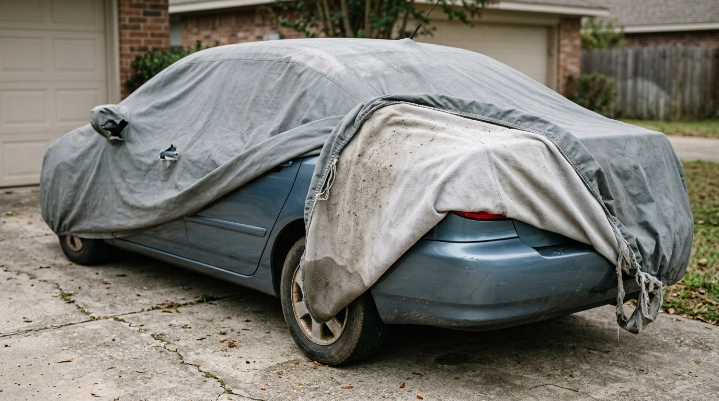
An old cover can create problems when the material no longer performs as it did when new. Age alone is not the deciding factor.
Definition: An old car cover is a vehicle cover that has developed wear from use, storage, washing, weather, ultraviolet exposure, dirt, or repeated installation and removal.
- Loose fit: Elastic hems may lose tension and allow more movement.
- Weak seams: Stitching can loosen, split, or open around stressed areas.
- Small tears: Tiny holes can grow when the cover is pulled over mirrors or bumpers.
- Dirty inner surface: Grit can collect on the side touching the vehicle.
- Reduced water resistance: An outdoor cover may begin letting more moisture through.
- Slow drying: Dirt and aging material may keep parts of the cover damp longer.
Fading does not always mean failure
A faded cover can look terrible and still remain usable. I care more about whether the fabric feels strong and stays secure.
I lightly pull the material near the roof, hood, and seams. If it feels brittle, separates easily, or opens around stitching, I stop trusting it outdoors.
Loose elastic deserves attention
Elastic helps keep the front and rear edges seated around the vehicle. Once it becomes weak, wind can get underneath more easily.
That movement matters because a cover should not spend hours sliding back and forth over dusty paint. Covercraft also advises keeping covers properly fitted and secured, especially in wind.
Covercraft’s guidance for windy conditions recommends checking fit and removing a cover during severe or sustained high winds.
Can an Old Car Cover Scratch or Damage Paint?
Yes, but the cover material is not always the direct cause. Dirt plus movement is often the bigger concern.
Imagine a thin layer of dust sitting on the hood. A loose cover moving over that dirt can create repeated contact in the same spots.
- Wash or dust the vehicle before covering it.
- Keep the inside of the cover clean.
- Do not drag a dirty cover across paint.
- Check mirror pockets and corners for tight rubbing.
- Fix or replace a cover that constantly flaps.
Look at high-contact areas first
I start around mirrors, fender edges, the roof, trunk corners, spoilers, and bumper edges. Those are common places for an ill-fitting cover to pull or move.
Covercraft notes that trapped dirt and debris can contribute to scratching. It also warns that loose covers can move against the paint.
Its paint-scratch guidance recommends a clean car, clean cover, and snug fit.
Be more careful with older paint
Older vehicles may already have oxidation, chips, repainted panels, or failing clear coat. A cover cannot repair any of these problems.
If paint is already peeling, use extra care during installation and removal. Never pull a tight, gritty cover hard across a fragile finish.
For general vehicle-care and repair information, Kelley Blue Book maintains automotive maintenance and repair resources for vehicle owners.
Can an Old Car Cover Trap Moisture?
A car cover can contribute to moisture problems when a wet vehicle is covered or dampness cannot escape efficiently. A leaking or dirty old cover can make the situation harder to manage.
Water under a cover does not automatically mean rain passed straight through the material. Condensation, a wet vehicle, wet ground, or humid air can also contribute.
- After rain: Check the roof, hood, trunk, and lower body.
- After washing: Let the vehicle dry before installing the cover.
- Before storage: Make sure the cover itself is dry.
- During long storage: Remove the cover periodically and inspect underneath.
Never store the cover wet
A damp cover folded into a bag creates another problem. It can develop odor, mildew, or staining while stored.
Covercraft recommends cleaning covers before storage and letting them dry completely. It also advises checking for tears, thinning areas, and worn seams.
Its vehicle-cover storage instructions recommend keeping a clean, dry cover in a breathable storage setup.
Do not assume waterproof means trouble-free
Outdoor protection needs more than stopping rain. Fit, drying speed, airflow, and correct use also matter.
If I repeatedly find the same damp areas under an old cover, I remove it and diagnose the source. I do not keep covering the vehicle and hope the moisture disappears.
Should You Clean, Repair, or Replace an Old Cover?
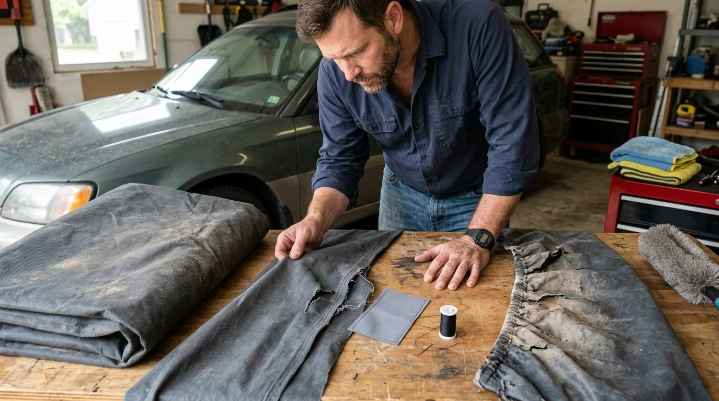
Cleaning makes sense when the fabric is structurally sound. Repair can work for limited damage, while widespread deterioration usually points toward replacement.
| What you find | Likely issue | Best response |
|---|---|---|
| Dust or light dirt | Normal contamination | Clean according to manufacturer directions |
| Small isolated tear | Local fabric damage | Repair if the surrounding material remains strong |
| One loose seam | Stitching failure | Repair before the opening spreads |
| Weak elastic and frequent flapping | Poor fit | Secure correctly or replace the cover |
| Many thin or brittle areas | Widespread material aging | Replace |
| Repeated leaks through damaged areas | Loss of useful outdoor protection | Replace for outdoor use |
| Persistent moldy smell after proper cleaning | Possible deep contamination | Consider replacement |
Do not guess at washing instructions
Different cover fabrics have different care requirements. Some can be machine washed, while others need different treatment.
I check the label or manufacturer’s instructions before cleaning. Harsh chemicals, bleach, or excessive heat may damage some materials.
Replacement can be cheaper than paint correction
I do not keep using a failing cover just because it still looks like a cover. Once it cannot stay clean, secure, and intact, its protective value has changed.
As of 2026, my rule is simple: judge the condition, not the birthday. A well-kept older cover may outperform a newer cover that has been abused.
How Do You Inspect an Old Car Cover?
You can perform a useful inspection at home without special tools. Give yourself good light and enough clean space to spread the cover out.
- Remove the cover carefully. Do not drag the dirty outer surface across the vehicle.
- Spread it out. Use a clean garage floor, driveway tarp, or other dry surface.
- Check the outside. Look for fading, thin patches, holes, tears, and damaged stitching.
- Check the inside. Feel for grit, rough spots, stains, sticky residue, or debris.
- Inspect elastic hems. See whether the front and rear still grip the vehicle properly.
- Check straps and grommets. Look for tearing around attachment points.
- Inspect mirror pockets. Make sure seams have not opened or stretched.
- Check the vehicle. Look for damp areas, dust patterns, rub marks, or fresh fine scratches.
Try a gentle fabric test
Hold a worn-looking section between your fingers and apply light tension. Strong material should not split from gentle handling.
If several areas feel brittle or tear with little force, I consider the cover near the end of its useful life. Repairing one hole will not restore weak material everywhere else.
Check fit on a calm day
Install the cover and look at how it sits around the bumpers, mirrors, roof, and lower edges. Large loose sections deserve attention.
Do not perform this test in severe wind. If the cover cannot remain secure in normal conditions, fixing the fit or replacing it is safer for the finish.
How Can You Prevent Car Cover Problems?
The easiest way to extend useful cover life is to keep both surfaces clean. The car and the cover work as one protection system.
- Cover a clean vehicle when practical.
- Let the vehicle dry before covering it.
- Remove leaves, grit, and debris from the cover.
- Follow the cover maker’s washing instructions.
- Dry the cover fully before storage.
- Inspect seams and attachment points regularly.
- Keep the fit snug enough to reduce movement.
- Remove the cover during conditions its manufacturer says to avoid.
Use the right cover for the environment
An indoor dust cover and an outdoor weather cover solve different problems. Using an indoor-only design outside can expose it to conditions it was not made to handle.
For broader vehicle safety information, the National Highway Traffic Safety Administration provides federal vehicle and equipment safety resources.
Inspect during long-term storage
I do not cover a vehicle for months and forget about it. I check underneath so I can catch dampness, dirt, pests, or cover movement early.
Covercraft recommends periodic removal and inspection during extended use. That is a practical habit even if your cover comes from another manufacturer.
You can also use established automotive resources such as Edmunds when researching broader ownership, maintenance, or vehicle-care questions.
Frequently Asked Questions
How do I know when my car cover is too old?
A cover is probably too worn when it has widespread thinning, brittle fabric, repeated tears, failed seams, weak elastic, or a fit that cannot stay secure. Age in years matters less than physical condition and how well the cover still performs.
Can an old car cover scratch my car?
It can contribute to scratches when dirt or grit becomes trapped between the cover and paint. A loose cover can increase the problem by moving against the dirty surface, so cleanliness and proper fit matter.
Can I keep using a faded car cover?
Possibly. Color fading alone does not prove the cover has failed. Inspect its strength, seams, fit, inner surface, and water performance before deciding whether to keep using it.
Can I repair a torn car cover?
A small isolated tear may be repairable if the surrounding material remains strong. If the fabric is thin or brittle in several places, repairing one tear usually does not solve the larger aging problem.
Why is my car wet under an old cover?
Moisture may come from rain penetration, condensation, covering a damp vehicle, humid air, or wet surroundings. Remove the cover, dry the vehicle, inspect the fabric and seams, and identify the source before reinstalling it.
Should I wash an old car cover before replacing it?
If the material remains strong, cleaning can help you decide whether dirt is the main problem. Follow the manufacturer’s care instructions because washing methods vary by fabric, and always let the cover dry fully before using or storing it.
The main takeaway is simple: an old car cover is not automatically bad, but a dirty, loose, brittle, leaking, or damaged cover should not be trusted just because it once protected the vehicle.
Inspect yours today. If cleaning or a small repair cannot restore a clean, secure fit, replacement is the sensible next step.
