
How to Stop Mold Under a Car Cover: Causes, Fixes, and Prevention

Quick Answer
To stop mold under a car cover, remove the cover and dry the vehicle, cover, and parking area completely. Then correct the moisture source and use a breathable cover suited to where you park; current Car and Driver cover guidance can also help when comparing replacement options.
Quick steps to stop mold
- Step 1: Remove the cover so trapped moisture can escape.
- Step 2: Dry the car, including mirrors, seals, trim gaps, and wheels.
- Step 3: Wash or clean the cover according to its care instructions, then dry it fully.
- Step 4: Find the moisture source, such as condensation, wet ground, rain intrusion, or poor garage airflow.
- Step 5: Reinstall the cover only after every surface feels completely dry.
One rule matters most
- If either the vehicle or the cover feels damp, don’t cover the car yet.
Finding mold beneath a car cover is frustrating because the cover was supposed to protect the vehicle. In most cases, though, the real problem is trapped moisture rather than the simple presence of a cover.
I’ve dealt with covers that felt dry across the main panels while the stitched hems were still damp. This guide shows you how I’d find the moisture source, clean things up, and prevent the problem from returning.
In This Guide
- Why Does Mold Grow Under a Car Cover?
- How Do You Stop Mold Under a Car Cover Right Now?
- How Do You Clean Mold From the Car and Cover?
- What Type of Car Cover Helps Prevent Mold?
- How Do You Prevent Mold in a Garage or Outdoor Storage Area?
- How Often Should You Check a Covered Car?
- Frequently Asked Questions
Why Does Mold Grow Under a Car Cover?
Mold under a car cover usually appears because moisture remains trapped around the vehicle long enough for damp conditions to persist. The water can come from the car, cover, ground, humid air, or weather.
Mold is fungal growth that develops when spores encounter suitable moisture and material to grow on. Dirt, dust, pollen, fabric fibers, and other contamination can provide material around a stored vehicle.
Is the car cover itself causing the mold?
Not necessarily. A cover can contribute when it slows evaporation, but you should first identify where the water is coming from.
- Wet vehicle: Wash water or rain remains inside mirrors, trim gaps, door seals, badges, and wheel openings.
- Damp cover: The fabric was installed or stored before drying completely.
- Condensation: Humid air contacts cooler vehicle surfaces and creates droplets.
- Wet ground: Grass, soil, standing water, or damp concrete keeps moisture near the vehicle.
- Poor ventilation: A closed garage holds damp air with little opportunity to escape.
- Cover leakage: Aging fabric, damaged seams, or incorrect outdoor cover choice allows rainwater through.
How can you tell condensation from a leaking cover?
Condensation often appears as fine droplets spread across several surfaces. Leakage is more likely when moisture repeatedly appears beneath a particular seam or damaged section after rain.
| What You Notice | Likely Cause | Best First Action |
|---|---|---|
| Fine droplets across paint and glass | Condensation | Dry everything and improve airflow |
| One wet area below a seam | Possible water intrusion | Inspect the cover for wear or damage |
| Dampness mainly near the lower body | Ground moisture | Move the vehicle to a dry paved surface |
| Musty smell inside the cover | Cover stored damp | Clean and completely air-dry the cover |
| Moisture returns in a closed garage | Persistent humidity | Find leaks and improve ventilation |
A simple test helps. Remove the cover, dry everything, and leave the vehicle uncovered through the next normal temperature change.
If the car stays dry, the cover or installation method deserves closer inspection. If moisture returns uncovered, the storage environment is probably the bigger issue.
How Do You Stop Mold Under a Car Cover Right Now?
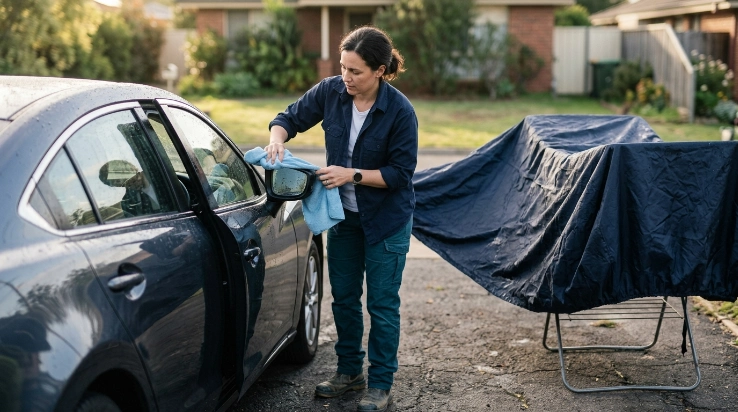
Remove the cover immediately and get both surfaces dry. Don’t reinstall the cover until you’ve identified why moisture accumulated.
What should you do first?
- Uncover the vehicle. Give trapped moisture an immediate escape path.
- Move into a dry area if possible. Avoid wet grass, puddles, or saturated soil.
- Dry the body. Use clean microfiber towels on paint, glass, trim, and accessible seams.
- Open moisture traps. Check mirrors, door jambs, trunk channels, fuel doors, and weatherstripping.
- Dry the cover separately. Hang or spread it so air can reach both sides.
- Inspect before re-covering. Look for remaining odor, damp seams, stains, and damaged fabric.
I like to run a clean microfiber towel around mirror housings and panel gaps before putting a cover back on. If the towel picks up water, the vehicle isn’t ready.
Should you just uncover the car for a few hours?
Sometimes, but don’t rely only on time. Thick hems, straps, lined sections, seals, and hidden body gaps can remain damp after exposed panels feel dry.
Touch those areas directly before reinstalling the cover. Dry first, cover second.
How Do You Clean Mold From the Car and Cover?
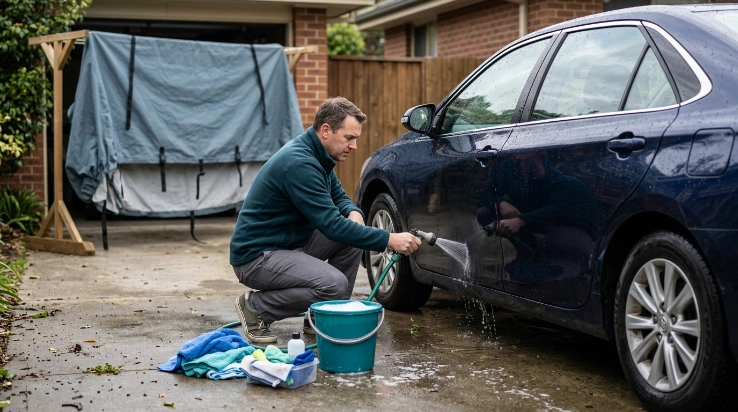
Start by separating the cover from the vehicle and checking which surfaces are affected. Cleaning methods should match the car surface and the cover manufacturer’s care instructions.
How should you clean the vehicle?
For ordinary exterior contamination, begin with a proper automotive wash instead of aggressively scrubbing the paint. Mold residue mixed with grit can scratch clear coat when rubbed dry.
- Rinse away loose contamination first.
- Use automotive-safe wash products on painted surfaces.
- Use clean wash media and microfiber towels.
- Clean door jambs, rubber seals, glass edges, and trim separately.
- Dry hidden gaps before covering the vehicle again.
Inspect your paint after washing. If staining remains or the finish appears damaged, a professional detailer can determine whether additional correction is appropriate.
For broader ownership and maintenance guidance, Kelley Blue Book is a useful reference when you need to separate basic car care from work better handled by a professional.
How should you clean a moldy car cover?
Check the manufacturer’s label before washing it. Car-cover fabrics, coatings, liners, and seam construction vary considerably.
- Follow the care label: Don’t assume the cover can handle hot water or a heated dryer.
- Remove loose debris: Shake off dirt outdoors before washing when practical.
- Use approved detergent: Avoid chemicals the manufacturer warns against.
- Rinse thoroughly: Residue left in the material can attract dirt later.
- Dry both sides: Pay extra attention to seams, straps, hems, and reinforced areas.
If mold has heavily penetrated a deteriorated or permanently odorous cover, replacement may make more sense than repeated cleaning. A damaged cover isn’t worth putting back against clean paint.
Mechanic Alert: If corrosion, electrical moisture intrusion, damaged wiring, or another mechanical problem appears during inspection, have a qualified technician evaluate the vehicle.
What Type of Car Cover Helps Prevent Mold?
A breathable cover suited to the actual parking environment usually gives moisture a better chance to escape. Breathability alone, however, cannot compensate for covering a wet car.
Breathable versus sealed material: which is better?
For routine vehicle storage, I avoid treating an ordinary plastic tarp as a substitute for a fitted automotive cover. A tarp may block rain yet offer poor fit and limited vapor escape.
| Cover Type | Best Situation | Moisture Consideration |
|---|---|---|
| Breathable indoor cover | Clean, dry garage | Humidity can still condense on cold surfaces |
| Breathable outdoor cover | Driveway or outdoor parking | Needs weather resistance plus vapor management |
| Generic plastic sheet | Temporary non-contact applications | Can restrict evaporation and fit poorly |
| Damaged or aging cover | Replacement recommended | Worn coatings and seams may manage water poorly |
Does car-cover fit matter?
Yes. A correctly sized cover is easier to install cleanly and is less likely to flap excessively or collect large folds of wet material.
- Choose the correct vehicle size.
- Keep the inner surface clean.
- Avoid dragging the cover across dirty paint.
- Secure outdoor covers as the manufacturer directs.
- Replace covers with torn seams or failing elastic.
As of 2026, I still treat cover choice as an environment decision rather than a simple waterproof-versus-not decision. Indoor dust protection and outdoor weather exposure demand different materials and construction.
How Do You Prevent Mold in a Garage or Outdoor Storage Area?
Control moisture around the parked vehicle before expecting the cover to solve the problem. A dry cover over a damp environment can still develop condensation underneath.
How do you reduce moisture inside a garage?
Start by looking for obvious water sources. Damp concrete, roof leaks, wall leaks, blocked drainage, and water entering beneath the garage door all deserve attention.
- Repair building leaks promptly.
- Let a wet vehicle dry before parking it for long-term storage.
- Improve ventilation when the garage regularly feels damp.
- Consider a dehumidifier for persistent indoor humidity.
- Keep the cover off while the floor or vehicle is visibly wet.
A small humidity meter can also help reveal whether the garage stays damp even when it looks dry. That gives you more useful information than judging the air by feel alone.
What changes when the car is stored outside?
Outdoor storage adds rain, dew, wet soil, wind, pollen, and larger temperature swings. Your goal is to keep external water out while still allowing trapped vapor to leave.
- Park on pavement or another well-drained surface.
- Avoid long-term parking over wet grass or soil.
- Keep drainage paths around the car clear.
- Remove leaves and organic debris trapped around the cover.
- Inspect the vehicle after prolonged rain or major weather changes.
For general maintenance planning beyond the cover itself, Edmunds provides broader vehicle-ownership and maintenance information.
How Often Should You Check a Covered Car?
Don’t treat a covered car as completely maintenance-free storage. Periodic inspection is the easiest way to catch moisture before a small problem becomes persistent.
What should you inspect?
For a frequently driven vehicle, I check whenever I remove or reinstall the cover. For longer storage, I also inspect after heavy rain, flooding nearby, or a major change in temperature and humidity.
- Paint and glass: Look for droplets, haze, spotting, or unusual residue.
- Cover underside: Feel for dampness rather than checking only the outer fabric.
- Seams and hems: These thicker areas often dry more slowly.
- Garage floor: Watch for dark damp patches or standing water.
- Trim and seals: Check areas where water can remain hidden.
- Odor: Investigate a persistent musty smell instead of masking it.
I also give the cover a quick inspection before every reinstall. Five minutes spent finding a damp seam can prevent days of trapped moisture.
Should you uncover a stored car occasionally?
Yes, especially when your parking area has recurring humidity problems. Periodic checks let you confirm that both the vehicle and cover remain dry.
You can also review broader ownership advice from Consumer Reports when planning long-term vehicle care.
Frequently Asked Questions
Can a breathable car cover still get mold underneath?
Yes. Breathable fabric helps moisture escape, but it cannot prevent every problem caused by a wet vehicle, damp cover, humid garage, or saturated ground. Always start with a clean, dry vehicle and inspect the storage environment when moisture keeps returning.
Should I cover my car immediately after washing it?
No. Wait until the paint, glass, mirrors, wheels, trim, seals, and hidden body gaps have dried. Water often remains behind mirror housings and inside seams after the large painted panels appear dry.
Can condensation underneath a car cover cause mold?
Persistent condensation can create the damp conditions mold needs. Remove the cover when you find moisture, dry both surfaces, and correct the humidity, ventilation, ground moisture, or temperature-related problem causing condensation.
Can I put a car cover over a slightly damp car?
I wouldn’t. Even small amounts of trapped water can take much longer to evaporate beneath a cover. Let the car and cover dry completely before installation.
Why does my car cover smell musty?
A musty odor usually deserves a moisture inspection. The cover may have been folded while damp, stored in a humid location, or repeatedly exposed to condensation while installed.
Should I replace a moldy car cover?
Not automatically. Follow the manufacturer’s cleaning instructions first, but replacement is sensible when mold or odor remains embedded, the fabric is deteriorating, seams are failing, or the inner surface can no longer be kept clean.
Is an indoor car cover better for preventing mold?
It can be better inside a clean, dry garage because indoor covers are designed for that environment. It still won’t solve a garage with leaks, wet concrete, poor airflow, or persistent humidity.
The simplest way to stop mold under a car cover is to control moisture before the cover goes on. Keep the vehicle, cover, and storage area dry, choose the right cover for the location, and inspect the car instead of leaving it covered indefinitely.
If you find moisture again, don’t just wipe it away and reinstall the cover. Find where the water came from first, because fixing that source is what keeps the mold from returning.