
Locking Car Cover Problems: 7 Common Issues and Fixes

Quick Answer
Locking car cover problems usually involve a jammed or corroded lock, a cable rubbing the vehicle, torn grommets, difficult installation, wind movement, trapped moisture, or expecting the cover lock to provide more theft protection than it can. A cover lock can discourage quick removal, but I treat it as only one security layer alongside the broader vehicle theft prevention steps recommended by NHTSA.
Common problems to check
- Stuck lock: Dirt, corrosion, water, or freezing conditions can make a small cover padlock difficult to open.
- Cable contact: A poorly routed cable can press or rub against painted panels, trim, wheels, or the cover itself.
- Torn grommets: Excess cable tension or wind loading can pull on reinforced locking holes.
- Loose cover: Locking the center of a cover does not automatically stop the front, rear, or sides from flapping.
- Moisture underneath: A lock cannot compensate for a wet vehicle or a cover that dries poorly.
- False security: A lightweight cable and cover are deterrents, not substitutes for locking the vehicle and using proper anti-theft systems.
Best first check
- Unlock the cover, inspect the cable, lock, grommets, inner fabric, paint contact points, and overall fit before using it again.
A locking car cover sounds simple until you start using one every day. The lock adds security, but it also introduces a cable, grommets, extra tension, and another piece of hardware near your vehicle.
I approach locking car cover problems by separating two jobs. The cover protects the parked vehicle, while the lock mainly makes quick cover removal less convenient.
This 2026 guide explains what can go wrong, how to troubleshoot each problem, and when I would stop using the lock or cover altogether.
In This Guide
What Problems Do Locking Car Covers Cause?
The most common locking car cover problems come from the lock, cable, grommets, cover fit, contamination, and weather exposure. The locking feature itself rarely fixes problems caused by choosing or installing the wrong cover.
Definition: A locking car cover is a vehicle cover that can be secured using a cable, lock, integrated strap, reinforced grommets, or another fastening system designed to make unauthorized removal more difficult.
Many designs use reinforced holes near the lower center of the cover. A cable passes underneath the car and connects at a small padlock.
That arrangement is simple, but several separate components have to work correctly.
| What You Notice | Likely Cause | First Check |
|---|---|---|
| Key will not turn | Dirty, wet, corroded, or frozen lock | Inspect the keyway and lock body |
| Marks near rocker panels | Cable or contaminated fabric rubbing | Check every cable contact point |
| Grommet pulling loose | Too much cable tension or cover movement | Release tension and inspect surrounding fabric |
| Cover still flaps | Poor fit or unsecured hems | Check front, rear, and side fit |
| Damp paint underneath | Wet installation or slow moisture escape | Remove the cover and dry both surfaces |
| Cover hard to remove quickly | Inconvenient cable routing or lock position | Review the installation route |
One mistake I avoid is tightening the cable until the cover looks stretched. The cable should secure the cover without turning its reinforced holes into load-bearing anchor points.
Paint cleanliness matters just as much. Consumer Reports’ vehicle maintenance guidance is a useful reminder that exterior care is part of normal vehicle ownership, not something to ignore once a cover goes on.
Section Takeaway: A lock adds another layer of retention, but it cannot correct dirt, moisture, poor fit, or weak cover construction.
Why Does a Car Cover Lock Get Stuck or Jammed?
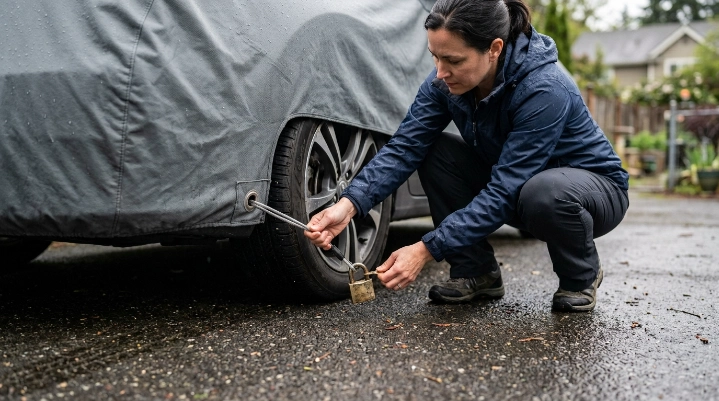
A car cover lock usually becomes difficult to open because water, dirt, corrosion, cold weather, or physical damage has affected the locking mechanism. Small outdoor padlocks are exposed to harsh conditions close to the pavement.
The location works against them. Road spray, mud, dust, winter salt, and standing water can reach a low-hanging lock.
Check the lock before forcing the key
Don’t twist harder when the key stops moving. A broken key inside a tiny lock creates a much bigger removal problem.
- Inspect the key: Make sure it is not bent, cracked, or badly worn.
- Look into the keyway: Check for visible dirt, corrosion, or ice.
- Reduce cable tension: Push the cover or cable inward slightly while trying the lock.
- Use the correct lock product: Follow the lock maker’s instructions for cleaning or lubrication.
- Replace damaged hardware: Don’t depend on a lock that repeatedly binds or sticks.
Water is a common concern because the lock sits outside during rain and washing. Freezing temperatures can turn retained water into another obstruction.
If you regularly park outdoors, weather resistance matters more than a shiny finish. I prefer hardware intended for outdoor exposure.
What if the lock will not open at all?
Start with the spare key and remove tension from the cable. Never pry against the vehicle body or use painted trim as a leverage point.
If the lock must be cut, protect the vehicle and cover from the tool. A locksmith is the safer choice when access is tight or you could damage the car.
Mechanic Alert: If removing the lock requires working underneath the vehicle or lifting the vehicle, don’t crawl under an unsupported car. Have a qualified professional handle the job safely.
Can a Locking Car Cover Cable Scratch Your Car?
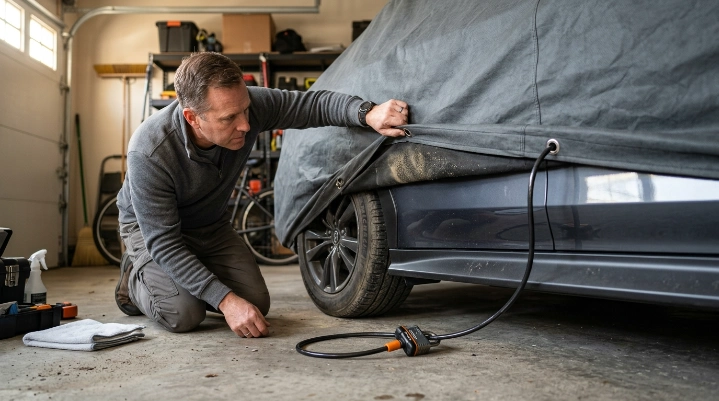
Yes, a locking cable can contribute to scratches if it touches painted surfaces or forces contaminated fabric against the vehicle. A protective coating around the cable reduces direct metal contact but does not make poor routing harmless.
The bigger issue is movement. Any dirty material rubbing repeatedly across clear coat can leave fine marks.
Cover makers also warn that trapped debris and loose cover movement can increase scratching risk. That is why I treat cleanliness and fit as the first defense.
Where should the cable run?
Follow the specific cover manufacturer’s instructions. On common grommet-and-cable systems, the cable passes underneath the car between reinforced cover points.
Before locking it, I check that the cable is clear of:
- painted rocker panels;
- lower bumper edges;
- wheels and delicate wheel finishes;
- plastic trim and side skirts;
- sharp underbody edges;
- hot exhaust components; and
- anything that could pinch or cut the cable coating.
Never route a cable around a hot tailpipe immediately after driving. Let the vehicle cool before installing the cover.
The dirty-cover problem
A cable can also pull the cover more firmly against contamination already sitting on the paint. Dust, grit, pollen, or dried road film can then move beneath the fabric.
I use a simple rule: if I would not wipe the panel with a clean microfiber towel, I don’t want a cover sliding over it either.
General car maintenance guidance from Edmunds is also useful when building a regular cleaning and inspection routine around a stored vehicle.
Section Takeaway: Keep the cable away from finished surfaces, but don’t forget the hidden abrasive—the dirt trapped between the cover and paint.
Why Do Locking Grommets and Cables Fail?
Locking grommets and cables usually fail because of excess tension, wind movement, corrosion, weak surrounding fabric, or normal wear. A lock may remain intact while the softer cover material fails around it.
This matters because the grommet is only as strong as the fabric holding it.
Too much tension can damage the cover
Pulling the cable tight does not necessarily make the setup more secure. It can concentrate stress around the locking holes.
Instead, secure the cable according to the manufacturer’s directions. Leave the actual vehicle fit to elastic hems, fitted panels, straps, or other retention features designed for that job.
Wind can load the grommets repeatedly
A poorly fitted cover may lift and settle with every gust. The locked center point then becomes one of the areas resisting that movement.
Look for these warning signs:
- elongated or distorted grommet holes;
- cracked material around metal eyelets;
- frayed fabric or stitching;
- rust or sharp edges on metal hardware;
- damaged cable coating;
- stretched elastic hems; and
- repeated flapping despite the cable being locked.
If fabric has started tearing around a locking point, I stop relying on that point. Continuing to tighten the cable usually accelerates the damage.
A locked cover can still blow loose
This surprises some owners. A cable across the lower center does not necessarily secure the hood, trunk, bumpers, mirrors, or corners.
A correctly sized cover should already sit securely before the lock becomes involved. The locking system is not a substitute for proper fit.
Section Takeaway: The grommets should secure the locking system, not carry all the forces created by a loose cover in windy weather.
Does a Locking Car Cover Really Prevent Theft?
A locking car cover may deter casual tampering or make quick cover removal less convenient, but it cannot guarantee that your vehicle or cover will not be stolen. I would never treat a thin cable and fabric cover like a primary vehicle immobilizer.
That distinction is important. A visible obstacle can be useful, but vehicle security works better in layers.
What a locking cover can do
- Slow casual removal: Someone cannot simply lift the cover away without dealing with the lock.
- Add a visible obstacle: The cable shows that the cover is intentionally secured.
- Discourage opportunistic interference: Extra effort may make casual tampering less attractive.
- Keep the cover attached: Some systems help retain the cover during ordinary use.
What it cannot do
- Immobilize the vehicle: The cover lock does not disable the engine or ignition system.
- Make the cable uncuttable: Lightweight security hardware has physical limits.
- Replace vehicle locks: Doors and windows still need to be properly secured.
- Recover a stolen car: A cover offers no tracking capability unless another system provides it.
NHTSA recommends basics such as taking your keys, closing and locking windows and doors, parking in well-lit areas when possible, and keeping visible valuables out of the vehicle. It also identifies visible deterrents, immobilizing devices, and vehicle recovery systems as different anti-theft approaches.
That is how I think about the cover lock. It belongs in the visible deterrent and inconvenience layer, not the immobilization layer.
You can also use broader ownership guidance from Kelley Blue Book’s Car Advice section when reviewing vehicle security, maintenance, storage, and ownership practices.
Section Takeaway: Use a locking cover as one deterrent, while still locking the vehicle and relying on proper anti-theft or recovery technology where appropriate.
How Do You Prevent Locking Car Cover Problems?
The safest routine starts before the cable ever comes out of its storage bag. I want the vehicle, cover, locking hardware, and parking conditions ready first.
A clean installation prevents more problems than trying to repair damage later.
1. Start with a clean, dry vehicle
Remove visible grit before installing the cover. Make sure rainwater, wash water, and heavy condensation have dried.
Pay attention to areas that hold water:
- mirror housings;
- door handles;
- window trim;
- badges;
- spoiler joints;
- trunk and hatch seams; and
- weather stripping.
2. Inspect the paint-side surface of the cover
Check the inner fabric before every installation if the cover has touched the ground. Small pieces of grit can hide surprisingly well.
Never drag the paint-side surface across concrete or a dirty garage floor.
3. Fit the cover before locking it
Position the front and rear correctly first. Make sure mirror pockets, elastic hems, and fitted corners sit where intended.
The cover should not depend on the locking cable to pull it into shape.
4. Route the cable without paint contact
Pass the cable only through the designated reinforced points. Follow the manufacturer’s routing instructions for your specific cover.
Check both sides before closing the lock. A minute spent here can prevent hours of paint correction later.
5. Avoid excessive tension
The cable should be secure, not guitar-string tight. Excess tension can load the grommets and surrounding fabric.
After locking, walk around the car. Check that the cover still sits naturally on every panel.
6. Inspect the setup after bad weather
Wind and rain can change how a cover sits. Look underneath after severe weather rather than assuming the lock kept everything perfect.
- Check for pooled or trapped water.
- Check that corners remain fitted.
- Look for new flapping areas.
- Inspect grommets for stretching.
- Confirm the cable coating remains intact.
- Make sure the lock is not sitting in mud or standing water.
7. Store the locking kit clean and dry
When the cover comes off, don’t throw a wet cable and lock into the storage bag. Dry the hardware and cover before long-term storage.
I also keep the spare key somewhere separate from the vehicle. Locking both keys inside the glove box defeats the point when the cover lock decides not to cooperate.
Section Takeaway: Clean surfaces, correct fit, careful cable routing, light tension, and regular inspection prevent most locking-cover headaches.
Frequently Asked Questions About Locking Car Cover Problems
Can a locking car cover damage paint?
It can contribute to paint damage if the cover or car is dirty, the cable touches paint, or loose fabric repeatedly moves across the finish. Use a clean, correctly fitted cover and keep the locking cable away from painted surfaces.
Why won’t my car cover padlock open?
Dirt, water, corrosion, freezing conditions, cable tension, or a damaged key may prevent the lock from opening. Reduce tension first and try the spare key. Follow the lock manufacturer’s cleaning instructions instead of forcing the key until it breaks.
Should the locking cable be tight under the car?
It should be secure without excessively stretching the cover or pulling hard on the grommets. The exact tension depends on the cover design, so follow its instructions. A tight cable should not be used to compensate for a loose, badly fitting cover.
Can a thief cut a car cover cable?
A lightweight cover cable should be treated as a deterrent rather than an unbeatable security barrier. Its main purpose is making quick removal more difficult. Continue locking your vehicle normally and consider purpose-built immobilizing or recovery systems when greater theft protection is needed.
Why does my locking car cover still flap in the wind?
The center locking cable does not control every section of the cover. Flapping often points to poor fit, stretched elastic, unsecured straps, or excess material around the vehicle. Fix the fit instead of increasing cable tension.
Can I lock a car cover over a wet car?
I would avoid it. Locking the cover does nothing to help existing water evaporate and may make you less likely to remove the cover for inspection. Dry the vehicle and the cover first, especially before long storage periods.
When should I replace a locking car cover?
Replace it when tears, stretched grommets, damaged lining, failed seams, badly worn elastic, or persistent poor fit make safe use difficult. Replace damaged locking hardware separately when necessary rather than waiting for the entire cover to fail.
Final Takeaway: A locking car cover works best when I treat the lock as a small part of the system, not the system itself. Clean paint, a clean cover, correct fit, careful cable routing, and sensible vehicle security matter more than simply tightening a padlock.
If your current setup is scratching paint, trapping moisture, pulling at the grommets, or constantly fighting the wind, stop and correct the cause before covering the vehicle again.
“`
