
Storing a Wet Car Cover: What to Do Before You Fold It

Quick Answer
Don’t fold and store a wet car cover. Shake off loose water, spread or hang the cover where air can reach both sides, and wait until it is completely dry before putting it into a bag or container. This matches Covercraft’s official cover storage guidance.
What to do with a wet car cover
- Remove standing water: Shake the cover gently before moving it into your drying area.
- Open it fully: Don’t leave a wet cover rolled, folded, or bunched together.
- Air-dry it: Hang or spread it so air reaches as much fabric as possible.
- Check hidden areas: Seams, elastic hems, straps, and thick sections can stay damp longer.
- Store only when dry: Make sure no damp patches remain before folding the cover.
If you cannot dry it right away
- Keep it loosely unfolded in a ventilated place rather than sealing it inside a storage bag.
Storing a wet car cover looks harmless until you pull it out later and find a musty smell or damp fabric. I’ve learned to treat drying as part of removing the cover, not as an optional extra.
The good news is that you don’t need special tools. A little airflow, enough space, and patience usually solve the problem.
In This Guide
Why Is Storing a Wet Car Cover a Problem?
A wet car cover needs airflow before storage. Folding it traps moisture between layers and makes drying much slower.
Definition: Storing a wet car cover means folding, rolling, bagging, or packing the cover while moisture is still held in its fabric, seams, straps, or lining.
The biggest issue isn’t simply that the cover feels wet. It’s that trapped moisture may remain inside folded sections where air cannot circulate.
- Musty odor: Damp fabric kept in a closed space can develop an unpleasant smell.
- Mold or mildew: Moisture, limited airflow, and contamination create conditions where growth can develop.
- Staining: Dirt or organic debris left on damp fabric may leave marks.
- Fabric wear: Poor storage can shorten the useful life of some cover materials.
- Dirty vehicle contact: A cover that stays damp and dirty may transfer grime back onto the vehicle later.
Covercraft specifically recommends fully drying a vehicle cover before storage to help prevent mold and mildew. Its guidance also suggests breathable storage options instead of trapping moisture.
That is why I don’t use the storage bag as soon as a wet cover comes off the car. I treat the bag as the final step.
Is a water-resistant car cover safe to store wet?
No. Water resistance does not change the basic storage rule.
A cover can resist rain while installed yet still hold moisture after removal. Seams, hems, straps, and fabric folds often need extra drying time.
| Cover condition | Safe to store? | What I would do |
|---|---|---|
| Dry throughout | Yes | Fold loosely and store in a clean, dry place. |
| Slightly damp | No | Open it up and continue air-drying. |
| Wet from rain | No | Shake off water and dry both sides. |
| Wet and muddy | No | Clean it according to its care label, then dry it fully. |
| Feels dry but seams are damp | Not yet | Give the seams and hems more airflow. |
What Should You Do Right After a Car Cover Gets Wet?
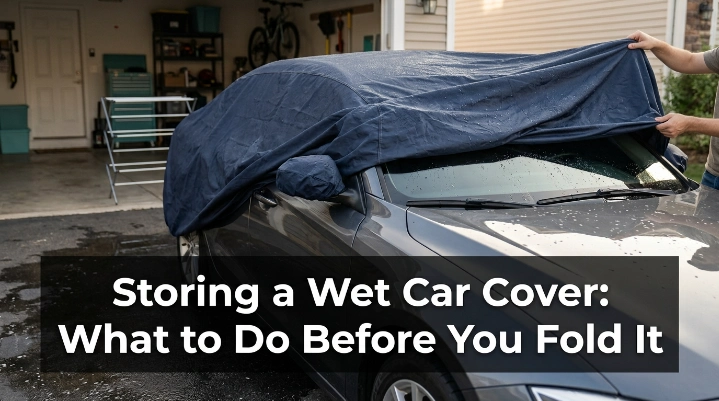
Remove excess water first, then get the cover opened up. The goal is to stop wet fabric from sitting against itself.
- Remove the cover carefully. Keep the wet outer surface away from clean paint as much as possible.
- Shake off loose water. A few gentle shakes can remove a surprising amount.
- Check for dirt. Look for mud, leaves, bird droppings, sap, or other debris.
- Spread the cover out. Avoid leaving it in a wet pile.
- Give both sides airflow. Turn or reposition it during drying when needed.
- Inspect thick areas last. Check seams, mirror pockets, hems, straps, and reinforced sections.
I pay close attention to elastic hems. The main fabric can feel dry while a thicker sewn edge still holds moisture.
Don’t assume sunlight is always the answer. Some fabrics have manufacturer-specific drying instructions, so the care label should come first.
Practical tip: If bad weather prevents outdoor drying, move the cover into a garage or other ventilated area and spread it over clean supports. Don’t leave it sealed in the trunk.
Can you temporarily leave a wet car cover in the garage?
Yes, if you leave it open and give it airflow. A garage can be a convenient drying area when outdoor weather is poor.
Avoid putting a dripping cover against cardboard boxes, bare metal tools, dirty floors, or painted walls. I prefer clean plastic chairs, a drying rack, or another smooth support.
How Should You Dry a Wet Car Cover?
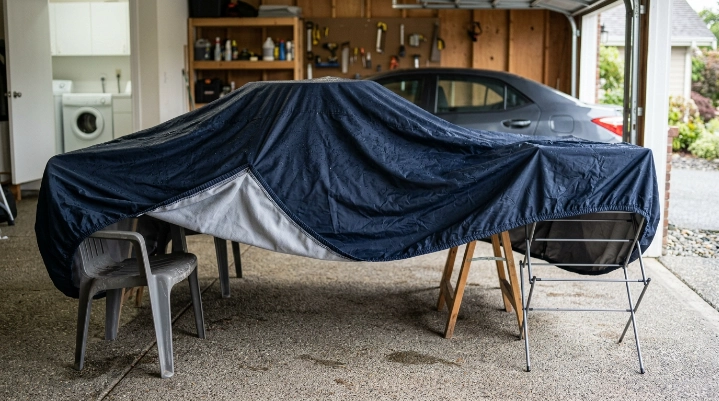
Air drying is the safest general approach unless the cover’s manufacturer allows another method. Different materials can have different heat limits.
Covercraft’s instructions illustrate why checking the exact fabric matters. Some of its covers can be machine dried, while others are specifically directed toward air drying.
Method 1: Hang the cover with plenty of airflow
This works well when you have a strong clothesline or large drying rack. Support the cover across several points rather than forcing its full wet weight onto one small section.
- Open the cover as much as possible.
- Keep it off dirty ground.
- Avoid sharp hooks or rough fence edges.
- Turn it if one side stays damp.
- Check pockets, hems, and seams before folding.
Method 2: Spread it across clean supports
This is the method I use when hanging the full cover is awkward. Several clean chairs or broad supports can create enough space underneath for air movement.
Don’t lay the cover flat on a garage floor. The underside gets little airflow and may pick up grit.
Method 3: Use a dryer only when the care instructions allow it
Never guess about machine drying. Read the tag or manufacturer’s instructions for your exact cover material first.
Some specialized fabrics tolerate machine drying, while other covers can be damaged by unsuitable heat. The manufacturer’s directions take priority over generic advice.
You can also review Car and Driver’s car cleaning and detailing resources when planning the rest of your vehicle-care routine.
Section Takeaway: Dry the cover until the fabric, seams, hems, straps, and other thick sections are completely free of dampness before you fold it.
Should You Clean a Car Cover Before Storing It?
Clean it before long-term storage when it is dirty, stained, salty, muddy, or covered in organic debris. Don’t wash a clean cover simply because rain made it wet.
Dirt matters because folding contamination into the fabric can make the next installation messy. It may also reduce how well some materials perform over time.
When I would clean the cover first
- Road salt or winter grime is visible.
- Mud is dried into the lower edges.
- Bird droppings are present.
- Tree sap or sticky residue is on the surface.
- The cover smells dirty even after drying.
- Dust or grit is trapped inside the vehicle-facing surface.
Follow the cover manufacturer’s wash instructions rather than using a random household detergent. Fabric coatings, liners, and water-resistant treatments can react differently.
Covercraft publishes a dedicated car cover cleaning guide and separate care instructions for individual fabrics. I would check the label before putting any large cover into a washing machine.
Should you wash the vehicle too?
If the vehicle became dirty during the same weather event, inspect it before reinstalling the cover. Grit trapped between a cover and painted surfaces can create unnecessary rubbing.
For wider maintenance planning, Edmunds’ car maintenance resources cover routine care for everyday cars, trucks, and SUVs.
What Is the Best Way to Store a Dry Car Cover?
Once the cover is completely dry, fold it cleanly and keep it in a dry, protected location. A breathable storage bag is a useful option for many covers.
I also keep the clean inner surface away from the dirty outer surface while folding. That reduces the chance of transferring road grit to the side that touches the paint.
A simple folding method
- Lay or position the cover with the clean side protected.
- Bring the side sections inward.
- Fold the cover into a long, manageable shape.
- Continue folding without forcing tight creases.
- Place it into its clean storage bag.
Don’t force a bulky cover into a tiny container. Tight compression makes it harder to notice if you missed a damp seam.
Where should you keep the storage bag?
- Dry garage shelf: Good when the area stays clean and protected.
- Closet or utility room: Useful for seasonal covers.
- Vehicle cargo area: Fine for a dry cover if the bag stays clean.
- Ventilated tote: Useful when you need extra protection from dust.
Avoid areas with standing water, constant condensation, leaking roofs, or strong chemical fumes. Keep the cover away from sharp tools too.
General preventive care matters beyond the cover itself. Kelley Blue Book’s maintenance guide also emphasizes regular inspection and routine upkeep as part of protecting a vehicle over time.
Should you use a sealed plastic bag?
I would not seal a cover in plastic unless its manufacturer specifically recommends that method and I know it is completely dry. Breathable storage gives any tiny amount of remaining moisture a better chance to escape.
Covercraft’s storage guidance recommends breathable cotton or canvas bags and warns against unventilated plastic storage. That is a useful rule for everyday owners.
What If You Already Stored the Car Cover Wet?
Take it out as soon as you notice. Open it fully, inspect both sides, and allow it to dry before deciding whether it needs cleaning.
Don’t immediately put a damp or musty cover back on the vehicle. Deal with the cover first.
If the cover smells musty
- Unfold it completely.
- Inspect seams and folded areas.
- Look for visible spotting or discoloration.
- Check the manufacturer’s cleaning instructions.
- Wash it only with an approved method.
- Dry it fully before storage or reuse.
If there is significant visible mold, severe staining, material breakdown, or damaged lining, replacement may make more sense than trying to save the cover. Your decision depends on the material and the extent of the damage.
Check the vehicle before using the cover again
Inspect the paint, glass, trim, and areas where the cover rests. If the vehicle itself has been sitting damp, give it time to dry too.
Consumer Reports provides broader car maintenance and repair guidance for owners who want to keep up with routine vehicle condition checks.
My rule: If I wouldn’t put the cover against a freshly cleaned paint surface, I don’t consider it ready to use again.
Frequently Asked Questions About Storing a Wet Car Cover
Can I fold a slightly damp car cover?
No. Even a slightly damp cover should stay unfolded until it is completely dry. Moisture can remain trapped inside seams and between folded layers long after the main surface begins to feel dry.
Can I put a wet car cover in its storage bag overnight?
I wouldn’t. A storage bag limits airflow and can keep moisture trapped against the fabric. If you cannot finish drying the cover, leave it loosely opened in a ventilated, protected area instead.
Can a wet car cover cause mold or mildew?
Storing damp fabric with limited airflow can create conditions where mold or mildew develops. Drying the cover completely before storage is the simplest way to reduce that risk.
How do I know when a car cover is completely dry?
Check more than the large flat panels. Feel the seams, elastic hems, mirror pockets, straps, reinforced areas, and any lining because these thicker sections may stay damp longer.
Can I dry a car cover in a clothes dryer?
Only when the manufacturer allows it for that specific cover material. Some fabrics permit machine drying at specified settings, while others require air drying. Always check the care label before applying heat.
Should I store my car cover in the trunk?
A completely dry cover can be kept in the trunk inside a clean storage bag. A wet cover should not be packed there because the enclosed space provides poor drying conditions.
Final takeaway: Storing a wet car cover is easy to avoid. Shake off the water, open the cover fully, give both sides good airflow, and wait until every seam and thick section is dry before folding it.
That extra drying step takes little effort and keeps the cover cleaner and ready for the next time your vehicle needs protection.
