
Car Cover Traps Moisture: Why It Happens and How to Stop It

Quick Answer
Yes, a car cover can trap moisture when you cover a wet vehicle, use non-breathable material, or leave too little ventilation for humidity to escape. A properly fitted, breathable, water-resistant cover lowers that risk, but the car and cover should still be dry before storage. Good long-term vehicle storage preparation also matters.
Common reasons moisture gets trapped
- Wet paint: Rain or wash water remains underneath the cover.
- Poor breathability: Plastic-like materials prevent water vapor from escaping.
- Temperature swings: Warm, humid air can condense as the vehicle cools overnight.
- Damp parking area: Humidity around wet soil, grass, or pavement can increase moisture beneath the vehicle.
- Poor airflow: A cover that stays wet or seals tightly can dry slowly.
Quick check
- Lift the cover after a cool night or recent rain. If the paint or inner fabric feels damp, let both dry before covering the car again.
If you’ve lifted a car cover and found beads of water underneath, you’re not imagining things. A cover can protect paint from sun, dust, bird droppings, and debris while still creating moisture problems when the conditions are wrong.
I’ve found that the cover itself is only part of the equation. How dry the car is, where it’s parked, and how easily humidity can escape matter just as much.
In This Guide
Can a Car Cover Really Trap Moisture?
Yes. A car cover traps moisture when water or humid air gets underneath faster than it can escape.
The problem is most common with wet vehicles, poorly ventilated storage areas, and covers made from materials with little vapor permeability.
Definition: Trapped moisture under a car cover is water, condensation, or humid air that remains between the vehicle and cover long enough to keep surfaces damp instead of allowing normal evaporation.
A cover doesn’t create water from nowhere. Moisture usually arrives from rain, washing, humid air, condensation, or the surrounding parking surface.
Problems start when evaporation slows. Think of the cover as a roof that also needs to breathe.
A good outdoor cover should repel much of the incoming water while still allowing water vapor to move outward. That’s different from wrapping the vehicle in an impermeable plastic sheet.
As of 2026, that distinction remains one of the most useful things to understand when shopping for a cover. “Waterproof” isn’t automatically better if the material prevents trapped humidity from escaping.
Why Does Moisture Build Up Under a Car Cover?
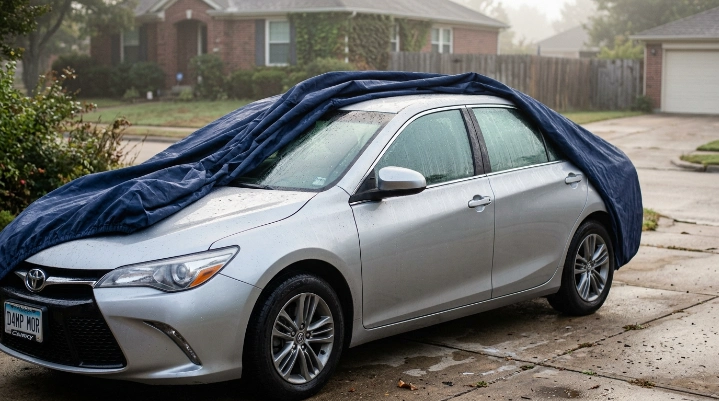
Most condensation problems come from a combination of existing water, humidity, and changing temperatures. Several conditions can make the problem worse.
1. You covered the car while it was still wet
This is the simplest cause. Water left around mirrors, trim, door handles, panel gaps, and weatherstripping can remain underneath the fabric for hours.
A quick towel-dry may not remove everything. Give hidden areas enough time to drain and air-dry.
2. Warm humid air cooled overnight
Air can hold different amounts of water vapor depending on temperature. When humid air underneath a cover cools enough, some moisture can condense onto cooler surfaces.
That’s why you might find droplets even though it didn’t rain.
3. The cover doesn’t breathe well
Low-permeability plastic sheets can block rain but also slow evaporation. Modern breathable covers are designed differently.
For example, Covercraft explains why it favors breathable, water-resistant construction rather than completely impermeable materials for vehicle covers.
4. The parking location stays damp
Parking over wet grass, soil, or consistently damp pavement can create a humid microclimate around the lower portion of the vehicle. Air circulation is usually better on a dry, well-drained surface.
Coastal environments deserve extra attention because humidity, precipitation, and salt exposure can combine.
What Damage Can Trapped Moisture Cause?
A damp cover doesn’t mean your paint will suddenly fail. The bigger concern is repeated or prolonged moisture exposure, especially when contaminants or exposed metal are present.
- Water spotting: Water containing dissolved minerals can leave visible deposits after repeated wet-and-dry cycles.
- Rust at damaged areas: Paint chips, scratches, fasteners, and exposed metal deserve closer inspection.
- Brake rotor surface rust: Cast-iron rotors commonly develop surface rust when a stored vehicle remains damp.
- Mold or mildew: A persistently damp cover can develop odors or biological growth, especially in warm conditions.
- Paint abrasion: Dirt trapped between a moving cover and paint can act like an abrasive when wind shifts the fabric.
Lexus long-term storage guidance submitted through NHTSA’s technical bulletin database specifically warns that significant precipitation or sea-breeze exposure can lead to corrosion in some components.
That doesn’t mean every damp cover causes rust. It does show why keeping a stored vehicle dry matters.
Cleanliness matters too. Consumer Reports’ car-washing guidance emphasizes proper cleaning methods that reduce the chance of scratching paint.
My practical rule is simple: I don’t want grit, standing moisture, and fabric movement happening together. That’s the combination I pay attention to first.
How Do You Stop a Car Cover From Trapping Moisture?
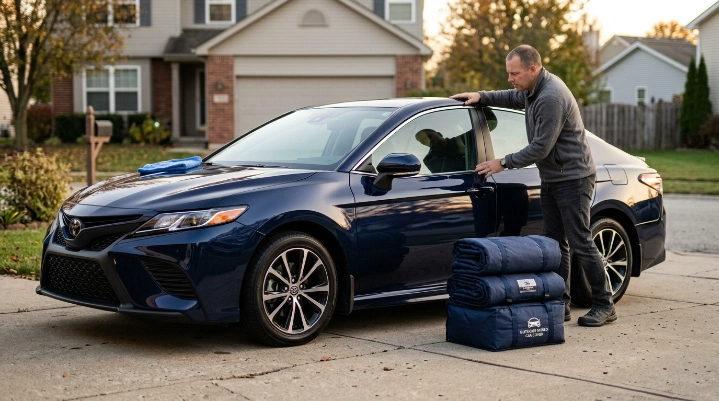
The best fix is to reduce moisture before the cover goes on and give any remaining humidity a path out. You don’t need specialized tools.
- Wash the vehicle when needed. Remove bird droppings, sap, mud, dust, and other contaminants before long storage.
- Dry the car completely. Check mirrors, trim gaps, door handles, spoilers, windshield channels, and lower body seams.
- Use breathable material. Choose a cover designed for your storage environment rather than an ordinary plastic tarp.
- Use the correct fit. Excess fabric can flap against paint, while an unsuitable makeshift cover may restrict drying.
- Start with a dry cover. Don’t reinstall a cover that is still soaked from the previous storm.
- Check underneath periodically. Inspect more often during rainy, humid, or rapidly changing weather.
- Let both surfaces dry when needed. Remove the cover during a suitable dry period if you discover persistent dampness.
For longer storage, the cover shouldn’t be your only preparation step. Battery condition, tires, fluids, fuel, rodents, and brakes also deserve attention.
Kelley Blue Book’s long-term car storage guide covers several of those supporting storage tasks.
A useful habit is to inspect the car soon after the first heavy rain while using a new cover. That tells you much more than simply assuming the material is working as intended.
Which Car Cover Type Handles Moisture Best?
For outdoor parking, a breathable water-resistant cover is usually the most balanced choice. Indoor storage has different needs because rain protection is less important.
| Cover Type | Rain Protection | Vapor Escape | Best Use | Main Concern |
|---|---|---|---|---|
| Breathable outdoor cover | Designed to resist or shed rain | Good when material is designed for breathability | Outdoor daily or seasonal storage | Still shouldn’t be installed over a wet car |
| Non-breathable plastic tarp | Blocks direct water well | Poor | Not ideal as a fitted vehicle cover | Condensation, trapped humidity, and abrasion |
| Soft breathable indoor cover | Limited | Good | Dry garage storage | Not intended for regular rain exposure |
| No cover in a dry garage | Garage provides protection | Excellent ventilation | Clean enclosed parking | Dust, accidental contact, and garage debris |
The terms on product packaging can be confusing. Look beyond words such as “all-weather” and check whether the manufacturer specifically discusses breathability and moisture vapor escape.
A soft inner surface is also useful for paint contact. However, even soft material can drag grit across paint if the vehicle or cover is dirty.
Should You Put a Car Cover on a Wet Car?
No. Whenever possible, let the vehicle dry completely before installing the cover.
Covering wet paint puts the moisture you’re trying to avoid directly underneath the fabric. Breathability can help it escape, but evaporation may still take much longer than it would in open air.
After washing, pay attention to places that continue dripping after the main body looks dry.
- Side mirrors
- Door handles
- Window seals
- Fuel door
- Trunk or hatch edges
- Grille openings
- Roof rails
- Spoilers and trim seams
If rain catches the vehicle before you can cover it, waiting for the next dry period is usually better than sealing that water underneath. A garage or carport is especially useful during this drying stage.
If the cover itself becomes saturated, remove it when conditions allow and let both the fabric and vehicle dry. Reinstall it only after checking the paint for trapped dirt or debris.
Frequently Asked Questions
Do breathable car covers still trap moisture?
They can under certain conditions. Breathable fabric improves evaporation, but it can’t instantly remove rainwater trapped beneath a cover installed over a wet vehicle. Humidity, temperature, parking surface, and airflow still matter.
Can a car cover cause rust?
A cover doesn’t automatically cause rust. However, prolonged moisture beneath any cover can contribute to corrosion where bare or vulnerable metal is exposed, especially in humid, rainy, or salty environments.
Is a fully waterproof car cover better?
Not necessarily. A material that completely blocks liquid water may also have poor vapor permeability. For outdoor vehicle storage, water resistance combined with useful breathability is often more practical than an impermeable plastic barrier.
Can I put a car cover on after washing my car?
Yes, but wait until the car is fully dry. Check mirrors, weatherstripping, panel gaps, trim, and other areas that can continue releasing water after the visible paint looks dry.
How can I tell if my car cover is trapping moisture?
Lift the cover after rain or a cool humid night. Look for condensation droplets, persistent dampness, a wet inner lining, musty odors, or moisture that remains long after nearby uncovered surfaces have dried.
Can moisture under a car cover damage the paint?
Persistent moisture can contribute to water spotting and can worsen problems around existing paint chips or exposed metal. Dirt underneath a moving cover can also scratch the finish, so both the vehicle and cover should stay clean.
Is storing a car in a garage better than using an outdoor cover?
A dry enclosed garage generally gives a vehicle more protection from rain, wind, sunlight, and airborne debris. A breathable indoor cover can still help protect a garage-kept car from dust and accidental contact.
Final takeaway: If your car cover traps moisture, don’t assume you need to stop using a cover altogether. Start by drying the vehicle, checking the cover material, improving the storage conditions, and inspecting underneath after wet weather.
The safest routine is simple: clean car, dry paint, clean breathable cover, correct fit, and regular checks. Those habits give the cover a better chance to protect your vehicle without turning trapped humidity into a storage problem.