Are Tesla Seats Comfortable?

Contents
- 1 Key Takeaways
- 2 📑 Table of Contents
- 3 The Great Tesla Seat Debate: A Deep Dive Into Comfort
- 4 Ergonomics and Support: The Sporty Trade-Off
- 5 The Real-World Test: Long Drives, Daily Commutes, and Owner Verdicts
- 6 Enhancing Tesla Seat Comfort: Practical Tips and Aftermarket Options
- 7 The Verdict: Who Are Tesla Seats For?
- 8 Conclusion: The Seat of the Matter
- 9 Frequently Asked Questions
Car Phone Holder

Portable Work Light

Pressure Washer for Car

Car Roof Rack Cross Bars
Are Tesla seats comfortable? The answer isn’t simple. While Tesla prioritizes a minimalist, tech-forward cockpit, seat comfort is a frequent point of discussion among owners. Comfort varies significantly by model (Model S vs. Model 3), seat material choice, and personal preference. Many praise the supportive bolsters and clean design, but common critiques include firm cushioning, lack of upper-back support, and temperature sensitivity. Ultimately, Tesla seats offer a sporty, connected driving position but may require adjustment periods or aftermarket enhancements for optimal long-haul comfort.
Key Takeaways
- Comfort is model-dependent: The flagship Model S and Model X generally offer more plush, adjustable seats than the more spartan Model 3 and Model Y.
- Material matters: Tesla’s “Premium” synthetic seats are durable but can feel hot/sticky; leather options (where available) offer more breathability but require maintenance.
- Firmness is a defining trait: Tesla seats are intentionally firm to provide sporty lateral support, which many drivers love but others find too hard for extended trips.
- Ergonomics are a mixed bag: Excellent lower-back (lumbar) support is standard, but many users report a lack of upper-back and shoulder support, leading to fatigue.
- Temperature control is key: Heated seats are standard and excellent, but the lack of ventilated seats (in most models) is a notable omission in hot climates.
- Aftermarket solutions work: Many owners use seat cushions, lumbar supports, or custom seat covers to tailor comfort to their specific needs.
- Personal fit is everything: The best way to judge is a lengthy test drive, as body type and driving style dramatically influence perceived comfort.
📑 Table of Contents
- The Great Tesla Seat Debate: A Deep Dive Into Comfort
- Ergonomics and Support: The Sporty Trade-Off
- The Real-World Test: Long Drives, Daily Commutes, and Owner Verdicts
- Enhancing Tesla Seat Comfort: Practical Tips and Aftermarket Options
- The Verdict: Who Are Tesla Seats For?
- Conclusion: The Seat of the Matter
The Great Tesla Seat Debate: A Deep Dive Into Comfort
So, you’re thinking about a Tesla. The instant torque, the over-the-air updates, the silent operation—it’s a compelling package. But then you start reading forums, watching reviews, and you see it: the recurring, passionate debate about are Tesla seats comfortable. It’s a topic that sparks fierce opinions, with some owners claiming they’re the best seats they’ve ever had, and others planning to swap them out at the first opportunity. What’s the real story? Why does a car praised for its innovation have such a divisive element right where you sit for hours? This isn’t just about plushness; it’s about Tesla’s fundamental design philosophy, the trade-offs of a minimalist interior, and how “comfort” is a deeply personal metric. We’re going to rip into the upholstery, so to speak, and examine every facet of the Tesla seating experience.
First, let’s set the stage. Tesla approached car interiors like a tech company, not a traditional luxury automaker. The goal was a clean, uncluttered cabin focused on the 15-inch screen and the driving experience. Physical buttons? Mostly gone. Traditional gauge cluster? Eliminated in the Model 3 and Y. This “less is more” ethos extends to the seats. They are functional, sculpted pieces designed to hold you in place during spirited driving, not necessarily to cradle you like a living room recliner. This core philosophy explains a lot of the praise and the criticism you’ll hear. It’s a sporty, engaged driving position, not a lazy, lounging one.
The Model Matrix: How Comfort Changes Across the Lineup
It’s a critical mistake to lump all Tesla seats together. Comfort varies dramatically between the Model S/X and the Model 3/Y, and even between different production years of the same model.
- Model S & Model X (Plaid/Long Range): These are Tesla’s luxury flagship sedans and SUVs. Their seats are noticeably wider, thicker, and more adjustable. They often feature more substantial cushioning, greater rear seat space, and available features like massaging functions and more comprehensive heating zones. The seating position is higher and more traditional, offering a commanding view. If comfort is your top priority within the Tesla range, these are the starting point.
- Model 3 & Model Y: These are the volume sellers, designed for efficiency and a lower price point. Their seats are firmer, thinner, and more aggressively bolstered. The seating position is lower and more “cockpit-like,” which enthusiasts love for its connected feel but can feel claustrophobic to some. Rear seat space, especially in the Model 3, is notoriously tight for adults. The materials, while high-quality synthetic, feel more utilitarian. These are the seats that generate the most debate.
Furthermore, Tesla has iterated on seat designs. A 2021 Model 3 Long Range feels different from a 2024 Model 3 Highland refresh. The Highland update, for instance, introduced a slightly softer, more supportive front seat with improved rear headroom. Always judge the specific vintage you’re test-driving.
The Material Science: Leather, Synthetic, and the Temperature Trap
What the seats are made of is half the comfort battle. Tesla has moved away from traditional animal leather, now offering its own “Premium” synthetic material across most markets (with some exceptions for leather in certain regions/trims). This material is durable, easy to clean, and animal-friendly. However, it has a major Achilles’ heel: temperature.
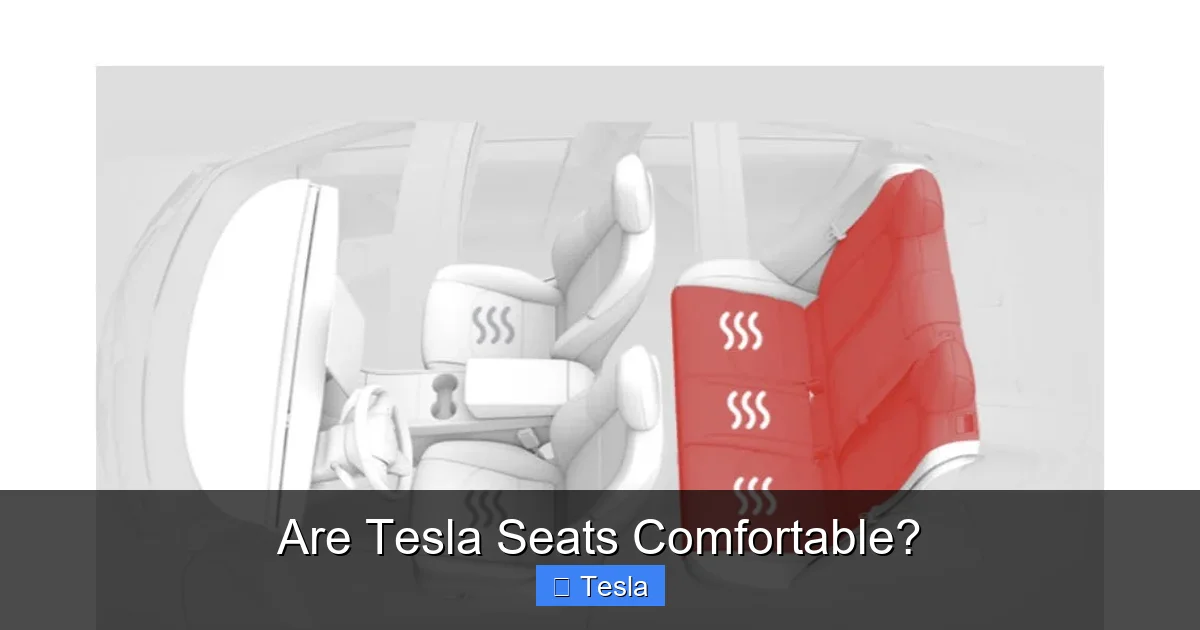
In summer, black synthetic seats can become scorching hot almost instantly, absorbing and retaining solar energy. They can also feel sticky and non-breathable, leading to a sweaty back on long drives. In winter, they can feel icy cold until the seat heaters kick in—which they do, very effectively. The lack of ventilated seats (a feature available on the Model S/X but not on the 3/Y in most markets) is a glaring omission for anyone in a warm climate and a top complaint. The synthetic material, while modern, doesn’t “breathe” like perforated leather or fabric would.
For those who opt for the available leather (or consider aftermarket covers), the temperature dynamic improves slightly, but maintenance becomes a new concern. Leather needs conditioning to prevent cracking, a topic covered in guides like those for Lexus seats, though the principles are similar. The ultimate takeaway? Seat material is a huge factor in daily comfort, and Tesla’s choice prioritizes durability and cost over all-weather, all-climate plushness.
Ergonomics and Support: The Sporty Trade-Off
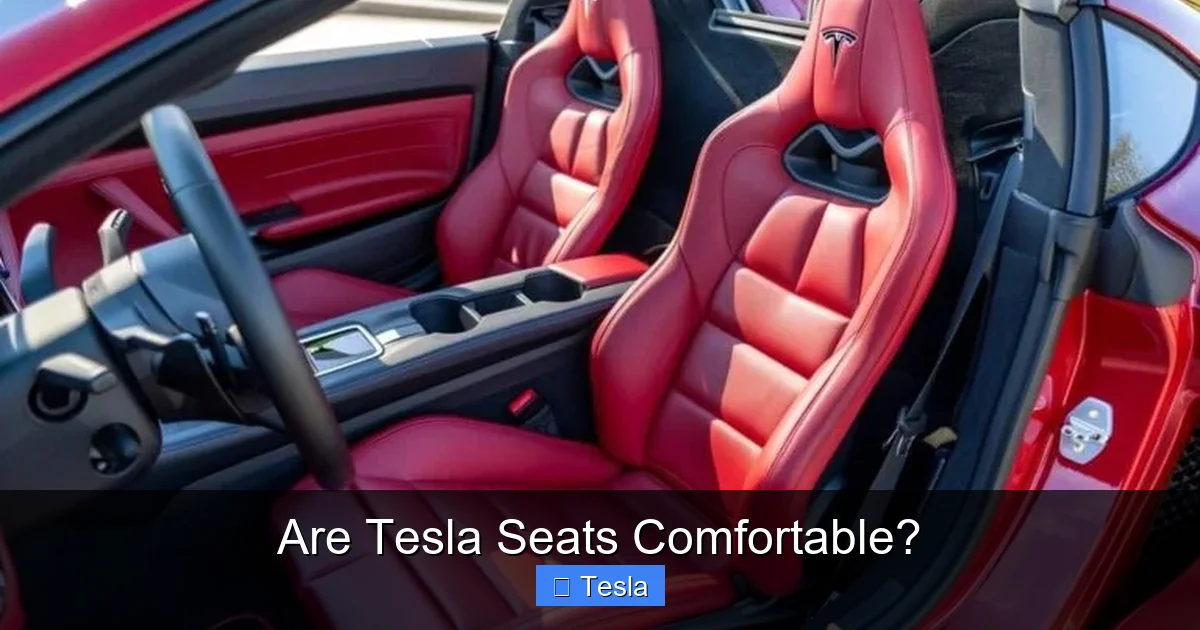
This is where Tesla’s design intent is most clear. The seats are built for the “Tessi” driving pose—that slightly reclined, arms-out, low-slung position you see in promotional material. They feature aggressive side bolsters that hug your torso and thighs, keeping you planted during hard cornering. This is fantastic for spirited back-road blasts and track days. It creates a feeling of being one with the car.
Visual guide about Are Tesla Seats Comfortable?
Image source: ecarcraze.com
However, this sporty ergonomics comes at a cost for daily, relaxed driving. The firm cushioning, while supportive, has minimal give. For drivers with back issues or those who prefer a softer, sinking sensation, it can feel like sitting on a park bench after a few hours. The most consistent criticism, though, is the lack of upper-back and shoulder support. The seat back ends rather abruptly, offering no contour for the upper trapezius muscles. This leads to a classic “ slumped forward” fatigue on long highway cruises, as your shoulders and neck lack a place to rest. It’s a design choice that favors the driving enthusiast over the comfort cruiser.
The Lumbar Support Conundrum
Here’s where Tesla gets it mostly right. All modern Teslas come with powered, adjustable lumbar support for the driver (and often the front passenger). This is a godsend. The ability to fine-tune the pressure and depth of lower-back support is a critical tool for counteracting the seat’s firmness. For many owners, finding the perfect lumbar setting is the single most important step in achieving all-day comfort. It’s a powerful, customizable feature that many mainstream brands still make you pay extra for or don’t offer at all. If you have a bad back, this feature alone might make or break the Tesla experience for you.
The Real-World Test: Long Drives, Daily Commutes, and Owner Verdicts
Lab analysis is one thing, but how do these seats perform after a 4-hour road trip or a bumper-to-bumper commute? Owner feedback is vast and polarized.

Visual guide about Are Tesla Seats Comfortable?
Image source: ecarcraze.com
The “Love It” Camp: These drivers often come from sporty sedans (BMW 3 Series, Mazda MX-5) or appreciate an engaged driving position. They describe the seats as “supportive,” “connected,” and “perfect for the driving experience.” They adjust the lumbar, find their ideal recline, and forget they’re even there. The firmness is seen as a positive, preventing fatigue from sinking too deep. For them, comfort is about feeling the road and being held correctly, not about cloud-like softness.
The “It’s Okay, But…” Camp: This is the largest group. They acknowledge the seats are well-built and the lumbar is great, but they note definite limitations. The common refrain: “Great for 1-2 hours, then I start shifting.” They point to the lack of shoulder support, the firm seat bottom (which can press into the thighs on tall drivers), and the temperature issues. Many in this group have added simple, inexpensive memory foam seat cushions or small lumbar rolls to bridge the gap, finding that a $30 Amazon cushion transforms the experience.
The “Can’t Wait to Replace Them” Camp: This minority, often with pre-existing back or neck conditions, finds the seats intolerable. The firmness is painful, the lack of upper support causes acute pain, and no amount of adjustment helps. They are actively researching aftermarket seats or significant modifications. Their experience is a stark reminder that car seats, perhaps more than any other car component, are a matter of individual anatomy.
To truly know which camp you’ll fall into, you must do a proper test drive. Not a 15-minute spin around the block. Book a longer test drive, ideally on a mix of smooth highways and bumpy roads. Bring a passenger to evaluate rear seat space. Sit in your normal driving position and see where your body contacts the seat. Does your head rest naturally? Do your shoulders touch the backrest? Is there pressure on the back of your knees? These are the questions you need to answer.
Enhancing Tesla Seat Comfort: Practical Tips and Aftermarket Options
If you’ve bought a Tesla and find the seats lacking, or you’re a future owner planning ahead, don’t despair. There are several effective, often inexpensive, ways to upgrade your comfort withoutvoiding your warranty or resorting to drastic measures.
Visual guide about Are Tesla Seats Comfortable?
Image source: tesletter.com
Simple, Cheap Fixes First
- Seat Cushions: A high-quality memory foam cushion can add a layer of plushness to the firm seat bottom, relieve pressure on the sit bones, and even improve thigh support for taller drivers. Look for ones with a cut-out at the back to avoid pushing you forward.
- Lumbar Rolls/Pillows: While the powered lumbar is good, a small, firm cylindrical roll placed higher up can provide the missing upper-back and shoulder support. A simple rolled-up towel can even work in a pinch.
- Adjust, Adjust, Adjust: Spend 20 minutes fine-tuning every setting: seat height, cushion tilt, backrest angle, lumbar depth and height, steering wheel telescoping. The “sweet spot” is often hiding in a combination of settings you didn’t initially try.
Aftermarket Seat Covers and Cushions
This is a popular path. High-quality seat covers can add a layer of padding and change the surface texture to something more breathable (like mesh or velour). They also protect the original upholstery. However, be cautious. Ill-fitting covers can bunch, interfere with side airbags (a major safety no-no), and look tacky. Always buy covers specifically designed for your Tesla model and year, and ensure they are airbag-compatible. For the ultimate in comfort, some owners opt for full seat replacement with aftermarket seats from brands like Recaro or Bride, but this is a major, expensive project involving wiring and potential warranty issues.
For those with Model Ys specifically, the market for tailored solutions is huge. A quick search for the best Tesla Model Y car seat covers will reveal options that address both protection and comfort. The same logic applies to protecting and enhancing the feel of any leather or synthetic surface, as discussed in articles about car seat covers for leather seats.
The Ambient Environment Connection
Comfort isn’t just about the seat itself; it’s about the entire cabin microenvironment. Tesla’s minimalist design means the climate system does a lot of heavy lifting. The powerful, zoned climate control is excellent, but the seat material’s temperature issues remain. Here’s where Tesla’s own ambient lighting system, while not directly heating/cooling, plays a subtle psychological role. A warm, soft ambient glow at night can make the cabin feel more cozy and relaxing, indirectly improving the perceived comfort of a firm seat. Conversely, a cool, blue light might feel more clinical. You can read more about customizing this feature in our piece on what ambient lights in Tesla are. Managing cabin temperature with pre-conditioning (using the app to cool or heat the car before you enter) is the single most effective way to mitigate the seat temperature problem.
The Verdict: Who Are Tesla Seats For?
So, after all this analysis, are Tesla seats comfortable? The only honest answer is: it depends entirely on you.
They are likely a great fit if you:
- Prioritize a sporty, engaged driving position over a lazy, reclined one.
- Have a medium to average build (very tall or very short drivers often struggle with the fixed headrest and seat bottom length).
- Live in a cooler climate where seat heaters solve the temperature issue.
- Appreciate firm, supportive cushioning and plan to use the excellent lumbar support.
- Do mostly city commuting or enjoy twisty roads more than endless highway cruising.
You might want to look elsewhere or plan modifications if you:
- Have specific back, neck, or shoulder pain that requires deep cushioning or pronounced upper-back support.
- Are very tall (the seat bottom can lack adequate thigh support) or very short (the headrest can be intrusive).
- Live in a consistently hot, sunny climate without reliable shade and dread getting into a scorching car.
- Regularly take 4+ hour highway trips with adult rear-seat passengers (the rear seats in Model 3/Y are particularly cramped).
- Dream of ventilated seats as a non-negotiable feature for summer comfort.
The Tesla seat is a statement. It says the driving experience, efficiency, and technology are paramount. It sacrifices some of the traditional, plush “luxury” comfort found in a Mercedes S-Class or a Lexus LS for a different kind of premium: one of focus, support, and modernity. Whether that trade-off works for you is a decision only your body can make, after a proper, extended sit-down behind the wheel.
Conclusion: The Seat of the Matter
The question “Are Tesla seats comfortable?” reveals more about the buyer than it does about the seats. Tesla has engineered a seat that perfectly serves its primary mission: to provide a secure, connected, and sporty interface between driver and machine. It is not, and was never intended to be, a luxury armchair. The firmness, the bolstering, the minimalist adjustment—these are conscious choices to prioritize driving dynamics and interior space efficiency.
For the enthusiast who loves to drive, the seats are likely more than adequate, especially with the superb lumbar support. For the family road-tripper who values cloud-like softness and endless adjustability, they will probably be a source of frustration. The good news is that the aftermarket, as seen with solutions for Model Y seat covers and universal cushions, offers a path to customization. Ultimately, your perception of Tesla seat comfort will be forged in the crucible of your own test drive. Go in with open eyes, understand the trade-offs, and listen to your body. That’s the only review that truly matters.
Frequently Asked Questions
Are Tesla seats comfortable for long drives?
This is highly subjective. Many owners report comfort for 2-3 hours but note fatigue on very long (5+ hour) drives due to firm cushioning and limited upper-back support. Using a lumbar roll or seat cushion can significantly improve endurance. The excellent seat heaters are a major plus in cold climates.
Which Tesla model has the most comfortable seats?
The Model S and Model X generally have the most comfortable, plush, and adjustable seats in the lineup, feeling more like traditional luxury cars. The Model 3 and Model Y have firmer, sportier seats with less rear space. The 2024+ Model 3 Highland refresh improved front seat comfort over previous versions.
Can I add seat covers to my Tesla?
Yes, and many owners do for both protection and added comfort. It is absolutely critical to purchase seat covers specifically designed for your Tesla model and year that are certified as airbag-compatible. Poorly fitting covers can interfere with side-curtain airbags, a major safety hazard.
Why do Tesla seats feel so hard?
The firmness is a deliberate design choice to provide sporty lateral support and a connected driving feel. It prevents excessive body movement during cornering. This prioritizes driving dynamics over the “sinking” sensation some drivers prefer from softer, luxury-oriented seats.
Do Teslas have ventilated seats?
Currently, only the Model S and Model X offer available ventilated front seats (as of the 2024 model year). The Model 3 and Model Y do not have ventilated seats in any market, which is a common complaint in hot climates. They rely on the powerful climate system and heated seats.
How can I make my Tesla seats more comfortable?
Start with exhaustive adjustment of all seat settings, especially the powered lumbar. Add a simple memory foam seat cushion for more plushness or a small lumbar roll for upper-back support. Use the excellent seat heaters. Pre-condition the cabin via the Tesla app to avoid getting into a scorching or freezing seat in extreme temperatures.