
Does Tesla Have 12v Outlet

Teslas do come with 12V outlets, but they’re not the old-school cigarette lighter type you might remember. These accessory sockets are tucked away in various spots depending on your model and are designed for low-power devices like phone chargers or dash cams. Knowing where they are and how much power they can handle helps you use them safely without draining your car’s battery.
Key Takeaways
- All Tesla models include at least one 12V outlet for powering accessories, though locations vary by model and year.
- These are “accessory sockets,” not cigarette lighters – they lack the heating element and are meant for DC power devices only.
- The 12V system is separate from the main battery but gets charged automatically when the high-voltage battery is connected.
- Power output is limited to about 10–15 amps (120–180 watts), so avoid high-draw devices like powerful inverters.
- Using the outlet while the car is off can drain the 12V battery over time, potentially leaving the vehicle unable to power on.
- Fuses protect the outlets – a blown fuse is the most common reason for a non-working socket and is easy to replace.
- For high-power needs, consider a dedicated 220V circuit installation rather than overloading the 12V system.
📑 Table of Contents
- Do Teslas Have 12V Outlets? The Definitive Answer
- Understanding the 12V Outlet in a Tesla: It’s Not Your Father’s Cigarette Lighter
- Where Are the 12V Outlets Located in Each Tesla Model?
- Power Capabilities and Limitations: What Can You Actually Plug In?
- Practical Uses and Accessory Tips for Tesla’s 12V Outlet
- Comparing Tesla’s 12V System to Other EVs and Traditional Cars
- Troubleshooting and Maintenance: When the 12V Outlet Stops Working
- Conclusion: Making the Most of Your Tesla’s 12V Outlet
Do Teslas Have 12V Outlets? The Definitive Answer
If you’ve ever driven a conventional car, you’re probably familiar with that handy 12V socket – the one you used for a cigarette lighter, a phone charger, or an air compressor. It was a universal feature, a little portal to power on the go. So when you step into a Tesla, a car that feels like it’s from the future, you might wonder: does it have that same reliable 12V outlet?
The short answer is yes, all Tesla vehicles come equipped with at least one 12V DC accessory socket. But there are some important differences from the sockets in your old gasoline car. Tesla’s 12V outlets are designed specifically for low-power electronics, they’re located in less obvious places, and they operate within a sophisticated electrical system that’s quite different from a traditional 12V car battery setup. Understanding these nuances is key to using them safely and effectively.
In this guide, we’ll cover everything you need to know about Tesla’s 12V power outlets. We’ll map out exactly where to find them in every Tesla model, explain how much power they can realistically provide, share practical tips for using them without causing problems, and even touch on how they compare to systems in other electric vehicles. Whether you want to charge your phone, run a dash cam, or inflate your tires, this article will make sure you get the most out of your Tesla’s auxiliary power.
Understanding the 12V Outlet in a Tesla: It’s Not Your Father’s Cigarette Lighter
Before we dive into locations and power specs, let’s clarify what a “12V outlet” actually is in a Tesla. In traditional cars, the 12V socket is directly connected to the car’s lead-acid battery, which provides a steady 12 volts of direct current (DC). That socket often had a metal sleeve that would heat up when you inserted a cigarette lighter, hence the name.
Visual guide about Does Tesla Have 12v Outlet
Image source: i.ytimg.com
In a Tesla, the system is more refined. The vehicle has a separate 12V lithium-ion battery (usually located in the front trunk or “frunk”) that powers essential systems like the infotainment computer, door locks, lights, and of course, the accessory sockets. This 12V battery is not the main high-voltage battery that drives the wheels; instead, it’s a smaller battery that acts as a backup and power source for low-voltage components.
When your Tesla is “awake” or charging, a DC-DC converter automatically charges the 12V battery from the main battery. This means the 12V system is self-sustaining as long as the main battery has charge. However, if the main battery is completely depleted, the 12V battery will eventually drain too, leaving the car in a low-power state.
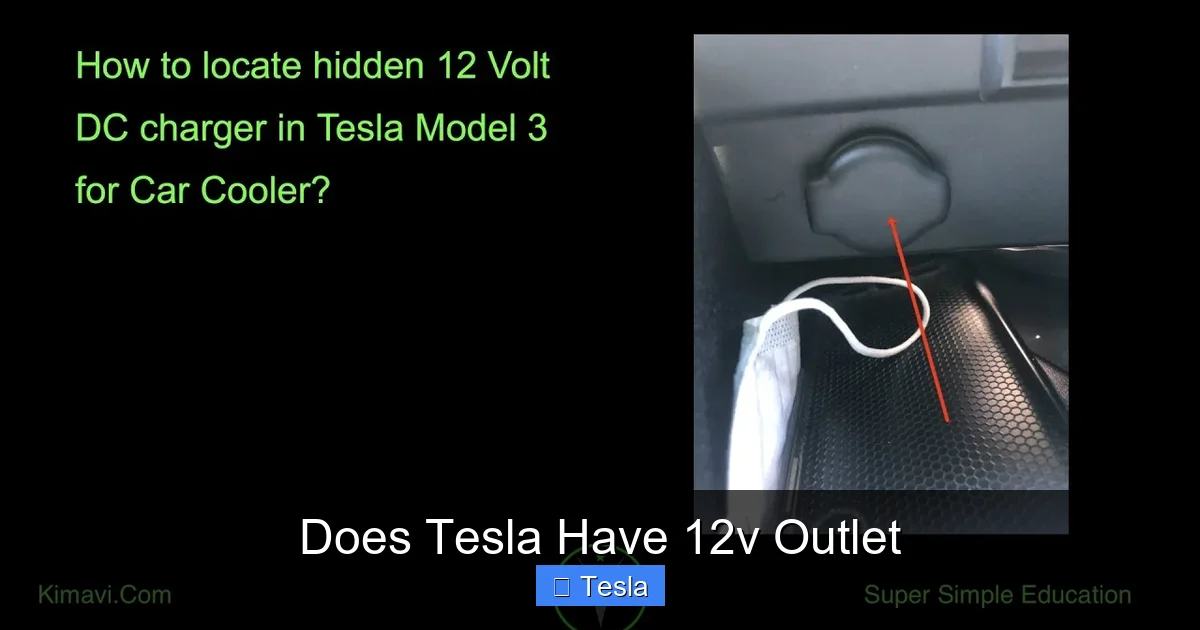
The outlet itself is typically a round, plastic-covered socket – no heating element, no cigarette lighter. It’s purely for DC power delivery. Tesla often calls it an “accessory socket” in the owner’s manual. This design is cleaner and safer, but it also means you can’t use old-style cigarette lighter plugs that rely on that heating coil (though most modern 12V accessories use the socket for power only).
How the 12V System Differs from the Main Battery
It’s crucial to understand that the 12V outlet is not connected directly to the high-voltage traction battery that powers the motor. That battery operates at several hundred volts and is completely isolated from the 12V system for safety. The 12V system is a traditional automotive low-voltage network, just like in any other car, but its battery is maintained by the car’s main computer via the DC-DC converter.
This separation has a few implications. First, the 12V outlet cannot power devices that require more than about 150 watts. Second, if you leave something plugged into the 12V outlet while the car is off and asleep, it will slowly drain the 12V battery. Tesla’s software tries to conserve 12V power by putting the car into a deep sleep mode, but a constant draw (like a dash cam hardwired to constant power) can still deplete the battery over days or weeks. Third, if the 12V battery dies, you might not be able to unlock the car or power it on, even if the main battery is full. In such cases, a jump start from another 12V source or a portable jump starter connected to the 12V terminals (often in the front trunk) can revive it.
Where Are the 12V Outlets Located in Each Tesla Model?
The location of the 12V outlet varies quite a bit between Tesla models and even between model years. Here’s a breakdown for the current lineup. Remember, these are accessory sockets – they look like a round hole with a plastic cap (some have a removable cap, others are always exposed).
Visual guide about Does Tesla Have 12v Outlet
Image source: electrek.co
Tesla Model S and Model X
The larger Model S and Model X typically offer two 12V outlets for added convenience:
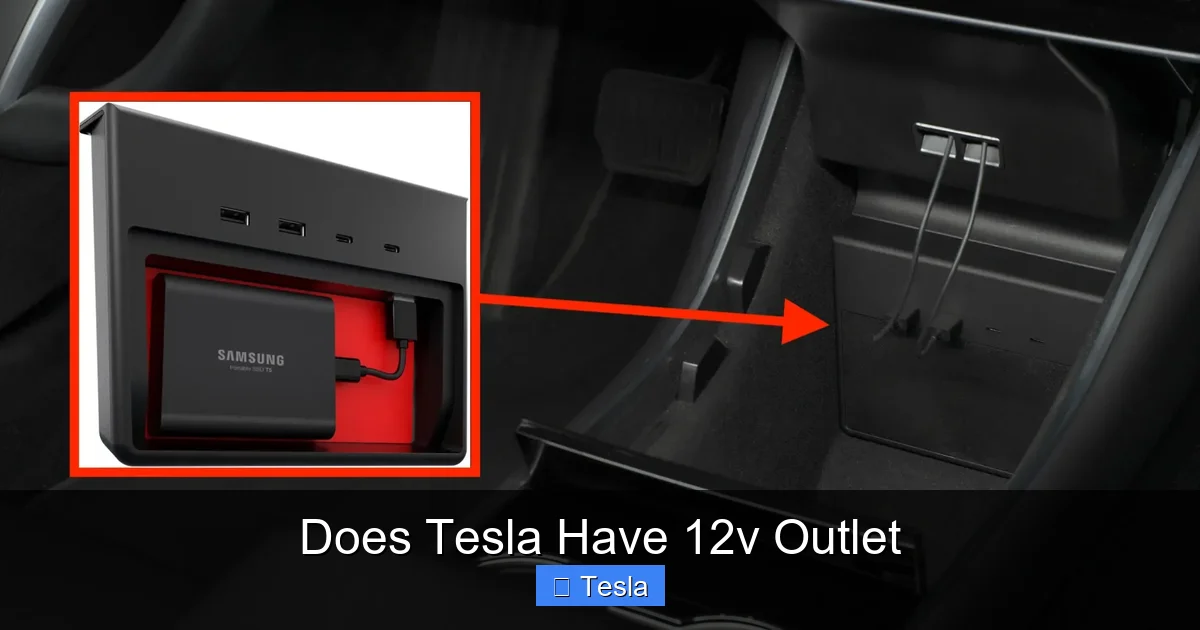
- Center Console: The primary outlet is inside the center console storage bin. You’ll find it on the front wall of the bin, often near the USB ports. This is the most accessible spot for passengers to plug in devices.
- Rear Console (Model S) or Glove Box (Model X): A second outlet is usually located in the rear center console of the Model S (for rear passengers) or inside the glove compartment of the Model X. In some Model X versions, there might also be an outlet in the third-row seating area.
Older Model S vehicles (pre-2016) sometimes had an outlet in the glove box instead of the rear console. Always check your owner’s manual for the exact location in your specific year.
Tesla Model 3 and Model Y
The more compact Model 3 and Model Y generally have one or two outlets, depending on the configuration:
- Center Console: Almost all Model 3 and Model Y vehicles have at least one 12V outlet inside the center console storage area. It’s typically on the front or side wall of the bin, alongside USB-C and USB-A ports.
- Glove Box: Many models also include a second outlet inside the glove compartment. This is useful for powering a dash cam or other devices you want hidden from view.
- Front Trunk (Frunk): Some Model 3 and Model Y vehicles, particularly those with the optional tow hitch or specific packages, may have a 12V outlet in the front trunk. This is primarily intended for jump-starting the 12V battery or powering accessories like a tire inflator when you have the hood open. It’s not always present, so consult your manual.
Note: The rear trunk (or “boot”) of Teslas does not have a 12V outlet. If you need power back there, you’d need to run a cable from the front or use a separate portable power source.
How to Locate Yours Quickly
If you’re unsure, the easiest way to find the 12V outlet(s) in your Tesla is to open the center console storage bin and look around. You should see a round socket, often with a small plastic cover that you can pry off with a fingernail. If you don’t see one there, check the glove box (press the button to open it and look inside). For the frunk, simply open it and inspect the walls or near the windshield washer fluid reservoir.
Tesla’s design philosophy is to keep these sockets somewhat discreet, so they’re not as prominently placed as the always-visible 12V socket in many older cars. But once you know where to look, they’re easy to access.
Power Capabilities and Limitations: What Can You Actually Plug In?
Knowing the location is only half the battle. The real question is: how much power can these outlets deliver? And what happens if you plug in something that draws too much?

Visual guide about Does Tesla Have 12v Outlet
Image source: trucksauthority.com
Amperage and Wattage: The Hard Limits
Tesla’s 12V accessory sockets are typically fused at 10 to 15 amps. That means the maximum continuous power they can supply is around 120 to 180 watts (since Watts = Volts × Amps, and Tesla’s system is ~12V). This is a significant limitation compared to a standard 120V household outlet (which can provide 1,500 watts or more on a 15-amp circuit).
So, what does that mean in practice? Most phone chargers, tablet chargers, dash cams, portable GPS units, and LED light strips draw well under 2 amps (24 watts). These are perfectly safe. A small tire inflator might draw 5–8 amps (60–96 watts), which is usually okay for short bursts but could be pushing the limit if it’s a high-performance model. A laptop charger might draw 3–4 amps (36–48 watts), which is fine.
However, devices like power inverters (which convert 12V DC to 120V AC for things like blenders, coffee makers, or power tools) often draw 10+ amps just at low wattage, and high-power ones can easily exceed the fuse rating. Plugging such a device will almost certainly blow the fuse, and if the fuse fails to blow (or if you bypass it), you risk overheating the wiring and potentially causing a fire.
What Happens If You Overload It?
The fuse is your friend. It’s designed to melt and break the circuit if the current exceeds its rating. If you plug in something that draws too much power, the fuse will blow, and that outlet will stop working until you replace the fuse. This is a protective measure – it’s better to have a $5 fuse blow than to damage the car’s wiring.
In some cases, if you use a device that has a massive startup current (like a motor that stalls), you might blow the fuse immediately. For devices that draw near the limit continuously, the fuse might take a few minutes to blow, or it might not blow at all if the current is just under the rating, but the wiring could still get warm. It’s best to stay well below the maximum rating.
Checking the Fuse
If a 12V outlet stops working, the first suspect is a blown fuse. The fuse box in a Tesla is usually located in the front trunk (under a cover near the windshield). There’s a fuse diagram on the inside of the cover or in your owner’s manual that tells you which fuse protects the accessory sockets. Pull the fuse with the provided tool or needle-nose pliers; if the metal strip inside is broken, replace it with a fuse of the same amperage (e.g., 10A, 15A). Never use a higher-amp fuse, as that defeats the safety purpose.
Power While the Car Is Off vs. On
An important nuance: the 12V outlet may or may not be “live” when the car is off, depending on your Tesla’s settings and software version. In most Teslas, the outlet is powered only when the car is in “Park” and awake (i.e., the screen is on, or the car is in “Sentry Mode” or “Camp Mode”). If you turn the car completely off (by exiting and locking it, allowing it to enter deep sleep), the outlet typically loses power to conserve the 12V battery.
However, some owners wire their dash cams to constant power by tapping into the fuse box directly, bypassing the socket’s switched power. This is an advanced modification and can drain the 12V battery if the dash cam draws too much or if the car sits unused for weeks. If you want your dash cam to run 24/7, consider using a dedicated low-drain hardwire kit designed for Teslas that monitors the 12V battery voltage and shuts off before it gets too low.
Practical Uses and Accessory Tips for Tesla’s 12V Outlet
Now that you know where the outlets are and how much power they can handle, let’s talk about what you can realistically plug in. The 12V outlet is perfect for low-power accessories that enhance your driving or camping experience.
Common and Safe Devices
- Phone and Tablet Chargers: USB chargers that plug into the 12V socket are the most common use. They draw 1–2 amps, well within limits.
- Dash Cams: Most dash cams use the 12V socket for power. For continuous recording, use a hardwire kit that connects directly to the fuse box, but ensure it has a low-voltage cutoff.
- Portable Tire Inflators: These are handy for topping off tires. Look for models that draw less than 10 amps. Some high-volume inflators might exceed the fuse rating, so check the specs before buying.
- LED Lighting: Small LED strips for ambient lighting in the cabin or trunk can be powered via the 12V outlet, but keep the total draw under 5 amps.
- GPS Trackers: If you use a dedicated GPS tracker (like for a teen driver or fleet vehicle), the 12V socket can power it.
- Portable Vacuums: Small 12V car vacuums work fine, but larger ones might draw too much.
- Coolers/Warmers: Thermoelectric coolers (that use the Peltier effect) are low-power and can run off the 12V outlet, but they’re not as cold as a compressor fridge. True compressor refrigerators often exceed the 12V outlet’s capacity and need a dedicated power source.
What to Avoid
- High-Power Inverters: Anything that converts 12V to 120V AC for appliances like blenders, hair dryers, or power tools will likely overload the circuit. If you need AC power while camping, consider a portable power station (like a Jackery) that you can charge at home or from the Tesla’s 12V outlet very slowly (but even that might be too much draw).
- Multiple Devices via a Splitter: Using a Y-splitter to power two devices from one socket is fine only if the combined draw stays under the fuse rating. But it’s easy to exceed it, so avoid daisy-chaining high-draw devices.
- Devices with High Startup Current: Some motors (like in a powerful air compressor) draw a surge of current when starting. This surge can blow the fuse even if the running current is lower.
- Anything Left Plugged In Indefinitely: If you plan to leave a device plugged in while the car is parked for weeks, ensure it has a very low draw (like a dash cam with a hardwire kit that has a low-voltage cutoff). Otherwise, you risk a dead 12V battery.
Pro Tips for Safe Use
- Check Device Amperage: Look at the label on your charger or device. It should list input voltage and amperage (e.g., “Input: 12V DC 1.5A”). Multiply volts by amps to get watts. Stay under 120W to be safe.
- Use Fused Adapters: If you’re using a splitter or adapter, choose one with its own built-in fuse for extra protection.
- Don’t Assume All Outlets Are Equal: Some Tesla models have multiple 12V outlets on separate fuses. One might be fused at 10A, another at 15A. Check your manual.
- For Jump-Starting: The 12V outlet can power a portable jump starter, but Tesla recommends against using another car to jump-start due to sensitive electronics. If your 12V battery is dead, use a dedicated 12V jump starter connected directly to the terminals in the front trunk (follow the manual’s instructions).
- Official Tesla Accessories: Tesla sells some accessories like a wireless phone charger that draws power from the 12V system internally, but they’re designed to be within limits. Third-party accessories are generally fine if they respect the power ceiling.
Comparing Tesla’s 12V System to Other EVs and Traditional Cars
Is Tesla’s approach to 12V power unique? Not really – most modern vehicles, electric or gasoline, have a 12V system for accessories. But there are some differences worth noting, especially if you’re coming from a conventional car or comparing to other EVs.
Traditional Gasoline Cars
In a gas car, the 12V outlet is directly tied to the lead-acid battery, which is always connected (unless the battery is disconnected). That means the socket is usually live even when the car is off, which can drain the battery if you leave something plugged in. Tesla’s 12V outlet is often switched – it turns off with the car to prevent drain, though this varies by model and settings. Also, gas car batteries are larger and more tolerant of deep discharges (though still not good for them), while Tesla’s 12V lithium-ion battery is more sensitive to being fully drained.
Other Electric Vehicles
Most EVs, like the Nissan Leaf, Chevrolet Bolt, or Ford Mustang Mach-E, also have 12V accessory sockets. Their systems are similar: a 12V battery (often lead-acid, but some are moving to lithium) that’s charged by the high-voltage battery via a DC-DC converter. Locations vary – some have them in the center console, glove box, or even the rear cargo area. Power limits are generally similar (10–15A).
One area where Tesla differs is in the number of outlets. Some EVs offer more 12V sockets, including in the rear cargo area, which can be convenient. Tesla’s focus on minimalism means they often have fewer, but they’re strategically placed. Another difference: Tesla’s 12V battery is in the front trunk, accessible for jump-starting, while in some other EVs it’s under the hood or in the rear, making access trickier.
The Bigger Picture: Electrical Architecture
Tesla’s electrical architecture is highly integrated. The car’s computers constantly monitor the 12V battery’s state of charge and health. If the 12V battery gets low, the car may wake up the main battery to recharge it, even if the car is parked. This is a sophisticated feature that helps prevent being stranded. In some older EVs, a dead 12V battery can leave you completely locked out, as the key fob and door handles may not work without 12V power. Tesla’s approach is more robust, but it’s still not advisable to let the 12V battery drain completely.
For owners who need more power than the 12V outlet can provide, the solution is often a dedicated 220V circuit, similar to what you’d install for a home EV charger. But that’s for high-power AC devices, not for plugging into the car’s 12V socket. If you’re considering such an installation for your Tesla, it’s important to understand the costs and requirements – you can learn more about how much it costs to install a 220V outlet for Tesla from professional guides.
Additionally, when it comes to auxiliary systems like climate control, Tesla uses a highly efficient heat pump in newer models, which draws power from the high-voltage battery. Some other EVs, like the Nissan Leaf, also use heat pumps for efficiency – you can read more about whether the Nissan Leaf has a heat pump to see how different manufacturers approach thermal management. These systems are separate from the 12V outlet but highlight the complexity of modern EV electrical design.
Troubleshooting and Maintenance: When the 12V Outlet Stops Working
Even though the 12V system is simple, things can go wrong. Here’s what to do if your Tesla’s accessory socket isn’t delivering power.
Step 1: Check the Fuse
As mentioned, a blown fuse is the most common culprit. Locate the fuse box in the front trunk. The cover will have a diagram showing which fuse protects the “12V outlet” or “accessory socket.” Pull it with the fuse puller (usually provided in the fuse box) or needle-nose pliers. If the metal strip inside is broken, replace it with a new fuse of the same amperage (e.g., 10A, 15A). Spare fuses are often included in the fuse box; if not, you can buy them at any auto parts store. Always replace with the correct amperage – using a 20A fuse in a 10A circuit is dangerous.
Step 2: Test with a Known-Good Device
Sometimes the problem is the device or its charger, not the outlet. Plug in a different, known-good device (like a phone charger you use elsewhere) to see if it works. If it does, your original device or its cable may be faulty.
Step 3: Look for Physical Damage
Inspect the socket for debris, corrosion, or bent contacts. Use a flashlight. If you see lint or dirt, carefully clean it out with compressed air or a soft brush. Avoid sticking metal objects in the socket, as that can damage the contacts or cause a short.
Step 4: Check for Software Glitches
Occasionally, a software bug might disable the outlet. Try power cycling the car: put it in “Park,” exit the vehicle, lock it, and wait a few minutes for it to go to sleep. Then unlock and wake it up again. In rare cases, a full reboot (via the touchscreen: Controls > Safety & Security > Power Off) might help.
Step 5: 12V Battery Health
If the outlet has no power at all (and the fuse is good), the 12V battery might be completely dead or disconnected. If your car won’t even unlock or the screen won’t turn on, that’s a sign the 12V battery is drained. You’ll need to jump-start it using a 12V portable jump starter connected to the terminals in the front trunk (follow the manual’s exact procedure). If the 12V battery is old (typically lasts 3–7 years), it may need replacement. Tesla service can replace it, or you can buy an aftermarket 12V lithium battery and install it yourself if you’re comfortable (the old one is usually held by a bracket; disconnect the negative terminal first, then positive).
Preventive Maintenance
To avoid problems:
- Avoid leaving high-draw devices plugged in for extended periods while the car is off.
- If you use a dash cam hardwired, ensure it has a low-voltage cutoff set to around 11.5V or higher.
- Check the 12V battery’s health during annual service. Tesla’s diagnostic tools can report its state.
- Keep the fuse box cover closed to prevent moisture and debris from getting in.
Conclusion: Making the Most of Your Tesla’s 12V Outlet
Teslas absolutely have 12V outlets – they’re a practical feature that bridges the gap between electric motoring and everyday accessory use. While they’re not as powerful as a household outlet and are hidden away more discreetly than in older cars, they serve their purpose well for charging phones, running dash cams, inflating tires, and powering small electronics.
The key is understanding their limitations. Respect the amperage rating, avoid overloading, and be mindful of leaving devices plugged in when the car is parked for long stretches. By doing so, you’ll enjoy the convenience without risking a dead 12V battery or a blown fuse.
And remember, if you ever need more robust power – say, for a campsite or a worksite – the solution isn’t to push the 12V outlet beyond its limits. Instead, look into proper 220V outlet installations for high-power AC devices, or invest in a portable power station that you can charge at home or from the Tesla’s 12V outlet very cautiously. With a little knowledge, your Tesla’s 12V socket is a reliable partner for all your on-the-go power needs.
Frequently Asked Questions
Do all Tesla models have a 12V outlet?
Yes, every Tesla model – Model S, Model X, Model 3, and Model Y – comes with at least one 12V accessory socket. The exact number and locations vary by model and year, but you’ll always find at least one in the center console or glove box.
Can I use the 12V outlet to charge my laptop?
Yes, you can charge a laptop using a 12V DC car charger adapter, as long as your laptop charger’s power draw is under the outlet’s limit (typically 120–180 watts). Check your laptop charger’s specifications; most modern laptops charge well within this range.
What happens if I plug in a device that draws too much power?
The fuse protecting that circuit will blow, cutting power to the outlet. This is a safety feature to prevent overheating and potential fire. Replace the blown fuse with one of the same amperage; do not use a higher-amp fuse.
Can I use the 12V outlet while the car is off?
It depends on your Tesla’s settings. In most cases, the outlet loses power when the car is locked and in deep sleep to conserve the 12V battery. However, if you have a dash cam hardwired to constant power or if your car is in Sentry Mode or Camp Mode, the outlet may remain powered. Be cautious, as extended use while off can drain the 12V battery.
Is the Tesla 12V outlet the same as a cigarette lighter?
No. Tesla’s 12V outlet is an accessory socket without the heating element used for lighting cigarettes. It’s designed solely for DC power delivery. You cannot use traditional cigarette lighter plugs that rely on that heating coil, but most modern 12V accessories (phone chargers, etc.) work fine.
How do I replace a blown fuse in the 12V outlet?
Open the front trunk and remove the fuse box cover. Use the diagram on the cover or your owner’s manual to identify the fuse for the “12V outlet” or “accessory socket.” Pull the fuse with the provided tool or pliers. If the metal strip inside is broken, replace it with a new fuse of the same amperage (e.g., 10A or 15A). Spare fuses are often in the fuse box; otherwise, purchase from an auto parts store.
