
A Second Tesla World Trade Center

A proposed Second Tesla World Trade Center could catalyze a new era of electric vehicle dominance in urban centers. This article explores the strategic location, economic benefits, and practical impacts on Tesla owners, from charging solutions to customization options like wraps and tinting. Get ready for a deeper dive into how this development might reshape your EV experience.
Imagine standing where resilience was rebuilt, now looking at a beacon of tomorrow’s technology. The original World Trade Center wasn’t just buildings; it was a symbol of global connection. Now, picture a Second Tesla World Trade Center rising in its shadow or nearby—a hub not of commerce alone, but of electric innovation. This isn’t just a factory or showroom; it’s a statement. It tells us that the future of transportation is charging full speed ahead, right in the heart of a city that never sleeps. For Tesla enthusiasts, urban planners, and everyday drivers, this potential development sparks a cascade of questions. What would it mean for the EV market? For your wallet? For the daily grind of charging your car? Let’s unpack it all, friend to friend.
First, let’s be clear: as of now, there’s no official “Second Tesla World Trade Center” project announced by Tesla. But the idea? It’s buzzing. It’s a thought experiment that merges Tesla’s aggressive expansion with the iconic, reborn World Trade Center complex in Lower Manhattan. Why here? Because location isn’t just real estate; it’s a megaphone. Placing a major Tesla facility—whether a Gigafactory component, a massive service center, or a global headquarters annex—on this site screams commitment to urban electrification. It’s a play to dominate the dense, lucrative Northeast corridor. And if it happens, the ripples will touch everything from your commute to your car’s custom wrap.
Key Takeaways
- Strategic NYC Location: A Second Tesla World Trade Center would anchor Tesla’s presence in a global financial hub, boosting brand visibility and urban EV adoption.
- Economic Engine: The facility promises thousands of jobs, from manufacturing to tech roles, and stimulates local businesses and supply chains.
- Charging Infrastructure Surge: Increased Tesla numbers will drive demand for home and public charging, making installation knowledge critical for new owners.
- Network Compatibility Questions: As Tesla’s Supercharger network expands, questions about interoperability with other EVs like the Nissan Ariya will grow.
- Customization Boom: New Tesla owners will seek wraps, tinting, and PPF, increasing demand for these aftermarket services.
- Ownership Cost Awareness: Beyond purchase price, owners must budget for charging setup, maintenance, and cosmetic protection like paint correction.
- Symbolic Rebirth: The project ties technological progress to the resilience of the World Trade Center site, representing a forward-looking America.
📑 Table of Contents
- Why New York City? The Strategic Allure of the World Trade Center Site
- Economic Ripple Effects: Jobs, Supply Chains, and Local Business Boom
- Charging Infrastructure: Scaling Up for a Tesla Tsunami
- The Ripple Effect on Tesla Ownership and Customization
- What It Means for the Broader EV and Automotive Landscape
- Conclusion: More Than a Building—A Signal
Why New York City? The Strategic Allure of the World Trade Center Site
New York City is a beast of its own. Over 8 million people, millions more commuting daily, and a congestion problem that’s legendary. For Tesla, cracking this market isn’t just about sales; it’s about proving EVs can work in the ultimate urban pressure cooker. The World Trade Center area, specifically, is a masterstroke of symbolism and logistics.
A Symbolic Powerhouse
The World Trade Center name carries weight—global trade, resilience, rebirth. Tesla, as a disruptor in automotive and energy, aligns perfectly with that narrative. A facility here wouldn’t just be a building; it’d be a monument to sustainable progress rising from a place synonymous with tragedy and recovery. It tells the world: the future is electric, and it’s being built on a foundation of strength. For marketing, it’s gold. Every news story, every photo, ties Tesla to one of the most recognizable skylines on Earth.
Logistical and Market Advantages
Beyond symbolism, the location is a logistical dream. Lower Manhattan is a transit hub: subways, PATH trains, ferries, and major bridges and tunnels converge here. Placing a Tesla mega-facility here would serve not just NYC, but the entire tri-state area and beyond. Think about it: a massive service center or parts distribution hub right where a huge chunk of Tesla’s East Coast customer base lives and works. Reduce delivery times. Slash service appointment wait times. Make test drives accessible to millions of tourists and finance workers daily. It’s a direct pipeline to a high-density market that’s currently underserved by EV infrastructure relative to its size.
And let’s talk about the market. New York State has aggressive EV adoption goals, with plans to ban new gas car sales by 2035. NYC itself offers hefty rebates for EV purchases and charging installations. A Tesla World Trade Center presence would turbocharge these efforts, acting as a physical catalyst. It would be a daily reminder to bankers, tourists, and locals: electric is here, and it’s convenient. This could pressure other automakers to accelerate their EV plans in the city, creating a competitive ripple that ultimately benefits consumers.
Economic Ripple Effects: Jobs, Supply Chains, and Local Business Boom
Okay, let’s get practical. A facility of this scale—let’s estimate a multi-use site spanning hundreds of thousands of square feet—is an economic engine. We’re not just talking about a few hundred showroom staff. We’re talking construction jobs for years, then permanent roles in manufacturing (if it includes production), engineering, software development, logistics, customer service, and maintenance.
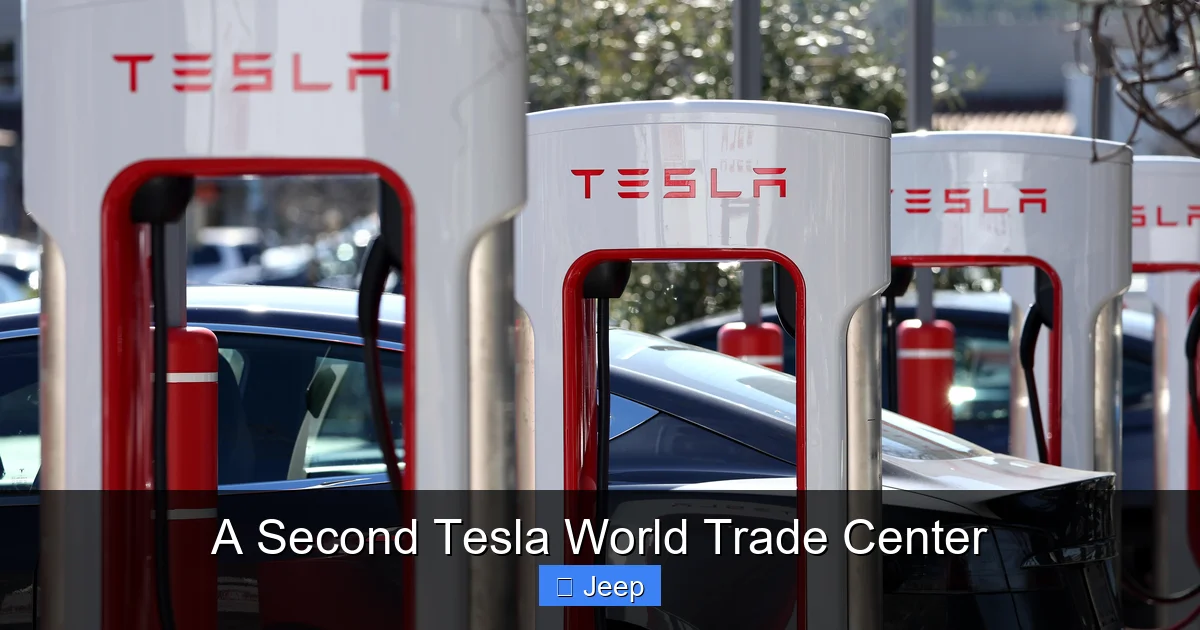
Visual guide about A Second Tesla World Trade Center
Image source: image.cnbcfm.com
The Job Multiplier Effect
Economic studies show that major manufacturing or tech facilities have a “multiplier” effect. For every direct Tesla job, 2-3 indirect jobs are supported in the local economy. Think food service for thousands of employees, retail, housing demand, and professional services (legal, accounting, cleaning). In a city with a high cost of living, these would be valuable, often skilled positions with wages well above minimum. The tax revenue from such a facility—property taxes, sales taxes from employee spending—would be a significant boost to city and state coffers, potentially funding more public services or infrastructure projects.
Supercharging the Supply Chain
A Second Tesla World Trade Center wouldn’t exist in a vacuum. It would require a network of suppliers. Battery cells, software components, stamped metal parts, glass for those massive windshields—all would need to flow in and out. This creates opportunities for local manufacturers and logistics firms. It could incentivize parts suppliers to set up satellite operations in the region, further cementing an EV industrial corridor along the I-95 Northeast corridor. This isn’t just about Tesla; it’s about building an entire ecosystem.
For the local business scene around the World Trade Center, it’s a windfall. Lunch crowds, after-work charging sessions (if paired with a large Supercharger station), employees needing dry cleaning, coffee, you name it. Small businesses would see a consistent customer base. It’s the classic economic development story: one big anchor tenant revitalizes a district.
Charging Infrastructure: Scaling Up for a Tesla Tsunami
Here’s where we get personal. If a Second Tesla World Trade Center spurs a wave of new Tesla registrations in NYC and surrounding counties—and it absolutely would—the biggest pain point for new owners will be charging. Not just at the facility itself, but at home and on the go.
Visual guide about A Second Tesla World Trade Center
Image source: slm-assets.secondlife.com
The Home Charging Imperative
Let’s be real: most Tesla charging happens at home, overnight. But in a city like New York, home charging is a patchwork of possibilities. Single-family homes in Queens or Brooklyn might have garages. But for millions in apartments and condos, it’s a different story. A Tesla World Trade Center could include a massive public charging hub, but that doesn’t solve the daily “refuel at home” need.
This is where practical advice kicks in. If you’re a new Tesla owner (or about to become one) in the area, you need a charging plan. For homeowners, installing a 220V outlet or a dedicated Wall Connector is the gold standard. It cuts charge time from days to hours. But what’s the cost? That’s a huge variable. It depends on your existing electrical panel, distance to the panel, and local electrician rates. We’ve seen installations range from $800 to over $2,500. Getting multiple quotes from certified electricians, preferably those with Tesla experience, is non-negotiable. A facility like a World Trade Center hub might even offer partnerships or bulk discounts with local installers, so watch for official announcements.
Public Charging: Superchargers and the Interoperability Question
On the go, Tesla’s Supercharger network is its killer app. A new mega-hub at the World Trade Center would likely include dozens of V3 or V4 Superchargers, serving both locals and highway travelers heading in and out of the city. But as the network grows and other automakers adopt Tesla’s North American Charging Standard (NACS), a fascinating dynamic emerges.
Right now, Tesla Superchargers are proprietary. But starting in 2024/2025, many non-Tesla EVs (like the Nissan Ariya) will gain access via adapters or native NACS ports. This means a Second Tesla World Trade Center charging plaza could see a mix of Teslas and other EVs. For Tesla owners, this could mean busier stations, but also a validation of Tesla’s charging tech as an industry standard. For potential Tesla buyers worried about access, it’s a net positive—more chargers being built, period. However, the user experience for non-Tesla drivers might differ (pricing, speed), so it’s worth reading up on how exactly a Nissan Ariya uses a Tesla charger before assuming seamless integration.
The Ripple Effect on Tesla Ownership and Customization
More Teslas on the road mean more eyes on them. And where there are eyes, there’s a thriving aftermarket. A surge of new Tesla owners—especially in a style-conscious city like NYC—will fuel demand for customization and protection. This isn’t just about vanity; it’s about preserving your investment in a harsh urban environment.
Visual guide about A Second Tesla World Trade Center
Image source: img.ifunny.co
Wraps, Tint, and PPF: The New Owner’s Checklist
Parking on a crowded street means door dings, rock chips, and graffiti. A factory paint job is good, but in a city, it’s under constant attack. Smart new owners will immediately consider Paint Protection Film (PPF), ceramic coating, window tint, and wraps.
- PPF (Clear Bra): A transparent, self-healing film on high-impact areas (hood, front bumper, fenders). Costs for a full PPF job on a Tesla Model 3 can range from $2,500 to $5,000+. It’s a premium investment that pays off by preventing costly paint repairs.
- Window Tint: Beyond looks, it reduces glare and heat. NYC has specific tint laws (usually 70% VLT for front sides), so you must comply. Professional installation for a Model 3 typically runs $200-$500.
- Full or Partial Wraps: Want to change your car’s color without a permanent paint job? A full vinyl wrap on a Model 3 averages $2,000-$4,000. Partial wraps (like a racing stripe or accent) are cheaper. It’s also a great way to protect the original paint.
With a potential influx of new Tesla owners from a World Trade Center facility’s publicity and employee purchases, local wrap and tint shops would see a boom. If you’re considering these, researching Model 3 wrap costs or Tesla tint pricing beforehand gives you a solid baseline for budgeting. Remember, quality matters. A cheap wrap will bubble and peel. Get references, see past work, and ask about the vinyl brand (3M, Avery Dennison, ORAFOL are top-tier).
Beyond Cosmetics: Maintenance and Real-World Costs
Owning a Tesla isn’t “set it and forget it.” Yes, there’s no oil changes, but there are other costs. Tire wear can be higher due to instant torque and heavy battery weight. A set of performance tires for a Model 3 Performance might cost $1,200+ and last 20,000 miles if driven hard. Brake pads last a long time thanks to regen braking, but they still need inspection. And then there’s windshield replacement—those giant glass panels are expensive. A Model 3 windshield replacement can cost $1,500-$3,000 with calibration. Insurance for Teslas is also notoriously high due to repair costs and parts pricing. Shopping for Tesla insurance carefully is a must.
A Second Tesla World Trade Center might include a world-class service center, potentially reducing wait times for appointments. But it also means more Teslas competing for those slots. Understanding these ownership realities—from charging setup to wrap budgets to insurance premiums—is key for anyone considering joining the Tesla family amidst this potential surge.
What It Means for the Broader EV and Automotive Landscape
This isn’t happening in a vacuum. A bold move like a Second Tesla World Trade Center sends shockwaves through the industry. It pressures legacy automakers to double down on their EV investments, especially in urban environments. It validates the strategy of building large, visible, customer-facing facilities in dense cities rather than remote factories. We might see Ford, GM, or Hyundai follow suit with flagship EV hubs in major metropolitan areas.
Infrastructure as a Competitive Battlefield
The charging network is the new dealership experience. Tesla’s integrated approach—selling cars, providing charging, offering service—is a vertically integrated dream. Competitors are scrambling to catch up, either through partnerships (like the deal between GM and ChargeGo) or building their own networks. A mega-hub at the World Trade Center would be a live demo of Tesla’s ecosystem: buy a car, get it serviced, charge it, maybe even grab a coffee in the lobby. It’s a holistic experience that traditional dealerships struggle to match.
Urban Planning and Policy Shifts
City planners would take note. If Tesla proves that a large, integrated EV facility can thrive in a dense downtown area, it could change zoning laws. It might encourage more mixed-use developments that incorporate massive charging plazas. It could accelerate the push for curbside charging in residential neighborhoods, as city officials see the demand spike. The policy debates around EV infrastructure—who pays for grid upgrades, how to equitably distribute chargers—would get louder and more urgent. A Tesla World Trade Center would be a case study in real-time.
Conclusion: More Than a Building—A Signal
So, is a Second Tesla World Trade Center a sure thing? Not yet. But the mere possibility is a powerful signal. It signals Tesla’s ambition to own the urban EV narrative. It signals that the world’s most iconic city is ready to embrace electric mobility at scale. And it signals to you, the driver, that the EV revolution is moving from suburban driveways into the concrete jungle’s core.
If this happens, the practical impacts are clear: get savvy on home charging installation costs, understand your vehicle’s protection needs (wraps, tint, PPF), and stay informed about charging network changes. The excitement of a new Tesla facility is real, but the day-to-day joy of ownership comes from a smooth-running, well-protected car that fits your life. Whether you’re eyeing a Model 3 for its efficiency, a Model Y for its space, or a Cybertruck for its boldness, the landscape is shifting. A Second Tesla World Trade Center would be a landmark in that shift—a place where the past of trade and travel meets the future of electric movement. Keep your eyes on Lower Manhattan, and keep your charger cable ready.
Frequently Asked Questions
What exactly is a “Second Tesla World Trade Center”?
It’s a speculative term for a potential major Tesla facility—like a Gigafactory component, service hub, or showroom—located at or near the World Trade Center site in New York City. It would symbolize Tesla’s deep commitment to urban electrification in a globally iconic location.
How would a new Tesla facility affect charging availability in NYC?
It would significantly add public Supercharger stations, easing congestion at existing sites. However, with more Teslas on the road, demand will rise. New owners must prioritize installing reliable home charging, as public stations will be busier. Planning your charging setup is crucial.
Will this development lower Tesla vehicle prices?
Not directly. Local manufacturing or assembly could reduce logistics costs, but Tesla’s pricing is driven by global factors like battery material costs, supply chain issues, and market strategy. Any price impact would be marginal and long-term.
Should I get a wrap or tint for my new Tesla if I live in the city?
Absolutely. Urban environments are harsh on paint. A PPF (paint protection film) on the front end is highly recommended to prevent rock chips and scratches. Window tint (within legal limits) reduces heat and glare. A full wrap offers ultimate protection and customization. Budget accordingly, as these are significant investments.
How many jobs could a facility like this create?
Estimates vary widely based on the facility’s scope. For a multi-use manufacturing/service center, direct jobs could range from 1,000 to 3,000+. When including indirect jobs in supply chains and local services, the total economic impact could support 3,000-9,000 jobs regionally over time.
Will other electric vehicles be able to use the new Tesla chargers at the World Trade Center?
Yes, eventually. Tesla is opening its Supercharger network to other EVs using the NACS standard (adopted by Ford, GM, Rivian, etc.) and via adapters for some models like the Nissan Ariya. However, initial rollout may be phased, and non-Tesla drivers might face different pricing or wait times. Always check compatibility before relying on it.
