
Why Does My Tesla Smoke When Charging

Seeing smoke or vapor from your Tesla during charging is often normal condensation from the thermal management system, but it can sometimes indicate a serious issue. The key is to distinguish between harmless water vapor and signs of an electrical fault or battery problem. This guide breaks down the causes, safety protocols, and when to contact Tesla Service immediately to protect your vehicle and yourself.
You’re at home, at a Supercharger, or at a public charging station. Your Tesla is plugged in, the charging icon is pulsing on the screen, and everything seems normal. Then you notice it: a wisp of something coming from around the charge port area, or perhaps from beneath the car. Your heart skips a beat. Is that smoke? In a vehicle powered by high-voltage batteries, the thought of smoke is enough to make any owner panic. Before you spring into full alarm mode, take a breath. The truth is, what you’re seeing is very often completely normal. But understanding the difference between harmless vapor and a dangerous signal is critical for your safety and your car’s health. Let’s break down exactly why your Tesla might produce vapor or smoke when charging.
Key Takeaways
- Normal vs. Abnormal: A light, wispy vapor (like steam) is typically normal condensation. Thick, colored, or foul-smelling smoke is a serious red flag.
- Primary Culprit: The most common cause is the thermal management system cooling the battery, producing water vapor, especially in humid conditions.
- Safety First: If you see abnormal smoke, immediately stop charging, unplug the cable, move to a safe distance, and contact Tesla Roadside Assistance or emergency services.
- Environmental Factor: High humidity, cold ambient temperatures, and charging at high power levels increase the likelihood of seeing normal vapor.
- Don’t Ignore Alerts: Any check engine light, warning message on the touchscreen, or charging error code combined with smoke requires immediate professional inspection.
- Prevention Matters: Ensure your charging equipment is in good condition, use the correct adapter, and keep your Tesla’s software updated for optimal thermal management.
- Internal faults are rare: While concerning, actual battery or charger fires from a properly maintained Tesla are statistically extremely rare events.
📑 Table of Contents
- Understanding Your Tesla’s Thermal Management System
- Common Causes of Vapor vs. Actual Smoke
- Immediate Action Plan: What To Do If You See Smoke
- Less Common, More Serious Technical Causes
- Prevention and Best Practices
- When to Contact Tesla Service: Diagnosis and Peace of Mind
- Conclusion: Knowledge is Safety
Understanding Your Tesla’s Thermal Management System
To understand the “smoke,” you first need to understand your Tesla’s sophisticated cooling system. Unlike a gasoline car that primarily manages engine heat, a Tesla must meticulously regulate the temperature of its lithium-ion battery pack. The battery operates best within a specific temperature window, typically between 60°F and 95°F (15°C and 35°C). When it’s too hot or too cold, performance degrades, and long-term health suffers.
The Role of the Coolant Loop
Your Tesla has a dedicated thermal management system—a network of coolant lines, a pump, and a radiator (or in some models, a chiller). During charging, especially at high rates (like with a 250 kW Supercharger), the battery generates significant heat. The thermal management system kicks into high gear, circulating a glycol-based coolant through the battery pack to absorb this heat. This coolant is then pumped to a heat exchanger where it releases the heat to the outside air.
Condensation: The #1 Suspect
Here’s the crucial part: as the warm coolant or battery pack air meets cooler ambient air—especially on a cold, humid night or morning—water vapor can condense. This is exactly the same physics as seeing your breath on a chilly day or fog forming on a bathroom mirror after a hot shower. This condensed water vapor exits through vents, often located near the charge port, under the car, or around the battery pack enclosure. To an observer, it looks like white smoke or steam. It has no smell, dissipates quickly, and is a sign your car’s cooling system is working perfectly. You might notice it more during the first 10-15 minutes of a charging session when the system is most active.
Common Causes of Vapor vs. Actual Smoke
Now, let’s categorize what you might see. The distinction is vital.
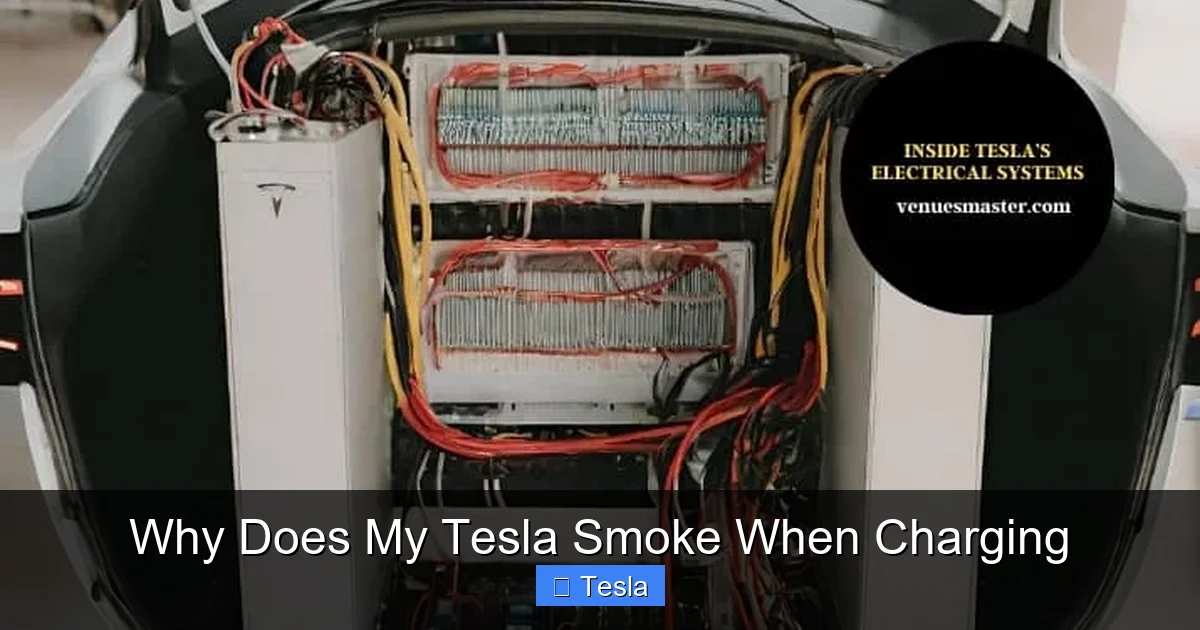
Visual guide about Why Does My Tesla Smoke When Charging
Image source: chargingoption.com
Normal, Harmless Vapor (The Good Steamer)
This is what you hope to see. Characteristics include:
- Appearance: Thin, wispy, white, and cloud-like. Similar to the vapor from a kettle.
- Location: Often seen emanating from under the rear of the vehicle (battery pack area) or around the charge port housing.
- Smell: No odor at all, or a very faint, sweet, coolant-like smell (glycol has a slight sweet scent).
- Duration: Usually appears at the start of charging and subsides after 10-20 minutes as the battery reaches a stable temperature.
- Context: More common in cold, humid weather, or when charging at high power levels.
If this matches your experience, your Tesla is likely functioning as designed. It’s managing its temperature. You can safely continue charging, but keep an eye on it.
Concerning Smoke or Vapor (The Bad Sign)
This is what requires immediate action. Red flags include:
- Appearance: Thick, billowing smoke. Not white and wispy, but grey, black, or blue-tinted. It may be sparse or heavy.
- Smell: A strong, acrid, burning smell. Think burning plastic, electronics, or insulation. A sweet smell could indicate coolant leak, which is also serious but different from an electrical fire.
- Location: Specifically pouring from the charge port itself, the cable connector, or a specific, concentrated spot under the car.
- Accompanied by: Any warning messages on the touchscreen (e.g., “Charging Stopped,” “Service Required,” battery warning), flashing lights, or error tones.
If you observe any of these signs, you are likely witnessing an electrical fault or overheating component. This could involve the onboard charger, the charging cable/coupling, a battery cell thermal runaway event (extremely rare), or another high-voltage component. This is an emergency.
Immediate Action Plan: What To Do If You See Smoke
Your response must be swift and calm. Follow these steps in order of priority.
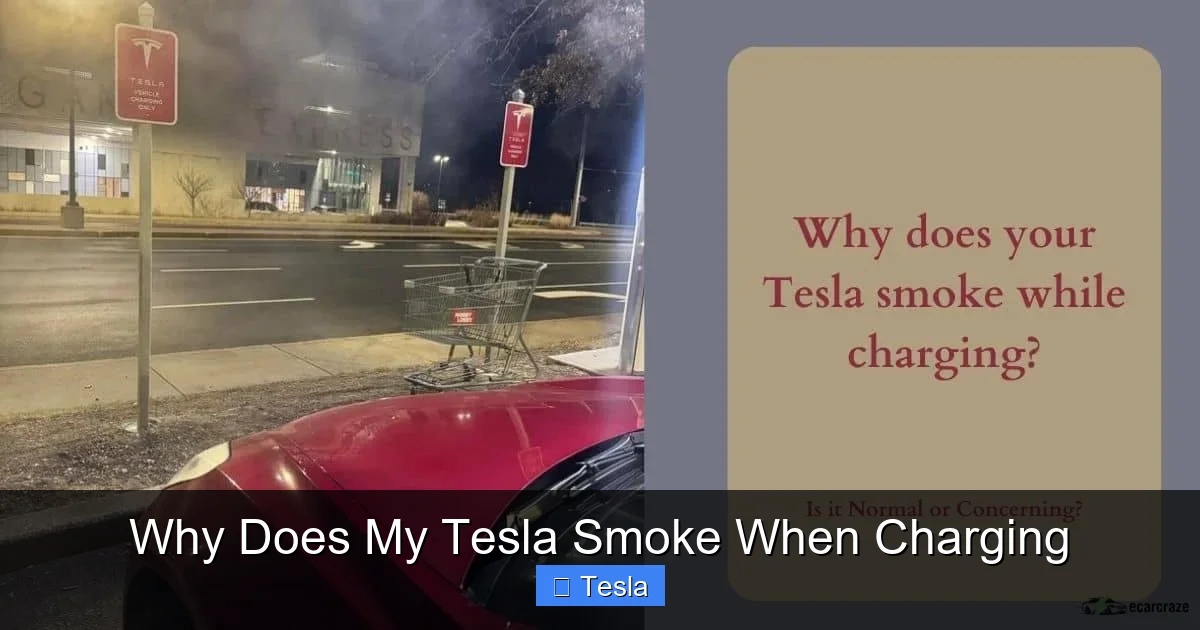
Visual guide about Why Does My Tesla Smoke When Charging
Image source: ecarcraze.com
Step 1: Cease Charging & Disconnect Safely
If the smoke is abnormal (thick, colored, smelly), your first instinct is correct: stop charging. Do not touch the charge port or cable if they appear hot or are actively smoking. If it’s safe to do so without risking burns or electric shock, press the stop button on your Tesla app or touchscreen. Then, carefully unplug the charging cable from the car first, and then from the wall/source. If the connector is hot, melted, or smoking heavily, do not touch it. Move to Step 2.
Step 2: Ensure Personal Safety & Alert Others
Move at least 100 feet (30 meters) away from the vehicle. If you’re at home, ensure family members and pets are clear of the area. If you’re in a public charging station, alert others nearby to stay away. Do not attempt to open the frunk or trunk. Do not attempt to inspect the battery pack.
Step 3: Contact the Proper Authorities
Call Tesla Roadside Assistance or your local emergency number (911/112/etc.) if you believe there is an active fire risk. Clearly state you have a Tesla that is smoking while charging. Firefighters need to know it’s an electric vehicle; they should use copious amounts of water if a fire starts and should not assume the fire is out if flames appear to subside, as battery fires can re-ignite. For non-emergency but concerning vapor, you can call Tesla Support to log the incident and get guidance.
Less Common, More Serious Technical Causes
Assuming you’ve ruled out normal condensation, what could actually be wrong? These are less frequent but possible.
Visual guide about Why Does My Tesla Smoke When Charging
Image source: ecarcraze.com
Faulty Charging Equipment or Adapter
The problem might not be the car at all. A damaged third-party charging cable, a worn-out wall connector, or a faulty adapter (especially a cheap, non-Tesla brand) can overheat, melt its plastic casing, and produce smoke. The smell will be distinctly of burning plastic. Always use Tesla-certified or reputable charging equipment. Check for physical damage, discoloration, or melting on any part of the charging apparatus. This is a common cause of charging-related smoke incidents and is often easier and cheaper to fix than a car problem.
Onboard Charger Failure
The Tesla’s internal charger converts AC power from the wall into DC power for the battery. If this high-power electronics module fails, it can overheat and smoke. This is usually accompanied by a clear charging error message. Repair requires service center intervention.
Battery Pack Thermal Incident (The Most Serious)
This is the scenario everyone fears. A failure within an individual battery cell or module can lead to “thermal runaway”—a rapid, uncontrolled temperature increase that can produce smoke, fire, and toxic gases. This is exceedingly rare in modern Teslas due to multiple layers of battery management and safety systems. Signs include a very strong, acrid, metallic smell, thick white/grey smoke billowing from the undercarriage, and potentially a fire. The car will almost certainly display multiple severe warnings and may shut down all systems. This requires emergency response.
Prevention and Best Practices
While you can’t eliminate all risk, you can dramatically reduce the chances of encountering a problem.
Use Genuine and Certified Equipment
Never compromise on charging hardware. Use the Tesla Mobile Connector provided with your car, a Tesla Wall Connector, or reputable third-party equipment that is UL-listed and specifically designed for EVs. Avoid cheap, no-name adapters and cables from online marketplaces. A faulty $20 adapter is not worth a $10,000 repair or a dangerous situation. For public charging, inspect the station’s connector for damage before use.
Maintain Your Charging Setup
Regularly inspect your home charging cable, wall connector, and adapters for signs of wear, cracking, discoloration, or damage. Ensure your home electrical system is properly rated and installed by a licensed electrician. A loose or overheating outlet can cause issues upstream.
Mind the Environment
Be extra observant in extreme conditions. When charging in very cold, humid weather, expect to see more normal vapor. If you notice it, just confirm it’s the thin, odorless type. When charging in very hot ambient temperatures, the thermal system works harder, so ensure your charging location has good airflow. Never charge a Tesla that has been directly exposed to extreme heat (e.g., parked in a hot garage after a long drive) if you see any unusual warnings—let it cool first.
Keep Software Updated
Tesla frequently pushes over-the-air (OTA) updates that improve battery management algorithms, charging protocols, and safety systems. Always install updates promptly. These updates can refine how the thermal system operates during charging, potentially reducing unnecessary vapor or improving fault detection. You can also check your car’s health remotely via the Tesla app, which provides peace of mind.
When to Contact Tesla Service: Diagnosis and Peace of Mind
If you experience abnormal smoke even once, your next step after ensuring safety is to get your car inspected. Do not simply forget about it.
Log the Details
Before contacting Tesla, write down everything you remember: date, time, location, weather (temp/humidity), charging power level (kW), state of charge when it started, the exact appearance and smell of the smoke, any warning messages (take a photo if safe), and whether you were using a mobile connector, wall connector, or Supercharger. This information is gold for the service technicians.
Schedule a Service Appointment
Use your Tesla app to schedule a service appointment. Describe the issue in detail using your notes. Tesla will likely run a full diagnostic on the high-voltage battery system, onboard charger, and thermal management system. They have specialized tools to check for cell imbalances, coolant flow issues, and charger health. This diagnostic is crucial to find a latent problem before it becomes a catastrophic failure. Be aware that if the issue was likely related to your home charging equipment, Tesla may charge for the diagnostics but will confirm the car itself is fine, shifting the responsibility to your equipment.
What About Those Other Weird Car Noises?
It’s not just smoke that causes concern. Many EV and hybrid owners report unusual sounds from their vehicles when turned off or in specific conditions. For instance, some Subaru owners have reported hearing a faint humming or gurgling noise after shutting off their vehicle, which is often related to the electric coolant pump or battery conditioning system running. Similarly, issues like a car overheating when stationary or the AC is on are classic signs of a cooling system problem in traditional vehicles, but the principles of thermal management are equally critical in EVs. If you hear strange noises from any vehicle, it’s always worth investigating. You can read more about common automotive mysteries in our guides on why a Subaru might make noise when off or why a car overheats when stopped.
Conclusion: Knowledge is Safety
Seeing vapor or smoke from your Tesla while charging is an understandably alarming experience. However, armed with the right knowledge, you can differentiate between your car’s perfectly normal thermal management at work and a genuine, dangerous fault. Remember, thin, odorless, short-lived vapor is usually just condensation—a sign of a system working as intended. Thick, colored, foul-smelling smoke, especially with warnings, is an emergency requiring immediate cessation of charging, evacuation, and professional help. Your Tesla is an incredibly safe vehicle, with safety systems designed to manage its high-voltage components. By using certified equipment, keeping up with maintenance, and responding appropriately to any signs of trouble, you can enjoy the benefits of electric driving with confidence and peace of mind. When in doubt, always err on the side of caution and consult Tesla Service. Your safety is the absolute priority.
Frequently Asked Questions
Is it normal for my Tesla to “smoke” while charging?
Yes, it is often normal. What you are likely seeing is water vapor (condensation) from the thermal management system cooling the battery, especially in cold, humid weather. It should be thin, white, odorless, and short-lived.
What should I do if I see thick, black, or smelly smoke from my Tesla?
Immediately stop charging, unplug the cable if safe to do so, move at least 100 feet away, and call Tesla Roadside Assistance or your local emergency number. Do not attempt to open the vehicle. This indicates a potential electrical fire.
Can a faulty charging cable or adapter cause smoking?
Yes, absolutely. A damaged or low-quality third-party charging cable or adapter is a common cause of overheating and smoking. Always use Tesla-certified or reputable, UL-listed charging equipment to prevent this.
Does the type of charger (Home vs. Supercharger) change the likelihood of seeing vapor?
The likelihood of seeing normal condensation vapor can increase with higher charging power (like at a Supercharger) because more heat is generated in the battery. However, the thermal system is designed to handle it. The location of vents might also make vapor more visible from certain chargers.
Will my Tesla’s warranty cover a problem related to smoking while charging?
If the diagnostic determines a fault in the vehicle’s onboard charger, battery pack, or thermal management system, it should be covered under your Tesla New Vehicle Warranty (typically 4 years/50,000 miles for the battery and drive unit, 4 years/50,000 miles for the vehicle). If the cause is determined to be your charging equipment (cable, wall connector, adapter), that is not covered by Tesla’s vehicle warranty.
How can I prevent abnormal smoking during charging?
Use only genuine or certified charging equipment, keep all hardware in good condition, ensure your home electrical setup is correct, keep your Tesla’s software updated, and be observant of any warning messages. Regular service inspections can also catch latent issues.
