
Does Tesla Service Center Tint Windows?

No, Tesla Service Centers do not offer or perform window tinting services. This is a deliberate policy from Tesla to maintain quality control and avoid warranty complications. For the best results, you must use a third-party, certified professional installer who understands Tesla’s unique electronics and glass. Choosing the wrong installer can damage sensitive sensors and void your vehicle’s warranty.
So, you just picked up your shiny new Tesla, or maybe you’ve been driving one for a while, and you’re thinking about getting the windows tinted. It’s a common desire for a few good reasons: privacy, reduced glare, a cooler cabin in the sun, and that sleek, finished look. Your first logical thought might be, “Can I just have the Tesla Service Center do it while my car is in for a tire rotation or an update?” It seems like a one-stop-shop solution. But here’s the straight answer: No, Tesla Service Centers do not tint windows. This isn’t a matter of them being too busy or simply not offering it as an extra. It’s a firm, company-wide policy. This article will explain exactly why Tesla takes this stance, what the risks are if you try to cut corners, and most importantly, how you can safely and effectively get your Tesla’s windows tinted by the right professionals.
Key Takeaways
- Official Policy: Tesla Service Centers explicitly do not perform window tinting as an in-house service.
- Warranty Protection: Using Tesla-certified or highly reputable third-party installers is critical to avoid voiding your vehicle’s warranty.
- Sensor Sensitivity: Tesla’s advanced driver-assistance systems (Autopilot) rely on cameras and sensors around the glass; improper tinting can interfere.
- Factory Tint: Some Tesla models come with a very light, factory-applied tint on rear glass only, but it is not a full window tint package.
- Professional Installation: Always seek installers with specific Tesla experience who use automotive-grade, non-conductive films.
- Cost Variable: Tinting a Tesla costs more than a standard car due to larger glass areas and specialized film requirements; prices vary by model and film type.
- Alternative Services: While they don’t tint, Tesla Service Centers do offer paint protection film (PPF) application in some locations, which is a different product.
[FEATURED_IMAGE_PLACEHOLDER]
📑 Table of Contents
- The Direct Answer: Tesla Service Centers Do Not Tint Windows
- Understanding Tesla’s Factory Glass: It’s Not Tinted
- The Significant Risks of Improper Tint Installation on a Tesla
- Finding the Right Installer: Your Essential Checklist
- The Professional Tesla Tinting Process: What to Expect
- Cost, Value, and Long-Term Considerations
- Conclusion: Your Action Plan
The Direct Answer: Tesla Service Centers Do Not Tint Windows
Let’s start with the clearest possible statement. You cannot pull into a Tesla Service Center, drop off your Model 3, Model Y, Model S, or Model X, and have them apply window tint film to your vehicle as part of a service appointment. This is non-negotiable and consistent across their entire service network globally. You will not find “window tinting” listed as a service on their website, in the Tesla app, or on any service menu. This policy applies to both new car deliveries and existing vehicle servicing.
This might seem odd or inconvenient. Many car dealerships, from Toyota to BMW, often have detailing departments or partnerships that offer tinting. But Tesla operates on a different model. Their service centers are hyper-focused on the core mechanical, electrical, and software components of the vehicle. They perform warranty repairs, software updates, tire services, brake work, and battery maintenance. Adding a cosmetic, aftermarket modification like window tinting falls entirely outside their scope of approved operations.
The “Why” Behind Tesla’s Policy
The reasoning is a mix of quality control, liability, and warranty protection. First, window tinting is a specialized skill. It requires precision cutting, flawless application on curved glass, and knowledge of different film types. Tesla does not train its service technicians as automotive detailers or film applicators. Their expertise is in the vehicle’s powertrain and systems, not in applying adhesive films without bubbles or creases.
Second, and more critically, is the issue of warranty. Tesla’s New Vehicle Limited Warranty covers defects in materials and workmanship for the vehicle and its components. If an improperly installed tint causes damage—for example, if a technician uses a conductive metal-based film that interferes with the rear camera or the antenna for the key fob—Tesla could logically deny warranty coverage for the resulting faulty sensor or electrical system. By refusing to perform the service themselves, Tesla eliminates this entire category of potential warranty disputes. They are protecting their own interests and, in a way, yours by forcing you to seek a specialist who accepts full responsibility for their installation work.
Understanding Tesla’s Factory Glass: It’s Not Tinted
It’s important to distinguish between what comes from the factory and aftermarket tint. Many new Teslas, particularly Models S and X, and often the rear glass of Model 3 and Y, have a very slight, light gray tint from the factory. This is often called “privacy glass.” It is not a functional window tint film; it is a permanently dyed layer within the laminated glass itself during manufacturing.
Visual guide about Does Tesla Service Center Tint Windows?
Image source: clearpro.com
This factory privacy glass provides minimal solar rejection (heat blocking) and UV protection compared to a dedicated aftermarket ceramic or metallic film. Its primary purpose is aesthetics and a tiny bit of privacy. It does not meet the legal definition of “window tint” in most states, which refers to an applied film. Therefore, even if your Tesla has this factory tint, you may still want a professional aftermarket tint applied to the front windows (which are almost always clear from the factory for legal visibility reasons) and to enhance the performance of the rear glass. The factory tint does not change the fact that Tesla Service Centers will not add any additional film.
The Significant Risks of Improper Tint Installation on a Tesla
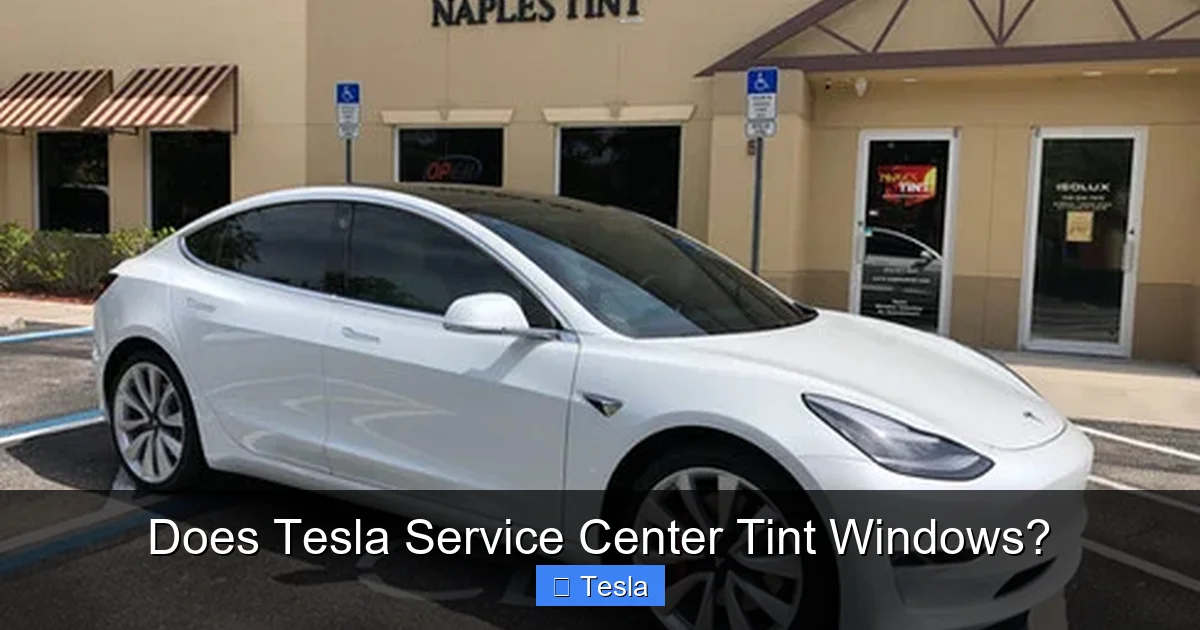
Because Tesla won’t do it, the responsibility falls on you, the owner, to choose an installer. This is not a task for a general handyman or a low-budget mobile tinter. A Tesla is not a typical sedan. Its advanced technology integrated into every window makes it uniquely vulnerable to poor installation practices. Here are the real risks you must avoid.
Visual guide about Does Tesla Service Center Tint Windows?
Image source: static.wixstatic.com
Interference with Critical Sensors and Cameras
This is the number one, most dangerous risk. Tesla’s Autopilot and Full Self-Driving (FSD) capabilities rely on a suite of eight external cameras, forward-facing radar (on older models), and ultrasonic sensors. Many of these are housed in the housing around the windshield, the front fenders, and the rear of the vehicle. The side repeaters for the turn signals are also in the window area.
A tint installer must be acutely aware of these locations. Applying film over a camera lens, even a high-quality one, can severely degrade the camera’s ability to see in low light, at night, or in adverse weather. Metallic or “dyed” films can create electromagnetic interference, potentially disrupting signal quality. A professional Tesla tint installer will meticulously map out all sensor and camera locations and either avoid applying film over them or use a specifically designed, non-metallic, non-conductive film in those precise spots to ensure zero signal degradation. A novice might accidentally cover a sensor or use the wrong film type, leading to phantom alerts, disabled Autopilot features, or, worst of all, impaired safety system performance.
Damage to Electronics and Heating Elements
The rear window of a Tesla typically has an embedded heating element (defroster) made of thin, delicate lines. Improper application of tint film—using the wrong tools, excessive heat from a heat gun, or a low-quality adhesive—can permanently damage these lines, causing the defroster to fail. Replacing a Tesla’s rear window is exceptionally expensive due to the integrated camera and sensor housing. Similarly, the antenna for the key fob and connectivity systems is often located in the rear glass or windshield. Conductive films can shield or block these signals, leaving you with a key fob that only works when you’re right next to the car.
Poor Aesthetics and Premature Failure
Beyond the technical risks, there’s the simple matter of a bad job. Tesla’s glass is often more curved and complex than average. A poor cutter or an inexperienced installer will create gaps, bubbles, creases, and peeling edges. This looks terrible and will fail within months or a few years. High-quality film applied by an expert should last 10+ years without significant fading, bubbling, or peeling.
Given these high stakes, the phrase “you get what you pay for” has never been more true. The cheapest quote in town is often the most expensive in the long run when it comes to a Tesla. For insights into the typical price range for professional-grade tinting on these vehicles, you can explore detailed cost breakdowns for specific models like the Model 3 and Model Y, which will give you a realistic expectation for investment.
Finding the Right Installer: Your Essential Checklist
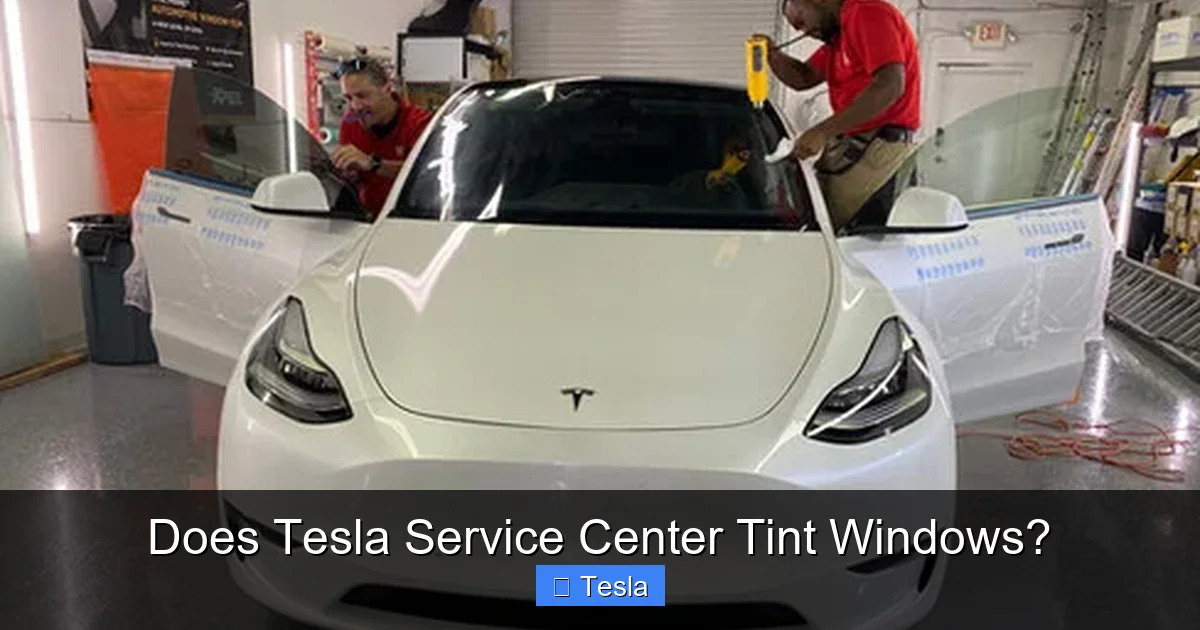
Since Tesla won’t do it, your mission is to find a specialist. Do not use a generic “car tint shop” unless they can prove extensive, specific Tesla experience. Here’s your actionable checklist for vetting installers.
Visual guide about Does Tesla Service Center Tint Windows?
Image source: static.wixstatic.com
Look for Tesla-Specific Certifications and Experience
The gold standard is an installer who is certified or recommended by 3M, Llumar, or XPEL—the leading film manufacturers—and who has a portfolio specifically showing Tesla work. These companies maintain lists of elite installers. Search for “Tesla window tint [Your City]” and look for companies whose websites and social media are filled with photos and videos of Tesla installations. They should understand the nuances between a Model 3 and a Model Y’s window curves. Ask directly: “How many Teslas have you tinted?” and “Can I see examples of your work on a Model [Your Model]?”
Demand Knowledge of Sensor Locations
During your consultation, a qualified installer will proactively discuss the Autopilot cameras and sensors. They will explain their process for identifying and working around them. They will recommend specific, non-conductive ceramic films (like 3M Crystalline or SunTek Ceramic) for the front windows and areas near sensors. If the installer seems vague or says, “Oh, we just tint right over everything,” run. That is a massive red flag.
Inspect the Facility and Ask About Warranty
Choose a dedicated, clean shop over a mobile service for your first tint. A professional shop controls the environment (dust-free, temperature-controlled) which is crucial for a perfect application. Ask about their warranty. A reputable installer will offer a comprehensive warranty against bubbling, peeling, fading, and adhesive failure for the lifetime of the film (often 10+ years). This warranty should be from the film manufacturer, backed by the installer. Get it in writing. For a deeper dive into the overall cost factors, including film grade and vehicle type, a general guide on Tesla window tinting costs is a valuable resource.
The Professional Tesla Tinting Process: What to Expect
Once you’ve found a trustworthy installer, here is the typical, correct process. Understanding this helps you know what you’re paying for.
Step 1: Consultation and Selection. You’ll discuss your goals: maximum heat rejection, maximum privacy (darker legal limit), or a balance. The installer will recommend specific Visible Light Transmission (VLT) percentages that are legal in your state for front, rear, and side windows. They will show you film samples. Ceramic films are almost always the recommended choice for Teslas due to their superior heat rejection without signal interference and non-conductive nature.
Step 2: Precise Computer Cutting. The installer will use a large-format plotter and computer software with a precise template for your exact Tesla model and year. The film is cut to shape on a plotter before ever touching your car. This ensures perfect fitment and avoids the risk of scratching the glass with a razor blade during on-car cutting.
Step 3: Meticulous Glass Preparation. This is the most time-consuming and critical step. The glass is cleaned multiple times with specialized solutions and tools to remove every speck of dust, dirt, and oil. Any contamination leads to adhesion failure.
Step 4: Application. Using a slip solution (soapy water), the installer positions the pre-cut film on the glass. They then use a squeegee to expertly push out all the water and air bubbles, working from the center outward. Heat is applied judiciously to help the film conform to the complex curves of the Tesla’s glass without over-stretching or damaging it.
Step 5: Final Inspection and Curing. The installer inspects the work under bright lights. You will be shown the car and given care instructions. The film needs 3-7 days to fully cure and adhere. During this time, you should avoid rolling down windows (if tinted) and washing the car. Small water pockets or haze are normal and will disappear as the film cures.
Cost, Value, and Long-Term Considerations
You should expect to invest significantly for a proper Tesla tint. Due to the larger glass surfaces (especially on the Model Y and Model 3 with their panoramic roofs) and the necessity of premium ceramic film, prices typically start around $1,200-$1,500 for a basic package on a Model 3/Y and can go up to $2,500+ for top-tier film on a Model S/X with full coverage including the large glass roof. This is not a $199 Groupon special.
The value, however, is substantial. A high-quality ceramic film can block up to 60-70% of solar heat, dramatically improving cabin comfort and reducing AC load (which saves battery range). It blocks 99% of UV rays, protecting your skin and the interior from sun damage. It adds privacy and security. And it simply makes the car look more complete and sleek. When you consider the long-term protection of your interior and the improved driving experience, it’s a worthwhile upgrade.
It’s also worth noting that while Tesla doesn’t tint, they are involved in another form of glass protection: Paint Protection Film (PPF). Some Tesla Service Centers or Tesla-approved body shops do offer PPF application for the painted surfaces of the car. This is a clear, urethane film that protects against stone chips and scratches. It’s a separate product from window tint, but often part of the same conversation for new Tesla owners wanting to protect their investment. The cost for a full PPF wrap on a Tesla is another significant consideration, which you can read more about in articles detailing Model 3 wrapping costs or similar models.
Conclusion: Your Action Plan
In summary, do not call the Tesla Service Center for window tinting. They will not help you with this request. Your path forward is clear: research, find, and hire a specialist. Prioritize installers with proven Tesla experience who use premium, non-conductive ceramic films and who understand the critical sensor locations. Get a detailed, written quote and warranty. Be prepared for a $1,200+ investment for a job done right.
Taking these steps protects your wallet (from a voided warranty or a re-do), your car’s technology (from interference), and your sanity (from a bubbly, peeling eyesore). The goal is a flawless, long-lasting tint that enhances your Tesla ownership experience without introducing a single problem. By following this guide, you can achieve exactly that.
Frequently Asked Questions
Will having aftermarket window tint void my Tesla’s warranty?
No, the mere presence of aftermarket tint does not automatically void your entire Tesla warranty. However, if the tint is installed poorly and causes damage to a covered component (like a window regulator, camera, or sensor), Tesla could deny a warranty claim for that specific damage. This is why using a reputable installer who accepts liability is so important.
What is the legal tint limit for my Tesla’s front windows?
>This varies significantly by state and country. Many states require front side windows to allow at least 70% of light in (VLT 70), meaning very light tint. Some states like Arizona allow 33% (darker). You must check your local laws. A professional installer will know and advise you on the legal limit for your location and can apply a legal film to the front windows.
What type of window tint is best for a Tesla?
High-quality ceramic film is universally recommended for Teslas. It offers the best heat and UV rejection without using metallic particles that can interfere with the vehicle’s electronic signals and sensors. Avoid cheap dyed films and metallic films for any Tesla window.
How long does it take to tint a Tesla?
A full, professional tint on a Tesla typically takes 3-5 hours for a two-door Model S/X and 4-6 hours for a four-door Model 3/Y with a panoramic roof. The large glass areas require extra care and time. You should not expect a quick, 1-hour job for a proper installation.
Does Tesla apply any tint at the factory?
Yes, but it’s very limited. Most Teslas come with a light factory “privacy glass” on the rear side and rear windows. The front doors and windshield are always clear from the factory to meet visibility laws. This factory tint is not the same as aftermarket film and offers minimal heat rejection.
Can I tint my Tesla’s panoramic roof?
Yes, but it is a specialized and more expensive part of the job. The large, complex curve of the glass roof requires an expert installer with the right software templates and film. Not all tint shops can or will do it correctly. Be sure to ask for examples of their Tesla roof work specifically.
