
Will Dodge 5-lug Wheels Fit a Chevy 5-lug

While Dodge and Chevy both use 5-lug wheels, they are not always interchangeable due to differences in bolt patterns, hub sizes, and offsets. Understanding these specs is crucial to avoid fitment issues and ensure safe driving.
If you’ve ever wandered through a junkyard or browsed online for used wheels, you’ve probably noticed something: Dodge and Chevy trucks both roll on 5-lug wheels. At first glance, they look similar—same number of lugs, similar sizes, maybe even matching finishes. So, it’s natural to wonder: *Will Dodge 5-lug wheels fit a Chevy 5-lug?*
The short answer? Not usually—not without some serious modifications. But the longer, more accurate answer is that it depends on several key factors: bolt pattern, hub bore size, offset, and whether you’re willing to use adapters. While both brands use five-lug setups, the devil is in the details. Getting those details right isn’t just about aesthetics—it’s about safety, performance, and avoiding costly mistakes down the road.
In this guide, we’ll break down everything you need to know about fitting Dodge wheels on a Chevy. Whether you’re restoring a classic truck, upgrading your ride’s look, or just trying to save money on wheels, understanding these compatibility issues will save you time, money, and headaches. We’ll cover the technical specs, real-world examples, and practical tips to help you make the right call.
Key Takeaways
- Bolt Pattern Matters: Dodge typically uses a 5×139.7mm (5×5.5″) bolt pattern, while most Chevys use 5x127mm (5×5″). These do not match, making direct fitment unlikely.
- Hub Bore Size Differences: Dodge trucks often have a larger center bore (around 77.8mm), while Chevy hubs are usually smaller (around 70.3mm), requiring hub-centric rings for safe use.
- Offset and Backspacing Impact Fit: Even with adapters, incorrect offset can cause rubbing or suspension interference on your Chevy.
- Wheel Adapters Can Help: Using quality 5×139.7 to 5×127 adapters allows Dodge wheels to fit some Chevys, but they must be hub-centric and properly torqued.
- Not All Dodge Models Are the Same: Older Dodge trucks (pre-2009) may have different specs than newer models, so always verify your wheel’s exact measurements.
- Safety First: Never force a wheel that doesn’t fit properly—improper mounting can lead to wheel failure or accidents.
- Check Your Chevy’s Generation: Full-size Chevys (like Silverado) may have more flexibility with adapters than smaller models like the Colorado.
📑 Table of Contents
- Understanding Bolt Patterns: The Foundation of Fitment
- Hub Bore Size: The Hidden Compatibility Killer
- Offset and Backspacing: The Fitment Wildcards
- Using Wheel Adapters: A Practical (But Risky) Solution
- Real-World Examples: When It Works (and When It Doesn’t)
- Final Tips for a Safe and Successful Swap
- Conclusion: Compatibility Is Complicated—But Manageable
Understanding Bolt Patterns: The Foundation of Fitment
When it comes to wheel compatibility, the bolt pattern is the first thing you need to check. It’s the most basic—and most critical—specification. A bolt pattern describes the number of lug nuts and the diameter of the imaginary circle they form. For example, a 5x127mm pattern means five lugs arranged in a circle 127 millimeters in diameter.
Now, here’s where Dodge and Chevy part ways. Most modern Dodge trucks—like the Ram 1500 from 2009 onward—use a 5×139.7mm bolt pattern, which is also known as 5×5.5 inches. This is common across many full-size trucks, including some Toyotas and older Fords.
On the other hand, most Chevrolet trucks—especially the popular Silverado, Sierra, and Tahoe models—use a 5x127mm (5×5 inch) bolt pattern. This has been the standard for decades on GM’s full-size trucks and SUVs.
Because 139.7mm and 127mm are not the same, you can’t simply bolt a Dodge wheel onto a Chevy hub and expect it to work. The lug holes won’t align, and even if you force it (which you absolutely should not), the wheel won’t seat properly. This creates a dangerous situation where the wheel could loosen or fail while driving.
Why Bolt Pattern Mismatch Is a Big Deal
You might think, “Hey, it’s only a 12.7mm difference—can’t I just stretch the bolts or use longer studs?” The answer is a hard no. Bolt patterns aren’t just about spacing—they’re engineered to distribute load evenly across the hub. When the pattern is off, the wheel doesn’t sit flat against the hub. This leads to:
– Uneven stress on lug nuts
– Warped brake rotors
– Vibration at highway speeds
– Premature wear on wheel bearings
Even if the wheel appears to “fit” with some persuasion, it’s not safe. The wheel needs to be hub-centric—meaning the center bore matches the hub diameter—and lug-centric, meaning the lugs bear the load, not the studs. A mismatched bolt pattern compromises both.
Exceptions and Close Calls
There are a few rare cases where Dodge and Chevy bolt patterns overlap. For example, some older Dodge Dakota models (pre-2005) used a 5×114.3mm pattern, which is actually closer to some import vehicles than to Chevy. But even then, it’s not compatible with most Chevys.
Another point of confusion: some people assume that because both are “5-lug,” they’re interchangeable. But the number of lugs is only half the story. The diameter of the bolt circle is what really matters. Think of it like shoe sizes—just because two shoes have five eyelets doesn’t mean they’ll fit your foot.
So, unless you’re working with a very specific combination of older models (and even then, it’s risky), you can’t rely on the “5-lug” label alone. Always verify the exact bolt pattern using a bolt pattern gauge or by measuring manually.
Hub Bore Size: The Hidden Compatibility Killer
Visual guide about Will Dodge 5-lug Wheels Fit a Chevy 5-lug
Image source: tirefever.com
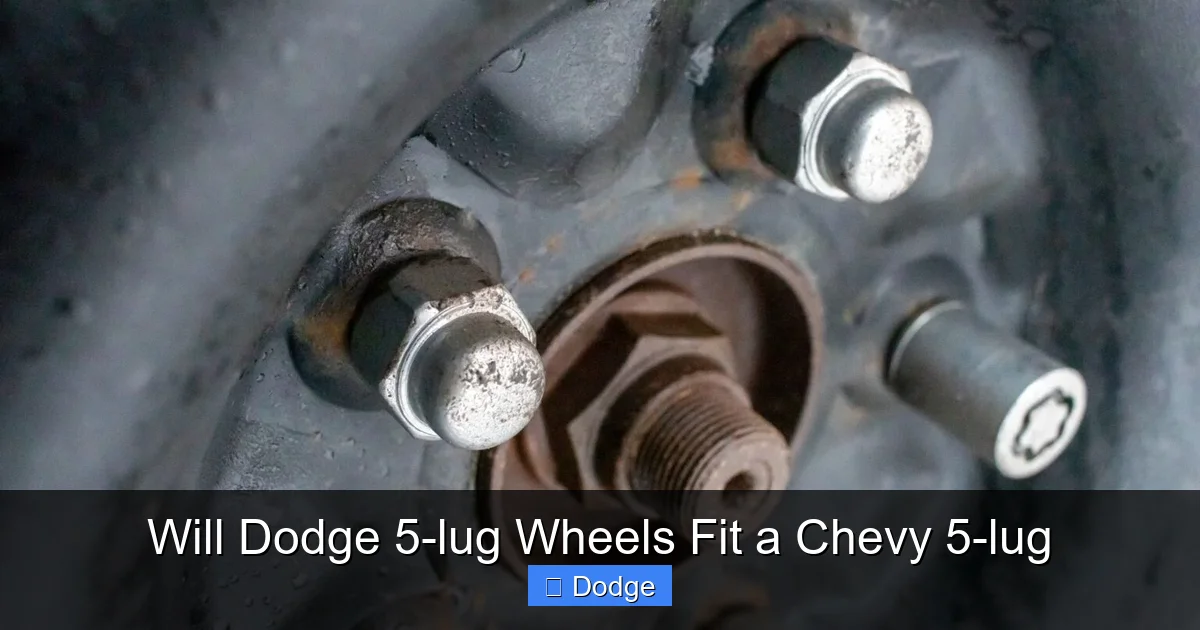
Even if you solve the bolt pattern issue, there’s another hurdle: the hub bore. This is the center hole in the wheel that fits over the hub of your vehicle. It needs to match precisely—or be adapted correctly—to ensure the wheel is centered properly.
Dodge trucks typically have a hub bore of around 77.8mm. This larger diameter helps with heat dissipation and accommodates the brand’s robust axle designs. Chevrolet, on the other hand, usually uses a smaller hub bore—around 70.3mm on most full-size trucks.
When you try to mount a Dodge wheel on a Chevy, the larger hub bore means the wheel won’t sit snugly on the hub. It will be loose in the center, relying entirely on the lug nuts to hold it in place. This is called being “lug-centric” rather than “hub-centric,” and it’s a major red flag.
The Problem with Lug-Centric Wheels
When a wheel is only held by the lugs, it can shift slightly under load—especially during hard braking or cornering. This movement causes:
– Steering wheel vibration
– Uneven tire wear
– Increased stress on suspension components
– Potential wheel detachment in extreme cases
Even if you don’t notice immediate issues, the long-term wear can be dangerous. That’s why hub-centric design is so important. The hub bore should match the vehicle’s hub diameter, ensuring the wheel is perfectly centered before the lugs are even tightened.
Using Hub-Centric Rings to Bridge the Gap
The good news? You can fix a hub bore mismatch with hub-centric rings. These are precision-machined adapters—usually made of aluminum or plastic—that fit inside the wheel’s center bore and reduce it to match your Chevy’s hub.
For example, if you’re putting Dodge wheels (77.8mm bore) on a Chevy (70.3mm hub), you’d use a 77.8mm to 70.3mm hub-centric ring. These rings are inexpensive (usually $10–$20 per wheel) and widely available online.
But here’s the catch: the rings must be the exact right size. A loose ring will defeat the purpose, and a tight one can crack or warp. Always buy rings specifically designed for your wheel and vehicle combo.
Also, remember that hub-centric rings only solve the centering issue—they don’t fix bolt pattern problems. You’ll still need adapters or a compatible setup for the lugs.
Offset and Backspacing: The Fitment Wildcards

Visual guide about Will Dodge 5-lug Wheels Fit a Chevy 5-lug
Image source: autoguruz.com
Even if you get the bolt pattern and hub bore sorted, there’s another layer to consider: offset and backspacing. These measurements determine how far the wheel sits in or out from the hub, affecting clearance, handling, and tire wear.
Offset is the distance (in millimeters) between the wheel’s mounting surface and its centerline. A positive offset means the mounting surface is toward the front (outside) of the wheel; negative offset means it’s toward the back (inside).
Backspacing is the distance from the mounting surface to the inner edge of the wheel. It’s a more traditional measurement, often used by off-roaders and custom builders.
Dodge and Chevy wheels can have very different offsets. For example, a Dodge Ram might come with a +15mm offset, while a Chevy Silverado could use a +20mm or even +30mm offset. This difference might seem small, but it can have big consequences.
How Offset Affects Fitment
If the Dodge wheel has a more negative offset than your Chevy’s stock wheels, it will stick out further from the fender. This can look aggressive—great for off-road style—but it also increases the risk of:
– Rubbing against the fender or suspension
– Increased scrub radius, affecting steering feel
– Excessive tire wear on the outer edge
– Stress on wheel bearings due to increased leverage
Conversely, if the Dodge wheel has a more positive offset, it may sit too far inboard. This can cause the tire to rub against the suspension components, especially during turns or when the suspension is compressed (like going over bumps).
Measuring and Matching Offset
To check compatibility, compare the offset of your current Chevy wheels with the Dodge wheels you’re considering. You can usually find this info on the back of the wheel or in the manufacturer’s specs.
If the offsets are close (within 5–10mm), you might be okay—especially if you’re not lifting or modifying the suspension. But if there’s a big difference, you’ll need to account for it.
One solution is to use wheel spacers. These add space between the hub and the wheel, effectively changing the offset. But spacers come with their own risks:
– They increase stress on wheel studs
– Can cause vibration if not hub-centric
– May void warranties or fail inspections
If you do use spacers, make sure they’re hub-centric and made from high-quality materials (like forged aluminum). And never use them to fix a bolt pattern mismatch—only for fine-tuning offset.
Using Wheel Adapters: A Practical (But Risky) Solution
Visual guide about Will Dodge 5-lug Wheels Fit a Chevy 5-lug
Image source: m.media-amazon.com
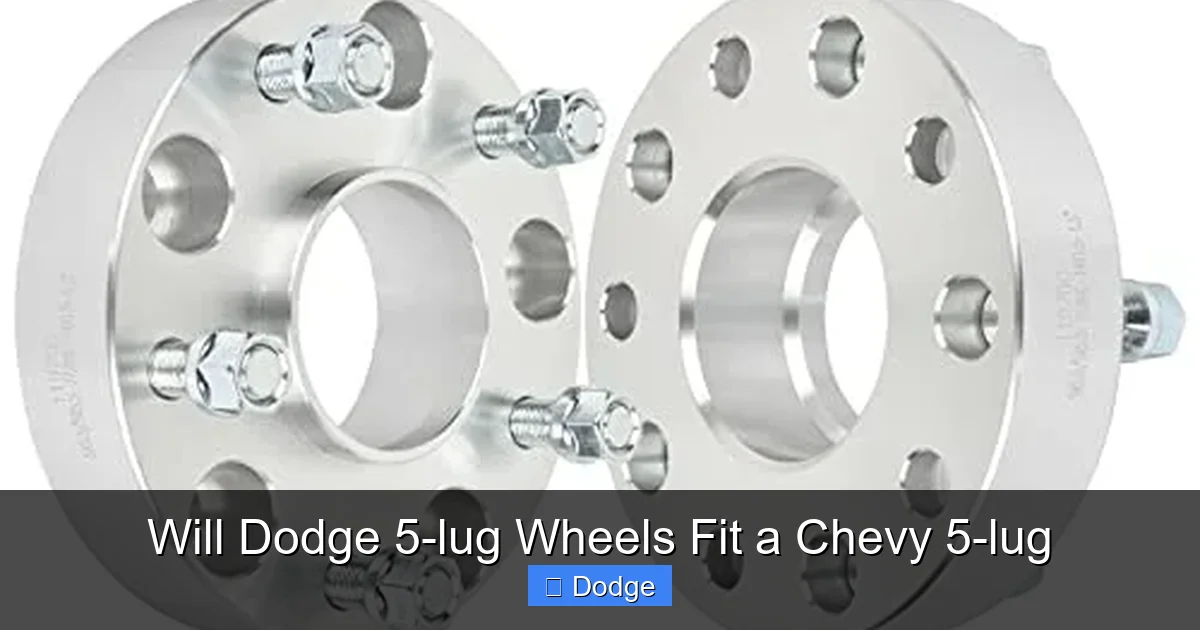
So, what if you really want those Dodge wheels on your Chevy? The most common workaround is using wheel adapters—also called bolt pattern converters. These are thick plates that bolt onto your Chevy’s hub and provide a new mounting surface with the Dodge bolt pattern.
For example, a 5×127 to 5×139.7 adapter lets you mount Dodge wheels on a Chevy hub. They’re available in various thicknesses (usually 1–2 inches) and can be found online or at specialty shops.
Pros and Cons of Wheel Adapters
Adapters can be a lifesaver if you’ve found the perfect set of Dodge wheels at a junkyard or swap meet. They’re relatively affordable (typically $100–$200 for a set of four) and can open up more wheel options.
But they’re not without downsides:
– **Added weight:** Adapters add unsprung mass, which can affect ride quality and handling.
– **Reduced safety margin:** More components mean more potential failure points.
– **Clearance issues:** Thick adapters can push the wheel out too far, causing rubbing or interference.
– **Legal and inspection concerns:** Some states or inspection programs don’t allow adapters.
Choosing the Right Adapters
If you decide to go the adapter route, don’t skimp. Look for adapters that are:
– Made from forged aluminum or steel
– Hub-centric (with proper center rings)
– SAE J2530 certified (a safety standard for aftermarket wheels)
– Sold by reputable brands (like Spidertrax, OMF, or Dynofit)
Also, make sure the adapter thickness matches your needs. A 1-inch adapter might be fine for a mild lift, but if you’re running big tires or a suspension lift, you might need more clearance.
And always torque the lug nuts to the manufacturer’s specs—both on the adapter and the wheel. Use a torque wrench, not an impact gun, to avoid over-tightening.
Real-World Examples: When It Works (and When It Doesn’t)
Let’s look at a few real scenarios to see how this plays out in practice.
Example 1: 2015 Chevy Silverado with 2012 Dodge Ram Wheels
You find a set of 2012 Dodge Ram 1500 wheels at a salvage yard. They’re in great shape, and you love the look. But your Silverado has a 5×127 bolt pattern, and the Dodge wheels are 5×139.7.
Can you make it work? Yes—but only with adapters. You’d need 5×127 to 5×139.7 adapters, plus hub-centric rings (77.8mm to 70.3mm). You’d also need to check the offset. If the Dodge wheels have a +15mm offset and your Silverado uses +20mm, you might need 5mm spacers to avoid rubbing.
Total cost: ~$200 for adapters, ~$40 for rings, plus installation. It’s doable, but not plug-and-play.
Example 2: 2004 Chevy Colorado with 2006 Dodge Dakota Wheels
Here’s a trickier case. The 2006 Dodge Dakota uses a 5×114.3mm bolt pattern—different from both the Ram and the Chevy Colorado (which is also 5×114.3mm). Wait—does that mean they fit?
Not necessarily. While the bolt pattern matches, the hub bore on the Dakota is 73mm, while the Colorado is 70mm. You’d still need hub-centric rings. Also, the offset might differ. So even with matching bolt patterns, you’re not out of the woods.
Example 3: Forced Fit = Failure
We’ve all heard stories of someone “making it work” by grinding the lug holes or using longer studs. Don’t do this. One forum user reported that his “modified” Dodge wheels came loose on the highway, causing a near-accident. The wheels weren’t hub-centric, and the lugs were overstressed.
Safety isn’t worth the risk. If it doesn’t fit properly, don’t force it.
Final Tips for a Safe and Successful Swap
Before you commit to putting Dodge wheels on your Chevy, here are some final tips:
– **Measure twice, buy once:** Use a bolt pattern gauge or calipers to confirm specs.
– **Check your owner’s manual:** It often lists OEM wheel specs.
– **Consult a professional:** A reputable tire shop can test-fit wheels and advise on adapters.
– **Don’t ignore vibration:** If your steering wheel shakes after a swap, something’s wrong.
– **Inspect regularly:** Check lug nuts and adapters every few thousand miles.
Remember, wheels are a critical safety component. Aesthetic upgrades are fun, but not at the expense of reliability.
Conclusion: Compatibility Is Complicated—But Manageable
So, will Dodge 5-lug wheels fit a Chevy 5-lug? The honest answer is: usually not without modifications. The bolt patterns are different, the hub bores don’t match, and offsets can vary. But with the right adapters, hub-centric rings, and careful planning, it’s possible—in some cases.
The key is to do your homework. Don’t assume compatibility based on the number of lugs. Measure everything, understand the risks, and prioritize safety over style.
If you’re not confident in your ability to assess fitment, consult a professional. A few hundred dollars in expert advice is cheaper than a wrecked truck or a hospital bill.
In the end, the best wheels are the ones that fit right, drive smooth, and keep you safe. Whether they’re Dodge, Chevy, or something else entirely, that’s what matters most.
Frequently Asked Questions
Can I put Dodge Ram wheels on a Chevy Silverado?
Only with wheel adapters. Most Dodge Rams use a 5×139.7mm bolt pattern, while Silverados use 5x127mm. You’ll also need hub-centric rings to match the larger Dodge hub bore.
Do I need hub-centric rings when using adapters?
Yes. Hub-centric rings ensure the wheel is centered on the hub, reducing vibration and stress on the lugs. Without them, the wheel may wobble or fail.
Are wheel adapters safe?
Quality adapters from reputable brands are generally safe if installed correctly. Always torque lug nuts properly and inspect regularly for wear or looseness.
What happens if I ignore bolt pattern differences?
The wheel won’t seat properly, leading to vibration, uneven wear, and potential wheel detachment. It’s a serious safety risk and should never be attempted.
Can I use spacers instead of adapters?
Spacers change offset but don’t fix bolt pattern mismatches. You can use them with adapters to fine-tune fitment, but never as a substitute for proper bolt pattern compatibility.
How do I measure my wheel’s bolt pattern?
For a 5-lug wheel, measure from the center of one lug hole to the back of the opposite hole. Use a bolt pattern gauge or calipers for accuracy.
