
What Transmission Is in a 1997 Dodge Ram 1500?

The 1997 Dodge Ram 1500 came equipped with either the 4-speed automatic 46RE or 47RE transmission, depending on the engine and drivetrain configuration. These robust units were designed for durability and smooth shifting, making them popular among truck enthusiasts and daily drivers alike.
If you’re a proud owner of a 1997 Dodge Ram 1500—or thinking about buying one—you’re driving a piece of American truck history. This model year marked the second generation of the Ram, known for its bold styling, improved ride quality, and rugged dependability. But when it comes to what’s under the hood—and more specifically, what’s bolted to the back of the engine—many owners and enthusiasts have questions. One of the most common is: *What transmission is in a 1997 Dodge Ram 1500?*
The answer isn’t a simple one-size-fits-all. Depending on your engine size, drivetrain (2WD or 4WD), and trim level, your 1997 Ram 1500 could have one of several transmissions. But the vast majority came equipped with a 4-speed automatic transmission from Chrysler’s trusted lineup. These units were built to handle the torque of the Ram’s V8 engines and deliver reliable performance both on the highway and off the beaten path.
In this guide, we’ll break down exactly what transmission your 1997 Dodge Ram 1500 likely has, how to identify it, what to expect in terms of performance and longevity, and how to keep it running smoothly for years to come. Whether you’re restoring a classic, troubleshooting a shifting issue, or just curious about your truck’s mechanics, this article has you covered.
Key Takeaways
- Standard Transmission Options: The 1997 Dodge Ram 1500 primarily used the 46RE (for V8 models) and 47RE (for heavier-duty applications) 4-speed automatic transmissions.
- Engine Compatibility: Transmission choice depended on the engine—5.2L V8 typically used the 46RE, while the 5.9L V8 often used the stronger 47RE.
- Manual Option Rare: A 5-speed NV3500 manual transmission was available but uncommon, mostly found in base trim or fleet models.
- Electronic Controls: Both automatic transmissions were electronically controlled, offering smoother shifts and better fuel efficiency than older hydraulic systems.
- Maintenance Matters: Regular fluid changes and filter replacements are crucial to extending the life of these transmissions.
- Common Issues: Overheating, solenoid failures, and worn bands are known problems—early diagnosis prevents costly repairs.
- Aftermarket Support: Plenty of rebuild kits, performance upgrades, and replacement parts are available due to the transmission’s popularity.
📑 Table of Contents
Understanding the 1997 Dodge Ram 1500 Transmission Lineup
When it comes to the 1997 Dodge Ram 1500, the transmission options were fairly straightforward—but important to understand if you’re maintaining, repairing, or upgrading your truck. The majority of these trucks rolled off the assembly line with one of two automatic transmissions: the **46RE** or the **47RE**. Both are 4-speed electronically controlled automatics developed by Chrysler and used across various Dodge and Jeep models during the late ’90s and early 2000s.
The **46RE** was the standard transmission for most 1997 Ram 1500 models equipped with the 5.2L Magnum V8 engine. This transmission was designed for rear-wheel-drive (2WD) and four-wheel-drive (4WD) configurations and was known for its balance of strength and smooth shifting. It featured a lock-up torque converter and electronic shift controls, which improved fuel economy and reduced heat buildup compared to older hydraulic systems.
The **47RE**, on the other hand, was a heavier-duty version used primarily with the 5.9L Magnum V8 engine. This engine produced significantly more torque—up to 300 lb-ft—so it required a transmission that could handle the extra load. The 47RE shared many internal components with the 46RE but featured upgraded parts like a stronger input shaft, reinforced planetary gears, and a more robust valve body. It was also used in some high-output 5.2L V8 models, especially in 4WD configurations or when towing packages were selected.
It’s worth noting that while the 46RE and 47RE look nearly identical from the outside, they are not interchangeable without modifications. The bellhousing bolt pattern matches the engine, but internal components and electronic controls differ. So if you’re swapping transmissions, you need to match the correct unit to your engine and drivetrain.
Manual Transmission Option: The NV3500
While automatic transmissions dominated the 1997 Ram 1500 lineup, there was a manual option available—though it was far less common. The **NV3500** was a 5-speed manual transmission offered primarily on base model Rams with the 3.9L V6 or 5.2L V8 engines. This transmission was manufactured by New Venture Gear and was known for its durability and smooth shifting, especially in lighter-duty applications.
The NV3500 was typically paired with the 5.2L V8 in lower trim levels or fleet vehicles. It featured a hydraulic clutch system and a gear ratio spread that favored both fuel economy and towing capability. However, due to the growing popularity of automatics in full-size trucks during the ’90s, manual transmissions became increasingly rare. As a result, finding a 1997 Ram 1500 with a manual transmission today is a bit like discovering a hidden gem—especially if it’s in good condition.
If you do come across a manual-equipped Ram, it’s often a sign that the truck was used for light-duty work or driven by someone who preferred the control and engagement of a stick shift. These trucks can be great for enthusiasts who enjoy driving mechanics, but they may require more maintenance, especially if the clutch or synchros are worn.
How to Identify Your 1997 Ram 1500’s Transmission
Visual guide about What Transmission Is in a 1997 Dodge Ram 1500?
Image source: dodgeforum.com
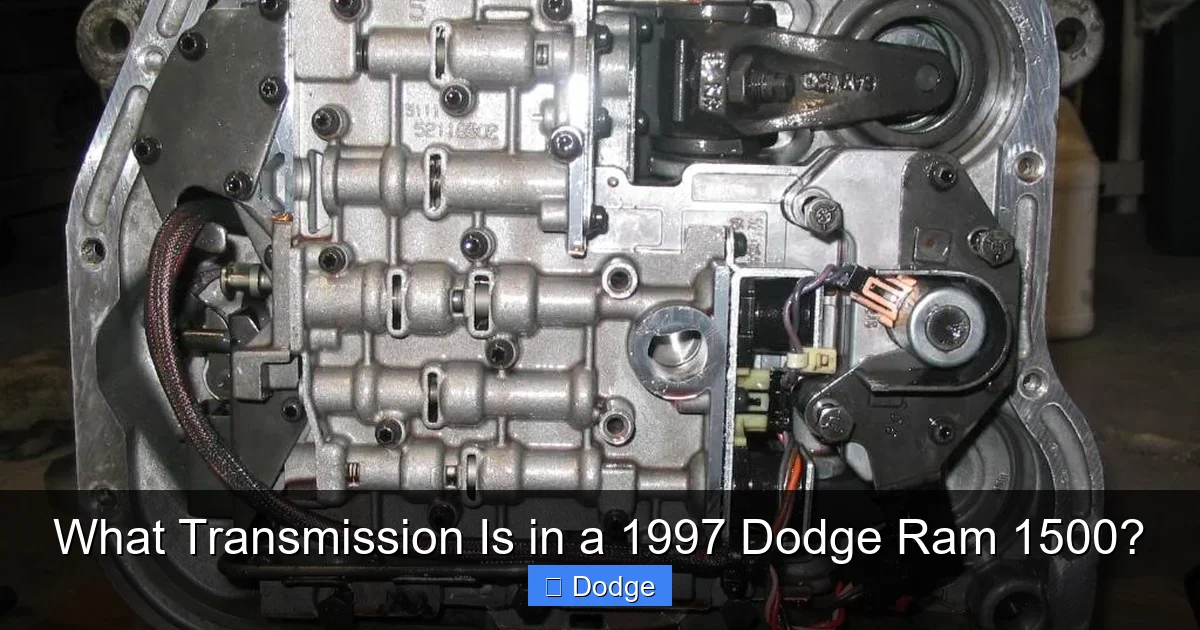
So, how do you know which transmission is in your 1997 Dodge Ram 1500? There are several ways to identify it, ranging from simple visual checks to decoding the vehicle identification number (VIN).
One of the easiest methods is to look at the **transmission tag** or **data plate** located on the transmission housing. On most 46RE and 47RE units, you’ll find a metal tag bolted to the side of the transmission case. This tag contains a series of numbers and letters that identify the model, build date, and gear ratios. For example, a tag that reads “46RE” confirms you have the standard-duty automatic, while “47RE” indicates the heavy-duty version.
Another way to identify your transmission is by checking the **VIN**. The 8th character of the VIN corresponds to the engine, and the 4th and 5th characters can sometimes indicate the transmission type. For instance, a VIN with a “Z” in the 8th position typically means a 5.9L V8, which would likely be paired with a 47RE. However, VIN decoding isn’t always 100% reliable for transmissions, so it’s best to confirm with a physical inspection.
You can also identify the transmission by its **physical characteristics**. The 46RE and 47RE both have a rectangular-shaped pan with 14 bolts, but the 47RE often has a slightly larger cooler line fitting and a different torque converter. The NV3500 manual, on the other hand, has a much smaller bellhousing and a clutch pedal—obvious signs you’re dealing with a stick shift.
If you’re still unsure, consulting a repair manual or reaching out to a Dodge specialist can help. Many online forums and parts websites also offer VIN decoders and transmission lookup tools that can provide accurate information based on your truck’s specs.
Performance and Reliability of the 46RE and 47RE
Visual guide about What Transmission Is in a 1997 Dodge Ram 1500?
Image source: platform.cstatic-images.com
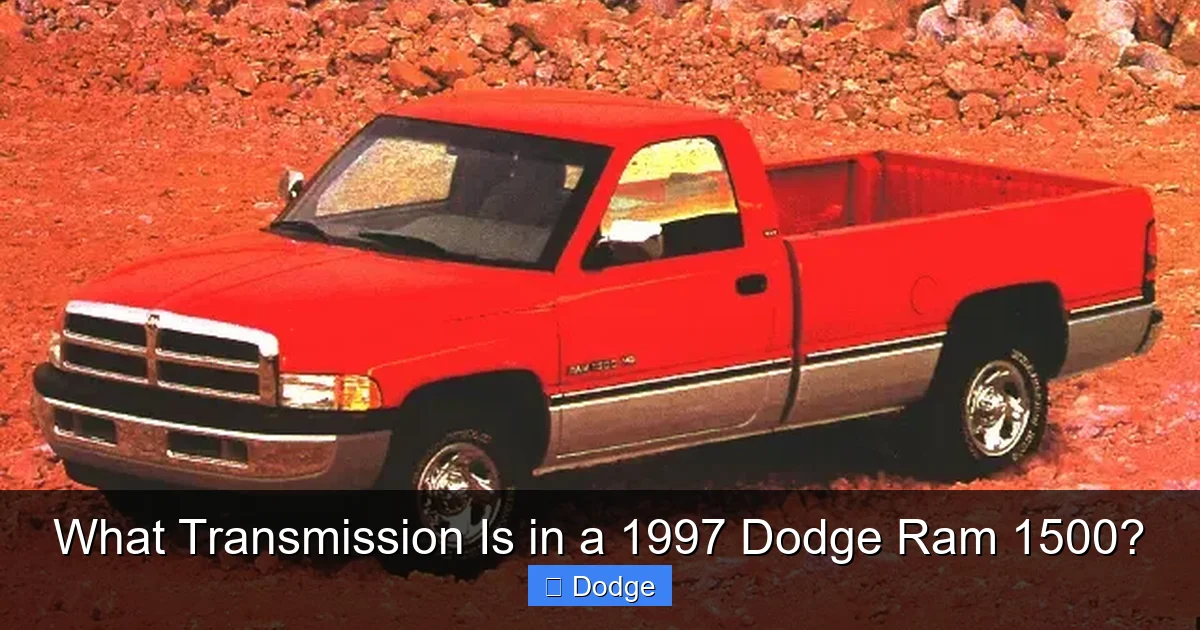
When it comes to performance and reliability, the 46RE and 47RE transmissions in the 1997 Dodge Ram 1500 have a solid reputation—especially when properly maintained. These units were built during an era when Chrysler was focusing on improving the durability and efficiency of its automatic transmissions, and the results show in real-world use.
The **46RE** is known for its smooth shifting and ability to handle the 5.2L V8’s 225 horsepower and 295 lb-ft of torque. It features a lock-up torque converter that engages around 45–50 mph, reducing slippage and improving fuel economy. Drivers often praise its quiet operation and responsive feel, especially in highway driving. However, like any automatic, it can develop issues over time—particularly if the fluid isn’t changed regularly.
The **47RE**, being the heavy-duty variant, is even more impressive in terms of strength. It was designed to handle the 5.9L V8’s 245 horsepower and 300+ lb-ft of torque, making it ideal for towing, hauling, or off-road use. Many owners report that their 47REs have lasted well over 200,000 miles with proper care. The reinforced internals and improved cooling system help prevent overheating, which is a common cause of transmission failure.
That said, both transmissions are not immune to problems. Common issues include:
– **Solenoid failures:** The electronic shift solenoids can wear out or become clogged, leading to harsh shifts, slipping, or failure to engage gears.
– **Band wear:** The forward and intermediate bands can stretch or burn out, especially if the truck is frequently driven in heavy traffic or towing heavy loads.
– **Overheating:** Lack of a transmission cooler or towing beyond capacity can cause fluid to break down, leading to premature wear.
– **Valve body issues:** Sticking valves or worn seals can cause erratic shifting or delayed engagement.
The good news? Most of these problems are preventable with regular maintenance. Changing the transmission fluid and filter every 30,000 to 50,000 miles—or more frequently if you tow or drive in hot climates—can significantly extend the life of your transmission.
Towing and Heavy-Duty Use
If you use your 1997 Ram 1500 for towing or heavy-duty work, the transmission becomes even more critical. The 47RE is the better choice for these applications, thanks to its stronger internals and improved cooling. However, even the 47RE has limits.
Chrysler recommended a maximum towing capacity of around 8,000 pounds for the 5.9L V8 with the 47RE, depending on the drivetrain and axle ratio. Exceeding this limit—or towing in hot weather without proper cooling—can lead to overheating and accelerated wear.
To protect your transmission during heavy use, consider installing an **auxiliary transmission cooler**. These coolers mount in front of the radiator and help lower fluid temperatures by 20–40 degrees Fahrenheit. They’re especially useful for drivers in warm climates or those who frequently tow trailers, boats, or RVs.
Additionally, avoid “lugging” the engine—downshifting too late or driving at very low RPMs under load. This puts extra strain on the transmission and can cause overheating. Use the overdrive wisely: turn it off when towing uphill or in stop-and-go traffic to prevent excessive shifting and heat buildup.
Maintenance Tips to Keep Your Transmission Running Smoothly
Visual guide about What Transmission Is in a 1997 Dodge Ram 1500?
Image source: dodgetransmission.net
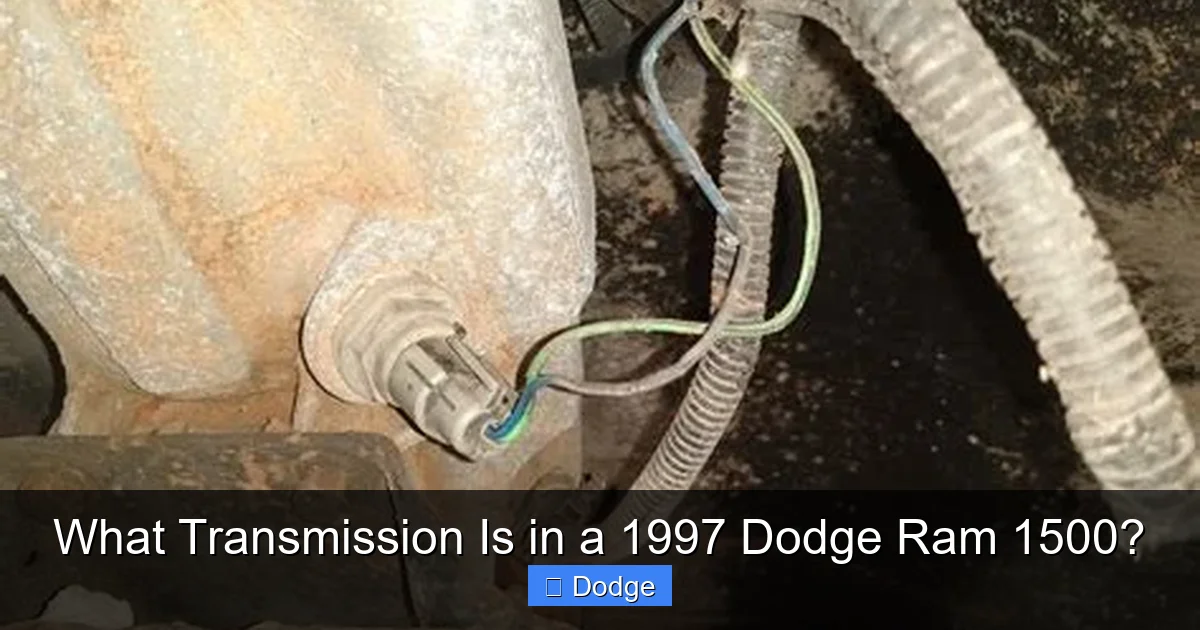
One of the best ways to ensure your 1997 Dodge Ram 1500’s transmission lasts for decades is through consistent, proactive maintenance. These transmissions are robust, but they’re not indestructible—especially after 25+ years of service.
The most important maintenance task is **regular fluid and filter changes**. The 46RE and 47RE use Dexron III/Mercon automatic transmission fluid (ATF), and it’s recommended to change it every 30,000 to 50,000 miles. If you tow, drive in hot weather, or frequently encounter stop-and-go traffic, consider changing it every 15,000 to 25,000 miles.
When changing the fluid, always replace the filter as well. The filter catches metal shavings and debris that can clog the valve body or damage internal components. Use a high-quality filter and make sure the new O-ring is properly seated to prevent leaks.
Another key tip: **check the fluid level regularly**. With the engine running and the transmission in park, pull out the dipstick, wipe it clean, reinsert it, and check the level. The fluid should be between the “Full” and “Add” marks and should be a clear red or pink color. If it’s dark brown or smells burnt, it’s time for a change.
Don’t forget about the **transmission cooler lines and radiator**. Over time, these can develop leaks or become clogged, reducing cooling efficiency. Inspect them during oil changes and replace any cracked or brittle lines.
If you notice any signs of trouble—such as slipping, delayed engagement, harsh shifts, or a burning smell—don’t ignore them. Early diagnosis can save you from a costly rebuild or replacement. A professional transmission shop can perform a pressure test or scan for trouble codes to pinpoint the issue.
DIY vs. Professional Service
Many Ram owners enjoy working on their trucks themselves, and basic transmission maintenance like fluid changes can be done at home with the right tools. You’ll need a socket set, a drain pan, a new filter, and about 5–7 quarts of ATF.
However, more complex tasks—like replacing solenoids, rebuilding the valve body, or repairing internal damage—are best left to professionals. These jobs require specialized tools and knowledge, and a mistake can lead to further damage.
If you’re considering a transmission rebuild or upgrade, consult with a trusted mechanic or transmission specialist. They can assess the condition of your unit and recommend the best course of action based on your driving habits and budget.
Upgrades and Aftermarket Support
One of the advantages of owning a 1997 Dodge Ram 1500 is the strong aftermarket support for its transmissions. Whether you’re looking to improve performance, increase durability, or simply replace worn parts, there are plenty of options available.
For daily drivers, a **high-performance rebuild kit** can restore your 46RE or 47RE to like-new condition. These kits include upgraded clutches, steels, seals, and gaskets designed to handle higher torque and heat. Some kits even include billet input shafts or reinforced planetary gears for added strength.
If you’re into off-roading or heavy towing, consider a **transmission cooler upgrade** or a **shift kit**. Shift kits modify the valve body to provide firmer, quicker shifts, which can improve performance and reduce wear. They’re especially useful for trucks that frequently tow or drive in mountainous terrain.
For those looking to modernize their truck, **transmission swaps** are also an option. Some enthusiasts swap in a 48RE (from later Ram models) or even a 6-speed automatic for better fuel economy and performance. However, these swaps require significant modifications, including custom mounts, wiring harnesses, and possibly a new PCM.
Another popular upgrade is the **electronic transmission controller**. These devices allow you to customize shift points, firmness, and torque converter lockup, giving you more control over your truck’s performance. They’re particularly useful for towing or performance driving.
Common Myths and Misconceptions
There are several myths surrounding the 46RE and 47RE transmissions that can lead to confusion or poor maintenance decisions. Let’s clear up a few of the most common ones.
**Myth 1: “You don’t need to change the fluid if it looks clean.”**
Even if the fluid looks red, it can still be degraded internally. Heat and friction break down the additives in ATF over time, reducing its ability to lubricate and cool. Regular changes are essential, regardless of appearance.
**Myth 2: “Flushing is always better than draining.”**
While a flush can remove more old fluid, it can also dislodge debris that’s been settled in the pan, clogging the valve body. A drain-and-fill is often safer, especially in high-mileage trucks.
**Myth 3: “The 46RE and 47RE are the same.”**
They’re similar, but not identical. The 47RE has stronger internals and is better suited for high-torque applications. Swapping one for the other without modifications can lead to premature failure.
**Myth 4: “Manual transmissions are always more reliable.”**
While manuals can be simpler in design, they require more driver input and can suffer from clutch wear, synchro issues, and pilot bearing failures. Automatics, when maintained, can be just as reliable—and more convenient for daily driving.
Conclusion
The 1997 Dodge Ram 1500 is a classic American truck that continues to earn respect for its durability, style, and capability. At the heart of its drivetrain is a transmission that’s stood the test of time—the 46RE or 47RE automatic, with the rare NV3500 manual as a niche option. Understanding which transmission your Ram has, how it works, and how to care for it is key to keeping your truck on the road for years to come.
Whether you’re cruising down the highway, towing a trailer, or restoring a vintage Ram to its former glory, knowing the ins and outs of your transmission empowers you to make smart decisions about maintenance, repairs, and upgrades. With regular care and attention, your 1997 Ram’s transmission can deliver smooth, reliable performance for another 25 years.
So the next time someone asks, “What transmission is in a 1997 Dodge Ram 1500?” you’ll have the answer—and the knowledge to back it up.
Frequently Asked Questions
What transmission does a 1997 Dodge Ram 1500 have?
The 1997 Dodge Ram 1500 most commonly came with the 46RE or 47RE 4-speed automatic transmission, depending on the engine. The 46RE was standard with the 5.2L V8, while the 47RE was used with the 5.9L V8 for added strength.
Can I swap a 46RE for a 47RE?
Yes, but it’s not a direct swap. The 47RE has stronger internal components and may require modifications to the wiring, cooler lines, and mounts. Consult a transmission specialist before attempting the swap.
Is there a manual transmission option for the 1997 Ram 1500?
Yes, the NV3500 5-speed manual was available, but it was rare and typically found on base models with the 3.9L V6 or 5.2L V8 engines.
How often should I change the transmission fluid?
Change the fluid and filter every 30,000 to 50,000 miles. If you tow or drive in hot climates, consider changing it every 15,000 to 25,000 miles.
What are common problems with the 47RE transmission?
Common issues include solenoid failures, worn bands, overheating, and valve body problems. Regular maintenance can prevent most of these issues.
Can I upgrade my 1997 Ram’s transmission for better performance?
Yes, you can install performance rebuild kits, shift kits, auxiliary coolers, or even swap in a stronger transmission like the 48RE, though modifications may be required.
