
Will Jeep 5 Lug Fit a Dodge Ram 1500

Jeep 5-lug wheels can fit a Dodge Ram 1500, but only if the bolt pattern, center bore, and offset match. This guide breaks down the technical details, compatibility factors, and real-world examples to help you make a safe and successful wheel swap.
So, you’ve got a Dodge Ram 1500 and you’re eyeing those rugged Jeep wheels sitting in your garage or at a swap meet. Maybe they’re from a Wrangler, a Grand Cherokee, or a Gladiator. They look tough, they’ve got that off-road vibe, and you’re wondering: “Will Jeep 5 lug fit a Dodge Ram 1500?” It’s a great question—and one that comes up often among truck and Jeep enthusiasts.
The short answer? Possibly. But it’s not as simple as just bolting them on and hitting the road. While both vehicles use a 5-lug bolt pattern, there are several other factors that determine whether a Jeep wheel will actually work on your Ram 1500. From center bore size to offset, wheel width, and even the year of the vehicle, every detail matters when it comes to safe and effective wheel compatibility.
In this guide, we’ll walk you through everything you need to know about fitting Jeep 5-lug wheels onto a Dodge Ram 1500. We’ll cover the technical specs, real-world examples, potential pitfalls, and practical tips to help you make an informed decision. Whether you’re upgrading for style, performance, or just trying to reuse some old wheels, this article will give you the confidence to move forward—safely and smartly.
Key Takeaways
- Bolt Pattern Compatibility: Both Jeep and Dodge Ram 1500 use a 5×5-inch (5x127mm) bolt pattern, making them technically compatible in this aspect.
- Center Bore Matters: The Ram 1500 has a larger hub-centric bore (77.8mm) than most Jeeps (71.5mm), so hub-centric rings are often needed for a snug fit.
- Offset and Backspacing: Jeep wheels may have different offsets, which can affect handling, tire wear, and suspension clearance on a Ram 1500.
- Wheel Width and Tire Size: Wider Jeep wheels or aggressive tires might rub on the Ram’s fenders or suspension components without modifications.
- Year and Model Variations: Not all Jeep models share the same specs—always verify your Jeep’s exact wheel dimensions before swapping.
- Use of Adapters or Spacers: In some cases, wheel adapters can bridge compatibility gaps, but they add complexity and should be used cautiously.
- Safety First: Always test-fit wheels and consult a professional if you’re unsure—improper fitment can lead to dangerous driving conditions.
📑 Table of Contents
- Understanding Bolt Patterns: The Foundation of Compatibility
- Center Bore: The Hidden Compatibility Factor
- Offset and Backspacing: How Wheels Sit on Your Truck
- Wheel Width and Tire Size: Clearance Is Key
- Using Wheel Adapters and Spacers: A Last Resort?
- Real-World Examples and Success Stories
- Final Tips for a Safe and Successful Swap
- Conclusion
Understanding Bolt Patterns: The Foundation of Compatibility
When it comes to wheel swaps, the bolt pattern is the first thing you need to check. It’s the most basic—and most critical—factor in determining whether two wheels can even be mounted on the same vehicle.
The bolt pattern, also known as the lug pattern or PCD (Pitch Circle Diameter), describes the number of lug nuts and the diameter of the circle they form. For example, a 5×5-inch bolt pattern means there are five lug nuts arranged in a circle with a diameter of 5 inches (or 127 millimeters).
Here’s the good news: both the Dodge Ram 1500 and many Jeep models—including the Wrangler (JK and JL), Gladiator, and Grand Cherokee (WK2)—use a 5×5-inch (5x127mm) bolt pattern. This means that, at least on paper, Jeep wheels should bolt onto a Ram 1500 without needing adapters.
But don’t get too excited just yet. While the bolt pattern matches, that’s only the first hurdle. There are other dimensions that must align for a safe and proper fit.
Why Bolt Pattern Matching Isn’t Enough
Just because two wheels share the same bolt pattern doesn’t mean they’re interchangeable. Think of it like shoes: two pairs might have the same size label, but one could be too narrow, too long, or have a different arch support. Similarly, wheels have multiple dimensions that affect how they sit on your vehicle.
For instance, a Jeep Wrangler might have a 5×5 bolt pattern, but if its center bore is too small or its offset is way off, it could cause vibration, poor handling, or even damage to your Ram’s suspension. That’s why you need to look beyond the bolt pattern and examine other key specs.
Common Jeep Models with 5×5 Bolt Patterns
Not all Jeeps use the same wheel specs, even if they share the same bolt pattern. Here are some popular Jeep models and their typical wheel dimensions:
- Jeep Wrangler (JK, 2007–2018): 5×5 bolt pattern, 71.5mm center bore, various offsets depending on trim and wheel size.
- Jeep Wrangler (JL, 2018–present): 5×5 bolt pattern, 71.5mm center bore, similar to JK but with updated suspension geometry.
- Jeep Gladiator (JT, 2020–present): 5×5 bolt pattern, 71.5mm center bore—essentially a Wrangler with a bed.
- Jeep Grand Cherokee (WK2, 2011–2022): 5×5 bolt pattern, but often with a larger center bore (up to 77.8mm on some trims).
As you can see, while the bolt pattern is consistent, other dimensions vary. This is why it’s essential to check each spec individually before attempting a swap.
Center Bore: The Hidden Compatibility Factor
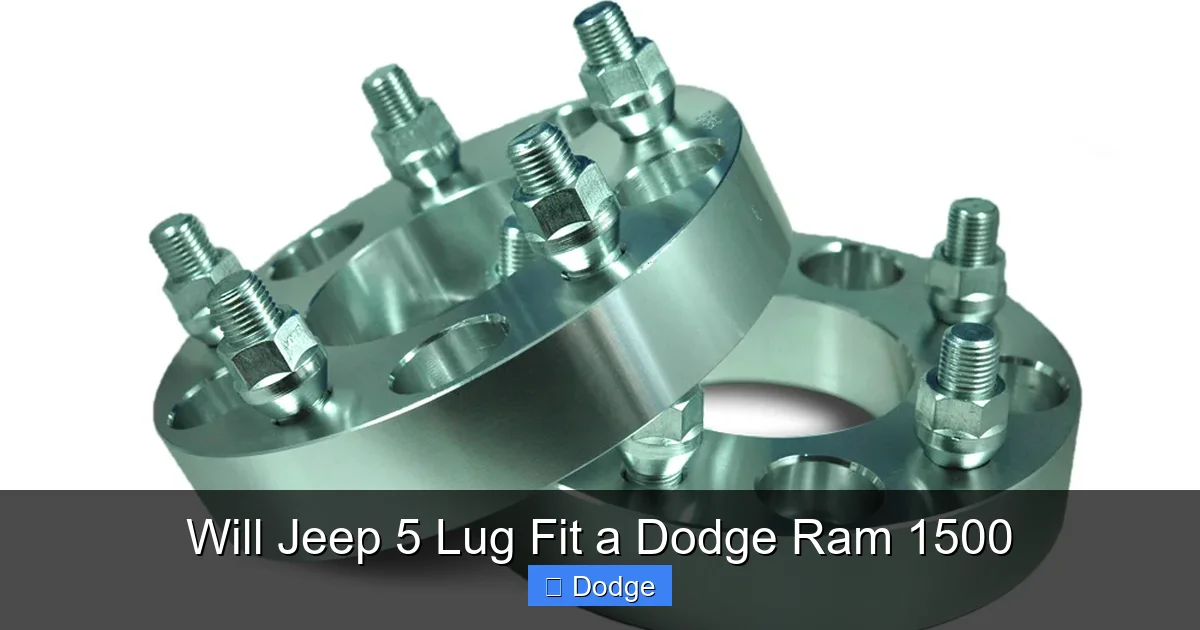
Visual guide about Will Jeep 5 Lug Fit a Dodge Ram 1500
Image source: imgs.inkfrog.com
If the bolt pattern is the first checkpoint, the center bore is the second—and often the most overlooked. The center bore is the large hole in the back of the wheel that fits over the hub of your vehicle. Its purpose is to ensure the wheel is perfectly centered on the hub, which is critical for smooth rotation and even tire wear.
Here’s where things get tricky: the Dodge Ram 1500 has a hub-centric design with a center bore of 77.8 millimeters. Most Jeep models, especially the Wrangler and Gladiator, have a smaller center bore of 71.5 millimeters.
This means that if you try to mount a typical Jeep wheel directly onto a Ram 1500, the wheel won’t sit flush on the hub. Instead, it will be held in place only by the lug nuts, which can lead to vibration, wobbling, and even wheel failure at high speeds.
Hub-Centric vs. Lug-Centric Wheels
There are two ways wheels can be centered on a hub:
- Hub-centric: The wheel’s center bore matches the vehicle’s hub diameter. This is the ideal setup, as the hub supports the weight and centers the wheel.
- Lug-centric: The wheel is centered by the lug nuts alone. This is less stable and can cause imbalance, especially with heavier wheels or at highway speeds.
Most modern vehicles, including the Ram 1500, are designed for hub-centric wheels. That’s why using a wheel with a smaller center bore—like a Jeep wheel—can be problematic.
Solving the Center Bore Mismatch
So, what can you do if your Jeep wheel has a 71.5mm center bore but your Ram needs 77.8mm? The solution is simple: use hub-centric rings.
Hub-centric rings are thin, durable plastic or metal inserts that fit into the back of the wheel, reducing the center bore from 77.8mm to 71.5mm. They allow the Jeep wheel to sit snugly on the Ram’s hub, restoring proper centering and eliminating vibration.
These rings are inexpensive (usually under $20 for a set) and widely available online or at auto parts stores. Just make sure to get the correct size: 77.8mm outer diameter (to fit the Ram hub) and 71.5mm inner diameter (to fit the Jeep wheel).
Important Note on Grand Cherokee Wheels
Interestingly, some Jeep Grand Cherokee models—especially later WK2 trims—come with a 77.8mm center bore, which matches the Ram 1500 exactly. If you’re using wheels from a Grand Cherokee, you might not need hub-centric rings at all. Always measure or check the specs before assuming.
Offset and Backspacing: How Wheels Sit on Your Truck
Visual guide about Will Jeep 5 Lug Fit a Dodge Ram 1500
Image source: vehiclerides.com
Even if the bolt pattern and center bore match, the offset and backspacing of the wheel can make or break the fit. These two measurements determine how far the wheel sits in or out from the hub, which affects handling, tire clearance, and overall appearance.
What Is Wheel Offset?
Offset is the distance between the wheel’s mounting surface and its centerline. It’s measured in millimeters and can be positive, negative, or zero:
- Positive offset: The mounting surface is toward the front (street side) of the wheel. This pushes the wheel inward, closer to the suspension.
- Negative offset: The mounting surface is toward the back (brake side) of the wheel. This pushes the wheel outward, giving a more aggressive stance.
- Zero offset: The mounting surface is exactly at the centerline.
Most factory wheels have a positive offset. For example, a stock Ram 1500 might have an offset of +15mm to +25mm, while a Jeep Wrangler could range from +10mm to -12mm, depending on the wheel and trim.
What Is Backspacing?
Backspacing is the distance from the wheel’s mounting surface to the inner edge (the back) of the wheel. It’s often used interchangeably with offset, but it’s a different measurement. Backspacing tells you how much room the wheel has inside the wheel well.
A wheel with more backspacing sits deeper into the fender, while one with less backspacing sticks out more.
Why Offset and Backspacing Matter on a Ram 1500
If you install a Jeep wheel with a significantly different offset or backspacing, you could run into several issues:
- Tire rubbing: A wheel with too much negative offset or too little backspacing may cause the tire to rub against the fender, suspension, or brake components—especially when turning or going over bumps.
- Handling changes: A more negative offset increases the track width, which can improve stability but also increase stress on wheel bearings and steering components.
- Uneven tire wear: Improper offset can cause the tire to wear unevenly, reducing lifespan and performance.
- Aesthetic issues: While some people like the “pumped” look of wheels sticking out, too much can look unbalanced or unsafe.
How to Check and Compare Offset
To determine if a Jeep wheel will fit your Ram 1500, compare the offset and backspacing to your current wheels. You can find this info in the owner’s manual, on the wheel itself (sometimes stamped on the back), or by using a wheel offset calculator online.
As a general rule:
- If the Jeep wheel has a similar or slightly more positive offset than your Ram’s stock wheels, it should fit without issues.
- If the offset is much more negative, you may need to check for clearance or consider using wheel spacers (more on that later).
For example, if your Ram 1500 has +20mm offset wheels and you’re considering Jeep wheels with +10mm offset, that’s a 10mm difference. The new wheels will sit 10mm farther out, which might be fine—but you should still test-fit them to be sure.
Wheel Width and Tire Size: Clearance Is Key

Visual guide about Will Jeep 5 Lug Fit a Dodge Ram 1500
Image source: cdn.opplehouse.com
Another factor that’s often overlooked is wheel width. Jeep wheels—especially aftermarket ones—can be wider than stock Ram wheels, which affects how the tire sits and whether it clears the fenders and suspension.
Typical Wheel Widths
- Stock Ram 1500: Usually 8 to 9 inches wide.
- Stock Jeep Wrangler: Typically 7 to 8.5 inches wide.
- Aftermarket Jeep wheels: Can range from 8 to 10+ inches wide, especially on lifted or modified Jeeps.
A wider wheel can accommodate a wider tire, which looks great and improves traction. But on a Ram 1500, a wheel that’s too wide—especially with a low offset—can cause the tire to rub against the inner fender liner, control arms, or sway bar.
Tire Size Considerations
Even if the wheel fits, the tire size matters. A Jeep might run 33-inch or 35-inch tires, but those same tires on a Ram 1500 could rub unless you have a lift kit or trimmed fenders.
For example, a 275/65R18 tire (about 32 inches tall) might fit fine on a stock Ram, but a 315/70R17 (about 35 inches) could require modifications.
Always check tire clearance before committing to a swap. You can do this by:
- Measuring the distance between the current tire and fender/suspension.
- Using a tire size comparison tool online.
- Test-fitting the wheel and tire combination (with the vehicle on the ground and suspension loaded).
Tips for Wider Wheels
If you’re set on using wider Jeep wheels:
- Look for wheels with a higher backspacing to keep the tire tucked in.
- Consider a mild lift or leveling kit to create more clearance.
- Use fender flares or trim the inner fender if necessary.
- Avoid extreme tire sizes unless you’re prepared for modifications.
Using Wheel Adapters and Spacers: A Last Resort?
If your Jeep wheels don’t quite fit due to offset or center bore issues, you might consider using wheel adapters or spacers. But these should be used cautiously—and only when necessary.
What Are Wheel Adapters?
Wheel adapters are thick plates that bolt onto your Ram’s hub and provide a new mounting surface for the Jeep wheel. They can change the bolt pattern, increase offset, or adapt to a different center bore.
For example, a 5×5 to 5×5 adapter with a 1.5-inch thickness would push the wheel out by 1.5 inches, effectively changing the offset.
What Are Wheel Spacers?
Spacers are similar but thinner. They fit between the hub and the wheel, pushing the wheel outward without changing the bolt pattern. They’re often used to correct minor clearance issues.
Pros and Cons of Adapters and Spacers
Pros:
- Allow use of incompatible wheels.
- Can improve stance and handling (if used correctly).
- Relatively affordable.
Cons:
- Add stress to wheel bearings and suspension.
- Can cause vibration if not hub-centric.
- May void warranty or affect insurance.
- Require high-quality, properly installed components.
When to Use Them
Only use adapters or spacers if:
- You’ve confirmed the wheels won’t fit without them.
- You’re using high-quality, hub-centric adapters.
- You torque them properly and recheck regularly.
- You’re not exceeding safe load or speed limits.
In most cases, it’s better to find wheels that fit natively rather than relying on adapters.
Real-World Examples and Success Stories
Many Ram 1500 owners have successfully used Jeep wheels—here are a few real-world examples:
- Case 1: A 2015 Ram 1500 owner swapped in 17×8 Jeep Wrangler JK wheels with +10mm offset. With hub-centric rings and 265/70R17 tires, they fit perfectly with no rubbing.
- Case 2: A 2020 Ram 1500 used 18×9 Grand Cherokee WK2 wheels (77.8mm bore, +25mm offset). No adapters needed—direct bolt-on with factory-like fit.
- Case 3: A lifted Ram 1500 installed 17×9 Gladiator wheels with -12mm offset and 35-inch tires. Required fender trimming and a 2-inch leveling kit, but looks great and drives smoothly.
These examples show that with the right specs and preparation, Jeep wheels can work on a Ram 1500.
Final Tips for a Safe and Successful Swap
Before you make the swap, keep these tips in mind:
- Always verify bolt pattern, center bore, offset, and width.
- Use hub-centric rings if needed.
- Test-fit wheels with tires before driving.
- Torque lug nuts properly and recheck after 50–100 miles.
- Consult a professional if you’re unsure.
- Prioritize safety over style.
Conclusion
So, will Jeep 5 lug fit a Dodge Ram 1500? The answer is: yes, in many cases—but only if the specs align. The shared 5×5 bolt pattern is a great starting point, but you must also consider center bore, offset, wheel width, and tire size.
With the right preparation—like using hub-centric rings or checking clearance—you can safely and successfully use Jeep wheels on your Ram 1500. Just remember: not all wheels are created equal, and a little research goes a long way.
Whether you’re going for a rugged off-road look or just reusing some spare wheels, take the time to do it right. Your truck—and your safety—will thank you.
Frequently Asked Questions
Can I put Jeep Wrangler wheels on a Dodge Ram 1500?
Yes, many Jeep Wrangler wheels can fit a Dodge Ram 1500 because both use a 5×5-inch bolt pattern. However, you’ll likely need hub-centric rings due to the smaller center bore on most Wrangler wheels.
Do I need wheel spacers to fit Jeep wheels on a Ram 1500?
Not always. Spacers are only needed if the offset or backspacing causes clearance issues. In many cases, proper hub-centric rings and matching specs are enough.
What size hub-centric rings do I need for Jeep wheels on a Ram 1500?
You’ll need 77.8mm outer diameter (to fit the Ram hub) and 71.5mm inner diameter (to fit most Jeep wheels). These rings ensure the wheel is centered properly.
Will 35-inch tires on Jeep wheels fit my Ram 1500?
It depends on your suspension setup. On a stock Ram, 35-inch tires may rub. A leveling kit or lift can help, but you should always test-fit first.
Are Grand Cherokee wheels better for a Ram 1500 swap?
Yes, especially later WK2 models with a 77.8mm center bore. They often match the Ram’s hub size, eliminating the need for hub-centric rings.
Can I use aftermarket Jeep wheels on my Ram 1500?
Yes, as long as they have a 5×5 bolt pattern, correct center bore (or use rings), and compatible offset and width. Always verify specs before installing.
