
Why Is My Toyota Tire Pressure Light Blinking Then Staying On?

When your Toyota’s tire pressure light blinks and then stays solid, it signals a specific fault within the Tire Pressure Monitoring System (TPMS), not just low tire pressure. This pattern typically indicates a malfunctioning sensor, a dead sensor battery, or a communication issue between the sensors and the vehicle’s computer. Driving with this light on is possible but not advisable for long, as you lose critical pressure monitoring, and the underlying issue needs professional diagnosis and repair.
That little exclamation mark inside a tire on your Toyota’s dashboard is supposed to be a straightforward friend. It lights up solid, you check your air pressure, you fill the tires, and it goes away. But what happens when it behaves erratically? What does it mean when your Toyota tire pressure light blinks for a few seconds and then stays on steadily? This isn’t just your car being quirky; it’s the Tire Pressure Monitoring System (TPMS) sending you a very specific, urgent message about its own health. Let’s decode that signal, understand why your Toyota is doing this, and figure out exactly what you need to do next.
First, a quick primer on your Toyota’s TPMS. Since 2007, all U.S.-sold vehicles, including every Toyota Camry, Corolla, RAV4, and Highlander, have had a direct TPMS. This means each wheel has a small electronic sensor inside the valve stem. These sensors constantly monitor the air pressure and temperature inside the tire and transmit that data wirelessly to your car’s computer. If pressure drops 25% below the recommended level, the system triggers a warning. The behavior of the light—how it illuminates—is actually a coded diagnostic language.
Key Takeaways
- Blinking then solid = system fault: This specific sequence means the TPMS itself has detected a problem, separate from just low pressure.
- Sensor failure is the prime suspect: A bad TPMS sensor, dead internal battery, or damaged sensor stem is the most common cause.
- Temperature swings trigger alerts: Significant cold weather can cause a temporary drop in pressure, sometimes triggering the light, but it shouldn’t cause the blink pattern.
- Reset won’t fix a hardware fault: You can reset the light after fixing tires, but a persistent blink-solid pattern requires sensor replacement or repair.
- Professional scan is essential: A mechanic needs a TPMS scan tool to read the specific sensor error code to pinpoint the faulty wheel.
- Ignoring it risks safety: Without a working TPMS, you won’t be warned of a slow leak or underinflation, affecting handling, wear, and fuel economy.
📑 Table of Contents
- Decoding the Blink: What “Blinking Then Staying On” Really Means
- Diagnosing the Problem: Your Step-by-Step Guide
- The Fix: What to Do When the Light Won’t Quit
- Can You Drive With a Blinking TPMS Light? (The Safety Answer)
- Prevention and Best Practices for Your Toyota
- Conclusion: Listening to Your Toyota’s Digital Voice
Decoding the Blink: What “Blinking Then Staying On” Really Means
The sequence of your tire pressure light is not arbitrary. Toyota, like most manufacturers, uses the initial blink pattern to indicate a system-level fault, not a tire pressure issue. Here’s the standard code:
- Solid Light On: This is the “normal” warning. It means one or more tires are significantly under-inflated (usually 25% below the recommended PSI). You need to check and adjust your tire pressures.
- Light Blinks for 30-60 Seconds, Then Stays Solid: This is the “malfunction” indicator. The TPMS control module has powered up, performed its self-check, and detected a fault in the system—most commonly a sensor that isn’t communicating, has a dead battery, or has failed internally. The system is now in a “fail-safe” mode, keeping the light on to tell you the monitoring function is disabled.
Think of it like a smoke detector. A steady beep means there’s smoke (low pressure). A chirping pattern means the battery is low (sensor fault). Your Toyota is chirping (blinking) to say, “Hey, my own battery or my ability to listen to the tire sensors is broken.”
The “Why”: Common Culprits Behind the Blink-Solid Pattern
So, what physically goes wrong to cause this? Here are the top offenders, in order of likelihood.
- Failed TPMS Sensor: The sensor itself is a small, battery-powered electronic device sealed inside the valve stem. The battery typically lasts 7-10 years. When it dies, the sensor goes silent. The system notices a wheel station that hasn’t checked in and flags an error. Physical damage from curb impacts, potholes, or tire mounting can also crack the sensor housing.
- Damaged or Corroded Valve Stem: The sensor is integrated into the valve stem. Over time, exposure to road salt, grime, and weather can corrode the metal or plastic components, breaking the electrical connection or causing air leaks.
- Sensor Replacement/Service Issue: Did you just get new tires, a rotation, or a repair? If the technician didn’t properly remount the sensor, damaged it during installation, or failed to relearn the sensor to the vehicle after replacement, this code will appear. Sometimes, a sensor is installed with a generic, non-OEM valve cap that interferes with the signal.
- Electrical/Module Fault: Rarely, the problem is with the TPMS control module itself (often located under the dash or in a fuse box) or a wiring issue. This is less common than a single sensor failure.
- Interference or “Sensor Confusion”: After a full set of new sensors is installed, or if you have a temporary spare with a sensor, the vehicle’s computer may need to be told to “forget” the old IDs and “learn” the new ones. Without this relearn procedure, it sees unknown signals and sets a fault.
Diagnosing the Problem: Your Step-by-Step Guide
Before you rush to a shop, you can perform some basic checks. This will save you time and money and help you communicate clearly with your mechanic.
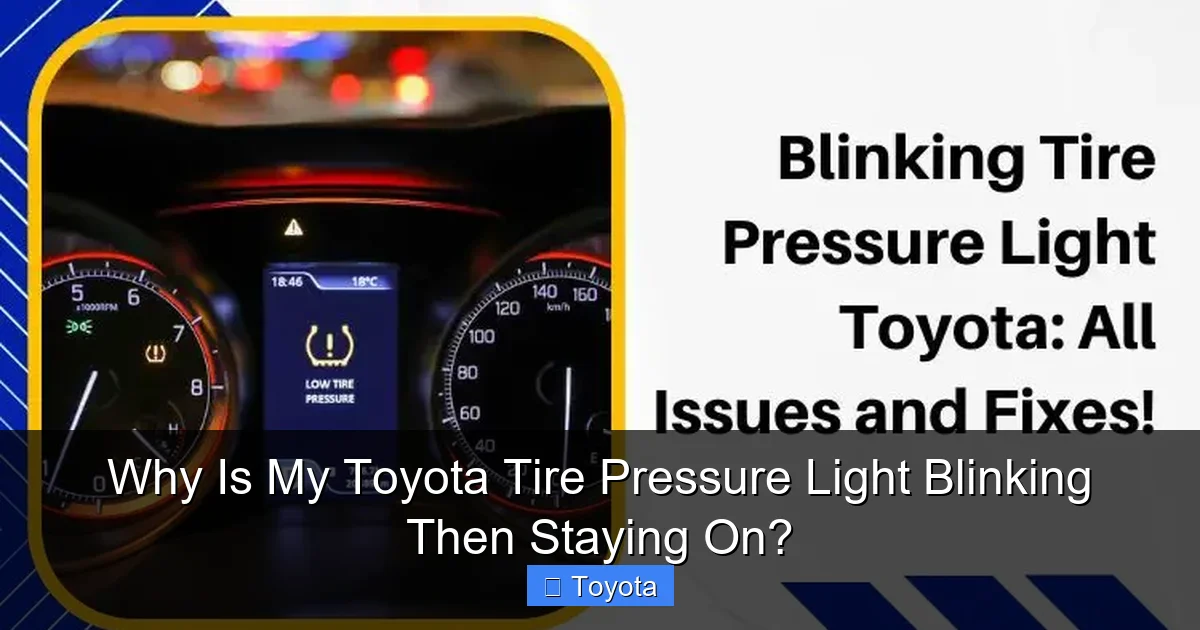
Visual guide about Why Is My Toyota Tire Pressure Light Blinking Then Staying On?
Image source: tirescamp.com
Step 1: The Physical Tire Check
Always start here, even with the blink pattern. Use a reliable tire pressure gauge (not the one at the gas station) to check the PSI in all four tires and the spare (if equipped). Compare it to the placard on your driver’s door jamb, not the number on the tire sidewall. Inflate them to the correct Toyota specification. If the light goes solid after this, you had low pressure. If it continues to blink then stay on, you have a system fault. You can also learn more about fluctuating pressure in our article on why tire pressure goes up and down.
Step 2: The Visual Inspection
Look at each valve stem. Is it bent, broken, or leaking air? Do you see any cracks in the rubber (if it’s a rubber stem)? Is there excessive rust or corrosion where the valve stem meets the wheel? Any obvious damage here is a strong indicator.
Step 3: The “Relearn” Attempt (For Some Models)
Some Toyota models have a manual TPMS relearn procedure you can try after adjusting pressures. It often involves turning the ignition on, pressing a TPMS button (usually located under the dash or near the steering column), and then driving the car for a period. Consult your owner’s manual first. If the manual procedure doesn’t work or your model doesn’t have a button, this step is skipped. For specific models like the Sienna, we have a dedicated guide on how to reset the tire pressure light on a Toyota Sienna.
Step 4: The Professional Scan (The Only Definitive Step)
This is the crucial one. You need a shop with a TPMS scan tool. They will plug into your Toyota’s OBD-II port and read the TPMS module for a specific fault code. This code will point to a specific wheel position (e.g., “Left Front Sensor Not Responding”) or a general system error. Without this scan, you’re guessing. This is the same technology used to diagnose other warning lights, like a Toyota Camry check engine light.
The Fix: What to Do When the Light Won’t Quit
Once diagnosed, the solution is usually one of the following, performed by a professional tire technician or mechanic.
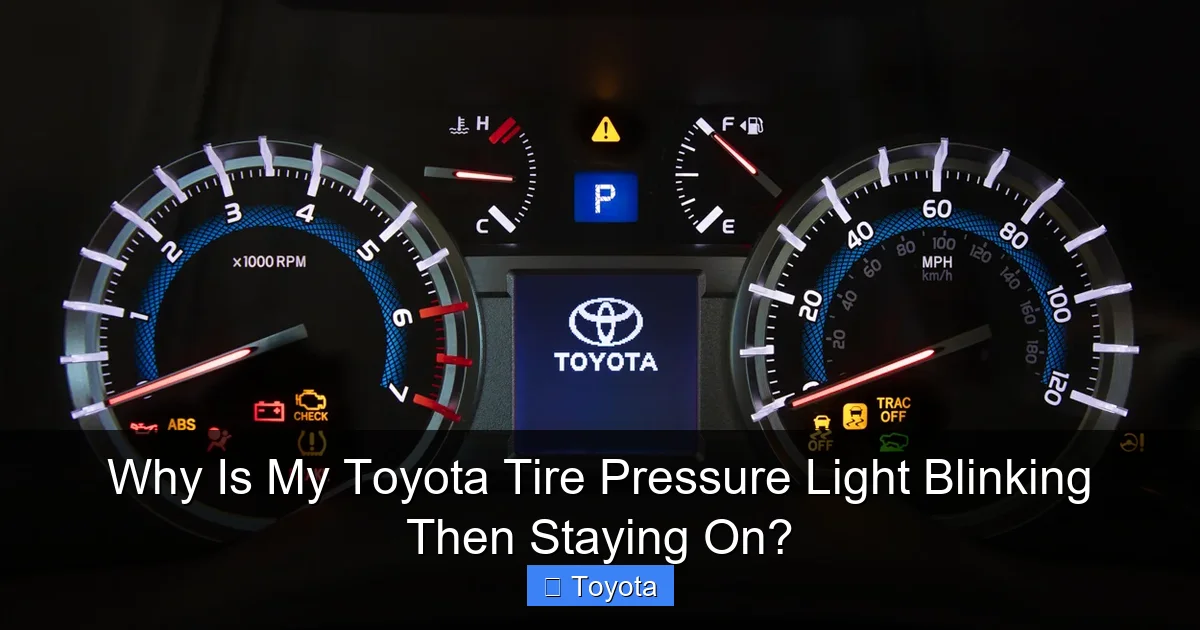
Visual guide about Why Is My Toyota Tire Pressure Light Blinking Then Staying On?
Image source: mrtirerack.com
1. Replace the Faulty TPMS Sensor
This is the most common repair. The entire sensor/valve stem assembly must be replaced. The old sensor is removed from the wheel (which requires breaking the bead seal on the tire), a new sensor is installed, the tire is re-sealed and balanced, and the new sensor’s ID is programmed/registered to your Toyota’s computer. This is not a DIY job for most people, as it requires special tools to dismount/mount the tire and program the sensor. The cost per sensor ranges from $80-$200+ for the part, plus labor. If you have a Toyota with a direct TPMS, this is the likely path.
2. Perform a TPMS System Relearn
If sensors were recently replaced or rotated, a simple relearn procedure (often done via the vehicle’s menu or a scan tool) will sync the sensor IDs to the computer. Sometimes, just driving at highway speeds for 15-20 minutes after properly inflating the tires can trigger an automatic relearn. If your Toyota has a built-in tire pressure display, you can also check tire pressure on the Toyota app to see if individual sensor data is being received.
3. Repair or Replace a Damaged Valve Stem
If the sensor is fine but the rubber valve stem it’s attached to is cracked or leaking, a tire technician can sometimes replace just the rubber stem without replacing the entire sensor assembly, though this is less common with newer sensor-integrated stems.
4. Address a Faulty TPMS Module
If the scan tool points to a module failure, this is a more complex and expensive repair, involving replacement of the control unit and its programming. This is a rare diagnosis.
Can You Drive With a Blinking TPMS Light? (The Safety Answer)
Technically, yes, you can drive the car. The blink-solid pattern does not affect your engine, brakes, or steering. However, you are driving without your primary electronic warning system for tire pressure. A tire can lose air slowly (from a nail or a bad bead seal) and you would receive no alert. Driving on significantly under-inflated tires is dangerous. It causes:
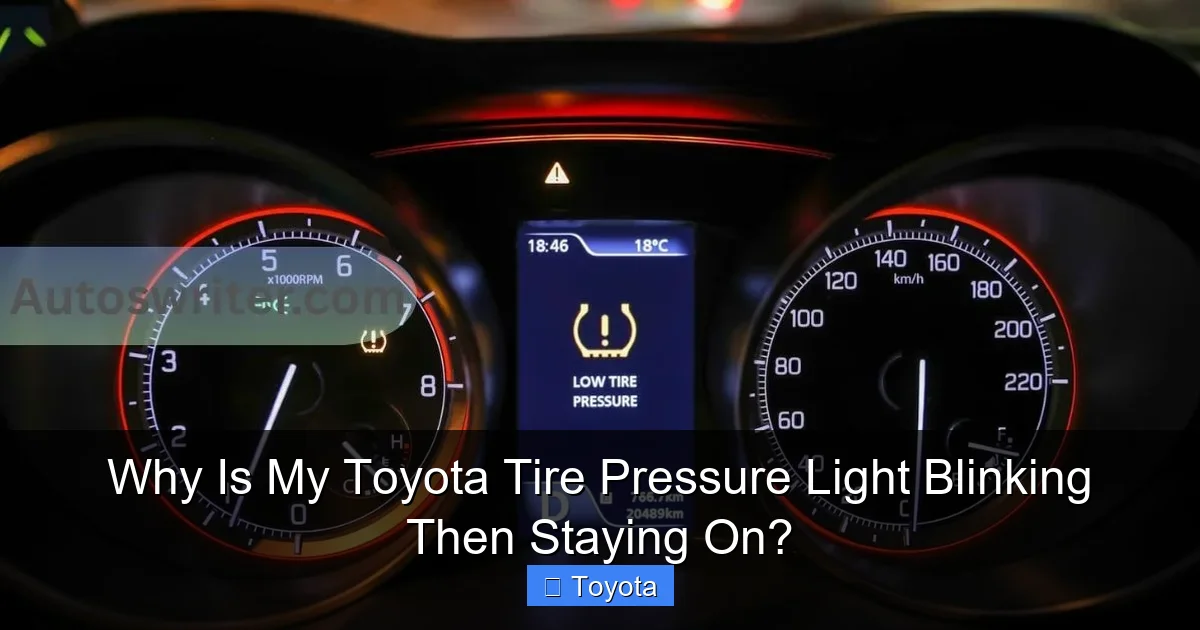
Visual guide about Why Is My Toyota Tire Pressure Light Blinking Then Staying On?
Image source: autoswriter.com
- Poor Handling & Braking: The car will feel sluggish, unresponsive, and may pull to one side. Stopping distances increase.
- Increased Tire Wear: The tire’s shoulders wear out prematurely while the center remains untouched.
- Overheating & Blowouts: Under-inflated tires flex more, generating excessive heat that can lead to a catastrophic failure, especially at highway speeds.
- Reduced Fuel Economy: Under-inflated tires increase rolling resistance, costing you miles per gallon.
Therefore, while not an immediate “stop-now” emergency like a flashing oil light, you should plan to get the TPMS fault diagnosed and repaired within a few days. In the meantime, be extra vigilant and manually check your tire pressures weekly.
Prevention and Best Practices for Your Toyota
You can’t prevent a sensor’s internal battery from dying, but you can avoid many other TPMS triggers.
- Use Proper Valve Caps: Always use the metal or high-quality plastic caps that came with your sensors. Cheap, universal caps can corrode and fuse to the stem, damaging it.
- Be Gentle at the Tire Shop: When getting tires rotated or new tires installed, specifically ask the technician to be careful with the TPMS sensors. They are fragile. A good shop will note sensor condition on the invoice.
- Check Pressures Monthly & When Temperatures Drop: A 10°F drop in temperature can lower tire pressure by about 1 PSI. Check and adjust pressures seasonally. This prevents the solid low-pressure light and reduces stress on the sensors.
- Don’t Ignore the Blink: Treat the blink-solid pattern as a “service engine soon” code for your tires. Get it scanned. A single failed sensor can sometimes cause the system to misinterpret data from other wheels, leading to false alerts.
- Consider Sensor Replacement Proactively: If you have a Toyota from the early-to-mid 2000s and the original sensors are still on the wheels, their batteries are likely nearing the end of life. Replacing them all at once during a tire service can be more efficient than dealing with them one by one over time.
Conclusion: Listening to Your Toyota’s Digital Voice
Your Toyota’s blinking then steady tire pressure light is a sophisticated cry for help from its safety net. It’s telling you that the net itself has a hole. Unlike the simple “low air” alert, this pattern is a direct line to the health of your TPMS sensors and module. The path forward is clear: verify your tire pressures are correct, then seek a professional TPMS scan to identify the faulty component. While it’s an added cost, a fully functional TPMS is a critical piece of your vehicle’s safety ecosystem, providing early warnings that prevent blowouts, poor handling, and wasted fuel. Don’t let that blinking light become a ignored background noise. Listen to what your Toyota is trying to tell you, address the system fault, and drive with the confidence that your tire pressure is being watched over, just as it should be.
Frequently Asked Questions
Can I just disconnect the battery to reset the blinking TPMS light?
No. Disconnecting the battery may reset some electronic modules, but it will not fix a failed TPMS sensor or repair a system fault. The light will return because the underlying communication error persists. The fault code must be cleared with a scan tool after the physical repair is made.
How much does it cost to fix a blinking TPMS light on a Toyota?
Costs vary widely. If it’s just a sensor relearn after a tire service, it may be free. Replacing a single faulty TPMS sensor, including parts and labor, typically costs between $150 and $300. Replacing all four sensors can range from $600 to $1,200+. A faulty control module is less common but more expensive.
How long do TPMS sensors last in a Toyota?
>Most original equipment TPMS sensors are designed to last 7-10 years, with the internal battery being the primary failure point. Their lifespan is non-serviceable; once the battery dies, the entire sensor must be replaced. Extreme temperatures and physical damage can shorten this lifespan.
Will an oil change place or tire shop be able to diagnose this?
Yes. Any reputable tire shop (like Discount Tire, Tire Kingdom, etc.) or mechanic will have a TPMS scan tool. They can read the fault code, tell you which sensor (or module) is bad, and provide a quote for replacement. This is a standard service they perform regularly.
Is the blinking TPMS light related to other dashboard warnings, like the check engine light?
Not directly. The TPMS is a separate, dedicated system. However, a severe electrical issue could theoretically trigger multiple warnings. A blinking TPMS light is almost always isolated to the TPMS circuit—sensors, wiring, or the module. A Toyota Camry check engine light points to engine or emissions system issues.
If I buy new tires, do I need new TPMS sensors?
Not necessarily. Your existing sensors can be reused if they are in good working condition. However, because the tires must be dismounted from the wheels, there is a risk of damaging the sensors. Many shops recommend replacing sensors if they are old (over 7-8 years) or show signs of corrosion/damage during the install, as the labor cost is the same whether you reuse or replace.