
Why Is the Tire Pressure Light Blinking on My Toyota 4runner?

A blinking tire pressure light on your Toyota 4Runner is a critical warning, not just a reminder. It almost always indicates a fault within the Tire Pressure Monitoring System (TPMS) itself, such as a dead sensor battery or a failed sensor, rather than just low tire pressure. Driving with a blinking light is unsafe and can lead to inaccurate pressure readings. The first step is to safely check all tire pressures with a manual gauge. If pressures are good, the issue is electronic and requires diagnosis, often with a professional scan tool to identify the faulty sensor.
That little exclamation mark inside a tire on your 4Runner’s dashboard is supposed to be a helpful friend. But when it starts blinking instead of glowing steadily, it transforms from a gentle reminder into a flashing red alarm bell. Your first thought is likely, “Why is the tire pressure light blinking on my Toyota 4Runner?” and a wave of confusion and concern follows. Unlike a steady light, which often means a tire is simply low on air, a blinking light is the TPMS (Tire Pressure Monitoring System) screaming that something is wrong with itself. It’s a system fault, and it needs your immediate attention. Let’s break down exactly what’s happening, why it matters, and what you need to do about it.
Key Takeaways
- Blinking Means System Fault: A blinking TPMS light signals a malfunction in the monitoring system, not necessarily low tire pressure. This is more urgent than a steady light.
- Immediate Safety Check: You must manually check all four tire pressures with a reliable gauge as soon as it’s safe. Correct pressures rule out a simple leak.
- Common Culprit: Dead Sensor: TPMS sensor batteries last 7-10 years. A blinking light on an older 4Runner often means one or more sensor batteries have died.
- Physical Damage is Possible: Hitting potholes, curbs, or road debris can damage a sensor or its valve stem, triggering the blink.
- Reset Won’t Fix Faults: You cannot reset a blinking light until the underlying hardware problem (like a failed sensor) is replaced and reprogrammed.
- Professional Help is Usually Needed: Diagnosing the exact faulty sensor and reprogramming the new one to the vehicle’s computer typically requires a dealer or a shop with TPMS tools.
- Don’t Ignore It: Driving with a faulty TPMS means you have no reliable low-pressure warning, which can lead to tire damage, blowouts, or poor handling.
📑 Table of Contents
- How Your 4Runner’s Tire Pressure Monitoring System (TPMS) Works
- Blinking vs. Solid: What’s the Critical Difference?
- Top Reasons Your Toyota 4Runner’s TPMS Light is Blinking
- What to Do When the Light Starts Blinking: A Step-by-Step Guide
- Resetting and Repairing the TPMS on Your 4Runner
- Preventing Future TPMS Alerts and Blinks
- Conclusion: Don’t Ignore the Blink
How Your 4Runner’s Tire Pressure Monitoring System (TPMS) Works
Before we diagnose the blink, we need to understand the system you’re dealing with. Your Toyota 4Runner uses a direct TPMS. This means each wheel has a small, sophisticated sensor mounted inside the valve stem or on a band around the wheel’s rim. These sensors are battery-powered, radio-transmitting devices.
The Sensor’s Job and Its Weakness
Each sensor constantly monitors the air pressure and temperature inside its tire. It sends this data via a unique radio signal to your 4Runner’s main computer, the ECU (Engine Control Unit). The ECU processes this information and tells the dashboard light what to do. The sensor’s battery is sealed inside and is designed to last roughly 7-10 years. Once it dies, the sensor is dead. There’s no changing the battery. The entire unit must be replaced. This battery life is the single most common reason for a blinking TPMS light on older vehicles. If your 4Runner is within that age range, this is the prime suspect.
The “Learn” Process
When you replace a sensor, or sometimes after rotating tires, the new sensor’s unique ID code must be “learned” or programmed into your 4Runner’s computer. The car then knows which corner of the vehicle each signal is coming from. If this programming fails or is forgotten, the system gets confused and will typically flash the light to indicate it can’t identify the sensor locations. This is why you often see a blinking light after a tire rotation if the shop didn’t perform the relearn procedure.
Blinking vs. Solid: What’s the Critical Difference?
This is the most important distinction. Misunderstanding it can lead to ignoring a serious problem.
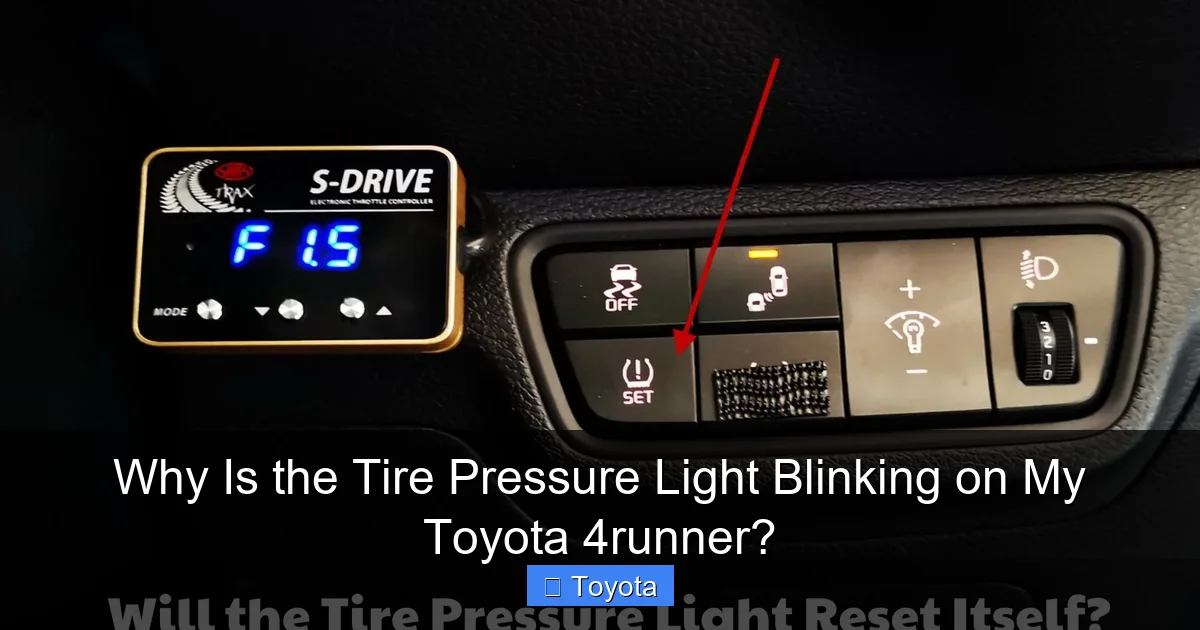
Visual guide about Why Is the Tire Pressure Light Blinking on My Toyota 4runner?
Image source: bradscartunes.com
The Steady Glow: “Hey, Check Your Tires”
A steady, solid illumination of the tire pressure light means the TPMS has detected that one or more tires is below the recommended pressure threshold (usually 25% below). It’s a low-pressure warning. Your action: find a gas station, check the pressures with a gauge, and inflate to the spec listed on your driver’s door jamb sticker. Once the correct pressure is restored, the light should turn off on its own after a few drive cycles, or you may need to manually reset it.
The Frantic Blink: “I Have a System Failure”
A blinking light—whether it flashes for 30-60 seconds and then stays solid, or continues to flash—is the TPMS’s self-diagnostic failure code. It is saying, “I cannot perform my function because a part of me is broken.” This is not a low-pressure warning. The system has lost communication with one or more sensors, detected a sensor failure (like a dead battery), or has an internal fault. Do not ignore this. Driving with a malfunctioning TPMS means you have no reliable electronic warning if you get a slow puncture or a sudden loss of pressure. You are flying blind regarding a critical safety component.
Top Reasons Your Toyota 4Runner’s TPMS Light is Blinking
So, what specifically causes that system fault? Here are the most prevalent culprits, from the most to least likely.
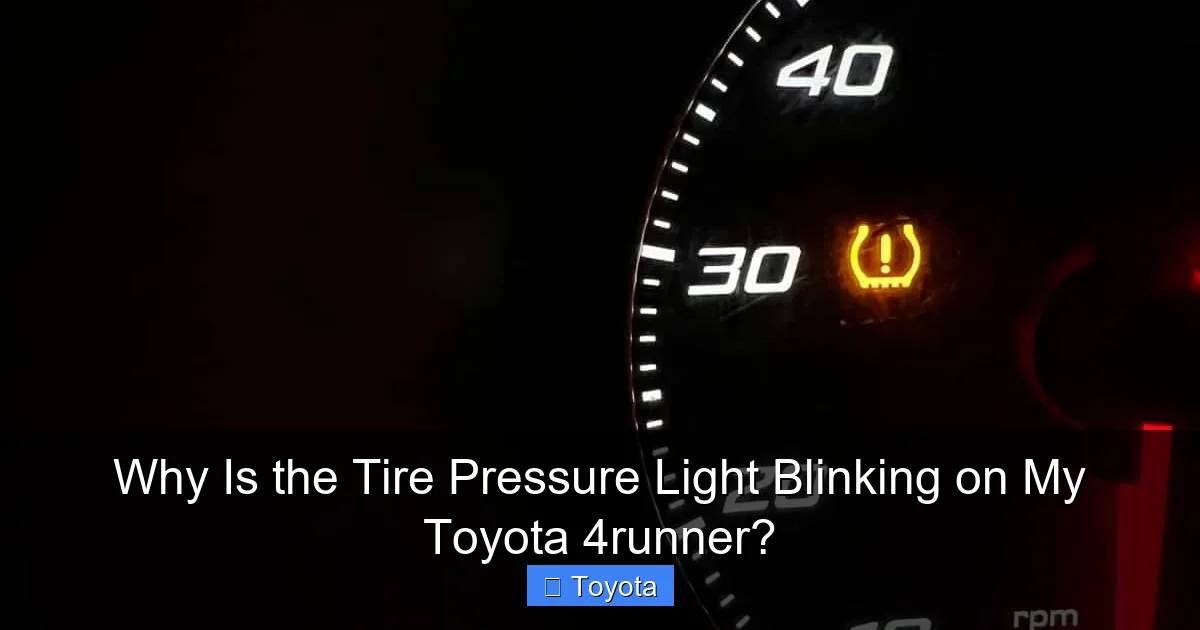
Visual guide about Why Is the Tire Pressure Light Blinking on My Toyota 4runner?
Image source: mechanicbase.com
1. Dead or Dying Sensor Battery
As mentioned, this is the #1 cause. The sensor battery is not replaceable. If your 4Runner is 8-10 years old or more, the odds are very high that one or more sensors have reached the end of their battery life. The light will blink to announce their permanent retirement. There’s no fixing it; you need new sensors.
2. Physical Damage to a Sensor
Your 4Runner is an SUV built for adventure, but that means it encounters curbs, potholes, rocks, and debris. A hard impact can:
- Crack the sensor’s plastic housing.
- Bend or break the metal valve stem.
- Damage the seal where the sensor meets the wheel.
Any of this can disrupt the signal or cause a slow leak, triggering a system fault blink.
3. Failed Relearn After Tire Service
If you recently had your tires rotated, replaced, or had a flat repaired, and the blinking started immediately after, this is the likely cause. The technician may have forgotten to use the TPMS activation tool to program the new sensor positions into your 4Runner’s computer. The system sees unknown signals and flags an error. For proper TPMS service on a 4Runner, a specific relearn procedure is almost always required. You can learn more about the general process of dealing with tire pressure lights after service in resources like this article on post-tire-service TPMS lights.
4. Interference or Signal Blockage
While less common, strong radio frequency (RF) interference can sometimes confuse the TPMS. This could be from aftermarket accessories like certain tire pressure gauges, high-powered radio systems, or even being parked near large industrial transmitters. Temporary interference might cause a brief blink, but a persistent point usually indicates a hardware issue.
5. Faulty Vehicle Module or Wiring
Rarely, the problem is not the sensors but the 4Runner’s own TPMS receiver module or the wiring connecting it. This is more likely after an electrical issue or water intrusion but is a possibility if all sensors are known to be new and functional yet the light still blinks.
What to Do When the Light Starts Blinking: A Step-by-Step Guide
Seeing that blink? Don’t panic, but do act promptly and safely. Follow these steps in order.
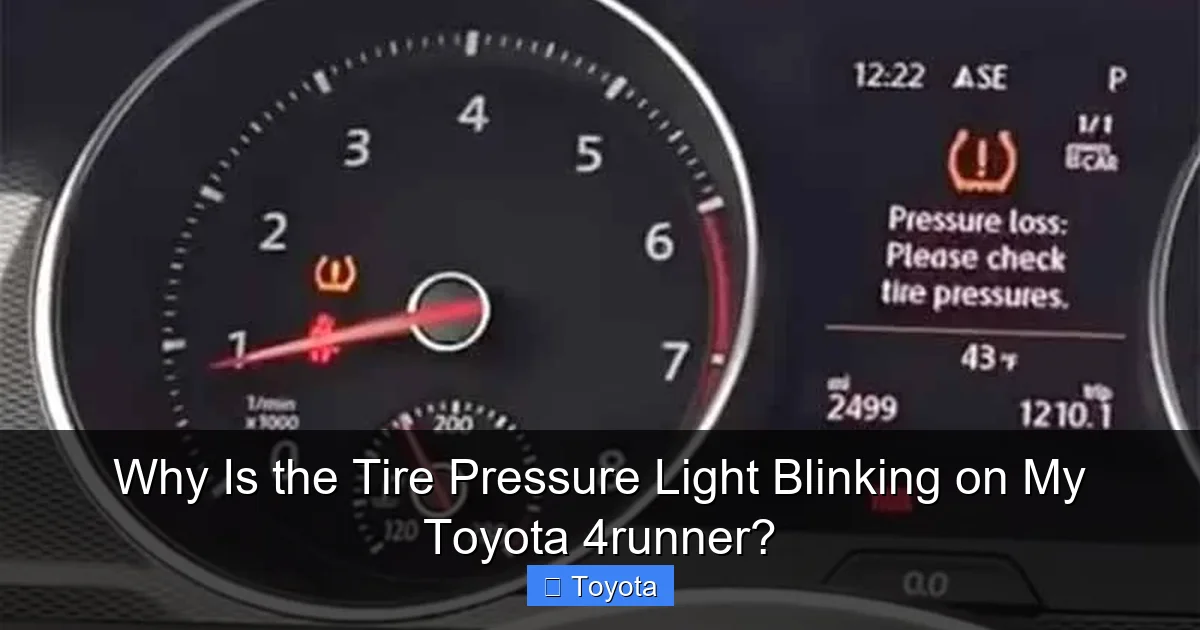
Visual guide about Why Is the Tire Pressure Light Blinking on My Toyota 4runner?
Image source: tiregrades.com
Step 1: Safely Pull Over and Perform a Manual Check
Your immediate priority is to rule out an actual low-pressure situation, even though a blink usually means system fault. Find a safe spot, turn on your hazard lights, and check every single tire—including the spare if it’s a full-size one with a sensor—with a reliable, handheld tire pressure gauge. Compare the readings to the placard on your driver’s door jamb. Do not rely on your visual inspection or the gauge at the gas station, which is often inaccurate.
- If any tire is low: Inflate it to the correct pressure. The light may turn off after driving, or it may stay on solid (not blinking). If it goes off, problem solved. If it stays solid, you likely have a slow leak that needs repair.
- If all pressures are correct and match the spec: You have confirmed a TPMS system malfunction. The blinking is legitimate. Proceed to Step 2.
Step 2: Try a Simple Reset (With Caution)
Some model years of the 4Runner allow for a manual TPMS reset via the multi-information display. The process typically involves:
- Turning the ignition to “ON” (engine off).
- Using the steering wheel controls to navigate to the TPMS settings menu.
- Selecting “TPMS Reset” or “Set Pressure” and holding the button until the light blinks three times.
Important: This reset only works if the system just needs to re-calibrate after a pressure adjustment. If there is a true sensor fault (dead battery, damage), this reset will fail. The light will either continue blinking or will come back on shortly after driving. Do not repeatedly attempt resets if the underlying cause is a failed sensor—it won’t work and wastes time.
Step 3: Inspect for Obvious Damage
Visually inspect each tire and valve stem. Look for:
- A bent, broken, or leaking valve stem.
- Cuts, bulges, or debris embedded in the tire sidewall or tread.
- Any sign that a sensor was recently replaced or worked on.
If you see damage, you’ve likely found your cause. The sensor needs replacement.
Resetting and Repairing the TPMS on Your 4Runner
Once you’ve diagnosed the problem—most often a dead sensor—the repair path is clear but requires specific tools.
The Replacement Process
When a sensor is dead or damaged, it must be replaced. This involves:
- Demounting the tire: The old sensor is removed from the wheel.
- Installing the new sensor: A new, compatible sensor (OEM or high-quality aftermarket) is installed and sealed properly.
- Re-inflating and balancing: The tire is remounted, inflated to spec, and rebalanced.
- Programming the new sensor: This is the critical step. The new sensor’s unique ID must be programmed into your 4Runner’s TPMS computer using a specialized scan tool. The tool activates the new sensor and teaches the car its location.
- Performing a Relearn: After programming, the vehicle’s TPMS module must be put into a “learn” mode so it recognizes all four sensor signals and their positions. This often involves driving the vehicle at a specific speed for a set time, or using the tool to trigger the relearn.
This is not a typical DIY job for most people. It requires a TPMS activation tool and often a diagnostic scan tool that can interface with the Toyota TPMS module. The cost is the sensor part plus labor. A set of four sensors can be a significant expense, but it’s a one-time fix for another 7-10 years.
Why Professional Help is Almost Always Required
While the manual reset in Step 2 is DIY-friendly, diagnosing which sensor is faulty and performing the final relearn is not. A shop uses a TPMS scan tool to read the fault codes from your 4Runner’s system. It will tell them something like “Left Front Sensor – No Signal” or “Low Battery.” They then know exactly which wheel to replace. After replacement, they use the same tool to program the new sensor and complete the vehicle-specific relearn procedure. Attempting this without the proper tools will leave you with a still-blinking light. For those interested in Toyota-specific maintenance, understanding common dashboard warnings is key, as discussed in articles about other models like check engine light issues on a Camry.
Preventing Future TPMS Alerts and Blinks
You can’t stop sensor batteries from dying on schedule, but you can protect your system and avoid unnecessary headaches.
Practice Smart Tire Care
The best way to avoid TPMS stress is to maintain proper tire pressure consistently. Use a good gauge monthly and before long trips. Proper inflation prevents uneven wear and reduces stress on the sensors. Consider using the Toyota app if your 4Runner is equipped with connected services, which can give you remote pressure readings without even getting in the car.
Be Mindful of Impacts
Your 4Runner’s sensors are vulnerable. While you can’t avoid every pothole, slowing down for unavoidable road hazards and being careful when parking curbside can prevent physical damage to the valve stems.
Use Quality Parts and Reputable Shops
When you do need sensor replacement, insist on high-quality sensors. Cheap, no-name sensors may have shorter battery lives or poor signal strength. Ensure the shop promises to perform the complete relearn procedure. Ask if they use a dedicated TPMS tool. A proper reset after any wheel/tire work is non-negotiable.
Know Your Vehicle’s TPMS History
If you bought your 4Runner used, try to find out if the sensors have ever been replaced. If they are original and the vehicle is over 10 years old, budgeting for a sensor replacement set is a wise proactive move. A blinking light will come eventually; it’s just a matter of time.
Conclusion: Don’t Ignore the Blink
That blinking tire pressure light on your Toyota 4Runner is your vehicle’s way of saying, “My ability to monitor tire pressure is broken.” It is a serious system malfunction, not a minor inconvenience. The safest and most accurate path is to immediately verify all tire pressures are correct with a manual gauge. If they are, you have confirmed a TPMS fault. The most probable cause is a dead sensor battery due to age, or damage from an impact. The solution requires a professional diagnosis with a TPMS scan tool to identify the failed component, followed by replacement and a complete system relearn. While it’s an expense, it restores a vital safety net. Your 4Runner’s TPMS is a guardian for your tires. When it cries for help with a blink, you must listen.
Frequently Asked Questions
Can I drive my Toyota 4Runner with a blinking tire pressure light?
You can drive it cautiously to a repair shop, but it is not recommended for long distances or high speeds. A blinking light means your TPMS is dead, so you have no electronic warning if a tire goes flat, which is a major safety risk. Get it diagnosed immediately.
Will cold weather cause the TPMS light to blink?
Cold weather causes tire pressure to drop, which triggers a steady light once pressure is 25% below spec. However, the rapid temperature change can sometimes stress an old, weak sensor battery and cause it to fail, resulting in a blinking light. The cold itself doesn’t make it blink; it can be the final straw that kills an aging battery.
How much does it cost to fix a blinking TPMS light on a 4Runner?
Cost depends on the cause. If it’s just a sensor battery failure (most common), you need to replace the entire sensor. Parts (a quality sensor) can range from $80 to $150+ each, and labor for replacement and relearn is typically 1-2 hours per wheel. For a full set, expect a total cost between $500 and $1,000+ depending on your location and shop rates.
How often should I check my 4Runner’s tire pressure if the light is blinking?
How often should I check my 4Runner’s tire pressure if the light is blinking?
Very frequently—at least once a week and before every long trip. Since your electronic warning system is down, you must manually check pressures with a gauge to ensure they are safe. This is your only reliable source of pressure information until the TPMS is repaired.
Can a blinking TPMS light fix itself?
No. A blinking light indicates a permanent hardware failure, most commonly a dead sensor battery. It will not turn off on its own. The faulty component must be identified and replaced, and the system must be reprogrammed.
Is a blinking light always a sensor problem, or could it be the car’s computer?
While a failed TPMS control module is possible, it is statistically rare. Over 95% of blinking lights are caused by one or more faulty wheel sensors. A professional scan will read the specific fault code and point directly to the wheel location or, very rarely, a module issue.