Which Is Better: Nissan Rogue or Mitsubishi Outlander?

Contents
- 1 Key Takeaways
- 2 📑 Table of Contents
- 3 Which Is Better: Nissan Rogue or Mitsubishi Outlander?
- 4 Performance and Engine Comparison
- 5 Fuel Economy: Efficiency Matters
- 6 Interior Space and Comfort
- 7 Technology and Infotainment
- 8 Safety Ratings and Reliability
- 9 Price, Trim Levels, and Value
- 10 Conclusion: Which Should You Choose?
- 11 Frequently Asked Questions


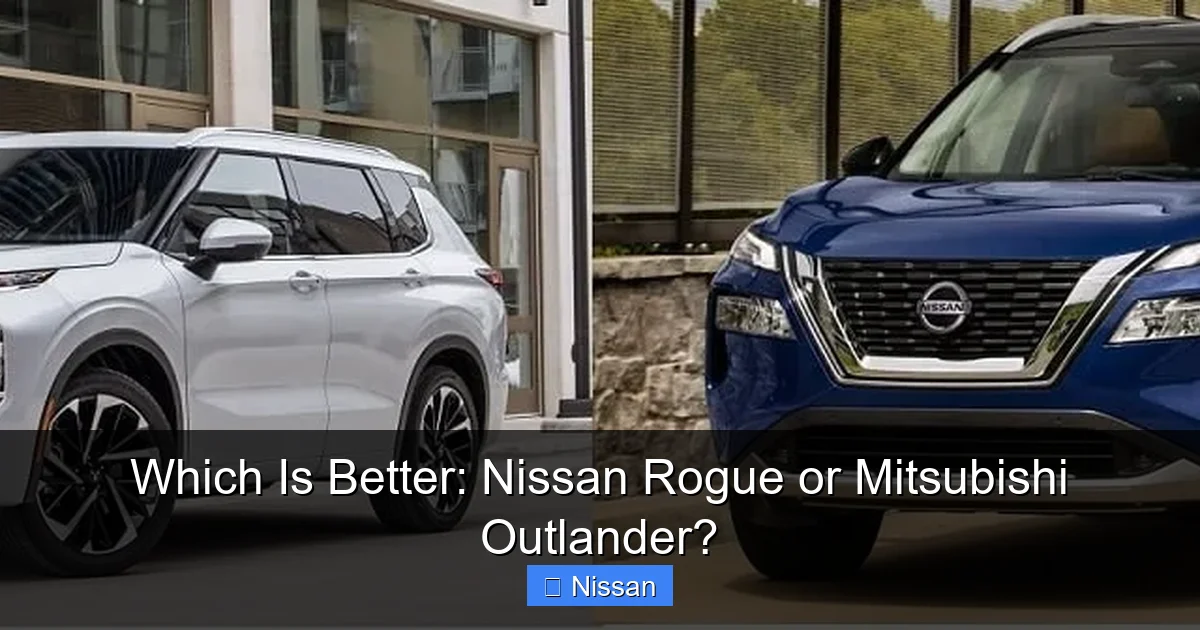
Choosing between the Nissan Rogue and Mitsubishi Outlander depends on your priorities. The Rogue offers better fuel economy, a smoother ride, and more advanced tech, while the Outlander provides standard third-row seating and a longer warranty. Both are solid compact SUVs, but one may suit your lifestyle better.
Key Takeaways
- Fuel Efficiency: The Nissan Rogue leads with up to 37 mpg highway, outperforming the Outlander’s 30 mpg.
- Seating and Space: The Mitsubishi Outlander includes a standard third row, making it a better choice for families needing seven seats.
- Ride Comfort: The Rogue delivers a quieter, more refined driving experience with better suspension tuning.
- Technology and Safety: The Rogue comes with more standard driver-assist features and a user-friendly infotainment system.
- Warranty Coverage: The Outlander offers a 10-year/100,000-mile powertrain warranty, double the Rogue’s 5-year/60,000-mile coverage.
- Value for Money: The Outlander starts at a lower price, but the Rogue offers more standard features for the cost.
- Reliability and Resale: The Rogue has a stronger reputation for long-term reliability and higher resale value.
📑 Table of Contents
Which Is Better: Nissan Rogue or Mitsubishi Outlander?
When it comes to choosing a reliable, family-friendly compact SUV, two names consistently rise to the top: the Nissan Rogue and the Mitsubishi Outlander. Both vehicles have earned their spots in driveways across the country thanks to their practicality, affordability, and modern features. But which one truly stands out? Is the Rogue’s refined ride and tech-forward design worth the extra cost? Or does the Outlander’s third-row seating and impressive warranty make it the smarter pick?
In this head-to-head comparison, we’ll dive deep into every aspect that matters to modern drivers—from performance and fuel economy to interior comfort, safety, and long-term value. Whether you’re a daily commuter, a weekend adventurer, or a growing family on the go, this guide will help you decide which SUV aligns best with your needs. We’ll break down the pros and cons of each model, highlight real-world driving experiences, and offer practical tips to help you make an informed decision. Let’s get started.
Performance and Engine Comparison
Under the hood, the Nissan Rogue and Mitsubishi Outlander take different approaches to power and efficiency. The 2024 Nissan Rogue comes standard with a 1.5-liter turbocharged three-cylinder engine that delivers 201 horsepower and 225 lb-ft of torque. This engine is paired with a continuously variable transmission (CVT) and offers front-wheel drive (FWD) or all-wheel drive (AWD). While three-cylinder engines often raise eyebrows, Nissan has tuned this one to deliver smooth acceleration and minimal turbo lag. It’s not a performance SUV, but it’s more than capable of handling highway merges and city driving with confidence.
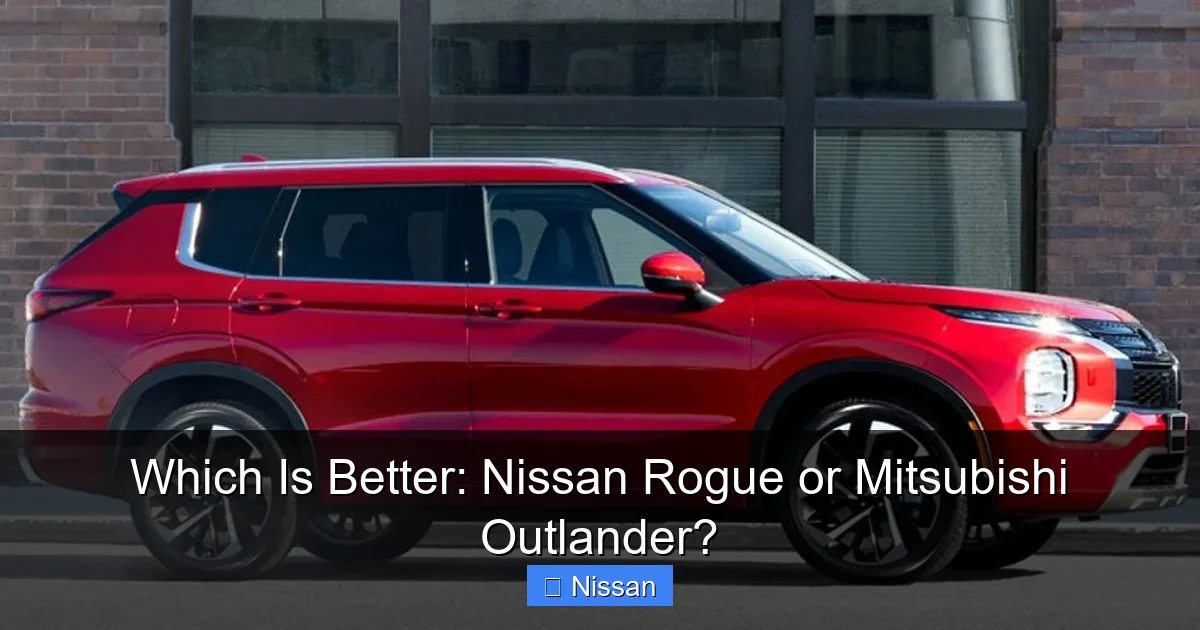
Visual guide about Which Is Better: Nissan Rogue or Mitsubishi Outlander?
Image source: dealerinspire-image-library-prod.s3.us-east-1.amazonaws.com
Real-World Driving Experience
On the road, the Rogue feels responsive and composed. The turbocharged engine provides a nice punch when you need it, especially during passing maneuvers. The CVT mimics traditional gear shifts to reduce the “rubber band” effect common in older CVTs, making the driving experience feel more natural. Steering is light and accurate, and the suspension absorbs bumps well, contributing to a comfortable ride. If you prioritize a smooth, quiet, and efficient drive, the Rogue shines.
In contrast, the 2024 Mitsubishi Outlander is powered by a 2.5-liter four-cylinder engine producing 181 horsepower and 181 lb-ft of torque. It also uses a CVT and offers FWD or AWD. While the engine is adequate for daily driving, it feels less energetic than the Rogue’s turbocharged unit. Acceleration is slower, especially when the vehicle is loaded with passengers or cargo. The Outlander’s transmission tends to hold revs longer under acceleration, which can make the engine feel strained during highway climbs or quick merges.
Towing and Off-Road Capability
Neither SUV is designed for serious off-roading, but both offer AWD systems for added traction in rain, snow, or light gravel. The Rogue’s AWD system is more sophisticated, with multiple drive modes (including off-road settings) and better torque distribution. It can handle light trails and snowy roads with ease. The Outlander’s AWD is functional but less refined, with fewer customization options.
When it comes to towing, the Rogue has a slight edge. With AWD, it can tow up to 1,500 pounds, while the Outlander maxes out at 1,500 pounds as well—but only when properly equipped. However, the Rogue’s stronger engine and better weight distribution make it feel more stable when towing small trailers or boats.
Overall, the Rogue wins in performance. It’s quicker, smoother, and more engaging to drive. The Outlander gets the job done, but it doesn’t inspire confidence in demanding situations.
Fuel Economy: Efficiency Matters
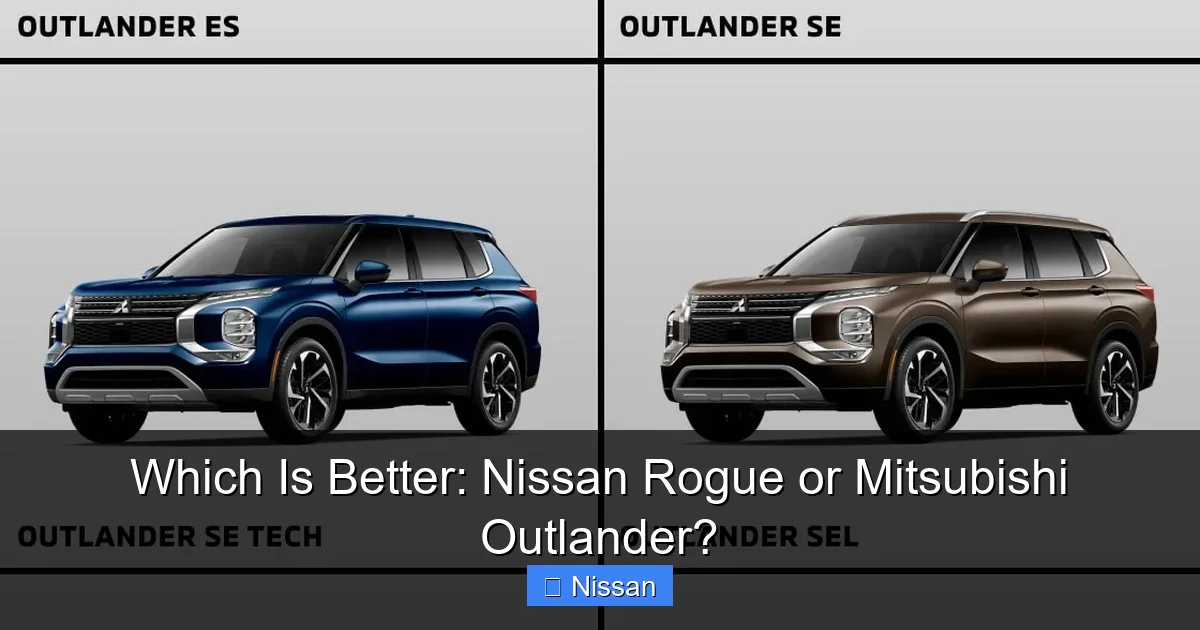
Fuel efficiency is a major factor for many SUV buyers, especially with fluctuating gas prices. Here, the Nissan Rogue takes a clear lead. The 2024 Rogue achieves an EPA-estimated 30 mpg in the city and 37 mpg on the highway with FWD. Even with AWD, it still manages 29 mpg city and 36 mpg highway. These numbers are impressive for a vehicle in this class and make the Rogue one of the most fuel-efficient compact SUVs on the market.
Visual guide about Which Is Better: Nissan Rogue or Mitsubishi Outlander?
Image source: wallacemitsubishijohnsoncity.com
Why the Rogue Sips Less Fuel
The secret lies in its lightweight design, aerodynamic shape, and efficient turbocharged engine. The 1.5-liter three-cylinder engine uses variable compression technology, which adjusts compression ratios on the fly to optimize power and efficiency. This innovation allows the Rogue to deliver strong performance without sacrificing fuel economy. Additionally, the CVT is tuned to keep engine RPMs low during cruising, further improving mileage.
The Mitsubishi Outlander, on the other hand, returns an EPA-estimated 25 mpg city and 30 mpg highway with FWD. With AWD, those numbers drop slightly to 24 mpg city and 29 mpg highway. While these figures are decent, they fall short of the Rogue’s efficiency. The larger 2.5-liter engine consumes more fuel, and the Outlander’s heavier curb weight (due to the optional third row) adds to the burden.
Real-World Fuel Savings
Let’s put this into perspective. If you drive 15,000 miles per year with 50% city and 50% highway driving, the Rogue would use approximately 476 gallons of gas, while the Outlander would use around 545 gallons. At $3.50 per gallon, that’s a difference of nearly $240 per year in fuel costs. Over five years, you’d save over $1,200 just on gas by choosing the Rogue.
For eco-conscious drivers or those with long commutes, the Rogue’s superior fuel economy is a significant advantage. It’s not just about saving money—it’s also about reducing your carbon footprint and making fewer trips to the pump.
Interior Space and Comfort
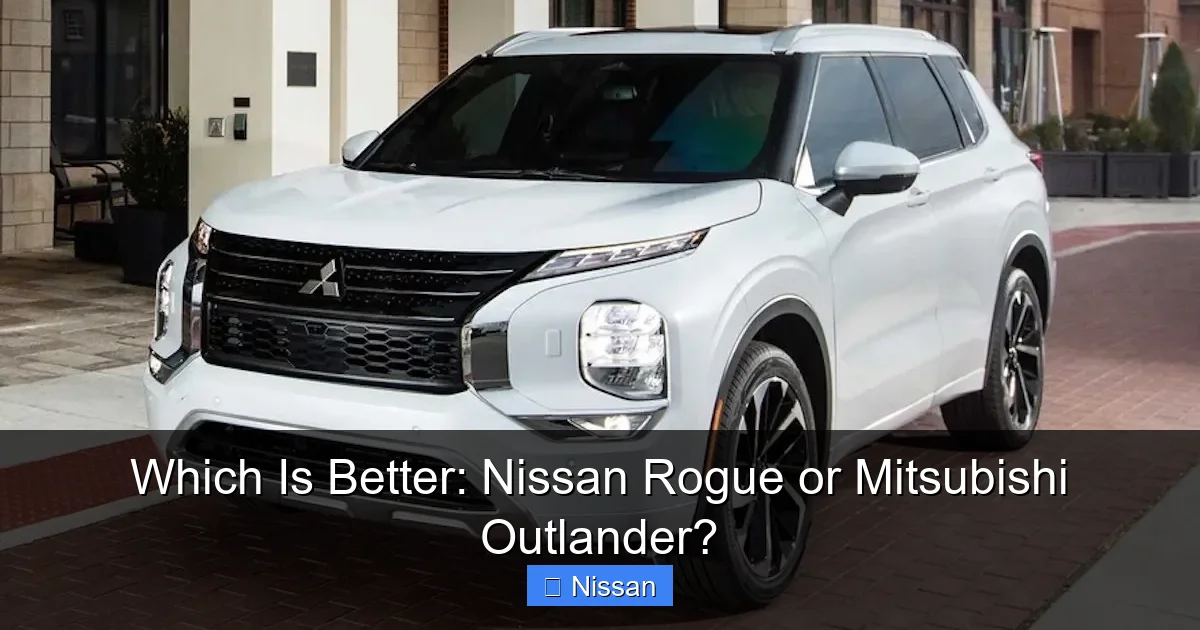
When it comes to interior space, the Mitsubishi Outlander has a clear advantage: it offers a standard third-row seat, making it one of the few compact SUVs that can accommodate seven passengers. The third row is best suited for children or short trips, but it’s a valuable feature for families who occasionally need extra seating. The Rogue, in contrast, is strictly a five-seater. While you can find used or older models with third rows, the current generation does not offer one.
Visual guide about Which Is Better: Nissan Rogue or Mitsubishi Outlander?
Image source: motorbiscuit.com
Passenger Comfort and Legroom
Both SUVs provide generous legroom in the front and second rows. The Rogue offers 43.8 inches of front legroom and 38.5 inches in the back, which is among the best in the class. The Outlander provides 40.9 inches in front and 37.9 inches in the second row—still comfortable, but slightly tighter. The third row in the Outlander has just 28.2 inches of legroom, which is tight even for kids.
Headroom is similar in both vehicles, with the Rogue offering a slight edge in the front. The Outlander’s higher roofline gives it an advantage in the third row, but visibility is limited due to small windows and a high beltline.
Cargo Space and Flexibility
Cargo capacity is another area where the Outlander’s third row affects usability. With all seats up, the Outlander offers 11.7 cubic feet of cargo space—enough for a few grocery bags or small suitcases. Folding the third row increases it to 33.8 cubic feet, and dropping the second row opens up 79.7 cubic feet. That’s impressive for a compact SUV.
The Rogue, without a third row, starts with 36.5 cubic feet behind the second row—nearly three times the Outlander’s cargo space with all seats in use. With the rear seats folded, it offers 74.1 cubic feet, which is slightly less than the Outlander but still very practical. The Rogue also features a clever under-floor storage compartment, perfect for stashing valuables or wet items.
Materials and Build Quality
Inside, the Rogue feels more upscale. Soft-touch materials, a modern dashboard layout, and available leather upholstery give it a premium feel. The Outlander’s interior is functional but leans more toward utilitarian. Hard plastics are more prevalent, especially in lower trims. However, higher-end Outlander models (like the SEL and GT) offer nicer finishes and ambient lighting.
Both vehicles offer dual-zone automatic climate control, but the Rogue’s system is more intuitive and responsive. The Outlander’s controls are straightforward but less refined.
Seating and Ergonomics
The Rogue’s front seats are well-buffered and supportive, with available heating, ventilation, and power adjustments. The Outlander’s seats are comfortable but lack the same level of adjustability. Rear passengers in both vehicles will find adequate space, but the Rogue’s slightly wider cabin and better seat contouring make it more comfortable for long trips.
If you need seven seats, the Outlander is your only option. But if you prioritize cargo space, comfort, and a more refined interior, the Rogue is the better choice.
Technology and Infotainment
Modern drivers expect seamless technology, and both the Rogue and Outlander deliver—but the Rogue does so with more polish. The 2024 Nissan Rogue comes standard with an 8-inch touchscreen, wireless Apple CarPlay, Android Auto, Bluetooth, and a six-speaker audio system. Higher trims upgrade to a 9-inch display with built-in navigation, wireless phone charging, and a premium Bose audio system.
User Experience and Interface
The Rogue’s infotainment system is intuitive and responsive. Menus are well-organized, and the touchscreen reacts quickly to inputs. Voice commands work reliably, and the system integrates smoothly with smartphones. The available head-up display projects key information onto the windshield, reducing the need to look away from the road.
The Mitsubishi Outlander also features an 8-inch touchscreen with Apple CarPlay and Android Auto, but it requires a wired connection. The interface is functional but feels dated compared to the Rogue’s. Navigation is available on higher trims, but it’s not as detailed or fast. The system can lag during startup or when switching between apps.
Driver Assistance and Safety Tech
Safety is a top priority, and both SUVs come well-equipped. The Rogue includes Nissan’s Safety Shield 360 as standard, which features automatic emergency braking, blind-spot monitoring, rear cross-traffic alert, lane departure warning, and high-beam assist. Higher trims add adaptive cruise control, traffic sign recognition, and a surround-view camera.
The Outlander comes with Mitsubishi’s MI-PILOT Assist, which includes forward collision mitigation, lane departure warning, and adaptive cruise control—but only on higher trims. Lower trims lack some of these features, making the Rogue a better value for safety-conscious buyers.
Connectivity and Charging
The Rogue offers multiple USB-C ports, a 12-volt outlet, and available wireless charging. The Outlander has USB-A ports and a 12-volt outlet, but wireless charging is only available on top trims. Both vehicles support over-the-air updates, but the Rogue’s system is more advanced and user-friendly.
In the tech department, the Rogue wins hands-down. It offers more standard features, better integration, and a more enjoyable user experience.
Safety Ratings and Reliability
Both the Nissan Rogue and Mitsubishi Outlander have earned high safety ratings from the National Highway Traffic Safety Administration (NHTSA) and the Insurance Institute for Highway Safety (IIHS). The 2024 Rogue received a 5-star overall safety rating from NHTSA and was named a Top Safety Pick by IIHS, thanks to strong crash test results and advanced safety features.
Crash Test Performance
In IIHS testing, the Rogue earned “Good” ratings in all categories, including driver-side small overlap front, passenger-side small overlap front, moderate overlap front, side, roof strength, and head restraints. The Outlander also scored “Good” in most areas but received an “Acceptable” rating in the passenger-side small overlap test—a minor weakness.
Reliability and Long-Term Value
Reliability is where the Rogue has a clear edge. According to J.D. Power and Consumer Reports, the Rogue consistently ranks higher in dependability and predicted reliability. Owners report fewer mechanical issues and lower repair costs over time. The Outlander has improved in recent years but still lags behind the Rogue in long-term reliability surveys.
Resale value also favors the Rogue. After three years, the Rogue retains about 55% of its value, compared to around 48% for the Outlander. This means you’ll get more money back when it’s time to sell or trade in.
Warranty Coverage
Here’s where the Outlander fights back. Mitsubishi offers a 10-year/100,000-mile powertrain warranty, which is one of the best in the industry. The Rogue comes with a 5-year/60,000-mile powertrain warranty—still solid, but not as generous. If you plan to keep your vehicle for a decade, the Outlander’s warranty provides extra peace of mind.
However, the Rogue’s better reliability may offset the shorter warranty. Fewer repairs mean less need for warranty coverage in the first place.
Price, Trim Levels, and Value
The Mitsubishi Outlander starts at a lower price point. The 2024 base ES trim begins around $29,000, making it an attractive entry-level option. The Rogue starts at about $30,500 for the base S trim—slightly higher, but it comes with more standard features.
Trim Comparison
The Outlander offers four trims: ES, LE, SEL, and GT. The SEL and GT add leather seats, a power liftgate, and advanced safety features. The Rogue has three trims: S, SV, and SL. Even the base S trim includes more tech and safety features than the Outlander’s base model.
Which Offers Better Value?
While the Outlander is cheaper upfront, the Rogue offers better value over time. You get more standard features, better fuel economy, and higher resale value. The Outlander’s lower price and third-row seating make it appealing for budget-conscious families, but the Rogue’s overall package is harder to beat.
Financing and incentives can also influence your decision. Nissan often offers competitive lease deals and low APR financing, while Mitsubishi may provide cash rebates or loyalty bonuses. Be sure to compare current offers at your local dealership.
Conclusion: Which Should You Choose?
So, which is better: the Nissan Rogue or the Mitsubishi Outlander? The answer depends on your priorities.
If you value fuel efficiency, a refined ride, advanced technology, and long-term reliability, the Nissan Rogue is the clear winner. It’s a well-rounded SUV that excels in almost every category, making it ideal for daily driving, road trips, and growing families who don’t need a third row.
On the other hand, if you need seven seats, want a lower starting price, and prioritize warranty coverage, the Mitsubishi Outlander is a solid choice. It’s practical, affordable, and backed by one of the best powertrain warranties in the business.
Ultimately, both SUVs are reliable, safe, and well-equipped. Test drive both to see which one feels right for you. But if we had to pick one, the Rogue’s combination of efficiency, comfort, and tech gives it the edge for most buyers.
Frequently Asked Questions
Does the Nissan Rogue have a third-row seat?
No, the current-generation Nissan Rogue does not offer a third-row seat. It is strictly a five-passenger SUV. If you need seven seats, the Mitsubishi Outlander is a better option.
Which SUV has better fuel economy: Rogue or Outlander?
The Nissan Rogue is more fuel-efficient, achieving up to 37 mpg on the highway compared to the Outlander’s 30 mpg. This makes the Rogue a better choice for long commutes or frequent driving.
Is the Mitsubishi Outlander reliable?
The Outlander has improved in recent years but still ranks below the Rogue in reliability surveys. It’s a decent choice, but the Rogue has a stronger track record for long-term dependability.
Which SUV has a better warranty?
The Mitsubishi Outlander offers a 10-year/100,000-mile powertrain warranty, which is significantly longer than the Rogue’s 5-year/60,000-mile coverage. This can be a deciding factor for buyers planning to keep their vehicle long-term.
Can the Nissan Rogue tow a trailer?
Yes, the Nissan Rogue can tow up to 1,500 pounds when properly equipped with AWD. It’s suitable for small trailers, bikes, or lightweight boats.
Which SUV is better for families?
If you need seven seats, the Outlander is better. But if you prioritize comfort, tech, and fuel economy, the Rogue is the superior family SUV—especially for five passengers or less.