
How Many Catalytic Converters Does a Dodge Ram 1500 Have

The number of catalytic converters in a Dodge Ram 1500 depends on the engine, model year, and drivetrain configuration—most models have two, but some V8 and high-output variants feature three or even four. Understanding your truck’s setup helps with maintenance, emissions compliance, and theft prevention.
If you own a Dodge Ram 1500—or you’re thinking about buying one—you’ve probably wondered about its emissions system. One of the most common questions we hear is: *How many catalytic converters does a Dodge Ram 1500 have?* It’s not just a technical curiosity. Knowing the answer can save you money, help you pass emissions tests, and even protect your truck from theft.
The short answer? Most Dodge Ram 1500 models come equipped with **two catalytic converters**, but depending on the engine, model year, and exhaust setup, some trucks have three or even four. This variation exists because modern vehicles are designed to meet strict environmental regulations, and the number of converters directly impacts how effectively harmful gases are filtered before they exit the tailpipe.
In this guide, we’ll break down everything you need to know about catalytic converters in the Dodge Ram 1500—from how many your specific model has, to why it matters, and what to do if one fails or gets stolen. Whether you’re a longtime Ram owner or just researching your next pickup, this information will help you stay informed and proactive.
Let’s dive in.
Key Takeaways
- Most Dodge Ram 1500s have two catalytic converters: One for each exhaust bank on V6 and V8 engines with dual exhaust systems.
- Some high-performance or newer models may have three or four: Especially those with turbocharged engines or advanced emissions controls like the 2021+ EcoDiesel or Hemi V8 variants.
- Engine type determines converter count: V6 engines typically use two, while V8s often use two or more depending on exhaust routing and emissions standards.
- Catalytic converter theft is a growing concern: Ram 1500s are prime targets due to their height and valuable precious metals inside the converters.
- Regular inspections can prevent costly repairs: Look for rattling noises, reduced fuel economy, or dashboard warning lights as signs of converter issues.
- Replacement costs vary widely: OEM converters can cost $1,500–$3,000+, while aftermarket options may be cheaper but less durable.
- Proper maintenance extends converter life: Use quality fuel, fix engine misfires promptly, and avoid short trips to reduce carbon buildup.
📑 Table of Contents
- Understanding Catalytic Converters: Why They Matter
- How Many Catalytic Converters Does a Dodge Ram 1500 Have?
- Why the Number of Catalytic Converters Varies by Model Year and Engine
- Signs of a Failing Catalytic Converter
- Catalytic Converter Theft: A Growing Threat to Ram 1500 Owners
- Replacing a Catalytic Converter: What to Expect
- Maintaining Your Catalytic Converter: Tips for Longevity
- Conclusion
Understanding Catalytic Converters: Why They Matter
Before we get into the specifics of the Dodge Ram 1500, it helps to understand what a catalytic converter actually does—and why it’s so important.
A catalytic converter is a key component of your vehicle’s exhaust system. Its job is to reduce harmful emissions by converting toxic gases like carbon monoxide, nitrogen oxides, and unburned hydrocarbons into less harmful substances such as carbon dioxide, nitrogen, and water vapor. This process happens through a chemical reaction facilitated by precious metals like platinum, palladium, and rhodium coated on a ceramic honeycomb structure inside the converter.
Without catalytic converters, vehicles would release significantly more pollution into the atmosphere. That’s why they’re legally required in most countries, including the United States, under the Clean Air Act. In fact, driving without a functioning catalytic converter can result in fines, failed inspections, and even registration issues.
But catalytic converters aren’t just about compliance—they also play a role in your truck’s performance and fuel efficiency. A clogged or failing converter can restrict exhaust flow, leading to reduced power, poor acceleration, and decreased gas mileage. In severe cases, it can even cause the engine to stall or prevent it from starting.
So, when we talk about how many catalytic converters a Dodge Ram 1500 has, we’re really talking about how well your truck is equipped to meet emissions standards and maintain optimal performance.
How Many Catalytic Converters Does a Dodge Ram 1500 Have?
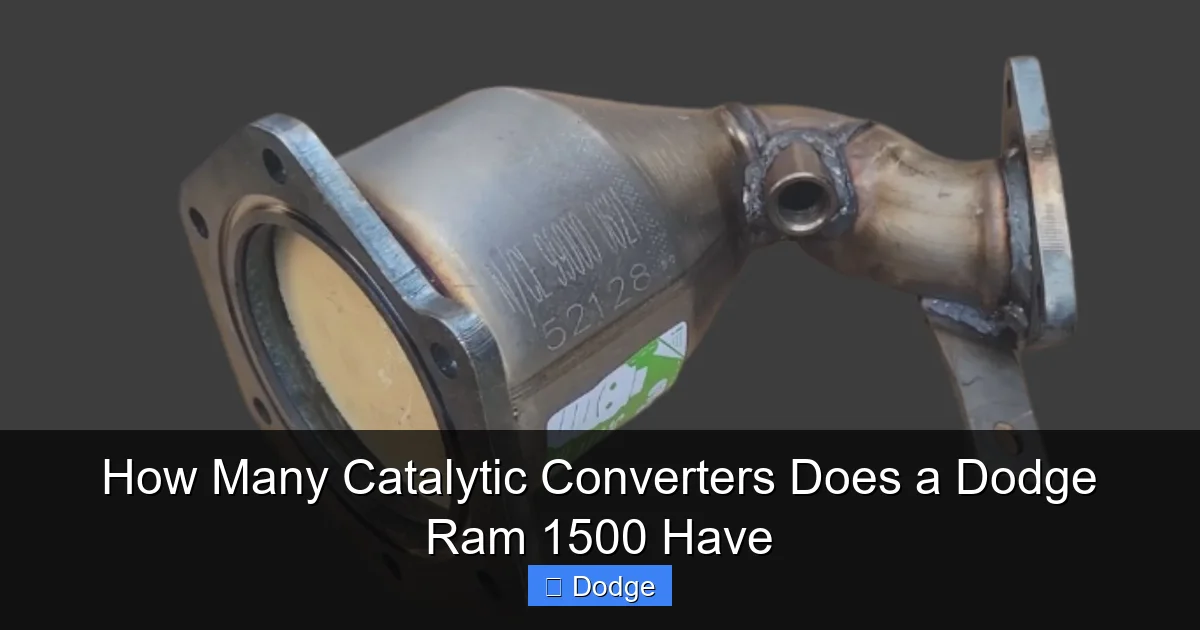
Visual guide about How Many Catalytic Converters Does a Dodge Ram 1500 Have
Image source: vehiclechef.com
Now, let’s get to the heart of the matter: *How many catalytic converters does a Dodge Ram 1500 have?*
The answer isn’t one-size-fits-all. It depends on several factors, including the engine type, model year, and whether your truck has a single or dual exhaust system.
Standard Configuration: Two Catalytic Converters
The majority of Dodge Ram 1500 models—especially those produced from the early 2000s through the 2020s—come with **two catalytic converters**. This setup is common on trucks equipped with V6 or V8 engines that have a dual exhaust system.
Here’s how it works: In a V-shaped engine (like the 3.6L Pentastar V6 or the 5.7L Hemi V8), the exhaust manifolds on each side of the engine collect gases from the cylinders. Each manifold feeds into its own catalytic converter, which is typically located close to the engine for maximum efficiency. This is known as a “close-coupled” design, and it helps the converters reach operating temperature quickly, improving emissions control during cold starts.
So, if your Ram 1500 has a V6 or a standard V8 with dual exhaust, you most likely have two catalytic converters—one on the driver’s side and one on the passenger side.
High-Performance and Newer Models: Three or Four Converters
Things get more complex with high-performance or newer-generation Ram 1500s. Some models, particularly those with turbocharged engines or advanced emissions systems, may have **three or even four catalytic converters**.
For example:
– The **2021 and newer Ram 1500 EcoDiesel** (3.0L V6 turbo diesel) uses a sophisticated emissions system that includes **three catalytic converters**: two close-coupled converters near the engine and one downstream converter in the exhaust pipe.
– Certain **Hemi V8 models with active exhaust systems** or those sold in California or other states with stricter emissions standards may also feature additional converters or secondary catalytic elements.
In some cases, manufacturers install a **pre-catalytic converter** (also called a “pre-cat”) near the engine and a **main catalytic converter** further down the exhaust line. This dual-stage approach allows for more efficient pollution control, especially under varying driving conditions.
Additionally, trucks with **four-wheel drive (4WD)** or **performance packages** may have slightly different exhaust routing, which can influence the number and placement of converters.
Single Exhaust vs. Dual Exhaust Systems
Another factor that affects converter count is whether your Ram 1500 has a single or dual exhaust system.
– **Single exhaust systems** (common on base-model V6 trucks) typically use **one catalytic converter**, though this is rare on modern Ram 1500s.
– **Dual exhaust systems** (standard on most V8 and higher-trim models) almost always use **two converters**, one for each exhaust bank.
It’s worth noting that even if your truck has a dual exhaust system, the converters may not be identical. For instance, one might be a “light-off” converter designed to heat up quickly, while the other handles the bulk of emissions reduction during normal driving.
Why the Number of Catalytic Converters Varies by Model Year and Engine
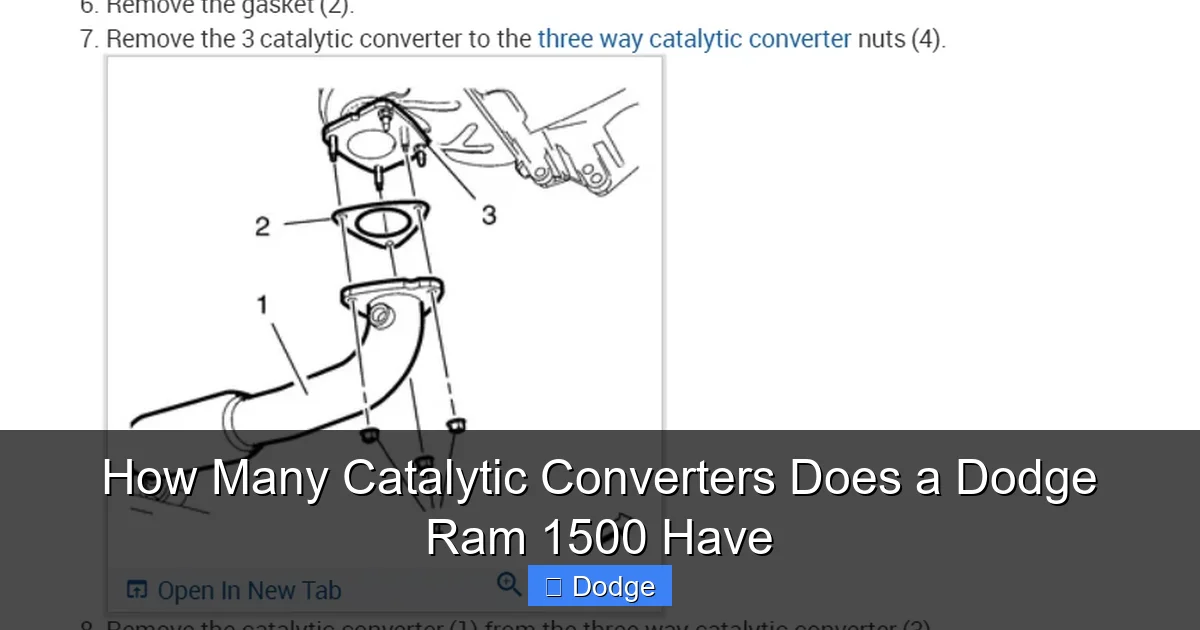
Visual guide about How Many Catalytic Converters Does a Dodge Ram 1500 Have
Image source: 2carpros.com
So why do some Ram 1500s have two converters while others have three or four? The answer lies in evolving emissions standards, engine technology, and manufacturer design choices.
Emissions Regulations Drive Design Changes
Over the past two decades, emissions standards have become increasingly strict. The Environmental Protection Agency (EPA) and California Air Resources Board (CARB) have mandated lower levels of pollutants, pushing automakers to innovate.
As a result, newer Ram 1500 models—especially those introduced after 2015—are equipped with more advanced exhaust systems. These systems often include multiple catalytic converters, diesel particulate filters (on diesel models), and selective catalytic reduction (SCR) systems that use urea (DEF fluid) to further reduce nitrogen oxides.
For example, the **2021 Ram 1500 EcoDiesel** was designed to meet Tier 3 Bin 30 emissions standards, one of the toughest in the industry. To achieve this, engineers added a third catalytic converter and integrated a complex aftertreatment system.
Engine Technology Influences Converter Placement
The type of engine in your Ram 1500 also plays a major role in determining converter count.
– **V6 engines** (like the 3.6L Pentastar) typically use two converters due to their dual exhaust manifolds.
– **V8 engines** (like the 5.7L Hemi) also use two converters in most configurations, but high-output versions may include additional components.
– **Turbocharged engines** (such as the 3.0L EcoDiesel V6) often require more converters because turbocharging increases exhaust gas volume and temperature, necessitating better emissions control.
Moreover, some engines use **cylinder deactivation** (like the Hemi’s MDS system), which can affect exhaust flow and require more precise catalytic converter tuning.
Model Year and Trim Level Matter
Even within the same engine family, the number of catalytic converters can vary by model year and trim level.
For instance:
– A **2015 Ram 1500 with a 5.7L Hemi** likely has two converters.
– A **2022 Ram 1500 TRX** (supercharged 6.2L V8) may have three or four due to its high-performance exhaust and emissions requirements.
– A **2023 Ram 1500 Limited with the EcoDiesel** will almost certainly have three converters as part of its advanced emissions package.
Always check your owner’s manual or consult a Dodge dealer to confirm the exact configuration for your specific truck.
Signs of a Failing Catalytic Converter
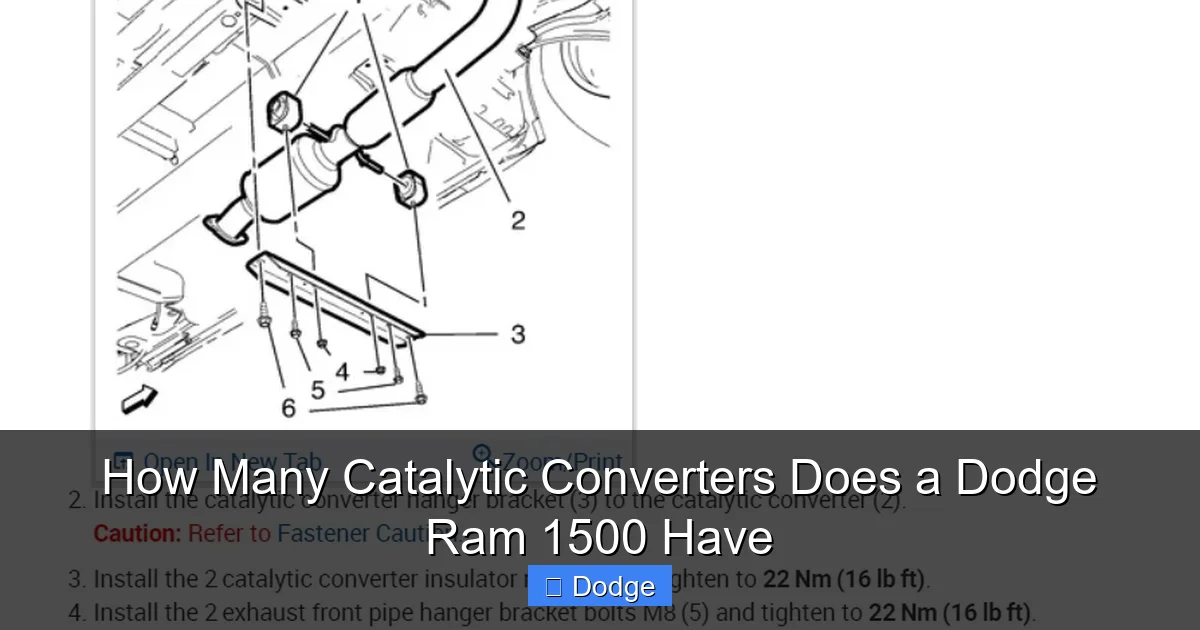
Visual guide about How Many Catalytic Converters Does a Dodge Ram 1500 Have
Image source: 2carpros.com
Knowing how many catalytic converters your Ram 1500 has is one thing—but recognizing when one is failing is equally important. A malfunctioning converter can lead to performance issues, increased emissions, and costly repairs if left unchecked.
Here are the most common symptoms to watch for:
Reduced Engine Performance
A clogged catalytic converter restricts exhaust flow, which can cause the engine to lose power. You might notice:
– Sluggish acceleration
– Difficulty reaching highway speeds
– A noticeable drop in towing capacity
This happens because the engine can’t expel exhaust gases efficiently, creating backpressure that hampers performance.
Poor Fuel Economy
If your Ram 1500 suddenly starts guzzling more gas than usual, a failing catalytic converter could be the culprit. Restricted exhaust flow forces the engine to work harder, burning more fuel in the process.
Rattling Noise from Under the Truck
Over time, the ceramic honeycomb inside the converter can break apart due to heat or physical damage. This creates a rattling sound, especially when the engine is idling or accelerating.
If you hear a metallic clinking or shaking noise from underneath your truck, it’s a strong sign that the internal structure of the converter has deteriorated.
Check Engine Light and Emissions Test Failure
Modern vehicles are equipped with oxygen sensors that monitor the efficiency of the catalytic converter. If the converter isn’t working properly, the engine control unit (ECU) will detect abnormal readings and trigger the **check engine light**.
Common diagnostic trouble codes (DTCs) related to catalytic converter failure include:
– P0420 – Catalyst System Efficiency Below Threshold (Bank 1)
– P0430 – Catalyst System Efficiency Below Threshold (Bank 2)
These codes often appear during emissions testing, and failing an inspection can prevent you from registering your vehicle.
Excessive Heat Under the Vehicle
A clogged converter can overheat because exhaust gases are trapped and can’t flow freely. You might notice:
– A burning smell
– Smoke from under the truck
– Heat radiating from the undercarriage, even when the engine isn’t running
This is a serious issue that can pose a fire risk, especially if flammable materials (like dry leaves or oil) are near the exhaust system.
Catalytic Converter Theft: A Growing Threat to Ram 1500 Owners
Unfortunately, catalytic converter theft has become a major problem across the U.S.—and the Dodge Ram 1500 is a prime target.
Why Are Ram 1500s Targeted?
There are several reasons why thieves go after Ram 1500 catalytic converters:
– **High ground clearance:** Ram 1500s sit higher off the ground than most cars, making it easier for thieves to slide underneath and cut out the converter with a reciprocating saw.
– **Valuable precious metals:** Catalytic converters contain platinum, palladium, and rhodium—metals that can fetch hundreds of dollars per unit on the black market.
– **Dual converter setup:** Trucks with two or more converters are even more attractive to thieves, as they offer multiple targets in one vehicle.
According to the National Insurance Crime Bureau (NICB), catalytic converter thefts have increased by over 1,200% since 2019. Ram trucks, along with Ford F-150s and Toyota Priuses, are among the most frequently targeted vehicles.
How to Protect Your Ram 1500
While you can’t eliminate the risk entirely, there are steps you can take to reduce the chances of theft:
– **Park in well-lit, secure areas:** Avoid leaving your truck in dark alleys or unmonitored parking lots.
– **Install a catalytic converter shield:** These metal covers make it much harder for thieves to access the converter. Brands like Cat Shield and RHO-TEK offer models specifically designed for the Ram 1500.
– **Engrave your VIN on the converter:** This makes it harder to sell and easier for law enforcement to identify stolen parts.
– **Use motion-sensor lights or cameras:** Deter thieves with visible security measures.
– **Consider an alarm system:** Some vehicle alarms include undercarriage sensors that trigger if someone tampers with the exhaust.
Replacing a Catalytic Converter: What to Expect
If your catalytic converter fails or gets stolen, replacement is necessary—but it’s not cheap.
Cost of Replacement
The cost to replace a catalytic converter on a Dodge Ram 1500 varies widely depending on:
– Whether you use OEM (original equipment manufacturer) or aftermarket parts
– Labor rates in your area
– The number of converters that need replacement
Here’s a general breakdown:
– **Aftermarket converter (per unit):** $300–$1,200
– **OEM converter (per unit):** $1,000–$3,000+
– **Labor:** $150–$400 (depending on accessibility)
So, replacing two converters could cost anywhere from $900 to over $6,000—especially if you go with OEM parts.
OEM vs. Aftermarket: Which Is Better?
– **OEM converters** are made by Dodge or its suppliers and are designed to meet exact specifications. They’re more expensive but offer better performance, longevity, and warranty coverage.
– **Aftermarket converters** are cheaper and widely available, but quality varies. Look for EPA-compliant or CARB-certified options to ensure they meet emissions standards.
Avoid cheap, uncertified converters—they may fail emissions tests or damage your engine over time.
Can You Repair Instead of Replace?
In most cases, **no**. Catalytic converters aren’t serviceable—once the internal structure is damaged or the catalyst is depleted, replacement is the only option.
Some mechanics offer “cleaning” services, but these are rarely effective for severely clogged or failed converters. It’s usually better to invest in a new one.
Maintaining Your Catalytic Converter: Tips for Longevity
The best way to avoid costly repairs is to take care of your catalytic converter before problems arise.
Use High-Quality Fuel
Low-quality or contaminated fuel can leave deposits that clog the converter. Always use top-tier gasoline or diesel from reputable stations.
Fix Engine Problems Promptly
Misfires, rich fuel mixtures, and oil leaks can dump unburned fuel into the exhaust system, overheating and damaging the converter. Address check engine lights immediately.
Avoid Short Trips
Catalytic converters need to reach high temperatures (around 800°F) to work efficiently. Frequent short trips prevent them from heating up, leading to carbon buildup and reduced lifespan.
Regular Inspections
Have your exhaust system inspected during routine maintenance. Look for rust, damage, or loose components that could affect performance.
Drive Responsibly
Avoid overloading your truck or towing beyond its capacity, as excessive strain can increase exhaust temperatures and wear out the converter faster.
Conclusion
So, how many catalytic converters does a Dodge Ram 1500 have? The answer depends on your truck’s engine, model year, and configuration—but most have two, with some high-performance or newer models featuring three or four.
Understanding your truck’s emissions system isn’t just about technical knowledge—it’s about protecting your investment, ensuring compliance, and avoiding expensive repairs. Whether you’re dealing with a failing converter, worried about theft, or just curious about your Ram’s design, knowing the facts puts you in control.
By staying informed, performing regular maintenance, and taking preventive measures, you can keep your Dodge Ram 1500 running clean, powerful, and efficient for years to come.
Frequently Asked Questions
How many catalytic converters does a 2020 Dodge Ram 1500 have?
Most 2020 Dodge Ram 1500 models with a V6 or V8 engine have two catalytic converters—one for each exhaust bank. However, the EcoDiesel version may have three due to its advanced emissions system.
Can I drive my Ram 1500 with a bad catalytic converter?
You can drive short distances, but it’s not recommended. A failing converter can reduce performance, increase emissions, and eventually cause engine damage or prevent your truck from starting.
How much does it cost to replace a catalytic converter on a Ram 1500?
Replacement costs range from $900 to over $6,000, depending on whether you use OEM or aftermarket parts and how many converters need replacing.
Are catalytic converters worth stealing?
Yes—they contain valuable precious metals like platinum, palladium, and rhodium, which can be sold for hundreds of dollars per unit on the black market.
How can I tell if my catalytic converter was stolen?
Signs include a loud exhaust noise, a noticeable drop in performance, and visible damage or missing components under the truck. You may also hear a rattling sound if the converter is partially removed.
Do I need a special permit to replace my catalytic converter?
In most states, no—but the replacement must meet EPA or CARB emissions standards. Using non-compliant parts can result in fines or failed inspections.
