
How to Reset Low Washer Fluid Light on Nissan Altima

Resetting the low washer fluid light on your Nissan Altima is simple and takes just minutes. This guide walks you through the exact steps, explains why the light appears, and offers tips to avoid future issues.
Key Takeaways
- Check fluid level first: Always ensure your washer fluid reservoir is full before attempting a reset.
- Use the correct fluid: Use a quality washer fluid rated for your climate to prevent freezing or clogging.
- Turn the ignition on: You don’t need to start the engine—just turn the key to the “ON” position.
- Press the trip odometer button: This is the key to accessing the reset menu on most Altima models.
- Hold the button until the light resets: It usually takes 10–15 seconds of holding the button.
- Test the system afterward: Spray the windshield to confirm the fluid flows and the light stays off.
- Visit a dealer if issues persist: If the light won’t reset, there may be a sensor or electrical problem.
📑 Table of Contents
- Why the Low Washer Fluid Light Comes On in Your Nissan Altima
- Step-by-Step Guide to Reset the Low Washer Fluid Light
- Tips to Prevent the Low Washer Fluid Light from Coming Back
- When to See a Mechanic
- Model-Specific Notes for Nissan Altima
- Final Thoughts: Keep Your Windshield Clean and Your Mind at Ease
Why the Low Washer Fluid Light Comes On in Your Nissan Altima
If you’ve ever been driving along and suddenly seen a yellow or orange light pop up on your dashboard that looks like a windshield with squiggly lines, you’ve likely encountered the low washer fluid warning. On the Nissan Altima, this light is designed to alert you when the windshield washer fluid level drops below a certain point. It’s a helpful feature—after all, a clean windshield is essential for safe driving, especially in rain, snow, or dusty conditions.
But here’s the thing: sometimes the light stays on even after you’ve refilled the fluid. That’s not because your car is broken—it’s because the system needs to be reset. The Nissan Altima uses a sensor in the washer fluid reservoir to detect fluid levels. When the fluid runs low, the sensor triggers the warning light. Once you top it off, the sensor detects the fluid again, but the dashboard warning doesn’t automatically turn off. That’s where the reset comes in.
Understanding why this happens can save you a trip to the dealership or mechanic. It’s not a sign of a major problem—it’s just a quirk of how the vehicle’s onboard computer system works. Think of it like your phone reminding you to charge it. Even after you plug it in, you might need to dismiss the notification. Same idea here.
How the Washer Fluid System Works
The washer fluid system in your Nissan Altima is actually pretty straightforward. It consists of a reservoir (usually located on the driver’s side of the engine bay), a pump, hoses, and spray nozzles on the windshield. When you pull the wiper stalk toward you, the pump sends fluid through the hoses and out the nozzles, cleaning your windshield.
The reservoir has a float sensor inside that rises and falls with the fluid level. When the fluid gets low, the float drops, and the sensor sends a signal to the car’s computer. That’s when the dashboard light comes on. Once you add fluid, the float rises again, but the computer doesn’t automatically clear the warning. You have to manually reset it.
This system is designed to prevent you from running out of washer fluid unexpectedly. It’s especially useful in winter, when road salt and grime can quickly dirty your windshield. But because it requires a manual reset, many drivers get confused when the light doesn’t go away after refilling.
Common Reasons the Light Stays On
Even after adding washer fluid, the low fluid light might not turn off. Here are a few reasons why this can happen:
– **Air trapped in the reservoir:** If you pour fluid too quickly or the reservoir wasn’t completely empty, air pockets can form. This can trick the sensor into thinking the fluid level is still low.
– **Faulty sensor:** Over time, the float sensor can get stuck or corroded, especially if you’ve used low-quality or contaminated fluid.
– **Old or degraded fluid:** Some washer fluids break down over time, leaving residue that can clog the sensor or hoses.
– **Electrical glitch:** Like any electronic system, the washer fluid sensor can occasionally experience a temporary glitch.
In most cases, a simple reset will solve the problem. But if the light keeps coming back even after a reset and refill, it might be time to inspect the sensor or have a technician take a look.
Step-by-Step Guide to Reset the Low Washer Fluid Light
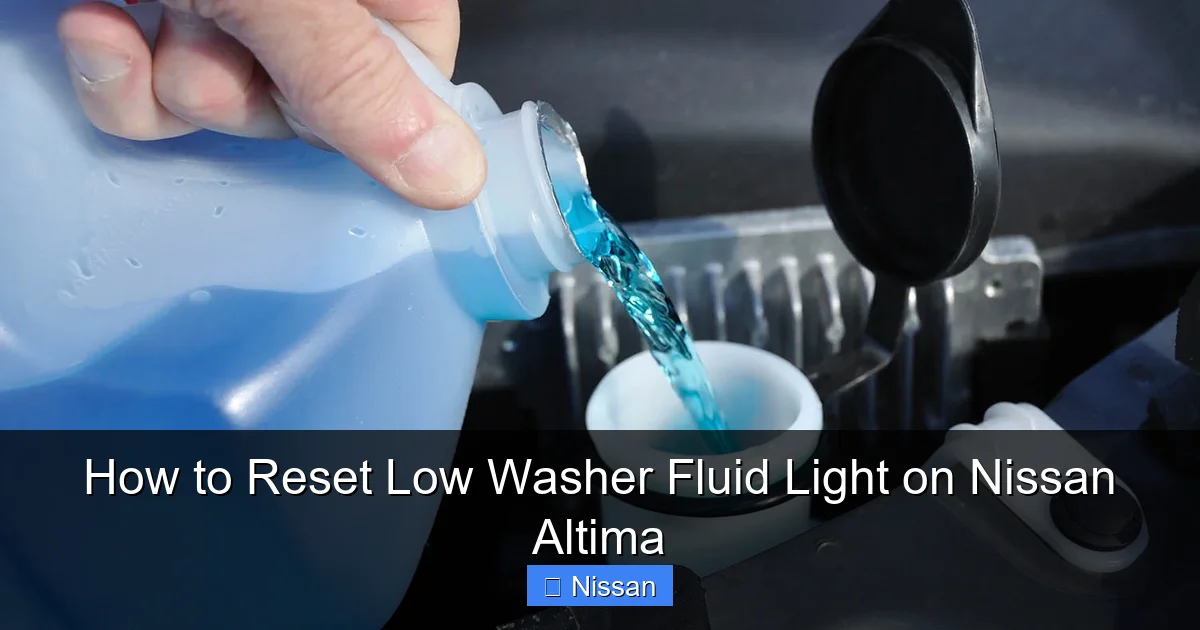
Visual guide about How to Reset Low Washer Fluid Light on Nissan Altima
Image source: yezig.com
Now that you understand why the light appears, let’s get into the actual reset process. The good news is that resetting the low washer fluid light on a Nissan Altima is quick and doesn’t require any special tools. You can do it in under five minutes, right in your driveway.
The exact steps may vary slightly depending on your model year (2007–2024), but the general method remains consistent. Most Nissan Altimas use the trip odometer button on the instrument cluster to access the reset menu. Here’s how to do it:
Step 1: Turn the Ignition to the “ON” Position
You don’t need to start the engine—just turn the key to the “ON” position. This powers up the dashboard and instrument cluster without engaging the engine. If you have a push-button start, press the “Start” button once (without pressing the brake) to turn on the ignition.
Make sure all dashboard lights come on. You should see the low washer fluid light illuminated. This confirms the system is active and ready for a reset.
Step 2: Locate the Trip Odometer Button
Look at your instrument cluster—the display behind your steering wheel. You’ll see a small button, usually labeled “TRIP” or “ODO/TRIP.” This button cycles through different trip meter readings (Trip A, Trip B, etc.) and is also used to access maintenance reset menus.
On most Altima models, this button is located on the right side of the instrument cluster. It’s a small, round button that you press with your finger.
Step 3: Press and Hold the Trip Button
With the ignition on, press and hold the trip odometer button. Keep holding it. After a few seconds, the display will start to change. You might see trip mileage reset or other menu options appear.
Continue holding the button. On many models, after about 10–15 seconds, the low washer fluid light will begin to flash or the display will show a reset confirmation. This means the system is recognizing your input.
Step 4: Wait for the Light to Turn Off
Keep holding the button until the low washer fluid light turns off completely. This usually takes between 10 and 15 seconds. Once the light goes out, release the button.
If the light doesn’t turn off after 20 seconds, try releasing and pressing the button again. Sometimes the system needs a second attempt.
Step 5: Test the Washer System
After the light is off, it’s a good idea to test the washer system. Turn the ignition to “ON” (if it turned off), then pull the wiper stalk toward you to spray the windshield. Make sure fluid comes out and the nozzles are working properly.
If the fluid sprays and the light stays off, you’ve successfully reset the system. If the light comes back on immediately, double-check the fluid level and try the reset again.
Alternative Method: Using the Display Menu (Newer Models)
On some newer Nissan Altima models (2019 and later), you may be able to reset the washer fluid light through the infotainment system or driver information display. Here’s how:
1. Turn the ignition to “ON.”
2. Use the steering wheel controls to navigate to the “Settings” or “Vehicle” menu.
3. Look for “Maintenance” or “Warnings.”
4. Select “Reset Washer Fluid Light” or a similar option.
5. Confirm the reset.
This method is more user-friendly but not available on all models. If you don’t see the option, stick with the trip button method.
Tips to Prevent the Low Washer Fluid Light from Coming Back
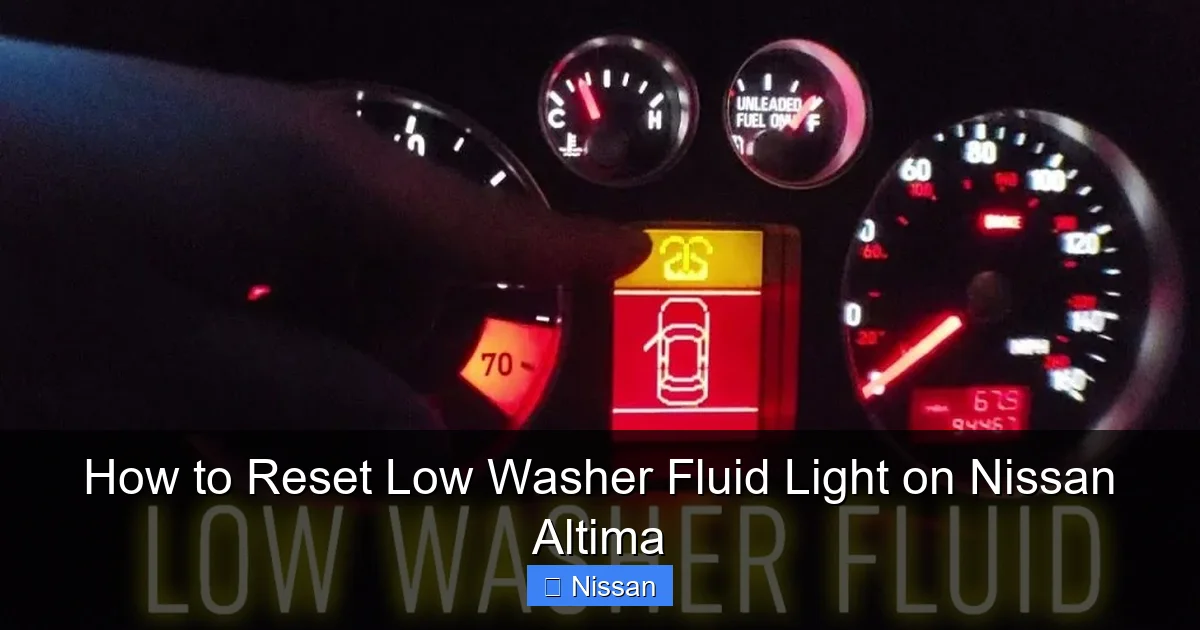
Visual guide about How to Reset Low Washer Fluid Light on Nissan Altima
Image source: yezig.com
While resetting the light is easy, it’s even better to avoid the issue altogether. Here are some practical tips to keep your washer fluid system running smoothly and prevent the low fluid warning from appearing too often.
Use High-Quality Washer Fluid
Not all washer fluids are created equal. Cheap or diluted fluids can leave residue, freeze in cold weather, or even damage the pump and hoses. Always use a reputable brand of washer fluid that’s rated for your climate.
In winter, use a fluid with antifreeze properties (usually labeled “-30°F” or lower). In summer, a standard all-season fluid works fine. Avoid using plain water—it can freeze, promote algae growth, and doesn’t clean as effectively.
Check Fluid Level Regularly
Make it a habit to check your washer fluid level every time you fill up your gas tank. The reservoir is usually translucent, so you can see the fluid level without opening it. If it’s below the “MIN” line, top it off.
This simple habit can prevent the light from coming on unexpectedly and ensure you’re never caught without washer fluid on a dirty road.
Inspect the Reservoir and Nozzles
Over time, the washer fluid reservoir can collect dirt, debris, or mold—especially if you’ve used low-quality fluid. Periodically inspect the reservoir cap and nozzles for clogs.
If the nozzles are clogged, the fluid won’t spray properly, and you might think the system is broken. Use a pin or needle to gently clear any blockages. You can also flush the system with clean washer fluid.
Avoid Overfilling
It might seem like a good idea to fill the reservoir to the very top, but overfilling can cause problems. When the fluid expands due to heat or when the pump runs, excess fluid can spill out or create pressure that damages the sensor.
Fill the reservoir to the “MAX” line—no higher. Leave a little room for expansion.
Replace the Sensor if Needed
If you’ve tried resetting the light multiple times and it keeps coming back, the float sensor might be faulty. This is more common in older vehicles or those that have used contaminated fluid.
Replacing the sensor is a job best left to a mechanic, but it’s usually not expensive. A new sensor typically costs between $20 and $50, plus labor.
When to See a Mechanic
Visual guide about How to Reset Low Washer Fluid Light on Nissan Altima
Image source: yezig.com
Most of the time, resetting the low washer fluid light is a DIY job. But there are situations where you should consider visiting a Nissan dealership or trusted mechanic.
The Light Won’t Reset After Multiple Attempts
If you’ve followed the steps correctly and the light still won’t turn off, there may be an electrical issue. The sensor could be stuck, the wiring could be damaged, or the instrument cluster might have a glitch.
A technician can use a diagnostic tool to check the sensor’s signal and determine if it’s sending the correct data to the computer.
Washer Fluid Doesn’t Spray
If the light resets but no fluid comes out when you try to spray the windshield, the problem could be a clogged nozzle, a faulty pump, or a broken hose. These issues require inspection and possibly replacement.
Fluid Leaks Under the Car
If you notice puddles of washer fluid under your car, there’s likely a leak in the reservoir, hose, or pump. This not only wastes fluid but can also damage other components.
A mechanic can locate and repair the leak, ensuring your system works properly.
Dashboard Warning Lights Stay On
If multiple warning lights are on—or if the low washer fluid light is accompanied by other alerts—there could be a broader electrical issue. In this case, a full diagnostic scan is recommended.
Model-Specific Notes for Nissan Altima
The Nissan Altima has been in production since 1992, and while the washer fluid reset process is similar across most years, there are a few model-specific details to keep in mind.
2007–2012 Nissan Altima
These models typically use the trip odometer button method. The button is located on the instrument cluster, and the reset process takes about 10–15 seconds. Some drivers report that the light resets immediately after refilling, but if not, the button method works reliably.
2013–2018 Nissan Altima
The process remains the same, but some models have a slightly different instrument cluster layout. The trip button may be smaller or located in a different spot. Refer to your owner’s manual if you’re unsure.
2019–2024 Nissan Altima
Newer models may offer the infotainment-based reset option. If your Altima has a touchscreen display, check the settings menu for a maintenance or warning reset option. If not, the trip button method still works.
Always consult your owner’s manual for the most accurate instructions for your specific model and year.
Final Thoughts: Keep Your Windshield Clean and Your Mind at Ease
Resetting the low washer fluid light on your Nissan Altima is one of those small maintenance tasks that can make a big difference in your driving experience. It’s quick, easy, and doesn’t require any special skills or tools. By following the steps in this guide, you can clear the warning light in minutes and get back to focusing on the road.
More importantly, understanding how your car’s systems work helps you stay proactive about maintenance. Regularly checking fluid levels, using quality products, and addressing small issues early can prevent bigger problems down the line.
So the next time that little windshield light pops up, don’t panic. Grab a bottle of washer fluid, top off the reservoir, and reset the light using the trip button. You’ll be back to clear visibility and peace of mind in no time.
And remember—keeping your windshield clean isn’t just about comfort. It’s about safety. Whether you’re driving through a rainstorm, a dust storm, or just a long highway stretch, having a clean windshield gives you the visibility you need to react quickly and drive confidently.
So take a few minutes today to check your washer fluid level. Your future self will thank you.
Frequently Asked Questions
Why won’t the low washer fluid light turn off after I refilled the fluid?
The light may not turn off automatically because the system requires a manual reset. Even though the sensor detects fluid, the dashboard warning stays on until you reset it using the trip odometer button.
Can I use water instead of washer fluid?
It’s not recommended. Plain water can freeze in cold weather, promote algae growth, and doesn’t clean as effectively as proper washer fluid. Always use a quality fluid designed for your climate.
How often should I check my washer fluid level?
Check it every time you fill up your gas tank—about once a week for most drivers. This helps prevent the low fluid warning and ensures you’re never caught without clean windshield spray.
What if the washer fluid light keeps coming back?
If the light returns frequently, the float sensor may be faulty or clogged. Try cleaning the reservoir and using fresh fluid. If the problem persists, have a mechanic inspect the sensor.
Do I need to start the engine to reset the light?
No. You only need to turn the ignition to the “ON” position. The engine doesn’t need to be running for the reset to work.
Is the reset process the same for all Nissan Altima models?
Most models use the trip odometer button method, but newer Altimas (2019+) may offer a menu-based reset through the infotainment system. Check your owner’s manual for model-specific instructions.