
Where Is the Transmission Dipstick on a Nissan Versa?

Many Nissan Versa models, especially those from 2007 onward, do not have a traditional transmission dipstick. Instead, they use a sealed transmission system that requires a different method to check fluid levels. Understanding your model year and transmission type is key to proper maintenance.
If you’re a Nissan Versa owner trying to check your transmission fluid, you might be surprised—and a little frustrated—to discover that there’s no dipstick under the hood. Unlike older cars where you can pop the hood and easily locate a bright yellow or red handle labeled “ATF” (automatic transmission fluid), many Nissan Versa models simply don’t have one. This can be confusing, especially if you’re used to doing basic maintenance yourself. But don’t worry—you’re not alone, and you’re not missing something obvious. The absence of a transmission dipstick is actually by design in most modern Versas.
Nissan made a significant shift in transmission technology starting in the mid-2000s. As part of a broader industry trend toward more efficient, low-maintenance vehicles, they began installing sealed automatic transmissions in the Versa. These systems are designed to go longer between fluid changes and don’t require regular checks by the average driver. Instead of a dipstick, these transmissions use a fill plug and drain plug, and fluid level is checked using a specific procedure that often requires the engine to be running and the transmission at operating temperature. This means that unless you have the right tools and knowledge, checking the fluid yourself isn’t straightforward—and in many cases, it’s best left to a professional.
Key Takeaways
- Most modern Nissan Versa models lack a transmission dipstick: Starting around 2007, Nissan began using sealed automatic transmissions that don’t include a traditional dipstick for fluid checks.
- Check your owner’s manual first: The best way to determine if your Versa has a dipstick is to consult the vehicle’s owner’s manual or look up your specific model year and transmission type.
- Sealed transmissions require professional service: If your Versa has a sealed transmission, checking and changing the fluid typically requires a certified technician using specialized tools and procedures.
- Older models (pre-2007) may have a dipstick: Some early-generation Nissan Versas with manual or older automatic transmissions might still feature a dipstick, usually located near the engine block.
- Low transmission fluid can cause serious damage: Even without a dipstick, it’s crucial to monitor for signs of low fluid, such as slipping gears, delayed shifting, or unusual noises.
- Regular maintenance prevents costly repairs: Whether your Versa has a dipstick or not, following the recommended service schedule helps extend the life of your transmission.
- DIY checks are limited but possible in some cases: On certain models, you can inspect fluid condition via the fill plug, but this should only be done when the engine is warm and the car is level.
📑 Table of Contents
Understanding the Nissan Versa Transmission Evolution
To truly understand where the transmission dipstick is—or isn’t—on your Nissan Versa, it helps to know a bit about how the car’s transmission has evolved over the years. The Nissan Versa first hit the market in 2006 as a budget-friendly compact car aimed at drivers who wanted reliability and fuel efficiency without breaking the bank. Early models came with either a 5-speed manual transmission or a 4-speed automatic. These older automatics often did include a traditional dipstick, usually located on the side of the transmission, near the engine block. If you own a 2006 or 2007 Versa with an automatic transmission, there’s a good chance you might still find a dipstick—though it’s not guaranteed, as Nissan began phasing them out even in those early years.
By 2007, Nissan started introducing more advanced automatic transmissions, including the Jatco RE0F10A continuously variable transmission (CVT). The CVT was a big step forward in terms of smoothness and fuel economy, but it also marked the beginning of the end for the traditional dipstick. CVTs operate differently than conventional automatics—they use a belt and pulley system instead of gears—and they require specialized fluid that’s more sensitive to contamination and level accuracy. Because of this, Nissan sealed the system to prevent improper maintenance by untrained individuals. The idea was to reduce the risk of overfilling, underfilling, or using the wrong type of fluid, all of which can cause serious damage to a CVT.
As the years went on, the trend toward sealed transmissions only grew stronger. By the time the second-generation Versa (2012–2019) arrived, almost all models—whether equipped with a CVT or a traditional automatic—were built without a dipstick. Even the manual transmission models, which typically do have a dipstick for the clutch fluid (not the transmission), can cause confusion. The clutch fluid reservoir is usually located near the brake master cylinder and is easy to check, but it’s not the same as the transmission fluid. So if you’re looking for a dipstick and find a small reservoir with a cap labeled “Clutch Fluid,” that’s not what you’re after.
Why Nissan Removed the Transmission Dipstick
Visual guide about Where Is the Transmission Dipstick on a Nissan Versa?
Image source: i1283.photobucket.com
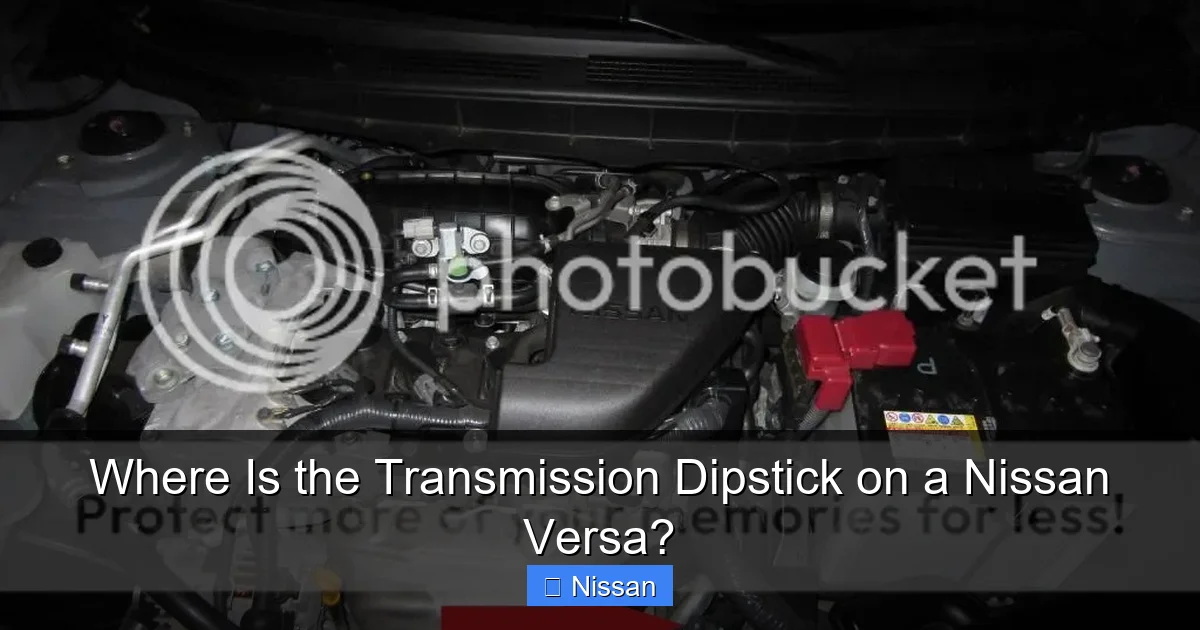
So why did Nissan decide to eliminate the transmission dipstick? It wasn’t just to make life harder for DIY mechanics—though it might feel that way. The move was actually part of a larger strategy to improve vehicle reliability and reduce long-term maintenance costs. Sealed transmissions are designed to be “maintenance-free” for the life of the vehicle, or at least for a very long time. Nissan claimed that the fluid in these systems could last up to 100,000 miles or more without needing a change, thanks to improved fluid formulations and better thermal management.
Another reason for the change was to prevent user error. Let’s face it—not everyone knows how to properly check transmission fluid. Some people check it when the engine is cold, which gives a false reading. Others overfill the transmission, thinking more fluid is better, when in reality it can cause foaming, overheating, and seal damage. By removing the dipstick, Nissan essentially took the decision out of the driver’s hands. Only trained technicians with the right equipment can access the fluid, ensuring that any checks or changes are done correctly.
There’s also a cost-saving angle. Sealed transmissions require fewer parts—no dipstick tube, no dipstick, no dipstick seal—which reduces manufacturing complexity and cost. While this might seem like a win for Nissan, it can be a drawback for owners who prefer to do their own maintenance. Without a dipstick, you can’t easily monitor fluid condition between service intervals. You have to rely on symptoms or scheduled maintenance, which means potential problems might go unnoticed until they become serious.
How to Check Transmission Fluid Without a Dipstick
Visual guide about Where Is the Transmission Dipstick on a Nissan Versa?
Image source: ww2.justanswer.com
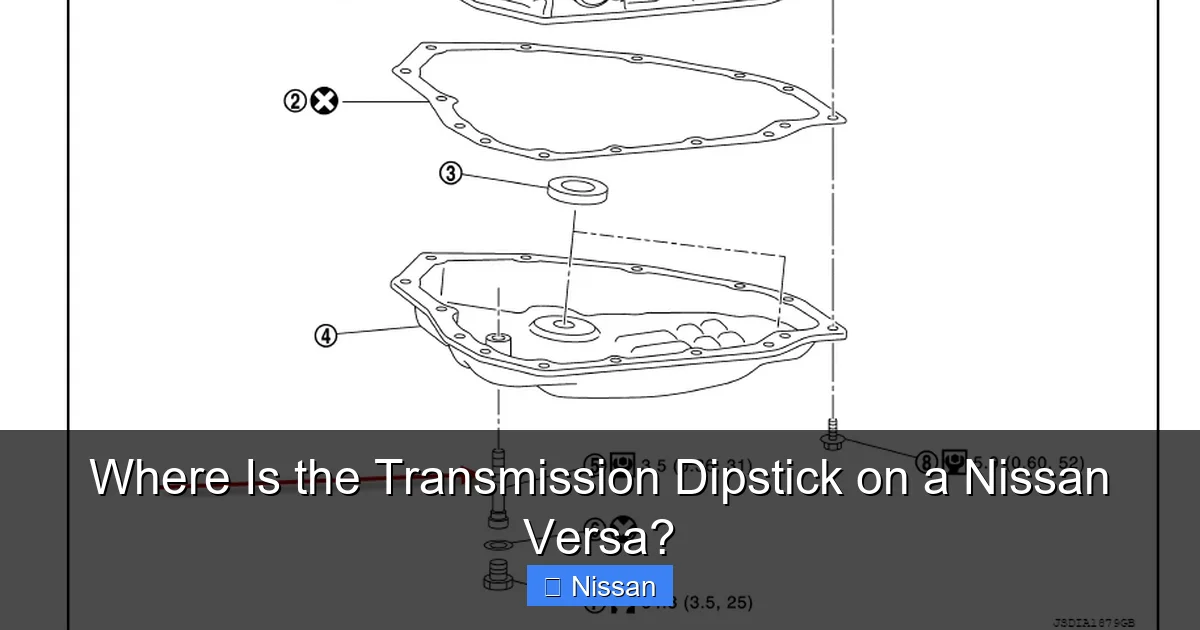
If your Nissan Versa doesn’t have a transmission dipstick, don’t panic. There are still ways to check the fluid, but they require a bit more effort and, in most cases, a trip to a professional. The standard method for checking fluid in a sealed transmission involves using the fill plug, which is typically located on the side of the transmission case. This plug is removed when the transmission is at operating temperature (usually after driving for 15–20 minutes), and the fluid level is checked by looking into the fill hole.
Here’s how it generally works: The car is parked on a level surface, the engine is running, and the transmission is in park (or neutral for manuals). The technician removes the fill plug, and if fluid begins to drip out, the level is correct. If no fluid comes out, the level is low and needs to be topped up. If fluid gushes out, it’s overfilled. This method requires precision and the right tools, including a torque wrench to properly reinstall the plug. It’s not something most DIYers can do in their driveway without the proper setup.
Some advanced DIYers have attempted to check the fluid themselves by carefully removing the fill plug, but this comes with risks. If you don’t have the transmission at the right temperature, the reading will be inaccurate. If you over-tighten the plug, you can strip the threads. And if you introduce dirt or debris into the transmission during the process, you could cause internal damage. For these reasons, Nissan strongly recommends having this procedure done by a certified technician.
That said, there are a few things you can do at home to monitor your transmission’s health. Pay attention to how your car drives. If you notice delayed engagement when shifting from park to drive, jerky or slipping shifts, or a burning smell, these could be signs of low or degraded transmission fluid. You can also check for leaks under the car—look for reddish or brownish fluid pooling near the transmission. If you see any, it’s time to get it checked out.
When to Service Your Nissan Versa Transmission
Visual guide about Where Is the Transmission Dipstick on a Nissan Versa?
Image source: i.ytimg.com
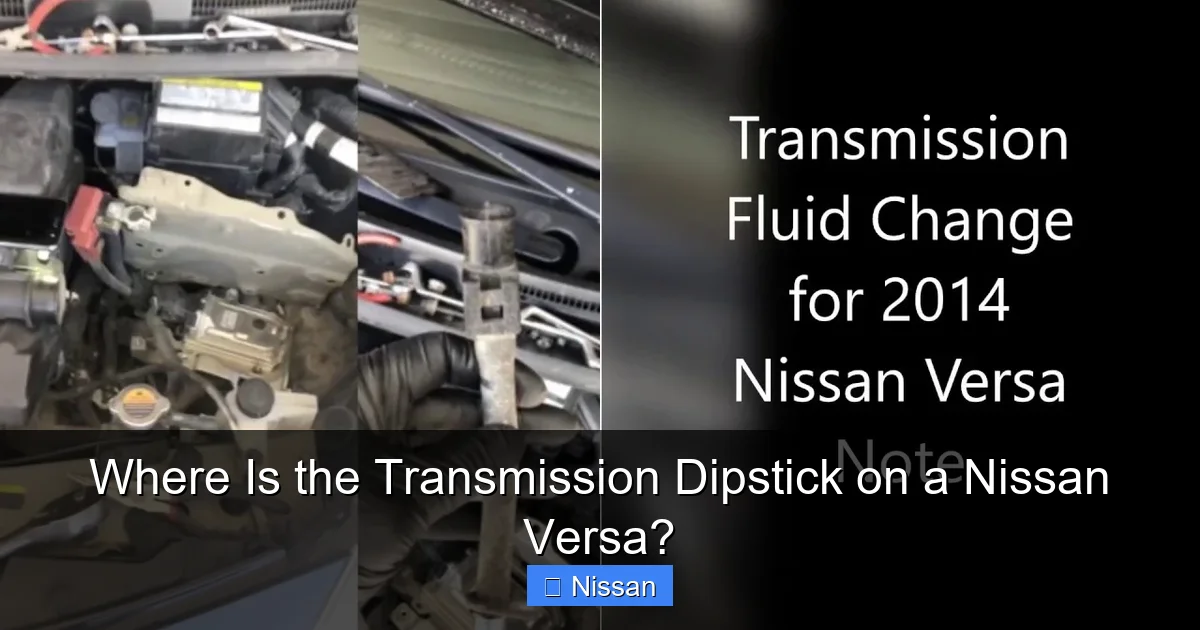
Even without a dipstick, your Nissan Versa’s transmission still needs regular maintenance. The recommended service interval varies depending on your model year and driving conditions, but most Nissan service schedules suggest a transmission fluid change every 60,000 to 100,000 miles. For CVT models, Nissan often recommends a fluid change at 60,000 miles, while some traditional automatics may go longer.
It’s important to follow the schedule in your owner’s manual, as skipping or delaying service can lead to costly repairs. CVTs, in particular, are sensitive to fluid condition. Over time, the fluid breaks down, loses its lubricating properties, and can cause the belts and pulleys to wear prematurely. In severe cases, this can lead to transmission failure, which can cost thousands of dollars to replace.
If you do a lot of stop-and-go driving, tow heavy loads, or live in a hot climate, you may need to service your transmission more frequently. These conditions put extra stress on the fluid, causing it to degrade faster. Some owners choose to change the fluid earlier than recommended as a preventive measure, especially if they plan to keep the car for a long time.
When you do get your transmission serviced, make sure the shop uses the correct type of fluid. Nissan specifies different fluids for different transmissions—using the wrong one can cause shifting problems or even damage the transmission. For CVT models, Nissan typically recommends NS-2 or NS-3 fluid, while older automatics may use Dexron III or equivalent. Always confirm the correct specification with your owner’s manual or a Nissan dealer.
DIY Tips for Nissan Versa Owners
While checking transmission fluid without a dipstick is challenging, there are still ways for DIY-minded owners to stay on top of their Versa’s health. Start by knowing your vehicle inside and out. Look up your model year, engine size, and transmission type online or in the owner’s manual. This will tell you whether your car has a dipstick or a sealed system.
If you have an older Versa with a dipstick, make sure you know how to use it correctly. The fluid should be checked with the engine running and the transmission warmed up. Pull the dipstick, wipe it clean, reinsert it fully, then pull it out again to read the level. The fluid should be between the “Full” and “Add” marks and should be pink or red in color. If it’s dark brown or smells burnt, it’s time for a change.
For sealed transmission models, focus on prevention. Keep up with regular maintenance, avoid aggressive driving, and don’t ignore warning signs. If your check engine light comes on, have it scanned—transmission-related codes can give you early warning of problems. You can also install an aftermarket transmission temperature gauge to monitor how hot your transmission is getting, especially if you drive in heavy traffic or hot weather.
Another tip: keep records of all maintenance and repairs. This not only helps you stay on schedule but can also increase your car’s resale value. If you ever sell your Versa, having a complete service history shows potential buyers that the car has been well cared for.
Conclusion: Know Your Versa’s Transmission Type
In the end, the answer to “Where is the transmission dipstick on a Nissan Versa?” depends entirely on your model year and transmission type. If you have a 2006 or early 2007 model with a traditional automatic, you might still find a dipstick tucked away near the engine. But for the vast majority of Versa owners—especially those with 2008 and newer models—the dipstick simply doesn’t exist. Instead, your transmission is sealed, and fluid checks require professional tools and expertise.
This shift reflects broader trends in the automotive industry toward lower maintenance and higher reliability. While it may limit DIY options, it also reduces the risk of user error and helps ensure that your transmission lasts as long as possible. The key is to stay informed, follow your owner’s manual, and don’t ignore warning signs. Whether your Versa has a dipstick or not, regular care and attention will keep it running smoothly for years to come.
Frequently Asked Questions
Does every Nissan Versa have a transmission dipstick?
No, most Nissan Versa models—especially those from 2007 onward—do not have a transmission dipstick. These vehicles use sealed transmissions that require professional service to check fluid levels.
How can I check my transmission fluid if there’s no dipstick?
You can have a technician check the fluid using the fill plug method, which requires the engine to be running and the transmission at operating temperature. DIY checks are possible but not recommended without proper tools and knowledge.
What happens if my transmission fluid is low?
Low transmission fluid can cause slipping gears, delayed shifting, overheating, and eventually transmission failure. It’s important to address low fluid levels immediately to avoid costly damage.
Can I change the transmission fluid myself on a sealed system?
While possible, it’s not recommended for most DIYers. The process requires special tools, the correct fluid type, and precise procedures. A certified technician is best equipped to handle it safely.
How often should I service my Nissan Versa’s transmission?
Most models require a transmission fluid change every 60,000 to 100,000 miles, depending on the transmission type and driving conditions. Always refer to your owner’s manual for specific recommendations.
What type of transmission fluid does my Nissan Versa need?
The correct fluid depends on your model and transmission. CVT models typically use Nissan NS-2 or NS-3 fluid, while older automatics may use Dexron III. Check your owner’s manual or consult a dealer to confirm.
