
Can You Install a Maserati Front End on a Dodge Viper?

Installing a Maserati front end on a Dodge Viper is technically possible but extremely complex, costly, and rarely practical. While the idea sounds exciting for car enthusiasts, it requires extensive fabrication, engineering expertise, and compromises in safety and performance.
Key Takeaways
- Physical Compatibility Issues: The Maserati and Dodge Viper have vastly different chassis designs, wheelbases, and body structures, making direct bolt-on installation impossible without major modifications.
- Structural and Safety Concerns: Altering the front end compromises crash safety systems, airbag deployment, and structural integrity, potentially making the vehicle unsafe or illegal to drive.
- High Cost and Labor Intensity: Custom fabrication, welding, and bodywork can cost tens of thousands of dollars and require hundreds of hours of skilled labor.
- Electrical and Sensor Integration Challenges: Modern Maserati front ends include advanced sensors, cameras, and lighting systems that must be integrated with the Viper’s older or incompatible electronics.
- Legal and Registration Hurdles: Modified vehicles may fail state inspections or emissions tests, and insurance companies may refuse coverage due to non-standard modifications.
- Aesthetic vs. Functional Trade-offs: Even if completed, the result may look unbalanced or perform poorly due to aerodynamic and weight distribution changes.
- Better Alternatives Exist: For most enthusiasts, custom body kits or professional restyling offer a safer, cheaper, and more reliable way to achieve a unique look.
📑 Table of Contents
- Can You Install a Maserati Front End on a Dodge Viper?
- Understanding the Vehicles: Viper vs. Maserati
- Physical and Structural Challenges
- Electrical and Sensor Integration
- Cost, Time, and Labor Requirements
- Legal and Insurance Implications
- Is It Worth It? Practical Alternatives
- Conclusion: A Dream Best Left in the Garage
Can You Install a Maserati Front End on a Dodge Viper?
So, you’ve got a Dodge Viper—raw, American muscle with a V10 scream that turns heads. And then you see a Maserati—sleek, Italian elegance with a grille that whispers luxury. The thought hits you: “What if I could combine the best of both worlds?” Specifically, what if you could install a Maserati front end on a Dodge Viper?
It’s a bold idea. One that sparks imagination and fuels late-night garage daydreams. But is it actually possible? And more importantly—should you even try?
Let’s be honest: the internet is full of wild car mods. From Lamborghini doors on Toyotas to full engine swaps between completely different brands. But this particular project—bolting a Maserati nose onto a Viper—isn’t just ambitious. It’s a mechanical, electrical, and legal minefield.
In this article, we’ll break down everything you need to know about this crossover concept. We’ll explore the technical challenges, the costs involved, the safety implications, and whether it’s even worth attempting. Whether you’re a seasoned gearhead or just curious about automotive possibilities, this deep dive will give you a realistic picture of what it would take—and why most experts would advise against it.
Understanding the Vehicles: Viper vs. Maserati
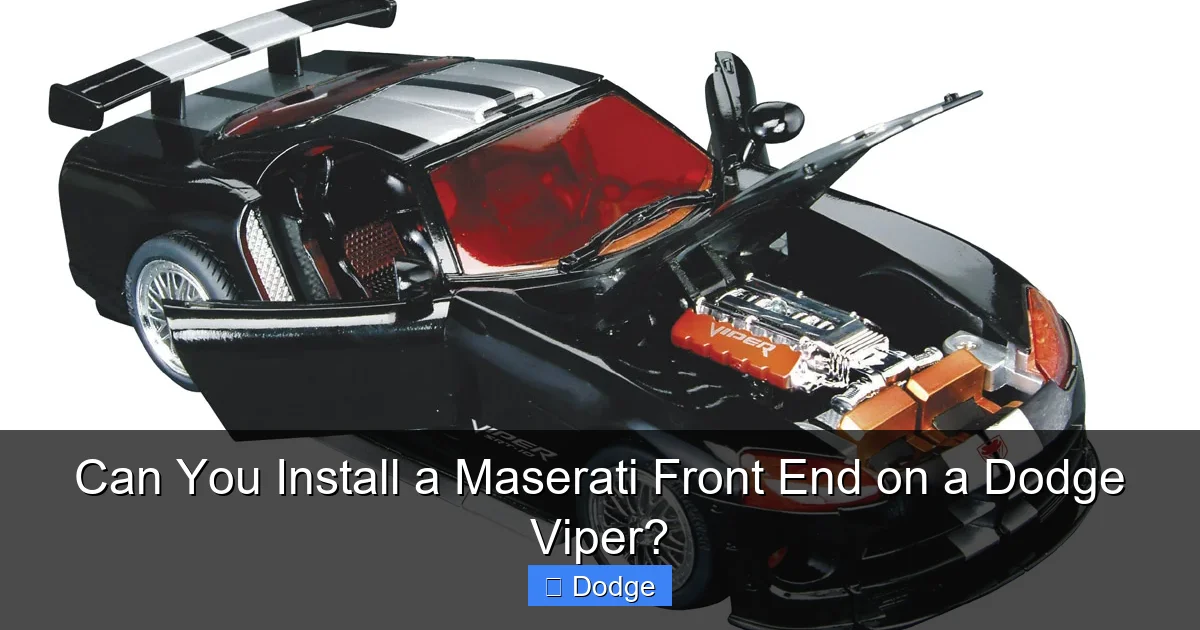
Visual guide about Can You Install a Maserati Front End on a Dodge Viper?
Image source: toys.tfw2005.com
Before we even think about swapping body parts, we need to understand what we’re working with. The Dodge Viper and Maserati are two very different beasts, born from different philosophies, built on different platforms, and designed for different purposes.
The Dodge Viper: American Muscle Unleashed
The Dodge Viper is a pure sports car—raw, loud, and unapologetically powerful. First introduced in the early 1990s, it was Dodge’s answer to European exotics like the Ferrari and Porsche. With its massive 8.0L to 8.4L V10 engine, rear-wheel drive, and minimal driver aids, the Viper was built for speed and driver engagement.
The Viper’s chassis is a steel space frame with aluminum body panels. It’s long, low, and wide, with a front-engine layout that places the bulk of the weight over the front axle. The front end is designed for high-speed stability and cooling, with large air intakes and a aggressive stance.
Over the years, the Viper evolved through several generations (SR I, SR II, ZB I, ZB II), but the core design principles remained: simplicity, power, and track-focused performance.
The Maserati: Italian Elegance and Engineering
Maserati, on the other hand, is all about Italian flair. Whether it’s the Quattroporte, Ghibli, or GranTurismo, Maserati vehicles blend performance with luxury. Their front ends are sculpted for aesthetics as much as aerodynamics, with signature trident grilles, flowing lines, and integrated lighting.
Modern Maseratis use unibody construction, meaning the body and frame are one piece. This allows for tighter tolerances and more complex shapes, but it also makes modifications far more difficult. The front end is packed with sensors, cameras, radar for adaptive cruise control, and advanced lighting systems like LED matrix headlights.
Even the older Maserati models—like the 3200 GT or the early 2000s Quattroporte—have more complex front structures than the Viper. Their designs prioritize luxury and refinement, not just raw speed.
Key Differences That Matter
When comparing the two, several critical differences stand out:
– Chassis Type: Viper uses a space frame; Maserati uses unibody. This affects how body panels attach and how structural loads are distributed.
– Wheelbase and Track Width: The Viper has a longer wheelbase and wider track, meaning the Maserati front end would likely look disproportionate.
– Front Suspension Geometry: The Viper’s suspension is designed for high lateral G-forces and track use. Maserati’s is tuned for comfort and daily driving.
– Electronics: The Viper, especially older models, has minimal electronics. Maseratis are packed with sensors, ECUs, and driver-assist systems.
These differences aren’t just cosmetic—they’re fundamental to how each car operates. Trying to merge them is like trying to graft a smartphone onto a typewriter.
Physical and Structural Challenges
Visual guide about Can You Install a Maserati Front End on a Dodge Viper?
Image source: toys.tfw2005.com
Now, let’s get into the nitty-gritty: can you physically attach a Maserati front end to a Dodge Viper?
The short answer? Not without a lot of custom work.
Mounting Points and Frame Compatibility
The first hurdle is mounting. The Viper’s front end attaches to the space frame at specific points designed for its own body panels. The Maserati’s front end is molded to fit a completely different frame structure.
Even if you could find a Maserati front clip (the front section of the body including fenders, bumper, and hood), the bolt patterns, brackets, and attachment points won’t align. You’d need to fabricate custom mounts, weld new brackets, and possibly cut and reshape the Viper’s frame.
This isn’t a weekend project. It requires precision welding, CAD design, and structural engineering knowledge. One mistake could compromise the entire front structure, leading to catastrophic failure in a crash.
Weight Distribution and Aerodynamics
The Viper’s weight distribution is carefully balanced for performance. The V10 engine sits far forward, contributing to a front-heavy setup. The Maserati front end—especially on newer models—may be heavier due to additional components like active grille shutters, sensors, and complex lighting.
Adding weight to the front could upset the Viper’s handling, making it understeer more or feel unbalanced. It could also affect braking performance, as the front brakes would have to work harder.
Aerodynamics are another concern. The Viper’s front end is designed to channel air through the engine bay and under the car for cooling and downforce. A Maserati nose might disrupt airflow, reduce cooling efficiency, or create lift at high speeds.
Imagine hitting 150 mph and feeling the front end lift because the new shape isn’t generating downforce. That’s not just inefficient—it’s dangerous.
Cooling and Airflow Issues
The Viper’s V10 generates a lot of heat. Its front end has large openings to feed air to the radiator, oil coolers, and intercoolers (on supercharged models). A Maserati front end, especially one with a sleek, closed-off design, might block airflow.
You’d need to cut new vents, reroute ducting, or even relocate cooling components. This adds complexity and could reduce engine efficiency or lead to overheating—especially on track days.
Electrical and Sensor Integration
Visual guide about Can You Install a Maserati Front End on a Dodge Viper?
Image source: toys.tfw2005.com
If you thought the physical challenges were tough, wait until you deal with the electronics.
Modern Maserati Front Ends Are Smart
Today’s Maseratis come with advanced driver-assistance systems (ADAS). That means radar sensors behind the grille for adaptive cruise control, cameras for lane-keeping assist, and ultrasonic sensors for parking.
These systems are integrated into the car’s CAN bus network—a digital communication system that connects all the electronic control units (ECUs). The Viper, especially older models, doesn’t have this level of integration.
Trying to wire a Maserati front end’s sensors into a Viper’s electrical system is like trying to plug a USB-C cable into a floppy disk drive. They don’t speak the same language.
Lighting Systems and Compatibility
Maserati headlights are often LED or xenon, with dynamic turn signals, auto-leveling, and even matrix lighting. The Viper, depending on the year, may have halogen or basic HID lights.
You can’t just plug in a Maserati headlight and expect it to work. You’d need to:
– Rewire the entire lighting circuit
– Install new control modules
– Possibly upgrade the Viper’s alternator to handle the increased electrical load
– Reprogram or replace the body control module (BCM)
Even then, the lights might not function correctly—or at all. And if they do work, they could drain the battery or cause electrical shorts.
Airbag and Safety System Conflicts
Here’s a critical point: the front end houses crash sensors and airbag triggers. The Maserati’s front clip includes sensors that detect impact severity and deploy airbags accordingly.
If you install a Maserati front end on a Viper, those sensors won’t communicate with the Viper’s airbag system. In a crash, the airbags might not deploy—or they might deploy at the wrong time.
This isn’t just a technical issue. It’s a safety hazard. You’re essentially disabling or confusing the car’s primary safety systems.
Cost, Time, and Labor Requirements
Let’s talk money. How much would this project actually cost?
Parts and Acquisition
First, you need a Maserati front end. A used front clip from a salvage yard might cost $3,000 to $8,000, depending on the model and condition. A new one? Easily $15,000 or more.
Then you need tools, materials, and possibly a donor Viper if you’re not working on your own. Add in paint, body filler, wiring harnesses, and custom fabrication supplies, and you’re already looking at $10,000–$20,000 just for parts.
Labor and Expertise
This isn’t a job for a weekend warrior. You’ll need:
– A skilled fabricator to modify the frame and body
– An auto electrician to handle wiring and sensors
– A body shop technician for paint and finish work
– Possibly a mechanical engineer to assess structural integrity
If you hire professionals, labor could easily run $15,000–$30,000. If you do it yourself, you’ll still need hundreds of hours of work—time you could spend on a more practical project.
Hidden Costs
Don’t forget:
– Alignment and suspension tuning after modifications
– Potential engine cooling upgrades
– Legal fees or inspections
– Insurance complications
And if something goes wrong—like a cracked frame or electrical fire—you could end up spending even more to fix it.
Legal and Insurance Implications
Even if you manage to build it, can you legally drive it?
State Inspections and Emissions
Most states require vehicles to pass safety and emissions inspections. A heavily modified car like this might fail due to:
– Non-standard body modifications
– Altered lighting (e.g., headlights not DOT-approved)
– Disabled or non-functional safety systems
– Emissions equipment tampering (if you modify the engine or exhaust)
Some states have “kit car” or “replica” laws that allow custom builds, but they often require extensive documentation and testing.
Insurance Challenges
Insurance companies hate uncertainty. A Viper with a Maserati front end is a red flag. They may:
– Refuse to insure the vehicle
– Charge extremely high premiums
– Deny claims if they determine the modification caused or contributed to an accident
You might have to go through specialty insurers, which can be expensive and limited in coverage.
Title and Registration Issues
When you modify a car this drastically, the VIN no longer matches the body. Some states may require a “reconstructed” or “assembled” title, which involves inspections and paperwork.
If you ever want to sell it, good luck. Most buyers won’t touch a car with this level of modification.
Is It Worth It? Practical Alternatives
So, after all that, is it worth it?
For 99% of car enthusiasts, the answer is no.
But that doesn’t mean you can’t achieve a unique look. Here are better alternatives:
Custom Body Kits
Companies like Liberty Walk, Rocket Bunny, or Duraflex make widebody kits for the Viper. These can give it a more aggressive, exotic look without requiring a full front-end swap.
You can even commission a custom kit inspired by Maserati styling—sleeker lines, a lower grille, integrated lighting—without the structural headaches.
Restyling and Paint
A professional respray in a Maserati-inspired color (like Blu Sofisticato or Nero Ribelle) with custom decals or trim can give your Viper a European flair.
Add smoked headlights, a carbon fiber hood, or a new front splitter, and you’ve transformed the look without touching the frame.
Performance Upgrades
Instead of changing the body, why not enhance what makes the Viper great? Supercharging, suspension upgrades, or a custom exhaust can make your Viper faster and more thrilling—without the risks.
Build a Replica or Kit Car
If you’re set on a Maserati-Viper hybrid, consider building a kit car from scratch. Companies like Factory Five or Superformance offer platforms where you can mix and match components legally and safely.
Conclusion: A Dream Best Left in the Garage
Installing a Maserati front end on a Dodge Viper is a fascinating idea—one that captures the imagination of car lovers who crave something truly unique. But when you dig into the details, the reality is far less glamorous.
The technical challenges are immense. The costs are staggering. The safety risks are real. And the legal hurdles could leave you with a car you can’t drive or insure.
While it’s technically possible with enough money, time, and expertise, it’s not practical—or advisable—for most people.
Instead, focus on enhancing your Viper in ways that respect its engineering and heritage. Whether it’s a custom body kit, performance upgrades, or a bold paint job, there are safer, smarter ways to stand out.
So, can you install a Maserati front end on a Dodge Viper? Yes—but should you? Probably not. Keep the dream alive in renderings and forums, but let your Viper remain the American icon it was born to be.
Frequently Asked Questions
Is it legal to install a Maserati front end on a Dodge Viper?
It depends on your state’s laws, but in most cases, such a modification would fail safety and emissions inspections. Altered crash structures and non-standard lighting can make the vehicle illegal to drive on public roads.
How much would it cost to swap a Maserati front end onto a Viper?
Expect to spend $25,000 to $50,000 or more, including parts, labor, fabrication, and potential electrical upgrades. Custom work and professional expertise drive the cost up significantly.
Will the Viper’s airbags still work after the modification?
Likely not. The Maserati’s crash sensors won’t communicate with the Viper’s airbag system, potentially disabling or misdeploying airbags in a collision.
Can I drive a Viper with a Maserati front end on the highway?
Only if it passes state inspections and is insured. Most modified vehicles like this fail inspections due to safety and lighting issues, making highway driving risky and possibly illegal.
Are there any successful examples of this modification?
There are no known professional or widely documented成功案例 of a Maserati front end successfully installed on a Viper. Most attempts remain概念渲染 or incomplete projects.
What’s a better way to give my Viper an exotic look?
Consider a custom widebody kit, carbon fiber body panels, or a Maserati-inspired paint job. These options are safer, cheaper, and preserve the Viper’s structural integrity.