
Which Is Better: Nissan Sentra or Versa?

The Nissan Sentra and Versa both offer great value in the compact car segment, but they serve different needs. The Sentra delivers a more refined ride, better tech, and stronger performance, while the Versa shines with lower pricing and excellent fuel economy.
When it comes to affordable, reliable compact cars, Nissan has long been a trusted name. Two of its most popular models—the Nissan Sentra and the Nissan Versa—often find themselves at the center of buyer debates. Both are fuel-efficient, come with modern tech, and are priced to attract first-time car buyers, students, and commuters. But which one is truly better?
It’s not just about price or looks. The real answer depends on what you value most in a daily driver. Are you looking for a smooth, comfortable ride with a touch of sophistication? Or do you prioritize low upfront cost and maximum fuel savings? Maybe you want a car that’s easy to park, simple to maintain, and packed with safety features.
In this detailed comparison, we’ll break down every important aspect of the Nissan Sentra and Versa—from performance and interior quality to safety, technology, and long-term value. By the end, you’ll have a clear picture of which model fits your lifestyle, budget, and driving preferences. Whether you’re shopping for your first car or upgrading from an older model, this guide will help you make a smart, informed decision.
Key Takeaways
- Sentra offers a more upscale interior and smoother ride: With higher-quality materials and better sound insulation, the Sentra feels more premium than the Versa.
- Versa is the more affordable option: Starting at a lower price point, the Versa is ideal for budget-conscious buyers who want basic transportation with modern features.
- Sentra has more standard safety tech: The Sentra comes with Nissan’s Safety Shield 360 suite, including automatic emergency braking and blind-spot monitoring.
- Versa gets better fuel economy: With up to 35 mpg combined, the Versa edges out the Sentra in efficiency, especially for city driving.
- Sentra provides more power and better handling: Its 1.6L engine and sport-tuned suspension make it more fun to drive than the Versa.
- Versa has a simpler, no-frills design: Great for drivers who want reliability and ease of use without extra bells and whistles.
- Resale value favors the Sentra: Due to its broader appeal and stronger features, the Sentra tends to hold its value better over time.
📑 Table of Contents
Performance and Driving Experience
When comparing the Nissan Sentra and Versa, one of the first things to consider is how each car feels on the road. Performance isn’t just about speed—it’s about responsiveness, comfort, and confidence behind the wheel.
Engine and Power Output
The Nissan Sentra is powered by a 1.6-liter four-cylinder engine that delivers 149 horsepower and 146 lb-ft of torque. This engine is paired with a continuously variable transmission (CVT), which helps optimize fuel efficiency while providing smooth acceleration. While it’s not a performance car, the Sentra feels peppy enough for city driving and highway merging. You’ll notice a noticeable difference when accelerating from a stop or passing on the freeway compared to the Versa.
In contrast, the Nissan Versa uses a smaller 1.6-liter engine that produces 122 horsepower and 114 lb-ft of torque. It also uses a CVT, but the lower output means it feels more sluggish, especially when carrying passengers or driving uphill. The Versa is perfectly adequate for daily commuting, but it won’t excite you with its performance.
Handling and Ride Comfort
The Sentra shines in this category. It features a sport-tuned suspension that strikes a nice balance between comfort and agility. The steering is responsive, and the car feels planted on winding roads. Whether you’re navigating tight city streets or cruising on the highway, the Sentra delivers a composed and confident ride.
The Versa, on the other hand, uses a more basic suspension setup. It’s tuned for comfort, which means it absorbs bumps well, but it can feel a bit floaty at higher speeds. Cornering is less precise, and there’s more body roll when taking turns quickly. For drivers who prioritize a smooth, relaxed ride over sportiness, the Versa is still a solid choice—but it doesn’t match the Sentra’s dynamic feel.
Fuel Economy Comparison
Here’s where the Versa pulls ahead. Thanks to its lighter weight and more efficient tuning, the Versa achieves up to 32 mpg in the city and 40 mpg on the highway, for a combined rating of 35 mpg. That’s impressive for a non-hybrid compact car and makes the Versa an excellent choice for long commutes or budget-minded drivers who want to minimize fuel costs.
The Sentra isn’t far behind, but it’s slightly less efficient. It gets an EPA-estimated 29 mpg in the city and 39 mpg on the highway, with a combined rating of 33 mpg. While that’s still very good, the difference can add up over time, especially if you drive mostly in stop-and-go traffic.
Interior Quality and Comfort
Visual guide about Which Is Better: Nissan Sentra or Versa?
Image source: octopus-center.com
Step inside both cars, and the differences become even more apparent. The interior is where the Sentra really sets itself apart from the Versa, offering a more premium feel and better materials.
Materials and Build Quality
The Sentra’s cabin uses higher-quality plastics, soft-touch surfaces, and available leather-like upholstery in upper trims. The dashboard layout is modern and intuitive, with a clean design that avoids clutter. Even the base model feels well put together, with minimal creaks or rattles.
The Versa’s interior, while functional, leans more toward utilitarian. Hard plastics dominate the dashboard and door panels, and the overall design is simpler. That’s not necessarily a bad thing—some drivers prefer a no-nonsense approach—but it lacks the refinement of the Sentra. Still, Nissan has improved the Versa’s cabin in recent years, adding better textures and a more cohesive look.
Seating and Space
Both cars seat five passengers, but the Sentra offers slightly more legroom in the rear, especially for taller adults. The front seats are more supportive and adjustable, with better cushioning for long drives. The Versa’s seats are comfortable enough for short trips, but they don’t offer the same level of support or adjustability.
Headroom is similar in both models, though taller drivers might find the Sentra’s seating position more accommodating. The Sentra also has a slightly larger trunk—14.6 cubic feet compared to the Versa’s 13.7 cubic feet—which may not seem like a big difference, but it can matter when packing for a weekend getaway.
Noise Levels and Ride Quietness
One of the Sentra’s standout features is its quiet cabin. Thanks to improved sound insulation and acoustic glass, road and wind noise are well controlled. You can have a conversation at normal volume even at highway speeds.
The Versa is quieter than previous generations, but it still lets in more noise from the road and engine. At higher speeds, you’ll notice more tire and wind noise, which can be tiring on long drives. For daily commuting, it’s not a dealbreaker, but it’s another area where the Sentra feels more upscale.
Technology and Infotainment
Visual guide about Which Is Better: Nissan Sentra or Versa?
Image source: s1.cdn.autoevolution.com
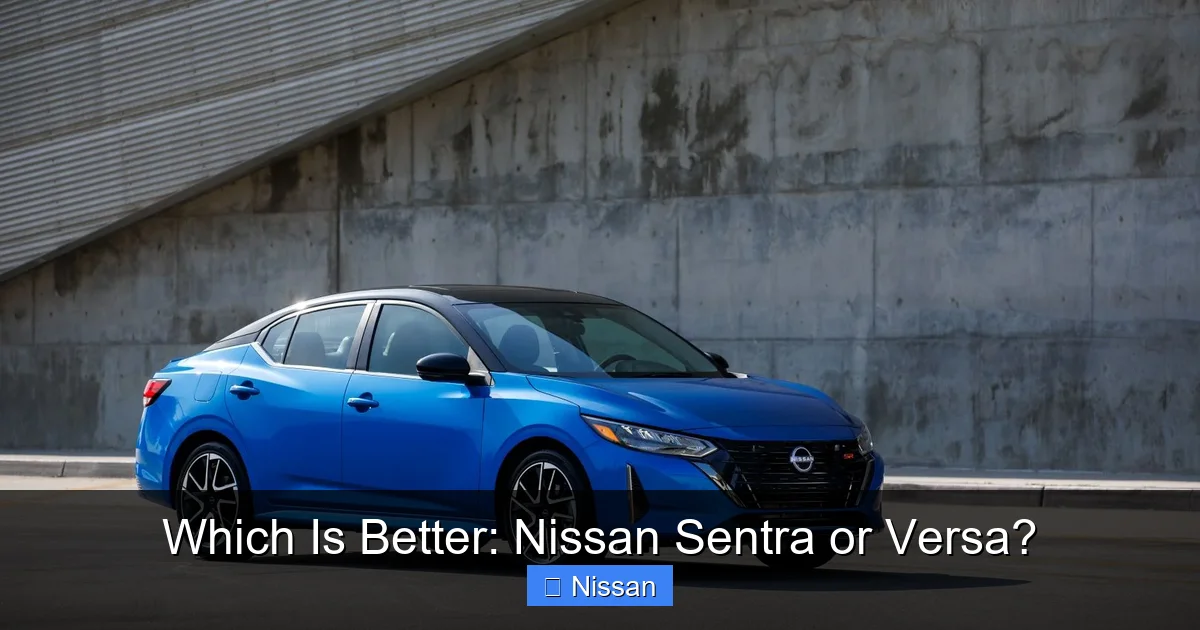
Modern drivers expect more than just a radio and a cup holder. Both the Sentra and Versa come equipped with user-friendly tech, but the Sentra offers a more advanced and integrated experience.
Infotainment Systems
The Sentra comes standard with an 8-inch touchscreen, Apple CarPlay, Android Auto, and a six-speaker audio system. Higher trims add features like wireless smartphone integration, a premium Bose audio system, and navigation. The interface is intuitive, with large icons and quick response times.
The Versa also includes an 8-inch touchscreen with Apple CarPlay and Android Auto, which is impressive for its price range. However, the system feels a bit slower, and the graphics aren’t as sharp. The base audio system has four speakers, which is adequate but not impressive. Wireless connectivity isn’t available, so you’ll need to plug in your phone every time.
Driver Assistance and Safety Tech
This is a major differentiator. The Sentra comes standard with Nissan’s Safety Shield 360, a suite of advanced driver aids that includes automatic emergency braking, blind-spot monitoring, rear cross-traffic alert, lane departure warning, and high beam assist. These features can help prevent accidents and give you peace of mind on the road.
The Versa offers some of these features, but not all are standard. Automatic emergency braking is included, but blind-spot monitoring and rear cross-traffic alert are only available on higher trims. This means budget-conscious buyers might miss out on key safety tech unless they upgrade.
Connectivity and Convenience Features
The Sentra offers more convenience features, such as a push-button start, dual-zone automatic climate control, and available heated front seats. These small touches make daily driving more comfortable, especially in colder climates.
The Versa keeps things simple. It has a traditional key ignition, manual climate control, and no heated seats. Again, this reflects its role as a no-frills commuter car. But for drivers who want a more modern, connected experience, the Sentra is the clear winner.
Pricing and Value
Visual guide about Which Is Better: Nissan Sentra or Versa?
Image source: mewanten.com
Price is often the deciding factor when choosing between the Sentra and Versa. Let’s break down the costs and what you get for your money.
Starting MSRP
The Nissan Versa starts at around $17,000, making it one of the most affordable new cars on the market. Even with destination fees, it’s easy to find a well-equipped model under $20,000. This low entry point is a major selling point for students, first-time buyers, and anyone on a tight budget.
The Nissan Sentra starts at about $21,000, which is significantly higher. But that price includes more standard features, better materials, and a more powerful engine. Higher trims can push the price closer to $25,000, but even then, the Sentra offers strong value for what you get.
Trim Levels and Options
The Versa comes in three trims: S, SV, and SR. The base S model is very basic, with manual windows and a simple audio system. The SV adds more features like alloy wheels, a rearview camera, and better upholstery. The SR is the sportiest version, with a rear spoiler, sport seats, and upgraded suspension.
The Sentra also has three trims: S, SV, and SR. Even the base S model comes well-equipped with automatic climate control, push-button start, and the full Safety Shield 360 suite. The SV adds more tech and comfort features, while the SR focuses on sporty styling and performance.
Long-Term Ownership Costs
Both cars are known for reliability and low maintenance costs. However, the Sentra’s higher resale value means you’ll get more money back when it’s time to sell or trade in. According to industry data, the Sentra retains about 50% of its value after three years, compared to around 45% for the Versa.
Insurance costs are similar, though the Sentra may be slightly more expensive due to its higher value and more advanced safety features. Fuel costs will be lower with the Versa, especially if you drive mostly in the city.
Safety and Reliability
Safety is a top priority for most car buyers, and both the Sentra and Versa perform well in this area—though the Sentra has a clear edge.
Crash Test Ratings
The Nissan Sentra earned a Top Safety Pick rating from the Insurance Institute for Highway Safety (IIHS), with “Good” scores in all crash tests and superior ratings for front crash prevention. It also received a 5-star overall safety rating from the National Highway Traffic Safety Administration (NHTSA).
The Versa also earned a 5-star NHTSA rating, but it hasn’t been tested by the IIHS in recent years. While it’s still a safe car, the lack of updated independent testing means we can’t compare it directly to the Sentra in all categories.
Standard and Available Safety Features
As mentioned earlier, the Sentra’s standard Safety Shield 360 suite gives it a big advantage. These features are proven to reduce accidents and are becoming standard on many new cars. The Versa offers some of these features, but not all are included on lower trims.
Both cars come with a rearview camera, tire pressure monitoring, and stability control. But the Sentra’s additional aids—like blind-spot monitoring and rear cross-traffic alert—make it a safer choice, especially for new drivers or those who frequently drive in busy areas.
Reliability and Warranty
Nissan offers a 3-year/36,000-mile basic warranty and a 5-year/60,000-mile powertrain warranty on both models. In terms of long-term reliability, both cars have solid reputations. Consumer Reports and J.D. Power have rated them above average for dependability, with few major issues reported.
That said, the Sentra’s more complex features (like the CVT and advanced safety systems) could mean slightly higher repair costs down the line. But for most owners, routine maintenance—oil changes, tire rotations, brake service—is affordable and straightforward.
Which One Should You Choose?
So, which is better: the Nissan Sentra or the Nissan Versa? The answer depends on your priorities.
Choose the Nissan Versa If:
- You’re on a tight budget and want the lowest possible upfront cost.
- You prioritize fuel economy and want to save money at the pump.
- You need a simple, reliable car for daily commuting or short trips.
- You don’t mind a basic interior and are okay with fewer tech features.
The Versa is a no-nonsense compact car that delivers exactly what it promises: affordability, efficiency, and reliability. It’s perfect for students, first-time buyers, or anyone who wants a dependable ride without breaking the bank.
Choose the Nissan Sentra If:
- You want a more refined, comfortable driving experience.
- You value advanced safety features and modern tech.
- You’re willing to spend a bit more for better materials and performance.
- You plan to keep the car for several years and want better resale value.
The Sentra is the more well-rounded choice. It feels more like a premium compact car, with a quiet cabin, smooth ride, and plenty of features to keep you connected and safe. It’s ideal for commuters, small families, or anyone who wants a little extra comfort and style.
Final Verdict
If you can afford the higher price tag, the Nissan Sentra is the better overall car. It offers more power, better handling, a nicer interior, and superior safety tech. It’s the smarter long-term investment.
But if your budget is tight and you’re looking for the most affordable way to get behind the wheel of a new Nissan, the Versa is a fantastic option. It’s efficient, reliable, and surprisingly well-equipped for the price.
Ultimately, both cars have their strengths. The right choice comes down to your needs, lifestyle, and how much you’re willing to spend. Take both for a test drive, compare the features side by side, and go with the one that feels right for you.
Frequently Asked Questions
Is the Nissan Sentra faster than the Versa?
Yes, the Sentra is faster. With 149 horsepower compared to the Versa’s 122 horsepower, the Sentra accelerates more quickly and feels more responsive, especially on highways and hills.
Which car has better gas mileage, the Sentra or Versa?
The Versa gets better gas mileage. It achieves up to 35 mpg combined, while the Sentra gets 33 mpg combined. The difference is small but noticeable for city drivers.
Does the Nissan Versa come with Apple CarPlay?
Yes, the Versa comes standard with Apple CarPlay and Android Auto on all trims, making it easy to connect your smartphone for navigation, music, and calls.
Is the Nissan Sentra more reliable than the Versa?
Both cars are similarly reliable, with strong ratings from owners and experts. The Sentra may have slightly higher long-term maintenance costs due to its more advanced features, but neither model has major reliability issues.
Can the Nissan Versa fit five adults comfortably?
Yes, the Versa seats five, but rear legroom is tighter than in the Sentra. It’s fine for shorter trips or smaller passengers, but taller adults may feel cramped in the back.
Which car has more standard safety features?
The Nissan Sentra has more standard safety features, including blind-spot monitoring, rear cross-traffic alert, and automatic emergency braking. The Versa includes some of these, but not all are standard on lower trims.
