
Nissan Rogue Won’t Start: Troubleshooting Guide

If your Nissan Rogue won’t start, don’t panic—there are several common and fixable reasons behind it. From a dead battery to faulty starters or fuel system issues, this guide walks you through practical troubleshooting steps to diagnose and resolve the problem quickly.
Key Takeaways
- Dead or weak battery: The most common cause of a no-start condition; check voltage and connections.
- Faulty starter motor: Listen for clicking sounds—this often signals a failing starter.
- Ignition switch problems: A worn ignition switch can prevent power from reaching the engine.
- Fuel delivery issues: Clogged filters or a failing fuel pump may starve the engine of fuel.
- Security system glitches: The Nissan anti-theft system can mistakenly lock out the engine.
- Faulty sensors: A bad crankshaft or camshaft sensor can disrupt engine timing.
- Corroded or loose connections: Inspect battery terminals and ground wires for corrosion or looseness.
📑 Table of Contents
- Why Your Nissan Rogue Won’t Start: Common Causes and Fixes
- Step 1: Check the Battery
- Step 2: Listen for the Starter
- Step 3: Inspect the Ignition System
- Step 4: Check the Fuel System
- Step 5: Look at the Engine Sensors
- Step 6: Check Fuses and Relays
- When to Call a Mechanic
- Preventing Future No-Start Issues
- Conclusion
Why Your Nissan Rogue Won’t Start: Common Causes and Fixes
Picture this: You’re running late for work, you hop into your Nissan Rogue, turn the key—or press the start button—and nothing happens. No engine cranking, no lights, just silence. Or maybe it cranks but doesn’t fire up. Frustrating? Absolutely. But before you call a tow truck, know this: many “Nissan Rogue won’t start” issues are fixable at home with a little know-how.
The Nissan Rogue is one of the most popular compact SUVs on the road, praised for its reliability, fuel efficiency, and smooth ride. But like any vehicle, it’s not immune to mechanical hiccups. When your Rogue refuses to start, it’s usually due to one of a handful of common problems—most of which you can diagnose yourself with basic tools and a bit of patience.
In this guide, we’ll walk you through the most frequent reasons your Nissan Rogue won’t start, how to identify them, and what you can do to fix them. Whether you’re dealing with a dead battery, a stubborn starter, or a mysterious electrical glitch, we’ve got you covered. We’ll keep things simple, practical, and jargon-free—because troubleshooting shouldn’t feel like decoding a secret language.
Step 1: Check the Battery
Visual guide about Nissan Rogue Won’t Start: Troubleshooting Guide
Image source: motorcarnutglass.com
The battery is the heart of your vehicle’s electrical system. If it’s weak or dead, your Nissan Rogue won’t have the power it needs to start. In fact, a dead or failing battery is the number one reason most cars—including the Rogue—fail to start.
Signs of a Dead or Weak Battery
You might notice dim headlights when you turn the key, slow cranking, or no cranking at all. Sometimes, the dashboard lights flicker or don’t come on. If your key fob doesn’t unlock the doors remotely, that’s another clue the battery is low.
How to Test the Battery
Grab a multimeter (available at any auto parts store for under $20). Set it to DC voltage (usually marked as “V” with a straight line). With the car off, touch the red probe to the positive terminal (+) and the black probe to the negative terminal (–). A healthy battery should read between 12.4 and 12.7 volts. Anything below 12.2 volts means the battery is weak or discharged.
If the voltage is low, try jump-starting the car using jumper cables and another vehicle. If it starts, great—but don’t assume the problem is solved. Drive the car for at least 30 minutes to let the alternator recharge the battery. Then test it again. If it drops quickly, the battery may need replacing.
Battery Connections Matter
Even a good battery won’t work if the connections are loose or corroded. Pop the hood and inspect the battery terminals. Look for white, green, or blue crusty buildup—that’s corrosion. It can prevent electrical current from flowing properly.
To clean it, disconnect the negative cable first (always negative first, then positive), then use a wire brush or battery terminal cleaner to scrub the terminals and cable ends. Reconnect securely, starting with the positive cable. A tight, clean connection can make all the difference.
When to Replace the Battery
Car batteries typically last 3–5 years. If your Rogue is older than that and the battery tests weak, it’s time for a new one. Don’t wait for a complete failure—replace it proactively. Most auto parts stores will test your battery for free and help you choose the right replacement.
Step 2: Listen for the Starter

Visual guide about Nissan Rogue Won’t Start: Troubleshooting Guide
Image source: cartipso.com
If your battery is fine but the engine still won’t crank, the next suspect is the starter motor. The starter is a small electric motor that turns the engine over when you turn the key or press the start button.
Clicking Sound? That’s a Clue
One of the most telling signs of a bad starter is a rapid clicking noise when you try to start the car. This usually means the battery has enough power to engage the starter solenoid, but not enough to turn the motor—or the starter itself is failing.
If you hear a single loud click but no cranking, that’s another red flag. The solenoid is engaging, but the motor isn’t spinning.
No Sound at All?
If there’s no sound—no click, no crank—it could still be the starter, but it might also be a blown fuse, a bad ignition switch, or a wiring issue. We’ll cover those next.
Testing the Starter
Testing a starter requires some mechanical skill, but it’s doable. First, check the starter fuse in the fuse box (usually under the hood). If it’s blown, replace it. If the fuse is fine, you can try tapping the starter gently with a hammer while someone tries to start the car. Sometimes, a stuck starter will respond to a light tap—this is a temporary fix, but it confirms the starter is the issue.
For a proper diagnosis, use a multimeter to check for power at the starter when the key is turned. If power is present but the starter doesn’t engage, it’s likely faulty and needs replacement.
Starter Replacement Tips
Replacing a starter on a Nissan Rogue is moderately difficult and may require lifting the vehicle. If you’re not comfortable with this, take it to a mechanic. But if you’re DIY-inclined, make sure to disconnect the battery first and follow a repair manual for your specific model year.
Step 3: Inspect the Ignition System
Visual guide about Nissan Rogue Won’t Start: Troubleshooting Guide
Image source: nissannationpodcast.com
The ignition system includes the ignition switch, key fob, and immobilizer system. If any of these components fail, your Rogue won’t start—even if the battery and starter are fine.
Ignition Switch Problems
The ignition switch sends power to the starter and other systems when you turn the key or press the start button. Over time, the switch can wear out, especially in older Rogues.
Symptoms include:
– The car starts intermittently
– Dashboard lights flicker when turning the key
– The engine cranks but doesn’t start
If you suspect the ignition switch, try jiggling the key while turning it. If the car starts after wiggling, the switch is likely worn.
Key Fob and Immobilizer Issues
Modern Nissan Rogues use a smart key system with an immobilizer. This anti-theft feature prevents the engine from starting unless the correct key fob is present.
If the fob battery is dead, the car may not recognize it. Try replacing the fob battery (usually a small CR2032 coin cell). If that doesn’t work, try using the physical key to unlock the door and start the car manually.
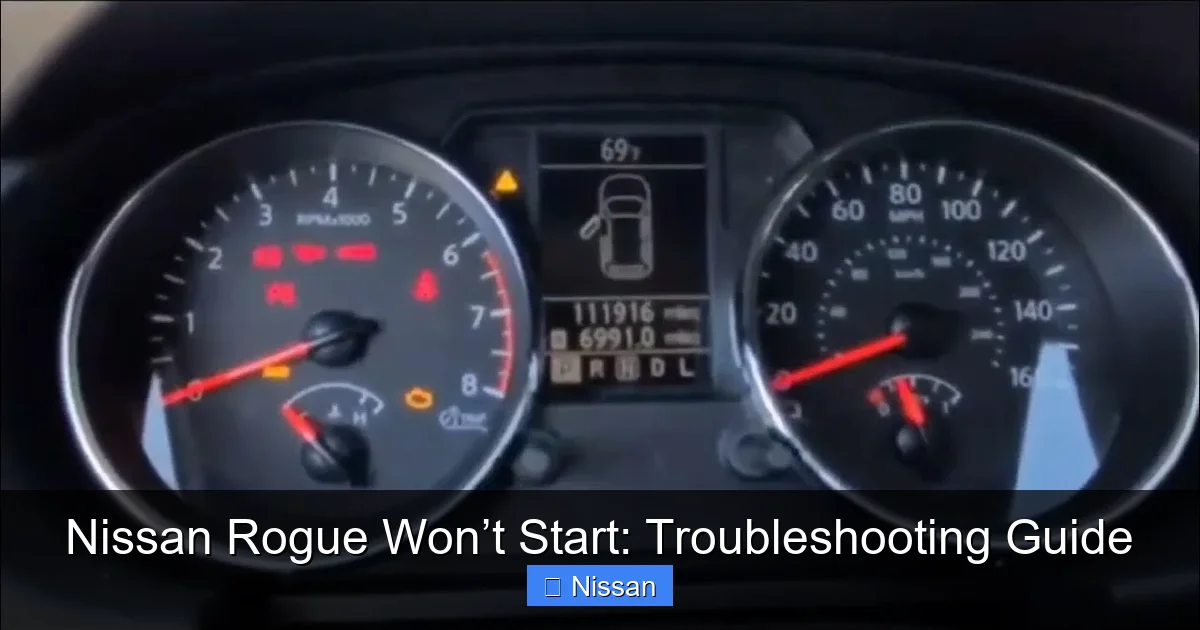
Sometimes, the immobilizer system glitches. If your Rogue won’t start and the security light is flashing on the dashboard, try this:
1. Turn the key to “ON” (don’t start the engine).
2. Wait 10–15 seconds.
3. Turn it back to “OFF.”
4. Wait another 10 seconds.
5. Try starting again.
This can reset the immobilizer and allow the car to start.
Faulty Ignition Coil or Spark Plugs
If the engine cranks but won’t start, the problem might be in the ignition system’s downstream components—like spark plugs or ignition coils. Worn spark plugs can cause misfires or prevent the engine from firing at all.
Check your owner’s manual for the recommended spark plug replacement interval (usually every 30,000–100,000 miles). If it’s been a while, consider replacing them. A mechanic can test the ignition coils with a multimeter or scan tool.
Step 4: Check the Fuel System
Your engine needs fuel to run. If the fuel system isn’t delivering gasoline to the engine, your Rogue won’t start—even if everything else is working.
Fuel Pump Failure
The fuel pump sends gasoline from the tank to the engine. If it fails, the engine won’t get fuel. A common sign of a failing fuel pump is a whining noise from the rear of the car (where the fuel tank is located), especially when you turn the key to “ON” but don’t start the engine.
To test the fuel pump, listen for a brief hum when you turn the key to “ON.” If you don’t hear it, the pump may be dead. You can also check fuel pressure with a fuel pressure gauge (available at auto parts stores). Low or no pressure indicates a pump issue.
Clogged Fuel Filter
The fuel filter traps dirt and debris before it reaches the engine. Over time, it can become clogged, restricting fuel flow. Most manufacturers recommend replacing the fuel filter every 30,000–60,000 miles.
If your Rogue cranks but sputters or dies shortly after starting, a clogged filter could be the culprit. Replacing it is relatively inexpensive and can restore proper fuel flow.
Bad Fuel Injectors
Fuel injectors spray gasoline into the engine’s combustion chambers. If they’re clogged or malfunctioning, the engine may not get the right fuel mixture. Symptoms include rough idling, poor acceleration, or a no-start condition.
Cleaning or replacing fuel injectors is best left to a professional, as it requires specialized tools and knowledge.
Empty Fuel Tank?
It sounds obvious, but sometimes the simplest explanation is the right one. Check your fuel gauge. If it’s on “E,” you might be out of gas. Even if the gauge shows a little fuel, the sensor could be faulty. Always keep at least a quarter tank to avoid fuel pump damage and ensure accurate readings.
Step 5: Look at the Engine Sensors
Modern cars like the Nissan Rogue rely on a network of sensors to manage engine performance. If a critical sensor fails, the engine control unit (ECU) may prevent the car from starting.
Crankshaft Position Sensor
This sensor tells the ECU when the engine is turning. If it fails, the ECU doesn’t know when to fire the spark plugs or inject fuel—so the engine won’t start.
Symptoms include:
– Engine cranks but doesn’t start
– Intermittent starting issues
– Check Engine Light on
The crankshaft sensor is usually located near the bottom of the engine, near the crankshaft pulley. It can fail due to heat, vibration, or age. Replacing it requires some mechanical skill, but it’s a common repair.
Camshaft Position Sensor
Similar to the crankshaft sensor, the camshaft position sensor monitors the position of the camshaft. If it fails, the ECU can’t synchronize fuel injection and ignition timing.
Symptoms are similar: cranking but no start, or rough running. The camshaft sensor is often located near the valve cover. Replacement is straightforward but may require removing other components for access.
Mass Airflow (MAF) Sensor
The MAF sensor measures how much air is entering the engine. If it’s dirty or faulty, the ECU may not deliver the correct amount of fuel, causing starting problems.
Cleaning the MAF sensor with a specialized cleaner can often fix the issue. Avoid touching the delicate wires inside.
Step 6: Check Fuses and Relays
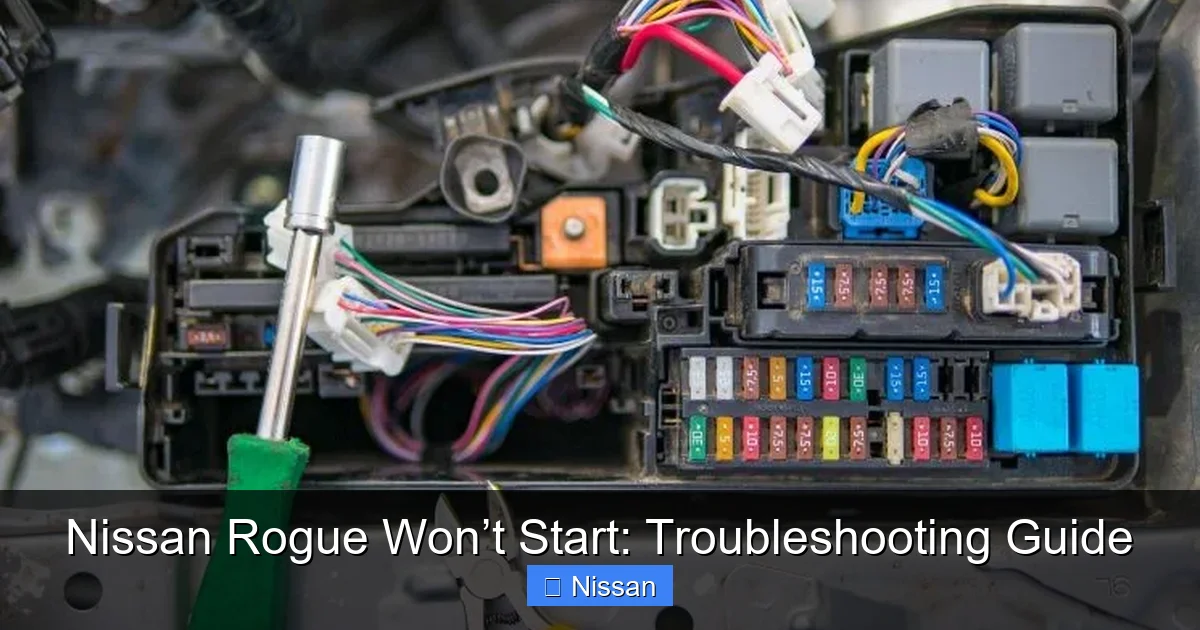
Electrical issues can prevent your Rogue from starting, even if the battery, starter, and sensors are fine. Fuses and relays protect the electrical system from overloads, but they can blow or fail over time.
Locate the Fuse Boxes
The Nissan Rogue has two main fuse boxes:
– Under the hood (engine compartment)
– Inside the cabin (usually under the dashboard on the driver’s side)
Check the owner’s manual for the exact location and fuse diagram.
Common Fuses to Check
Look for fuses related to:
– Ignition system
– Fuel pump
– Starter
– Engine control module (ECM)
If a fuse is blown (you’ll see a broken wire inside), replace it with one of the same amperage. Never use a higher-rated fuse—it could cause a fire.
Relay Issues
Relays are switches that control high-current circuits. A faulty relay can prevent the fuel pump or starter from receiving power. Relays often fail intermittently, making them hard to diagnose.
If you suspect a relay, try swapping it with an identical one (like the horn relay) to see if the problem goes away. If it does, replace the faulty relay.
When to Call a Mechanic
While many “Nissan Rogue won’t start” issues can be fixed at home, some problems require professional help. If you’ve checked the battery, starter, fuses, and basic sensors and the car still won’t start, it’s time to visit a trusted mechanic.
A professional can use a scan tool to read diagnostic trouble codes (DTCs) from the ECU. These codes can pinpoint issues like sensor failures, fuel system problems, or internal engine faults.
Also, if you’re not comfortable working under the hood or handling electrical components, don’t risk it. A small mistake can lead to bigger problems—or even injury.
Preventing Future No-Start Issues
The best way to avoid a “Nissan Rogue won’t start” situation is regular maintenance. Here are a few tips:
– Test your battery annually, especially before winter.
– Replace the battery every 4–5 years.
– Keep the battery terminals clean and tight.
– Replace spark plugs and fuel filters on schedule.
– Use a battery tender if you don’t drive often.
– Avoid leaving lights or accessories on when the engine is off.
A little prevention goes a long way in keeping your Rogue reliable and ready to go.
Conclusion
When your Nissan Rogue won’t start, it’s easy to feel frustrated—but most causes are common and fixable. Start with the battery, then move on to the starter, ignition system, fuel delivery, sensors, and fuses. With a methodical approach, you can often solve the problem yourself and save time and money.
Remember, if you’re ever unsure, don’t hesitate to consult a professional. Your safety and your vehicle’s health are worth it. And with regular maintenance, you can keep your Rogue running smoothly for years to come.
Frequently Asked Questions
Why won’t my Nissan Rogue start even though the battery is new?
Even with a new battery, issues like a faulty starter, bad ignition switch, or fuel pump failure can prevent your Rogue from starting. Check for clicking sounds, test the fuel pump, and inspect fuses and relays.
Can a dead key fob battery cause my Rogue not to start?
Yes. If the key fob battery is dead, the immobilizer system may not recognize the key. Replace the fob battery or use the physical key to start the car manually.
What does it mean if my Rogue cranks but won’t start?
This usually indicates a fuel, ignition, or sensor problem. Check the fuel pump, spark plugs, and crankshaft or camshaft sensors. A clogged fuel filter can also cause this issue.
How do I reset the immobilizer on my Nissan Rogue?
Turn the key to “ON” for 10–15 seconds, then back to “OFF.” Wait 10 seconds and try starting again. This can reset the anti-theft system and allow the engine to start.
Can bad spark plugs prevent my Rogue from starting?
Yes, especially if they’re severely worn or fouled. Spark plugs deliver the spark needed to ignite the fuel. Replace them according to your owner’s manual’s recommended interval.
Is it safe to jump-start my Nissan Rogue?
Yes, but follow proper procedures: connect red to positive, black to negative, and avoid touching the cables together. Let the donor car run for a few minutes before attempting to start your Rogue.