
Where Is the Transmission Dipstick on a Nissan Frontier?

Locating the transmission dipstick on a Nissan Frontier depends on your model year and transmission type. Older models (pre-2005) typically have a traditional dipstick near the back of the engine bay, while newer models often use a sealed system requiring a scan tool or dealer inspection. Knowing your truck’s specs is key to proper maintenance.
If you’re a proud owner of a Nissan Frontier, you already know it’s a rugged, reliable pickup built to handle tough jobs and long drives. Whether you’re hauling gear to a job site or cruising down the highway, your Frontier’s transmission plays a crucial role in keeping everything running smoothly. But here’s a question that comes up often—especially among DIY mechanics and new truck owners: Where is the transmission dipstick on a Nissan Frontier?
The answer isn’t always straightforward. Unlike older vehicles where the transmission dipstick is easy to spot near the engine, modern Nissan Frontiers—especially those made after 2005—have evolved. Many now use sealed transmission systems that don’t have a traditional dipstick at all. This shift has left a lot of drivers scratching their heads, wondering how to check their transmission fluid without one.
In this guide, we’ll walk you through everything you need to know about finding and using the transmission dipstick (or understanding why there isn’t one) on your Nissan Frontier. We’ll break it down by model year, transmission type, and maintenance best practices. Whether you’re driving a 2000 Frontier with a manual transmission or a 2020 model with an automatic, this article will help you stay on top of your truck’s health.
So, grab your owner’s manual, pop the hood, and let’s dive in. By the end, you’ll know exactly where to look—and what to do—when it comes to checking your Frontier’s transmission fluid.
Key Takeaways
- Model year matters: Pre-2005 Nissan Frontiers usually have a visible transmission dipstick, while 2005 and newer models often use a sealed transmission system without a dipstick.
- Check your owner’s manual: Always refer to your specific vehicle’s manual to confirm transmission type and fluid check procedures.
- Automatic vs. manual: Automatic transmissions are more likely to have dipsticks (on older models), while manual transmissions typically don’t require regular fluid checks via dipstick.
- Sealed systems require special tools: Newer Frontiers with sealed transmissions need a scan tool or professional service to check fluid levels safely.
- Regular maintenance prevents damage: Even without a dipstick, transmission fluid should be inspected and changed according to Nissan’s recommended schedule.
- Look near the firewall: On older models, the transmission dipstick is often located near the back of the engine bay, close to the firewall.
- Use the right fluid: Always use Nissan-approved transmission fluid to avoid damage and ensure optimal performance.
📑 Table of Contents
- Understanding the Nissan Frontier’s Transmission System
- Locating the Transmission Dipstick on Older Nissan Frontiers (Pre-2005)
- Nissan Frontiers from 2005 Onward: The Sealed Transmission Era
- Manual Transmission Frontiers: Do They Have a Dipstick?
- Best Practices for Maintaining Your Frontier’s Transmission
- When to See a Professional
- Conclusion
Understanding the Nissan Frontier’s Transmission System
Before we get into the nitty-gritty of dipstick locations, it’s important to understand how the Nissan Frontier’s transmission system works. The transmission is responsible for transferring power from the engine to the wheels, allowing your truck to shift gears smoothly and efficiently. There are two main types of transmissions in the Frontier: automatic and manual.
Automatic transmissions are more common in newer models and are designed to shift gears without driver input. Manual transmissions, on the other hand, require the driver to use a clutch pedal and gear shifter. Each type has its own maintenance needs, especially when it comes to fluid.
Transmission fluid is the lifeblood of your transmission. It lubricates moving parts, cools the system, and helps with hydraulic pressure for gear shifts. Over time, this fluid can break down, become contaminated, or leak out—leading to poor performance, overheating, or even transmission failure.
That’s why regular fluid checks are essential. But here’s the catch: not all Frontiers make it easy to check that fluid. Older models often come with a dipstick, similar to the one used for engine oil. But starting around 2005, Nissan began phasing out traditional dipsticks in favor of sealed transmission systems.
Why Did Nissan Remove the Dipstick?
You might be wondering why Nissan would remove something as useful as a dipstick. After all, it’s a simple tool that lets you check fluid levels quickly and easily. The shift to sealed systems was driven by several factors.
First, sealed transmissions are designed to be maintenance-free for longer periods. Nissan claims that with proper care, the fluid can last the life of the vehicle—no need for regular top-offs. This reduces the chance of overfilling or using the wrong fluid, which can cause serious damage.
Second, sealed systems help prevent contamination. With no dipstick tube, there’s less risk of dirt, moisture, or debris getting into the transmission. This improves reliability and longevity.
Finally, it’s a cost-saving measure for manufacturers. Fewer parts mean lower production costs, and fewer service visits mean happier customers—at least in theory.
But for DIYers and those who like to stay hands-on with their vehicle maintenance, the lack of a dipstick can be frustrating. It means you can’t just pop the hood and check the fluid yourself. Instead, you’ll need special tools or a trip to the dealership.
Locating the Transmission Dipstick on Older Nissan Frontiers (Pre-2005)
Visual guide about Where Is the Transmission Dipstick on a Nissan Frontier?
Image source: i.ytimg.com
If you’re driving a Nissan Frontier made before 2005, there’s a good chance your truck has a transmission dipstick. These older models—especially those with automatic transmissions—were built with traditional service points, including a dipstick for checking transmission fluid.
So, where exactly is it?
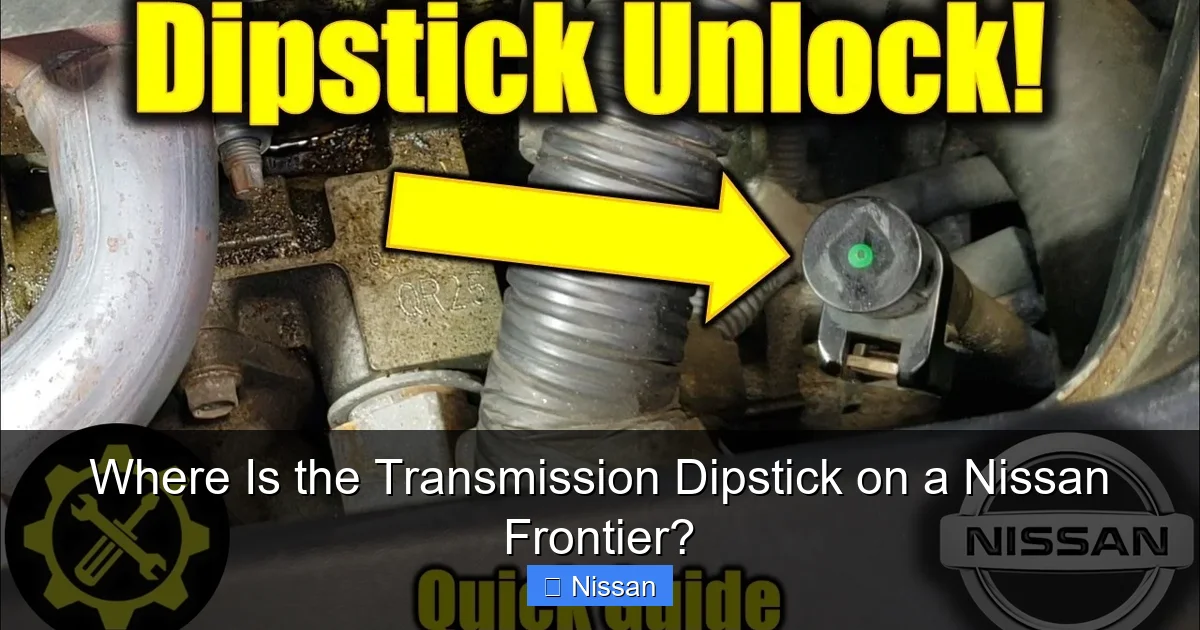
On most pre-2005 Frontiers, the transmission dipstick is located near the back of the engine bay, close to the firewall (the wall between the engine and the cabin). It’s usually on the passenger side, though this can vary slightly depending on the engine configuration.
To find it, open the hood and look for a long, thin metal rod with a loop or T-handle at the top. It’s often labeled “ATF” (Automatic Transmission Fluid) or has a yellow or red handle to make it stand out. The dipstick tube typically extends down into the transmission pan.
Here’s a step-by-step guide to help you locate it:
- Pop the hood and secure it with the prop rod.
- Look toward the rear of the engine bay, near the firewall.
- Scan the passenger side for a metal rod with a colored handle.
- If you see one labeled “ATF” or “Transmission,” that’s your dipstick.
Once you’ve found it, checking the fluid is simple—but there are a few important rules to follow.
How to Check Transmission Fluid on Older Frontiers
Checking the transmission fluid on a pre-2005 Frontier is similar to checking engine oil, but with a few key differences. Here’s how to do it correctly:
- Start the engine and let it idle for a few minutes to warm up the transmission fluid. Cold fluid can give inaccurate readings.
- Shift through all the gears (P-R-N-D) and then return to Park. This ensures the fluid is evenly distributed.
- With the engine still running, pull out the dipstick, wipe it clean with a lint-free cloth, and reinsert it fully.
- Pull it out again and check the fluid level. There should be markings for “Full” and “Add” or “Low.” The fluid should be between these lines.
- Also check the fluid’s condition. It should be bright red or pink and clear, not dark, burnt-smelling, or gritty.
If the fluid is low, add the correct type of ATF (usually Dexron III or Nissan-approved equivalent) through the dipstick tube using a funnel. Add a little at a time and recheck the level to avoid overfilling.
Pro Tip: Always check transmission fluid with the engine running and the transmission in Park. This ensures the fluid is circulating and the reading is accurate.
Nissan Frontiers from 2005 Onward: The Sealed Transmission Era
Visual guide about Where Is the Transmission Dipstick on a Nissan Frontier?
Image source: ww2.justanswer.com
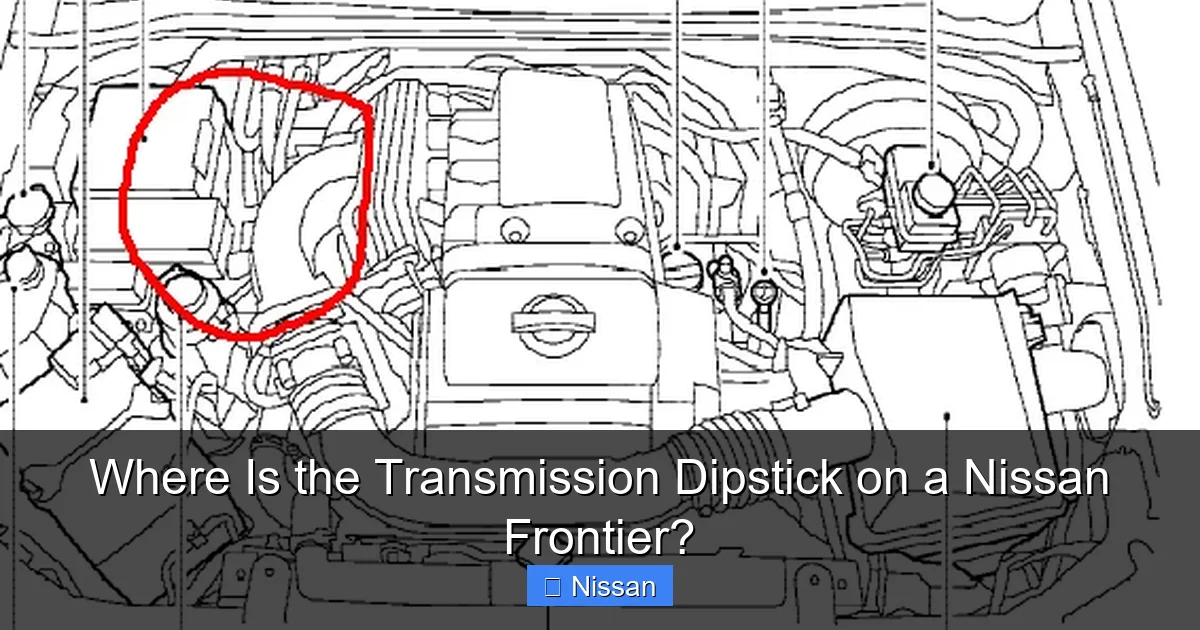
Starting in 2005, Nissan began installing sealed transmission systems in many of its Frontier models. This means there’s no dipstick to check the fluid level. Instead, the transmission is designed to be filled for life—at least according to Nissan.
But “filled for life” doesn’t mean “never check it.” Over time, transmission fluid can still degrade, leak, or become contaminated. And if something goes wrong, you won’t know until it’s too late—unless you have the right tools.
So, how do you check the fluid on a newer Frontier?
The short answer: you can’t do it the traditional way. There’s no dipstick, and the transmission pan doesn’t have a fill plug you can easily access. Instead, Nissan uses a sealed system with a fill plug located underneath the vehicle, often near the transmission pan.
To check the fluid, you’ll need to:
- Raise the vehicle safely using jack stands or a lift.
- Locate the fill plug on the side of the transmission pan.
- Remove the plug and check if fluid drips out. If it does, the level is correct. If not, you may need to add fluid.
- Use a fluid pump to add the correct ATF through the fill hole until it starts to drip out.
- Replace the plug and lower the vehicle.
This process requires some mechanical skill and the right tools. It’s not something most DIYers can do in their driveway without preparation.
Why You Still Need to Check the Fluid
Even though Nissan says the fluid is “filled for life,” real-world conditions can shorten that lifespan. Off-roading, towing, extreme temperatures, and frequent stop-and-go driving can all accelerate fluid breakdown.
Signs that your transmission fluid may be low or degraded include:
- Delayed or rough shifting
- Transmission slipping or shuddering
- Unusual noises (whining, grinding)
- Overheating (check the dashboard warning light)
- Fluid leaks under the vehicle
If you notice any of these symptoms, it’s time to have your transmission inspected—even if there’s no dipstick.
Manual Transmission Frontiers: Do They Have a Dipstick?
Visual guide about Where Is the Transmission Dipstick on a Nissan Frontier?
Image source: i.ytimg.com
Now, what about Nissan Frontiers with manual transmissions? These trucks don’t use automatic transmission fluid (ATF). Instead, they use gear oil—a thicker lubricant designed for manual gearboxes.
And here’s the good news: most manual transmission Frontiers do not have a dipstick. Instead, they use a fill plug and a drain plug, both located on the transmission housing.
To check the fluid level on a manual Frontier:
- Raise the vehicle and locate the fill plug on the side of the transmission.
- Remove the plug. If gear oil drips out, the level is correct.
- If no oil comes out, you’ll need to add the correct type of gear oil (usually 75W-90 synthetic) using a pump until it starts to drip.
- Replace the plug and lower the vehicle.
This method is similar to the sealed automatic system, but it’s a bit simpler since you don’t need to warm up the transmission or cycle through gears.
Important: Never overfill a manual transmission. Too much oil can cause foaming, overheating, and seal damage.
Best Practices for Maintaining Your Frontier’s Transmission
Whether your Frontier has a dipstick or a sealed system, proper transmission maintenance is key to longevity and performance. Here are some best practices to follow:
Follow the Maintenance Schedule
Your owner’s manual includes a recommended maintenance schedule for your transmission. For most Frontiers, this includes:
- Automatic transmissions: Fluid and filter change every 30,000 to 60,000 miles, depending on driving conditions.
- Manual transmissions: Fluid change every 30,000 to 50,000 miles.
If you frequently tow, drive in hot climates, or do a lot of city driving, you may need to change the fluid more often.
Use the Right Fluid
Using the wrong transmission fluid can cause serious damage. Always use the fluid specified in your owner’s manual. For most Frontiers, this is:
- Automatic: Nissan ATF or Dexron III/Mercon equivalent
- Manual: 75W-90 synthetic gear oil
Avoid generic or “universal” fluids. Stick with reputable brands like Mobil 1, Valvoline, or Nissan Genuine Parts.
Watch for Leaks
Transmission fluid leaks are a common issue, especially as seals age. Look for red or brown puddles under your truck. Common leak points include:
- Transmission pan gasket
- Seals around the input/output shafts
- Cooler lines
- Dipstick tube (on older models)
If you spot a leak, have it repaired promptly to prevent low fluid levels and transmission damage.
Don’t Ignore Warning Signs
Your transmission will often give you warning signs before a major failure occurs. Pay attention to:
- Slipping gears (especially when accelerating)
- Burning smell
- Check Engine or Transmission Warning Light
- Difficulty shifting
If you notice any of these, have your truck inspected by a qualified mechanic.
Consider a Transmission Cooler
If you frequently tow heavy loads or drive in hot climates, consider installing an auxiliary transmission cooler. This helps keep the fluid at a safe temperature and extends its life.
When to See a Professional
While some transmission maintenance can be done at home, there are times when you should leave it to the experts. These include:
- Checking or changing fluid on a sealed automatic transmission
- Replacing the transmission filter (requires removing the pan)
- Diagnosing shifting problems or noises
- Rebuilding or replacing the transmission
Dealerships and certified mechanics have the tools and expertise to handle these tasks safely and correctly. They can also use diagnostic scanners to check fluid levels and system health on newer models.
Conclusion
So, where is the transmission dipstick on a Nissan Frontier? The answer depends on your truck’s model year and transmission type. Older Frontiers (pre-2005) often have a dipstick near the firewall, making it easy to check fluid levels at home. But newer models typically use sealed transmissions without a dipstick, requiring special tools or professional service.
Regardless of your Frontier’s design, regular transmission maintenance is essential. Whether you’re checking fluid with a dipstick or having it inspected by a mechanic, staying on top of this critical system will keep your truck running smoothly for years to come.
Remember: your owner’s manual is your best friend. It contains the exact specifications for your vehicle, including fluid types, maintenance intervals, and service procedures. Keep it handy, follow the recommendations, and don’t ignore warning signs.
Your Nissan Frontier is built to last—but only if you take care of it. With the right knowledge and a little attention, you can enjoy smooth shifts, reliable performance, and peace of mind on every drive.
Frequently Asked Questions
Does every Nissan Frontier have a transmission dipstick?
No, not every Nissan Frontier has a transmission dipstick. Models made before 2005 often have one, but newer models typically use sealed transmissions without a dipstick.
How do I check transmission fluid on a 2010 Nissan Frontier?
On a 2010 Frontier with a sealed transmission, you’ll need to raise the vehicle and remove the fill plug on the transmission pan. Fluid should drip out if the level is correct.
Can I add transmission fluid through the dipstick tube?
Yes, on older Frontiers with a dipstick, you can add fluid through the dipstick tube using a funnel. Be careful not to overfill.
What happens if I use the wrong transmission fluid?
Using the wrong fluid can cause poor shifting, overheating, or even transmission failure. Always use the type specified in your owner’s manual.
How often should I change the transmission fluid in my Frontier?
For automatic transmissions, every 30,000 to 60,000 miles. For manuals, every 30,000 to 50,000 miles. Check your manual for exact recommendations.
Is it safe to drive with low transmission fluid?
No, driving with low transmission fluid can cause overheating, slipping, and permanent damage. Check and top off fluid as soon as possible.