
How to Check Cvt Fluid Level on Nissan Altima Without Dipstick

Checking the CVT fluid level on a Nissan Altima without a dipstick isn’t as scary as it sounds. With the right tools, a warm engine, and the correct procedure, you can monitor your transmission health at home. This guide walks you through every step—safely and simply.
If you’ve ever popped the hood of your Nissan Altima and looked for a transmission dipstick—only to come up empty—you’re not alone. Many newer Altima models, especially those from 2007 onward with Continuously Variable Transmissions (CVTs), don’t have a traditional dipstick for checking fluid levels. Instead, Nissan uses a sealed system with a fluid level check plug located on the side of the transmission. While this design reduces the chance of overfilling or contamination, it also means you can’t just pull a stick and wipe it clean. But don’t worry—checking the CVT fluid level on a Nissan Altima without a dipstick is totally doable at home, as long as you follow the right steps.
The key to success is understanding how the system works and preparing properly. Unlike older cars where you could check fluid cold or hot with a simple glance, CVTs are more sensitive to temperature and fluid volume. Too little fluid, and your transmission can overheat or slip. Too much, and it can foam, leading to poor lubrication and premature wear. That’s why Nissan designed a precise method to check the level when the fluid is at the correct operating temperature. With a few basic tools, a safe workspace, and about 20–30 minutes of your time, you can confidently monitor your CVT’s health and catch potential issues early.
In this guide, we’ll walk you through everything you need to know—from why Nissan removed the dipstick to the exact steps for checking and topping off your CVT fluid. Whether you’re a DIY enthusiast or just trying to save a trip to the dealership, this process empowers you to take control of your vehicle’s maintenance. We’ll also cover safety tips, common mistakes to avoid, and when it’s time to call in a professional. By the end, you’ll feel confident handling this essential maintenance task like a pro.
Key Takeaways
- No dipstick? No problem: Many modern Nissan Altimas use a sealed CVT system with a fluid level check plug instead of a traditional dipstick.
- Engine must be warm: Always check the fluid level when the engine is at operating temperature (around 104°F to 113°F or 40°C to 45°C).
- Use the correct fluid: Only use Nissan NS-2 or NS-3 CVT fluid—using the wrong type can damage your transmission.
- Follow the 5-step process: Warm up the engine, locate the check plug, remove it, observe fluid flow, and refill if needed.
- Work safely: Always use jack stands or a lift—never rely solely on a jack—and wear gloves and eye protection.
- When to seek help: If you’re unsure or notice burnt smells, slipping, or leaks, consult a certified technician.
- Regular checks prevent damage: Inspecting CVT fluid every 30,000 miles helps avoid costly repairs down the road.
📑 Table of Contents
Why Nissan Removed the Dipstick on CVTs
Back in the early 2000s, Nissan began phasing out traditional automatic transmissions in favor of Continuously Variable Transmissions (CVTs) in models like the Altima. CVTs offer better fuel efficiency, smoother acceleration, and fewer gear shifts, making them ideal for daily driving. However, they also require more precise fluid management than older automatics. That’s why Nissan made a bold move: removing the dipstick and sealing the transmission system.
The main reason? To prevent contamination and overfilling. CVT fluid is highly specialized and sensitive to air, moisture, and debris. A dipstick tube can allow dirt and moisture to enter the system over time, especially if the cap isn’t sealed properly. Additionally, many drivers tend to overfill their transmissions when checking fluid cold or without proper tools, which can cause foaming and reduced lubrication. By eliminating the dipstick, Nissan ensures that only trained technicians—or careful DIYers—can access the fluid, reducing the risk of user error.
Another factor is the complexity of CVT fluid dynamics. Unlike traditional automatics, CVTs operate under high pressure and rely on precise fluid levels to maintain belt and pulley contact. Even a small deviation can affect performance. The sealed system, combined with a temperature-based check method, ensures the fluid is measured under real-world operating conditions. This approach aligns with modern engineering trends toward precision and reliability.
While some drivers miss the simplicity of a dipstick, the sealed design ultimately protects the transmission. It encourages proper maintenance habits and reduces the chance of DIY mistakes. Plus, with the right knowledge, checking the fluid isn’t much harder than using a dipstick—it just requires a bit more preparation.
Understanding CVT Fluid and Its Importance
Visual guide about How to Check Cvt Fluid Level on Nissan Altima Without Dipstick
Image source: tireer.com
Before diving into the checking process, it’s important to understand what CVT fluid does and why it’s so critical to your Altima’s performance. CVT fluid isn’t just a lubricant—it’s a hydraulic fluid, a coolant, and a friction modifier all in one. It transfers power from the engine to the transmission, keeps internal components cool, and ensures smooth engagement between the belts and pulleys.
Nissan specifies two types of CVT fluid for Altima models: NS-2 and NS-3. NS-2 was used in earlier models (roughly 2007–2012), while NS-3 is for newer vehicles (2013 and later). Using the wrong fluid—or mixing types—can cause serious damage, including slipping, overheating, and transmission failure. Always check your owner’s manual or the fluid reservoir cap to confirm which type your Altima requires.
One of the biggest misconceptions about CVT fluid is that it lasts forever. While some manufacturers claim “lifetime” fluid, real-world driving conditions—like stop-and-go traffic, towing, or extreme temperatures—can degrade the fluid over time. Contaminants, moisture, and heat break down the additives, reducing its effectiveness. That’s why regular checks and changes are essential, even if the fluid looks clean.
Another key point: CVT fluid expands when heated. This is why the check must be done at operating temperature. If you check it cold, the fluid will contract, giving a false low reading. Conversely, if the engine is too hot, the fluid may overflow when you remove the plug. The ideal range is between 104°F and 113°F (40°C to 45°C), which you can monitor using an OBD2 scanner or by driving the car for about 15–20 minutes.
Tools and Safety Precautions
Visual guide about How to Check Cvt Fluid Level on Nissan Altima Without Dipstick
Image source: d2hucwwplm5rxi.cloudfront.net
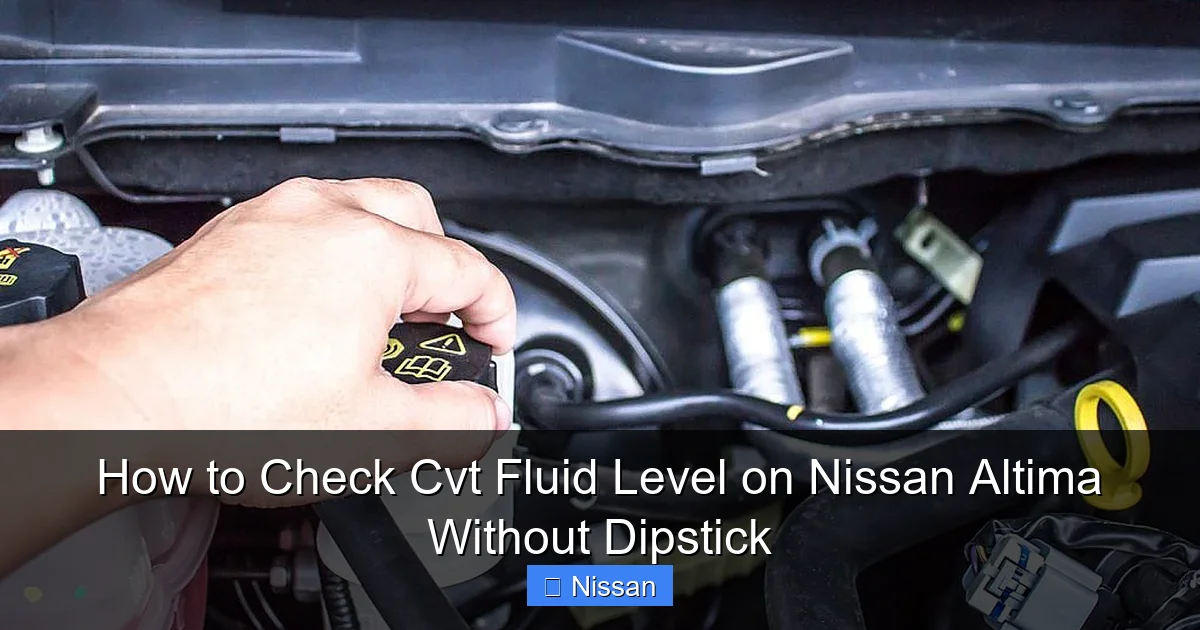
Checking your CVT fluid level at home is safe and straightforward, but only if you prepare properly. Here’s what you’ll need:
– A jack and jack stands (or a vehicle lift)
– Wheel chocks
– Safety glasses and gloves
– A clean rag or shop towels
– A fluid pump or syringe (for topping off)
– Nissan NS-2 or NS-3 CVT fluid (as specified)
– An OBD2 scanner (optional, but helpful for checking fluid temp)
– A 10mm hex key or Allen wrench (size may vary by model year)
Safety is paramount. Never work under a vehicle supported only by a jack—always use jack stands on level, solid ground. Engage the parking brake and chock the rear wheels to prevent rolling. Wear gloves to protect your hands from hot fluid and sharp edges, and safety glasses to shield your eyes.
Before starting, make sure your Altima is parked on a flat surface. If the car is tilted, the fluid level will be inaccurate. Also, avoid checking the fluid immediately after a long drive or towing, as the transmission may be too hot. Let it cool slightly if needed, but don’t let it go cold.
If you’re not comfortable lifting the vehicle or working near hot components, consider having a professional perform the check. However, with the right tools and caution, most DIYers can handle this task safely.
Step-by-Step Guide to Checking CVT Fluid Level

Visual guide about How to Check Cvt Fluid Level on Nissan Altima Without Dipstick
Image source: corwheels.com
Now for the main event: checking your CVT fluid level without a dipstick. Follow these steps carefully to ensure an accurate reading.
Step 1: Warm Up the Engine
Start your Altima and let it idle for 5–10 minutes. Then, drive it around the block or on a quiet road for 15–20 minutes. This brings the transmission fluid to operating temperature. You’re aiming for a fluid temp between 104°F and 113°F (40°C to 45°C). If you have an OBD2 scanner, you can monitor the transmission temperature directly. If not, a good rule of thumb is that the engine coolant temp should be at the midpoint of the gauge.
Step 2: Park and Prepare
Once warmed up, park the car on a level surface, engage the parking brake, and turn off the engine. Place wheel chocks behind the rear tires. Use a jack to lift the front of the vehicle and secure it with jack stands. Never skip the jack stands—this is not optional.
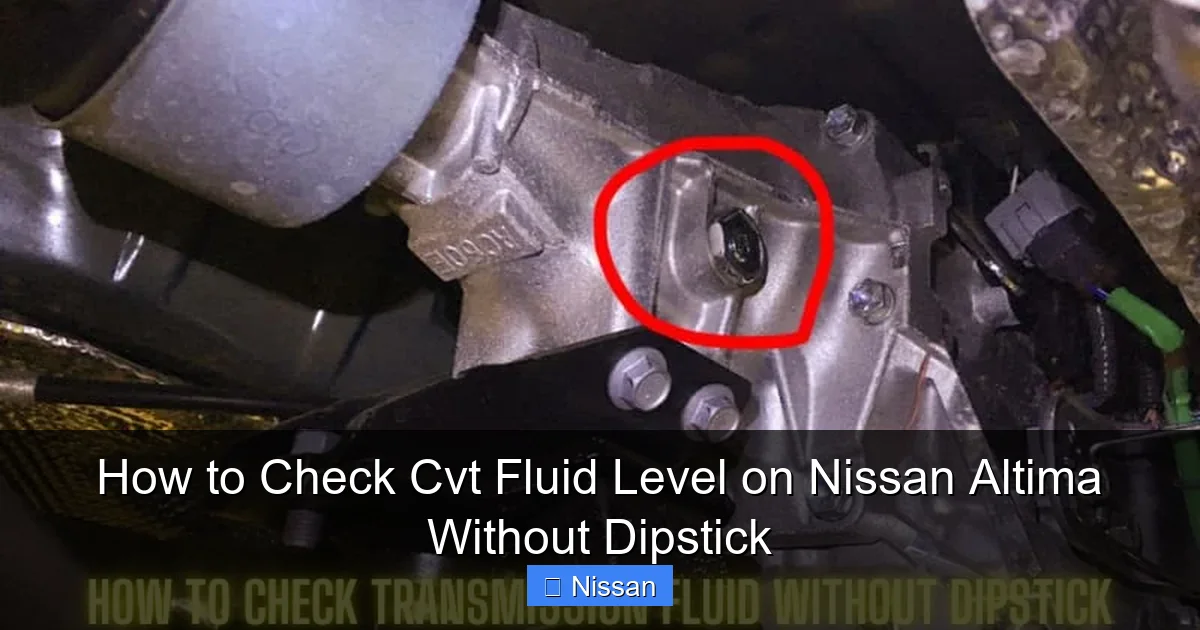
Step 3: Locate the Fluid Level Check Plug
Crawl under the vehicle and locate the transmission. On most Altima models, the CVT fluid level check plug is a 10mm hex bolt on the passenger side of the transmission, near the front. It’s usually marked with a yellow or orange cap or label. Some models may have a fill plug nearby—don’t confuse the two. The level plug is typically lower on the transmission case.
Step 4: Remove the Check Plug and Observe
Put on your gloves and glasses. Use the 10mm hex key to slowly loosen the check plug. Be ready—fluid may start to drip out. If fluid flows out in a steady stream or steady drip, the level is correct. If it trickles slowly or doesn’t come out at all, the fluid is low. If it gushes out under pressure, the level may be too high (rare, but possible if overfilled previously).
Step 5: Top Off if Necessary
If the fluid is low, you’ll need to add more. Use a fluid pump or syringe to inject Nissan-approved CVT fluid through the fill plug (usually located higher on the transmission). Add small amounts at a time—about 4–8 ounces—then recheck the level by replacing the check plug, starting the engine, warming it up again, and repeating the process. This ensures accuracy.
Once the fluid level is correct, tighten the check plug to the manufacturer’s torque specification (usually around 7–10 ft-lbs). Wipe away any spills and lower the vehicle safely.
Common Mistakes to Avoid
Even with the best intentions, it’s easy to make mistakes when checking CVT fluid. Here are the most common pitfalls and how to avoid them:
– Checking cold fluid: Always warm up the engine. Cold fluid gives a false low reading.
– Using the wrong fluid: Only use Nissan NS-2 or NS-3. Generic or automatic transmission fluid will damage the CVT.
– Overfilling: Adding too much fluid can cause foaming and overheating. Add slowly and recheck.
– Confusing the plugs: The level plug and fill plug are different. Removing the wrong one can lead to overfilling or leaks.
– Skipping safety gear: Hot fluid and sharp edges are real hazards. Always wear gloves and eye protection.
– Not using jack stands: Relying on a jack alone is extremely dangerous. Always use jack stands.
When to Change CVT Fluid
While checking the level is important, don’t forget about fluid changes. Nissan recommends changing CVT fluid every 60,000 to 100,000 miles, depending on driving conditions. Severe use—like frequent towing, extreme heat, or city driving—may require more frequent changes.
Signs your CVT fluid needs changing include:
– Burnt or foul odor
– Dark or discolored fluid
– Slipping or hesitation during acceleration
– Delayed engagement when shifting
If you notice any of these symptoms, have the fluid changed by a professional or do it yourself using a drain-and-fill method. Never flush a CVT unless specified by the manufacturer—some models don’t support it.
Conclusion
Checking the CVT fluid level on your Nissan Altima without a dipstick might seem intimidating at first, but it’s a manageable task with the right approach. By warming up the engine, using the correct tools, and following the step-by-step process, you can keep your transmission running smoothly for years to come. Regular checks help prevent costly repairs and give you peace of mind on the road.
Remember, safety comes first—always use jack stands, wear protective gear, and double-check your work. And when in doubt, consult your owner’s manual or a certified technician. With this guide, you’re now equipped to handle one of the most important aspects of Altima maintenance like a pro.
Frequently Asked Questions
Can I check CVT fluid level when the engine is cold?
No, you should never check CVT fluid when the engine is cold. The fluid contracts when cool, giving a false low reading. Always warm up the engine to operating temperature (104°F–113°F or 40°C–45°C) for an accurate check.
What happens if I use the wrong CVT fluid?
Using the wrong fluid—like generic automatic transmission fluid—can cause slipping, overheating, and permanent damage to your CVT. Always use Nissan NS-2 or NS-3 fluid as specified in your owner’s manual.
How often should I check my CVT fluid level?
Check the fluid level every 30,000 miles or once a year, whichever comes first. If you drive in severe conditions (towing, extreme heat, stop-and-go traffic), consider checking it more frequently.
Is it safe to check CVT fluid at home?
Yes, it’s safe as long as you follow proper safety procedures. Use jack stands, wear gloves and eye protection, and work on a level surface. If you’re unsure, consult a professional.
Can I overfill the CVT by adding too much fluid?
Yes, overfilling can cause foaming, which reduces lubrication and leads to overheating. Always add fluid slowly and recheck the level after warming up the engine.
What if no fluid comes out when I remove the check plug?
If no fluid flows out, the level is low. Add the correct CVT fluid in small increments through the fill plug, then recheck after warming up the engine. If the problem persists, there may be a leak or internal issue—consult a technician.